e-Newsletter | July 23, 2021 |
|
Today, we take some peeks at Plum Island during the halcyon summer days of the late nineteenth and early twentieth centuries.
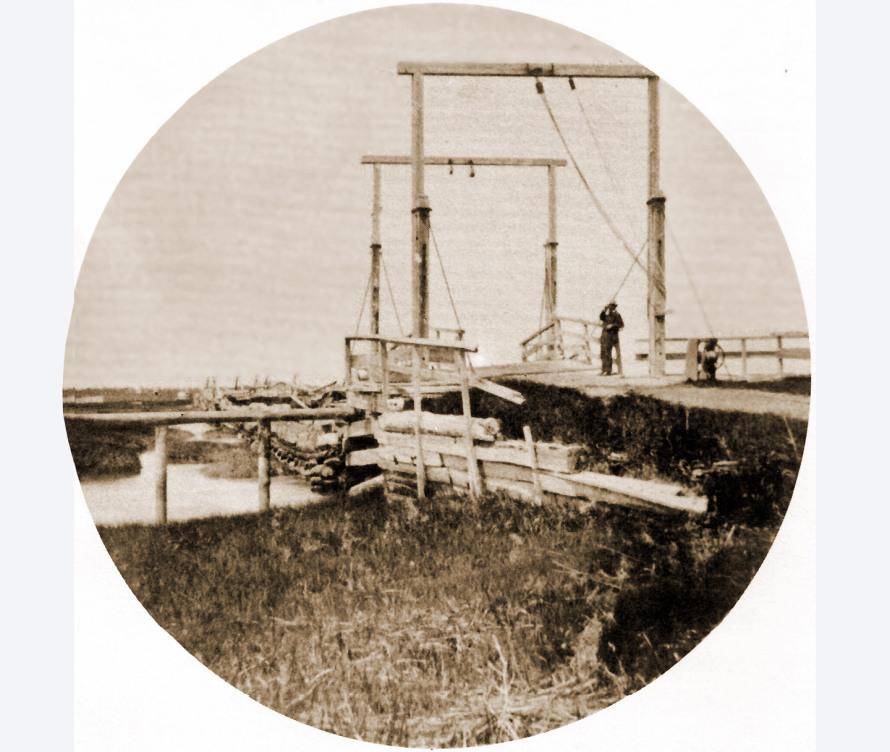
Although we think of Plum Island as a resort only in the last 150 years or so, the first attempt to promote the island as a leisurely spot in which to while away warm days with ocean breezes was in 1806 when the first toll bridge was constructed, and a small hotel was built.
Families came by boat or wagon, and later, by steamer to picnic and camp, setting up tents in the sand.
|
|
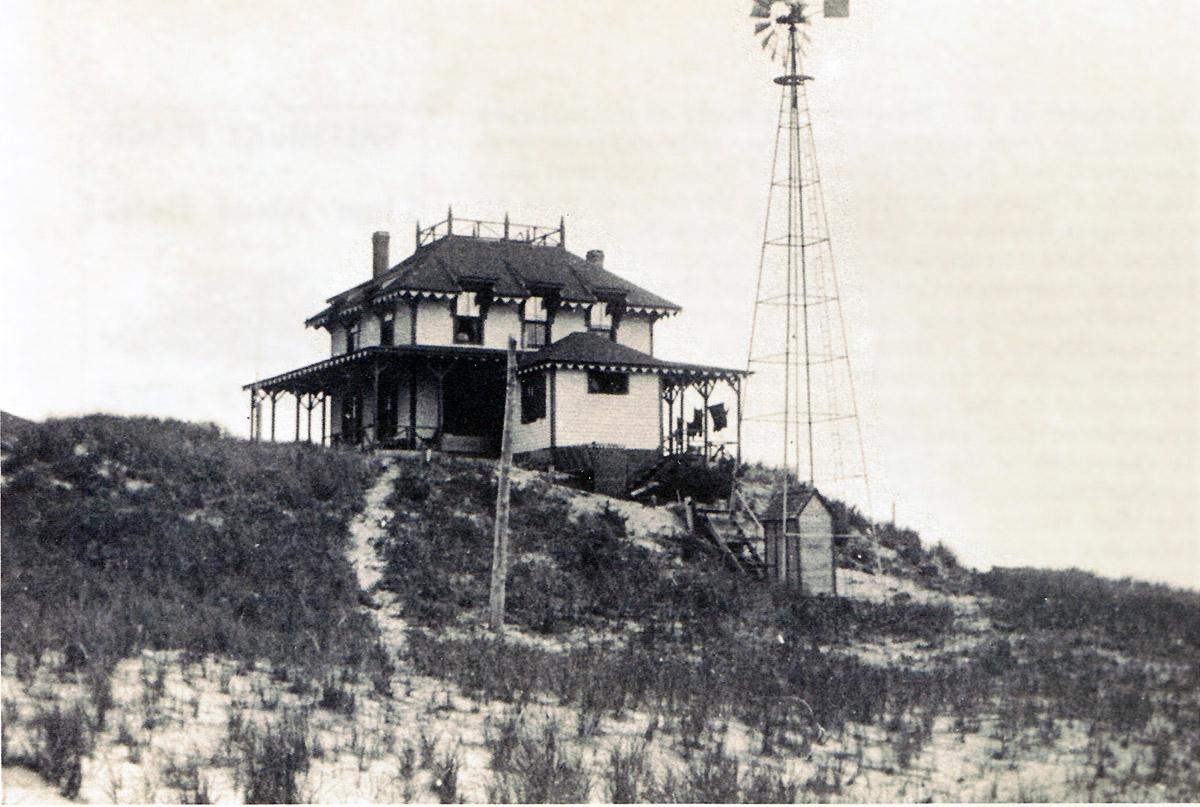
The first cottage, shown below, was built in 1881 for Boston merchant Michael Hodge Simpson who was a Newburyport native. Located just off Plum Island Center, the cottage, perched on a high dune, has been a landmark since it was constructed. |
|
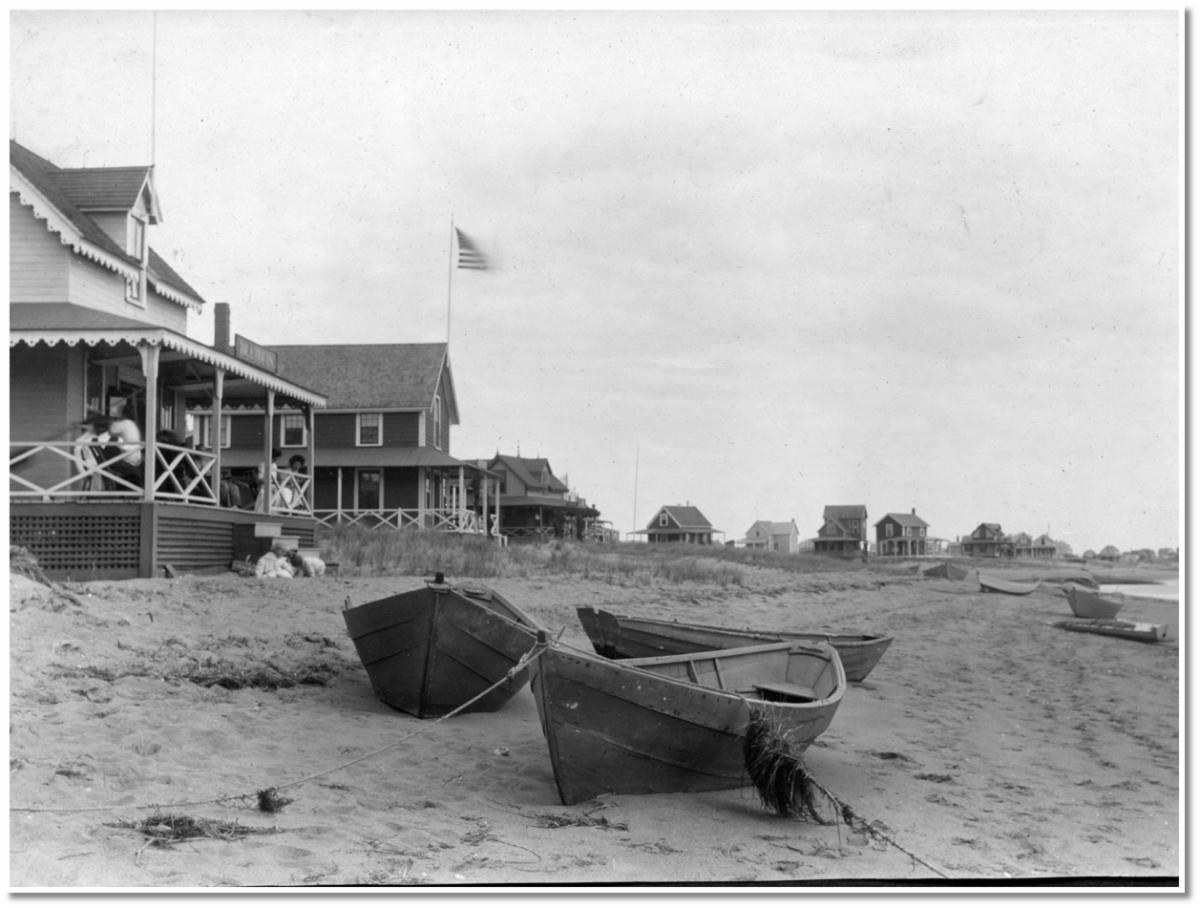
After the first pleasure cottage was erected, it didn't take long for others to crop up along the shoreline. In order to take full advantage of the location, most of these early structures boasted large, covered porches for enjoying ocean views and breezes. |
|
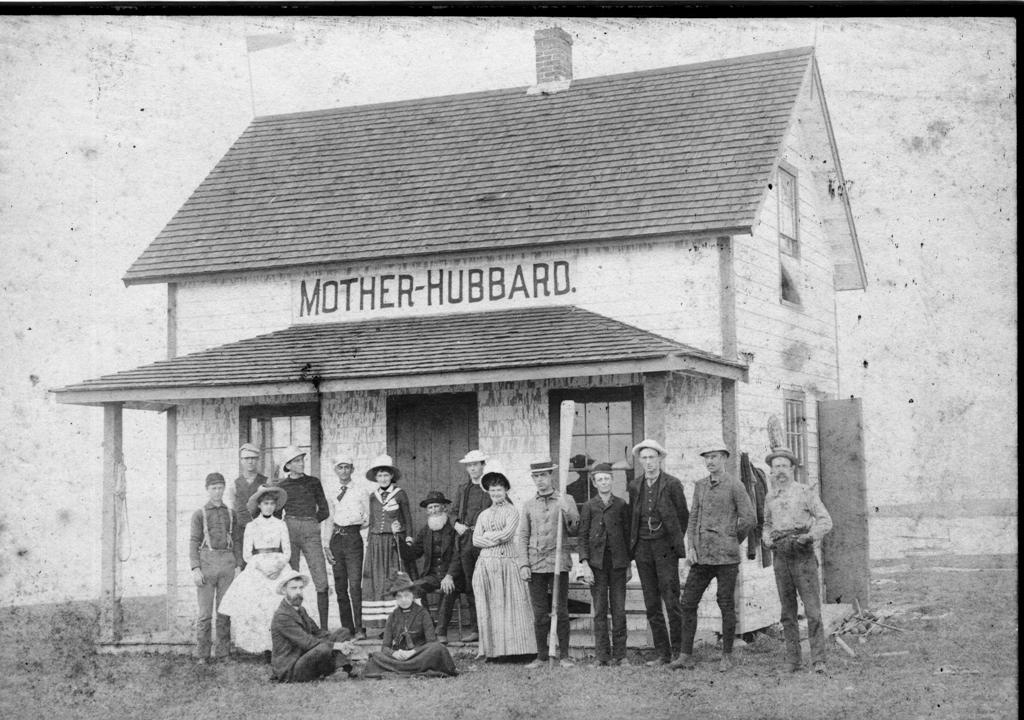
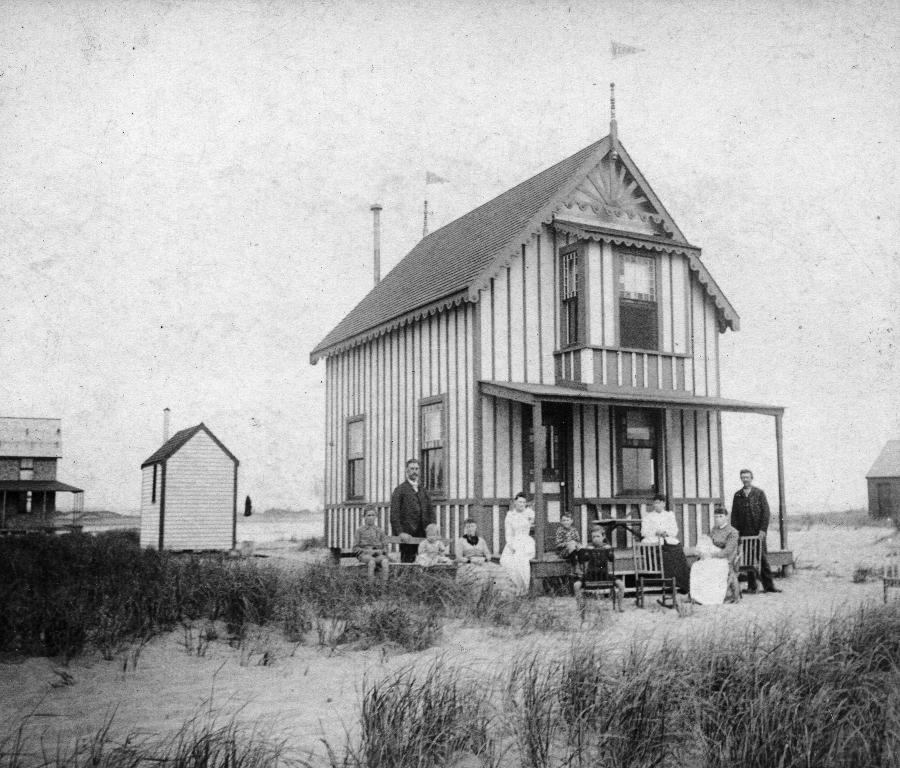
As the island became more inhabited and many more cottages were built, it became fashionable for residents to name their ocean side retreats. Mother Hubbard Cottage was a perfect destination for sporting enthusiasts. The Noyes Cottage was a favorite family gathering place. This 1890 photo includes several generations.
Pictured above, from left to right, are Harry V. Noyes, S. Henry Noyes, Harlan E. Noyes, Marie Farrar, Maggie C., Herbert Farrar, Fred S. Noyes, Sarah J. Noyes, and Ella W. Noyes holding Howard and George Farrar.
|
|
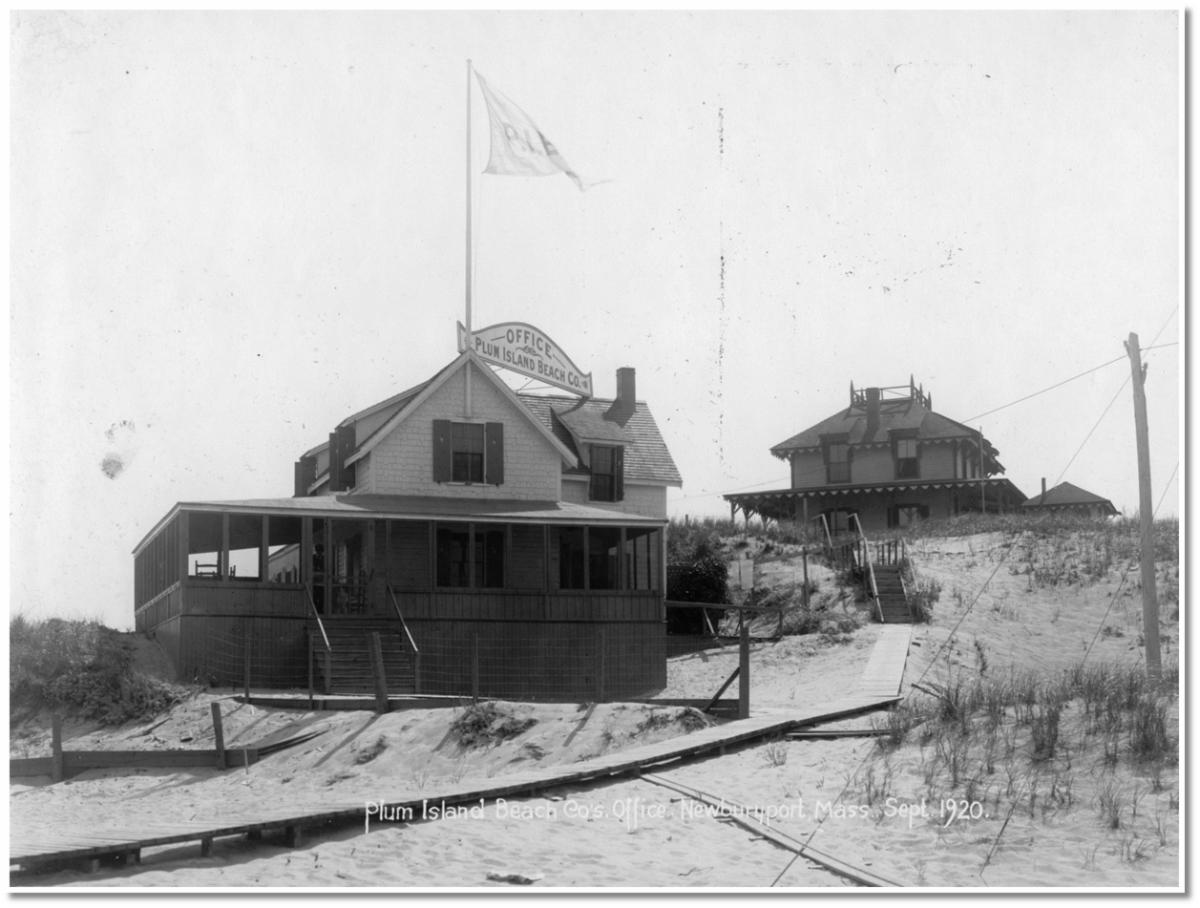
By 1920, the office of the Plum Island Beach Company was located adjacent to the Simpson Cottage. The beach company purchased land from the Pettingell family and built the road now known as Northern Boulevard, creating lots and selling them to the public for cottages. |
|
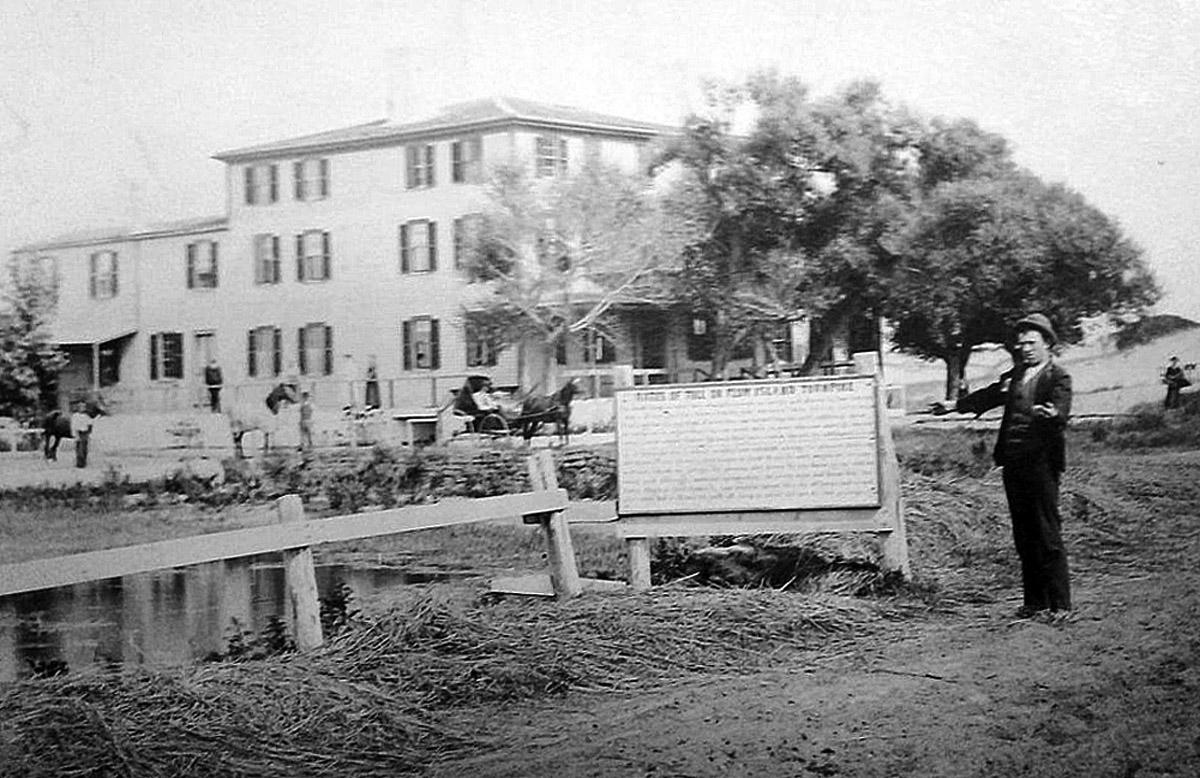
The Plum Island Hotel, pictured here in 1877, was the largest hostelry on the island. Although there were numerous landlords, the hotel became best known under Captain Nathaniel Brown in the 1830s and under William H. Thompson in the mid-nineteenth century. The cuisine was highly esteemed and game dinners were a favorite. Over the decades, the hotel was remodeled and updated.
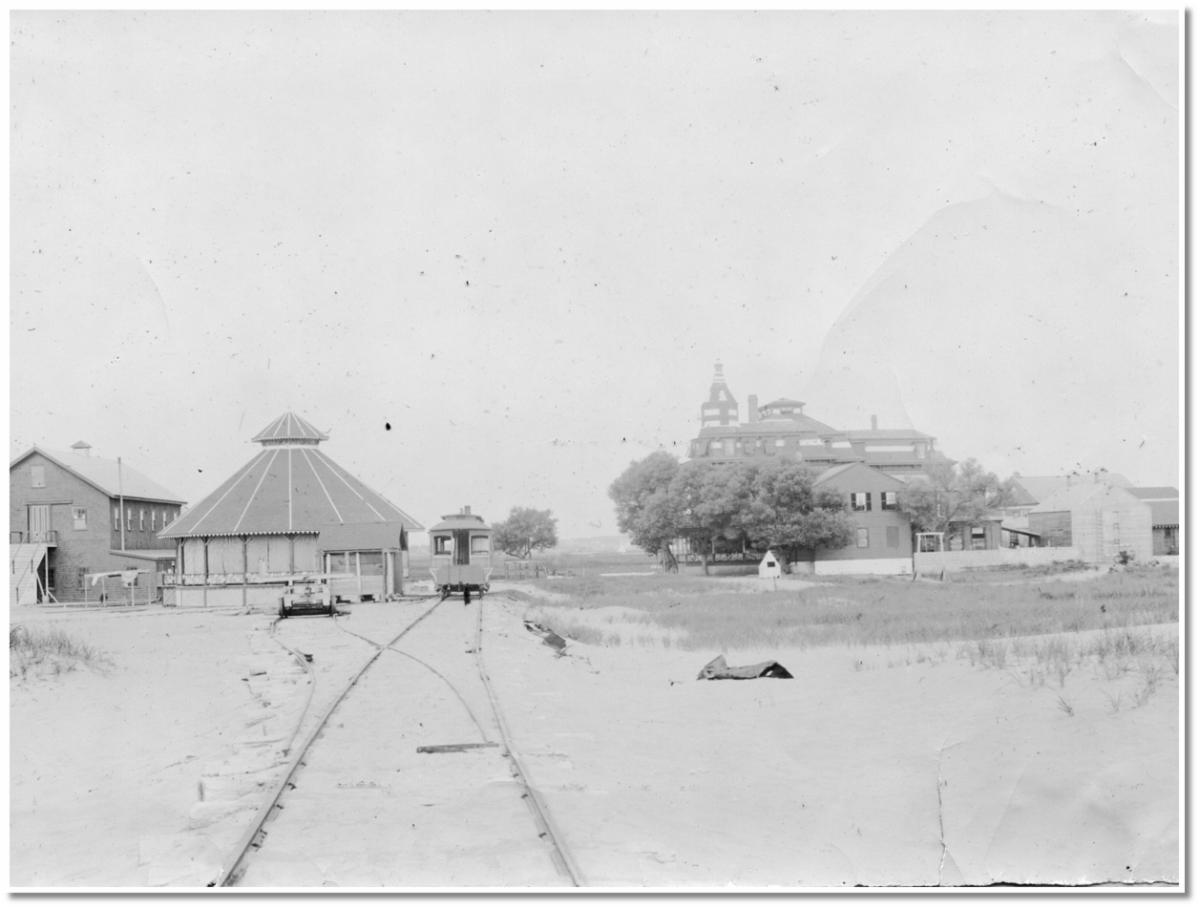
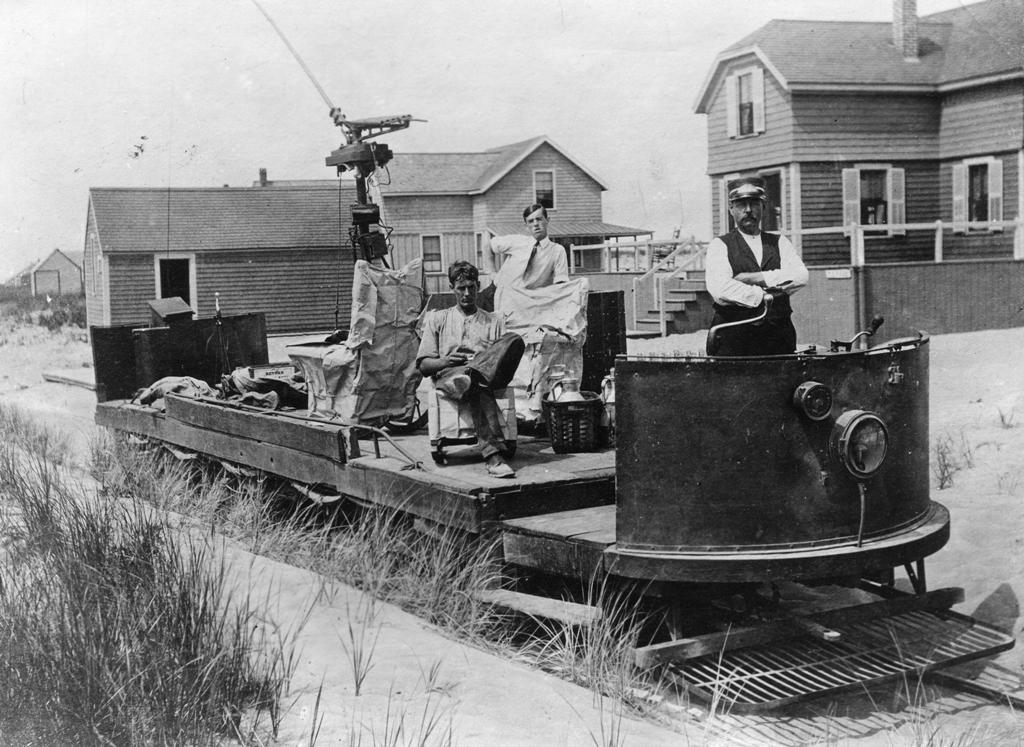
The electric railway was introduced to the island in 1897 and trolleys continued to run until 1922. The trolley freight car, shown below, made deliveries of ice, milk, coal, furniture and other provisions for residents of the newly built cottages. Driver Ed Fowler is at the helm.
|
|
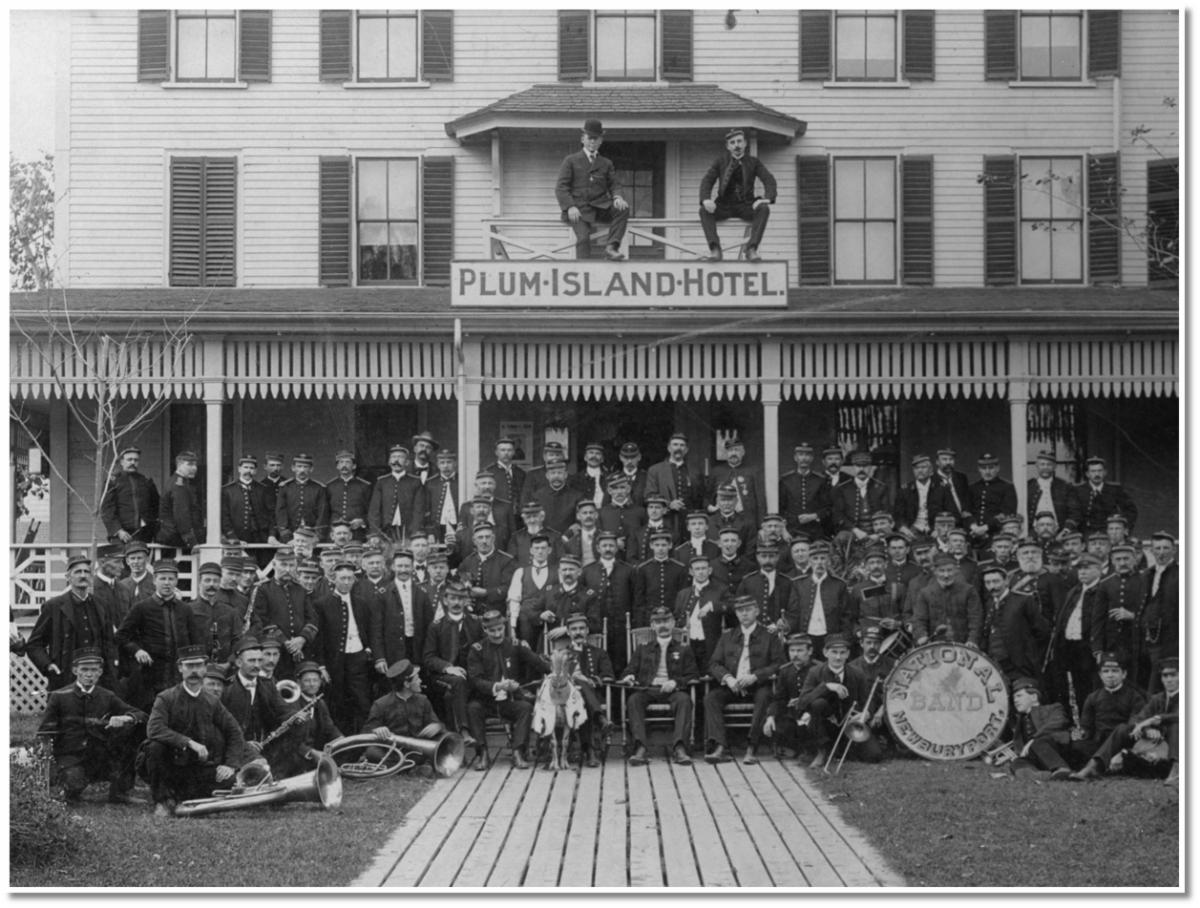
The National Band of Newburyport poses in front of the Plum Island Hotel in the early twentieth century. In the front row, two men hold on to a goat, the band’s mascot.
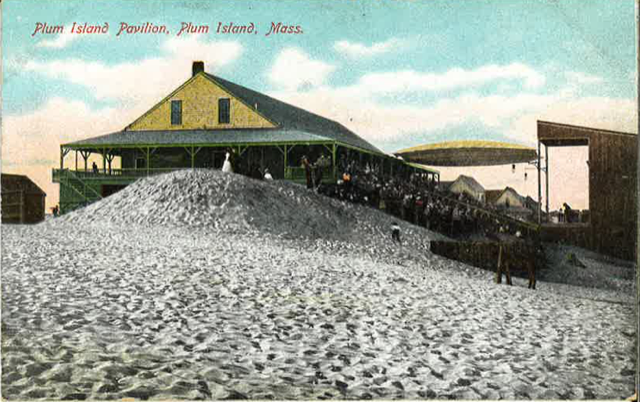
Waterfront concerts have always been a popular summer event in Newbury and Newburyport. In addition to events and entertainment at the hotel, dances with live orchestras were held at the Plum Island Pavilion located nearby.
|
|
In July 1913, a fire started in the Noyes Refreshment Booth and traveled, unchecked, to adjacent buildings. Fanned by a strong wind, the flames leapt the trolley track and the Pavilion burned to the ground. Nothing was saved. The following May, the hotel met the same fate when a faulty flue in the kitchen chimney reduced the hotel, a carriage house and an icehouse to rubble and ashes. |
|
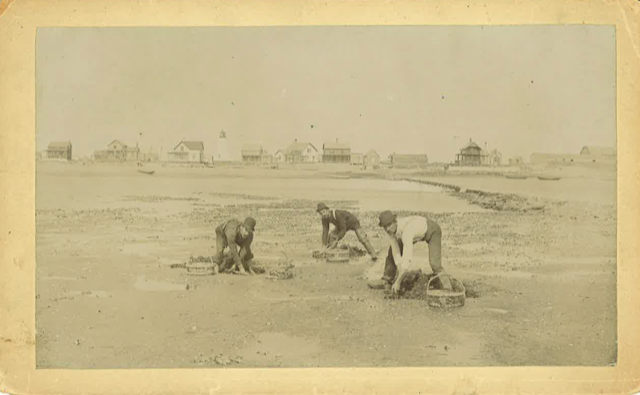
A popular pastime on the island was digging for clams. Here, a group of men work near the mouth of the Basin. The Bay View House near the Point was popular for its clambakes. |
|
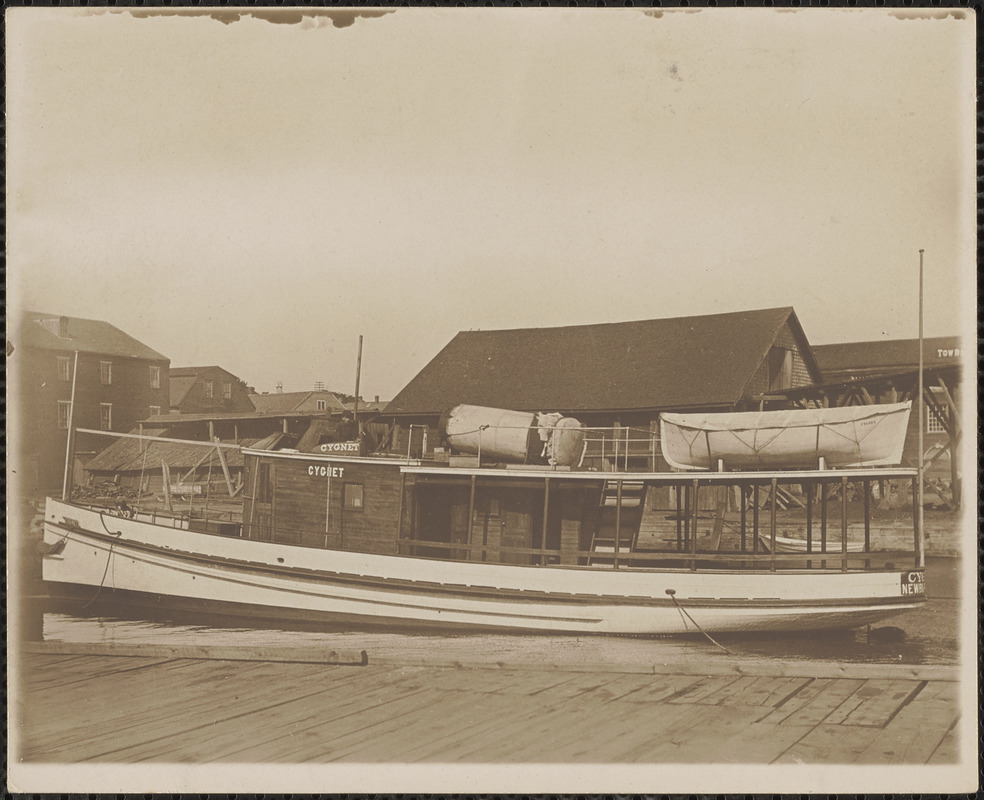
In addition to those who made their home on the island during the summer months, there were day trippers who enjoyed sunning in the sand and enjoying a robust shore meal. By 1876, there were ten steamers making trips to the island. Some were from as far away as Haverhill and others made daily trips from Ipswich. The Cygnet, shown above, was one of two commercial steamers that plied the waters of the Parker River providing pleasure excursions for residents and visitors alike. In addition to fulfilling this role, the Cygnet was also employed in the anniversary festivities for the city of Newburyport in 1901.
|
|
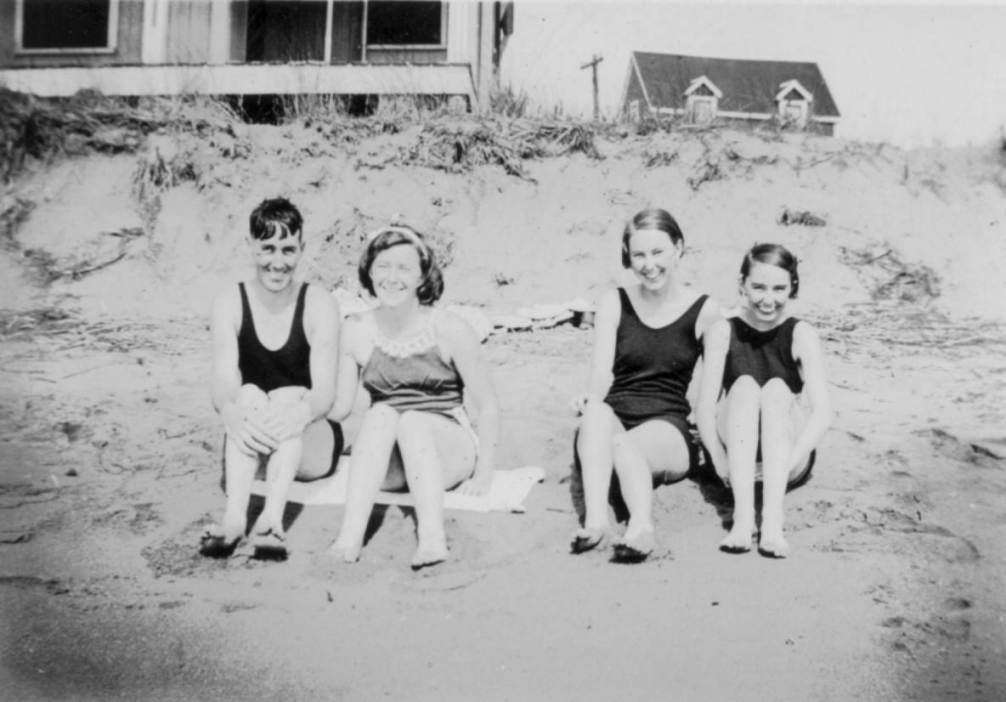
During the 1920s and 1930s Plum Island boasted a thriving, family oriented summer community between the Point and the Center. Pictured here during a visit in 1935 from left to right, are Howard Poore, Mary Page Anderson, Louise Poore and Emily Poore (Bethany's own aunt, cited in this week's Woman on the MOON.)
Above photo courtesy of Bethany Groff Dorau. All other photos are from the collections of the Museum of Old Newbury. Some information provided by Plum Island, The Way It Was by Nancy Weare.
|
|
Woman on the MOON
A Warning to the Wife to Look Out for Strangers
...a blog by Bethany Groff Dorau
My husband, James, and my stepdaughter, Zoe, came to visit me at the Museum of Old Newbury today. They did a whole lot of stopping and pointing and gasping, because, well, there is a whole lot of eye candy lying around here, arranged in ways to confound and delight (sometimes by accident).
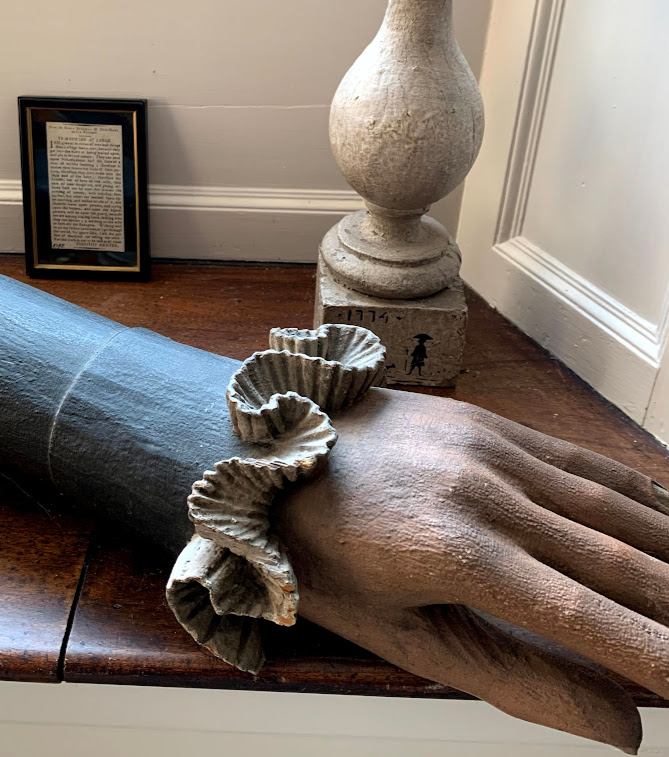
On the second floor landing, there is a strange tableau. An oversize carved, painted arm, complete with exquisitely ruffled cuff lies next to a baluster fragment. Behind them is a tiny, framed newspaper article. They both bent over it, squinting, until I made the executive decision that we would pick it up and hold it six inches from our faces. The tiny print was a missive from Newburyport’s own Lord Timothy Dexter, well-known to you, dear reader, I am sure.
|
|
This fragment of statuary and architectural piece were salvaged from the Dexter House, now 201 High Street, after the "Lord's" death. |
|
But, just in case you’re tuning in from the actual moon, Dexter (1747-1806) was a Malden-born eccentric, self-educated businessman who moved to Newburyport in 1769, married very well, and managed to turn a profit on some rather unorthodox items, including stray cats, junk currency and bed warmers.
He was snubbed by Newburyport’s elite and retaliated by writing pithy diatribes in local newspapers, eventually publishing a book called A Pickle for the Knowing Ones in 1802, in which he consolidated his complaints about his wife, his neighbors, politics, etc. He introduced himself as “the first Lord in the younited States of A mercary Now of Newburyport” and the “Lord” stuck. In the second edition he added eleven lines of punctuation at the end so readers “may peper and solt it as they plese.”
The small article was an early effort, printed in 1792 in the Essex Journal and New Hampshire Packet, to enlighten his fellow man (and woman) on the dangers of, oh, just about everything.
TO MANKIND AT LARGE, it begins. “I am greater in views of men and things than College-learnt men, because they get in the habit of being waited upon, and use is second nature: They can tend upon business about half the time of a man of middle-learning.”
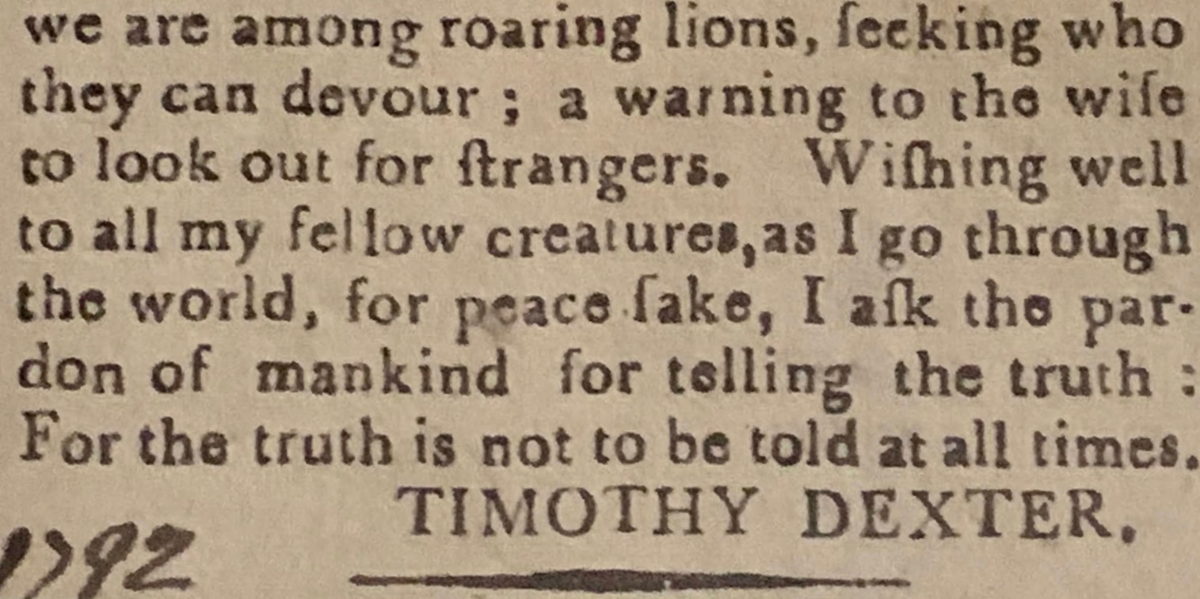
Okay, so far, I say to myself. Then it gets weird (er). “…we are among roaring lions, seeking who they can devour; a warning to the wife to look out for strangers.” James turns to me. “Hear that, wife?” “Loud and clear,” I say.
Dexter closes his article with a sorry-not-sorry. “Wishing well to all my fellow creatures as I go through the world, for peace sake, I ask the pardon of mankind for telling the truth.”
|
|
Letter to the editor from Timothy Dexter (he was not yet a "lord"), 179 |
|
And this is where I lose hours of my life. “For peace sake?” I say to James. “Is that where ‘Pete’s sake’ comes from?”
We gasp, a new truth revealed in the teeny print in front of us. “Wasn’t Pete short for St. Peter?” I recall someone once telling me that it was preferable to substitute the name of a saint to the name of God, which is why so many near curses employ the name. We are yelling back and forth. “For the love of Pete!” “What in the name of Pete?” etc.
I go reverently to the Oxford English Dictionary. “For Pete’s sake,” first used in 1903. But here in the Museum of Old Newbury, we have “for peace sake” in 1792. Bam. I am a linguistic Indiana Jones.
Later, I was in my office, looking out for strangers, when I thought, as I so often do, of the faux blasphemy employed by my dear great-aunt Emily Noyes Poore. She certainly mentioned “Pete,” though she also enjoyed “Jiminy Cricket,” “Jumping Jehoshaphat” and “for Cripes’ sake.” There was also the classic, "Ye gads and little fishes," a less-serious version of "Ye gods," veering dangerously close to paganism.
She only swore twice for real, that I can recall. Once, explaining why she never married, she said that when her older siblings (she was the youngest of six) began courting, they “acted like fools,” and sensible Emily thought the whole things “a bunch of s***.”
Later, while working in a historic house, and eternally in possession of either supernatural sensitivity or an overactive imagination (the jury is still out), I told her breathlessly of an encounter I thought evidence of a haunting. She snorted. “Well, that’s a bunch of bull****,” she said, categorically refusing to acknowledge the doors in the ancestral Poore house that seemed to close by themselves, audible footsteps in the attic and those million times a day she somehow knew that I was headed for the porch fridge to drink Hawaiian Punch directly from the can. “For Pete’s sake,” she would say, before I moved an inch.
|
|
Learn about upcoming programs, register, find Zoom links and catch up on previous presentations here. All of our virtual programs are free, however donations are gratefully accepted to help defray speaker fees.
|
|
Martin Johnson Heade and the New England Landscape
Martin Johnson Heade (1819-1904) was a prolific painter of landscapes, still life and exotic portraits of tropical birds and flowers. Perhaps most iconic, are his salt marsh paintings of New England centered around Newbury's Great Marsh.
Colleene Fesko, an appraiser on the hit PBS television series Antiques Roadshow since its inception 25 years ago, will explore Heade's work beyond his associations with the Hudson River School of artists and discuss him as a Luminist painter, placing his salt marsh paintings and seascapes in the context of his own oeuvre and that of his contemporaries.
|
|
2021 Garden Tour Gallery – Part 5
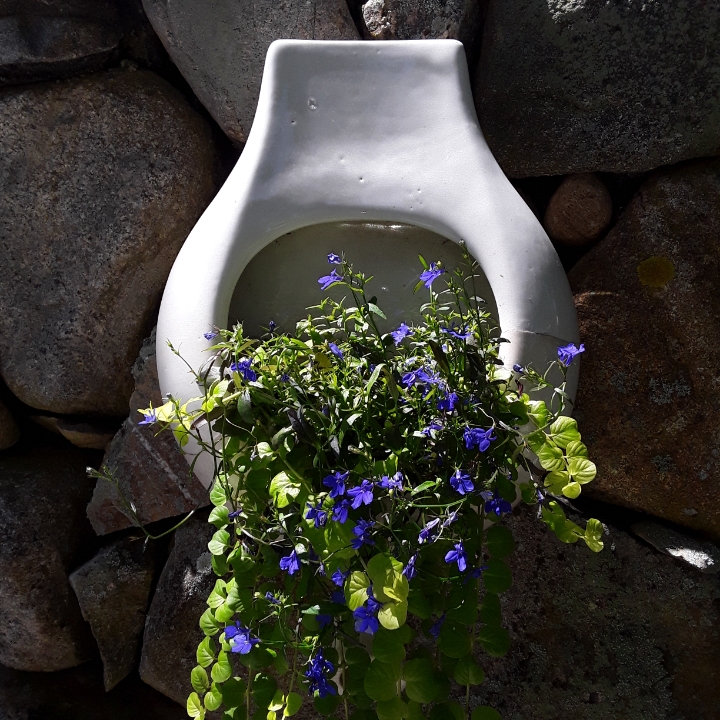
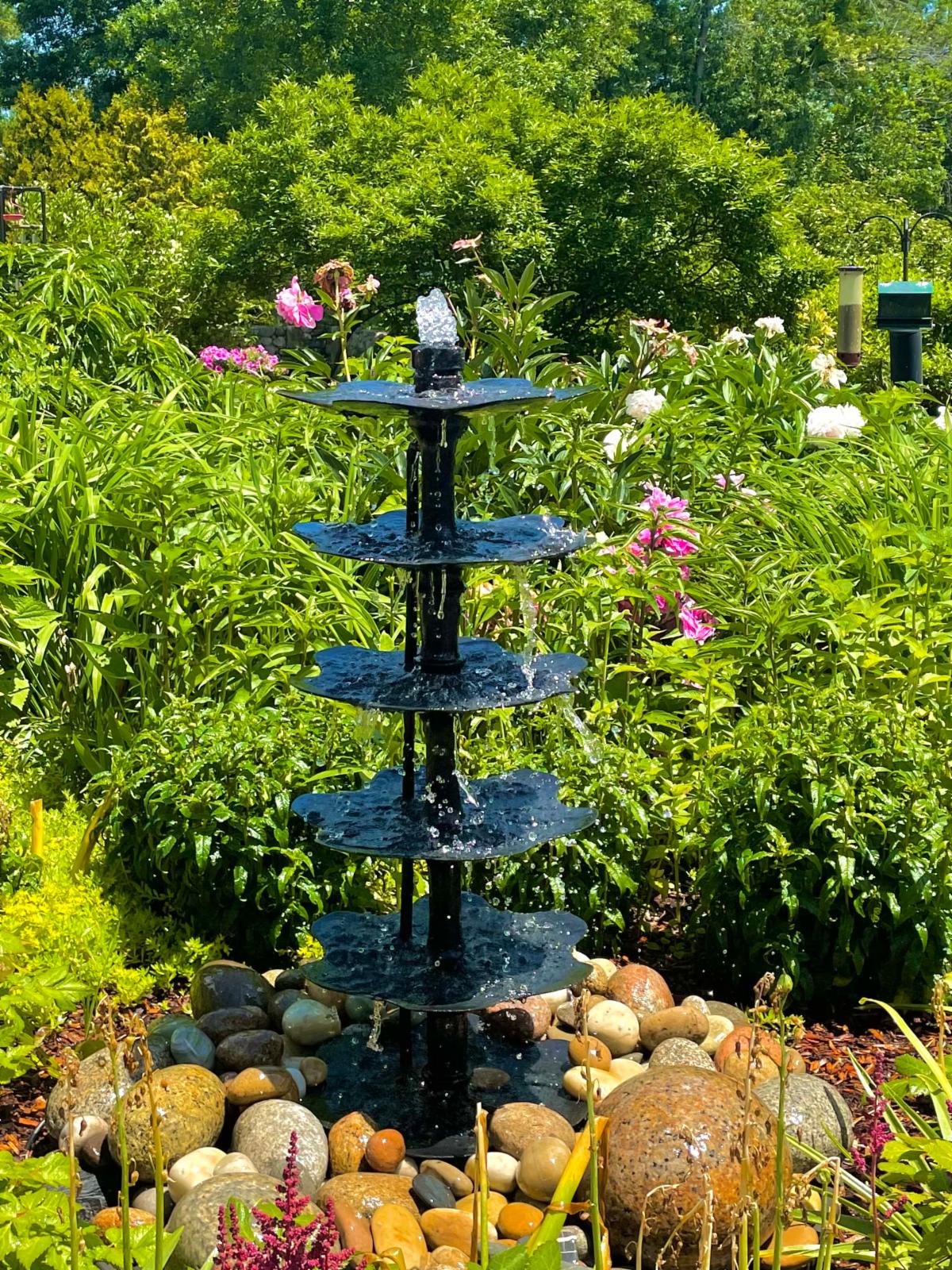
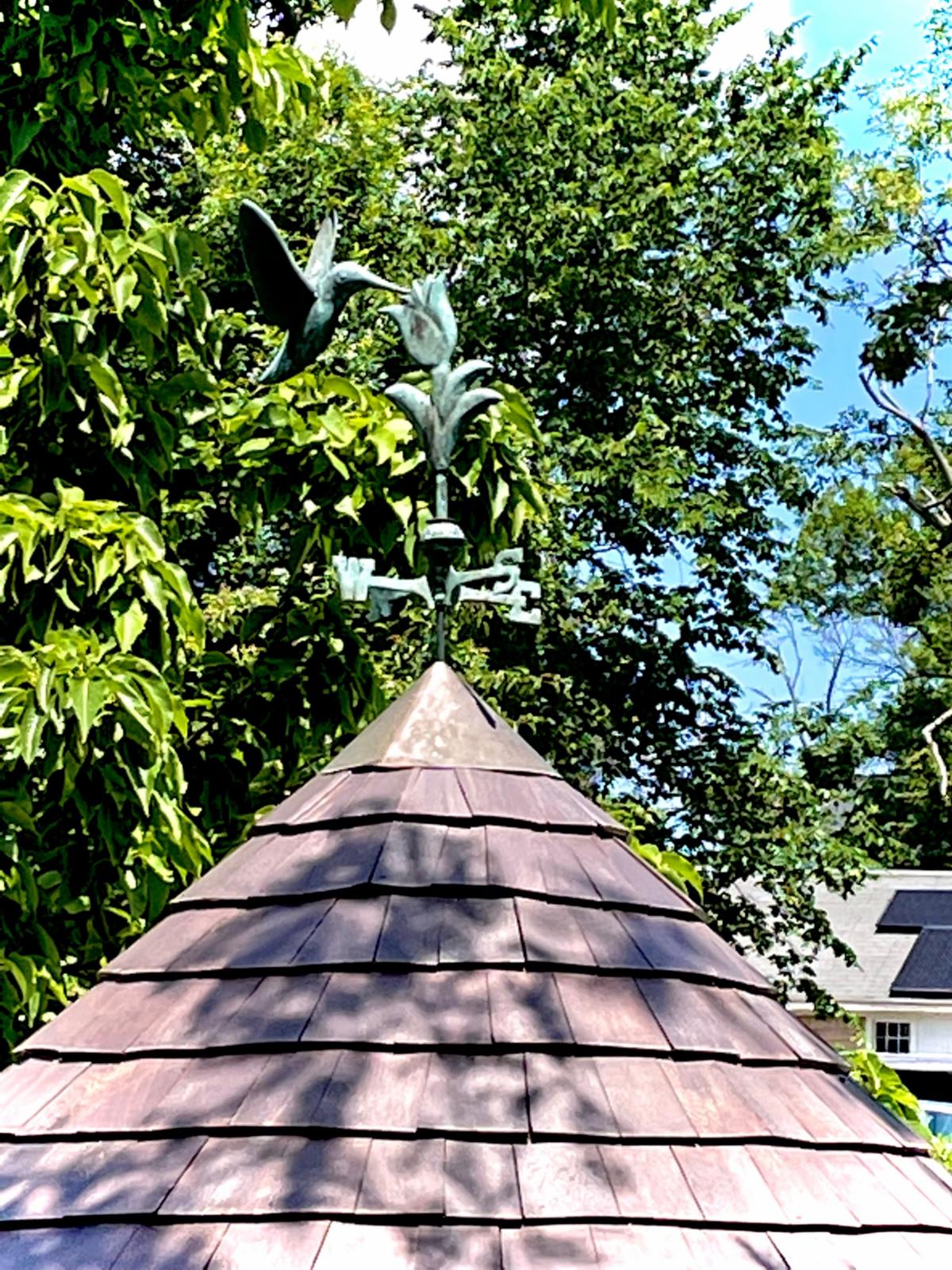
Some of the fabulous images sent in by attendees of this year's 42nd Annual Garden Tour. Many more to come! Do you have a few? Send along (with your name and the town you live in) and you could be eligible for free Garden Tour tickets next year.
|
|
Photo by Rochelle Perry-Platine of Haverhill. |
|
Two whimsical gems from Jeannie Moak of Salisbury. |
|
Puzzle Me This...
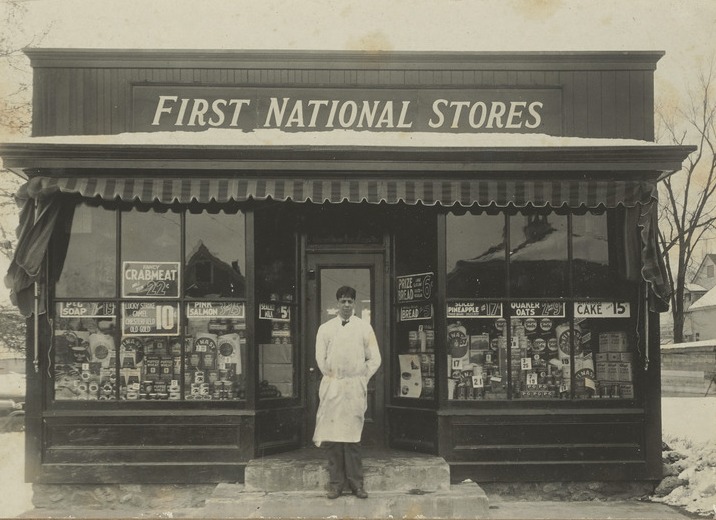
During the late 19th century and into the first half of the 20th century Newburyport had numerous neighborhood grocery stores.
Charles Albert Robie's First National Grocery Store was located on Merrimac Street. This photograph was taken about 1933.
From the Museum of Old Newbury Snow Photograph Collection.
Click on image to begin.
|
|
Something is Always Cooking at the Museum
Peg McClure's citrus delight is the perfect end to a summer meal. Light and slightly sweet, serve with a dollop of fresh whipped cream and all is right with the world.
Lemon Cream Pie
1 1/2 cups sugar
1/2 cup cornstarch
2 cups half-and-half
1 stick unsalted butter
1/2 cup fresh lemon juice
Zest of 1 lemon
6 egg yolks
1 1/2 cups sour cream
Baked pie shell
In a saucepan, mix sugar, cornstarch, half-and-half, butter, lemon juice, lemon zest and egg yolks. Stir over medium heat until mixture thickens and boils. Remove from heat. Add sour cream and mix well. Pour filling into pie shell. Cover with plastic wrap and cool at room temperature until set.
|
|
During this difficult period of COVID-19, we rely on your support more than ever. We continue to develop new, online programs for you to enjoy and keep us connected and look forward to in-person events as protocols for safety loosen. We hope, if you are able, that you will consider a donation to the museum. Thank you for your continued support.
|
|
Museum e-Newsletter made possible through the
generosity of our sponsors:
|
|
|
Museum of Old Newbury
98 High Street
Newburyport, MA 01950
978-462-2681
|
|
|
|
|
|
|
|