WEDNESDAY | DECEMBER 2, 2020
|
|
2021 Medicare Physician Payment Schedule Final Rule |
|
This afternoon the AMA announced the Centers for Medicare & Medicaid Services (CMS) released the 2021 Medicare Physician Payment Schedule Final Rule. ASIPP will analyze the rule and provide a detailed summary soon.
Office and Outpatient Evaluation and Management (E/M) Visits
Last year, CMS finalized an important policy change in the 2020 Medicare Physician Fee Schedule Final Rule when it adopted CPT guidelines to report office and outpatient E/M visits based on either medical decision making or physician time and reduce unnecessary documentation. These changes were made effective on Jan. 1, 2021 to allow for extensive education on use of the new guidelines and revised codes.
CMS also adopted the relative value recommendations made by the AMA/Specialty Society RVS Update Committee (RUC) for the office and outpatient E/M visits, which will lead to significant payment increases for these services in 2021.
The final 2021 E/M policies differ from the RUC recommendations in one important respect: although the surgical specialties participated in the RUC survey and their data and vignettes were incorporated into the RUC recommendations, CMS did not apply the RUC recommended values to the visits bundled into global surgical payments.
Budget Neutrality Adjustments
By law, significant increases in Medicare physician payment rates must be offset by across-the-board decreases. This budget neutrality requirement means that the RUC recommendations for the office and outpatient E/M visits would lead to an approximate 5% payment reduction affecting physicians and other health professionals who do not report office visits. This reduction was doubled to more than 10% as a result of other policy changes made by CMS. In particular, despite concerns about a lack of clarity in its definition and estimated utilization, CMS finalized a new code, G2211, to be reported in addition to the CPT codes for office visits which requires an additional budget neutrality offset of about $3 billion.
Despite the consensus of the AMA and the Federation that CMS should waive the budget neutrality impacts of the Medicare E/M policies in light of the COVID-19 public health emergency, CMS has finalized a significant budget neutrality adjustment. The CY 2021 physician payment conversion factor is $32.41, a decrease of $3.68 from the CY 2020 conversion factor of $36.09. This is a decrease of 10.2%. The CY 2021 anesthesia conversion factor is $20.04, a decrease of $2.15 from the CY 2020 conversion factor of $22.20.
Table 106 below illustrates the specialty payment impacts. Redistributions will be significant, with family medicine increasing by 13% and many specialties that do not perform office visits decreasing by 8% or more.
Because the Administration does not offer any relief from the budget neutrality cuts in the final rule, the AMA strongly urges Congress to avert the more than 10% cut as physicians are experiencing substantial economic hardships due to the COVID-19 public health emergency. Cuts of this magnitude are problematic for all services, but we are extremely concerned that these cuts will directly impact care to COVID-19 patients, as payments for hospital visits, critical care visits, nursing home visits, and home visits are among those being slashed.
|
|
The CDC Announces Its Suggested Vaccine Priorities And Timeline |
|
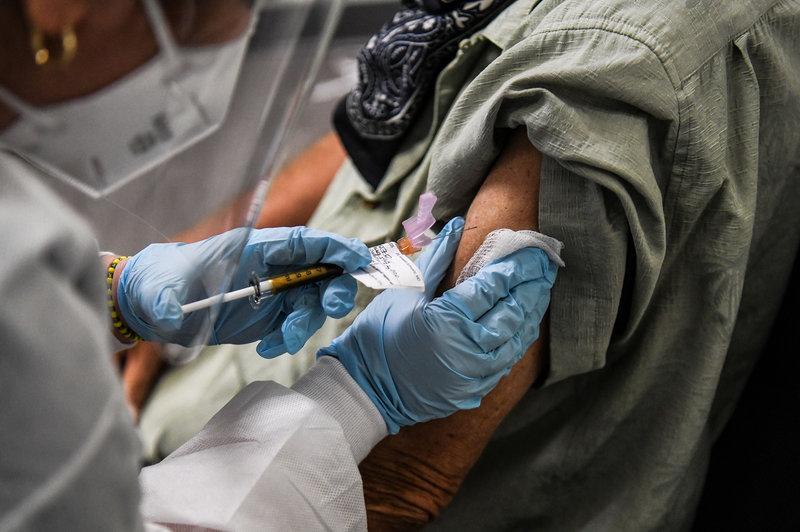
The obvious question on many people’s minds is: When can I expect to be vaccinated? While there is still a lot of uncertainty, it’s possible to lay out a rough expected timeline. I’ve done so below, with help from public health experts and colleagues who are covering the virus.
December: Health care workers and nursing home residents will likely be the first people to receive the vaccine, as the panel recommended.
Up to 40 million doses could be available to Americans before the end of this year, from a combination of Pfizer’s and Moderna’s vaccines. That would be enough to vaccinate the three million people who live in long-term-care facilities, as well as most of the country’s 21 million health care workers.
January: Keep in mind that both the Pfizer and Moderna vaccines require a second dose a few weeks later to be effective. So an initial batch of 40 million doses would be enough to vaccinate only 20 million people.
By early next year, Pfizer and Moderna are likely to be able to ship about 70 million doses per month, Moncef Slaoui, a top federal vaccine official, told The Washington Post yesterday. People will likely receive the shots at doctor’s offices, hospitals and pharmacies, as well as at specially created clinics in some places, my colleague Katie Thomas says.
February and March: The next priority groups are likely to be people over the age of 65 (and especially those over 75); people with medical conditions that put them at risk of death if infected; and essential workers, like those in education, food, transportation and law enforcement.
One exception to this second wave of vaccine recipients may be people who have already had the virus, making them immune from it for at least some period of time.
If other companies in addition to Pfizer and Moderna receive approval for their vaccines, the total number shipped each month could reach 150 million by March, Slaoui said.
April, May and June: The most likely scenario is that even people who don’t qualify as a priority — like healthy, nonessential workers younger than 65 — will begin receiving the vaccine by the spring. The vast majority of Americans could be vaccinated by early summer.
Once that happens, life will still not immediately return to normal, partly because the vaccines are not 100 percent effective. “There will still be risks to people,” as Caitlin Rivers, a Johns Hopkins epidemiologist, told me.
|
|
Several COVID-19 vaccines are being studied in trials around the country. Once the Food and Drug Administration authorizes a vaccine for use, health leaders must decide which groups of people get to receive the vaccine first. |
|
Health Care Workers,
Nursing Home Residents To
Be Prioritized For COVID-19 Vaccine
|
|
A federal advisory committee to the Centers for Disease Control and Prevention voted Tuesday to recommend who should get COVID-19 vaccines first once one is authorized for use.
The CDC estimates that most people in these high-priority groups could be fully vaccinated by early next year if the Food and Drug Administration authorizes a vaccine by mid-December, as is currently anticipated.
|
|
U.K. OKs Pfizer's COVID Vax;
A Shorter Quarantine;
Inside Italy's Second Wave
|
|
A daily roundup of news on COVID-19 and
the rest of medicine
|
|
Note that some links may require registration or subscription.
Pfizer and BioNTech announced emergency authorization from the United Kingdom for their COVID-19 vaccine on Wednesday.
The CDC will now recommend that close contacts of those infected with COVID-19 quarantine for 7 to 10 days, down from the 14 days it is currently recommending. (CNN)
As of 8 a.m. ET on Wednesday, the unofficial COVID-19 toll in the U.S. reached 13,728,153 cases and 270,691 deaths, increases of 181,515 and 2,588 since this time a day ago.
Sign of the times? Reviews of scented candles are much more negative this year, suggesting a possible coronavirus connection. (Washington Post)
|
|
Trump Administration
Finalizes Permanent Expansion Of Medicare Telehealth Services And Improved Payment For Time Doctors Spend with Patients
|
|
On December1, the Centers for Medicare & Medicaid Services (CMS) released the annual Physician Fee Schedule (PFS) final rule, prioritizing CMS’ investment in primary care and chronic disease management by increasing payments to physicians and other practitioners for the additional time they spend with patients, especially those with chronic conditions. The rule allows non-physician practitioners to provide the care they were trained and licensed to give, cutting red tape so healthcare professionals can practice at the top of their license and spend more time with patients instead of on unnecessary paperwork. This final rule takes steps to further implement President Trump’s Executive Order on Protecting and Improving Medicare for Our Nation’s Seniors including prioritizing the expansion of proven alternatives like telehealth.
“During the COVID-19 pandemic, actions by the Trump Administration have unleashed an explosion in telehealth innovation, and we’re now moving to make many of these changes permanent,” said HHS Secretary Alex Azar. “Medicare beneficiaries will now be able to receive dozens of new services via telehealth, and we’ll keep exploring ways to deliver Americans access to healthcare in the setting that they and their doctor decide makes sense for them.”
|
|
Follow ASIPP On Twitter | @ASIPP |
|
|
Join Dr. Manchikanti For Recommended Reading And More | LinkedIn |
|
|
Vaccines for COVID-19: Pfizer, Moderna, and AstraZeneca Race to Finish Line |
|
“Let’s say these vaccines were out and they were available to you and somebody said to you ‘How would you like to participate in a trial where you have … 50 percent chance of not getting a vaccine.’ How enthusiastic would you be?”
-- Dr. Gordon Guyatt
|
|
Recently, there has been emerging good news regarding the development and testing of vaccine candidates against COVID-19. On November 9 and 16, 2020, Pfizer (along with BioNTech) and Moderna both released positive and promising preliminary results from their phase III clinical trials testing the efficacy of COVID-19 vaccine candidates. On November 18, the CEO of Pfizer announced their final analysis, which showed that their vaccine candidate had a very high efficacy in protection against SARS-CoV-2 infection without major safety concerns. This exciting news, as the Prime Minister of Canada Justin Trudeau commented, made people see “the light at the end of the tunnel” (Source).
But how should we interpret the vaccine efficacy rates? How optimistic should we feel about the efficacy of the vaccines? How much longer do we have to wait to get vaccinated and have the pandemic finally under control? And will the introduction of the leading vaccines to the marketplace stall further vaccine development? There are still many questions that need to be answered. In this OE Original, we aim to provide insight into these questions by introducing the 2 new vaccine candidates developed by Pfizer and Moderna.
|
|
During these hard times, ASIPP would like to help out our members by offering a special dues payment benefit! When you renew before December 31, 2020, we are offering the following benefits: |
|
One-year renewal by December 31 – Two (2) complimentary on-demand two-day review courses, or one (1) board video, which is conducted in 6-day sessions, or the on-demand version of our 2020 Annual Meeting. Additionally, to further express our gratitude to you for your continued support, we will also provide you with the Opioid and Regenerative Medicine Guidelines.
Two years dues renewal by December 31 – Four (4) on-demand review courses and your choice of either the on-demand Board Review course or the Annual Meeting. You will also receive the Opioid and Regenerative Medicine Guidelines.
Three years dues renewal by December 31 - Four (4) on-demand review courses and either the on-demand Board Review course or the Annual Meeting. You will also receive the Essentials of Regenerative Medicine in IPM book, the Opioid Guidelines, and Regenerative Medicine Guidelines.
Join as a Lifetime Member by December 31 - Four (4) on-demand review courses and both the on-demand Board Review course and the Annual Meeting. Additionally, you will receive the Essentials of Regenerative Medicine in IPM book, the Opioid Guidelines, and Regenerative Medicine Guidelines.
Your contribution to ASIPP through your membership dues renewal is crucial. Member dues allow ASIPP to continue our advocacy efforts with legislatures, administration, and various other bodies on your behalf.
Already a life member? Make a tax deductible year-end contribution to ASIPP of $500 or greater to receive a complimentary demand review course. Each $500 contribution is worth a one (1) two-day on-demand review course and a $1000 contribution = Board Review or Annual Meeting on-demand. The more you contribute the more you earn!
This offer is also open to those who are joining ASIPP for the first time, paying 2020 dues, and paying future dues (2021 and beyond). By paying for multiple years, you will benefit from these tax deductions before taxes go up in 2021. Please share this great offer with others and encourage them to join ASIPP.
|
|
|
|
Live Webinar
Attendees Price
|
|
|
Controlled Substance Management |
|
|
|
Documentation, Coding, Compliance,
and Practice Management
|
|
|
|
Chronic pain and high-impact chronic pain higher among women, adults ages 65 years and older. |
|
CDC Provides General Estimates of US Adults With Chronic Pain |
|
HealthDay News — In 2019, more than 20 percent of U.S. adults reported chronic pain in the last three months, according to a November data brief published by the U.S. Centers for Disease Control and Prevention National Center for Health Statistics.
Carla E. Zelaya, Ph.D., from the National Center for Health Statistics in Hyattsville, Maryland, and colleagues examined chronic pain and high-impact chronic pain in the previous three months among U.S. adults ages 18 years and older using data from the National Health Interview Survey.
|
|
Register to View ASIPP 2020 Annual Meeting Recordings |
|
Free Access Window Closed |
|
Free access for live meeting registrants was limited to 30 days following the close of the September 4-6 meeting. Please select the appropriate option under the payment section on the registration form if you want to extend your access to the meeting recordings. A significantly reduced add-on fee is available for those who pre-registered for the live meeting, as well as for fellows, residents and medical students.
If you did not register for the ASIPP Virtual Annual Meeting in September, you may still register to view the recorded version. All sessions from the September 4-6, 2020 meeting are available through June 2021 for a reduced fee. On-demand registration also provides access to all of the great resources available in the exhibit hall.
You will receive your new login credentials soon after completing the registration form.
CME Statement
Recorded sessions for this meeting are not eligible for CME credits.
|
|
Making Telehealth Visits Better for Nurses and Doctors |
|
Seven strategies patients can use to improve virtual care |
|
Due to the coronavirus pandemic, telehealth visits conducted via video calls are becoming more common than ever, and more insurance companies are covering them. The annual physical you once had in a doctor's office may now be taking place over your webcam instead. You may be wondering how you can make the most of your telehealth appointment and make it easier for your nurse, doctor, or other professional in cotton scrubs. Here are seven things that you can do to improve the experience on both sides. |
|
Stiff Penalties Common When Physicians Found Guilty of Opioid-Related Crimes |
|
Physicians from a variety of clinical specialties are increasingly being prosecuted for opioid-related offenses, according to a study (abstract 3457, PAIN MEDICINE-22) submitted to the canceled 2020 annual meeting of the International Anesthesia Research Society (IARS).
Principal investigator Guohua Li, DrPH, a professor of anesthesiology at Columbia University Vagelos College of Physicians and Surgeons, in New York City, and Julia Berman, an undergraduate research intern from Dartmouth College in Hanover, N.H, were inspired to undertake the study because of the numerous class action lawsuits against pharmaceutical companies and distributors filed by state and local governments.
The Nexis Uni database was searched for news media reports of physicians who had been arrested, indicted or criminally charged for illegally prescribing opioids in the United States between January 1995 and December 2019.
|
|
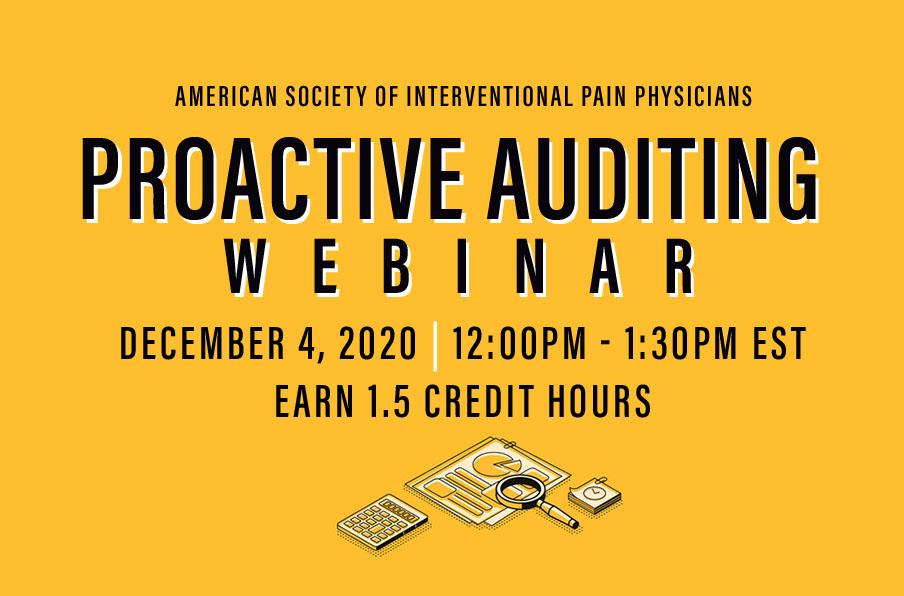
As individuals we have undergone many changes in our day-to-day life in 2020. Changes are also coming to our professional lives. Major changes impacting Evaluation and Management (EM) coding in 2021 are around the corner as well as the addition of items to the Office of Inspector General (OIG) Workplan that may impact pain management providers.
Effective training and education as well as conducting monitoring and auditing are elements of an effective compliance plan. Now is the time to develop and maintain a proactive auditing program.
We will discuss the benefits of monitoring and auditing as related to in-person EM encounters and forecasting revenue changes in 2021 as well as telemedicine visits.
Documentation of medical necessity remains an area requiring ongoing focus by means of education and training to match the ever-changing payer regulations. Other topics include recent reports related to facet procedures and, of course, urine drug testing documentation and the relationship of these issues to ongoing monitoring of auditing.
|
|
|
|
P R E S E N T E R :
Amy Turner,
RN BSN MMHC CPC CHC CHIAP
Amy Turner has a widespread background in clinical operations, revenue cycle, internal audit, risk management and health care administration.
|
|
*This program has been approved by the American Academy of Professional Coders (AAPC) for 1.5 continuing education hours.
Granting of prior approval in no way constitutes endorsement by the AAPC of
the program content or the program sponsor.
|
|
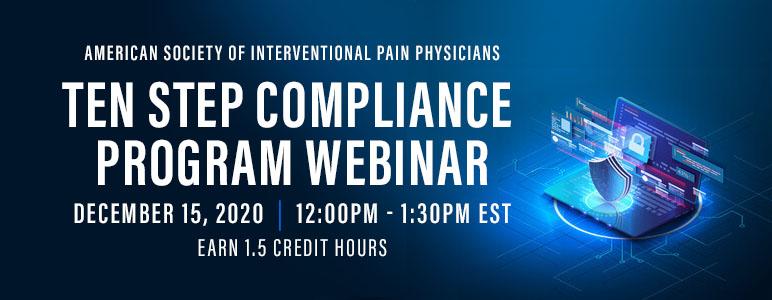
10 Easy Steps to an Effective Compliance Program
The Affordable Care Act requires that all physician practices implement and maintain an effective compliance program. In this intensely practical webinar, Vicki Myckowiak will discuss the 10 most important steps you can take to meet the legal requirements and achieve effective compliance. At the conclusion of the webinar you will be able to:
- Identify the elements required for an effective compliance program;
- Recognize the benefits of a compliance program;
- Identify the roles and responsibilities of a Compliance Officer and Committee;
- Understand the issues surrounding effective compliance audits and education;
- Identify strategies and practices for open lines of communication in a compliance program; and,
- Understand and identify steps for achieving corrective action when needed.
|
|
|
|
P R E S E N T E R :
Vicki Myckowiak, Esq.
Principal of Myckowiak Associates, P.C.
Vicki Myckowiak, Esq., is a principal of Myckowiak Associates, P.C., Detroit, MI. Ms. Myckowiak has been practicing healthcare law for over 25 years and focuses her practice on representing anesthesia and chronic pain practices on issues including compliance programs, reimbursement, third party payor coverage issues, Medicare audits, commercial payor audits, fraud and abuse defense, contracting, chronic pain informed consent, and HIPAA.
|
|
*This program has been approved by the American Academy of Professional Coders (AAPC) for 1.5 continuing education hours.
Granting of prior approval in no way constitutes endorsement by the AAPC of
the program content or the program sponsor.
|
|
This study used cross-sectional data from the Peripheral Neuropathy Research Registry, which consists of a well-characterized patient cohort who have distal, symmetrical polyneuropathies treated at multiple centers. |
|
Exercise Alleviates Pain Symptoms in Idiopathic Polyneuropathy |
|
Researchers from Johns Hopkins University School of Medicine observed that among patients with idiopathic neuropathy, those who exercised regularly were less likely to experience severe pain symptoms according to study results published in the Journal of the Peripheral Nervous System.
Exercise is generally linked to improved outcomes in patients with certain peripheral neuropathies; there is limited data, however, regarding idiopathic peripheral neuropathies. Study researchers sought to analyze the relationship between regular exercise and polyneuropathy severity in patients with idiopathic polyneuropathy.
|
|
A Comparison of the Effectiveness of Ultrasound-Guided Versus Landmark-Guided Suprascapular Nerve Block in Chronic Shoulder Pain: A Prospective Randomized Study |
|
Analgesia using a thoracic epidural catheter is one of the popular methods for postoperative pain control of hepatobiliary, thoracic, orgastric surgery due to its favorable safety and efficacy.
Previous studies showed that thoracolumbar or caudal epidural anesthesia affected intracranial pressure(ICP) in both animals and humans. Epidural injection increases ICP at least transiently. Increased ICP has long been considered as a contraindication to epidural anesthesia. Early diagnosis and management of increased ICP plays an essential role for preventing brain damage. Despite the importance of increased ICP during surgery, ICP is rarely monitored intraoperatively due to invasiveness of ICP measurement. Direct measurement of ICP includes measuring pressure in the ventricle or the brain parenchyma directly. However, such an invasive method makes the popular use of ICP monitoring difficult. One of the noninvasive methods for ICP assessment is using the optic nerve sheath diameter(ONSD) measurement by ultrasonography. Numerous studies suggested that ONSD correlates well with the degree of ICP and is able to detect intracranial hypertension. Optimal cutoff point for identifying increased ICP was 5.5 mm.
|
|
Using the Pain Scale: How to Talk About Pain |
|
One of the hardest things about chronic pain is that only you know how bad the pain feels. There's no blood test that can show much you're suffering. There's often no outward sign, like a bandage or a cast. There's just the pain.
"Pain is always personal," says F. Michael Ferrante, MD, director of the UCLA Pain Management Center in Los Angeles. "It's invisible to other people looking at you -- and that can lead to a lot mistrust and difficulties in relationships."
Whether you have low back pain, or migraines, or nerve pain, people might not understand or believe what you're going through. That suspicion might not only be shared by your in-laws or your boss, but even your doctor -- and that can have serious repercussions, preventing you from getting the pain treatment you need.
To get good control of your chronic pain -- and your life -- it's not enough to tell your doctor it hurts. You need to learn how to talk about pain: how it feels, how it rates on a pain scale, and how the pain affects you.
|
|
Pain Definition Updated
After 40 Years
|
|
Now, for the first time in 40 years, IASP has revised the definition of pain to reflect advances in the understanding of pain, with hopes that this will lead to new ways of assessment and management.
As described in IASP's journal PAIN, the updated definition of pain is: "An unpleasant sensory and emotional experience associated with, or resembling that associated with, actual or potential tissue damage." (The previous definition, adopted by the IASP Council in 1979, was: "An unpleasant sensory and emotional experience associated with actual or potential tissue damage, or described in terms of such damage.")
|
|
ASIPP® Partners with Fedora Billing And Revenue Cycle Management Company
|
|
ASIPP is now offering our members the benefit of a unique revenue cycle management/billing service. We have received a tremendous amount of interest in the ASIPP billing and coding program. One question we continue to receive is what the negotiated rate is for practices. The rate is 3% for ASIPP members and includes all the following services:
- Reporting
- Credentialing
- Charge and Payment Posting
- Credentialing
- Pre-certification/Prior Authorization
- Denials and A/R Management
- And more!
Fedora is a company known to many of our board members and others. ASIPP has reached an agreement with Fedora to provide exclusive discounts on billing or revenue cycle management that will decrease practice costs and promote growth, or at least stop deterioration. It is not just a billing company; they streamline the billing and receivable process and constantly update payor regulations keeping your practice up to on date on a daily basis.
|
|
The American Society of Interventional Pain Physicians (ASIPP) is pleased to announce a partnership with Willow Risk Advisors to create an exclusive policy available to ASIPP members. In an effort to further increase value to its physician members, the American Society of Interventional Pain Physicians (ASIPP) has endorsed Willow Risk Advisors as their professional liability insurance broker. Teaming up with the NORCAL group, Willow Risk has developed an exclusive Medical Malpractice Insurance Program tailored specifically to serve interventional pain physicians. This new program will offer necessary benefits including risk management, premium discounts, consent to settle, aggressive claims handling, and administrative defense. |
|
Join The Group Purchasing
Organization Today
|
|
ASIPP® has formed a partnership with Henry Schein and PedsPal, a national GPO that has a successful history of negotiating better prices on medical supplies and creating value added services for the independent physician. Working with MedAssets, PedsPal provides excellent pricing on products like contrast media that alleviate some of the financial pressures you experience today. While the cost of contrast media has skyrocketed due to the single dose vial issue, because we have partnered with Henry Schein, this could enable you to purchase Omnipaque 240mg/50mL for slightly above $4.50.
Click on “view our discounted supplier prices” (Username: ASIPPmember and Password: Save) or click on the words "join for free now" and begin saving today!
|
|
Essentials of Regenerative Medicine in Interventional
Pain Management
|
|
|
|
Essentials of Regenerative Medicine in Interventional Pain Management is a book to bring concise, collective, and comprehensive information to interventional pain physicians practicing regenerative medicine in managing chronic pain. Regenerative medicine is an integral part of interventional pain management within the definitions of interventional pain management and interventional techniques.
Each chapter contains an introduction of the subject, historical context,pathophysiology, applicability of regenerative medicine with its evidence base, indications, anatomy, technical aspects, complications, and precautions for each topic when available and applicable. This comprehensive book consists of 35 chapters, more than 350 figures, and 50 tables.
|
|
| ORDER | Essentials of Regenerative Medicine in IPM
|
|
Take Control Of Your Waiting Room TV With ASIPP-TV |
|
Customized waiting room TV exclusively for ASIPP® members. Create your own ad-free television broadcasts using our videos, custom informational slides and your own YouTube videos. Even add local weather reports, news and live messages.
|
|
|
In addition, PainExam has now collaborated with ASIPP and offer 2 new programs:
|
|
STATE SOCIETY MEETINGS AND WEBINARS |
|
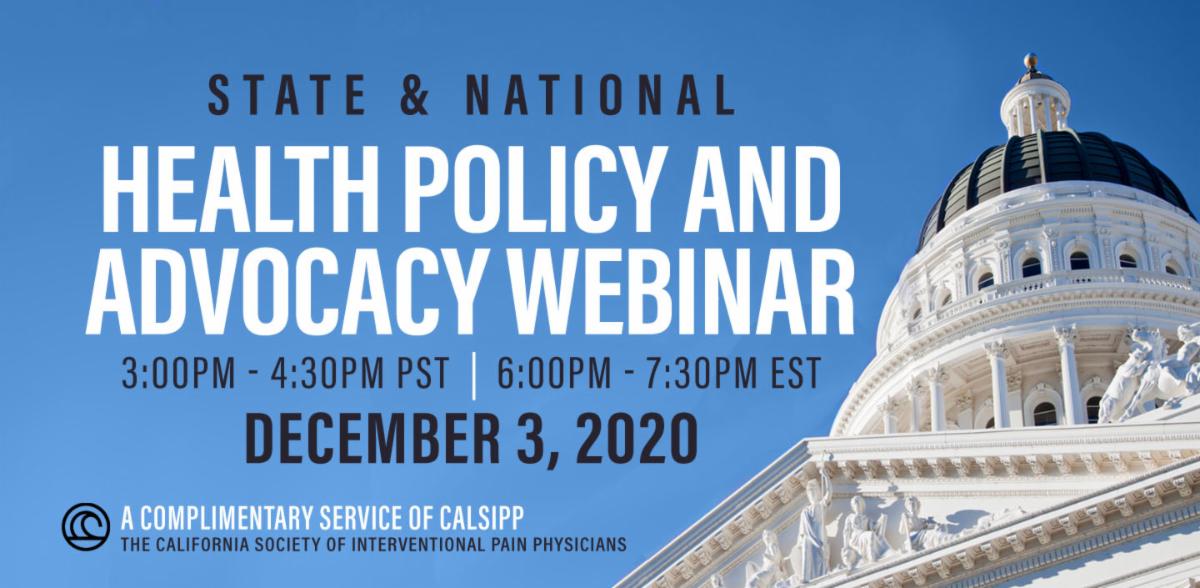
The California Society of Interventional Pain Physicians is providing a unique, townhall type webinar on health policy and advocacy of both state and national issues that are of interest to CALSIPP members as well as pain physicians across the country.
The webinar consists of two separate sessions, each with a moderator and three expert panelists on state and national issues. The webinar will be 90 minutes. The first session will be 30 minutes focused on issues in the state of California that may have an impact on pain physician's practices and patients. After a 10 minute break, the next 30 minute session will focus on larger national issues related to recent actions of the Center for Medicaid and Medicare Services (CMS), national coverages, as well as ongoing concerns regarding prescription medications and physician autonomy.
The webinar is intended to provide discussion and different perspectives from experts. Following each session there will be a brief question and answer period that will bring additional viewpoints from attendees. The objective of this webinar is to provide focus on healthcare policies and advocacy issues that are of interest to CALSIPP members and America's pain community.
|
|
Please join us for this complimentary webinar and join the
discussion on health policy and advocacy.
If you can't make the live webinar, you will be able to view the
recorded version any time you desire at no extra charge.
Register Today!
|
|
This live webinar and recorded version is brought to you free of charge by:
|
|
25131 Narbonne Avenue | PO Box 2072 | Lomita, California 90717-8777
|
|
|
|
|
|
|