LVTC Happenings!

A monthly report of events and resources for our passionate, growing local multisport community.


Sustainability


Welcome to this month's edition of the Las Vegas Triathlon Club newsletter, where we focus on the theme of *sustainability*. As triathletes, we often push our limits, but it's important to consider how to train and live sustainably, ensuring long-term success and health both in the sport and in life.


In the President's Corner, John Mercer emphasizes the importance of *sustainable training*. He highlights the balance of consistent effort with rest and recovery to avoid burnout and injuries. Similarly, Past President Shawna Glasser shares a personal story that underscores how triathlon is a long-term commitment that requires patience and sustainability in training.


In the Coaches Corner, Hilary Mauch offers practical tips on integrating sustainability into training routines, while Bob Gamble discusses the importance of prioritizing health to avoid injuries and stay active in the sport for the long haul.


Don't miss our member spotlights featuring Krista Rendon and Patrick Bowlds, and be sure to read about the Legacy Scholarship, which honors triathletes we've lost and supports new athletes.


By focusing on sustainability, we can enjoy the journey while ensuring our long-term success in triathlon and beyond.

Las Vegas Triathlon Club Events


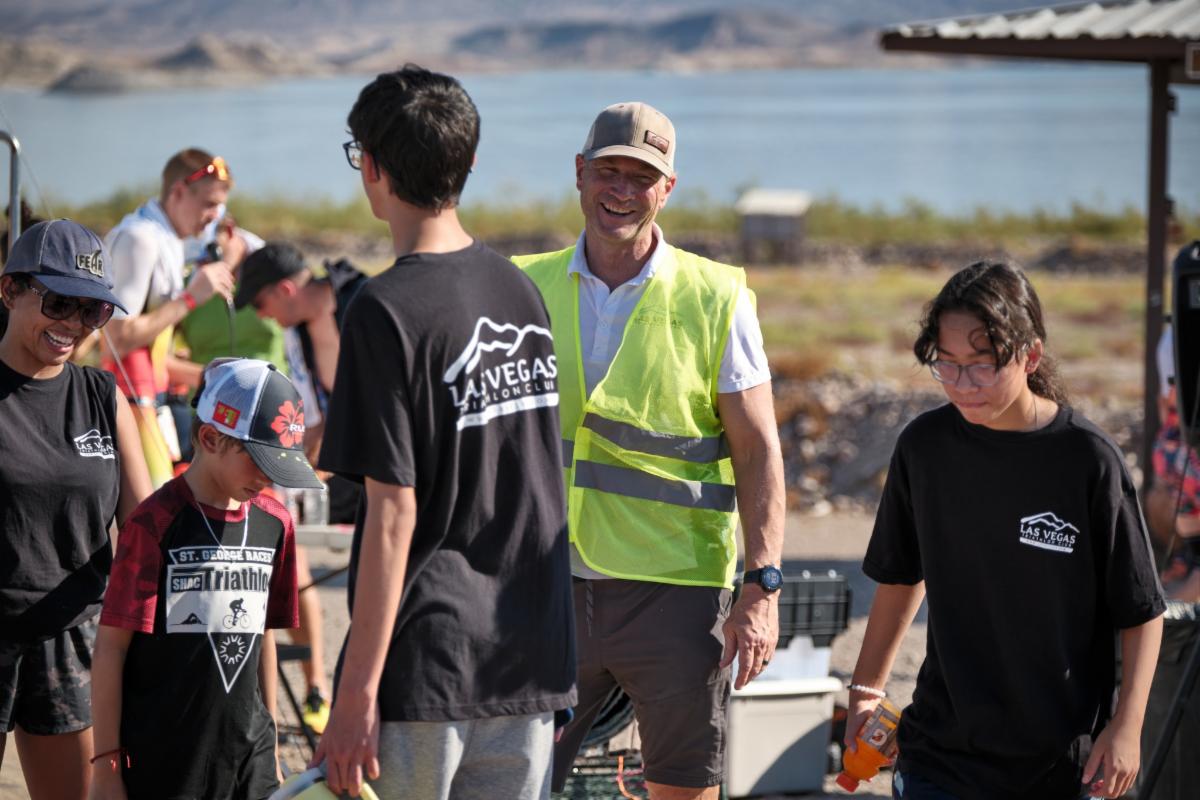
We've wrapped up our 2024 Club Events! We look forward to seeing you at next year's events! Continue to check our Facebook Group for other happenings in our endurance community.

4/14/24

Sunday

RESULTS

6/1/24

Saturday

RESULTS

7/14/24

Sunday

RESULTS

8/10/24

Saturday

RESULTS

The Las Vegas Triathlon Club Legacy Scholarship


On 12/10/20, five Las Vegas athletes were killed when an impaired driver ran into a group of cyclists. The athletes were Tom Trauger, Erin Ray, Aksoy Ahmet, Michael Murray, and Gerrard Nieva. These five athletes are endearingly referred to as TEAMG (Tom, Erin, Aksoy, Michael, and Gerrard).


Following their deaths, there has been an upswell of community support for the families and survivors directly affected. There has also been a renewed call for action to create a safer environment for our athletes to train here in the Greater Las Vegas Valley.


The purpose of the Las Vegas Triathlon Club Legacy Scholarship is to honor the legacy of TEAMG as well as any local triathletes who have been killed or injured as result of distracted driving. The Legacy Scholarship is designed to encourage involvement in triathlon by new athletes, youth athletes, and/or continuing athletes in special need.


More information about the scholarship can be found at this page.


The list of our Scholarship Awardees can be found at these pages:

2024 Winners

2023 Winners

2022 Winners


This scholarship continues thanks to a generous donation by an anonymous donor. 

Socials/Training Events/Education

We've wrapped up our 2024 Club Events!


  • 4/14/24: Sunday - Triathlon
  • RESULTS
  • 6/1/24: Saturday - Triathlon
  • RESULTS
  • 7/14/24: Sunday - Aquabike
  • RESULTS
  • 8/10/24: Saturday - Triathlon
  • RESULTS


Continue to check our Facebook Group for any additional get-togethers that may be happening, and for locals who are training in town or down at Lake Mead. Post your workouts!


Thanks everyone!

Past President


Keep It Sustainable


It reminds me of a story. When I was just starting the sport of triathlon, do you know what was the biggest sign to me that an athlete would burnout of triathlon and I would probably never see them again? If they did a full Ironman distance, from zero, in less than a year. It just isn’t “sustainable.” The story is, I was doing my first full, 5 years later. I was doing my race and I ended up running with this guy. He started triathlon 6 months prior and this was his first race, ever. Mile 3 of the run, he said we need to push our pace. I told him I enjoyed talking to him, but I was where I needed to be. I was at a “sustainable” pace. There was no reason to push my limits that far from the finish line. As I suspected, he blew up at mile 7 and had to quit the race.


Every bit of triathlon is about sustainability if you think about it. Can you keep asking the same thing of yourself everyday and keep answering, “Yes!” 


~Shawna Glasser

The New Triathlete


Err to the Side of Caution


If you look around at your fellow triathletes, you’d be hard pressed to find someone who isn’t injured, recovering, or sick. Why is this? Why are so many triathletes injured? It’s because of our goals, or rather, because of one specific goal that we blatantly overlook: staying healthy. 


We set time goals and finish position goals for our races. We set distance and volume goals for our training. But we completely overlook the one goal that is arguably the most important goal of all: staying healthy and injury-free. Think about it – NONE of our performance goals will ever be possible if we can’t train because of an injury or illness. And why do we get injured and sick? Because we sacrifice our health in pursuit of fitness; we prioritize the wrong goals, and this is particularly common among new triathletes.

I urge you to look hard at your goals and prioritize your health. What does this mean? What does it look like in practical reality? It means that when your training plan calls for three consecutive days of training, and you had a draining day at work or didn’t sleep well, you skip a day of training, eat a good meal and go to bed early. It means that when you are halfway through a training run and you get a “niggle” in your knee, that you don’t “press on” to complete the prescribed workout. It means that when you find yourself being irritable, tired and cranky, you recognize that you need to back off a little or take a break. Also consider the importance of consistency. Keep in mind that a few light workouts are much better than a killer workout that drains you.


No one ever says to themselves, “I’m on my way to getting sick or injured, so I’m going to keep going until it happens.” No, you simply overdo it until you find yourself sick or injured. So, I urge you to err to the side of caution in your training. You won’t lose fitness by skipping a day, but you will lose fitness if you need to take three weeks off for bed rest or rehab.


~Bob Gamble

LVTC Member Spotlight


Get to know our club members as our President sits down with the following members to talk about tris and life.


The Evidence-Based Triathlete


We are taking a little break … we’ll be back! In the meantime, enjoy these previous episodes:

Where in the World Has Our TRI Club Raced?


Check out the map below to see where our athletes have raced!

Prez Corner:


Sustainable Training


As triathletes, we're wired to push our limits, whether it's shaving off those extra seconds in a sprint or mastering the balance of strength and endurance in an Ironman. However, one of the most important lessons we can learn is the value of sustainable training. It's easy to fall into the trap of "more is better," but long-term success in triathlon comes from smart, balanced training that prioritizes longevity over quick gains.


Sustainable training means integrating consistency, rest, and recovery into your regimen. Training hard is only half the equation; recovery allows your body to adapt, grow stronger, and prevent injury. Prioritizing sleep, nutrition, and regular recovery sessions can keep you performing at your best, year after year. It’s not about how hard you can train this week—it's about how consistently you can train over the next few months and beyond.


This approach is particularly crucial as we transition through different phases of life. Work, family, and other commitments ebb and flow, but sustainable training is adaptable. Remember, triathlon should be adding value not only to your life, but others around you. A finisher medal or podium should not be pursued at the expense of family and friends. Whether you're in peak race season or juggling a busy work schedule, sustainable training helps you stay in the game without burning out and without burning relationship bridges.


The goal is simple: stay healthy, stay strong, and stay motivated. By training smarter—not harder—you'll set yourself up for success in both your next race and for many seasons to come.


Train smart and keep it sustainable!


~John Mercer

Coach's Corner:


Sustainability in Sport: Triathlon Training That Lasts


As triathletes, we’re no strangers to endurance. We push through long training sessions, tackle grueling races, and pride ourselves on being able to go the distance. But when we think of sustainability, we often think about the environment—not our training practices.


Sustainability in triathlon isn’t just about going green; it’s about training smarter, not harder, to ensure long-term success and enjoyment in the sport. Whether you’re aiming for your first sprint triathlon or gearing up for a full Ironman, incorporating sustainable practices into your training can prevent burnout, reduce injury risk, and ensure you stay in the game for years to come. Here are a few tips to help you integrate sustainability into your triathlon training.


1. Prioritize Quality Over Quantity


The notion that “more is better” often leads triathletes to pile on excessive volume. However, sustainable training means focusing on quality workouts rather than sheer quantity. Too much volume without proper recovery can lead to burnout, injury, or lackluster results.


Instead, make sure each session has a purpose. If it’s an endurance ride, focus on maintaining steady power. If it’s a speed workout, ensure you’re pushing the limits on intensity, but not at the expense of form. Remember: consistent, focused training over time will get you further than sporadic spurts of over-training.


Tip:

Plan your weekly workouts with intention. Try to avoid incorporating “junk miles”.


2. Cross-Train for a Balanced Body


Sustainable triathlon training involves building a body that’s capable of handling the diverse demands of swimming, biking, and running. This requires more than just focusing on the three disciplines; it’s about creating balance through cross-training.


Incorporating activities like strength training and yoga can help prevent the overuse injuries that come with repetitive motion. Cross-training challenges different muscles, helps correct imbalances, and keeps you mentally fresh.


Tip:

Integrate strength training twice a week, focusing on core stability and functional movements. Yoga or Pilates can also improve flexibility and mental clarity—key to sustaining long-term training.


3. Practice Efficient Recovery


Recovery is where the magic happens, allowing your body to rebuild stronger and adapt to the training stress. Sustainable training prioritizes recovery just as much as the workouts themselves. A strong recovery strategy includes active rest days, proper sleep, nutrition, and hydration.


Tip:

Incorporate taking a rest day. Yes, a full day off from training. Ensure you’re getting adequate sleep—7-9 hours—especially after hard sessions, and stay on top of post-workout nutrition. Consider foam rolling or massage therapy to enhance muscle recovery.


4. Listen to Your Body


One of the most sustainable habits any triathlete can develop is the ability to listen to their body. Ignoring aches and pains, pushing through fatigue, or overriding your body’s signals can lead to injury or burnout. Sustainable training is about recognizing when to back off and understanding that rest is an important part of the process.


Tip:

Develop a habit of body awareness. Track how you feel on a daily basis—both mentally and physically. If your body is consistently feeling drained, it’s a sign to dial back the intensity and allow time to recover.


5. Set Long-Term Goals


Sustainability in triathlon is not just about staying healthy—it’s about setting realistic, long-term goals. Chasing big race goals in quick succession without allowing time for proper development is a recipe for burnout. Sustainable triathletes plan with the future in mind.


Tip:

Map out a long-term race calendar that includes off-seasons for rest and reflection. Don’t be afraid to adjust your goals based on how you’re feeling or progressing—remember, the journey is just as important as the destination.


Sustainable training is all about taking care of yourself—physically and mentally—so you can enjoy triathlon for the long term. Prioritize recovery, listen to your body, and remember that every training session doesn’t have to be a race. By making sustainable choices, you’ll not only improve your performance but also your longevity in the sport.


~Hilary Mauch

Have you met these Coaches?


Triathlon race season is here. Do you have a coach? Are you looking for one? Well, the Las Vegas Triathlon Club is going to try to help make some connections.


Earlier this year, we sent out a google form to try to capture our local coaching expertise. We had a number of coaches (all are members of Las Vegas Triathlon Club) respond and we have featured them on this webpage:


Las Vegas Triathlon Club Coaches


We are going to continue to highlight coaches on our web page – if you would like to be part of that, please fill out this form.

Yoshi
 

Las Vegas Triathlon Club http://www.lvtriclub.com


Editor: Quyen Luu

 
Facebook  Instagram