e-Newsletter | June 10, 2022
|
|
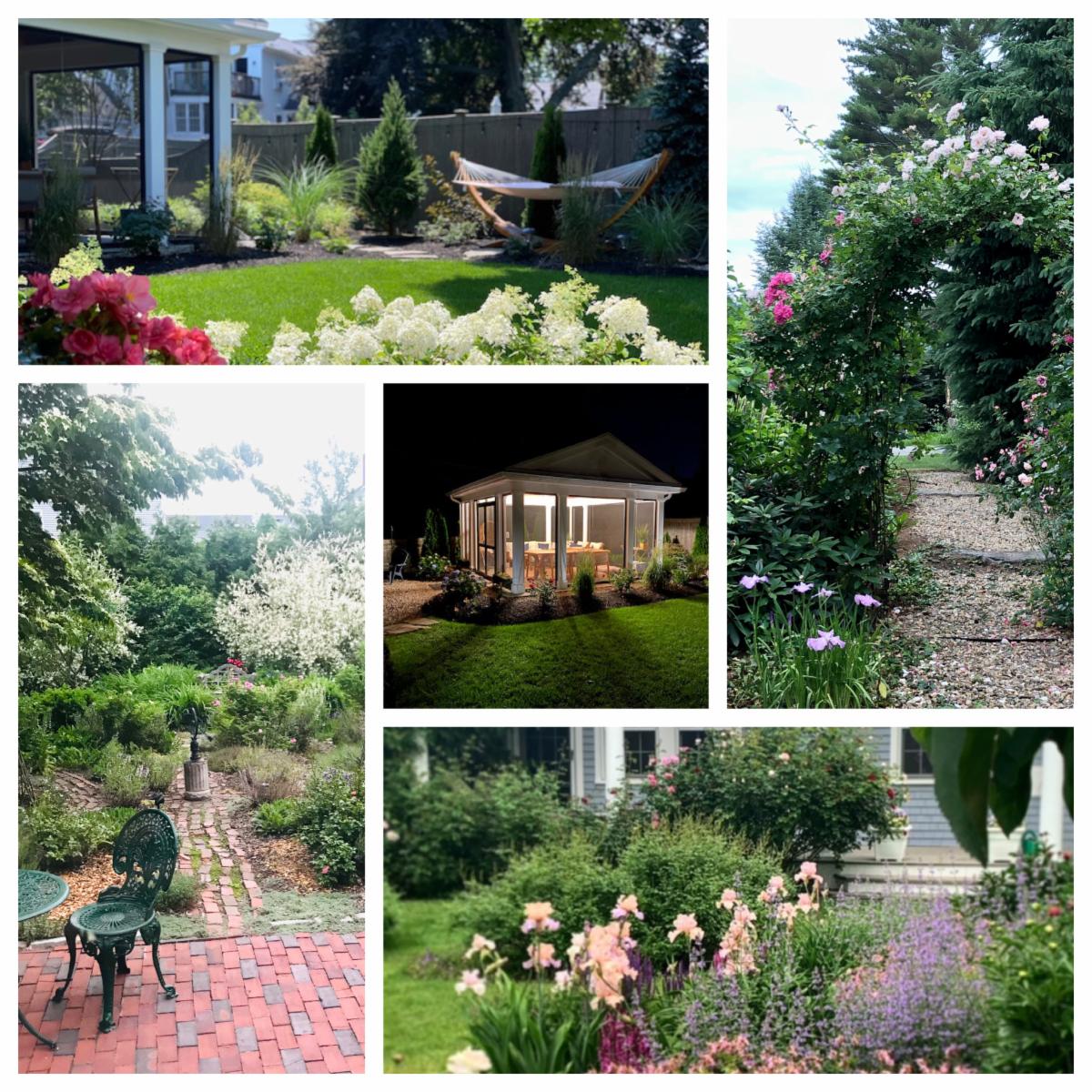
Photos from just some of our 2022 gardens
43rd Annual Garden Tour - this weekend!
June 11 & 12, 2022, 10am-4pm
Come join us - our 43rd year! Tickets still available! Buy tickets in advance or come to 98 High Street for day-of tickets.
A great way to spend the day or the weekend - your ticket is good for both days. Visit 11 separate gardens and get ideas for your own. The gardens are in Newbury, West Newbury and Newburyport. With thanks to our sponsors, Bentley's Real Estate, New England Home Magazine, and Harborside Printing. $25 for museum members, $35 general admission. Or become a member and get two tickets for the price of one ($65 total).
|
|
Twilight Music in the Garden - Saturday, June 11, 7pm
Round out the Garden Tour weekend with this special offering. Join us for an exclusive after-hours musical event in the Cushing House Garden as we welcome mezzo-soprano Kathryn Tolley and members of Theater in the Open to this magical space. Enjoy a unique program of arias and art songs celebrating the natural world by Grieg, Mozart, Handel, and Hahn. Sip a glass of wine or seltzer or a local brew, courtesy of Ipswich Ale Brewery, accompanied by a selection of fine desserts, and spend the evening surrounded by music, poetry, and history in an idyllic setting.
This event is a fundraiser for the Museum of Old Newbury and Theater in the Open. Tickets are $35 members/$45 non-members and include dessert and two drink tickets.
|
|
More upcoming events (details on our web site):
|
|
Woman on the MOON
...a blog by Bethany Groff Dorau
|
|
Hidden History: Newburyport's Swedish Connection
My grandfather was born in Boston in 1909, the firstborn son of Irish parents (with a long stayover in Maritime Canada). When he was five years old, his father died, leaving his mother with four children. If you did that math, my grandfather was five years old and the ELDEST of four. Unable to support her young family, his mother put her children in a Catholic orphanage and then took them back, one at a time, starting with the youngest.
This is my grandfather’s story, and it is (mostly) true. What is certainly true is that after a brutal childhood – he was left-handed and was particularly targeted for this “sin” - he was sent off to work on a South Shore farm and became Swedish.
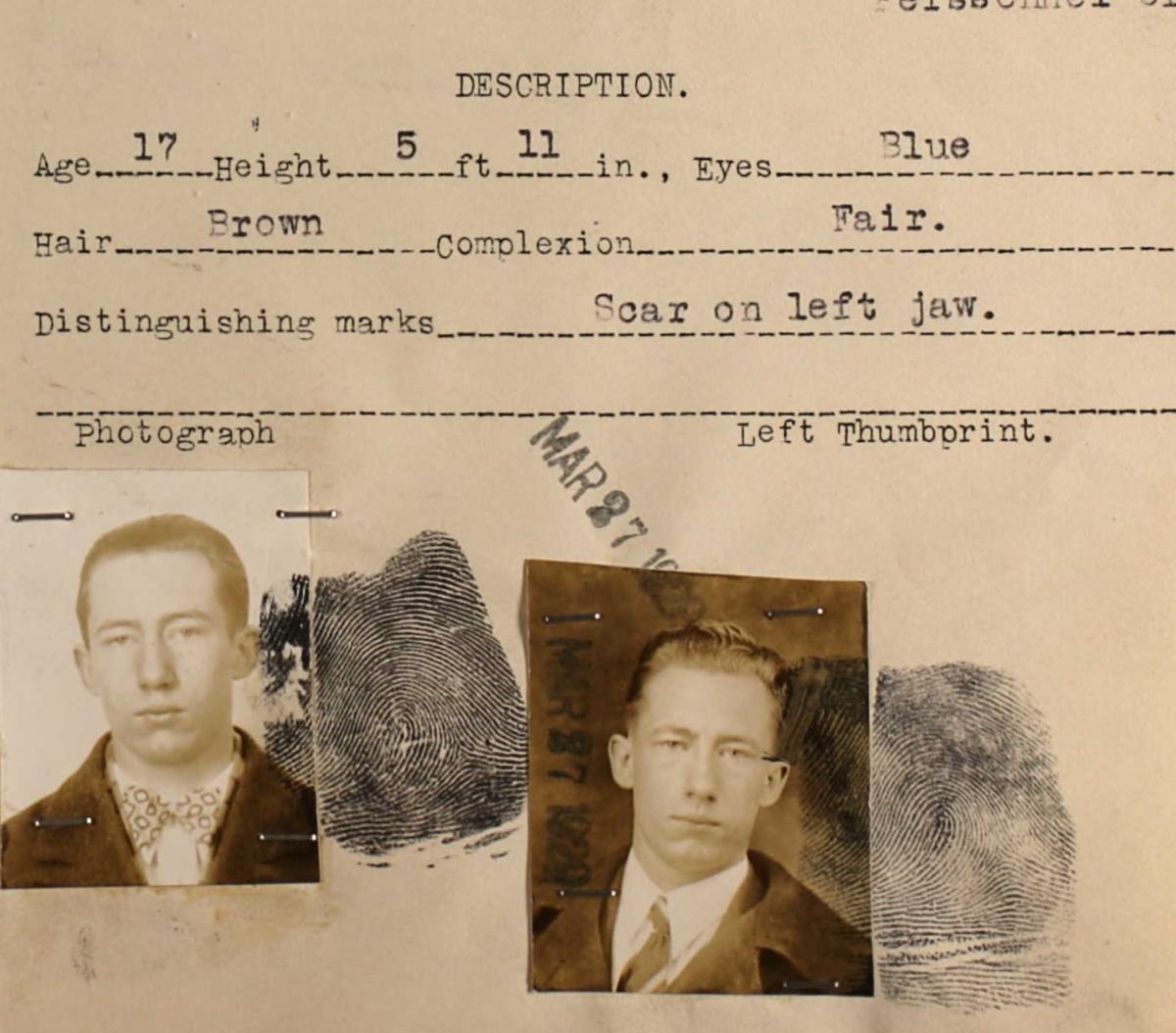
This is a story for another time, but let me just say that having determined that the life of a Swede was preferable to the life of a semi-orphaned Irish lad, my grandfather stole the identity of a recently deceased Swedish boy, and 13-year-old John Muzrall became 16-year-old John Erickson and ran away to New York City and hopped a ship. He spoke Swedish, lived with a Swedish family, the Dahlgrens, in Brooklyn, and was even elected as a spokesperson for a Swedish labor union. For four years, my grandfather was Swedish.
|
|
John Muzrall’s application for certification of identity in 1927, approved in 1929.
John Erickson was finally laid to rest when John Muzrall was 17 and shipped out on the Leviathan under his true name and age as a “messman”, but for the rest of his life he thought of himself as a bit more Swedish than Irish. My grandfather died at 91, here in Newburyport. In his final days, he slipped in and out of consciousness, speaking only Swedish.
Such is the shifting nature of identity.
When Swedish artist Tina Rawson, a friend from years ago, stopped by the Museum of Old Newbury several months ago to check out my new(ish) digs, I thought of my grandfather, the fake Swede. At one point in the conversation, she made a comment to the effect that, historically, she did not believe there was a significant Swedish population in Newburyport. Being the obstinate history nerd that I am, I set out to prove her wrong.
When I was writing my second book, A Newburyport Marine in World War I: The Life and Legacy of Eben Bradbury, I came upon a startling statistic. Almost one-third of WWI draft registrants in 1917-1918 in Newburyport were foreign-born. One third. This, to me, speaks to the ethnic diversity of our fair city, at least in the past, and so I was reasonably sure I would come across some Swedes.
As you may imagine, this being a port town, there were Swedish connections long before Swedish people begin to appear in Newburyport census records as permanent residents.
In 1850, Joanna Jackson, 49, is listed as the wife of Nathaniel Jackson, surveyor of the port. This is the first census in which Sweden appears as the country of origin for Newburyport residents in significant numbers. Along with Joanna, Francis C Stromberg plied his trade as a gilder, Charles Johnson as a painter, Augustus Hanson as an able seaman, Lewis Stanson, mariner, and more. With their families, they constituted about a dozen residents.
The Swedish population of Newburyport seems to have grown steadily until it numbered over 30 in 1900. Keep in mind that this number does NOT include the children of Swedish parents, and so the community was significantly larger. Deeper research will reveal a network of business, neighborhood, and family networks that will shed further light on how these people lived and worked in this community, but knowing that they were here, that they often came over as adults, and that their community seems to have shifted from maritime workers and fine artists to factory and domestic labor is also an interesting part of the story.
|
|
The 1910 census includes a “real” John Erickson and his family, employed in the comb factory and living on Bromfield court.
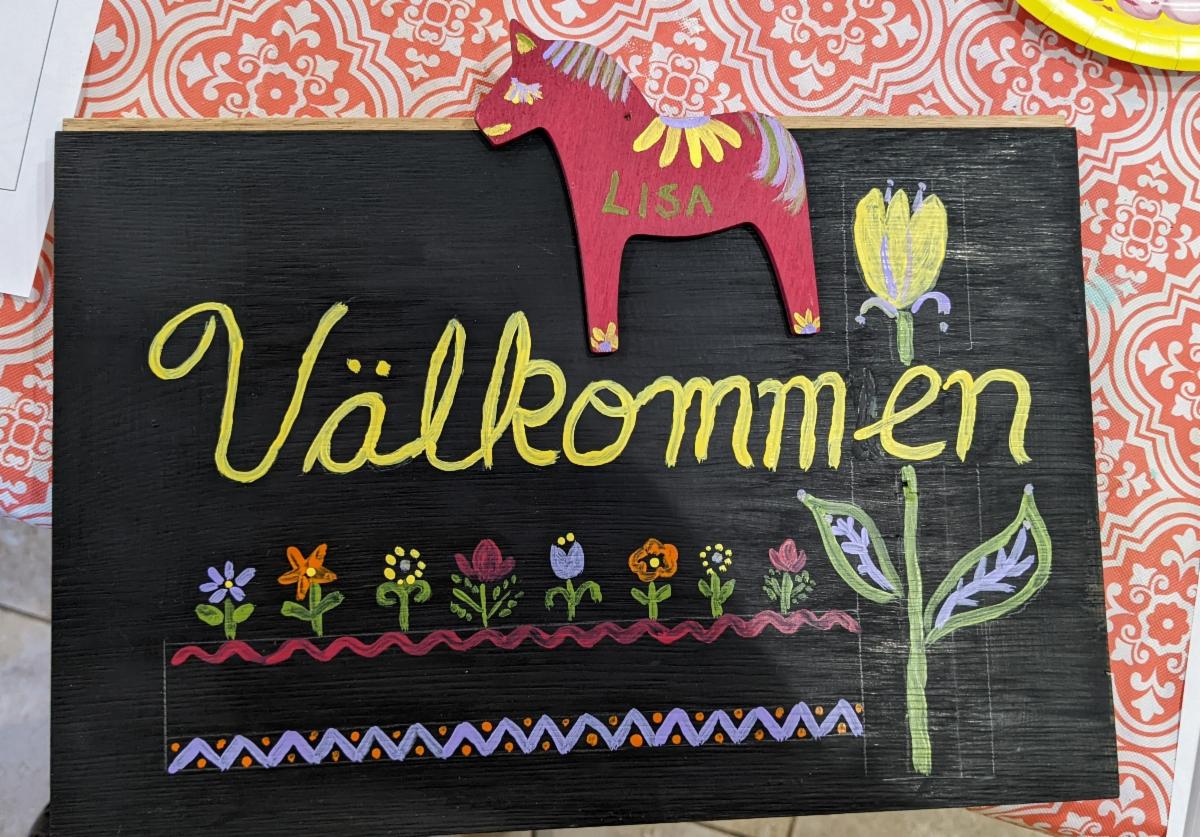
Whether you have a Swedish connection, true or invented, please join us on June 25 for Midsummer Magic: Creating Swedish Folk Art in the Garden. We hope to explore more of this community’s immensely rich history in the future, and creating art seems like an excellent way to start. I will be painting for my grandfather, and for his Brooklyn substitute mother, Naomi Dahlgren, who let him live as a Swede. She had secrets of her own…but that really is a story for another time.
|
|
Whether you're Swedish or not, you are welcome to make some art in our garden on June 25! |
|
Sunday, June 12, 2022, 4pm: Reflections on 125 Years of Rich Jewish History in Newburyport
Moderated by Anna Smulowitz and Joel Grossman. Following the event, join us for refreshments, a display of community memorabilia and a photographic slide show. This event will be in-person and live streamed, registration is requested. Please register for the 6/12 event here. The event will be held at Congregation Ahavas Achim, 53½ Washington Street, Newburyport, MA.
|
|
June 18 - Newbury Town Day
Events all day and all over Newbury. Highlights include Tours of the First Settlers Burying Ground (11am - 3pm) and Open Studios on the Lower Green, where Margaret Russell, a Byfield weaver, will be demonstrating her craft that was shared by her Newbury first settler ancestor, Francis Plummer. This is taking place with a dozen Newbury artists as part of Newbury Town Day. More information at https://www.newburytownday.com/events
|
|
Something is Always Cooking at the Museum |
|
Icy Melon Soup
As the weather gets hot, this refreshing soup will hit the spot!
1 lg. ripe cantaloupe or other melon - about 2 pounds, peeled, seeded and diced
Juice of 2 limes
1/2 c. orange juice
1 t. fresh ginger
1/2 c. fruity white wine (optional)
1/2 c. creme fraiche
4 thin slices of lime
Place melon, juices, ginger and wine in food processor fitted with a blade. Blend until smoother. If mixture seems too thick, add more lime and orange juice. Transfer to a large bowl and chill 3-4 hours. Ladle soup into bowls and garnish with creme fraiche and slices of lime. Serves 4. From Ruth Yesair and found in "Cushing House Cooks."
|
|
Click on image above to play the puzzle |
|
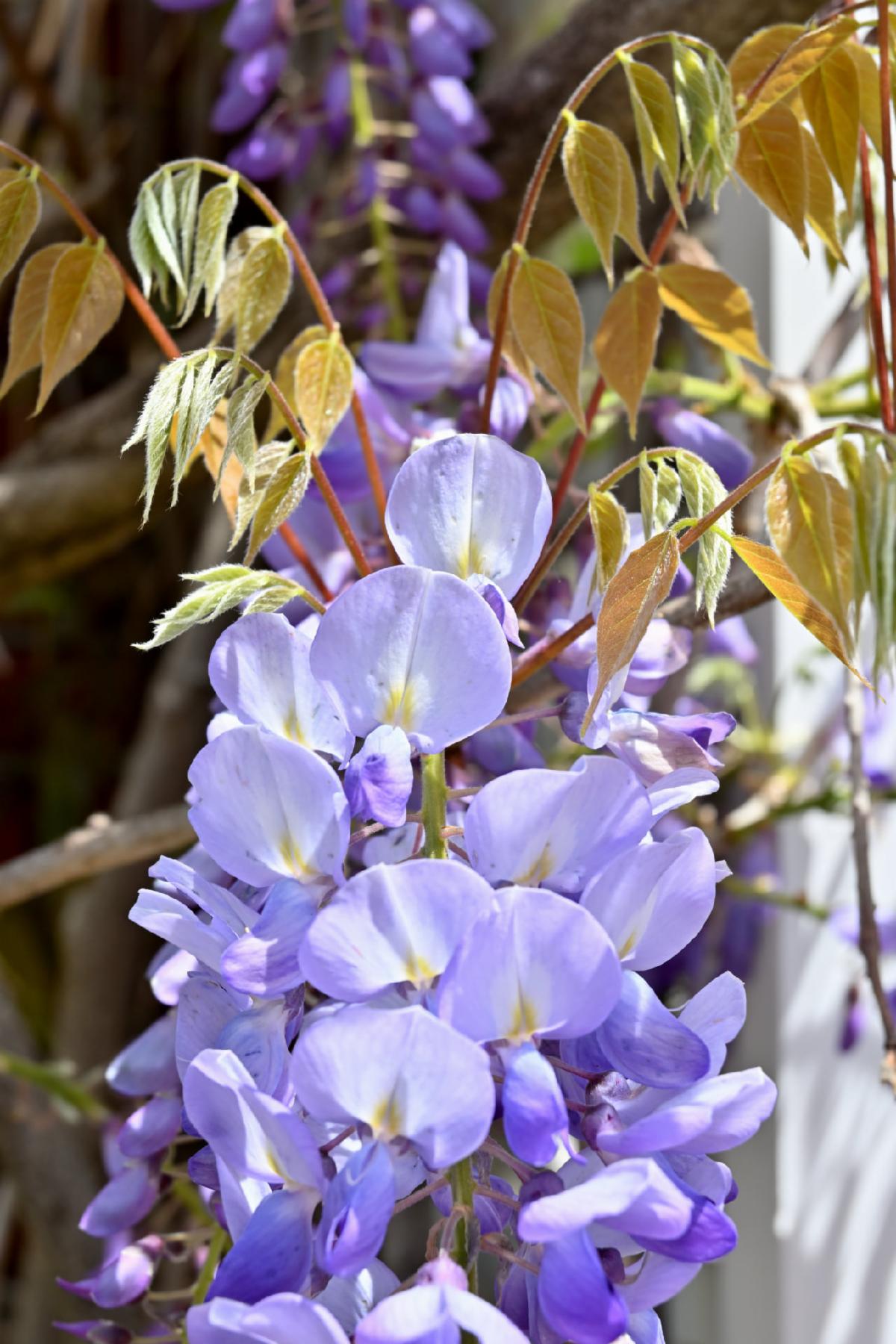
Wisteria
Cushing House doorway
Museum of Old Newbury
Wisteria was introduced to the West from Japan in 1830 as an ornamental. In the early years, only the seeds were exported from China and Japan. It is from these seeds that the first plants were grown, and from that original stock many contemporary plants descend. Historically, Wisteria symbolizes long-life and immortality. Wisteria can live up to 100 years or even older. Wisteria is hardy enough to be found in New England, providing a luxurious element to porches, gazebos, and garden walls. Seen here is the wisteria vine that graces the entrance to the Cushing House. Click the image above to play the puzzle.
|
|
Museum e-Newsletter made possible through the
generosity of our sponsors:
|
|
|
Museum of Old Newbury
98 High Street
Newburyport, MA 01950
978-462-2681
|
|
|
|
|
|
|
|