Rail Workers Weekly News Digest
Number 20 - May 19th, 2020
|
|
Below is a series of articles compiled over the previous week.
They are of interest to railroad workers.
|
|
Article 1 -
RAIL SAFETY NEWS
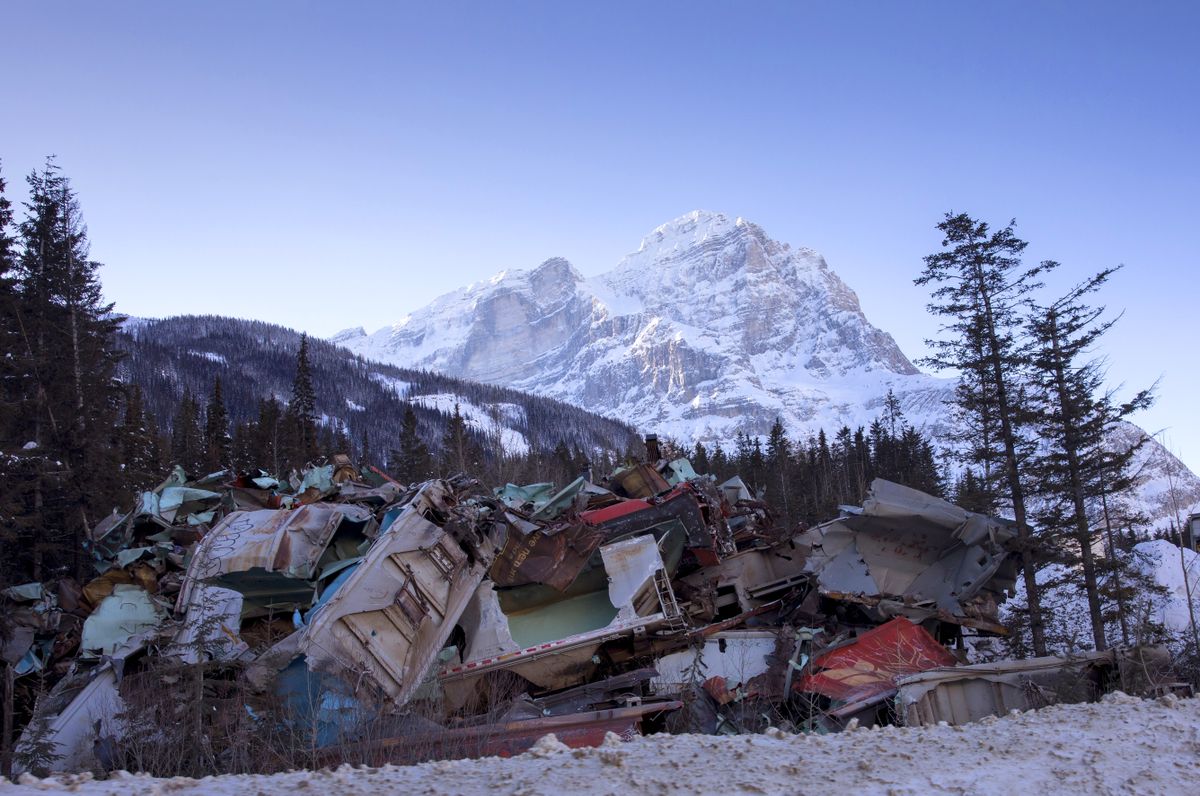
TSB Urges New Way to Test Train Brakes; Probe into Fatal Crash Continues
(Editor's Note: This represents potentially new evidence in the rail carrier's culpability in the deaths of the three crew members from the 2019 runaway train wreck).
CALGARY, Canada — The Transportation Safety Board (TSB) says there should be a better way of determining whether a train’s brakes are working as they should.
The agency wrote to Transport Canada last month asking what it intends to do about shortcomings with the current method for testing air brakes.
The agency says that train passed the No. 1 brake test in Calgary before it set out on the fatal trip.
The No. 1 test is meant to verify that at least 95 per cent of a train’s air brakes are operative but does not physically measure their force or effect.
The safety board says research comparing brake testing methods, along with concerns flagged by Canadian Pacific employees before the Field derailment, suggest the No. 1 brake test is not reliable.
|
|
Article 2 -
LEGISLATIVE NEWS
Call Your legislator: Protect the Rail Worker Provisions in the HEROES Act
HEROES Act legislation progressing through the U.S. House of Representatives includes many provisions that would provide substantive support to railroaders and all working people.
This is a significant accomplishment. We will need to increase pressure on lawmakers to pass the legislation in the House, especially the provisions that provide substantive support to railroaders and all working people. We ask that you call and email your elected representatives and implore them to keep railroaders and working people protections foremost and prominent in any stimulus legislation. You can call your Congressional Representative at 855-300-3836 or email at this link:
https://bit.ly/message-EWBOR
Below are a list of provisions that we have worked diligently on to be included in forthcoming law.
For Rail, the legislation also provides the following:
Sec._1_. Amtrak COVID-19 Requirements. This provision provides that, for the duration of the COVID- 19 pandemic, Amtrak must require passengers and employees to wear masks or protective face coverings while onboard an Amtrak train. Amtrak must also provide masks or protective face coverings, gloves, hand sanitizer, and wipes to all employees whose job responsibilities include passenger interaction. It also ensures that Amtrak trains, stations, and enclosed facilities are frequently cleaned and disinfected, and that employees who do this work are provided masks or protective face coverings and gloves.
Sec._2_. Additional Enhanced Benefits under the Railroad Unemployment Insurance Act. For railroad workers receiving unemployment benefits under the Railroad Unemployment Insurance Act, this provision would extend the temporary recovery benefit that provides $1,200 every two weeks (per registration period) in addition to regular benefits, creating parity for railroad workers.
|
|
Article 3 -
FREIGHT TRAFFIC NEWS
U.S. Freight Railroads Log Another Dramatic Decline in Traffic
U.S. freight-rail traffic plunged 22.1 percent to 412,549 carloads and intermodal units during the week ending May 9 compared with the same week a year ago,
Association of American Railroads
(AAR) data shows.
Railroads logged 185,144 carloads, down 28.4 percent, and 227,405 containers and trailers, down 16 percent. None of the 10 carload commodity groups that AAR tracks on a weekly basis posted increases.
Among the commodity group decreases posted during the week, coal was down 34,111 carloads to 46,515; motor vehicles and parts were down 14,876 carloads to 2,108; and metallic ores and metals were down 7,513 carloads to 13,624.
Last week was similar to recent weeks in that the vast majority of rail traffic categories logged large year-over-year volume declines, said AAR Senior Vice President John Gray in a press release.
"As in the prior two weeks, autos, coal and steel saw especially big declines in the last week," Gray said. "In terms of total carloads, last week was the second lowest since our data began in 1988."
Railroads have experience weathering difficult times and will get through this one, he said.
"That said, they're hopeful that the efforts now underway to find effective ways to combat the pandemic will bear fruit and our economy can first recover and then return to growth mode," Gray added.
|
|
Article 4 -
OIL BY RAIL NEWS
PHMSA Preempts Washington State's Crude-by-Rail Law
(Editor's Note: Like the FRA did with the states' two-person crew laws, the Trump PHMSA has now done in the case of this Washington state law. Federal "preemption".)
PHMSA announced federal hazardous material transportation law preempts Washington state's vapor pressure requirement for transportation of crude by rail, agency officials said in a press release.
A study conducted by Sandia National Laboratories concluded that imposing vapor press limits would not reduce the risks of transporting crude oil and other flammable liquids by rail, PHMSA officials said.
On April 28, the U.S. Department of Energy submitted its report on the Sandia lab's "Crude Oil Characterization Research Study" to Congress. U.S. Sens. John Hoeven and Kevin Cramer and U.S. Rep. Kelly Armstrong, all Republicans representing North Dakota, previously made the case to PHMSA and U.S. Transportation Secretary Elaine Chao for preempting Washington's law. They said the law would effectively block Pacific Northwest refineries as a destination for North Dakota Bakken crude. They also wrote to Washington Gov. Jay Inslee asking him to veto the law, claiming it lacked a scientific basis or solid legal foundation.
|
|
Article 5 -
CORPORATE NEWS
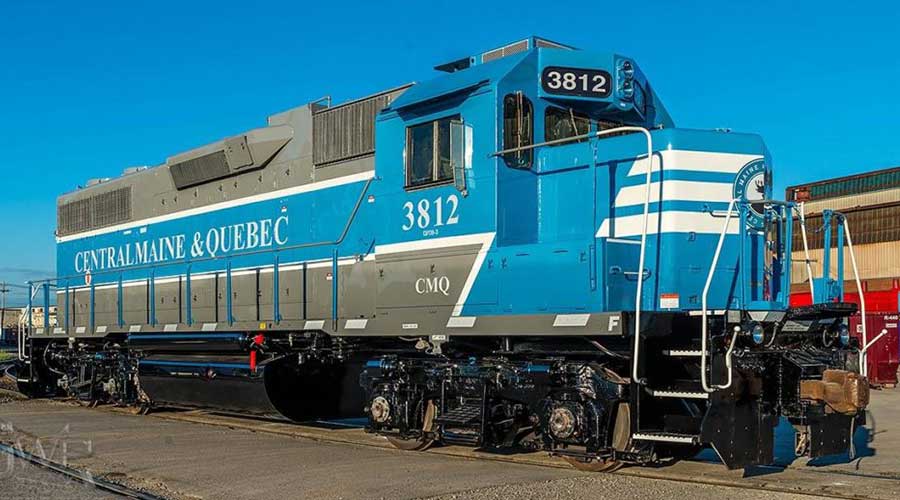
STB Approves CP Acquisition of Central Maine & Quebec
(Editor's Note: This railroad was made up mostly - at one time - of CP trackage. The Class One spun it off a generation ago to union buster Ed Burkhart and the MM&A railroad, bankrupted after the infamous Lac-Megantic runaway oil train disaster. Now, CP has re-amalgamated this trackage into its empire, something this Class One - and others - have done in recent years with properties that they had previously cast to the wolves).
The U.S.
Surface Transportation Board
(STB) earlier this month approved
Canadian Pacific's
acquisition, through subsidiary Soo Line Corp., of Central Maine & Quebec Railway US Inc. (CMQR US) from Fortress Transportation and Infrastructure Investors LLC.
The
STB decision
, made on May 1 and issued May 4, is subject to standard employee protective conditions.
Initially, the STB determined its decision would take effect June 18. However, CP/Soo Line officials asked the board to clarify that date because the company initially planned to integrate the railroads on June 3. Delaying the effective date to June 18 would complicate those transition plans, they said.
In response, the board on May 8 issued a separate ruling that states its approval of the acquisition is effective June 3.
CP announced Dec. 30, 2019
, that it completed the acquisition subject to STB approval. The acquisition provides CP customers with "seamless, safe and efficient access" to ports at Searsport, Maine, and to Saint John, New Brunswick, via Eastern Maine Railway Co. and New Brunswick Southern Railway, CP officials said at the time.
|
|
Article 6 -
SHORTLINE NEWS
Short-line Railroaders’ Views Vary on How PSR has Impacted their Operations
The 603 short lines operating in the United States play a critical role in the nation’s freight transportation network. They operate over 47,500 route miles — or 29 percent of the U.S. freight-rail system — and move one in five carloads annually, according to the
American Short Line and Regional Railroad Association
(ASLRRA).
They work together with Class Is to serve shippers, often providing the first or last mile of service for a shipment set for a longer journey. For example, 48 percent of freight-rail traffic is transferred from a Class I to a short line for final delivery; 9 percent is moved solely on a short line or regional; and 10 percent is moved from one Class I to another by a smaller railroad, according to the ASLRRA.
With a majority of North American Class Is adopting precision scheduled railroading (PSR) operations of late, the question arises: How has the PSR implementation trickled down to impact the short line industry? Has the spread of PSR been a good or bad development for short lines’ business?
Progressive Railroading
in February and early March reached out to several short-line railroaders to get their perspective on dealing with the new operating strategy. The upshot? Although PSR has the potential for improving freight-rail efficiency, it’s impact on short lines so far has been mixed.
“There are pluses, minuses and unknowns,” says Chuck Baker, president of the ASLRRA. “On the plus side, ignoring the initial turbulence when this started a few years ago with the rough
CSX
summer, it’s unquestionable at this point that the network is operating smoother, faster and more efficiently.”
|
|
Article 7 -
TRANSIT NEWS
Transit Asking for Big Money in Next Federal Stimulus Bill
On the same day House Speaker Nancy Pelosi introduced the Democrats’ next federal stimulus bill, called the Health and Economic Recovery Omnibus Emergency Solutions Act, or HEROES Act, leaders in the transit industry were calling for more help.
Five transit officials are asking federal lawmakers to make sure to include at least $33 billion for public transportation in the next federal stimulus bill. New York Metropolitan Transportation Authority (MTA) CEO Pat Foye, NJ Transit CEO Kevin Corbett, Bay Area Rapid Transit (BART) General Manager Bob Powers, Southeastern Pennsylvania Transportation Authority General Manager Leslie Richards and Metropolitan Atlanta Rapid Transit Authority (MARTA) CEO Jeffrey Parker made the financial plea during a conference call on May 12.
Foye said the federal government must recognize the ongoing emergency and the vital role of transit infrastructures as economic drivers, but also as agencies that transport first responders and essential workers during the pandemic. The MTA CEO added that the COVID-19 pandemic is a national disaster, one that requires a continued national response.
The MTA wants $3.9 billion in additional stimulus money, which should help the agency through 2020. Foye estimates MTA will need $10.4 billion to cover projected deficits over the next two years. New York City subway ridership has dropped 92 percent since March, while the Long Island Rail Road has experience a 97 percent decline.
|
|
Article 8 -
WORKERS DEFENSE NEWS
Judge Reinstates Charges in Deadly Philadelphia Amtrak 188 Crash
(Editor's Note: This represents at least the third attempt by Pennsylvania since the crash 5 years ago to overturn lower court rulings which had previously dismissed the case. RWU continues to stand behind this besigned rail worker).
PHILADELPHIA -- A judge has reinstated all charges brought against an Amtrak engineer for his role in a high-speed derailment in Philadelphia that killed eight people.
The ruling Thursday by Superior Court Judge Victor Stabile overturns a lower court's decision last July to dismiss the involuntary manslaughter and reckless endangerment charges against Brandon Bostian. His lawyer, Brian McMonagle, has argued that any mistakes Bostian made did not rise to the level of a crime.
Ruling on an appeal brought by the state attorney general's office, Stabile found the dismissal was based on fact-finding that should happen in a trial, a decision that McMonagle said would be appealed. Stabile said the lower court's role was only to determine whether the state presented enough evidence to warrant a trial, and prosecutors met that burden, he ruled.
The derailment happened in May 2015, when the New York-bound train jumped the track as it rounded a curve at more than twice the 50 mph (80 kph) speed limit.
National Transportation Safety Board investigators concluded Bostian lost his bearings while distracted by radio chatter about a nearby train that had been struck by a rock. They found no evidence he was impaired or was using a cellphone.
The case against Bostian has seen a series of reversals of prosecutors' or judges' decisions that the engineer should not be held criminally culpable for what happened that night.
|
|
|
|
|
|
|