Weekly Digest Number 45 - November 8th, 2022 |
|
Welcome to the RWU Rail & Labor News! This news bulletin is produced and emailed out each Tuesday morning. We hope you find each week's news and information useful. If so, please share with co-workers, friends, and colleagues. If you like, you can sign them up to get all the news from RWU HERE. Or forward them the link. Note: If you read over this news bulletin each week, you will be sure to never miss the important news of what is going on in the railroad world from a worker's perspective!
|
|
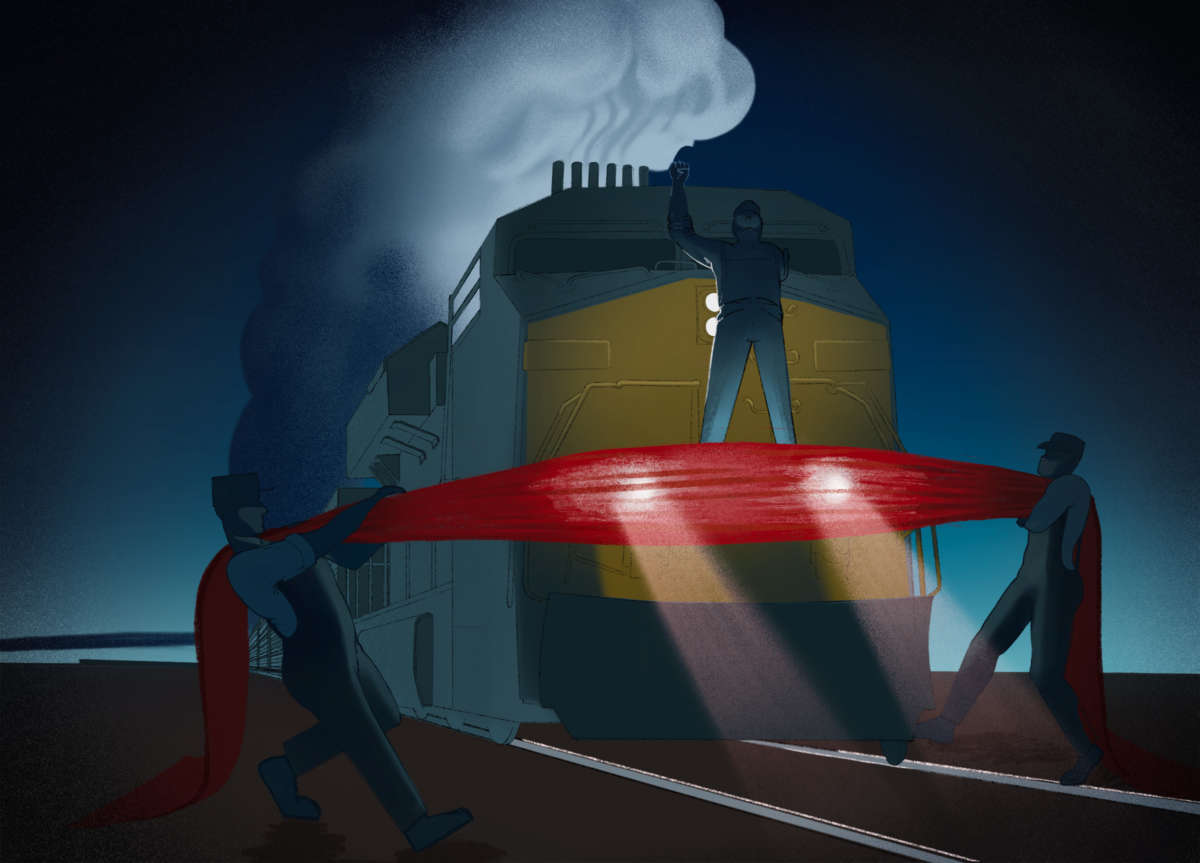
(Editor's Note: If Walsh wants a deal and wishes to avoid a strike, then the pressure needs to be ramped up on the Class One carriers to do the right thing. If there is a national rail shutdown, the responsibility for this lies squarely at the doorstep of the rail carriers, not the workforce.) |
|
Labor Secretary Expects Congress to Block Rail Strike
Walsh tells CNN he still wants unions, railroads to negotiate a deal
|
|
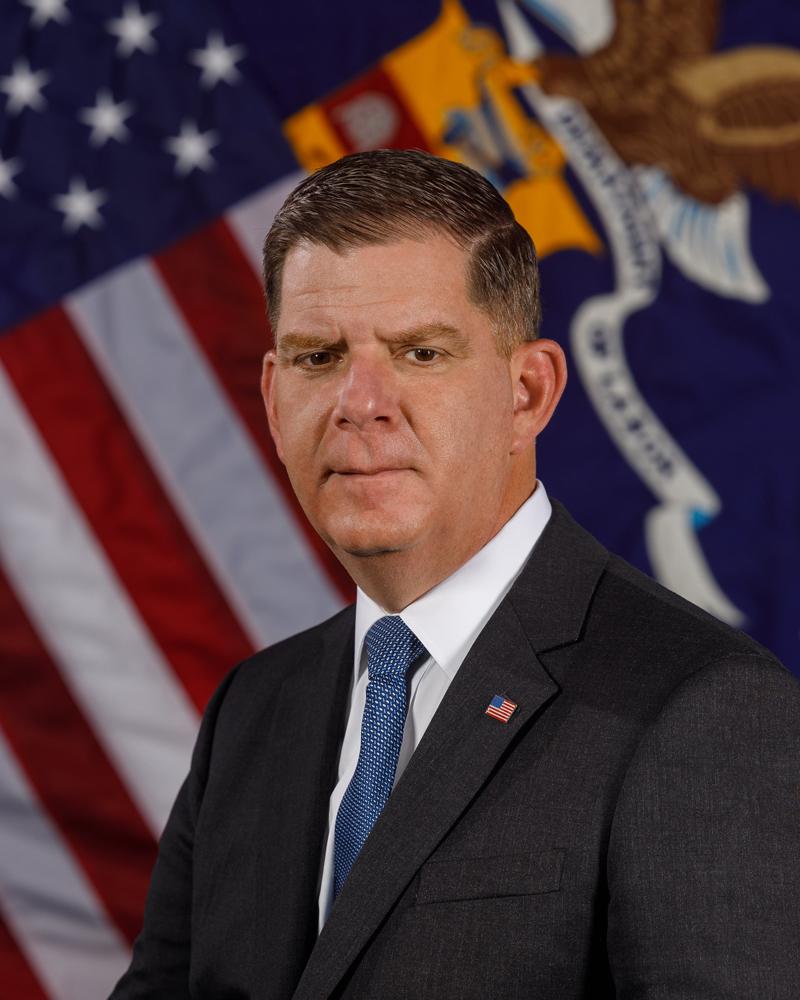
NEW YORK — U.S. Secretary of Labor Marty Walsh, credited by unions with a key role in the tentative agreement that averted a railroad strike in September, says he expects Congress will act to block a possible strike later this month.
Walsh made his comments on Friday to CNN, prior to the latest vote ratifying a national rail labor contract. The International Association of Machinists and Aerospace Workers District 19, which represents 4,900 rail worker, on Saturday announced it had approved a tentative deal by a 52%-48% margin [see “Machinists narrowly ratify …,” Trains News Wire, Nov. 5, 2022]
Just 52% of voters approved the agreement, after the union’s rank and file had turned down a previous deal.
The Brotherhood of Maintenance of Way Employes Division and Brotherhood of Railroad Signalmen have turned down tentative agreements, with the BMWED set to strike as soon as Nov. 19.
Walsh said his goal is to “get those two unions back at the table with companies and get this thing done,” and that a negotiated settlement is the best possible outcome. But if the two sides don’t reach an agreement, he said, “Congress will have to take action to avert a strike in our country.”
In response to Walsh’s statement, the union told CNN, “Congress should not have to intervene. The railroads should provide paid sick leave to its employees. They have the money to do it, and it literally would cost them a penny of every dollar of record profits to provide it. It’s only 2% of what CSX, NS, and UP spent so far this year in stock buybacks. It’s literally nothing to them, yet they refuse to provide it.”
|
|
(Editor's Note: Even though the TA "Take 2" was ratified, one cannot help but wonder how many of those YES votes were from A - workers who want the backpay and plan to then retire/quit; B - workers who feel it is hopeless to keep rejecting a contract when they know the union will simply extend the cooling off period once again, repackage the damn thing, and tell them "OK, vote until you get it right"; and C - workers who have been starved into submission without a raise for 3 years and really need to settle because of economic strife at home.) |
|
Machinists Narrowly Ratify New Deal with Railroads
Just 52% of those voting are in favor of agreement
|
|
WASHINGTON — Members of the International Association of Machinists and Aerospace Workers, who rejected an earlier agreement with railroads, have narrowly approved a new deal, the union announced Saturday.
The union’s District 19, which represents 4,900 rail workers, said 52% of those voting approved the revised agreement with the National Carriers’ Conference Committee. That deal had been announced on Sept. 27 [see “Machinists’ union reaches second tentative agreement …,” Trains News Wire, Sept. 27, 2022].
The union is the seventh to ratify a new national agreement. Three others — including the two largest, representing engineers and conductors — have yet to complete ratification votes or announce results, while two have rejected the agreement, raising the possibility of a strike later this month.
About 59% of machinists’ union members participated in the vote.
|
|
(Editor's Note: As of Monday, more than 2000 Go Transit workers have engaged in strike activity in Ontario. ATU members and locals have been assisting RWU in recent weeks with our struggles. All RR workers in both the U.S. and Canada should do what we can to support these brothers and sisters!) |
|
Workers for Toronto’s GO Transit Vote Down Contract Offer, Prepare to Strike
Walkout set for Monday; train service should still operate, Metrolinx says
|
|
TORONTO — The union representing 2,200 GO Transit workers says they have rejected the latest contract offer from parent transit agency Metrolinx and will strike on Monday.
Global News reports Amalgamated Transit Union Local 1587 said 81% of those voting rejected the contract offered last week. The union represents bus drivers, station attendandents, maintenance workers, safety officers, and office workers.
“Our members have made it utterly clear,” Local 1587 President Rob Cormier said. “We will not accept a deal unless it addresses our primary concern, which is contracting out. … Without those protections, Metrolinx can contract to outside companies unfamiliar with the fleet which will hire inexperienced workers at the lowest of wages.”
Metrolinx said it was “disappointed” by the vote and that it would continue working through the weekend to get a new agreement. It said that without one, there would be no bus service on Monday but that trains will continue to operate as scheduled.
|
|
UP Maintenance Worker Killed in Texas Explosion |
|
SPRING, Texas — A Union Pacific worker was killed Saturday in an explosion during track work in Spring, Texas, KPRC-TV reports.
The Harris County Fire Marshal’s Office told the station the accident occurred about 9 a.m. Two workers were welding when gas was ignited, causing an explosion. One worker was taken to an area hospital, where he later died; the other was uninjured. No other information was immediately available.
Harris County Fire, the Spring Fire Department, and Union Pacific are investigating.
|
|
(Editor's Note: Working railroaders continue to speak out about the contract and explain the reasons for their opposition to it.) |
|
Rail Unions Got Pressured Into a Bad Deal. Now Workers Are Threatening to Strike |
|
Gabe, a veteran train conductor on the West Coast, thinks the contract proposal that his union hammered out with rail carriers last month is insulting — condemning tens of thousands of freight train operators to brutal, exhausting schedules with barebones crews — but he also knows that if his union votes it down, potentially pushing the union toward a strike, even mass industrial action would likely end with the same deal. Nonetheless, he said, “Even if this was going to get stuffed down our throats, I want to go on strike and make them bleed a little money and make them hurt for a little bit. You know what I mean? If we have to, at least I could give ’em a kiss.”
The kiss would still have consequences. The Association of American Railroads (AAR), the trade association representing top rail carriers, has estimated that a nationwide freight rail strike could cost $2 billion a day. Warnings of the devastating economic consequences echo a long history of labor unrest on the rails going back to the Gilded Age revolt by Pullman railcar workers, which triggered a nationwide wave of sympathy strikes and boycotts that federal troops eventually quashed. But for the past century, the Railway Labor Act has effectively preempted such disruption with a byzantine process of mediation and federal intervention to pressure unions and carriers into an agreement. The impasse in contract talks in August triggered an investigation by a Presidential Emergency Board (PEB) appointed by the Biden administration, followed by a last-minute tentative agreement brokered by Secretary of Labor Marty Walsh and other officials. If the unions’ rank and file reject the agreement, they will have to return to the bargaining table with a new timeline, and if that process is exhausted, workers could then mobilize for a strike. Under the Railway Labor Act, however, Congress would likely halt the strike through legislation.
|
|
(Editor's Note: With the technology that is available today - to say nothing of just plain common sense and mandating proper track inspection during periods of dynamic and extreme weather events - there is simply no excuse for these catastrophes to be taking place.) |
|
NTSB To Short Lines – Keep A Close Eye on Weather |
|
The National Transportation Safety Board (NTSB) recently issued a safety recommendation to the American Short Line and Regional Railroad Association about the importance of maintaining dynamic weather alert criteria in railroad operations.
NTSB Safety Recommendation R-20-27 was issued in response to a CSX Transportation train derailment that resulted in a hazardous materials release, and ASLRRA asked its members to review the following information provided by NTSB on dynamic weather alerts and how its use could prevent weather-related derailments.
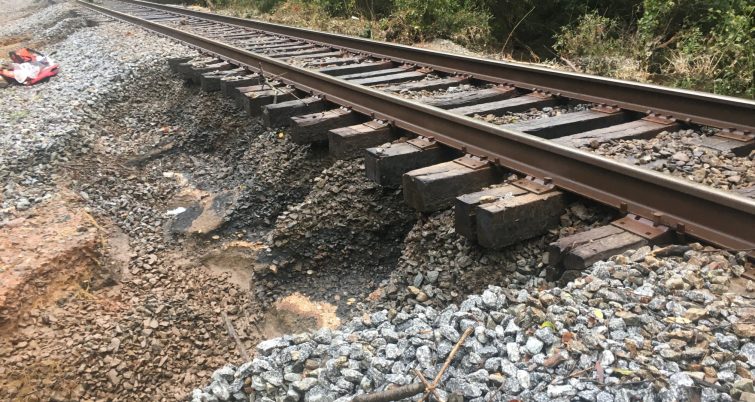
The NTSB recently issued a report about a derailment in Draffin, Ky. caused by heavy rainfall where the weather alert criteria did not account for the risks due to excessive rainfall before the accident.
On Feb. 13, 2020, a high hazard flammable train carrying denatured ethanol derailed on a CSX Transportation railroad track that runs between a hillside and the Russell Fork River near Draffin. The NTSB determined that the derailment occurred because of a mudslide that obstructed the track following excessive rain accumulation over several weeks before the accident. Furthermore, the NTSB found that the system providing the weather alerts to the railroad did not consider the above-normal rainfall accumulated over several weeks, and elevated temperatures (leading to rainfall instead of snow) in the month before the derailment.
This was not an isolated incident. In the past 40 years, the NTSB has investigated five other derailments where adverse weather conditions, particularly rainfall, affected railroads’ infrastructure and created unsafe operating conditions.
|
|
NTSB Releases Initial Report on PATCO Contractor Fatalities |
|
On Oct. 17, RT&S reported that a PATCO train killed two workers on the Benjamin Franklin Bridge in New Jersey. The National Transportation Safety Board has released a preliminary report on this accident.
“On October 14, 2022, about 9:21 pm local time, Port Authority Transit Corporation (PATCO) train Westbound #1 struck and killed two contractor employees from JPC Group, Inc. on track 2 on the Benjamin Franklin Bridge in Camden, New Jersey. The train was traveling west at 33 mph and had 68 passengers aboard; 8 were in the lead car. At the time of the accident, conditions were dark and clear, and the temperature was 59°F.
“Before the accident, a team of contractors arrived at the bridge to perform concrete work during a scheduled track 2 outage. However, two contractors entered a close-clearance area on track 2 before track 2 was scheduled to be out of service, and Westbound #1 was able to enter their work area. The train’s engineer initiated emergency braking before striking the two contractors. The train’s head end stopped about 1.5 railcar lengths west of where the two contractors were struck.
”While on scene, National Transportation Safety Board investigators reviewed data from a bridge-mounted surveillance camera and images from the lead railcar’s inward-facing image recorder, reviewed PATCO train operations, inspected the involved railcars, and completed interviews. The National Transportation Safety Board’s investigation is ongoing. Future investigative activity will focus on regulatory oversight of roadway worker protection and PATCO’s roadway worker protection program.
|
|
Canada: Agreement-in-Principle for Lac-Mégantic Bypass |
|
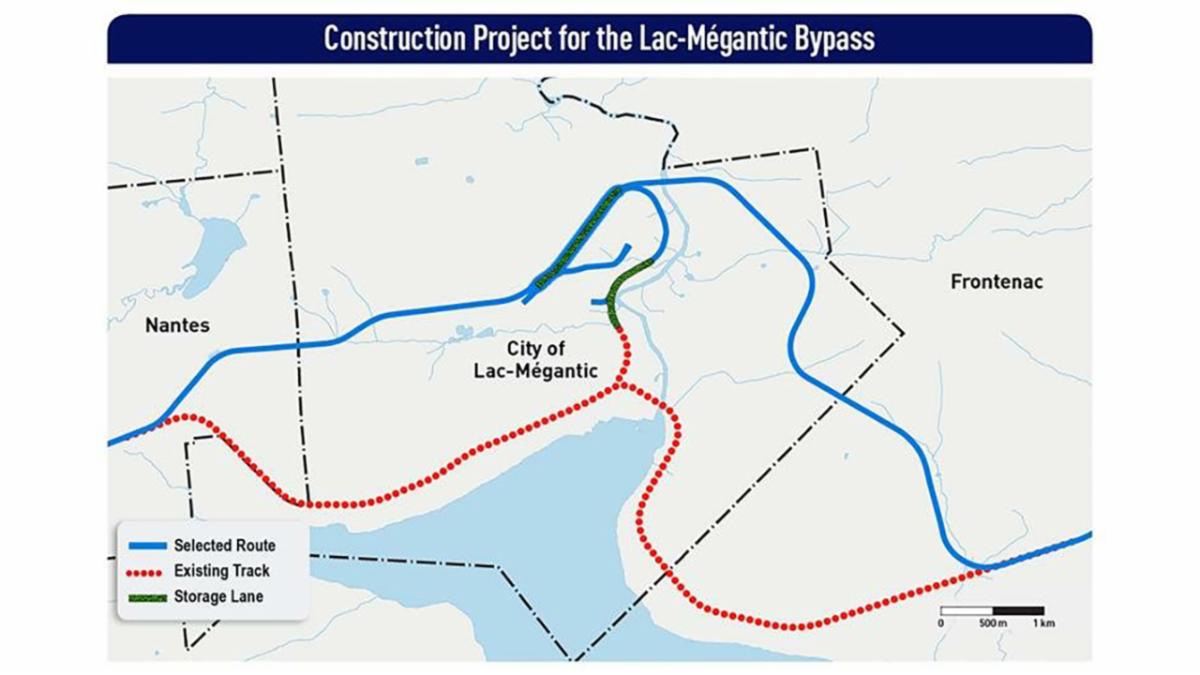
More than nine years after the horrific derailment of a crude oil unit train at Lac-Mégantic, Quebec that claimed 47 lives and led to new regulations for railroad hazmat tank cars, the Government of Canada announced that an agreement-in-principle has been reached with the City of Lac-Mégantic for land parcel acquisition required for construction of the 12.5-km (7.75-mile) Lac-Mégantic bypass.
“This agreement in principle will allow both parties to prepare the deed of sale,” said Transport Canada, adding that it “is fully committed to the bypass project and the entire route that has been identified to permanently get trains out of downtown This is an important project for the community, the Government of Canada, and the families of the 47 victims of the tragedy. The Government of Canada is working with the Government of Quebec, the City of Lac-Mégantic and the municipalities of Frontenac and Nantes to complete this project, which will benefit the community.”
|
|
(Editor's Note: This is a hopeful sign that the Amtrak network might just start to expand. Had all of the various long distance trains not be removed from service over the years, the national map would look quite different today, with most areas of the country served by passenger trains.) |
|
FRA Launches Passenger Long-Distance Study Site
Agency promises public engagement over the next year in look at discontinued Amtrak routes, possible new service
|
|
WASHINGTON —The Federal Railroad Administration has launched a website for comments leading to an evaluation of long-distance service Amtrak had previously discontinued, as well as its two current triweekly routes, the New Orleans-Los Angeles Sunset Limited and the New York-Washington-Cincinnati-Indianapolis-Chicago Cardinal.
The “Amtrak Daily Long-distance Service Study” site, which began operation Oct. 28, now only describes the FRA’s mission to examine the possibility of resurrecting routes dropped when faced with federal budget reductions. Cutbacks, additions, and reroutings occurred throughout Amtrak’s history, but pivotal cancellations came in two groups, in October 1979, and May 1997:
October 1979:
— Floridian: Chicago-Nashville-Jacksonville-Miami/Tampa;
— National Limited: New York-Pittsburgh-Columbus, Ohio-Indianapolis-St. Louis-Kansas City;
— Lone Star: Chicago-Wichita-Oklahoma City-Ft. Worth-Dallas/Houston;
— North Coast Hiawatha: Chicago-St. Paul-Bismarck-Billings-Missoula-Spokane-Seattle.
May 1997:
— Desert Wind: Salt Lake City-Las Vegas, Nev.-Los Angeles;
— Pioneer: Denver-Boise-Portland, Ore.,-Seattle.
Other notable long-distance discontinuances were the New York-Philadelphia-Chicago Broadway Limited in September 1995 (though the Pittsburgh-Youngstown-Chicago segment, over CSX’s former Baltimore & Ohio route, was resurrected as an extension of the New York-Pittsburgh Three Rivers from 1996 until 2005), and the Sunset Limited east of New Orleans, after the route was repaired following damage inflicted by Hurricane Katrina in August 2005.
The front page of the FRA website to study long-distance passenger service.
Historical “routes that qualify” information has yet to appear on the site, though it does begin to list evaluation criteria prescribed by Congress in Infrastructure Investment and Jobs Act legislation:
— Link and serve large and small communities as part of a regional rail network;
— Advance the economic and social well-being of rural areas of the United States;
— Provide enhanced connectivity for the national long-distance passenger rail system;
— Reflect public engagement and local and regional support for restored passenger rail service.
Significantly, lawmakers made it a point to have the FRA oversee the process, rather than Amtrak management.
|
|
(Editor's Note: Sadly, the Canadian government is doing what the government south of the border has done to Amtrak for the better part of half a century: death by a thousand cuts. In the Canadian case, things look bleak for the future of the national passenger railway.) |
|
Canada to Create Separate Railway for Corridor HFR |
|
Transport Canada confirmed Oct. 31 that state corporation VIA Rail Canada has been shunted aside from its own project to construct and operate an electrified “High Frequency Rail” (HFR) service along the Corridor linking Quebec City, Montreal, Ottawa and Toronto—the only profitable route VIA currently covers.
A new state enterprise will be created to carry the project forward and oversee HFR operations. Technically, it will be a subsidiary of VIA Rail, but the two entities will be operated independently of each other and report directly to Transport Canada.
HFR trains will be run by a yet-to-be-chosen “Private Development Partner.” The private operator will also take over VIA Rail’s existing “local” services operating on CN and VIA Rail’s own trackage in the corridor.
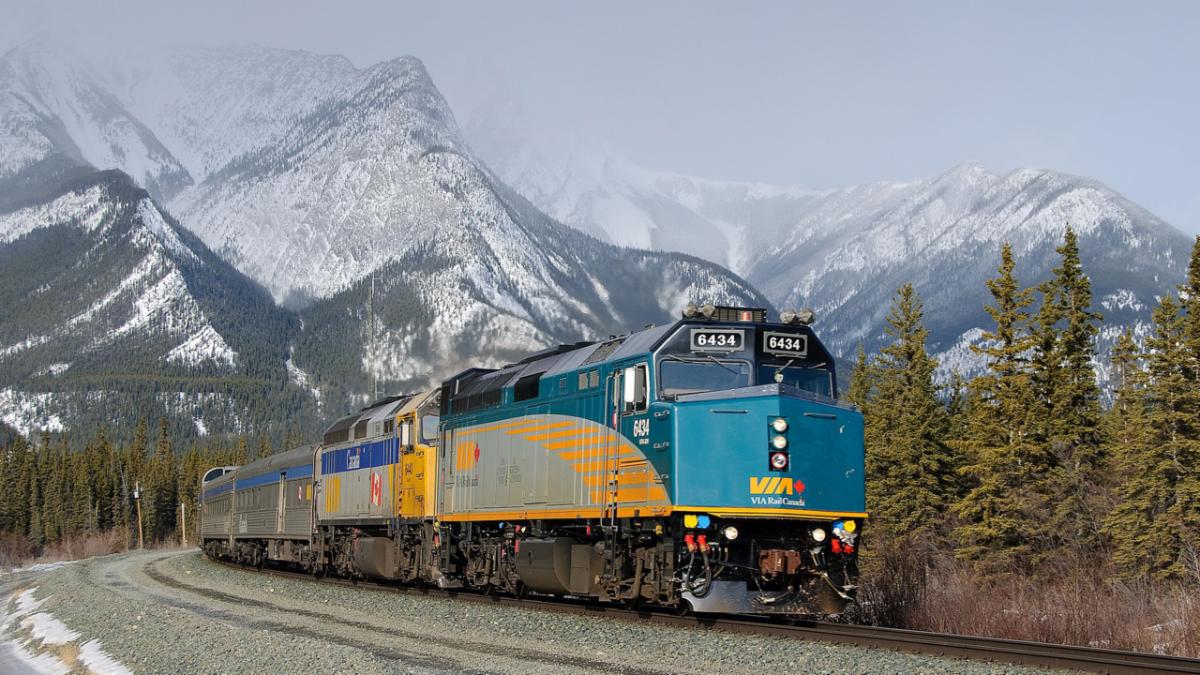
Deprived of the Corridor traffic, VIA Rail would be left only with its money-losing regional and national services, including its low-frequency and often interrupted stainless-steel streamliner The Canadian, which runs in fits and starts between Vancouver and Toronto at the operating whim of its main host railway, CN. (Unlike Amtrak, VIA Rail does not enjoy a government-mandated priority over freight operations.)
This would kill VIA Rail’s commercial viability and eventually the provision of any publicly owned passenger rail beyond the Quebec and Ontario Corridor that spans the essential electoral base of the governing Liberal Party led by Justin Trudeau (whose father, former Prime Minister Pierre Trudeau created VIA Rail in 1977).
|
|
CN Derailment Causes Acid Spill, Evacuation in Louisiana Town |
|
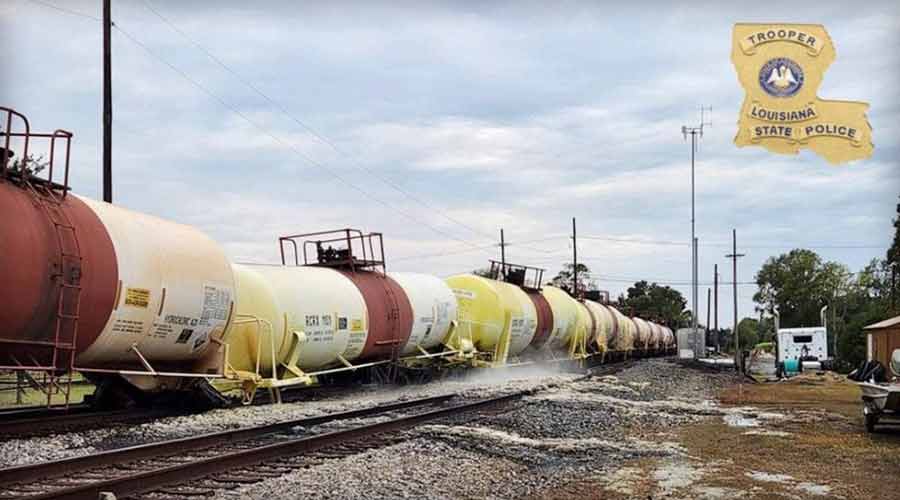
CN crews are responding to a derailment that occurred yesterday in Paulina, Louisiana, involving one tank car that leaked hydrochloric acid, prompting an evacuation in the immediate vicinity.
A total of eight cars derailed in the town, which is located about 30 miles west of New Orleans. The leaking car was carrying 20,000 gallons of hydrochloric acid, according to the Louisiana State Police. About 200 homes were evacuated, St. James Parish officials estimate.
Efforts are underway at the site to prevent the spread of the spilled acid, CN officials said in a statement.
“There were no injuries or fires. CN is working with local first responders at the scene and will provide updates as more information becomes available,” they said.
|
|
UK Strike Dates Changed to Save Poppy Appeal |
|
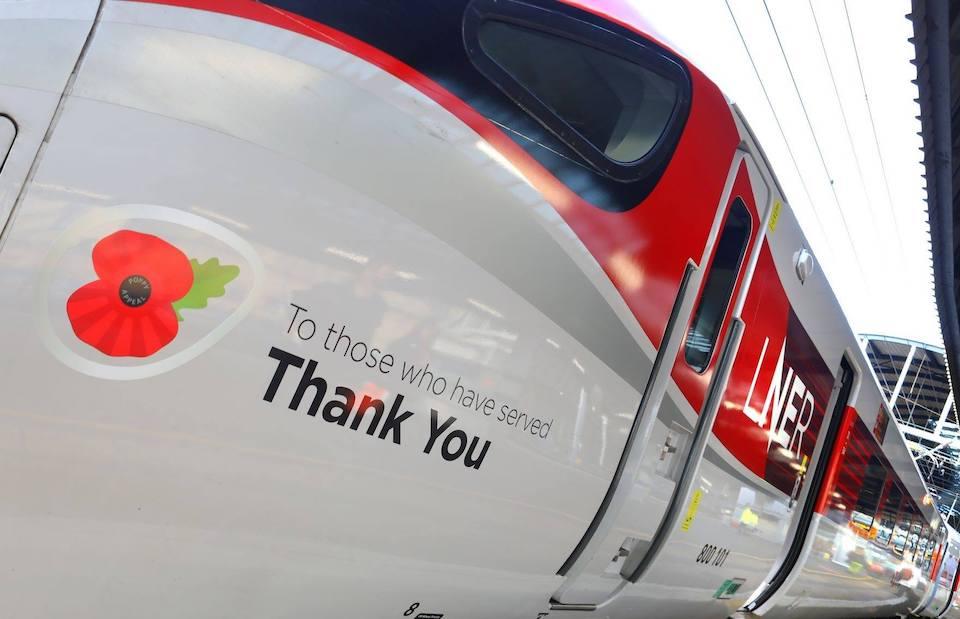
The annual Royal British Legion Poppy Appeal, which raises money for the ex-service personnel, has been saved by a change of heart from railway unions. The strike planned for Friday 3 November has been rescheduled. That means that the annual nationwide charity collection at stations can go ahead after all.
The strike, called by the RMT trades union, was to be the first of three staggered days of action, in the latest round of confrontation over a wide-ranging dispute. There had been dismay expressed across the country that the annual poppy appeal, a tradition over a century old, would have to be cancelled.
Remembrance Day commemorations
The Poppy Appeal is an annual fundraiser, particularly associated with the railways in Britain. The Royal British Legion charity was originally established after the Great War, to help ex-service personnel and their families. The poppy represents the iconic flower that bloomed in the battlefields of Flanders on the Western Front. The railways played a huge role in the conflict, not least in the constant evacuation of wounded personnel from the front line, returning them to recuperation centres all over the UK.
The biggest single event in the appeal is a traditional collection at railway stations in the week prior to Remembrance Day (11 November). That had been scheduled for Friday 3 November, but planned strike action placed that in jeopardy, and threatened to derail the Legion’s efforts. However, after a public outcry, the union involved has relented, and cancelled their action on that day, replacing it with a walk out in the following week.
Separate disputes in London and Scotland
Trades union RMT will now take strike action on 5, 7 and 9 November in the long-running dispute over jobs, conditions and pay. Network Rail members will be on strike on those days and members working for the train operating companies will take action on 5 November. In separate disputes, members at London Underground, and the Arriva Rail London managed Overground, will take strike action on 10 November.
|
|
|
|
|
|
|