|
- Transit for All PA! Kicking into High Gear for the Year Ahead
- LSA Applications Due 11/30 -- Toolkit from LAB for Political Asks
- Cranks-Giving Has Been Busting Out By Bike Across PA
- Guidance on Designing for Drivers While Focusing on People
- Some Perspective on E-Bikes and E-Motos... from South Park et al?
- DC Isn't That Far Away -- 3+ Advocacy Reasons to Visit in 2027
- What's In a Word? Street Furniture
- Infrastructure Insights From the Interwebs
Reminder: The "Sidewalks of PA" webinar is coming up on Wednesday, December 9, from 2 to 3:30pm. This WalkWorks Webinar will cover sidewalk assessment, funding incentives, and long-term compatibility between trees and sidewalks. Register HERE!
| | |
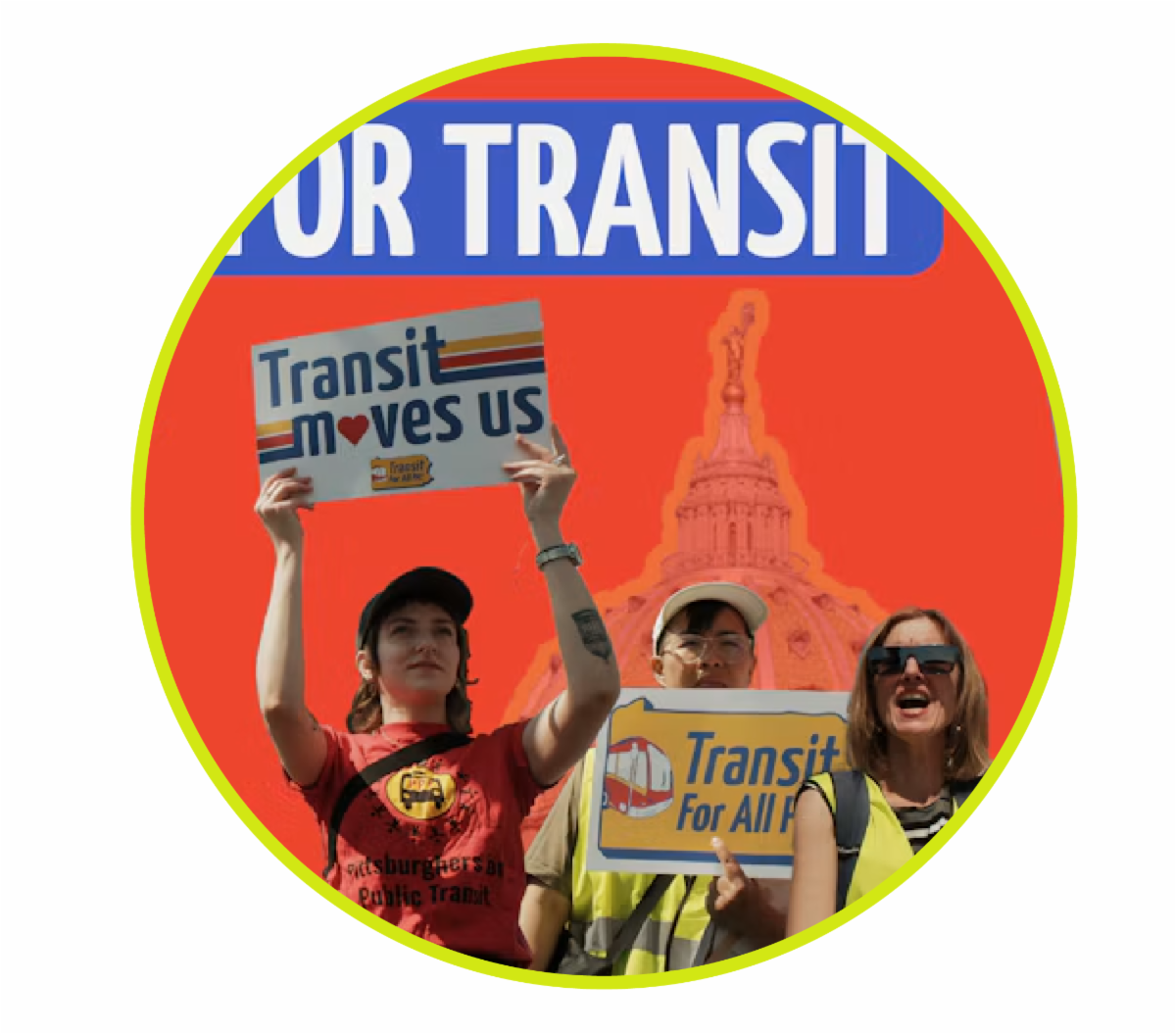
The plans for the coming year's legislative session are ramping up rapidly. Hopes are high! To prepare, advocates are honing their persuasive practices, rallying their recruits, and pushing for promises to be kept. There is a lot of talk about the clear need to fund transportation, particularly public transit and shared ride, across the Commonwealth. There may (will be offers) that we need to be ready to greet with a Yes! And... because the expectation is that they will be a good start, but not enough to get the job done. The initial outline of the Transit for All PA! Comprehensive Legislative Package will be introduced and outreach arranged in the next statewide all-call on Thursday, December 3, at 6pm. Sign up to participate. And check out the pre-print version of the TFAP 5-Point Plan Overview:
- Yes, to durable funding, BOTH from sales tax reallocation AND additional sustainable funding sources heading into the future
- Yes, to Shared Ride funding that BOTH meets the urgent need AND keeps small transit systems from having to rob their fixed route budget to provide the mandated service
- Yes, to adjusting the Public Transit Trust Fund formula to ensure equitable distribution of the newly established funding to meet need BOTH in Philly AND everywhere else
- Yes, to enabling legislation that will BOTH allow large metro areas to generate local revenue to fund capital projects AND not force smaller ones to do so
- Yes, to updating the transportation project prioritization process to make sure BOTH that taxpayer dollars are spend wisely AND that their potential to maximize safety, accessibility, economic development/job access, environmental protection, health, and congestion relief are all considered, not just vehicle throughput.
If you are looking for multi-modal inspiration and an engaging reminder of what non-driving access looks like in different settings, check out this video from Streetcraft documenting three teams of micro-influencers taking on a variety of Week-Without-Driving-esque challenges in their hometowns of Phoenix, Chattanooga, and NYC. How would the non-driving options stack up in your corner of PA? Need some more transit funding to make it feasible for all?
| |
 | | It's that time of year again... not the holidays, but rather the Statewide Local Share Account application deadline. This year at least the 11/30 date falls on a workday rather in the middle of the holiday weekend. If you are applying, DCED staff hope you did your outreach and miscellaneous questions emails well in advance. As usual, we think this is a good time to point out that you could observe the occasion this year and mark your calendar to prep for next year. The LSA statewide program has only been offered for a few years now, spreading the largesse of gambling revenue anywhere in the state, not just in the counties with casinos. Municipalities can apply for a wide range of projects or purchase needs, with the scale of the requests ranging from $25k to $1M, with no match required. There are very few constraints on what the money can be used for within a municipality's sphere of needs, which means it could help fund design or construction of projects. It can even be used for sidewalks as long as they are "in the public interest" and "for public use." There are few other potential funding sources that will touch that category. It's easy to imagine every single application (all ~3k) being for sidewalks, the level of need is so great. (Side note: remember to register for the December 9 webinar on sidewalks).
These funds are very competitive and some also say very political. It is definitely valuable to have the support of your state Representative and state Senator. But rather than noting this as a barrier and dismissing the funding option, consider educating yourself and mounting a campaign to advocate for your project. It just so happens that the League of American Bicyclists released a new set of resources after the election related to mounting a campaign for Congressionally Directed Funds, aka "earmarks." They have a blog post about it and a pdf toolkit available for download. The target and specifics of such an effort would be your federal Representative or one of our two Senators, but the general outline of reaching out and making the case for your project in order to line up support can be applied at both levels. The League is focusing on this because there is likely to be a gap in the provision of Safe Streets and Roads for All funding, given the delayed process around the Surface Transportation Reauthorization. 2027 may therefore be a good year to seek funds for key projects elsewhere... (And to hope and encourage the reinstatement of SS4A going forward!)
| |
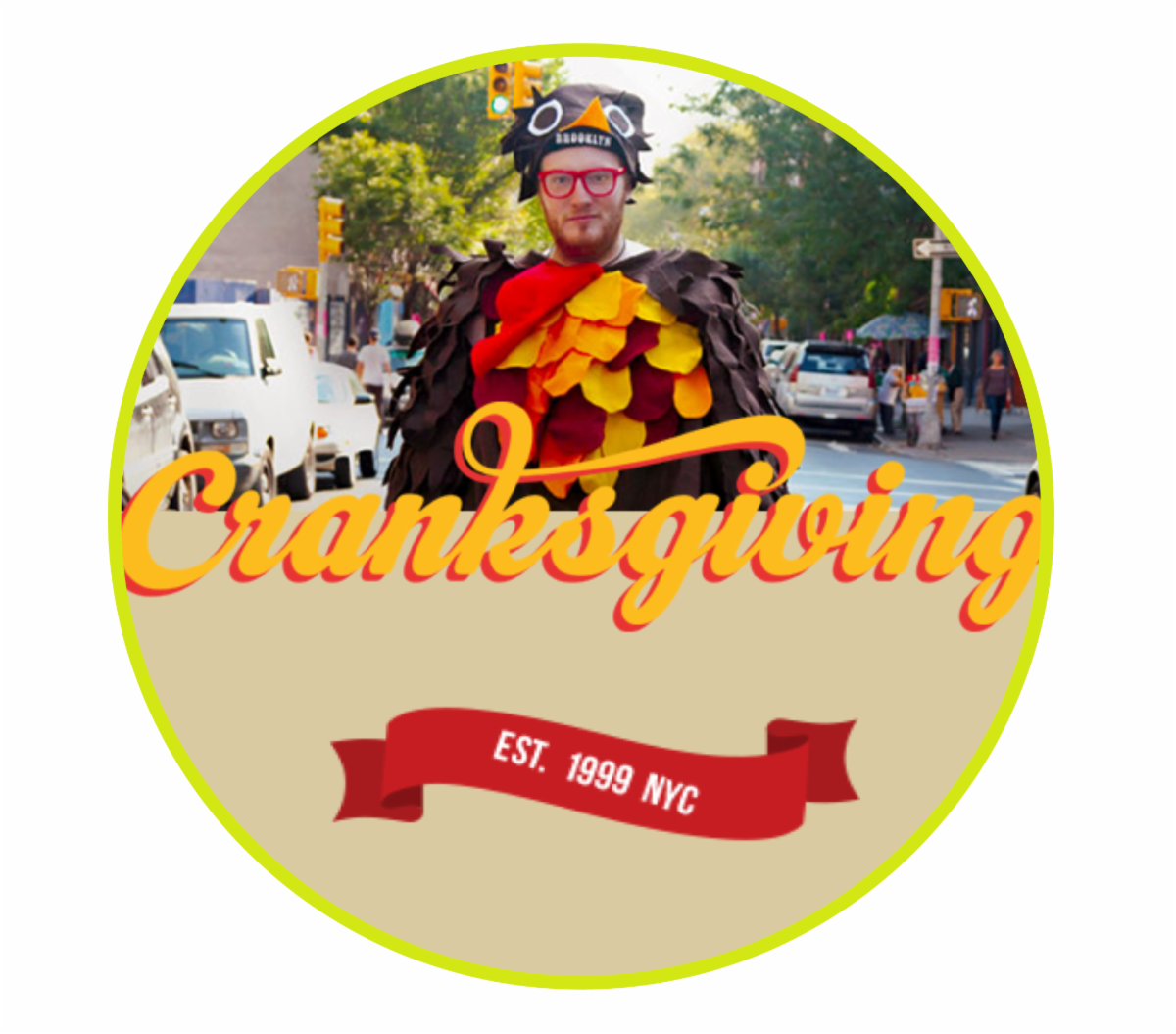
| | | This is turkey season in so many ways. Many will be sitting down to a choreographed feast featuring the runner-up national bird on Thursday, but there are other ways of celebrating, too, like Cranksgiving. Perhaps you've already seen a person dressed up as a turkey pedaling madly past you some time this November and wondered what was going on. It might just be a person with a strange sense of humor, but it could well be part of Cranks-giving. That's the name given to a Thanksgiving and turkey-themed unofficial scavenger hunt bicycle race mash-up that combines a cycling, navigating, and logistics management challenge with a charity event, bringing donated food to homeless shelters, food banks, or other social service sites. In the classic format, participants convene at a set location and are given a list of potential stops and destinations; they have some time to map out their strategy and route to hit a designated number of the sites and then they are off, collecting different Thanksgiving ingredients at multiple different stores and then delivering the booty to people in need.
The first Cranksgiving was organized in New York City in 1999 by a bike messenger and was very much part of that culture, arising from similar scavenger hunt race/rides called Alleycat Races that had been happening around the world for about a decade. While the early rides were more focused on bike messenger culture and many still feature a lot of people on "fixies," fixed gear bikes, the Cranksgiving Alleycat in particular is quite inclusive and now sees a wide range of participants on all sorts of bikes -- including bikes that make it easier to transport actual packaged turkeys. That said, since the riding is on-street, with traffic, and without any official or universal route, the events do tend to appeal to more seasoned cyclists. It's noticeable that of the more than 100 locations of observances mapped for this year, mostly hosted by cycling groups, many are not necessarily sited in the center of cities. And also noticeable that the cargo-carrying aspect of the activity is one of the less familiar parts. Bike commuters and cargo-bike riders may have an edge in that respect. Here in PA, they happen at different times in November in Erie, Scranton, Hershey, State College, York, Lancaster, Johnstown, Lititz, Greensburg and Philly, but not Pittsburgh (unless it's just not on the map) or Harrisburg. Winners get bragging rights, but it is mostly about the fun and showing off your skills. In fact, there may also be prizes for being DFL (i.e. Dead F'ing Last), so it's not all about speed. It's more about the spirit and the season! And a throwback to the pre-email era of bike couriers.
| | |
We have long been sharing resources that highlight how places that are designed thoughtfully for people riding bikes and walking are often also better places for drivers. Maybe not for drivers seeking to maximize speed at any given instant, but for those who recognize the value of smooth flowing traffic and reduced congestion. But noting this and pointing excitedly to fairly obscure NotJustBikes videos about how the Netherlands has been repeatedly recognized as a great place to drive or about the "hidden" bike routes in the Netherlands which are disentangled (ontvlechten) from the driving routes doesn't always catch people's attention. (In fact it can be quite difficult to track down that video about ontvlechten if you can't remember how it's spelled! It's a great video, but it's pretty buried and not likely to march across someone's feed unbidden.) But there are new efforts afoot to highlight and clarify these critical points -- and bring them to new audiences.
One great new resource on this topic is the report entitled "Designing for Drivers in People-Centred Places" from Mobycon and Happy Cities. In this case, it takes on addressing drivers' needs directly, rather than as an offhand side comment. It's probably not a coincidence that that skillful messaging and impending trainings to accompany it appeared recently from Mobycon, where Melissa Bruntlett is a key player, even as her partner Chris from the Dutch Cycling Embassy hit on many compatible points in a discussion on the Bike Networks Now! podcast (from the Bike Streets founder). That interview brought together all the key references in one place. It feels like this subtle and somewhat obscure point about how all modes are inter-related is finally coming into clearer focus.
To pile one more example on, a recent article from Nick Ferenchak in the ITE Journal spells it out quite clearly: the easier and more enticing it is for people to get around without a car, the less exposure there is to high speed, heavy motor vehicles for everyone, including the people still in the cars. Making our communities more effectively multi-modal, right-sizing our paving, building out accessible and inviting pedestrian and bike routes, providing well-connected and frequent transit options, and prioritizing direct routes for people and indirect routes for cars, is a recipe for places where the roads are well-maintained, less crowded with cars, and those trips when one needs to drive go better -- and are safer. Now let's see if we can get these resources in front of the people who need to hear this multi-modal message most.
| |
| | | E-motos and E-bikes really are on everyone's minds these days. The DVRPC's Regional Safety Task Force recently held a panel discussion on E-Micromobility and the Media, which, given their position straddling two states, included an intro to the current e-bike laws in NJ, the result of a draconian crackdown on the chaos playing out on streets and trails all over the country. Many other states, including PA, are trying to come to grips with how best to handle the situation. We anticipate legislation will be updated in PA early in 2027 and hope to build on lessons and models from other states. Top concerns include updating definitions to distinguish more clearly between e-bikes and e-motos (which are too fast, too heavy, or too powerful) and making the difference more publicly visible with labeling and education, recognizing the legally elusive Class 3s, and encouraging safer, UL-rated batteries and safer riding -- through safer facilities. We'll be looking to examples in CA and MA for how to handle it, as well as the counterexample of NJ.
Even as the laws are in flux on one side of the state border, DVRPC is working on updating their media toolkit on Reporting Traffic Crashes to include considerations in this era of expanded micromobility. The existing recommendations include avoiding using the term accident in favor of crash, focusing on the agents in a crash, drivers rather than cars for example, and asking questions about the systemic context for the crash and who is around to share their story. These need to be reviewed and shared more widely and reporters now also need to be prompted to find out more about speed and actual vehicle/device type so that e-bikes are not blamed for crashes actually caused by often already-illegal e-motos.
These same topic and the NJ wholesale rejection dynamic recently showed up in a very unexpected location. South Park, the longstanding irreverent animated cartoon, never one to shy away from controversy, took the topic of e-motos and e-bikes on in a recent episode. While they tend to skewer any and all with their crude and relentlessly racist humor, they also hit upon some key observations in the moment. Their e-moto/e-bike tale takes a variety of absurd twists and turns and culminates in the death of a central character on an e-moto, not because the battery exploded as is assumed but because (spoiler alert?) the local peloton/gang of aging lycra-clad riders planted a bomb on it. Embedded in all the over-the-top bad behavior and caricatured rage, there are some moments of clarity showing how fun and essential freedom of movement is, for all ages, but especially for youth -- and how e-bikes have the potential to unlock that independence. In the end, the show winds up being a cautionary tale about throwing the baby out with the bathwater as the town bans all e-devices whether low-power, low-speed and ridden reasonably or not. In an article about the episode from one manufacturer, they zero in on how "the behavior of the worst riders becomes representative of every rider. And instead of targeting dangerous behavior, inappropriate vehicles or unsafe equipment, the easiest political solution is simply getting rid of the thing everyone has decided is the problem."
| | |
Pennsylvania is not that far from DC. It may make sense to consider whether there are upcoming opportunities to join gatherings of advocates from around the country there in 2027 to push for safer streets and the policies and funding needed to make them happen. There are several in the near term and another a little further out. First, the biggest event of the year in transportation engineering and planning is coming up the second week of January. It's called the Transportation Research Board and it sees many thousands of transportation professionals converging on DC for a week with hundreds of conference sessions to choose from. That is a huge -- and pricey -- event. Good for networking and information gathering, but also probably too much for the volunteer activist. There are some other opportunities that crop up in the shadow of TRB though that might be suitable for a more casual visitor.
-
TransportationCampDC - Saturday, January 9, from 9am to 5pm, on the campus of Catholic University - an unconference organized by Transportation for America and realized by the several hundred attendees from across the country, looking at what's next for multi-modal transportation.
-
AmericaWalks 30th Anniversary Celebration - Sunday, January 10, from 2:30 to 7:30pm, at the Rails-to-Trails Conservancy - advocates and leaders will celebrate three decades of organizing around walking and walkability with a visioning workshop and networking reception. This is the first such national gathering focused on walking since before the pandemic!
-
Smart Growth America Complete Streets Gathering - Monday, January 11, 6 to 8pm, Planet Word - this is a fundraising reception more explicitly tied to the presence of the TRB and celebrating the Complete Streets Coalition and the many champions they have been cultivating for years.
-
ITE Safe System Roundtable (link pending) - Tuesday?, January 12, TBA - this will be a TRB adjacent event highlighting the Safe System Success Stories that have been compiled and helping to spread word about the collection of success stories as a resource.
And if all that early January action doesn't catch your fancy, look out a little further and consider a trip a little south in March for the League of American Bicyclists National Bike Summit and integral Hill Day, from Tuesday, March 9, to Thursday, March 11, at the MLK Jr Library. There are even scholarships that can help defray cost of attending offered by QBP again this year (after a hiatus since before the pandemic). Applications for that funding assistance are due by January 31.
| | |
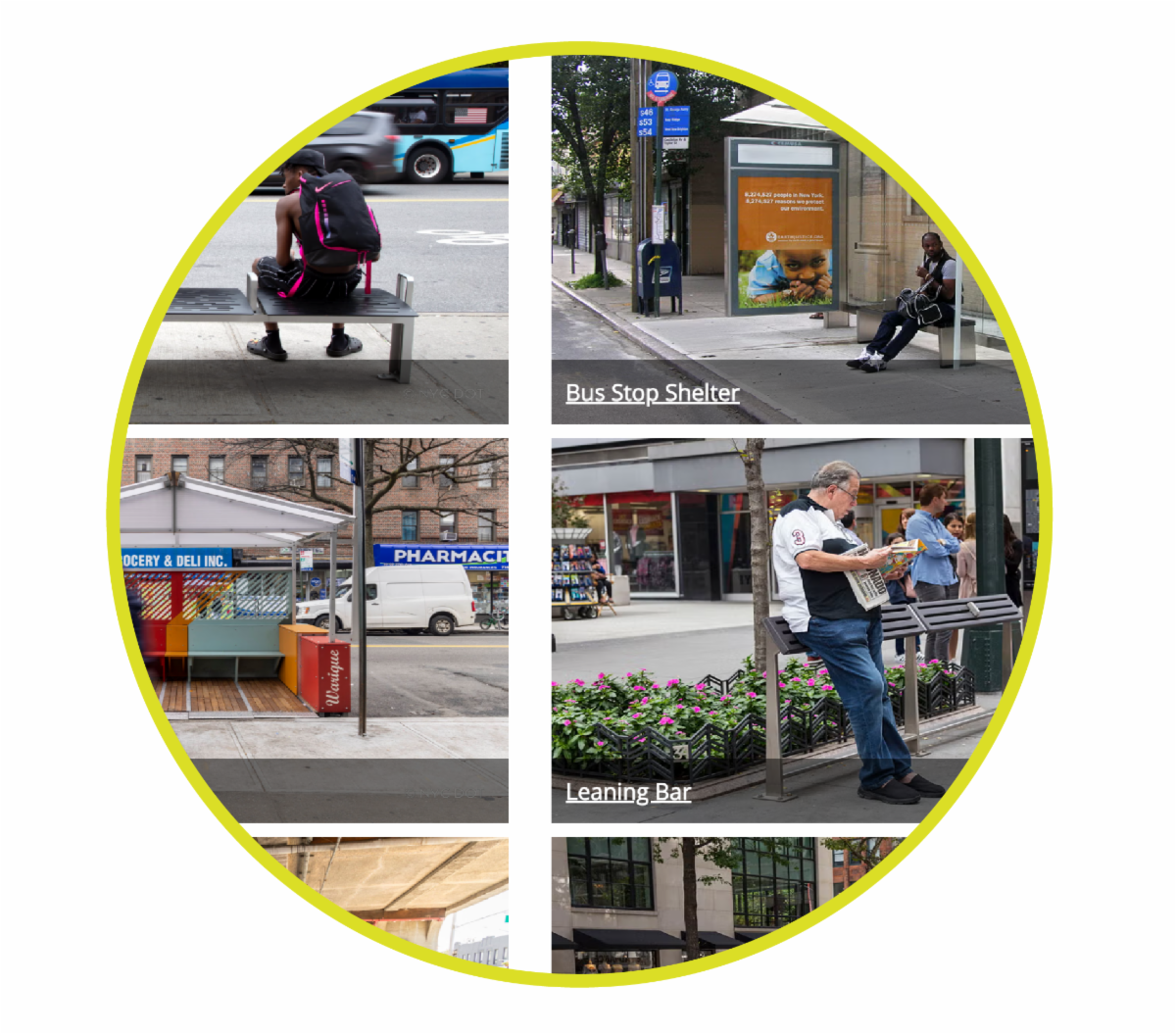
Street furniture does not refer to that rained-on couch and end table you saw sitting one block over and back on a run recently. It's also not the incongruous lamp abandoned on the sidewalk in the student neighborhood at the end of the academic year. But it is all the accoutrements that build out the space of sidewalks and other public spaces.
It includes basics like benches, lighting, signage, and trash cans. And big ticket items like bus stops, news stands, or modular public restrooms -- or even the occasional public clock. And then there are sometimes less considered but often essential gear like bike racks, bikeshare stations, planters, and information kiosks.
Street furniture is critical to the experience of the sidewalk for people walking or using wheelchairs. When it is well-designed and thought out, it is both seamless and well-used. But caution is needed as the urge to place items along the street can run afoul of the clear, accessible path. Even if a bolted-down object like a bench or a bike rack might not impinge on the clear route itself, care must be taken to ensure that when it is in use, neither the user's feet or bags nor a bike left there extend into and close off through traffic for people in wheelchairs or present a hazard to people using a white cane.
In recent year, demands for curb space and sidewalk territory have increased, with additional furniture categories being added, like EV (or even small device) charging stations, parking kiosks, swings, or increasingly common outdoor dining accommodations.
In the most enjoyable of public spaces, the street furniture may extend to art, fountains, artistic variations on benches, lounges, or platforms, and play areas. And the line between street furniture and landscape architecture blurs for those items or when shade structures or more involved integrated seating and placemaking is deployed, perhaps to create a public stage or a market plaza.
One of the essential street furnishings in many public space designs exists in a border area, literally, as the lowly bollard helps delineate the edges of one type of space from another. Bollards can be both decorative, illuminated, even ingenious and also critical utilitarian tools for repelling errant drivers. So, it may be street furniture or it might be more accurately considered part of the road safety infrastructure design. Traffic signals are also in this category, while they may sometimes be conceived more as design elements than engineered objects/interruptions, they are more often placed and designed purely to meet engineering criteria. In some setting you may see that they get paint or more elaborate detailing in order to align with the overall community aesthetic.
| | |
Not Expected -- But All Too Common
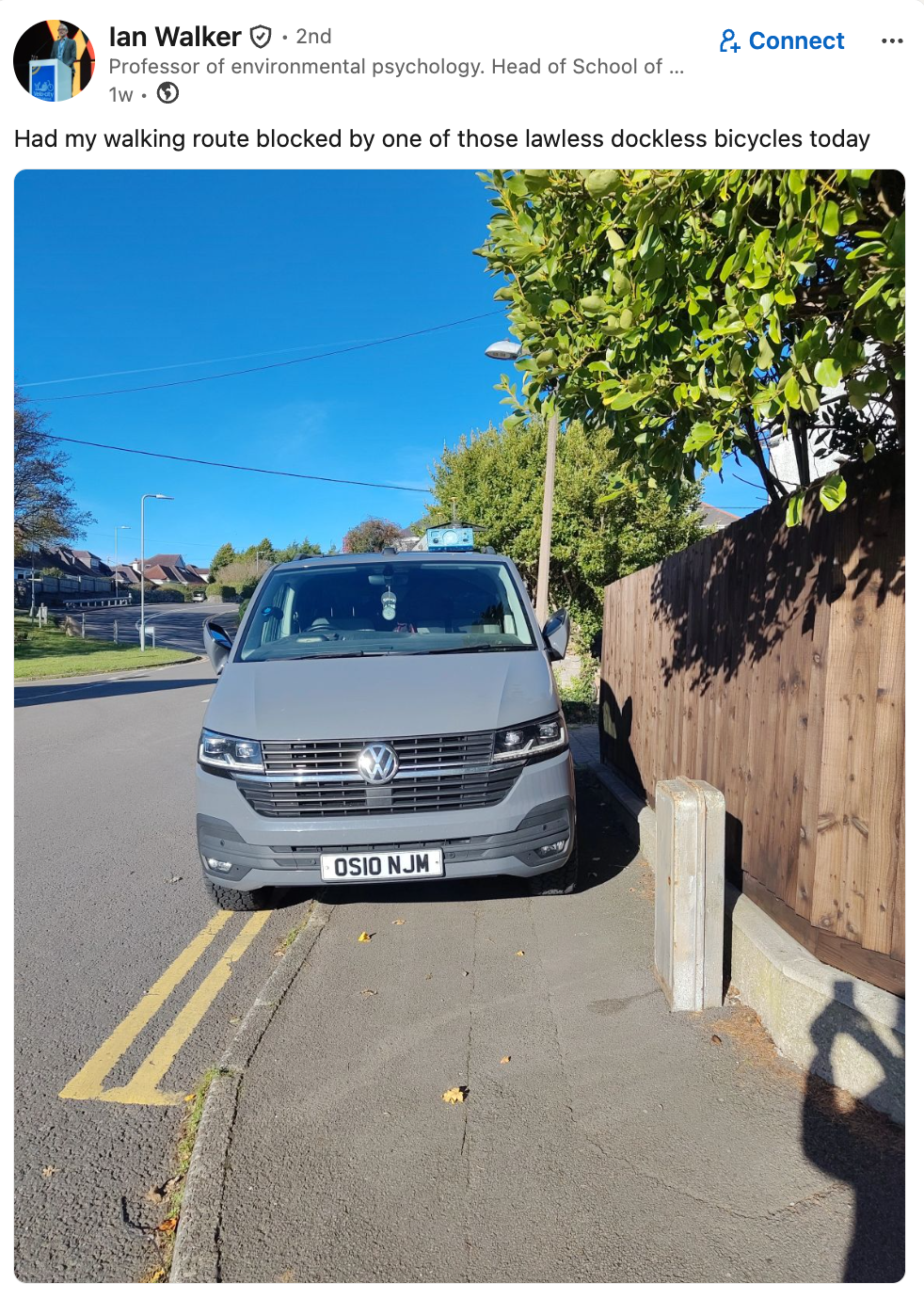
This is a familiar lament, paired with an image that jolts the reader out of lazy agreement. The contradiction between the words decrying the eternal whipping boy of the stray bikeshare and the image of the insouciant automotive miscreant is striking. It puts the familiar, forever-forgiven trespassing car in a fresh light.
| | |
Keep the Hazard in Perspective
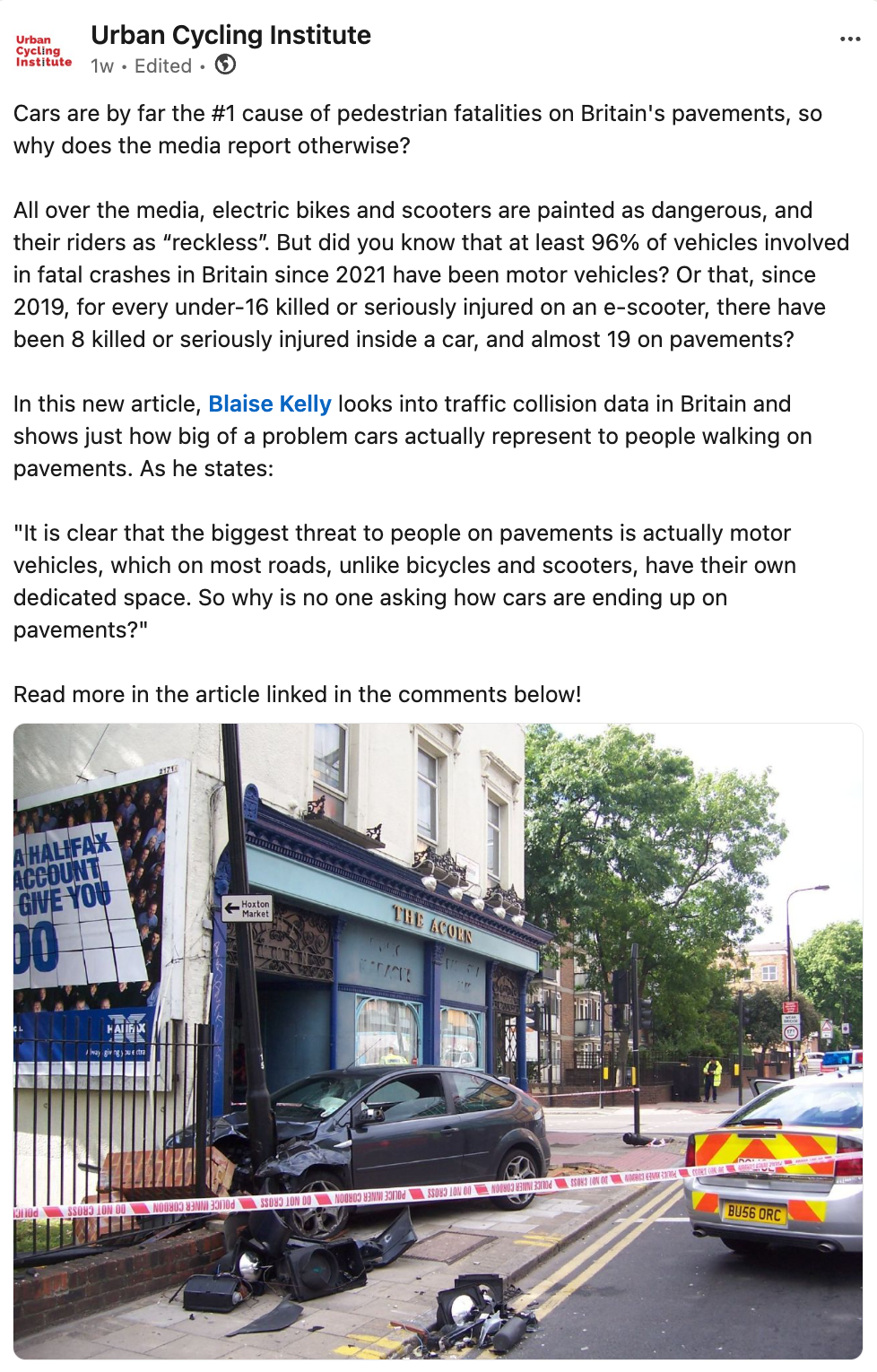
This lesson will surely be added to the DVRPC's updated media toolkit for reporting on crashes. We need to look not only to contextualize a crash as being part of a pattern of crashes in a location, but also to put it in context/comparison with the mode that by far creates the most damage, death, and destruction.
| | |
PA Walkworks | Website
Reading a forward? Sign up for the newsletter here.
Have a comment, suggestion, or content for the newsletter? Submit it here!
| | | | | |