1. What is your academic background and current affiliation?
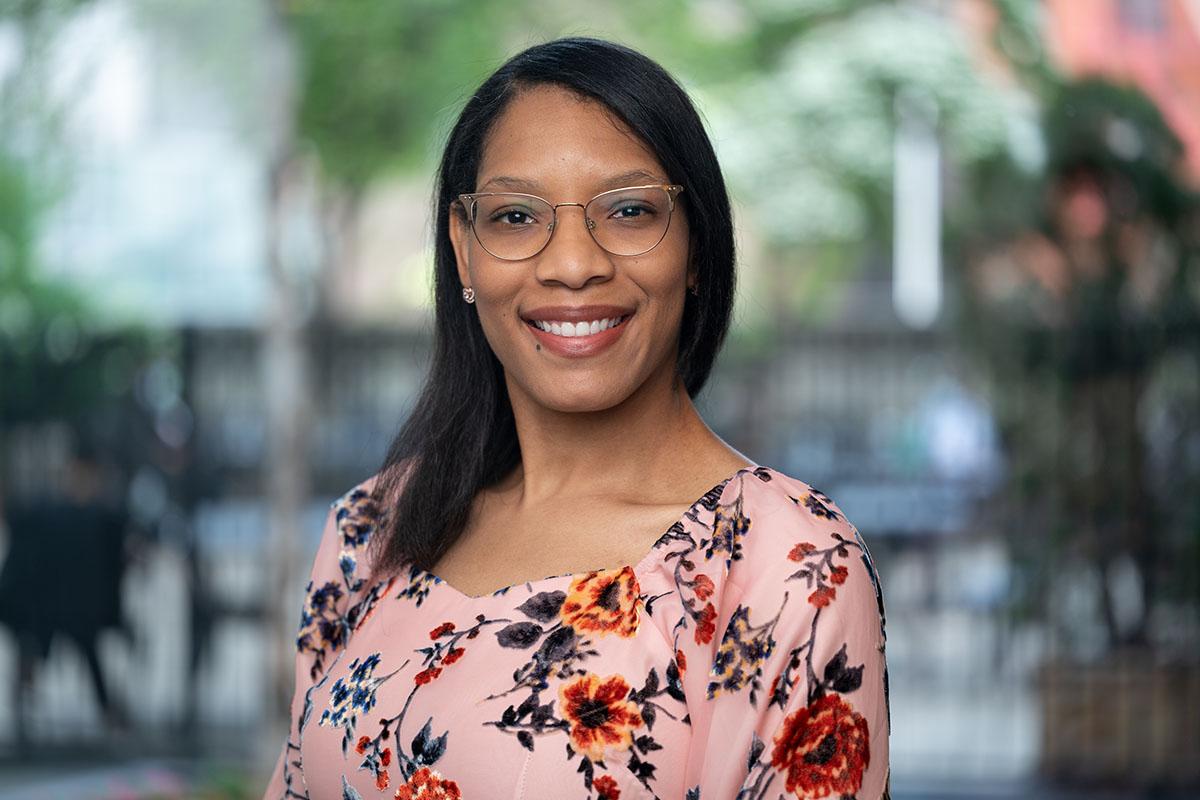
I am currently a psycho-oncology post-doctoral Research Fellow in the Department of Psychiatry and Behavioral Sciences at Memorial Sloan Kettering Cancer Center. I received my master’s from Columbia University School of Social Work and my PhD from the City University of New York Graduate Center.
As a BIPOC women I am personally and professionally invested in addressing health disparities across the cancer care continuum. My mother’s breast cancer diagnosis was the catalyst for my career in cancer disparities research. During her treatment and journey into survivorship it was extremely challenging to find a Black/African American oncology social worker, or psycho-oncology provider. That was the moment I knew, I needed to peruse a clinical and research career in cancer health disparities.
My interest in tobacco-related disparities is the result of great mentorship. During my fellowship interview Dr. Ostroff told me she had been actively mentoring women of color and supporting them in their career development. After a full day of interviews with brilliant faculty members we spoke again, and she asked me who I’d like to work with. I very boldly said you! Mentorship matters Dr. Ostroff gave me the resources and space to cultivate my own research ideas and thought that I found my passion for tobacco-related disparities research.
3. What are your current research interests?
My research and scholarship focus on three areas: 1) examining patterns and drivers of tobacco treatment engagement among tobacco dependent individuals living with cancer from marginalized communities including but not limited to race, ethnicity, sexual and gender minorities, and those who are differently abled. 2) Exploring the multi-level barriers for tobacco treatment delivery by examining the unintended and perceived barriers to accessing and utilizing tobacco treatment. 3) Addressing Diversity, Equity, Inclusion, and belonging (DEIB) in tobacco treatment.
4. What do you hope your career in research will change in the field of tobacco control?
I hope that through out my career I am able to cultivate community partnerships to develop culturally sensitive and sociopolitical aware strategies for increasing reach and engagement among tobacco dependent individuals living with cancer from marginalized communities in tobacco treatment.
5. How has receiving the HEN travel scholarship benefited your work/career?
The HEN travel scholarship gave me the opportunity to meet other scholars who are passionate about tobacco-related disparities. Without the scholarship I would not have been a part of the mentorship program which was the most impactful part of the conference for me.