|
Civic Saturday
Chicago’s First School Board Elections
| |
Click Image Below to View Previous Civic Saturday Newsletters | |
|
The First-Ever Chicago School
Board Elections
A Historic Moment for Public Education
| |
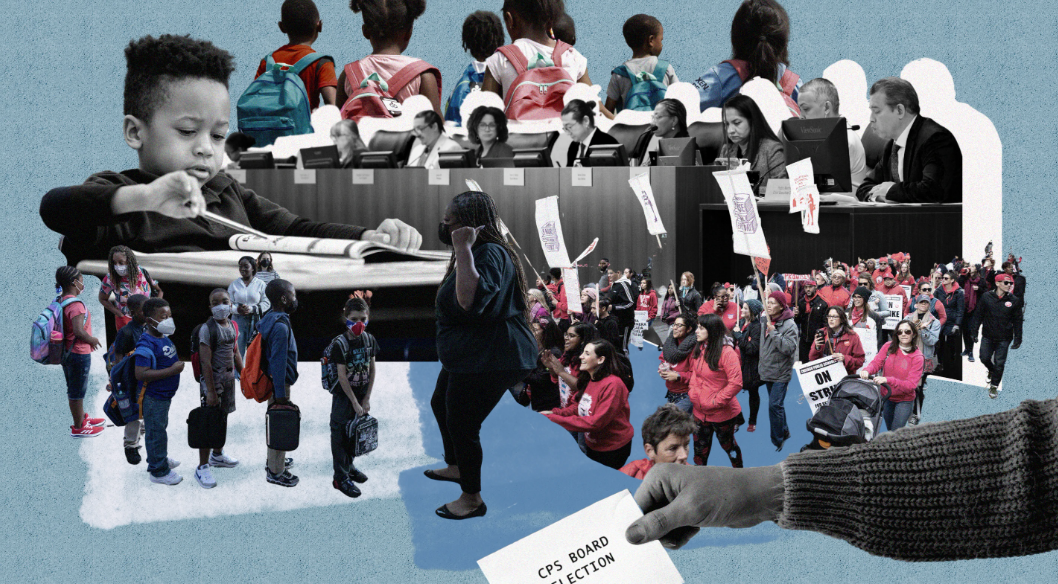
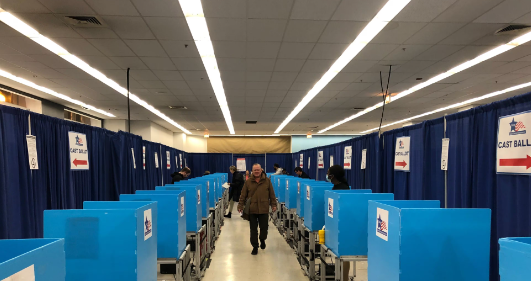
The upcoming school board elections mark the first time in Chicago’s history that voters will directly choose board members. This change reflects a shift toward greater community involvement and accountability in decisions that impact public education. The outcome of these elections will shape the future of Chicago Public Schools (CPS), with lasting effects on students and educational equity. | |
Chalkbeat Chicago Reports
March 27, 2024
| Six things to know about Chicago’s board of education election | |
Campaign money, voting districts, and school board member compensation are some of the issues Chicagoans have questions about as the city’s first school board elections loom.
Starting Jan. 15, 2025, Chicago’s Board of Education will go from seven members appointed by the mayor to a 21-member board with 10 elected members and 11 appointed by Mayor Brandon Johnson. Campaign season is officially underway and candidates are surfacing.
Tuesday was the first day people could collect signatures to get on the ballot for the Nov. 5 election. As of Wednesday, six candidates have filed campaign finance paperwork with the Illinois State Board of Elections.
| |
WBEZ Chicago Reports
October 22, 2024
| |
A first for Chicago, an elected CPS
school board
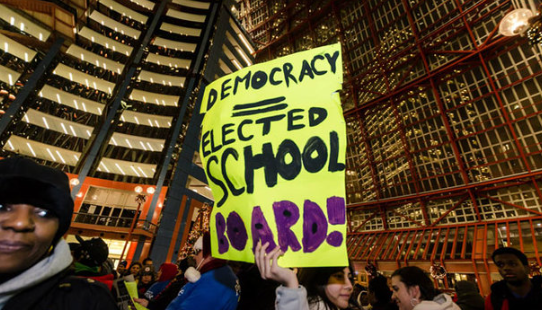
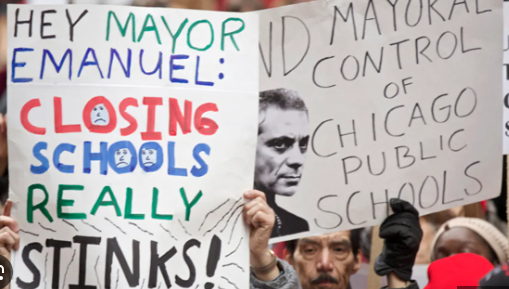
| The school board election is the result of years of activism — born out of the frustration by community members who felt ignored as dramatic changes happened at their local schools. Opposition to the mayoral-appointed board reached a fever pitch in 2013 after former Mayor Rahm Emanuel and his board closed 50 schools with low enrollment, despite pleas from students, parents and teachers to spare their schools. | |
Chicago voters will pick 10 new members of the Board of Education this election | |
|
From 1872 to 1995
The Evolution of School Board Elections in Chicago and the Shift to Mayoral Control
| 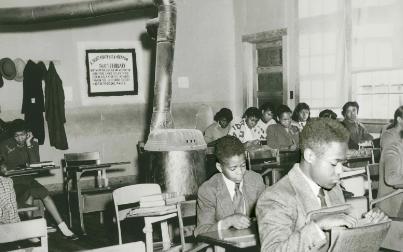 | |
The 1872 law simplified city incorporation, allowing Chicago to formalize its governance, including the school board. This law helped streamline the board's structure and authority, shaping its role in managing public education.
On April 23, 1875, Chicago chose to adopt the 1872 Illinois law, moving away from its previous city rules. This change influenced how the Chicago School Board was structured and operated. Over the years, updates like the Revised Village Act of 1941 provided clearer guidelines for organizing local governance, including school boards, refining their responsibilities and oversight in managing education.
In 1970, the Illinois Constitution was amended to grant Chicago "home rule" powers, which began on July 1, 1971. These powers allow the city, including its school board, to manage public health, safety, welfare, taxes, and debt independently. This means the school board can make important decisions about local education without needing state approval for every action.
In 1995, the state government passed the Chicago School Reform Amendatory Act, returning the power to appoint school board members back to the Mayor of Chicago. The board was temporarily renamed the "Reform Board of Trustees" from 1995 until July 1, 1999, when it was once again called the "Chicago Board of Education." This gave the mayor significant control over education policy and administration, shaping the direction of Chicago's public schools.
| |
Illinois's 1872 Law
Impact of the Chicago School Board
| The 1872 Illinois law not only simplified the incorporation process for villages and cities but also laid the groundwork for formal governance structures within these municipalities. In Chicago, this change affected how the school board was organized and operated. With the city's official recognition and streamlined incorporation, the Chicago School Board gained the ability to formalize its authority and structure, influencing its responsibilities in managing public education. This law was part of broader efforts to create more efficient and standardized local government institutions, including educational oversight. | |
The Chicago Reporter Reports | |
History of Chicago Public Schools | |
|
1837
Chicago becomes official with its first city charter.
1854
John Dore, a Boston teacher and principal, becomes Chicago’s first school superintendent.
1870
Public school enrollment stands at more than 27,000 students.
1872
Illinois creates the Chicago Board of Education. Members will be appointed by the mayor to oversee the city’s public education system.
| |
|
Loyola University Chicago Reports
May 1992
| Battle Over the Chicago Schools: The Superintendency of William Mcandrew | 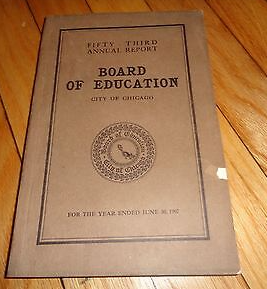 | |
The Illinois General Assembly granted the city of Chicago its third charter on 13 February 1863. Intended to provide a broader base for municipal government, the new charter weakened the common council's firm hold over the city's public school system but vested authority to control the school fund and school lands in the city of Chicago: The common council shall, at all times have the power to do all acts and things in relation to said school lands and school fund which they may think proper to their safe preservation and efficient management, and sell and lease these lands •
Provided that the proceeds arising from such sales shall be added to, and constitute a part of, the school fund. 36 The charter granted the board of education exclusive governance to operate the schools, and the power "to enact ordinances as necessary for proper management of the schools.
Enactment of the Cities and Villages Act by the General Assembly in 1872 delineated the relationship between the common council and the board. Intended for cities with populations of 100,000 or greater, the Act strengthened the board of education and granted it, with concurrence of the common council, power to erect or purchase school buildings; buy or lease school sites; and, issue bonds upon credit of the city for the purchase or lease of buildings or lands and for capital improvements.
| |
Chicago School Board Evolution
The Role of the 1872 Law and the Revised Village Act of 1941
| On April 23, 1875, Chicago adopted Illinois' 1872 law, impacting the structure of the city's school board. This shift moved Chicago away from its prior local rules, establishing a framework for school board governance. The Revised Village Act of 1941 further refined this by setting clearer guidelines for village and school board organization, ensuring better oversight and operation of local education systems. These legal updates played a key role in shaping the Chicago School Board's structure and responsibilities over time. | |
|
Chicago Kent-Law Reports
March 1943
| |
Illinois Revised Cities and Villages Act:
A Study
| After the prohibition, by the Illinois Constitution of 1870, of this type of special legislation, the General Assembly, in 1872, enacted the Cities and Villages Act.2 This Act, constituting as it did the general charter of all municipalities incorporated thereunder, authorized new cities and villages to be incorporated under its provisions, and authorized already existing cities, villages, and incorporated towns to abandon their prior organization and become incorporated as a city or village under the provisions of the Act. | |
Click Image Below to View the Revised Cities and Villages Act of 1941. | |
The Illinois Municipal Handbook Reports
Handbook of 2021
| Chapter 2: Home Rule and Intergovernmental Cooperation | On July 1, 1971, approximately 60 Illinois municipalities automatically achieved home rule status. The 1970 Illinois Constitution freed home rule municipalities from having to hunt for authority for their every act. Instead, subject to certain limitations and restrictions, the municipal legislative body may act without relying on the General Assembly. This power pertaining to local affairs allows solutions to local problems to be fashioned by those closest to the problems rather than those sitting in the legislature. Hence, home rule may be thought of as the power to act without specific statutory authority. Since 1971, many municipalities have become home rule units, either through population growth or referendum. There are currently 217 home rule municipalities in Illinois. Many municipalities have, by referenda, become home rule units. | |
1995 Chicago School Reform
Mayoral Control and the Chicago Board
of Education
| In 1995, the Illinois state government passed the Chicago School Reform Amendatory Act, granting the Mayor of Chicago the authority to appoint school board members. This shifted significant control of education policy and administration to the mayor. From 1995 to July 1, 1999, the school board was temporarily renamed the "Reform Board of Trustees" before returning to its original name, the "Chicago Board of Education." This act marked a pivotal moment in shaping the direction of Chicago’s public schools, allowing the mayor to directly influence education reforms and administrative decisions. | The Chicago Board of Education Reports | The History of the Chicago Board of Education | In 1987, Secretary of Education William Bennett declared Chicago Public Schools as “the worst in the nation.” In 1988, the Illinois General Assembly passed a school reform act which authorized Mayor Richard M. Daley to take control of Chicago’s crisis-riddled education system. The Chicago School Reform Act officially took effect on May 1, 1989 and one of the series of amendments created to effectuate change was the Amendatory Act. In 1995, it empowered Mayor Daley to appoint the five-member Reform Board of Trustees who embarked upon comprehensive reform measures to improve Chicago Public Schools. | |
|
Loyola University Chicago Reports
May 2011
| |
The 1995 Chicago School Reform Amendatory Act and the Cps Ceo: A Historical Examination of the Adminstration of Ceos Paul Vallas and Arne Duncan | This study provides a historical analysis of the 1995 Chicago School Reform Act, as well as an analysis of the tenures of Chicago Public Schools Chief Executive Officers Paul Vallas and Arne Duncan. It provides an analysis of words and actions of the two CEOs through the interpretive framework of Thomas Sergiovanni’s Five Sources of Authority. The sources of authority are bureaucratic, psychological, technical-rational, professional and moral. Each source of authority represents certain assumptions that are dominant if the particular source is primarily utilized. | |
Click Image Below to View the Chicago School Reform Act. | |
The Passage of Legislation
How the Fight for Elected School Boards Became Reality
| After years of advocacy from community groups, legislation was passed to reinstate school board elections in Chicago. The new law empowers residents to elect officials responsible for overseeing CPS, shifting control from the mayor’s office back to the community. This legislation is seen as a victory for advocates of equitable and accountable public education. | |
|
Chalkbeat Chicago Reports
March 7, 2024
| Illinois House passes plan for Chicago’s elected school board | |
|
The Illinois House has approved a Senate proposal that would allow Chicagoans to vote for 10 out of 21 school board members during the Nov. 5 election. The bill now heads to Gov. J.B. Pritzker’s officer for final approval.
Senate Bill 15, which passed 75-31 on Thursday, includes boundaries for the districts that school board members will represent, ethics guidelines, and term limits.
November marks the first time Chicago voters will be able to elect school board members. Voters will elect 10 board members while Mayor Brandon Johnson will appoint 11, effectively keeping control until the end of his first term. In 2026, all 21 seats will be up for election, with 20 members elected from districts and the board president voted on by the entire city.
| Illinois House pass elected Chicago school board bill, new gun legislation | |
Click Image Below to View Public Act 103-584, sponsored by Don Harmon. | |
|
State of Illinois Reports
July 26, 2021
| |
Gov. JB Pritzker signs law creating elected Chicago school board | |
CHICAGO -Governor JB Pritzker signed landmark legislation creating an elected school board for Chicago Public Schools. The legislation expands the size of the board from the existing seven members to 21 members over the course of the next five years.
"An elected school board will help students and their families have a strong voice in important decisions about the education system in Chicago," said Governor JB Pritzker. "I applaud the members of the General Assembly for working together on behalf of their constituents to pass legislation that required compromise and thoughtful deliberation. I look forward to ongoing conversations with the General Assembly and mayor, in particular about the district's finances, board members' compensation and campaign rules."
| LIVE: Pritzker speaks after bill to create elected CPS board passed | |
Rahm Emanuel’s School Closures
The Impact of Shutting Down 50 Schools and Its Lasting Effects
| |
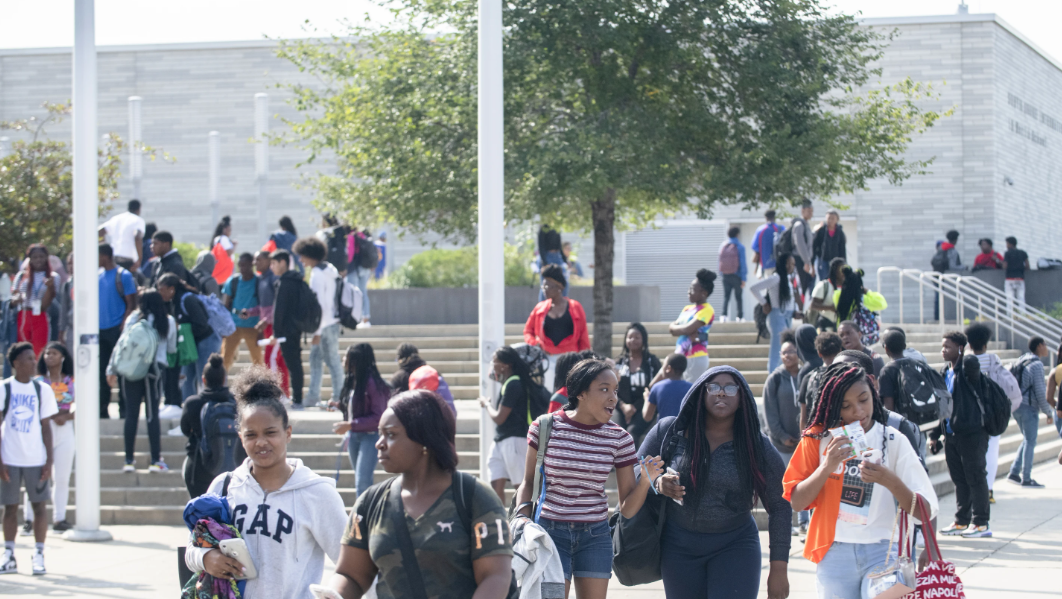
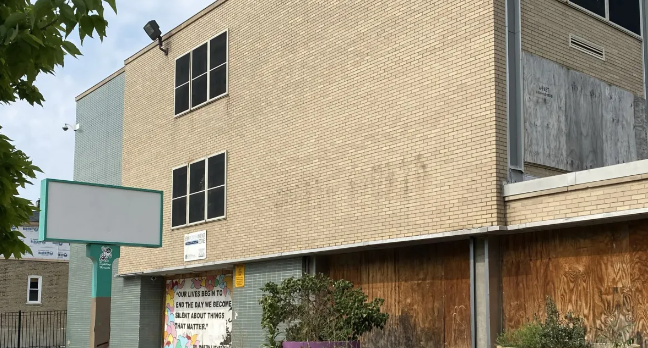
During Rahm Emanuel’s administration, 50 CPS schools were closed, primarily affecting Black and Brown communities. These closures displaced thousands of students, creating overcrowded schools and disrupting neighborhood stability. The long-term effects of these decisions are still felt, with ongoing debates about their fairness and impact on
education equity.
| Chicago Public Schools: Closed (documentary on the 2013 CPS closings) | |
Associated Press Reports
March 21, 2013
| |
Chicago to close 54 schools to address $1B deficit | |
|
CHICAGO (AP) — Tens of thousands of Chicago students, parents and teachers learned Thursday their schools were on a long-feared list of 54 the city plans to close in an effort to stabilize an educational system facing a huge budget shortfall.
Mayor Rahm Emanuel says the closures are necessary because too many Chicago Public School buildings are half-empty, with 403,000 students in a system that has seats for more than 500,000. But opponents say the closures will further erode troubled neighborhoods and endanger students who may have to cross gang boundaries to attend school. The schools slated for closure are all elementary schools and are overwhelmingly black and in low-income neighborhoods.
| | Parents Protest Chicago Public Schools Closings | |
9-Year Old Stands Up To Rahm Emanuel Closing His School
| |
WTTW Reports
June 16, 2023
| Revisiting the Impact of Chicago’s Mass School Closings 10 Years Later in Austin, Garfield Park | |
Ten years ago, the Chicago Board of Education and former Mayor Rahm Emanuel decided to close nearly 50 public schools, mainly on the South and West sides of the city.
One of those schools was Delano Elementary in Garfield Park. Issues arose when those students had to then attend school with students at Melody Elementary.
“I thought it was erroneous for them to take these two schools that have been adversaries for almost 40 to 50 years and put them in the same school,” said Reginald Akkeem Berry Sr., founder of Saving Our Sons Ministries. “That was just, again, set up for failure.”
Berry said his organization had to step in to help mediate when the school closed.
| |
WBEZ Chicago Reports
June 1, 2023
| After 10 years, Chicago school closings have left big holes, and promises unkept | |
George Smith Jr. looked over his shoulder every day on the walk home across the street from his Englewood school, scared of the tense environment, scared of neighborhood gangs, scared of getting jumped.
But he loved his elementary school. His band class gave him peace, his after-school programs something to do. And despite the anxiety he carried into adulthood, he was devastated when the school was one of 50 closed in 2013 by then-Mayor Rahm Emanuel.
"I got a lot of pride in that school, a lot of memories," Smith says of his school, later renamed Woods Elementary. "To see it just be nothing now and to know what the kids had to go through to go to these different schools, it's sad. It's heartbreaking.
| Preservation Snapshots: Ten Years Later, the Impact of School Closings in Chicago | |
Block Club Chicago Reports
August , 2023
|
Chicago Closed 50 Schools 10 Years Ago. What’s Happened Since Then?
| |
CHICAGO — Demetrius Hobson’s voice piped through the loudspeaker into every classroom at Matthew Henson Elementary School on Chicago’s West Side.
It was just before 3:45 p.m. on June 19, 2013. In a few minutes, the bell would ring to dismiss classes on the last day of the school year at Chicago Public Schools.
Hobson had arrived the previous year, fresh out of Harvard’s principal leadership program, with endless energy and new ideas. He had been ready to transform the 250-student school that served mostly Black students from low income families in North Lawndale and was “gearing up for the long run.”
| |
Chicago Public Schools
An Overview of Leadership Changes and the Impact of Brief Tenures
| This article provides an overview of the leadership changes within Chicago Public Schools (CPS), highlighting the frequent turnover of its CEOs and the implications of these brief tenures. It examines the challenges faced by the district during periods of leadership transition, including continuity of policies and initiatives, as well as the impact on staff, students, and the community. By exploring the history of CPS’s leadership, the article sheds light on the dynamics that have shaped the district's approach to education and governance over the years. | |
WTTW News Reports
May 3, 2021
| A Brief History of CPS’s Often Briefly Tenured CEOs | |
With Janice Jackson stepping down as CEO of Chicago Public Schools, Mayor Lori Lightfoot will now be on the hunt for the 10th person to head the district since the position was created in 1995.
It was former Mayor Richard M. Daley who appointed the first CEO, Paul Vallas, after the Illinois legislature placed the district under mayoral control.
Though leadership was relatively stable in the early years, with just two CEOs occupying the spot between 1995 and 2009, in the last decade, the position has become something of a revolving door, rocked by scandal and corruption.
Here’s a look back at the history of CPS CEOs — including two interim leaders — and where they are now.
| |
Chicago Magazine Reports
October 2, 2012
| Reform Before the Storm: A Timeline of the Chicago Public Schools | |
1996–2001: ACCOUNTABILITY
CPS chief Paul Vallas imposes quantitative metrics for evaluating student and school performance. Students scoring poorly on standardized tests are now held back, and low-performing schools face probation.
1997
Chicago’s first charter schools open.
1999
Northside College Prep opens. Selective enrollment schools gain momentum.
2001
Arne Duncan appointed CEO of CPS.
2002–2012: DIVERSIFICATION
Under Arne Duncan, 82 poor-performing or underattended schools close, and 116 new schools open, including 72 charter schools and 9 contract schools. In compliance with No Child Left Behind, CPS steps up emphasis on standardized testing.
| |
The Consortium on Chicago School Research Reports
September 2011
| Trends in Chicago’s Schools across Three Eras of Reform: Summary of Key Findings | 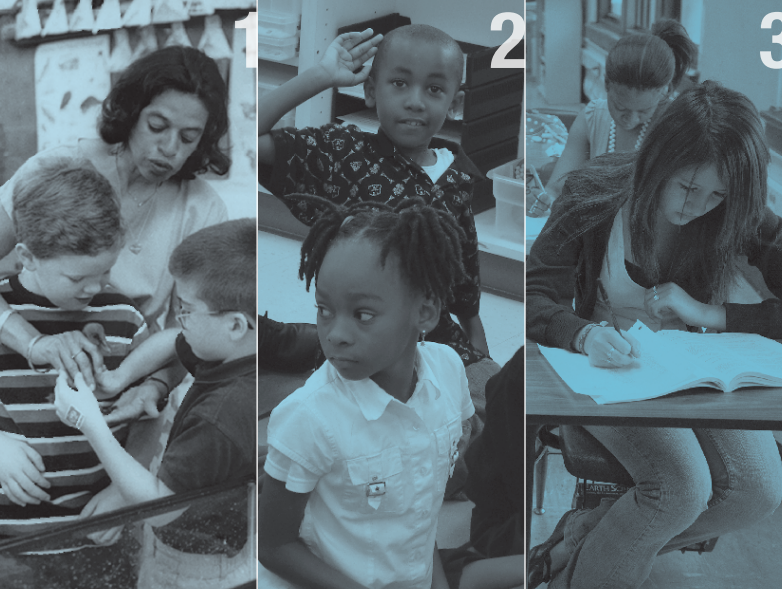 | |
This report was the result of a group effort by many people, and we greatly appreciate the support and feedback we received from our colleagues at the Consortium on Chicago School Research (CCSR) and the CCSR Steering Committee. Special thanks to Holly Hart for researching and constructing the Reform Timeline and working on the early stages of this study. Several CCSR directors provided feedback on early drafts of this report, including Penny Sebring, Paul Goren, David Stevens, Jenny Nagaoka, Melissa Roderick, and Sue Sporte. We appreciate their efforts greatly. We are also very grateful for the considerable help of CCSR Associate Director for Communications, Emily Krone, who provided tireless editing and substantive feedback. We are also very grateful for the support of our Steering Committee and the members who took the time to read drafts of this report and provide us with valuable feedback.
We particularly thank Kim Zalent, Arie van der Ploeg, Kathleen St. Louis, Steve Zemelman, Matt Stagner, Josie Yanguas, and Greg Michie. We would like to thank the Illinois State Board of Education for providing test data and Chicago Public Schools (CPS) for their continued cooperation and support in providing us with data that allow us to do this work. Most importantly, we want to acknowledge the Chicago Community Trust for taking the initiative to commission this study and providing the funding to carry it out.
| |
Mayor Johnson to Appoint New Members
Chicago School Board Resigns Entirely
| |
Mayor Johnson is set to appoint new members to the Chicago School Board following the sudden resignation of all current board members. The mass resignation, which has sparked widespread attention, is believed to be driven by internal conflicts and growing public pressure over the board’s handling of key issues such as school funding, equity, and safety. This pivotal moment gives Mayor Johnson the opportunity to reshape the leadership of Chicago Public Schools, with his appointees likely to play a critical role in setting future policies, improving educational outcomes, and addressing the district’s ongoing challenges. The appointments will be closely watched as they may signal a new direction for public
education in the city.
| |
The Chalkbeat Chicago Reports
October 4, 2024
|
All Chicago Board of Education members to resign amid tensions between Mayor Brandon Johnson and CEO Pedro Martinez
| |
The entire seven-member Chicago Board of Education will resign in the coming weeks after months of tension between Mayor Brandon Johnson and Chicago Public Schools CEO Pedro Martinez.
The resignations pave the way for Johnson to appoint new board members who could then carry out his wishes, including potentially firing Martinez. Johnson’s office said late Friday he will announce new appointments on Monday at 10:30 a.m.
Word of the resignations comes more than a week after the school board took no action to remove Martinez and about a month before the city’s first school board elections, which will create for the first time a hybrid board of 10 elected members and 11 appointed by the mayor. In three decades of mayoral control, no Chicago mayor has replaced all of their hand-picked members so quickly. Johnson hand-picked six of
seven members last July.
| Entire Chicago Board of Education to resign, Mayor Brandon Johnson's office says | Full: Heated Q&A with Mayor Brandon Johnson after school board press conference | |
NBC 5 Chicago Reports
October 7, 2024
|
Mayor Johnson to appoint 7 new members to Chicago Board of Ed after entire
board resigns
| |
Chicago Mayor Brandon Johnson will appoint seven new members to the Chicago Board of Education during an announcement Monday, according to a release from the Mayor's office.
The appointments come three days after the entire board said they would resign ahead of the start of a hybrid elected- and-appointed School Board in January 2025. They also come weeks after Johnson reportedly asked Chicago Public Schools CEO Pedro Martinez to resign from his post.
Johnson later denied that he asked Martinez to resign, though Martinez defended his status as the district's leader in a Chicago Tribune op-ed.
| Mayor Johnson plans to appoint 7 new School Board members Monday after current board members' resign | |
The Roles and Responsibilities of School Board Members
What Will They Be Accountable For?
|  | |
Elected school board members in Illinois have several key roles and responsibilities that focus on the governance and oversight of local school districts. Their duties include:
-
Setting Policy: School board members develop and implement policies that govern the school district, ensuring these policies comply with state and federal laws.
-
Budget Approval: They approve and oversee the district’s budget, ensuring that financial resources are used effectively to support educational programs and district operations.
-
Hiring and Evaluating Superintendents: Board members hire the district superintendent, who is responsible for the day-to-day management of schools, and they regularly evaluate the superintendent's performance.
-
Curriculum Oversight: School board members review and approve curriculum decisions to ensure they align with state standards and meet the educational needs of students.
-
Community Representation: As elected officials, they represent the interests and concerns of the community, acting as a bridge between the public and the school district.
-
School Improvement: They focus on long-term goals for improving educational outcomes and ensuring school facilities are safe and adequate for students and staff.
-
Policy Enforcement: School boards ensure that district policies and procedures are followed by administrators, staff, and students.
| |
Illinois Association of School Boards Reports
| The school board: What it is. What it does. | 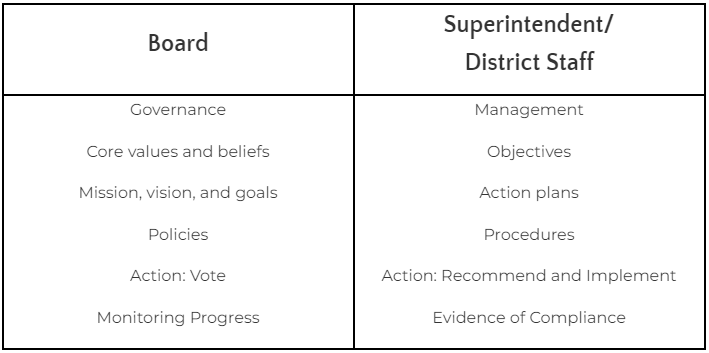 | |
The board of education, also called the school board, is a unit of local government that establishes direction, goals, and priorities for a school district and determines policy, budget, leadership, and administration.
The local school board grew out of the town meeting, dating back to the original 13 Colonies. Times have changed, but the function of school boards today remains the same: to provide local citizen control over public education, representing the community and its aspirations for its local schools.
Today, school board members represent the interests of two million Illinois public school children.
The Illinois Constitution grants boards of education latitude in governing their school districts, subject to state laws and regulations. The local school board is required to adopt and enforce all policies necessary for the management and governance of the public schools of the district. Through its written policies, the board directs and empowers the superintendent to function as chief executive officer in managing day-to-day district operations.
The board studies the needs of students and the community and bases its decisions on those needs. The superintendent carries out those decisions. The following chart distinguishes board work from staff work:
| |
WBEZ Chicago Reports
October 2, 20
| What do Chicago School Board members actually do? | |
Ahead of Chicago’s first election for school board members on Nov. 5, WBEZ and the Sun-Times are sharing information with voters to help cast an informed vote.
As the longest-serving member of the current Chicago Board of Education, Elizabeth Todd-Breland has adopted two metaphors when she thinks about the position.
The first: The board is watching a dance performance from the balcony, asking perhaps whether the choreography on the left side is coordinated with the right side, but not telling the dancers exactly what to do. The other metaphor: the board is like a rudder at the back of a big ship.
“We are like the big directional stuff,” she says. “The big picture. The community values. The shaping of the direction.”
| How School Board Members Determine Education Policy | NowThis | While this video refers to the elected school board in Arizona, many of the roles and responsibilities discussed are also applicable to the elected school board in Illinois. However, specific regulations and procedures may vary between the two states. | |
Choosing the Right Candidates
What to Consider When Deciding Who to Vote For in the School Board Elections
| With a range of candidates running, it’s important for voters to assess their backgrounds and positions on key issues like equitable funding and school closures. Voters should consider candidates’ track records, community engagement, and commitment to improving CPS. Informed voting will help ensure the right leaders are elected to represent Chicago’s diverse student population. | |
Chalkbeat Chicago Reports
September 25, 2024
|
Chicago school board election 2024: Here’s everything you need to know
| |
Chicagoans will vote for school board members for the first time in November.
Starting Jan. 15, Chicago’s Board of Education will go from seven members appointed by the mayor to a 21-member board with 10 elected members and 11 appointed by Mayor Brandon Johnson. This will be the first step toward transitioning to a fully elected board by 2027.
Chicago is divided into 10 districts for the 2024 election. Each district has roughly 275,000 residents.
Do you know which district you’re in? Check it out here on this interactive map. (Note: Enable location services in your settings).
| Click the image below to enter your home address and find out which Chicago School Board candidate is running in your district. | |
WBEZ Chicago Reports
October 15, 2024
|
Get to know Chicago School Board candidates at these forums
| |
Voters are casting ballots for Chicago’s first elected school board. Election Day is Nov. 5. Several community groups are planning candidate forums in the 10 voting districts. We also have videos below of forums that have already taken place.
Don’t know your district? Look it up using our voter guide while learning about the 31 candidates. If you know of an upcoming forum, email details to kgrossman@wbez.org.
Check back regularly for updates.
| |
Crains Business Chicago Reports
October 16, 2024
| Opinion: How do you decide who gets your vote for the new elected school board? | |
An elected school board for Chicago is one of those ideas that sounds a lot better than it likely is going to be.
Even Mayor Brandon Johnson, who ran on a promise to get this done, had second thoughts as the deadline for electing the full 21-member board approached. Johnson worked with allies in Springfield to slow the roll a bit. Now we are poised to vote for only 10 board members; Johnson will appoint 11, including the president. We'll have a fully elected board in 2027.
| |
|
The Chicago Tribune Reports
October16, 2024
| |
Editorial: Our endorsements for Chicago School Board |  | |
We begin the Tribune Editorial Board’s endorsements for the 2024 general election with our choices for Chicago Board of Education which — improbably — looks like the hottest local race we’ll see.
Chicago is making history by allowing voters to begin choosing members of the Board of Education for the first time ever. The precedent-setting aspect of that vote is noteworthy, but more important are the stakes attached to these selections.
The Chicago Teachers Union’s dominance of the city’s levers of power, mainly through its capture of the mayor’s office with the 2023 election of former CTU lobbyist Brandon Johnson, has made bringing some balance to the debate over the future of Chicago Public Schools more critical than ever. November marks the beginning of a two-step transition to a fully elected, 21-person school board. Johnson will get to appoint 11 members of the new board, who will take their seats in January, while voters are choosing 10.
| |
|
Chalkbeat Chicago Reports
July 16, 2024
| |
More than $400,000 raised so far in Chicago’s 2024 school board elections | |
|
The 45 candidates vying for 10 seats in Chicago’s first school board elections this November have raised more than $400,000 collectively for their campaigns, new campaign finance filings show.
The money is a mix of small donations from candidates’ friends and family, sizable personal loans, and in-kind and financial support from existing political and labor groups, according to a Chalkbeat analysis of state campaign finance records.
| |
|
CBS News Chicago Reports
October 16, 2024
| |
Fueled by Chicago Teachers Union, campaign contributions in school board race reach nearly $2.5 million
| |
|
Here are the four biggest candidate fundraisers as of October 14. The information comes from candidate filings made to the Illinois Board of Elections.
- Anusha Thotakura, a candidate in District 6 has raised $258,896. $181,666 or 70% has come from CTU.
- Bruce Leon, a candidate in District 2 has $245,000. He is self-funded through loans to himself.
- Jason Dones, a candidate in District 3 has raised $230,000. 98% of which has come from CTU.
- Robert Jones, a candidate in District 10 has raised $229,188. 96% of which has come from CTU.
| |
|
Your Vote, Your Schools
Why Participating in the School Board Elections is Crucial for CPS’s Future
| |
The future of Chicago Public Schools (CPS) relies on voter participation in the upcoming school board elections, a rare opportunity for residents to shape the district's governance. By voting, the community can ensure leaders are chosen who prioritize student welfare, equitable funding, and true community representation, creating a school system that is more responsive to the needs of all students. With this election, voters have the power to influence critical decisions about resource distribution, policy-making, and educational priorities, ensuring CPS evolves into a system that fosters inclusivity and success for Chicago’s youth. | |
|
The Chicago Sun-Times Reports
October 21, 2024
|
Vote, Chicagoans, in city's first school
board election
| |
|
School board elections are generally the sleepiest of contests, with turnout as low as the single digits — the national average is 5% to 10%, according to one estimate — and race that are often uncontested and decided by a small number of voters.
We hope Chicago can beat those odds, and holding school board elections at the same time as a high-interest presidential election is a good way to try to accomplish that.
With so much at stake for Chicago Public Schools, every voter — not just parents and guardians — needs to get involved in choosing the best people to grapple with the many vexing problems facing CPS.
| |
|
Crains Business Reports
October 21, 2024
| |
Commentary: Elected CPS school board has to become every Chicagoan's business | |
The Nov. 5 ballot marks a historic shift to an elected board for our public schools. While it is the norm for districts nationwide, it will be a first for Chicago. And while the size and structure of our school board is causing warranted concerns, what’s done is done. As Chicagoans, it is now our challenge — and our opportunity — to ensure this new governance model works for students and taxpayers. | |
|
Why Chicago's Public School System
Is Broken
| |
Click Below to View Today's Job Highlights | |
 | |
Radiological Response Equipment Technician
Date: Oct 11, 2024
Location: Springfield, IL, US, 62703
Job Requisition ID: 42052
Agency: Emergency Management Agency
Posting Number: 42052
Class Title: NUCLEAR SAFETY EQUIPMENT TECH - 83691
Skill Option: None
Bilingual Option: None
Opening Date/Time: 10/11/2025
Closing Date/Time: 10/28/2024
Salary: Anticipated Starting Salary: $5,703 monthly;
Full Range $5,703 - $8,170 monthly
Job Type: Salaried
Category: Full Time
County: Sangamon
Click Here to Apply
Administrative Assistant Date: Oct 16, 2024
Location: Chicago, IL, US, 60661
Job Requisition ID: 41936
Agency : Department of Human Rights
Closing Date/Time: 10/30/2024
Salary: Anticipated starting salary $5,423 monthly;
Full range $5423--$7,721
Job Type: Salaried Full Time
County: Cook
Number of Vacancies: 1
Click Here to Apply
Product Designer
Date: Oct 16, 2024Location: Springfield, IL, US, 62702-5056
Job Requisition ID: 41884
Agency: Department of Public Health
Class Title: PROJECT MANAGER - 34725
Skill Option: Standard Building Design / Architecture
Office: Health Care Regulation
Division: Life Safety & Construction
Posting ID: 45-22-0159 / 41884
Posted: 10/16/2024-10/30/2024
Salary: Anticipated Starting Salary $6,005/month;
Full Range $6,005 - $8,678/month
Job Type: Salaried
Category: Full Time
County: Sangamon
Click Here to Apply
Information Services Specialist II
Date: Oct 11, 2024
Location: Springfield, IL, US, 62701
Job Requisition ID: 41604
Agency: Illinois Commerce Commission
Closing Date/Time: October 28, 2024
Salary: $6,005 - $8,678 Monthly
Job Type: Salaried Full Time
Category: Professional
County: Sangamon County
Number of Vacancies: 1
Click Here to Apply
Foster Home Licensing Specialist
Date: Oct 11, 2024Location: Chicago, IL, US, 60616
Job Requisition ID: 42094
Agency: Department of Children and Family Services
Skill Option: None
Bilingual Option: Spanish
Closing Date/Time: 10/28/2024
Salary: Anticipated Starting Salary $6,291/Month –
Full Salary Range $6,005-$8,678/Month
Job Type: Salaried
Category: Full Time
County: Cook
Number of Vacancies: 1
Click Here to Apply
| Click Below to View Job Highlights From Previous Dates | | | | |