|
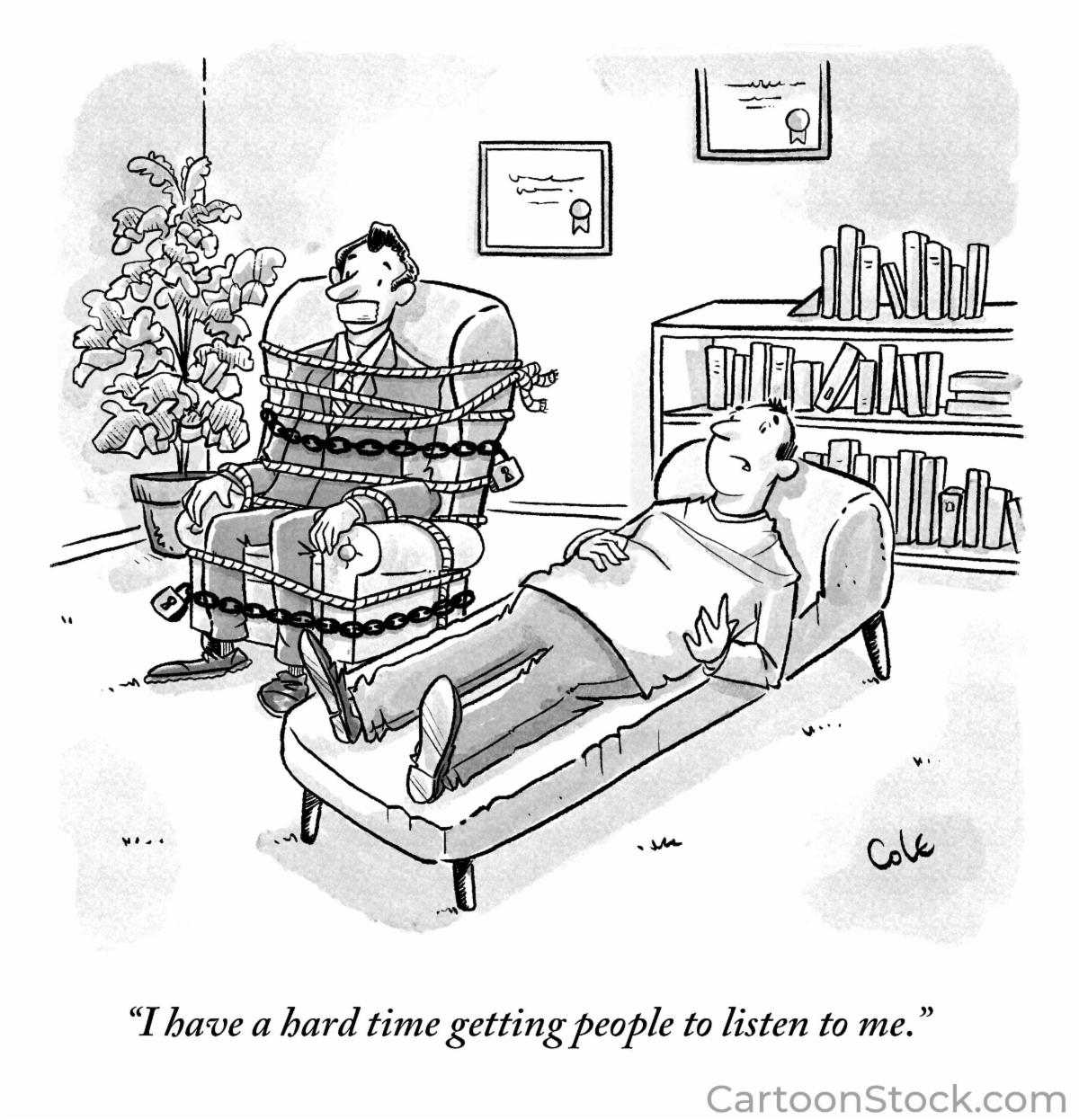
When people aren't listening, we don't feel heard. Our interpretation generally lands us in one of two camps:
It's their problem- they're arrogant, idiots, over talkers ...
Or
It's our problem: we aren't good communicators, our message isn't worth hearing ...
Regardless of evidence for either case, we are experiencing a communication problem. The kind that frequently leads to misunderstandings and increases the likelihood of mistakes.
It's Their Problem (or ours if we're the ones not listening)
Think about the times when you're the one not listening.
Do you:
- have the urge to tell your story or give advice?
- tend to interrupt?
- believe you know more than they do?
- think you already know what they're thinking?
Are you:
- thinking about what you're going to say while they're talking?
- distracted?
- tired or bored?
- experiencing an emotional reaction that makes you want to avoid or defend?
If you experience one or more of these, chances are so do they. Did you notice that some of these qualities not only make us poor listeners, but also contribute to reasons why others may not want to listen back?
It's My Problem
Some things we're aware of and we all have blind spots. Consider asking someone you trust if they've noticed these tendencies or ask them what they think is getting in your way of communicating more effectively.
Over-Explain
We may do this to make up for lack of knowledge or confidence. Even when you have interest, attention will wane if you’re giving info that is too much, too detailed or too repetitive.
- Give succinct accurate points.
- Ask what context they would like.
- Leave room for your listener to ask questions - this encourages engagement.
Apologize
This can be irritating when it's unnecessary. When we apologize for talking or having an opinion, we depreciate the message and people place less value on what we have to say.
- Avoid words like: "I'm sorry or maybe I don't get this, but..."
Ramble
Perhaps you don't get to the point. Or you start off okay but then you take one point and go down a rabbit hole. Or you feel like you must contribute something, so you speak but you don't have a clear point to deliver. You lose track, and people lose track, which causes them to stop listening & interrupt.
- Prepare what you want to say
- Stick to bullet points
- Re-direct if the conversation goes off course
Believe You DON'T Deserve to Be Heard
Holding the belief that you don't deserve to be heard comes across in the way you speak and your body language. It can be interpreted that you are unsure or indecisive. Thinking your communication skills aren't good enough may result in avoiding or resisting the effort it takes to get others to listen.
- Make the shift to: "I have ideas that deserve to be heard and I am doing people a disservice if I don't communicate them."
Come Across Negative
If you're mostly giving the worst-case scenario or complaining without thinking about what comes next, people are going to tune out.
Likewise, sarcasm can bite and come across as passive-aggressive which puts people either on the defensive or running away, neither of which will create meaningful connections.
If you don't have a learning attitude, you may be viewed as a know-it-all and the conversation will be very one sided.
- Consider your tone and timing.
- Identify the problem AND have potential solutions & next steps ready to offer
- Pay attention to how your humor lands - aim for genuine laughter that creates a release not tension
- Get & Stay curious - learn to ask good questions
Interrupt or Let Yourself be Interrupted
If you're the interrupter -
Even when it's to show agreement or understanding, if you cut people off mid-sentence it can come across as rude. People may feel disrespected, devalued or that their point isn't compelling or interesting. If it happens often enough, people stop paying attention.
If your communication style is more passive, you may tend to back off and not hold your talking space. It's easy for others to interrupt and if you let it happen, it tends to keep happening.
- Set a boundary: "I can see you have something to say, but I haven't finished my point yet." "I want to hear your view. Please let me finish."
- Set group dynamics: Have a designated facilitator. Everyone gets the floor for X minutes. Ask the person if they've finished before moving on.
THINGS WE CAN ALL TRY
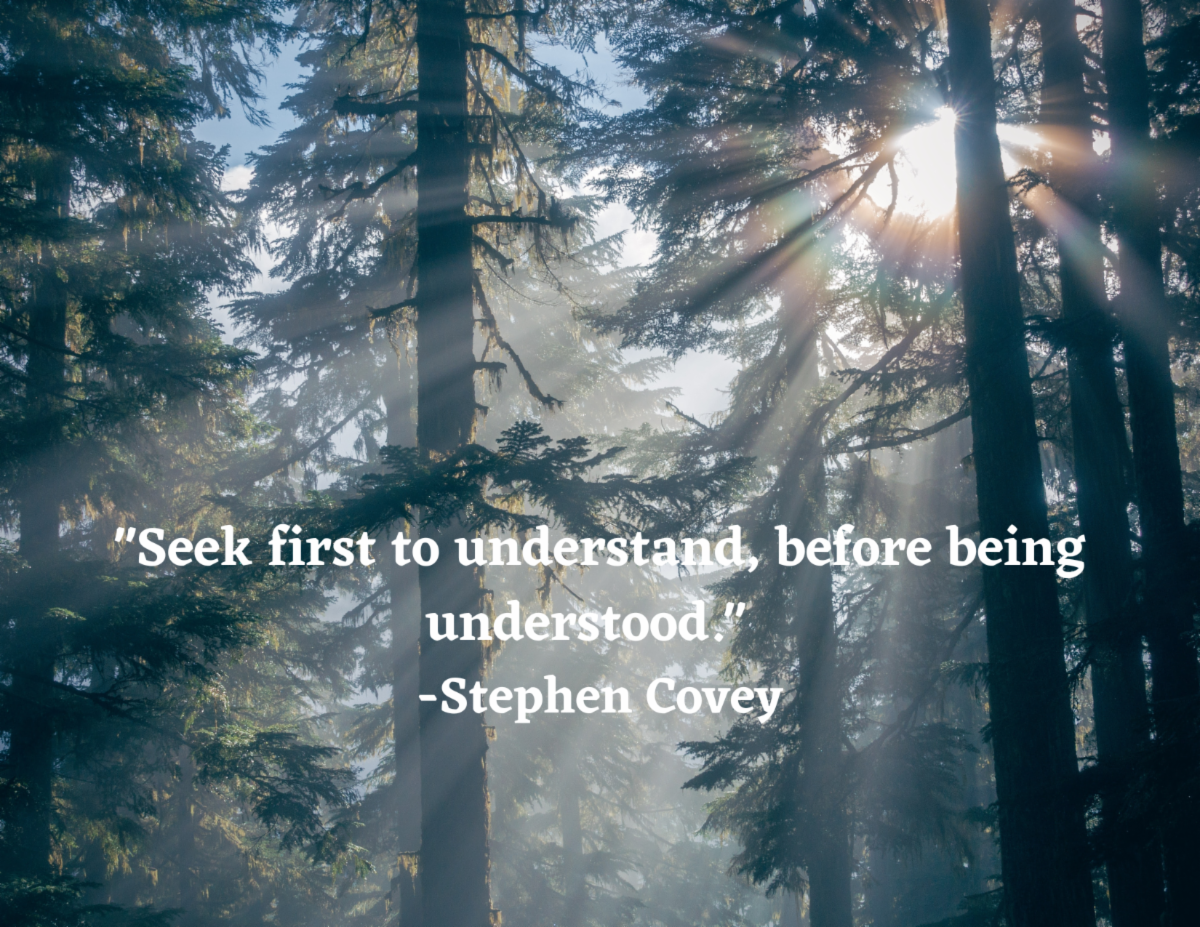
Focus On Your Own Listening Skills
-
Make sure people feel heard and understood. Being a good listener builds trust and increases the likelihood that others will be more open to hearing what you have to say.
Know Your Audience & Make It About Them
- Create a connection. Find common ground. Make the conversation mutually beneficial and engage them.
- Understand their preferences for receiving & processing information. Use a combination of visual & verbal methods.
- Pay attention to body language. Address distractions.
- Make it relevant: What's in it for them?
- Be responsive. When you respond to what they are saying, they will be more likely to get and stay involved.
Send The Right Signals
- Pay attention to your body language. Posture, eye contact, how you use your hands & responsive cues help portray confidence, attentiveness & energy.
- Be mindful of speed, volume, inflection & vocabulary. Too fast/too slow, too loud/too soft, too monotone, too simple/too complex are variables that will have an impact on your listener's stamina.
Add Value, Emphasize Importance & Create Accountability
- Set the tone
- Here's WHAT you're going to get from listening.
- Here's WHY it's important. Stressing the importance upfront sends a signal to listen up.
- Create accountability. Set up an expectation at the start. When people know there is an expected deliverable, they listen more attentively.
- Make your point multiple times in multiple ways.
- Check in for understanding.
- Invite feedback.
Communication is a two-way street. While we can't control other's behaviors, we can control our own and we can have influence. Developing yourself and fostering environments where healthy communication is the expectation goes a long way in getting your message across!
|