Issues spurring
recent changes
and
pushbacks
in journalism aren’t new, said
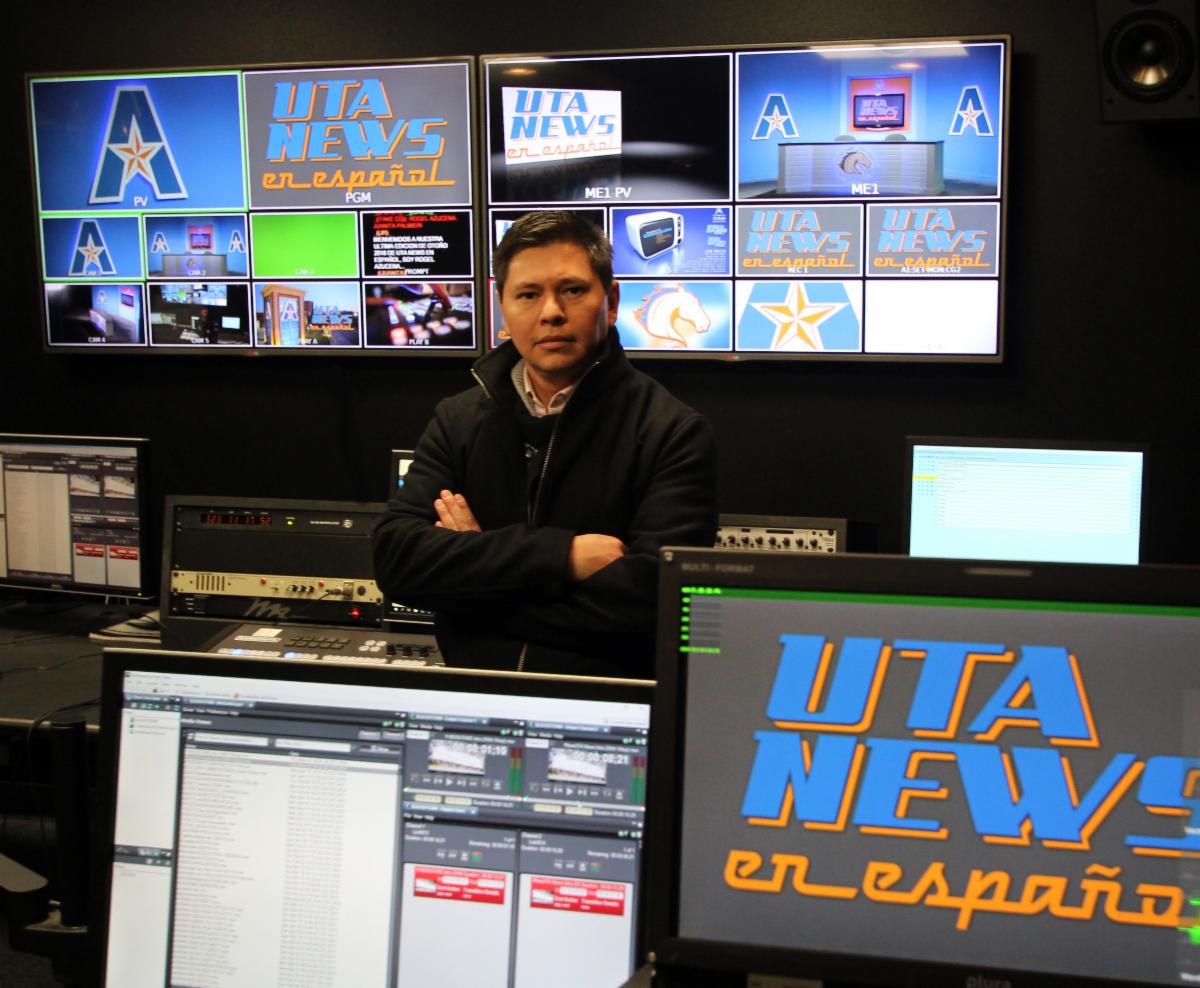
Julian Rodriguez
, a broadcast professor at the University of Texas at Arlington. They’ve simply become “more prominent because of how we perceive and understand inequality today.”
“We have today's newsroom heated discussions not necessarily because journalism is in decline but because we are seeking a higher standard,” said Rodriguez, who is also the faculty advisor of the Hispanic Media Initiative. “And higher standards demand higher-level thinking, strategies benefiting the whole, and less the one.”
As newsrooms continue to
address racial inequities
, the Journalism Institute reached out to journalism schools by email to learn how academia is confronting the same issues in classrooms and in student media. We are featuring Rodriguez’s answers this week.
Why do you think the industry has been so slow in addressing racial inequities within?
Rodriguez
: If we lack leadership sensitive to the value of diversity and inclusion, we can't easily advance in the inclusion of diverse voices in the newsroom. Most attempts to diversify newsrooms are explicit, on paper, but implicit forces still rule decision-making today. Furthermore, newsrooms continue to lack professional development and advancement systems for journalists, a trend found in newsrooms across the nation, regardless of language.
Can you share examples of hiring managers or organizations that are doing it right?
Rodriguez
: One good example is NBC-Universal-Telemundo; the company is fully invested in addressing diversity and inclusion issues, both at the national and local levels. Their impact is remarkable: NBC and Telemundo newsrooms share resources, they are always present and involved at professional conferences like the ones held by the National Association of Hispanic Journalists (NAHJ) and the National Association of Black Journalists (NABJ), and they partner with universities across the nation to educate, cultivate, and hire journalists with diverse backgrounds.
UTA has been partnering with NBC-Universal-Telemundo for more than a decade, and we recently joined the Telemundo University program, a series of workshops exclusively targeting bilingual journalism students interested in news production and multiplatform distribution. In addition, UTA is part of the Telemundo News Service (TNS) and our Hispanic students have the ability to produce and distribute news reports to every Telemundo station in the nation.