|
Fruit of Labor Singing Ensemble and Lynnette Barber & Will Ellis Blues
Duo Perform at National Mobilization in Atlanta
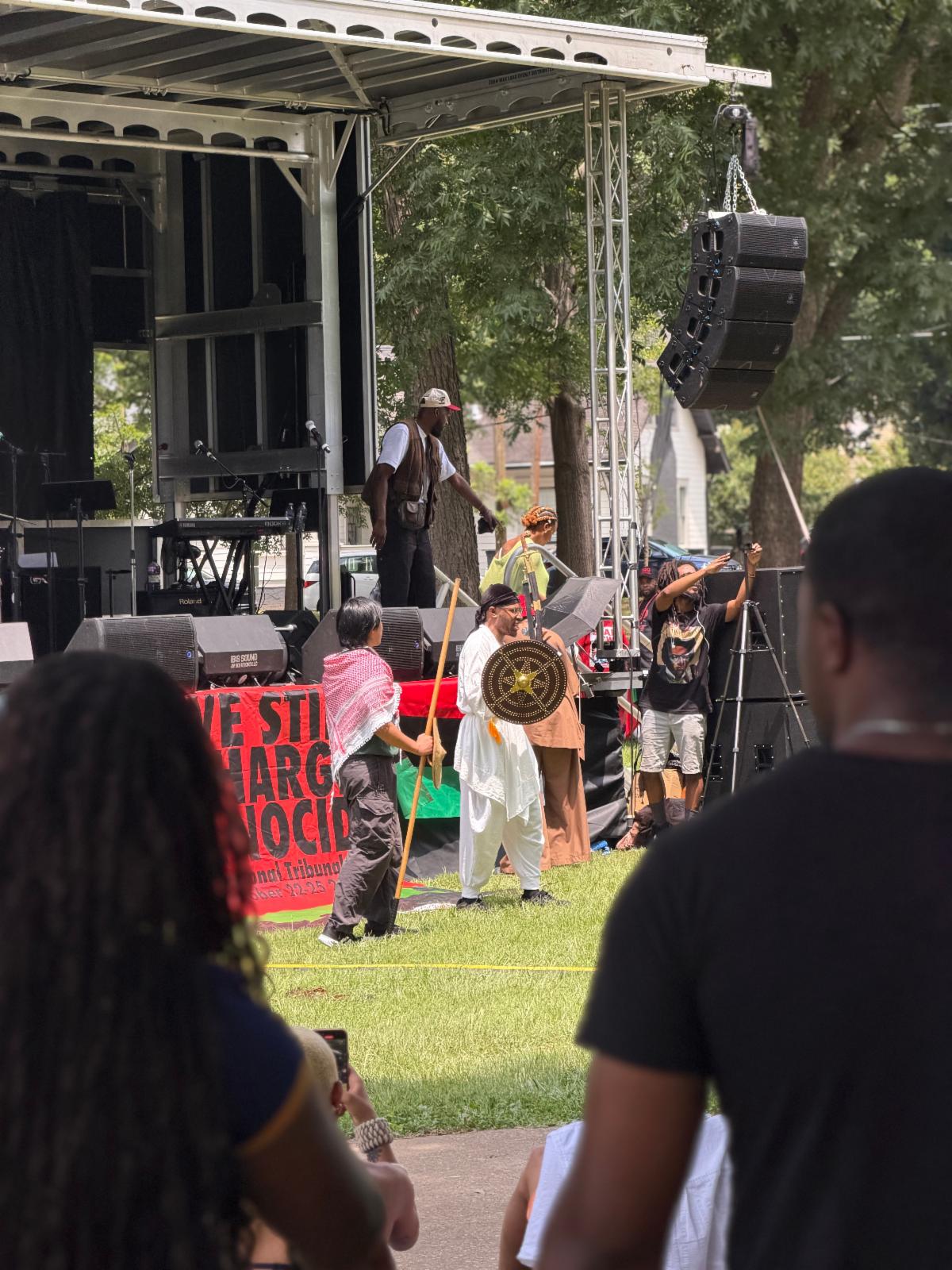
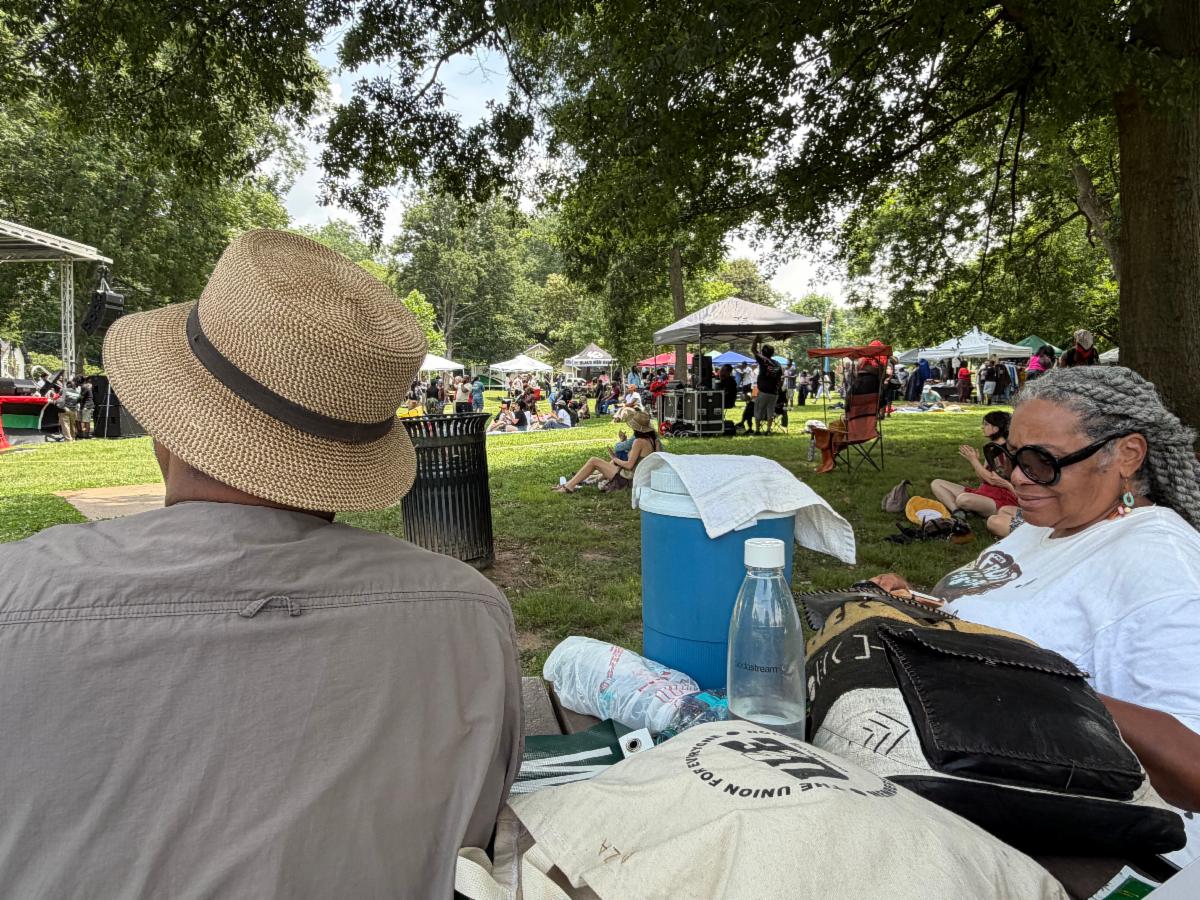
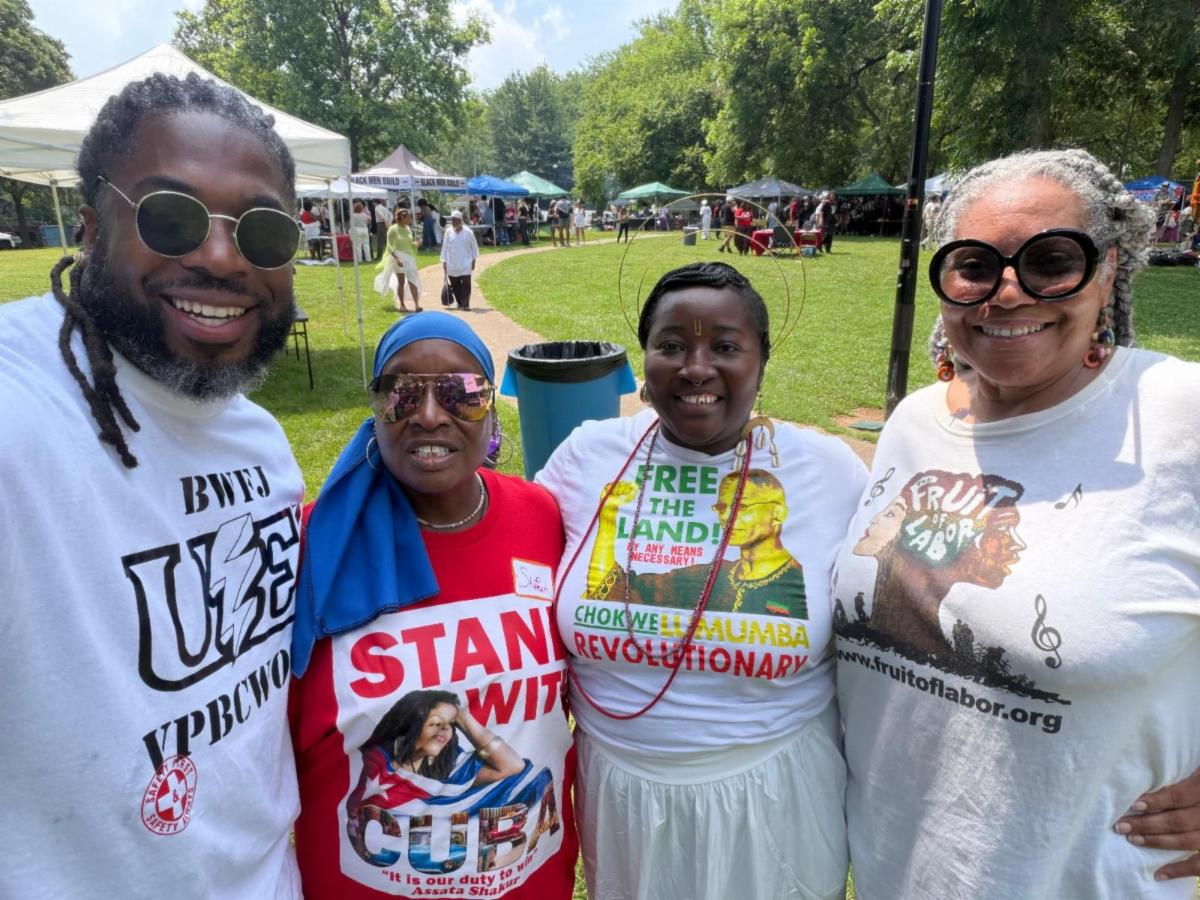
ATLANTA, GA — July 4, 2026 — The 250 Years of Peoples’ Resistance: National Mobilization Against Genocides brought together freedom fighters, social justice advocates, community organizers, and artists from around the world at Malcolm X Park in Atlanta, Georgia.
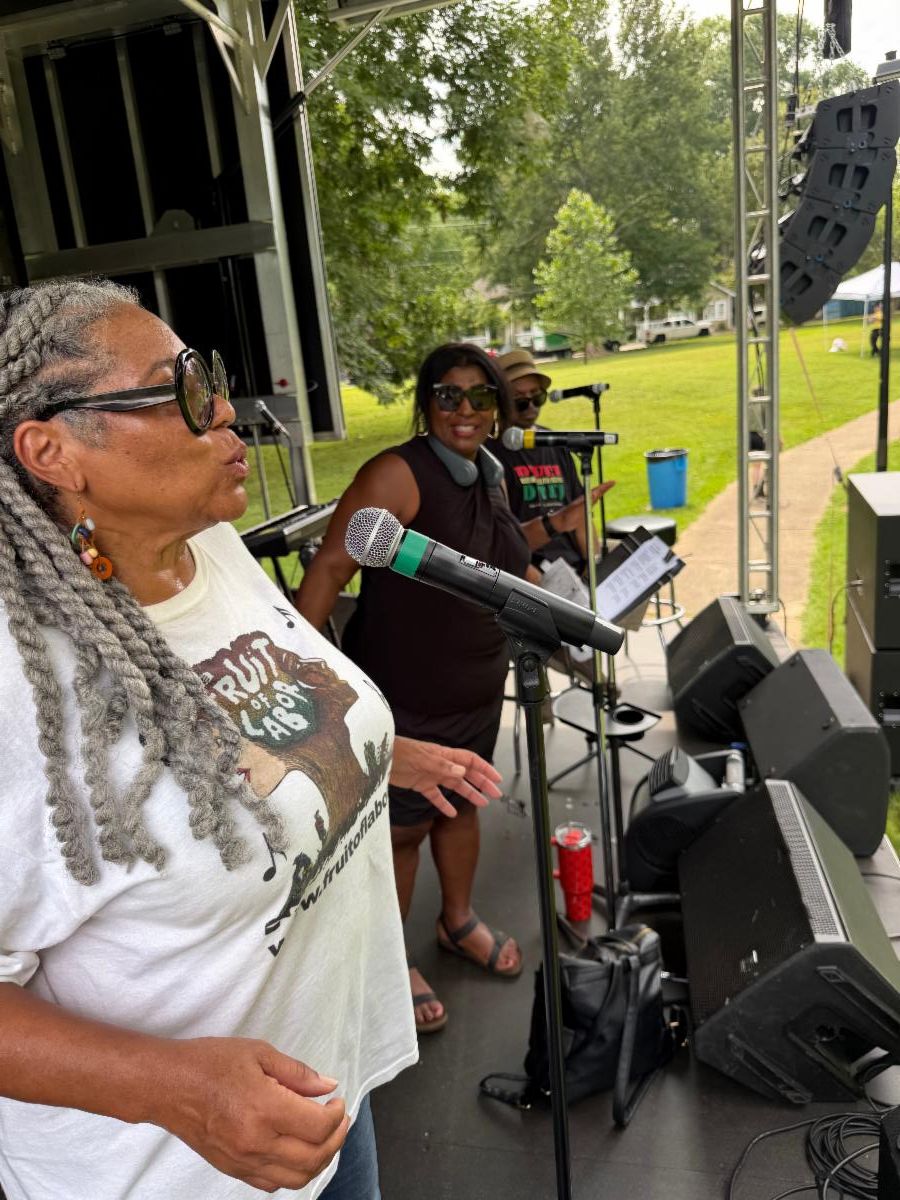
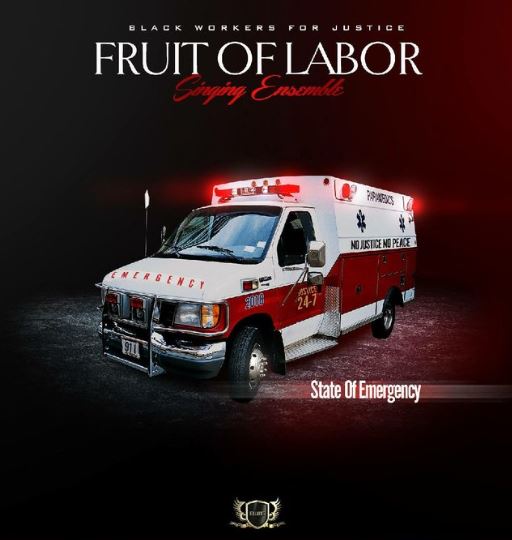
Representing Black Workers for Justice, the Fruit of Labor Singing Ensemble inspired the crowd with powerful songs rooted in the freedom movement. The ensemble featured Lee Tate, Music Director, Lead Singer Nathanette Mayo, and Elder Angaza Laughinghouse, whose voices and leadership helped deliver a moving musical tribute to the ongoing struggle for justice and liberation. Their performance included stirring renditions of “Lift Every Voice and Sing,” widely recognized as the Black National Anthem, along with other historic freedom songs that have long served as anthems of hope, resilience, and justice.
The ensemble also performed “PAZ,” a Latin American song celebrating peace, freedom, and liberty for all people. They were joined by Lynnette Barber and the Will Ellis Blues Duo, who delivered a riveting performance of I Wish I Knew How It Would Feel to Be Free, made famous by Nina Simone. Their soulful interpretation reflected the spirit of the gathering and reinforced the event’s call for unity, justice, and human dignity.
| | |
Richmond County Coalition for Justice and Black Empowerment Delegation and Other Environmental Justice Activists Speak Out Against Data Centers
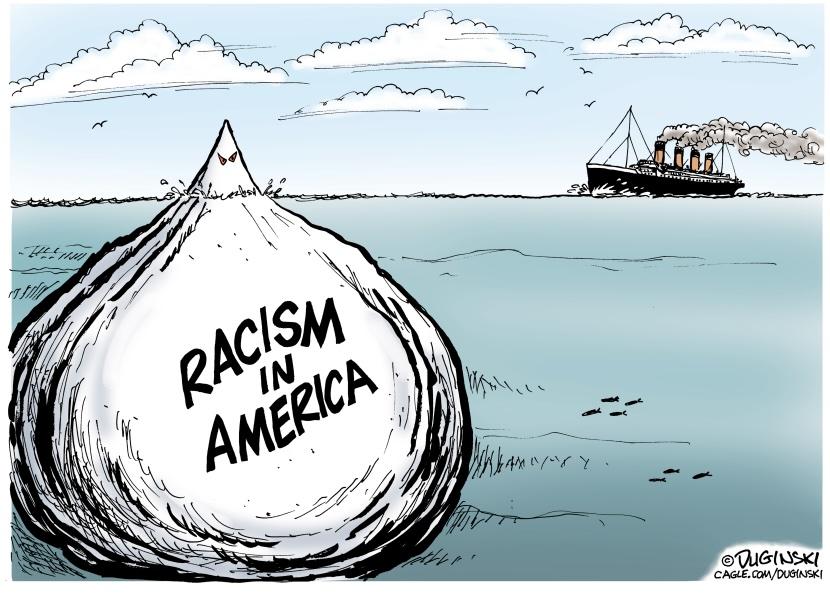
Richmond County residents, organizers, elders, and community advocates gathered at the North Carolina Legislative Building in Raleigh on Wednesday, June 24, 2026 to raise urgent concerns about environmental racism, land loss, water infrastructure, and the proposed data center development impacting Richmond County communities with elected representatives. The message from the press conference was clear: our communities deserve transparency, protection, and the right to be heard before major decisions are made about our land, water, air, and future.
Speakers lifted up the long history of Black and Indigenous families in Richmond County, emphasizing that these communities are not newcomers to the land. Shaun Ingram , RCCJ&BE spokesperson stated “For generations, families have farmed, worshipped, built schools and churches, maintained burial grounds, and preserved community life despite land loss, discrimination, pollution, and political neglect. We are not newcomers to this land. We are descendants of the Indigenous Black people who have lived, worked, farmed, worshipped, and buried our loved ones on this land for generations. For generations, our people have demanded justice - for land that was taken, for heirs' property lost through fraud, taxes, intimidation, and other coercive tactics, and for communities denied the same clean water, safe housing, infrastructure, and protection given to others. We did not ask for development that threatens our water, our air, our wildlife, our burial grounds, and our future generations. . . It is about honoring ancestors, protecting elders, defending children, and ensuring that Black and Indigenous communities are no longer treated as sacrifice zones for corporate development.”
COMMUNITY DEMANDS include: Full transparency from county, state, and corporate officials regarding the data center and other industrial developments.- Independent water and air testing in impacted communities throughout Richmond County.- A full environmental impact review before major development moves forward.- A cultural and historical impact review to protect ancestral land, cemeteries, churches, and historic Black and Indigenous communities.- Protection of heirs' property and family farmland from displacement, speculation, fraud, and coercive land loss.- Investment in clean water, safe sewer systems, affordable housing, and public health.- Living-wage jobs and real local benefits for Richmond County residents, not empty promises.- Community consent before decisions are made that affect Land, Air, Water, and future generations.
Why this matters: A central concern raised was the proposed data center development and its potential impact on local water, energy use, air quality, wildlife, land prices, housing, and ancestral sites. Richmond County communities have long faced pollution risks from industrial facilities, aging water pipes, unsafe sewer infrastructure, chemical exposure, quarries, factories, and other environmental hazards. Many historically Black and Indigenous neighborhoods still lack basic infrastructure and protections.
| | JULY 2026 CALENDAR OF EVENTS | | |
2nd & 4th, Sundays; 1:00-4:00 PM; Black Farmers Market at the Montague Plaza at 2718 Rock Quarry Rd, Raleigh, NC. Go out and support Black Farmers growing healthy food to nourish our communities!
4th, Saturday; National Mobilization Against Genocides; Atlanta, GA; Cultural Presentations by Fruit of Labor Singing Ensemble & other cultural workers.
11th, Saturday; 11:00 AM-12:00 PM; Youth Leadership and Wellness Academy Workshop
11th, Saturday; 11:00 AM-12:00 PM; Summer Financial Health Workshop Series Session #1; Understanding the US Capitalist System & Trump’s Policies’ Impact. We will use the book “5 Laws of Credit” to buy your home or make basic family investments during present hard times and develop your financial plan for the next year. You must e-mail or call our office (919) 876-7187 to reserve your seat at the FOLWCC.
15th, Wednesday; 6:30-8:00 PM; Black Workers for Justice Triangle Chapter Meeting
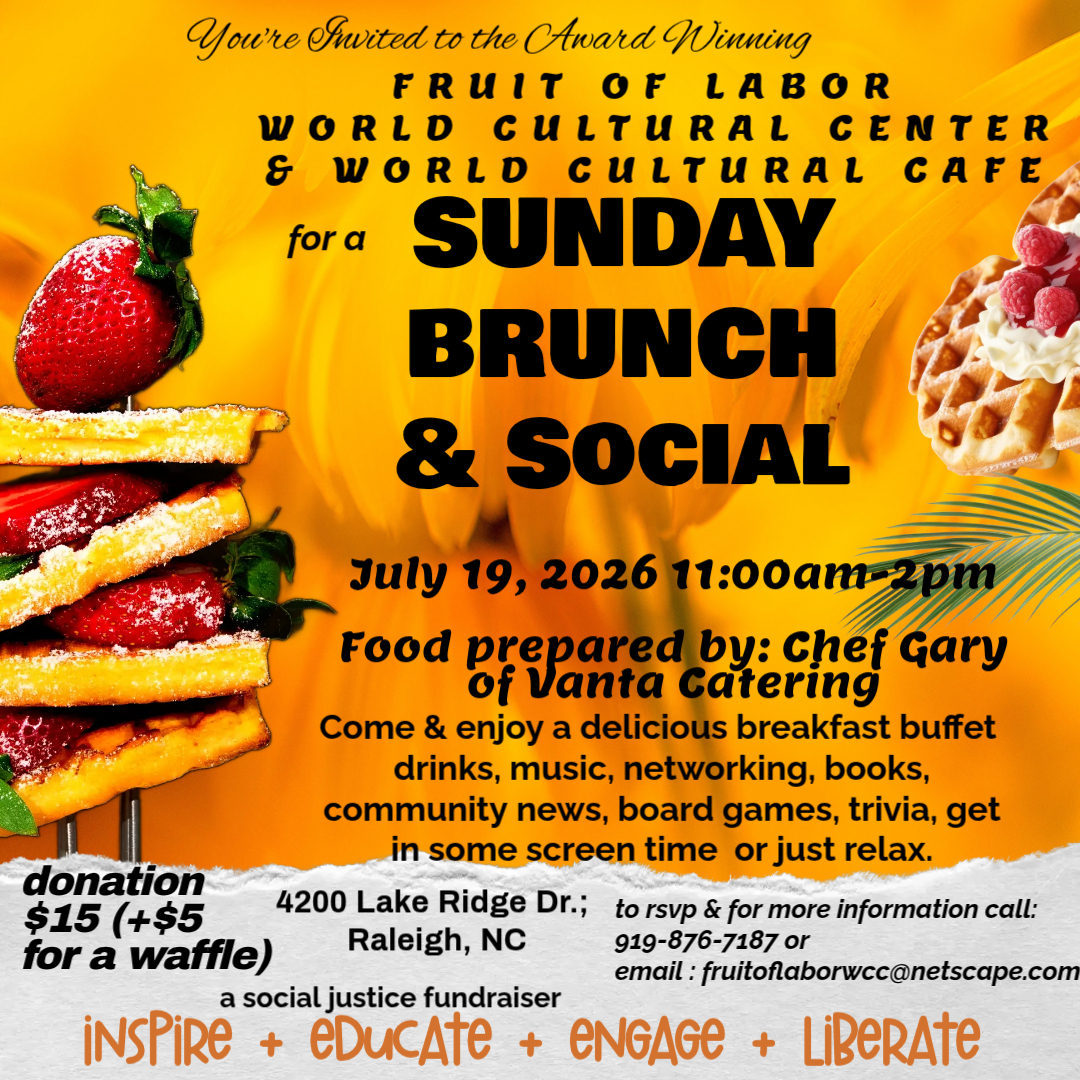
19th, Sunday; 11:00 AM-2:00 PM; Only on Sunday Brunch at the Fruit of Labor World Cultural Café! There will be delicious food & drinks, great music, poetry, discussion, books, games, networking or bring your laptop and get comfy and get a little work done if you must! $15 donation requested. RSVP your attendance to (919) 876-7187 or email fruitoflaborwcc@netscape.com.
| | |
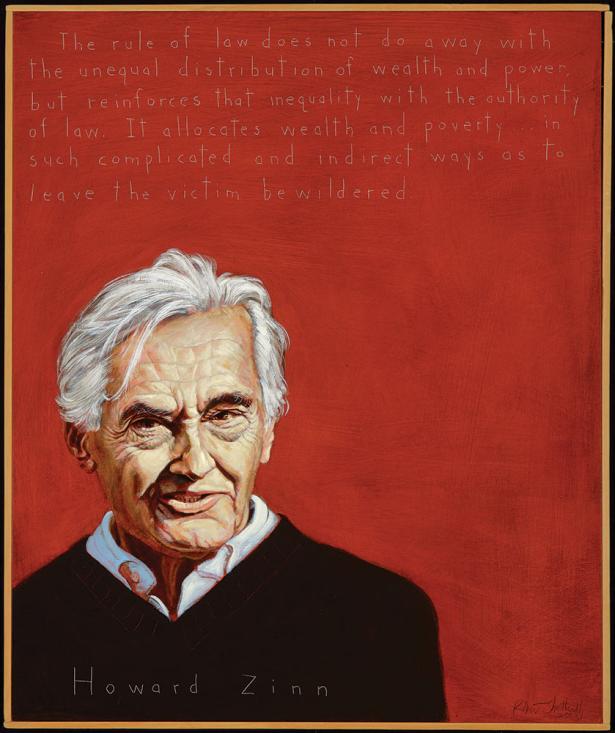
Lessons From the People’s Historian, Howard Zinn
portside.org
This article appears in the July/August 2026 issue, with the headline “Lessons From the People’s Historian, Howard Zinn.”
This article is adapted from Dave Zirin’s The People’s Historian: The Outsized Life of Howard Zinn, available in August from Dutton, an imprint of Penguin Publishing Group. Copyright 2026 by Dave Zirin.
Nothing says more about the fear of history on the part of right-wing elites than the fact that Donald Trump used a presidential address—delivered in the summer that saw tens of millions of Americans take to the streets to protest the police murder of George Floyd—to attack Howard Zinn.
Despite the fact that the protests against structural violence and racism had been largely peaceful, with masses of demonstrators asserting their right to assemble and petition for the redress of grievances, Trump used his September 2020 address at the National Archives Museum to go after the radical historian who told the real story of America.
“[The] left-wing rioting and mayhem are the direct result of decades of left-wing indoctrination in our schools. It’s gone on far too long,” our endlessly divisive and mendacious president griped. “Our children are instructed from propaganda tracts, like those of Howard Zinn, that try to make students ashamed of their own history.” Read more here.
| |
FOLWCC Special Event Rental
Need a special place for your special event?
Award-Winning Fruit of Labor World Cultural Event Center
Main Center | Café –Meeting Room | Outdoor Garden Area
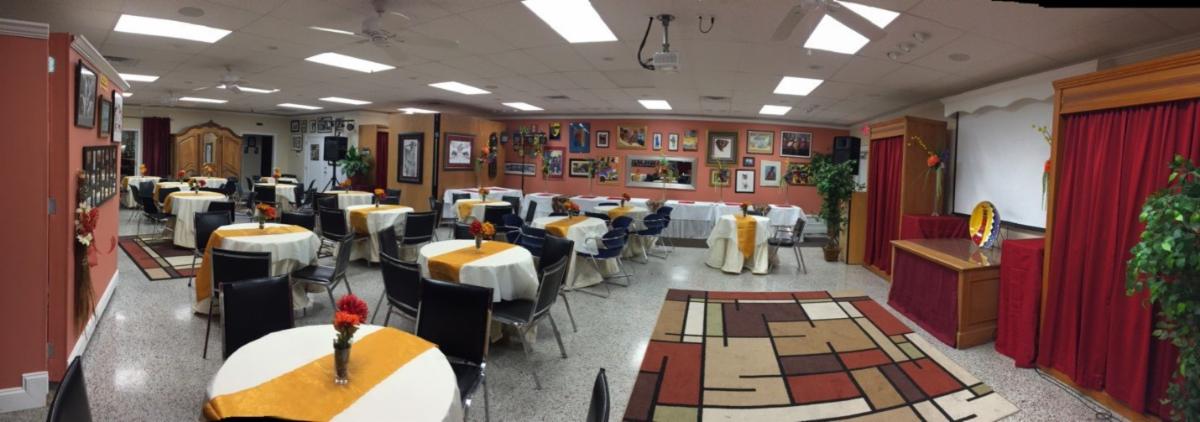
The Fruit of Labor World Cultural Center and the World Cultural Café are your place. The 2,000 sq. ft. World Cultural Center, with a big screen and surround sound theater, is the ideal intimate setting for:
- Parties & Game Nights
- Movie Screenings
- Organizational & Business Meetings
- Receptions
- Classes, Seminars & Workshops
- Gatherings to Watch Sporting Events
- Conferences
- Art Shows
- Religious & Family Gatherings
- Small Concerts & Fundraisers
- Bridal & Baby Showers
| | |
Katherine Dunham: The Scholar Who Changed American Dance Forever
bronzecommhub.com
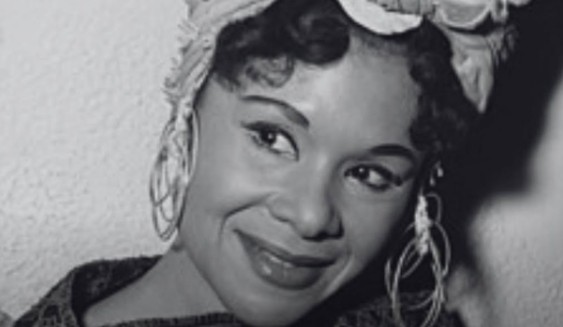
She was a 27-year-old Black woman who showed up in Haiti in 1936 with notebooks and a fellowship—not to perform, but to study. What she brought back changed American dance forever. She also refused to perform for segregated audiences. When a Kentucky venue turned away Black ticket holders, she stopped the show mid-performance and announced from the stage: "I will never perform in Louisville again." She kept that promise for 20 years.
Port-au-Prince, Haiti. 1936.
| | |
Katherine Dunham stood at the edge of a Vodou ceremony, watching. She wasn't a tourist. She wasn't an entertainer looking for exotic inspiration. She was a trained anthropologist from the University of Chicago, holding a Rosenwald Fellowship, carrying notebooks and a scholar's eye.
What she saw that night would change everything she understood about dance, culture, and what it meant to be a Black woman in America.
The ceremony moved in ways European ballet never had. The bodies weren't just performing—they were communicating. The polyrhythmic footwork, the articulated torsos, the grounded stances. This wasn't primitive movement. This was sophisticated, codified, ancient knowledge stored in muscle and memory.
Katherine wrote it all down. And then she asked to participate. Because that's what made Katherine Dunham different from every other researcher who'd come before her: she didn't just observe. She joined in. She learned. She let the tradition enter her body as well as her notebooks. She understood something most scholars of her era didn't: you can't fully document movement by watching it. You have to feel it. That understanding would build an empire. Read more here.
| | Gerald Horne: America At 250 & The Counter-Revolution Of 1776 | | | | |