Undergraduate Research Opportunities Center
N e w s l e t t e r | M A R C H 2 0 2 1
|
|
Marching into the Community |
|
This month we marched into the research community to hear from three UROC alums (spring 2020) to see how being part of the undergraduate research community has shaped them over the last year. |
|
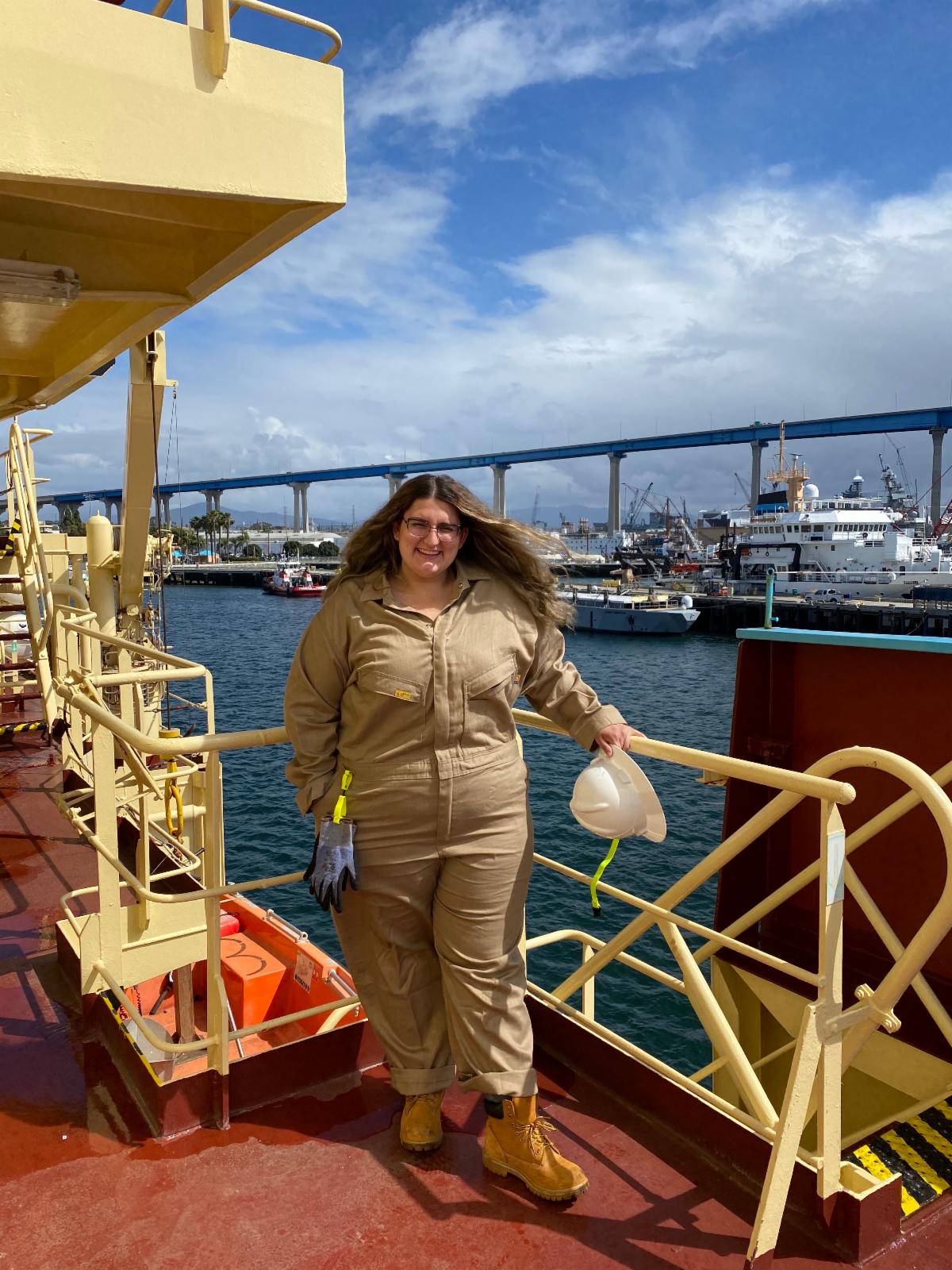
Victoria Assad, UROC Scholar
Hello from the middle of the Pacific!
As I write this, I’m in transit to the Clarion-Clipperton Zone where I'll be using a MOCNESS tow to get depth discrete samples of deep-sea micronekton in a region contracted for deep-sea mining. This work is contributing to the Environmental Impact Assessment by building a community structure of the micronekton within our sample area. The cruise is over 40 days long and will be conducted again in the fall! Overall, graduate school in Hawaii has been great as I get to learn and handle wonderfully unique deep-sea creatures whenever I want to and do it in such a beautiful place!
Being a part of UROC and participating in undergraduate research helped equip me with the skills to confidently be a part of these great opportunities.
|
|
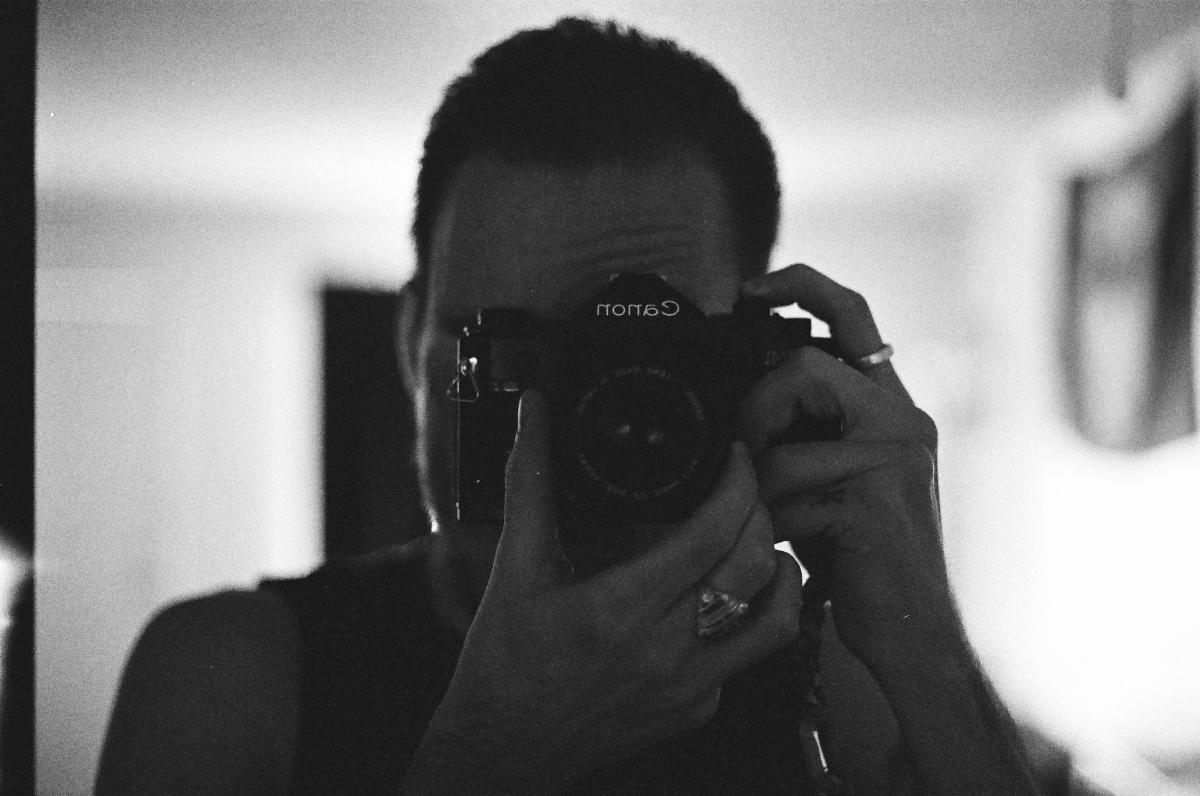
Brandon Garcia,
UROC Researcher
As a recent graduate from CSUMB, I certainly had a much different vision for what life would be like immediately following college. I always pictured myself getting accepted to a graduate school, taking a tropical vacation to celebrate, and shortly thereafter beginning a new journey to pursue my degree. But nowhere in any of my planning did I anticipate a massive pandemic that would bring the world to a screeching halt just months before my final semester. Rather than feeling like I was ready to celebrate, I was absolutely miserable.
I had to remind myself that progress is not linear. One of my favorite quotes from Kurt Vonnegut is, “a step backward, after making a wrong turn, is a step in the right direction” (Player Piano, 1952). I knew that I wanted to go to graduate school out of state, but I did not know what I wanted to study. I decided to take a calculated risk and move to Arizona, where I could reasonably afford to take a gap year while I reassessed my goals.
The other thing I knew is that in order to stave off the feelings of Zoom burnout, I would need a creative outlet that allowed me to get away from my desk and explore my new state. For me, that outlet was film photography. Everything about photography reinforces the things that I have learned as both a psychology major and as a researcher working with Dr. Dyer-Seymour. Through the lens of the camera, I am able to look at the world with a mindfulness perspective, but by using film I have to be more critical of the composition, lighting, and subject I am shooting. The trial and error that comes with shooting on film also reinvigorated my inner researcher. I found myself reading textbooks on photography, experimenting with different techniques, and watching tutorials from professionals so that I would be able to capture images exactly as I envision them. The skills I learned as a researcher taught me how to do this more efficiently.
Though photography is not something I foresee as a career, it is still incredibly important to me. It’s a reminder that the things we find most fulfilling do not always have to be career-oriented. We don’t all have to be accomplishing “great things” all the time, especially in a year-long pandemic. I may still be in the process of figuring out what my next step will be, but with the tools I have learned at CSUMB, I know that I will see progress one way or another.
|
|
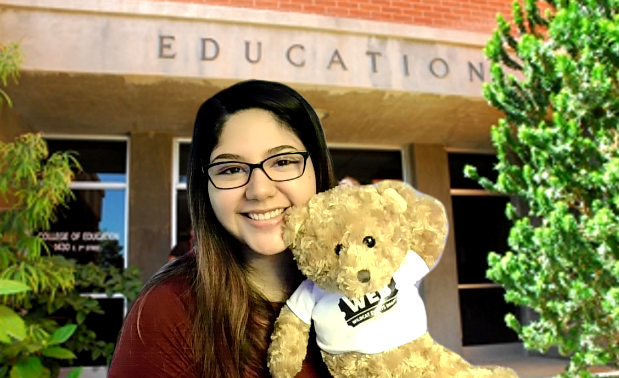
Selena Velasquez,
McNair Scholar
Humbled to be the only Master's GRA on the team, I lead the qualitative subteam of four doctoral students in utilizing coding software (NVivo) to analyze focus groups of underrepresented STEM transfer students’ experiences. I am very grateful to my amazing undergraduate research mentors for providing professional growth opportunities in qualitative methodology that I have utilized to guide my teammates in learning the initial stages of qualitative research.
Reflecting on this past year, I believe that CSUMB’s warm and encouraging research community had always been preparing me for UA’s rigorous research as an R1 research-intensive university. As an undergraduate, I gained an understanding of the research process, knowledge of graduate-level skills, and received personalized attention from a hands-on supportive community. These experiences greatly helped me transition into my new fast-paced environment where I am comfortable with a more need-based support approach that my mentors actually appreciate in regards to their busy schedules. I feel like my CSUMB research community granted me the space to make mistakes and grow at a pace comfortable to me which has been invaluable to my self-efficacy as a scholar and strengthened my abilities to navigate through familiar and new challenges as a graduate student.
Throughout my first year, I have often been comforted when reflecting on the many open conversations I had with my CSUMB research community about Imposter Phenomenon and other graduate school challenges that I have encountered, such as complex readings and arduous academic writing. When I think about the generations of empowering peer and faculty researchers in my network and their continued moral support, I am enheartened to keep pushing forward in my graduate studies and continue expanding my research community of marvelous scholars!
|
|
CSU Student Research Competition Delegates |
|
The 35th Annual California State University Student Research Competition is held each spring to promote excellence in undergraduate and graduate scholarly research and creative activity by recognizing outstanding student accomplishments across the 23 CSU campuses. CSU Pomona will host the virtual competition April 30-May 1, 2021.
Congratulations to the following undergraduate delegates selected by the CSUMB Committee on Research, Scholarship, and Creative activity to represent CSUMB at the competition!
Help them prepare at the Spring Showcase on April 23. Prerecorded presentations will be shown followed by a Q&A. We are excited and wish the best of luck to the following researchers:
|
|
Gagandeep Choongh, McNair Scholar & Erika Hernandez Gonzalez~ Psychology & Business
Safety or Value? A Construal Level Theory Perspective on Consumers’ Perceptions toward the Brand
Competition Category: Business, Economics, and Public Administration
Faculty Mentor: Dr. Jenny Lin
Courtney Crouse, Koret Scholar & Nevan Bell, UROC Scholar ~ Psychology
Project-Based Learning as an Intervention for Digital Wellness During The COVID-19 Pandemic
Competition Category: Education
Faculty Mentor: Dr. Jennifer Lovell
Paul Dommert, Koret Scholar ~ Psychology
Understanding the Psychology of Transformation: A Mixed Methods Investigation into the Dynamics of Significant Psychological Change
Competition Category: Behavioral and Social Sciences
Faculty Mentor: Dr. Christine Valdez
Gerhard Gross~ Social Behavioral Sciences & Global Studies
Assessing the Vulnerability of Monterey Bay Area Seniors to COVID-19
Competition Category: Health, Nutrition and Clinical Sciences
Faculty Mentor: Dr. Yong Lao
|
|
Melissa-Ann Lagunas, Koret Scholar ~ Psychology
Connectedness to Nature and Well-being Among First-generation College Students, Faculty, and Staff
Competition Category: Behavioral and Social Sciences
Faculty Mentor: Dr. Jennifer Lovell
Amelia Parker, Dewar Scholar & Jesus Sanchez Orozco, McNair Scholar ~ Humanities and Communication
Higher Education Is Not Immune to Messaging Mishaps: A Rhetorical Analysis of COVID-19 Messaging on U.S. Campuses
Competition Category: Humanities & Letters
Faculty Mentor: Dr. Sam Robinson
Claudia Rocha, Koret Scholar ~ Psychology
The Impact of COVID - 19 on Gonzales Youth
Competition Category: Behavioral and Social Sciences
Faculty Mentor: Dr. Jennifer Lovell
Rosalba Saavedra, Researchers ~ Kinesiology
Relationship Between Walking Speed and Key Vital Signs in Young Adults
Competition Category: Health, Nutrition and Clinical Sciences
Faculty Mentor: Dr. Eric Martin
|
|
|
Undergraduate Research Week 2021 |
|
UROC is excited to host 2021 Virtual Undergraduate Research Week! This weeklong celebration of undergraduate research, scholarly activity, and creative work first began on November 16, 2011 when the U.S. House of Representatives declared a week in April as "Undergraduate Research Week."
In celebration, UROC will host a number of different events and workshops open to all CSUMB students, culminating in the Research, Scholarship, and Creative Activity Showcase on April 23, 2021. We look forward to seeing you there!
|
|
Too Diverse for Academia
feat. Dr. Melissa Callaghan,
CSUMB & McNair Scholar Alum;
Postdoctoral Research Fellow,
Harvard Graduate School of Education
From CSUMB to PhD
feat. the CSUMB McNair Advisory Collective
Pathways from Undergraduate Business Research to Graduate School
feat. Dr. Ishva Minefee, Iowa State & Dr. Jenny Lin, CSUMB
Ethics in Research and Practice
feat. Dr. Renee Penalver, CSUMB
Northwestern University Graduate School Panel: Navigating from Hispanic Serving Institutions*
NSF GRFP Workshop
feat. Sam Miller and Ally Morris, UROC Scholars and Writing Fellows
|
|
Talking Research y Cafecito
feat. CSUMB Alum: Ari Perez, Alexandria Taylor Cervantes, and Daniel Olivares,
Funding your Graduate Education
feat. Dr. Heather Haeger, UROC
How to get involved in addressing environmental issues
feat. Maria Rocha & Silvia Vasquez, McNair Scholars
Getting Ready for your Summer REU
feat. Dr. Jessica Bautista, UROC
Northwestern University: Resources for Native and Indigenous Graduate Students*
2021 Research, Scholarship and Creative Activity Spring Showcase
Friday, April 23, Time TBD
|
|
|
*Not CSUMB-sponsored events |
|
featuring Dr. Jennifer Lovell, Assistant Professor of Psychology |
|
The CSUMB Founding Vision Statement emphasizes the importance of collaboration and community partnerships for service and research benefitting the Tri-County region. Like many of you, I chose to come to CSUMB due to this Vision! As researchers, it is important for you to understand how your work is informed by your values, beliefs, and biases. The research questions you ask, the methods you use, your interpretation of the data, and the ways you share your findings are all connected to your identity and values (and/or the identity and values of your mentor[s]). This is true when doing research across all disciplines.
My goal is to use my professional expertise in youth and family wellness to serve the community, and one way I do this is with community-engaged research. An example of my research is a recent youth-led participatory action research (YPAR) project focused on the wellness, academic progress, and resilience of youth in Gonzales, CA, during the COVID-19 pandemic. YPAR is a research method that challenges traditional notions of the researcher as objective and separate from participants. In YPAR, young people identify research questions relevant to their community and pursue research to gather data and engage in local advocacy with adult allies. YPAR can support the empowerment of marginalized youth as well as improve social validity of research (Ozer, 2017).
Two UROC students worked with me on the Gonzales Youth Council YPAR project during May 2020 to present: Claudia Rocha (Koret Scholar) and Selina Espinoza (UROC and McNair Scholar). We used a transformational mixed-methods online research design. Quantitative and qualitative survey data from 374 middle- and high-school students indicated they were struggling with the shift to online learning, and 52% of high school students scored above the screening cutoff scores for anxiety and/or depression. The Gonzales Youth Commissioners presented the results to the City Manager, School Superintendent, and Monterey Board of Supervisors. Their advocacy also spurred the City and Unified School District to co-fund a new school licensed clinical social worker position. I am proud to have helped the youth conduct this research and use their findings to advocate for the mental health needs of Gonzales youth. This project has also benefited my CSUMB mentees via research experience, professional development, presentation, and a recently submitted manuscript for publication. Our work was featured in a Robert Wood Johnson Foundation article about youth leading the way. To find out more, attend Claudia’s oral presentation at the CSUMB Spring Showcase and/or CSU Research Competition in April 2021.
Dr. Lovell is the Co-Principal Investigator of two research grants focused on teaching service learning to psychology students and supervises research students. Dr. Lovell is a licensed clinical psychologist in the state of California. Visit Dr. Lovell's website to learn more about her commitment to teaching, research, and service.
|
|
|
|
Chat with us!
Want to get involved in research but don't know where to start? Set up a virtual consultation on the UROC website!
|
|
|
|
|
|
|