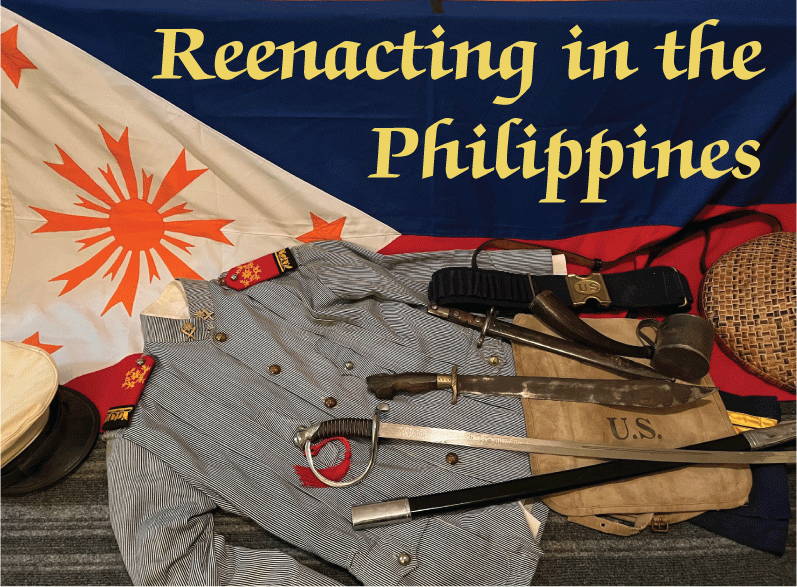
Reenacting in the Phillippines has come a long way in a short time | | |
 | |
The Beginnings.
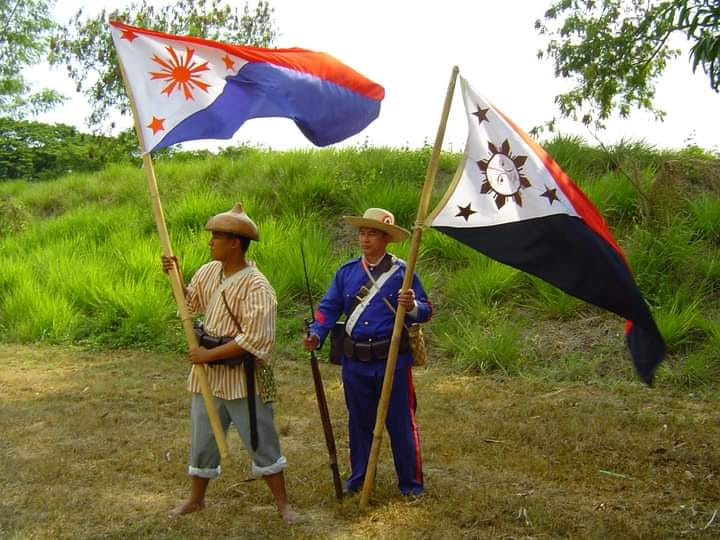
Living history is an instantly recognized term in our community. "Buhay na kasaysayan" (in Filipino Tagalog) is the term that transplanted American Civil War reenactor Mike Hoff was able to get translated into when he began his efforts to begin historical interpretation. In like manner, Mr. Hoff translated many elements of the American approach to living history.
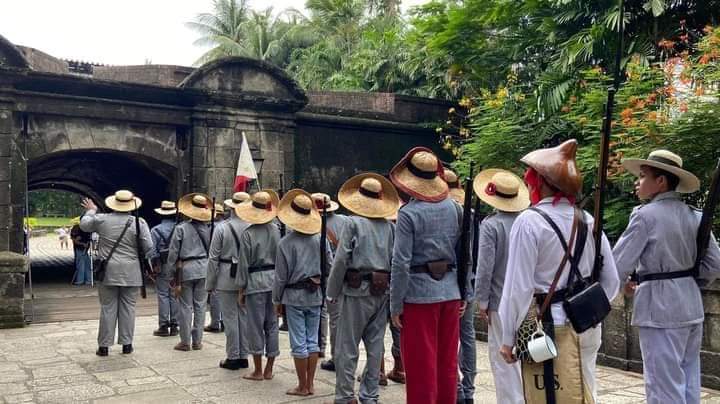
The reenacting hobby started to develop in 2000-2001 time period, which followed a collaboration of Ray Ortega, the late Nonito "Ding" Flores, Pedro Antonio "Perry" Javier, and American Mike Hoff.
Through networking, the group was introduced by Selwyn Clyde Alojipan in 2005 to the University of the Philippines Department of Military Science and Tactics (UP DMST) via Commandant, Colonel Virgilio Aganon and the Assistant Commandant, Major Miguel "Mike" Samante. who then explained his interest in the Philippine Revolution through his organization, the KMAB (Katipunan ng Mga Anak ng Bayan, "Society of the Children of the Nation") which wanted to honor the founders of the (Kataastaasang, Kagalanggalangang Katipunan ng Mga Anak ng Bayan, "Highest and Most Honorable Society of the Sons of the Nation"), the secret society who launched the War of Independence Against Spain in 1898.
After Mike Hoff returned to the USA, it was the combined enthusiasm of Perry, Mike Samante, and Ding for the entire range of Philppine military history that made for a deeper delve into the hobby. Perry, Ding, and Selwy, along with Mike Samante, eventually set up Buhay na Kasaysayan - Philippines (BnK), a branch of the BnK-USA that the Ortega brothers had set up in California. Eventually both Ding Flores and Mike Samante passed away but their initial work was passed on to others who came in as the hobby spread.
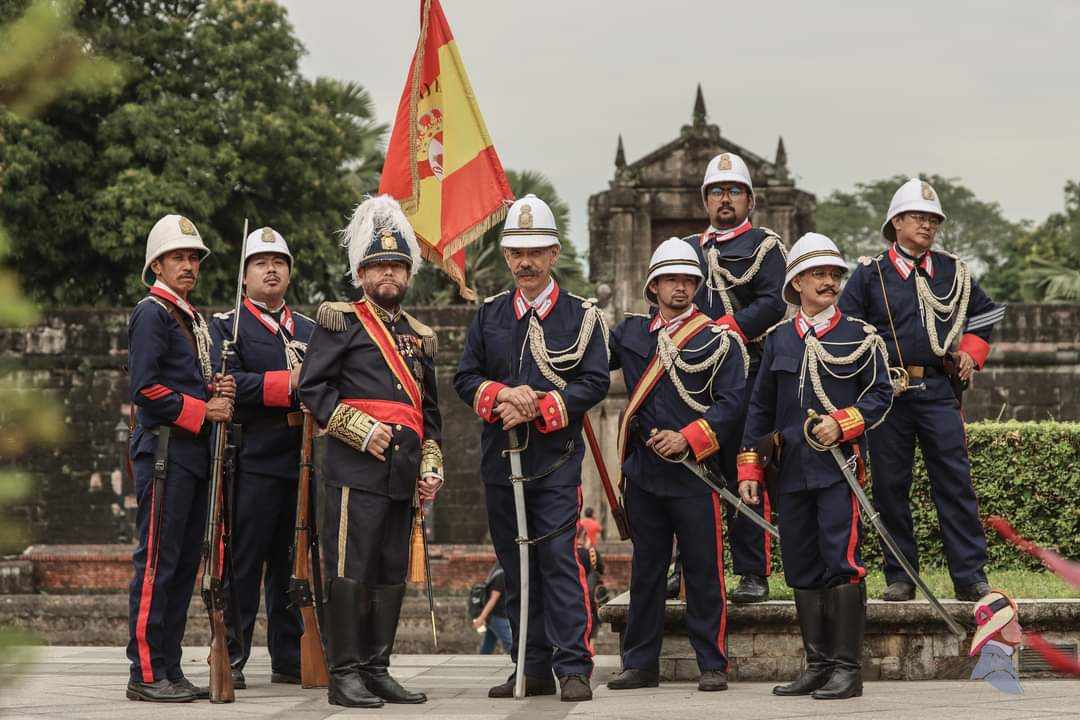
|  | One of the events that truly taps into national pride is that of the commemoration of the Spanish execution of José Rizal. He was considered a national hero of the Phiippines. He was executed by the Spanish colonial government on December 30th, 1896, for the crime of subversion through his writings that in turn, were triggered by the Spanish execution of three Filipino priests in 1872. | 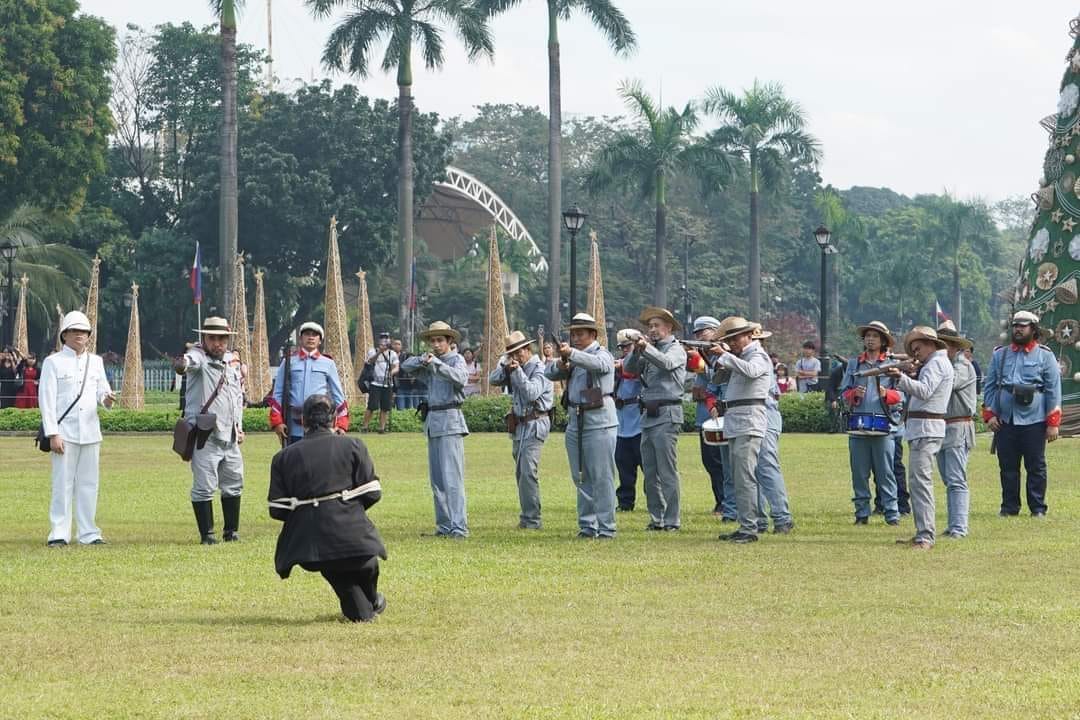 | |
Pre-Colonial and Spanish Colonial Period.
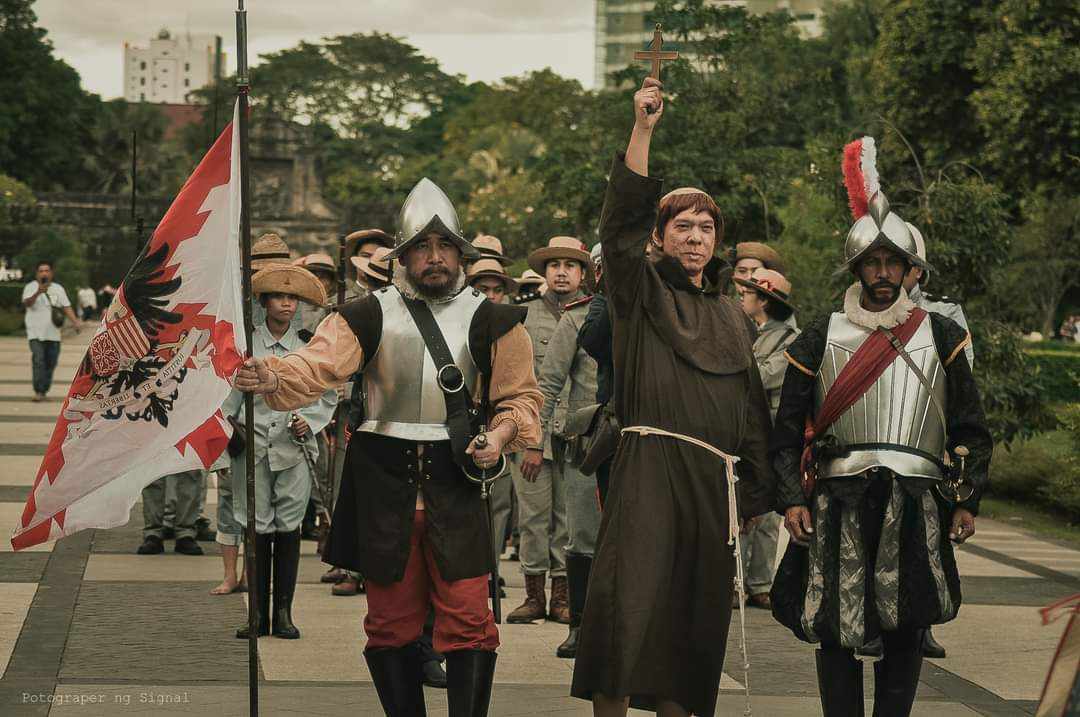
From the 16th/17th Centuries to just before the start of the Philippine Revolution. This includes Spanish conquistadors who established the Spanish East Indies, the Filipino cuadrilleros (militia) under the Spanish colonizers, the Guardia Civil (Civil Guard), and the Filipino bandits, pirates, and rebels, as well as independent Moro and Ifugao/Igorot highland tribes who had successfully resisted colonization. A small adjunct here would be the British Occupation of Manila in 1763-1764 and some naval battles and skirmishes with Dutch expansionists from the Dutch East Indies.
|  | |
Philippine Revolution.
(Rise of the Katipunan and other secret societies), 1896-1898; Second Phase of the War of Philippine Independence, 1898; Spanish-American War (1898 Naval Battle of Manila Bay); the "alliance of convenience" of Americans with Filipinos, 1898-1899.
American Involvement.
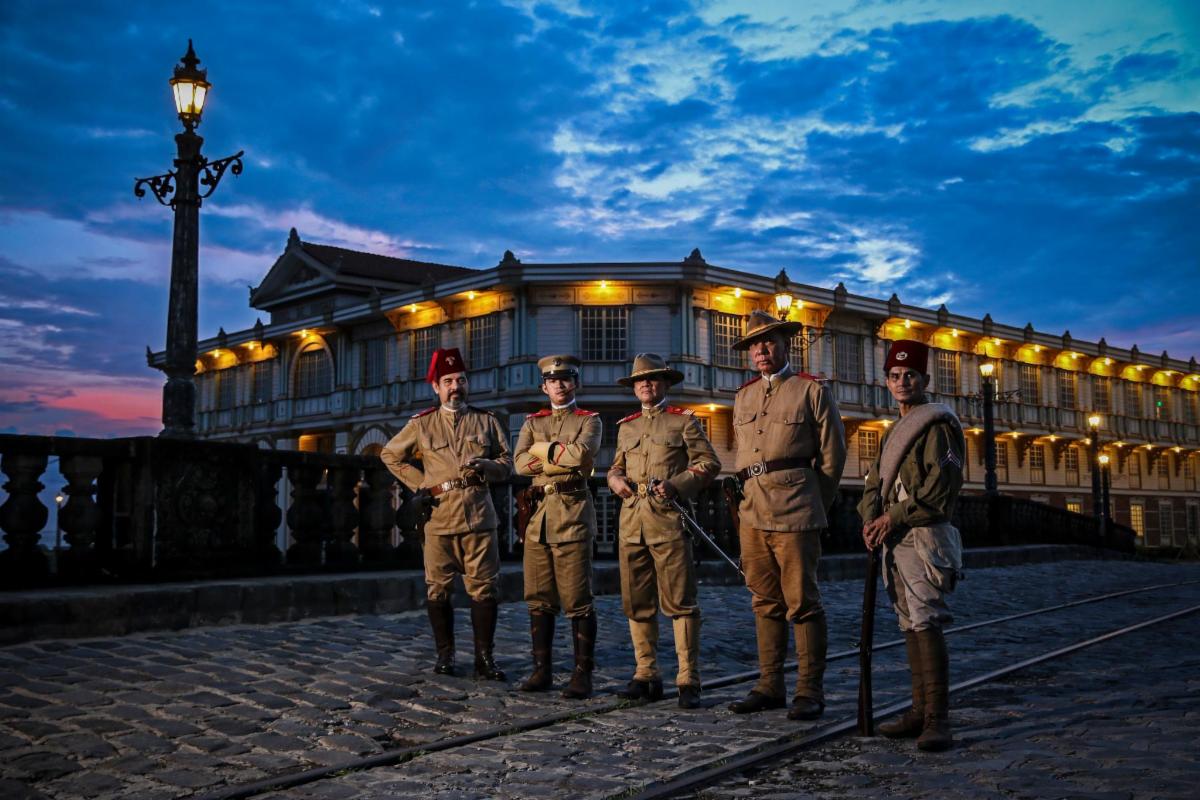
(1899-1902); American Consolidation of the Philippine Islands using the American Expeditionary Force to the Philippines and native recruits (1900-1907); Philippine Constabulary Philippine Commonwealth Army under American rule 1901 to 1941.
World War II.
(1)Combined US Armed Forces in the Far East (USAFFE) along with the Philippine Commonwealth Army at the time of the Japanese Invasion and Conquest, 1941-1942;
(2) ad hoc home-grown and/or American-led and American-supplied Filipino Guerrilla units, 1942-1945; (3) US Army 1st and 2nd Filipino Infantry Regiments (based in California, USA), 1942-1945;
(3) is the overall US Army and Navy (with Australian and UK contingents) counter-invasion and liberation of the Philippine Archipelago, 1944-1945.Reenactments branched out to
| 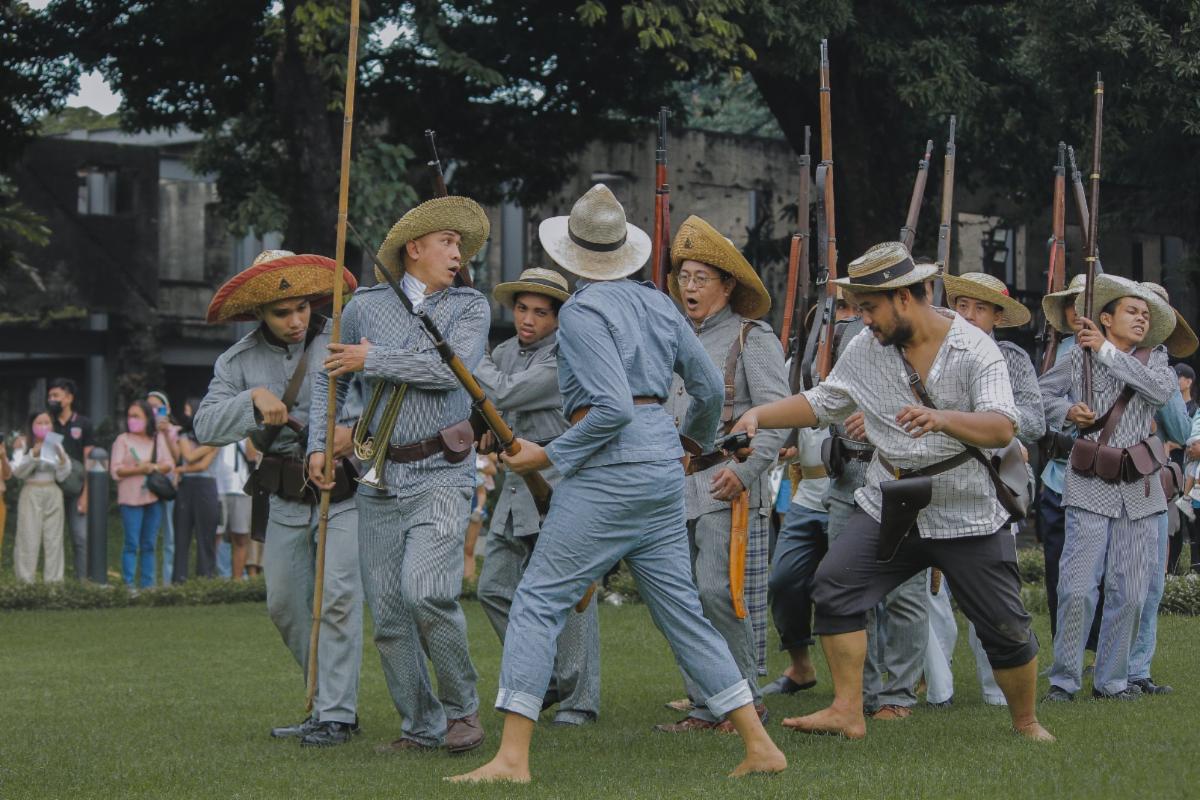 | World War II from initial collaborations by BnK USA with the Philippine Scouts Heritage Society (PSHS) in the USA The founding of the Philippine Living History Society (PLHS) that set up the first major battle reenactments under | |  |
|
Post-World War II.
This era is depicted mostly through displays of historical AFP uniforms
(1) Philippine Expeditionary Force to Korea (PEFTOK), 1950-1953;
(2) HUKBALAHAP insurgency and various Moro rebellions, 1950s-1960s; Philippine Civic Action Group sent to Vietnam, 1960s-1970s; ongoing Maoist Communist and Bangsamoro insurgencies including Martial Law and UN Peacekeeping expeditions, 1970s-onward.
There's a whole lot more, including several eras of military history still unresearched and un-reenacted. Among those are the clash of the Chinese-Japanese Wako pirates with the Spanish Conquistadors.
They extend an open invitation worldwide, to any reenactors interested in participating and learning about Filipino history.
| Reenactments on Philippine Army Bases. | 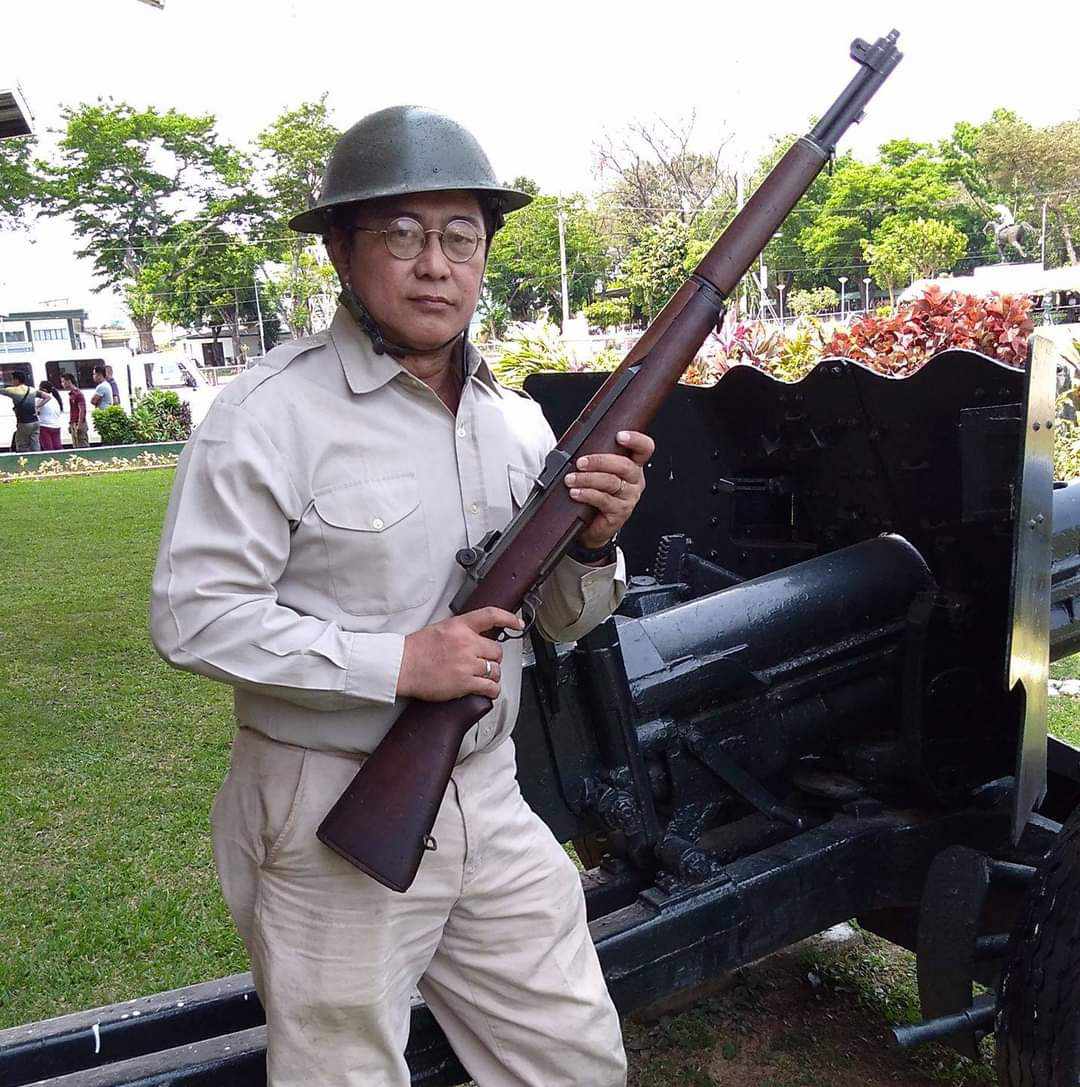 | |
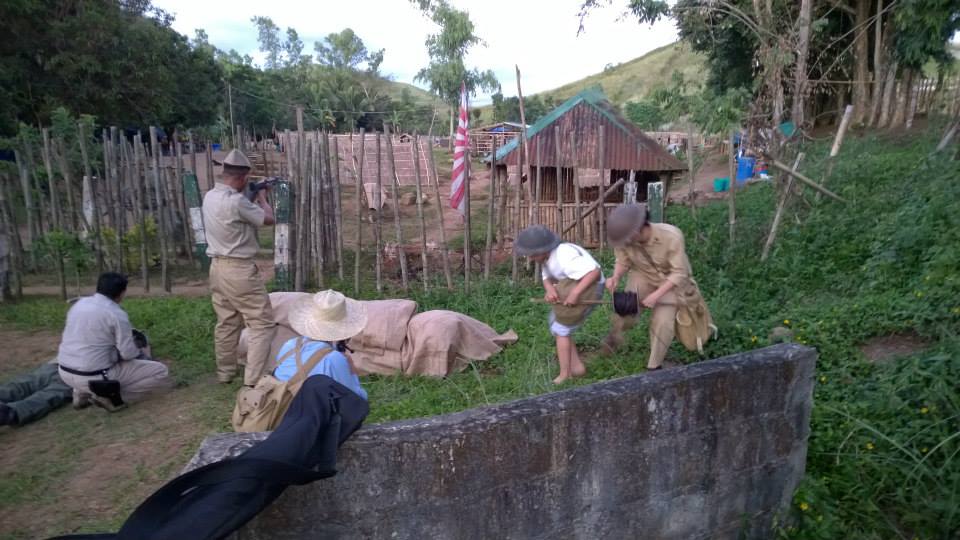
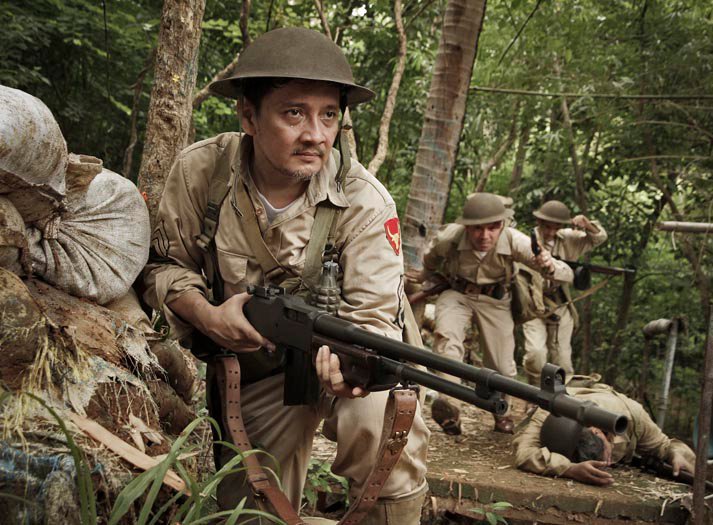
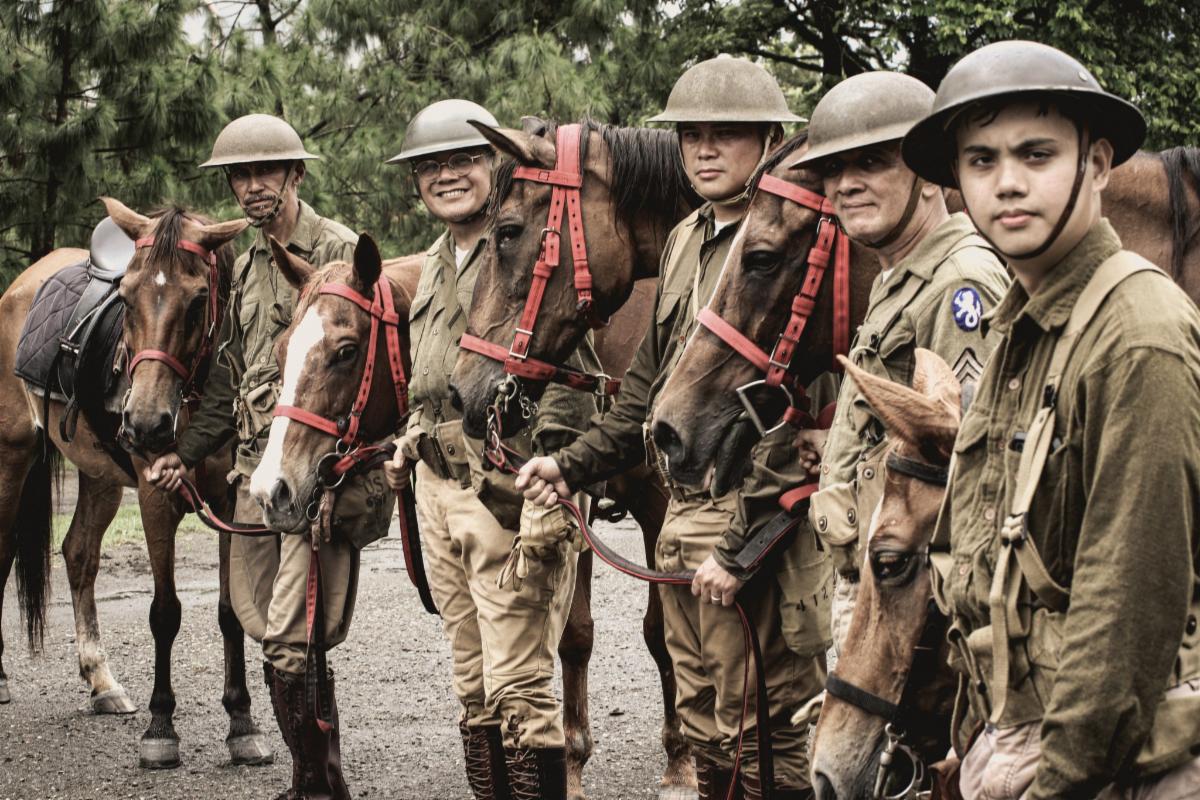
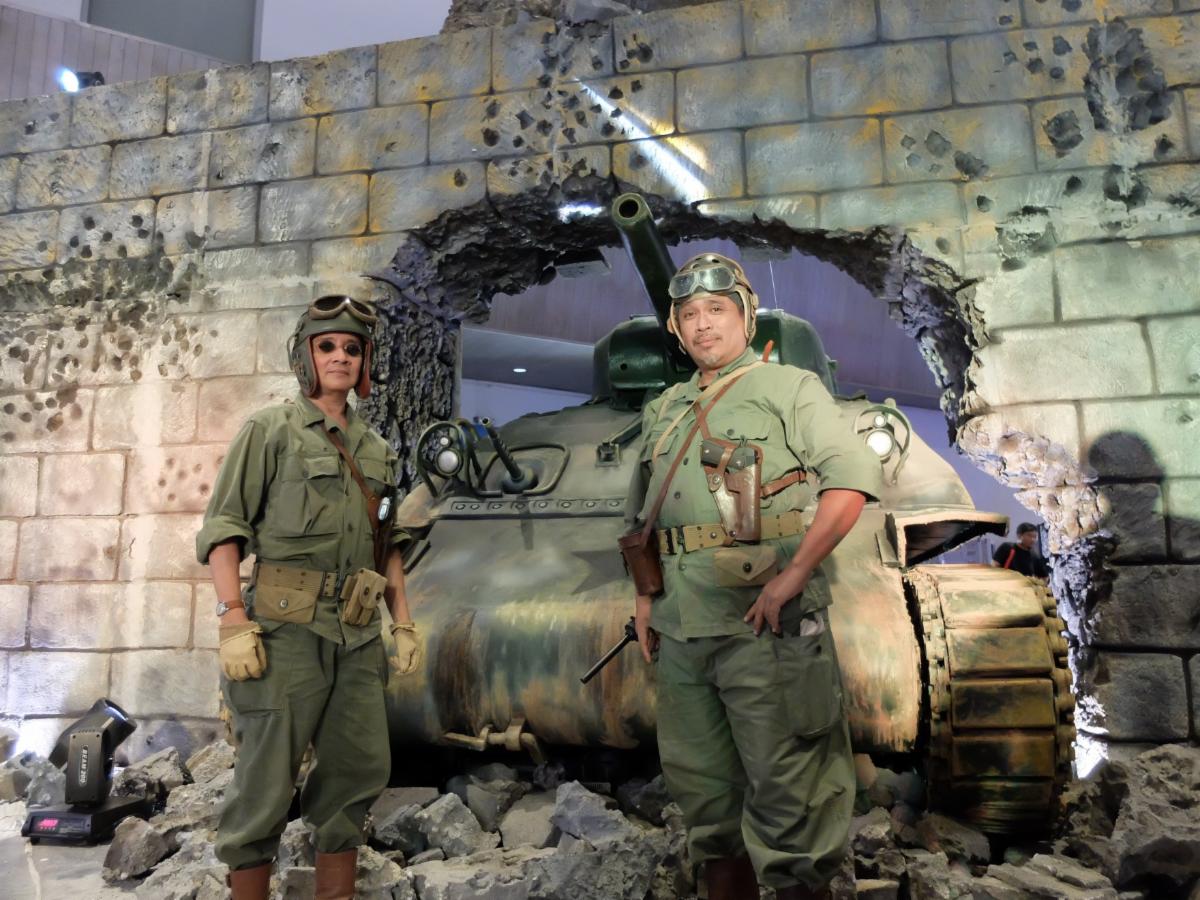
There is a growing recognition in the Armed Forces of the Philippines (AFP) that civilian reenactors can present the active-duty military, the reservists, and the upcoming cadets and recruits with a strong sense of identity about the Filipino fighting man through living history of colonial eras, displays of the evolution of uniforms, and battle reenactments.
Through the different connections, of two Philippine Brigadier Generals, and the Philippine Veterans Affairs Office (PVAO), World War II reenactments were hosted on active Philippine Army Bases.
Moreover, they were able to secure the loan of original, live-fire M-1 Garands and 1903 Springfields. Each of these was issued with single clips of blank ammo to each reenactor. These firearms were drawn from stocks that remained in the Philippine arsenals from the World War II United States Lend Lease program. Sadly for reenacting, in 2020, these weapons were recalled to the United States, and sold to private collectors through the Civliian Marksmanship Program.
In addition, current Philippine Army artillery pieces were loaned for background effect for the reenactments. With the generous sponsorship of the Philippine Veterans Bank and other corporate sponsors like MD Juan (the Philippine-based international WW2 jeep parts supplier), pyrotechnicians were hired to wire up electronically sequenced simulated HE (high explosive) ground bursts and bullet hits on temporary field fortifications.
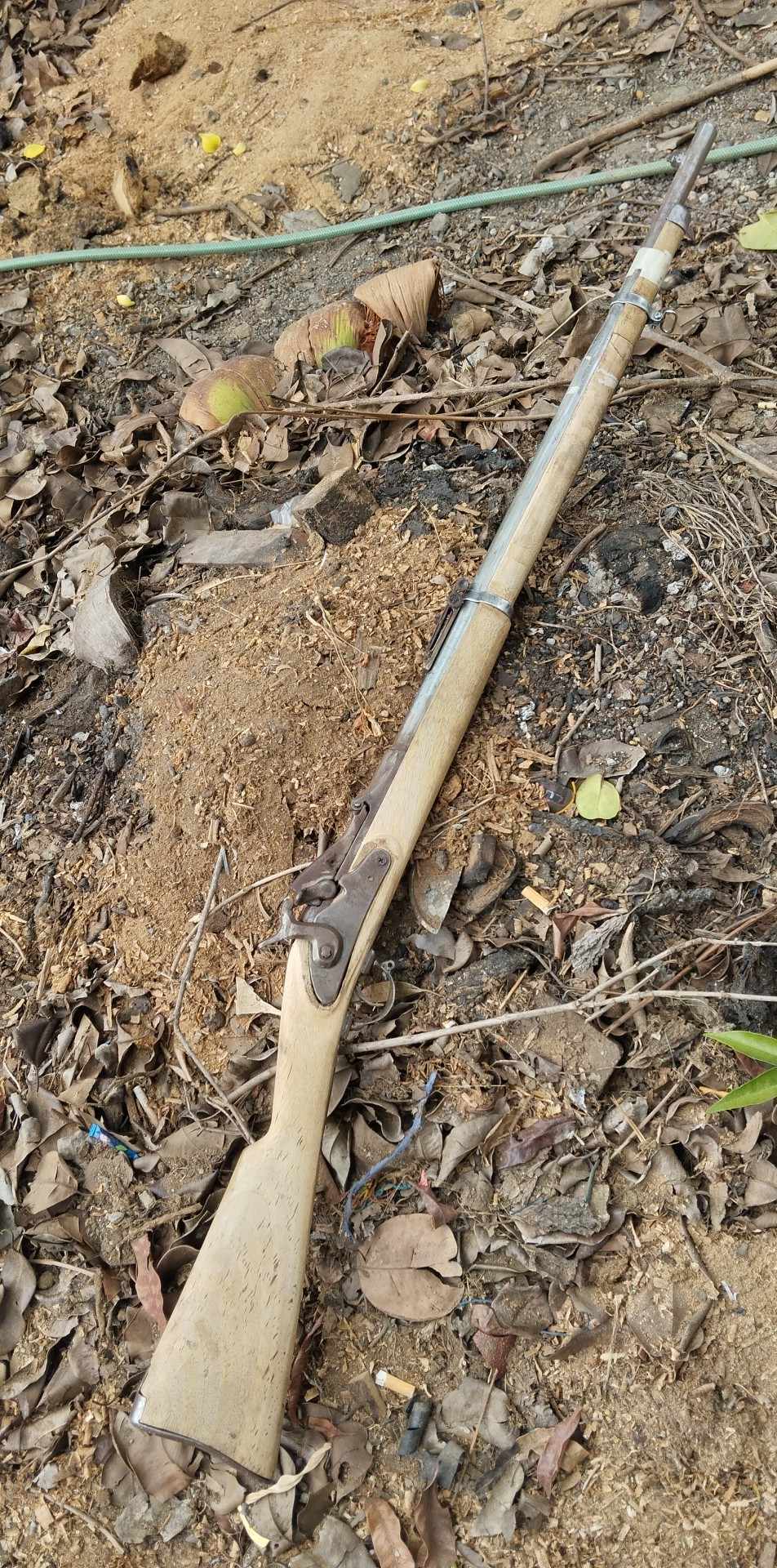
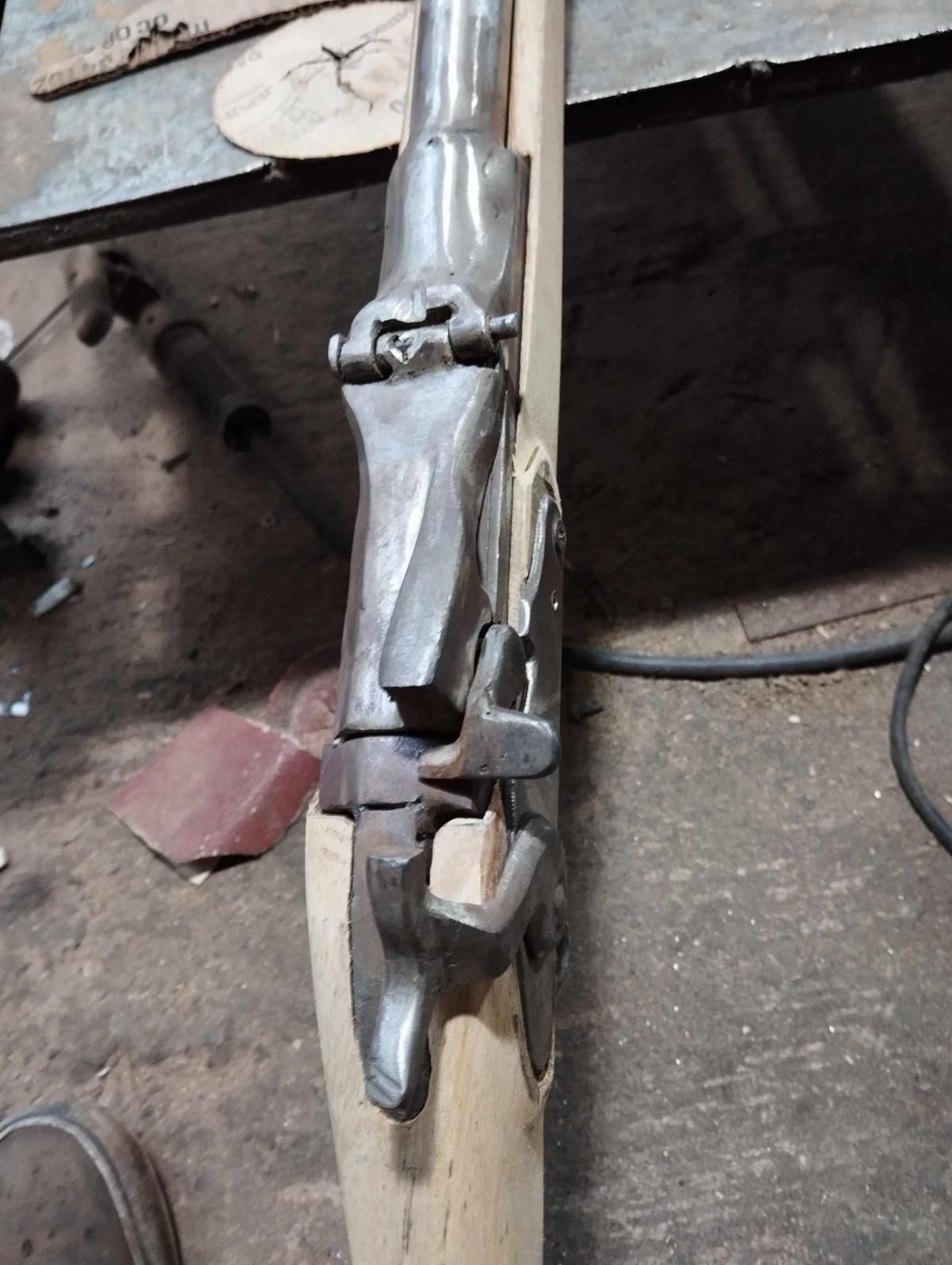
Owing to firearm restrictions, it started with airsoft weapons. Eventually, artisans Toym Imao and Jeffrey Santos started making near-authentic wood-metal-replica rifles for the late 19th-Century and World War II eras. Larry Ronquillo also made plastic resin or fiberglass models of pistols for rent and sale.
Rubberized bayonets and native bolo knives were crafted to use in simulated close-combat melee attacks.
Dulled metal replica bayonets, swords, and bolo knives, as well as bamboo spears are also used but are carefully choreographed to simulate actual combat from a safer distance. Possible endangerment of fellow reenactors during simulated combat is carefully regulated and practiced.
| 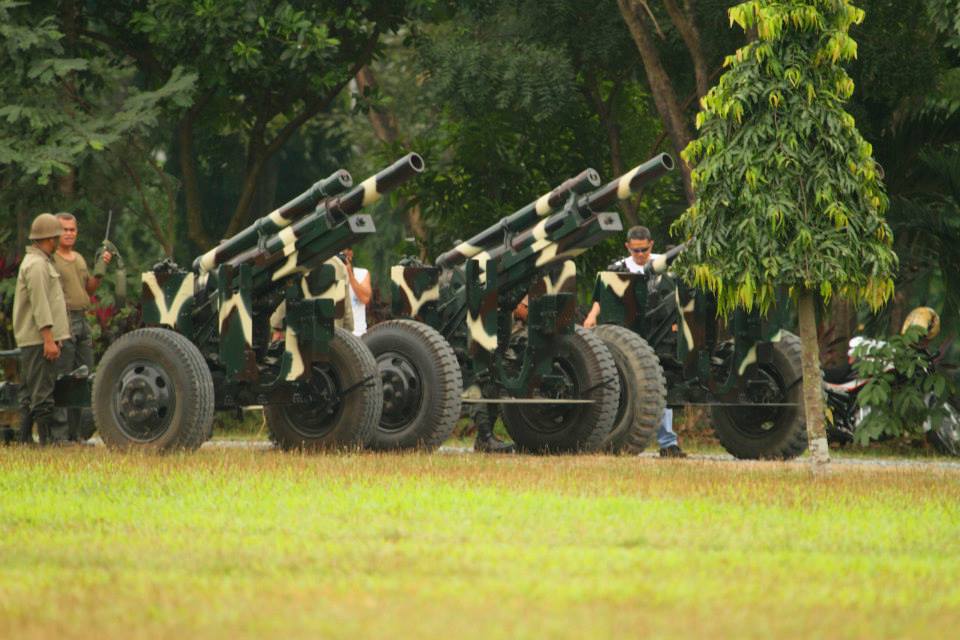 | |
In addition, current Philippine Army artillery pieces were loaned for background effect for hte reenactments.
With the generous sponsorship of the Philippine Veterans Bank and other corporate sponsors like MD Juan (the Philippine-based international WW2 jeep parts supplier), pyrotechnicians were hired to wire up electronically sequenced simulated HE ground bursts and bullet hits on temporary field fortifications.
Any airsoft or plastic replica weapons (rifles or pistols) available on the market were personally bought by the reenactors. Eventually, artisans Toym Imao and Jeffrey Santos started making near-authentic wood-metal-and/or-fiberglass replica rifles for the late 19th-Century and World War II eras. Larry Ronquillo also made plastic resin or fiberglass models of pistols for rent and sale.
Rubberized bayonets and native bolo knives were crafted to use in simulated close-combat melee attacks.
Dulled metal replica bayonets, swords, and bolo knives, as well as bamboo spears are also used but are carefully choreographed to simulate actual combat from a safer distance. Possible endangerment of fellow reenactors during simulated combat is carefully regulated and practiced.
| 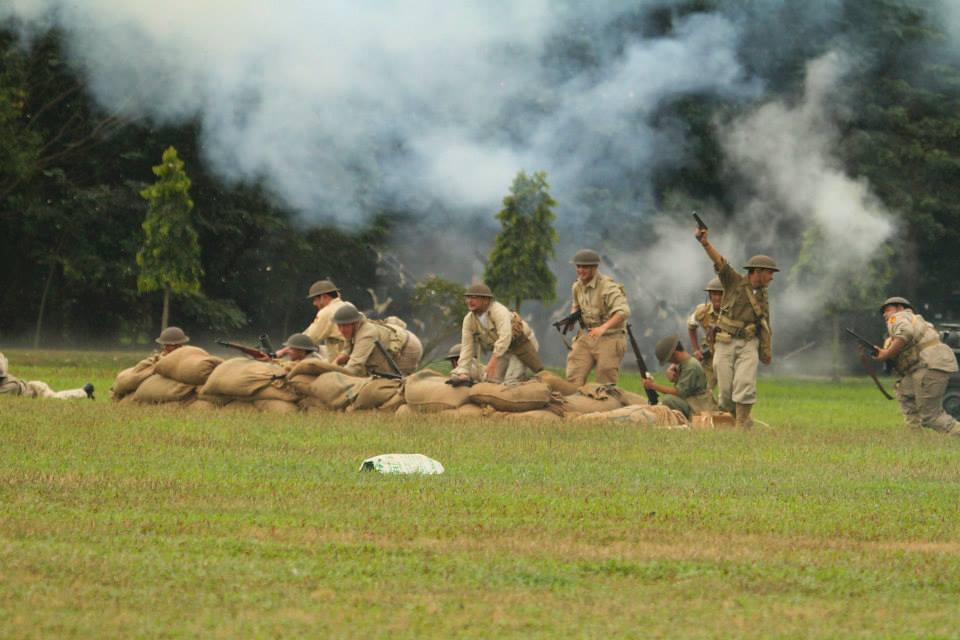 | 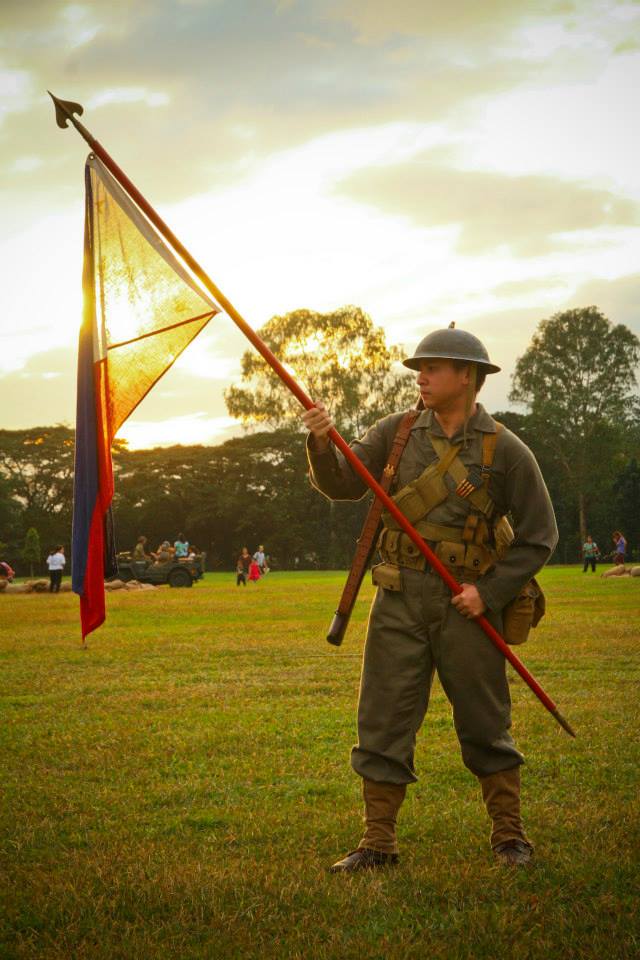 | | |
|
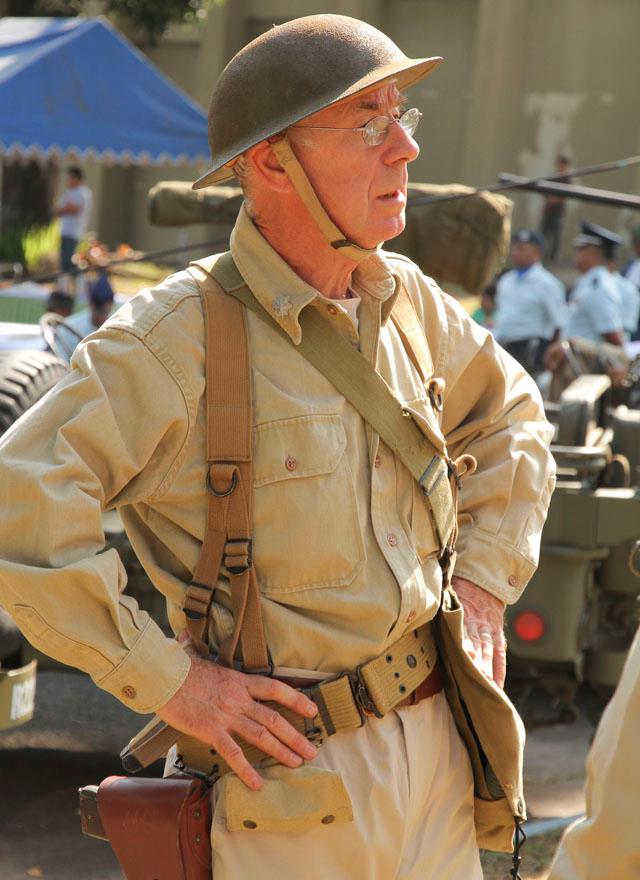
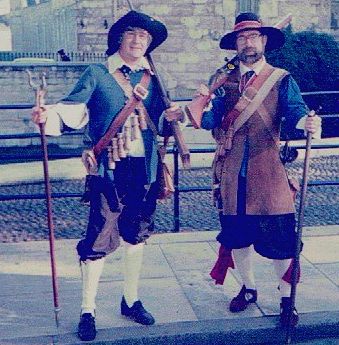
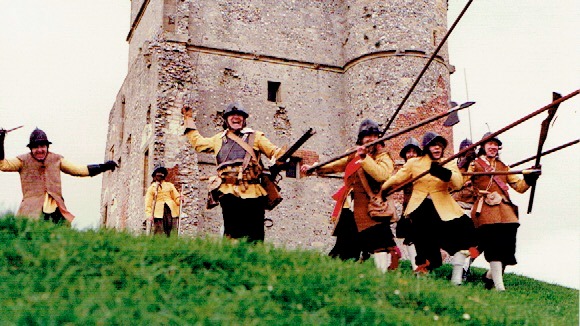
A long time reenactor from the UK who started in the English Civli War in the 1970s, David Banaghan had retired to the Philippines. Equally considering himself retired from reenacting until 2001, when he had, by chance, bumped into a group of reenactors in Manila.
Bringing with him the rough-and-tumble experience of 17th-Century reenacting in the UK, David was a member of the Sealed Knot Society, a Landsturm Company of Austrian Jaegers for the Napoleonic Wars.
H
| |
e has brought different time periods to life, ranging from his origins in European wars and now to his portrayals of Spanish clergy and colonial administrators of the Spanish era to the senior American officers of the Philippine-American War, the 1900s-1940s Philippine Commonwealth, and American WW2 commanders during the Japanese Invasion and the Allied Liberation.
| |
David has been credited among Filipinos as teaching them a professional attitude towards reenacting. They regard him as the Noah of living history.
David stated that he gets great pleasure in enlightening the Filipino public about their past and nurturing a greater awareness and pride in nations past glory.
| | |
|
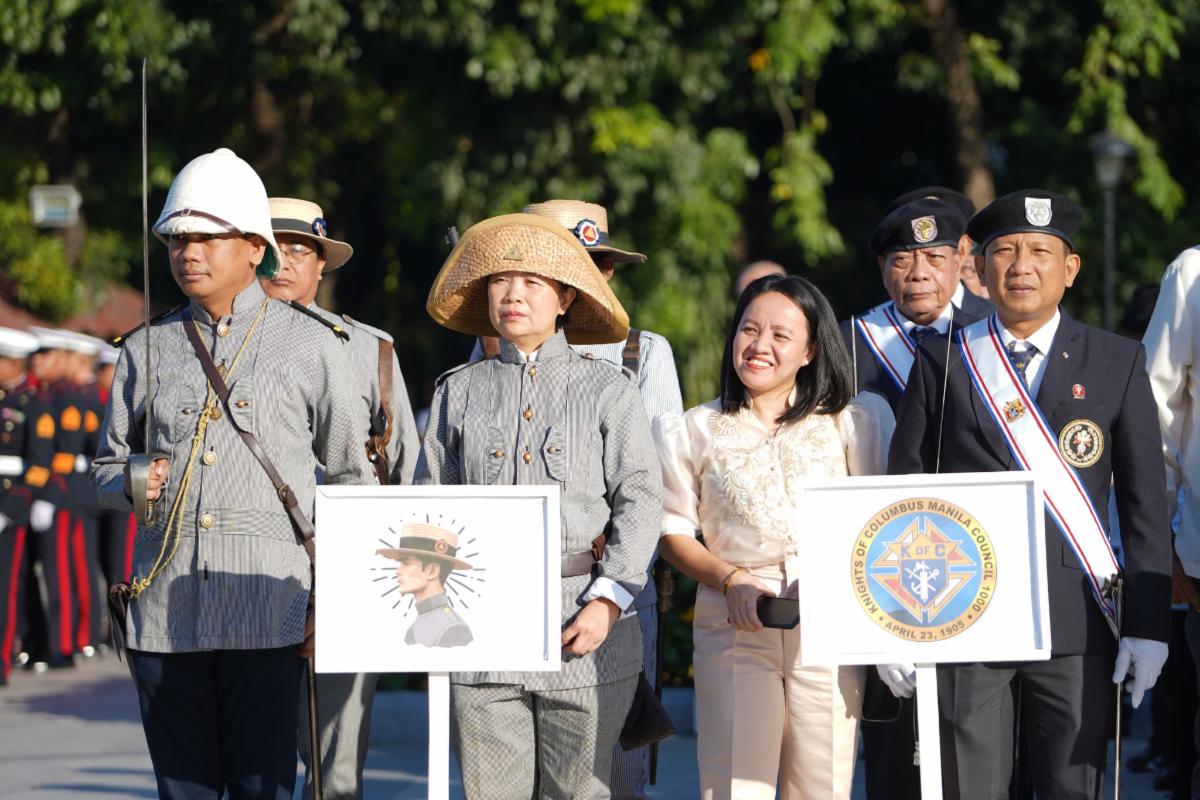
American Michael Hoff began reenacting in 2001 and by 2003, collaborated with a group of Philippine military modelers, Perry Javier and brothers Ray and Manny Ortega, all of whom had an intense attention to detail. Their first organized event was June 12th, 2004.
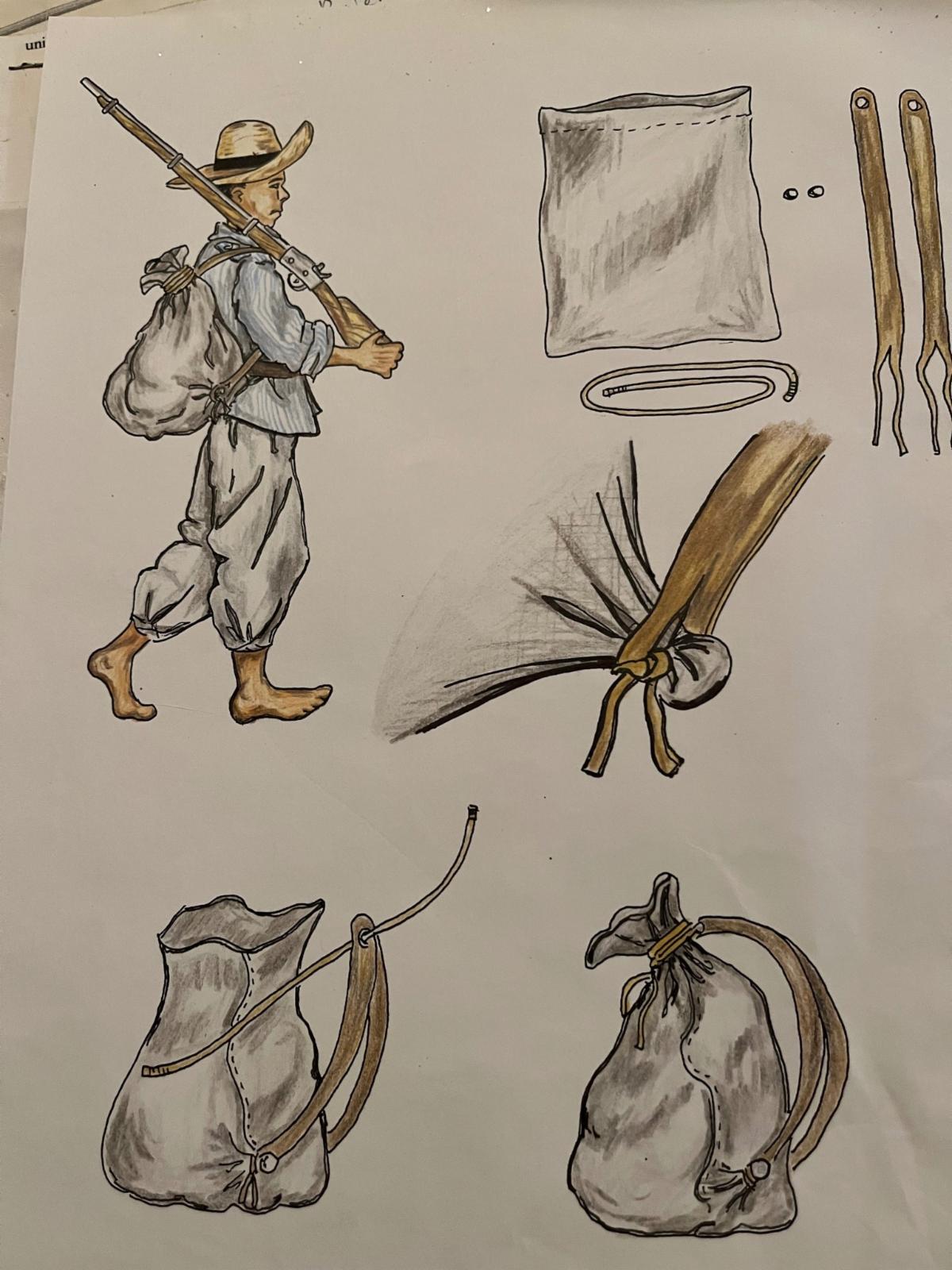
Not being a firearms person, Mr. Hoff termed himself a "uniformologist" and brought with him the flat cloth to finished garment skills that he had developed while reenacting the time period of the American Revolution and Civil War in the United States.
| |
He brought the process of making reproductions by first locating original garments to copy. Through the diligence and dogged sleuthing skills of his wife, he was able to track down examples of the 1890's Philippine uniforms in out of the way museums. Being that the military remained a position of respect within the Philippines, flashing his father in law's military ID expedited the process of gaining access to a collection. He was also able to obtain the temporary loan of original garments, from which to make reproductions.
| | |
 |
Organizations.
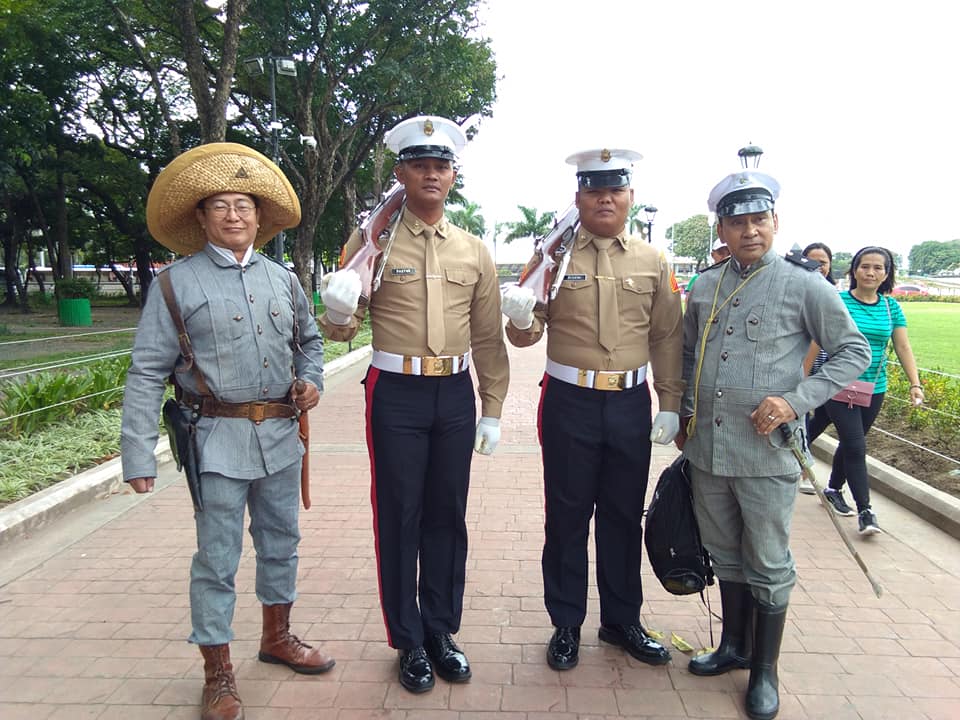
1. Republica Filipina Reenactment Group (Philippine Revolution, Philippine-American War, World War 2) (RFRG) was founded in 2019 by Mr. Joshua M. Matipo from Quezon City. The RFRG is a private living history and non-profit organization that focuses on the Philippine Revolution (1896-1898) and the Philippine-American War (1899-1902) and is currently in partnership with the National Historical Commission of the Philippines, the Department of Tourism and other government agencies.
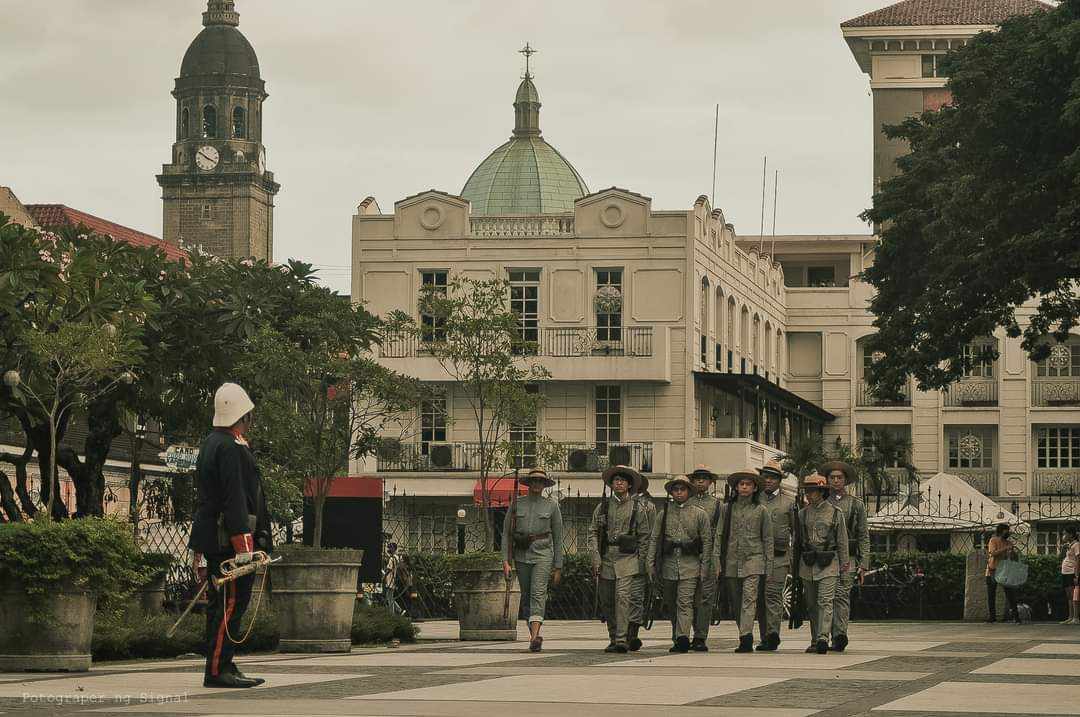
2. Buhay na Kasaysayan(Philippine Revolution, Philippine-American War) BNK Phil is the first Historical Reenactment group in the Philippines formed in 2005. It played the major role in promoting the accuracy of Filipino uniforms based on military regulations unfocused by most historians since its pioneers have strong military background like Ray, Engr. Perry, Selwyn, Col. Aganon, the late Maj. Samante with the support of the AFP historian Gen. Aguilar. It inspired & guided many enthusiast on how the soldier correctly execute the drills, tactics & wear the uniform. Soon many formed their own reenactment groups in different parts of the country sharing the common goal in promoting history & nationalism to creating modern heroes while having fun in doing a noble endeavor.
3. Philippine Living History Society (Philippine-American War, World War 2)
4. La Liga de Cebu (Pre-Colonial Era, Philippine Revolution, Philippine-American War, World War 2) (Province of Cebu)
| | | |
5. Meycauayan Reenactors Group (Philippine Revolution, Philippine-American War, World War 2) 6. Philippine scouts heritage society was formed on April 5, 1989, by Rhode Island State Senator John Patterson, along with former Philippine Scout officers John Olson, Lloyd Mills and Roy Reynolds, The Society's mission is to help preserve the history and legacy of these outstanding soldiers. The Society has chapters in the San Francisco Bay area, Tacoma, El Paso, and Los Angeles, and holds a reunion on or around Memorial Day each year.
Today the sons, daughters and grandchildren of the Scouts are taking over the Society, as only a few of the men are left. At the closing dinner of their annual reunion only ten or fifteen line up across the dance floor now, with graying hair and an occasional cane or wheelchair momentarily pushed aside. In the darkened room with its sparkling lights, flashbulbs and background music, they receive the applause of their families and admirers.
The Philippine Chapter was begun in 2009-2010 by Philip Garcia
| 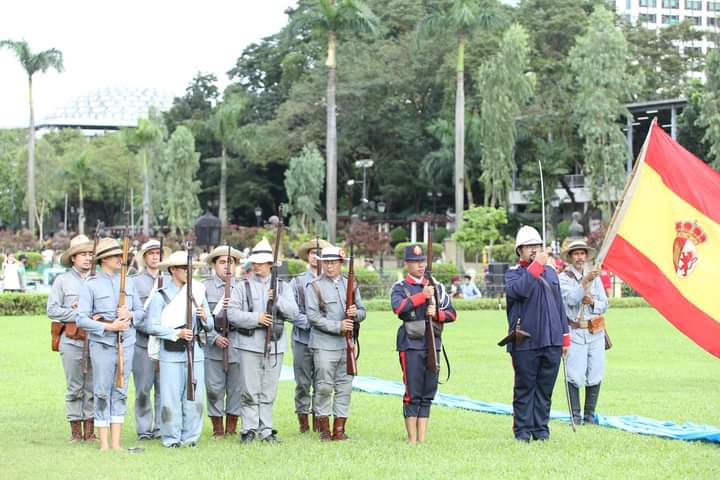 | Like in the United States and elsewhere, there are many small groups and individuals that try to form but many don't have staying power. Those who do persist have either lots of time to do research and fabrication, lots of extra cash to spend, lots of contacts to keep them involved and busy, or are just | | |
stubborn. Like the United Statess, others show up for one event and then aren't heard from for months or years. | |
Vehicles.
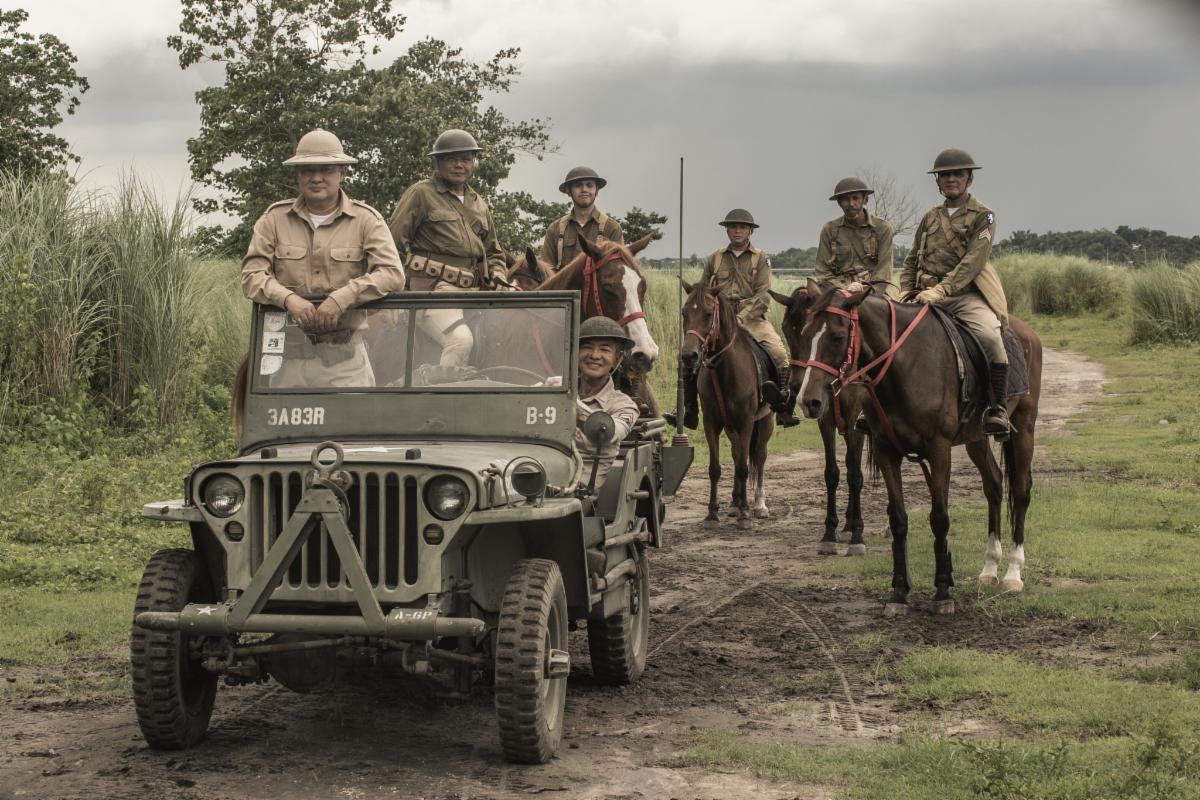
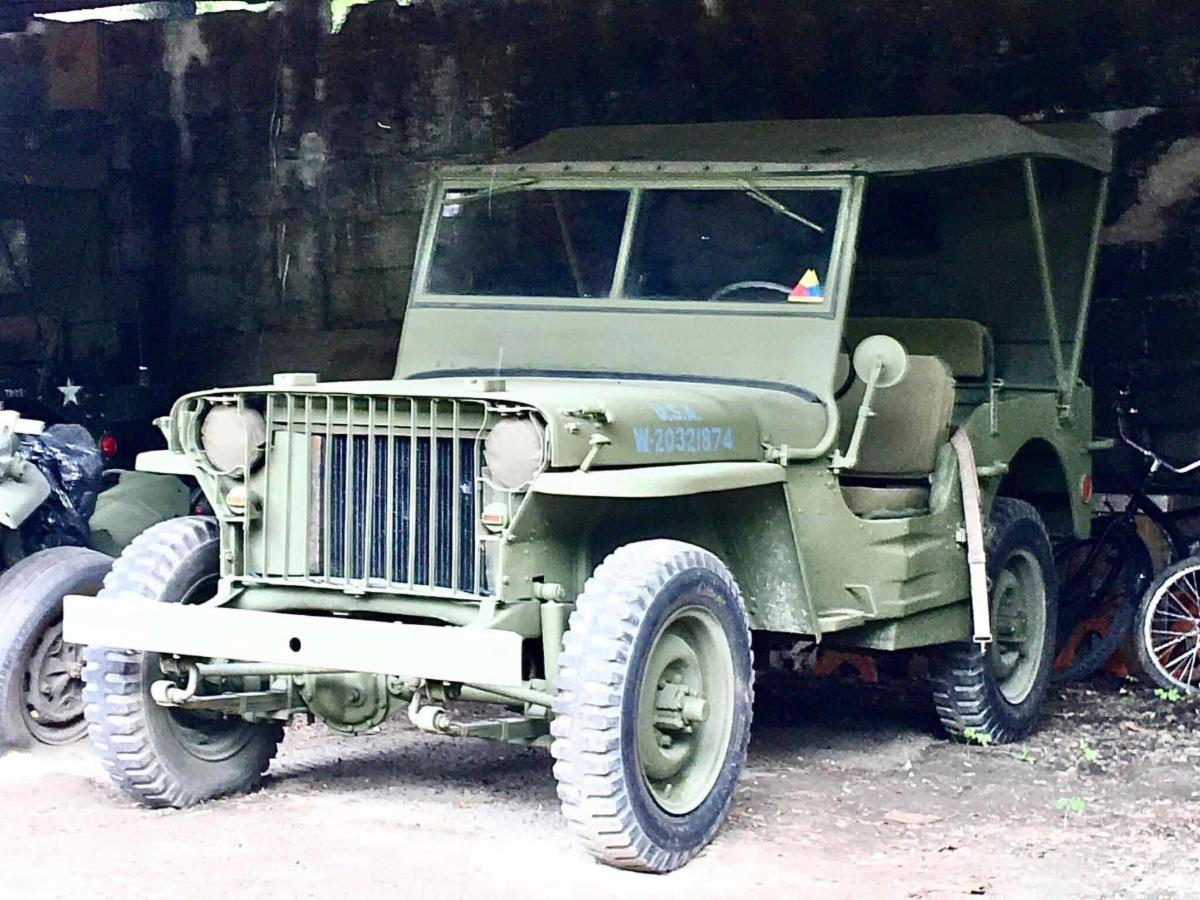
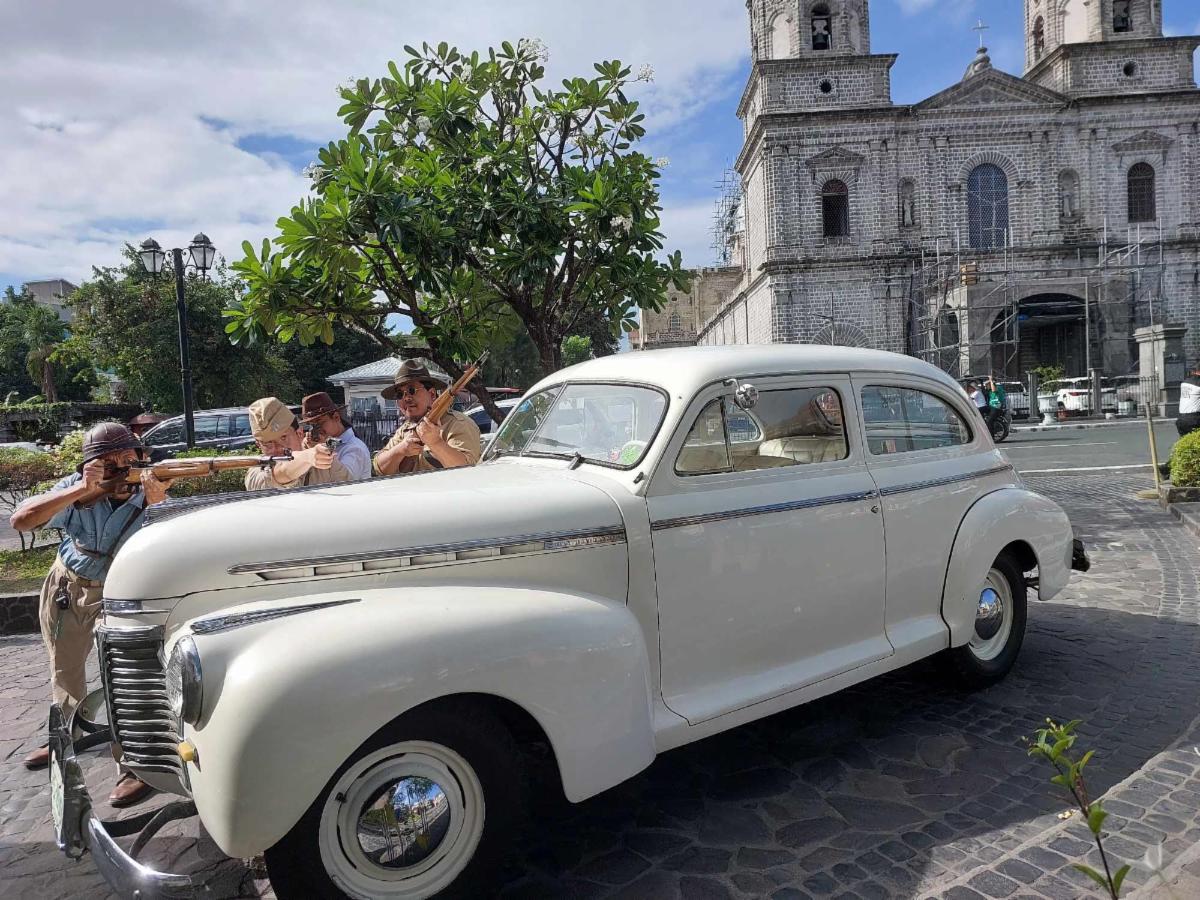
1942 Willys MB, which has been in the same family sinde 1965. Served in the French Army in Algeria 1956, and bought as surplus in 1965 for ₱3,500, roughly $60.
| |
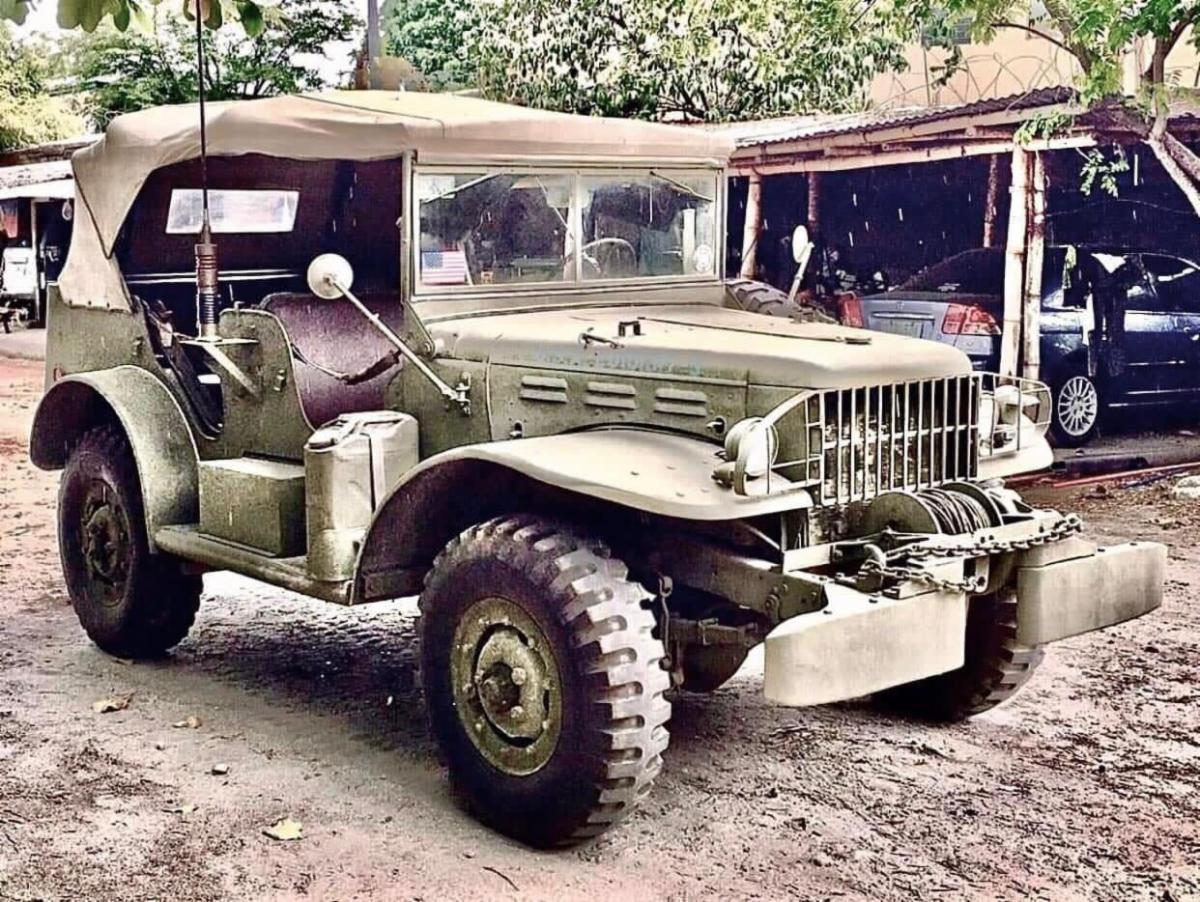
1944 Dodge WC57 Command Car
-26 year restoration
| | |
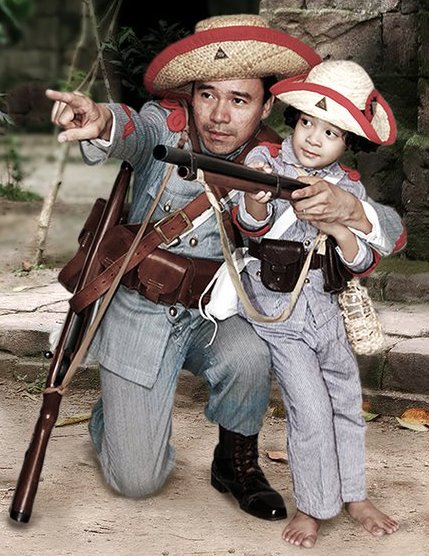 | |
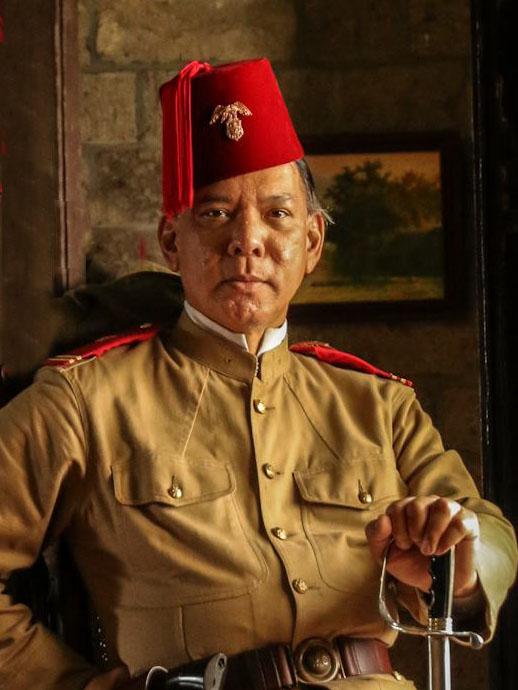
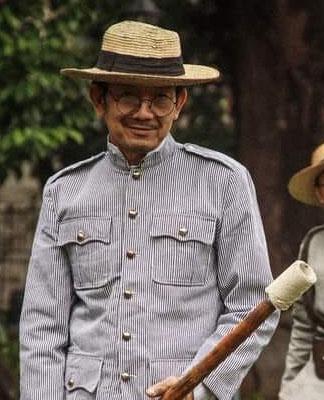
One of the pioneers of the Historical Reenactment in the Philippines started in 2005. Since accurate uniforms and accoutrements were not available for the Philippine Revolution and Spanish Rayadillo uniform he and Nonito Flores reproduced these on their own After investing a lot of resources and with the help of Ortega, Hoff and others, they finally produced an accurate uniform which they able to share with reenactors in Spain, US, Puerto Rico, etc.
To promote the historical reenactment & nationalism more, he joined & won several reenactment competitions. He conducted exhibits & lectures about the Filipino uniform in National Museum and universities. He included his son Agilard as young as 2 weeks old .
His ambition is to document all the military uniforms of the Philippines. To that end, his colleciton has been compiled in a multi volume series; volume 1 titled Mandirigma 1935-45 era. Volume 2 is about the Philippline Revolution 1892-1906 and Vol 3 Evolution of Filipino Camouflage 1899 to 2024 era.
| | |
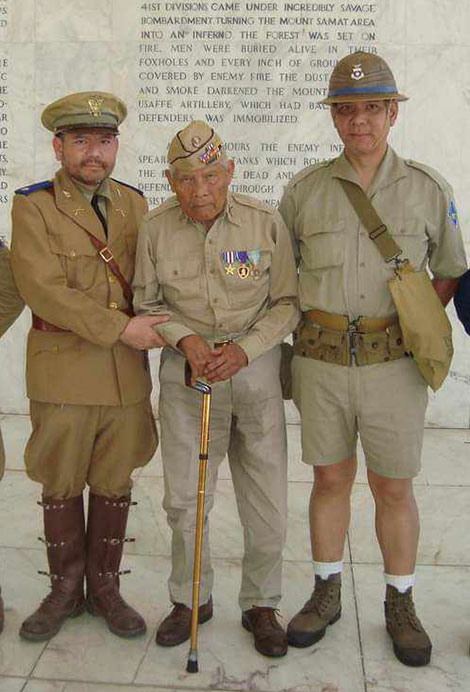
His father survived the Death March and commanded the Philippine Army's Armored Battalion in the 1950s. As a survivor, General Ortega was granted automatic United States citizenship. that being the case, Ray enjoyed dual citizenship, and was one of the founders of reenacting in the Philippines. | World War II and Bataan Death March veteran retired Brigadier General Antonio Ortega with two of his sons | | |
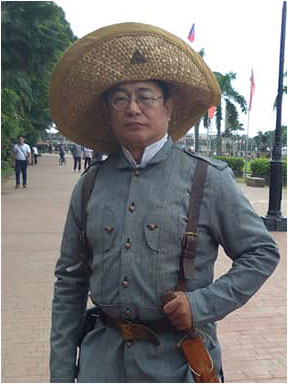 | |
At 61, Selwyn has spent 19 years in living historyand is a promoter of reenactment to other groups like the National ROTC Alumni Association (NARAA), the AFP's Civil Relations Service (CRS), the Philippine Veterans Affairs Office (PVAO) of the Department of National Defense (DND), the Department of Tourism (DOT), the Department of Education (DepEd), the National Historical Commission of the Philippines (NHCP), the National Parks Development Committee (NPDC), the Intramuros Administration (IA), and various historical associations as well as museums in the cities and provinces of the Tagalog (Central and Southern Luzon) regions.
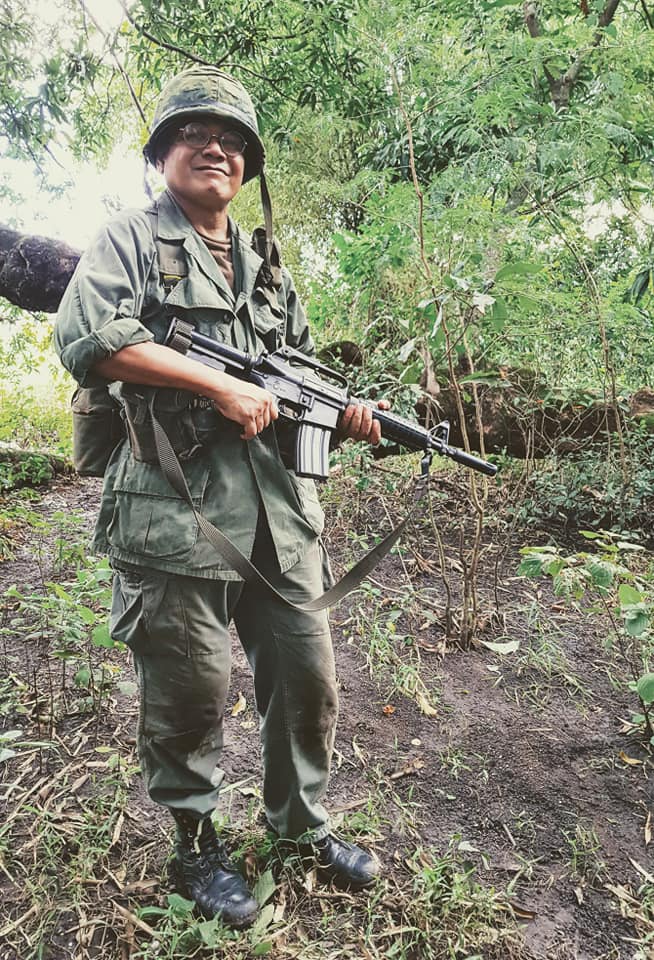
With inspiration, hard work, and sacrifice, he has been able to gather and assemble a few sets of uniforms from the Spanish Colonial era to the Philippine Revolution and Philippine-American War up to the World War II and Vietnam War eras
Aside from the increasing frequency of reenactment events, is to help the RFRG become administratively stable with a strong logistic base, hoping to assist new reenactors learn how to do the hobby without going through the rough portions. Another area he is working towards, would be to help cities conduct their own reenactments on a steady basis so that they can eventually build up a local community and cottage industry to supply reenactors with authentic and nearly correct clothing, accessories, utensils, replica weapons, and special effects.
| | |
|
Albert Labrador has been a professional photographer since 1992 and has served as a contributor for over 20 coffee table books and publications covering travel, industry, art, food, architecture and many more.
His latest book is Mandirigma, which is an illustrated guide to uniforms and equipment of Filipino soldiers of the second world war.
Albert has been a history buff since his grade school days and is an avid scale modeler, In 2009 he joined the Philippine Living History Society and worked with its members to produce and direct several reenactments on various WW2 battles. He has since continued his involvement with projects concerning WW2 history in The Philippines.
Labrador now teaches photography classes at his Alma Mater, the UP College of Fine Arts.
| | |
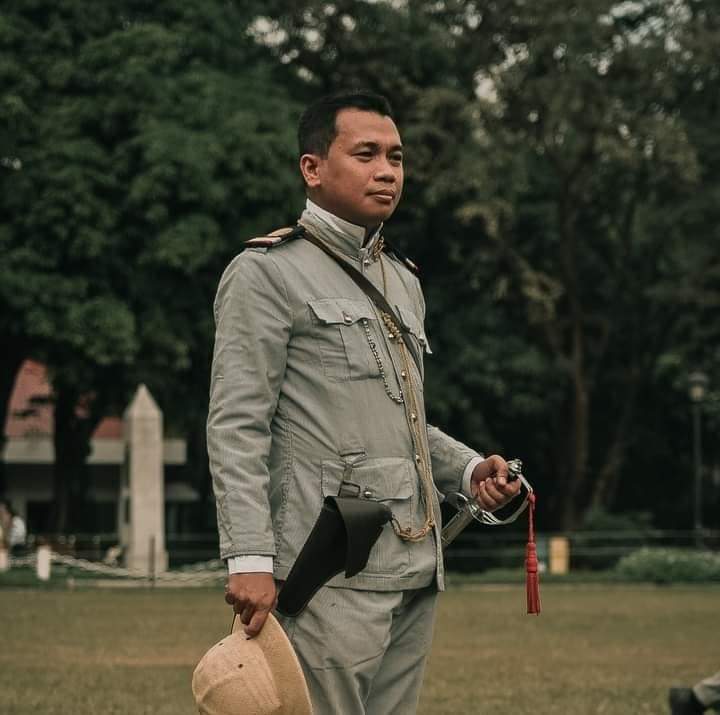 | |
the Founder and President of the Republica Filipina Reenactment Group, which was founded in March 2019. The said Group focuses on the Philippine Revolution (1896-1898), Philippine-American War (1899-1902) and the Second World War in the Philippines (1941-1945).
His paternal grandfather,was a Filipino Guerilla during World War II. He was raised to promote Filipino Patriotism began and his interest in history continues into adulthood.
His group, The Republica Filipina Reenactment Group, together with the Philippine Army and other various Reenactment Groups like the Buhay na Kasaysayan and the Philippine Living History Society, also contributed to the production of the Philippine Army Coffee Table Book, "Warriors and Heroes", which showcase Philippine Military History in celebration of the 125th Anniversary of the Philippine Army last March 2022.
As of now, he is encouraging young people to join the Reenactment Community and see the importance of it as a medium to tell the tumultuous and amazing past of the Filipino people
| | |
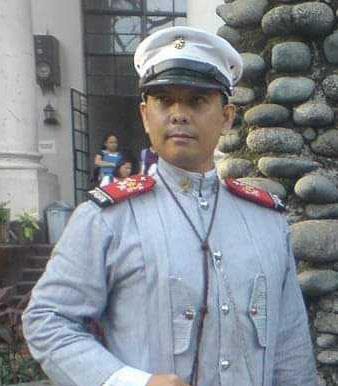 | |
A pioneer of the Historical Reenactment in the Philippines in 2005 together with Ray, Perry and Selwyn. Since there were no available accurate uniforms and accoutrements about the Phil Revolution and Spanish Rayadillo uniform he and Perry Javier reproduced these on their own. It was their greatest challenge considering uniform is the back bone of historical reenactment. After a year of sacrifice in searching the correct material, tailor and leather/metal makers that would pass a strict qualification standard to attain an authentic replica, they finally produced an accurate uniform which they even able to share and gain respect from reenactors in Spain, US, Puerto Rico and other parts of the world.
In Sep 2009, he, Perry and Macky as part of the historical reenactment gave a speech in front of the Chief of Staff and soldiers of the Armed Forces of the Philippines, which would prove to be Ding's last event before his untimely death. Ding was a big loss to historical reenactment, and in particular, in reproducing an accurate Filipino and Spanish uniforms, leather and web gear. He was respected as far away as Spain, by the Valencia Military Museum and Reenactors headed by Javier Planells.
| | |
"The general public really doesn't know much about these things and so the performances make an impact. Even active duty AFP soldiers engage us after the shows and thank us for enlightening them. We thank them in turn for being the real thing."....... Albert Labrador | |
|
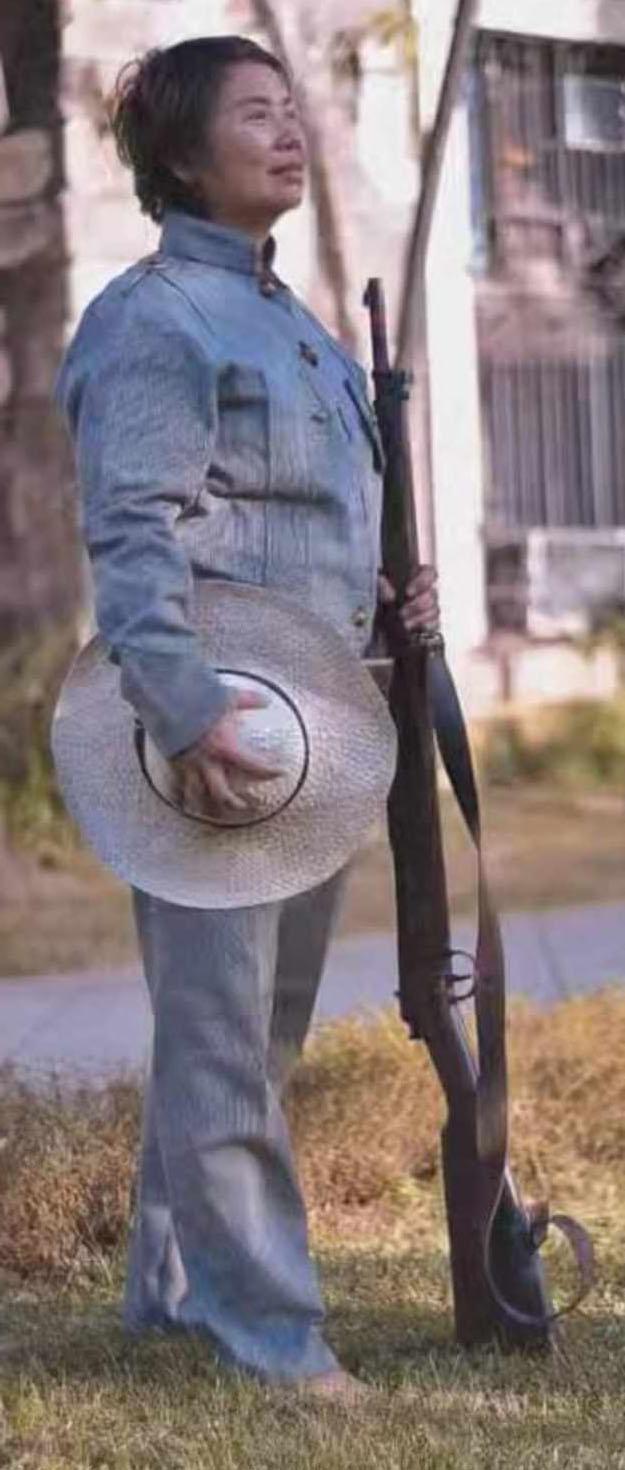
Vivian was always fascinated by historical movies and wars and books on military espionage that her father read, that she paticipated in military training days with her high school classmates practicing sword drills during our free time.
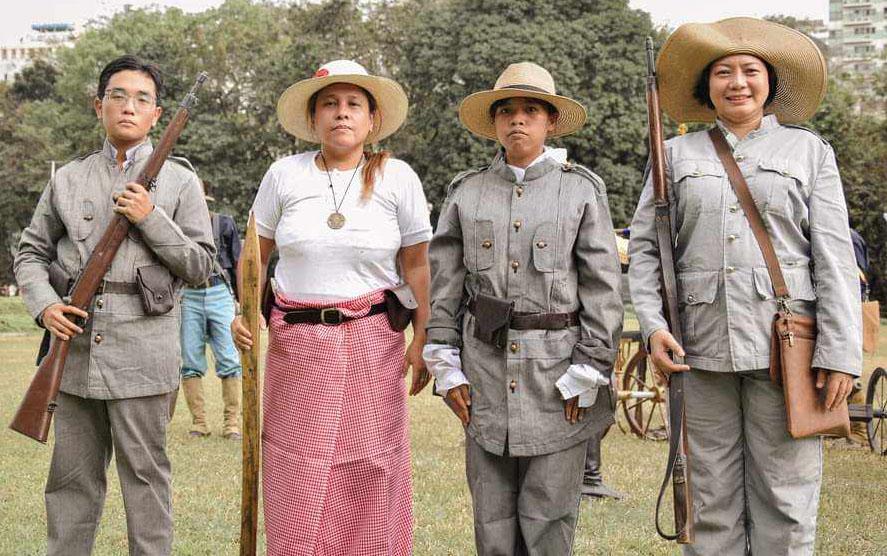
During a visit to the coffee festival in Intramuros she met reenactors who were there to support the event. She joined republica filipina reenactment group and took the initiative to enchance their civilian reenactors. Within a year, she has oversaw a large opportunity for more women joining us and taking roles not only for civilians but for medics that the battle reenactments need
| |
ilaw ng tahanan.
Roughly equivalent to our saying, The fairer sex, it translates to lighten the home. Make it liveable and a place of rest for the family members.
Woman are joining RFRG for a multitude of reasons. One member is a mother of our new recruit who was invited to participate as a medic. She liked the reenactment so much that she will be participating on the next Philippines American war battle reenactment. Another one is a friend of an old member that got interested. Another woman came on her own and is part of our Pampanga (another province) chapter. She was a history student and is interested in reenactment. Though social media and television exposure the female contingent will continue to grow.
Currently they have the headquarters in manila and the Cavite chapter and Pampanga chapters
| | |
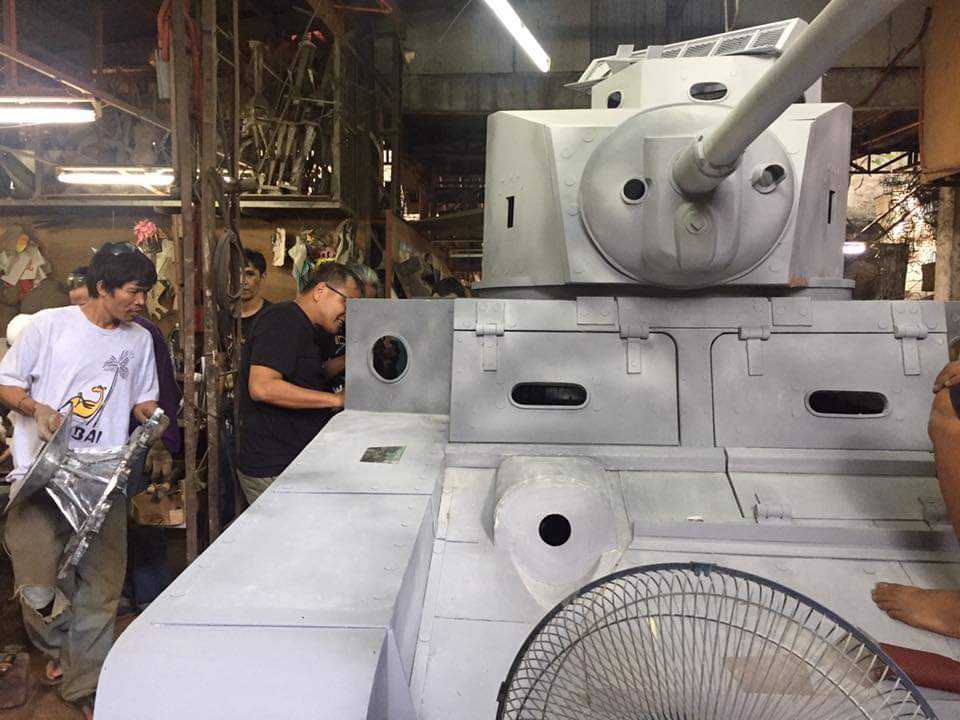
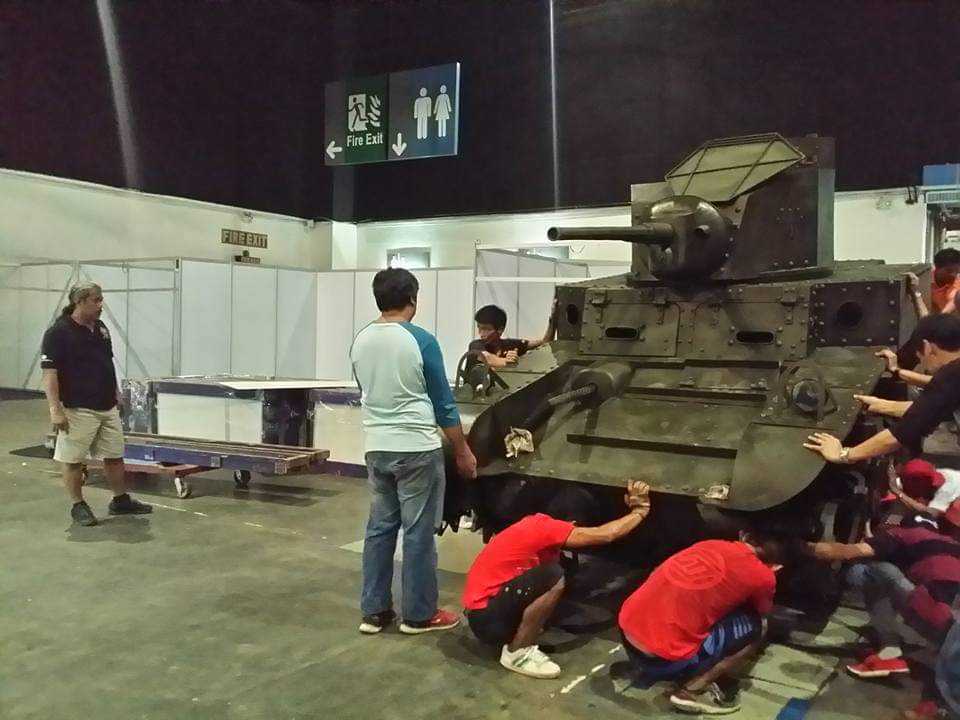
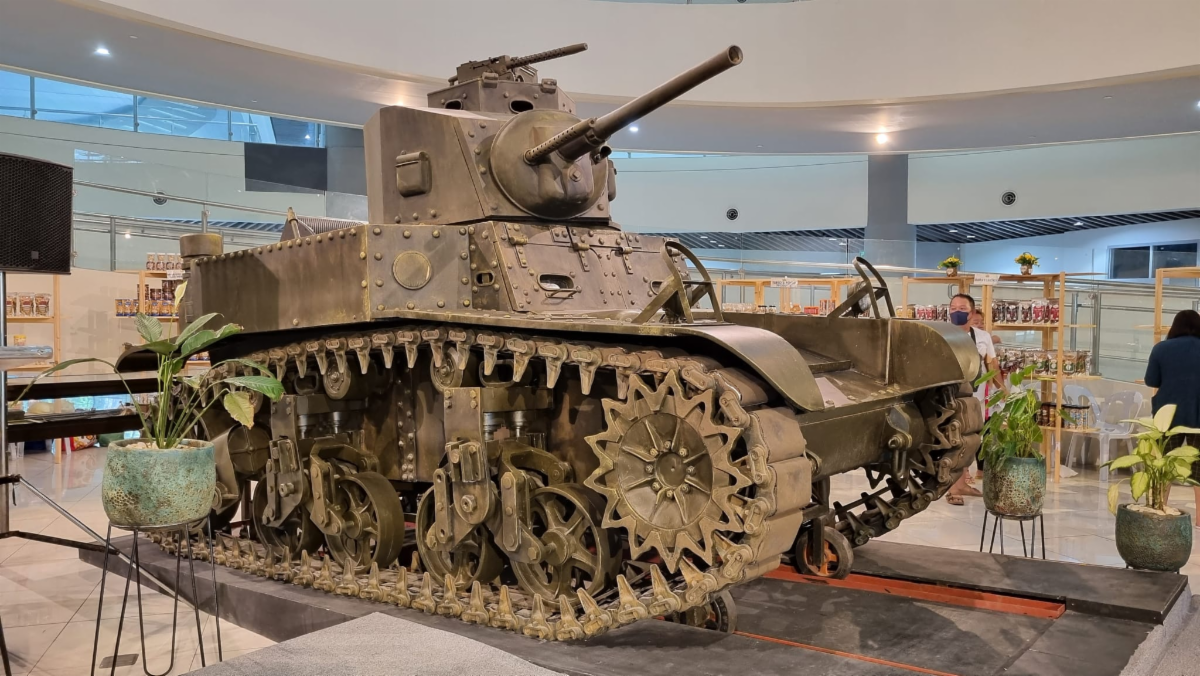
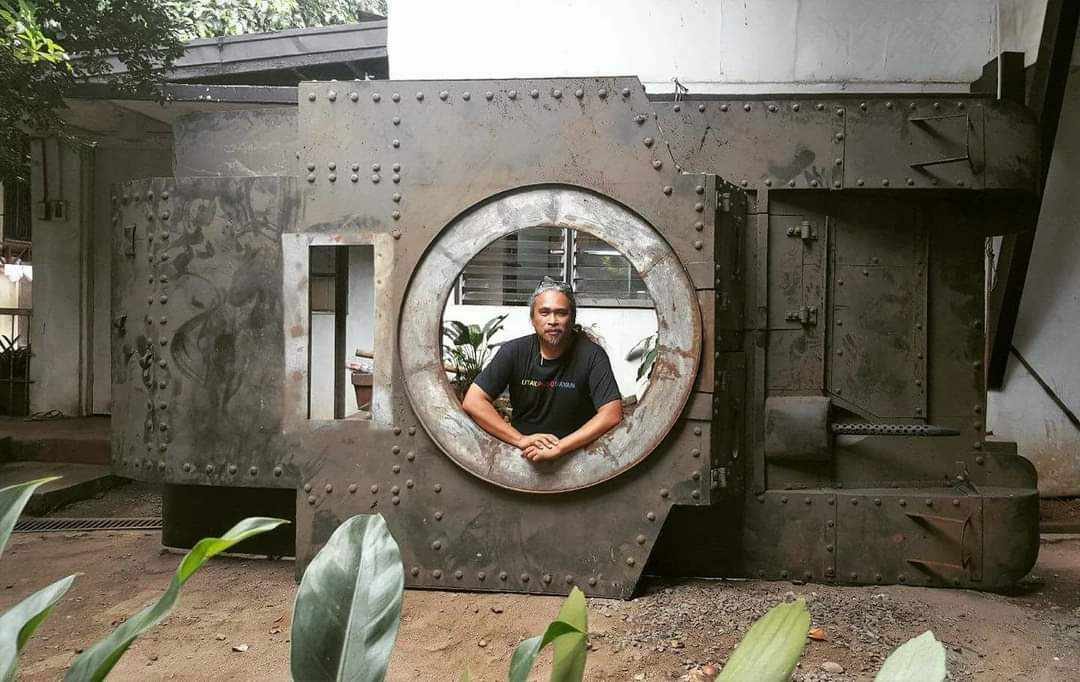
Scratch built Stuart Tank.
Financed by the Veterans Bank fo the Philippines, this full size all-steel replica of a Stuart tanks is an example of the genius of sculptor Toym Leon Imao, a professor at the University of the Phillippines.
Toym is renowned, and has exhibited in galleries in New York City and Washington, D.C., and locally at the Cultural Center of the Philippines, the Metropolitan Museum of Manila, the Ayala Museum, and at the Lopez
| |
|
Museum. Some of his most notable works are the Tandang Sora National Shrine in Quezon City, the Andres Bonifacio National Shrine in Maragondon, Cavite, the Monumento Fernandino in San Fernando, Pampanga, and the Dr. Jose P. Rizal statue in Carson City, California."
After earning his Masters in Fine Arts degree from the Maryland Institute College of Arts in the USA through a Fulbright scholarship, Toym returned to the Philippines to continue exhibiting in galleries and doing public art installations and monumental-scale works. He is currently an Assistant Professor at the University of the Philippines where he hopes to inspire young artists to tell their own stories creatively.
| | |
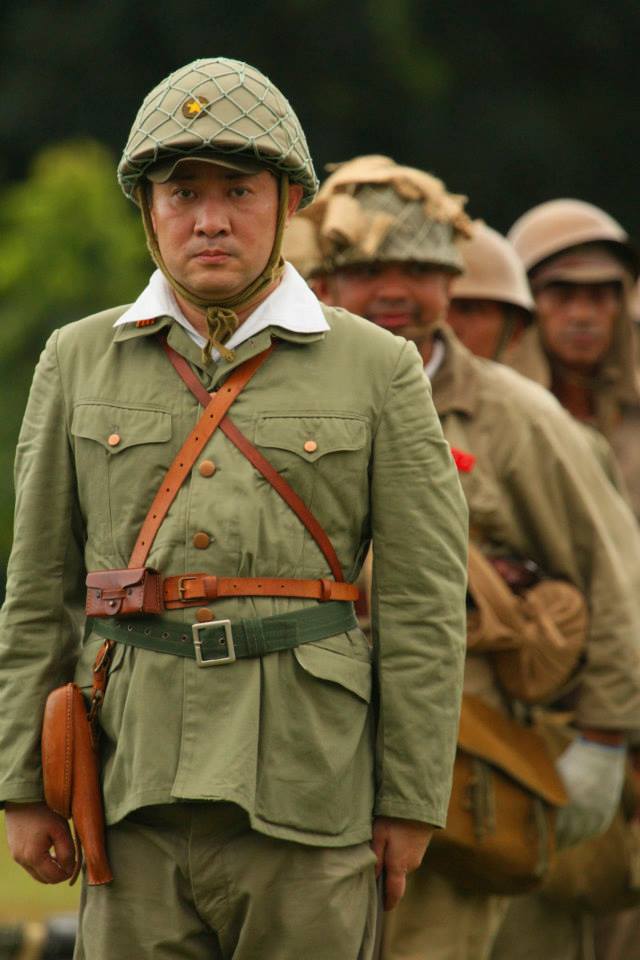
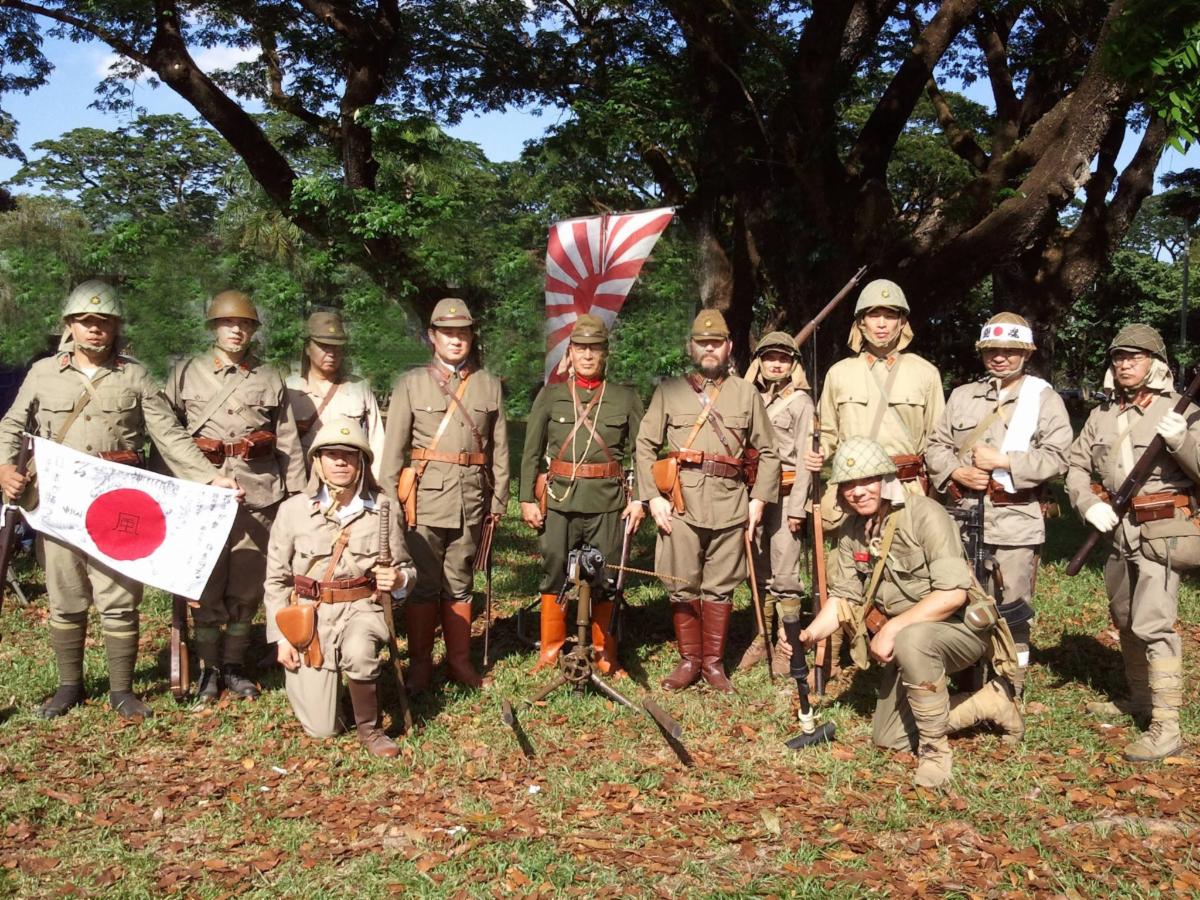
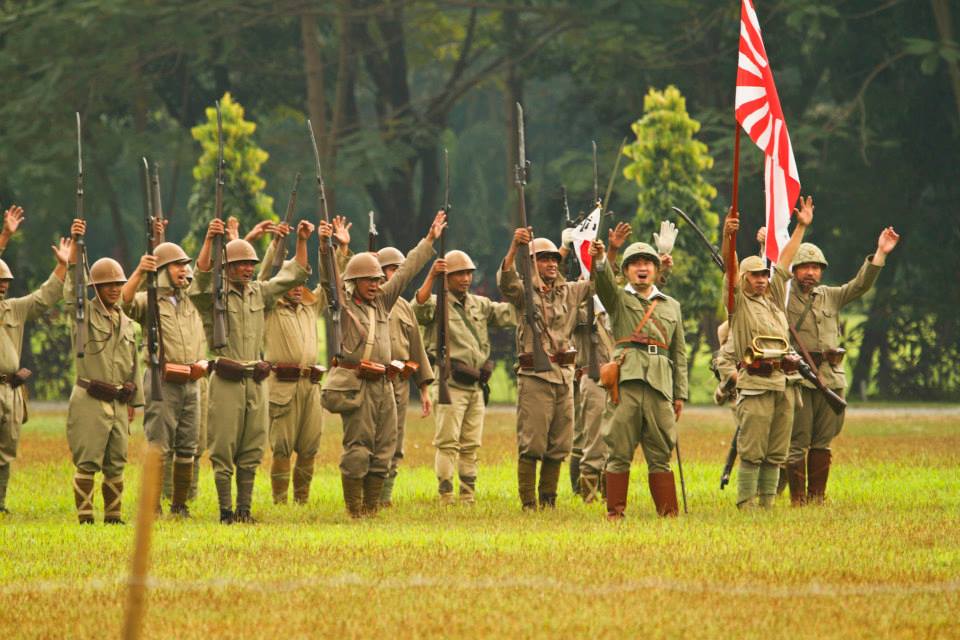
Japanese Reenactors Sponsored
In a drive to achieve high accuracy, reenactors from Japan were invited to visit and give instruction on the commands and tactics of the IJA. At the surface, it can be viewed as controversial, but the movies in the Philippines, have portrayed the Japanese invaders and inept, bumbling buffoons. The damage is that the general public are given a complete misconception, leading to a lack of comprehension of the effect on the country and the civilian population.
| | |
When portraying Pilippine soldiers in the tan uniforms, spectators mistakenly thought that they were representing Japanese soldiers. The living history part of the allows people to see first hand the differences in the uniforms, and consequently the strategies and tactics. |
| | |
|
|
Santos Jeffrey.
As a child, Jeffrey was into building scale model military aircraft improvising using cardboard, sticks and whatever he can get his hands into.
Trained as a Communication Electronics Technician by trade. he knew how to solder but not weld. A friend loaned him his vintage transformer type arc welder, where he started REALLY learning. After being burned several times, eyes sored bad, he eventually learned how to use a us se a conventional welder for his intended products.
It was reenactors who urged him to build historical weapons but lack of knowledge of the older weapons made him hesitant. At the time, reenactors were using fiberglass movie props.. Reenactors encouraged him to start building for them.
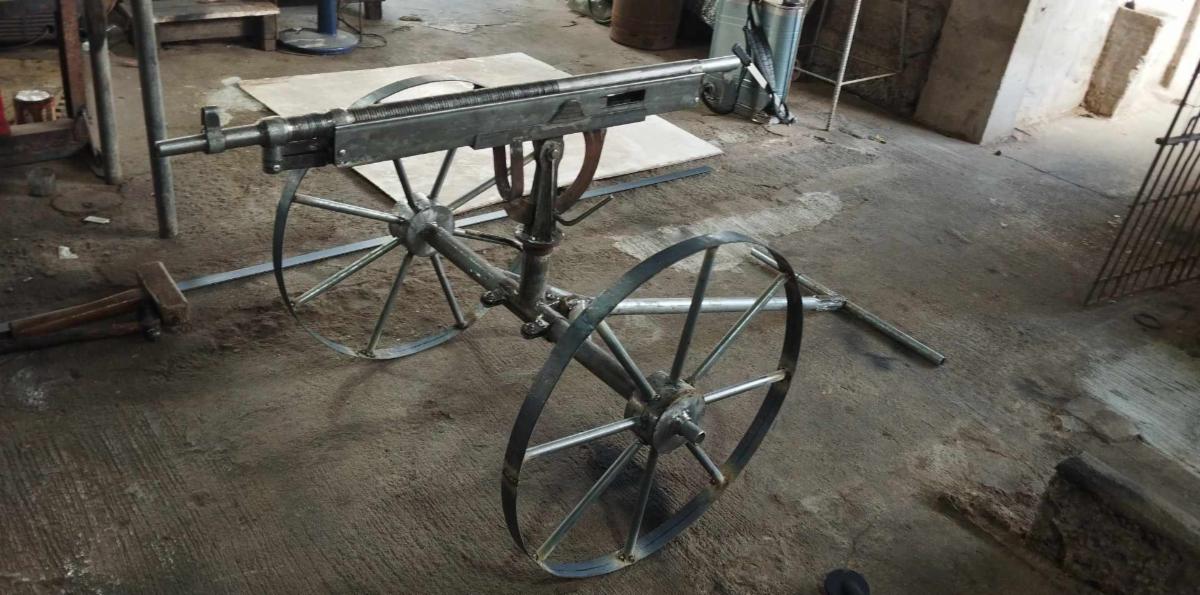
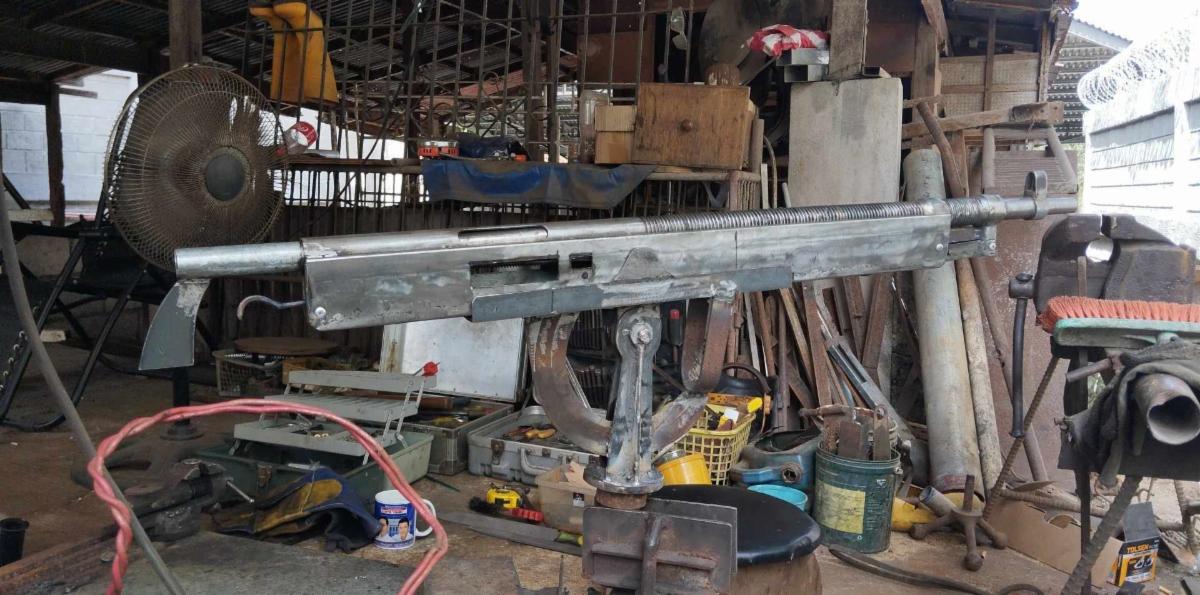
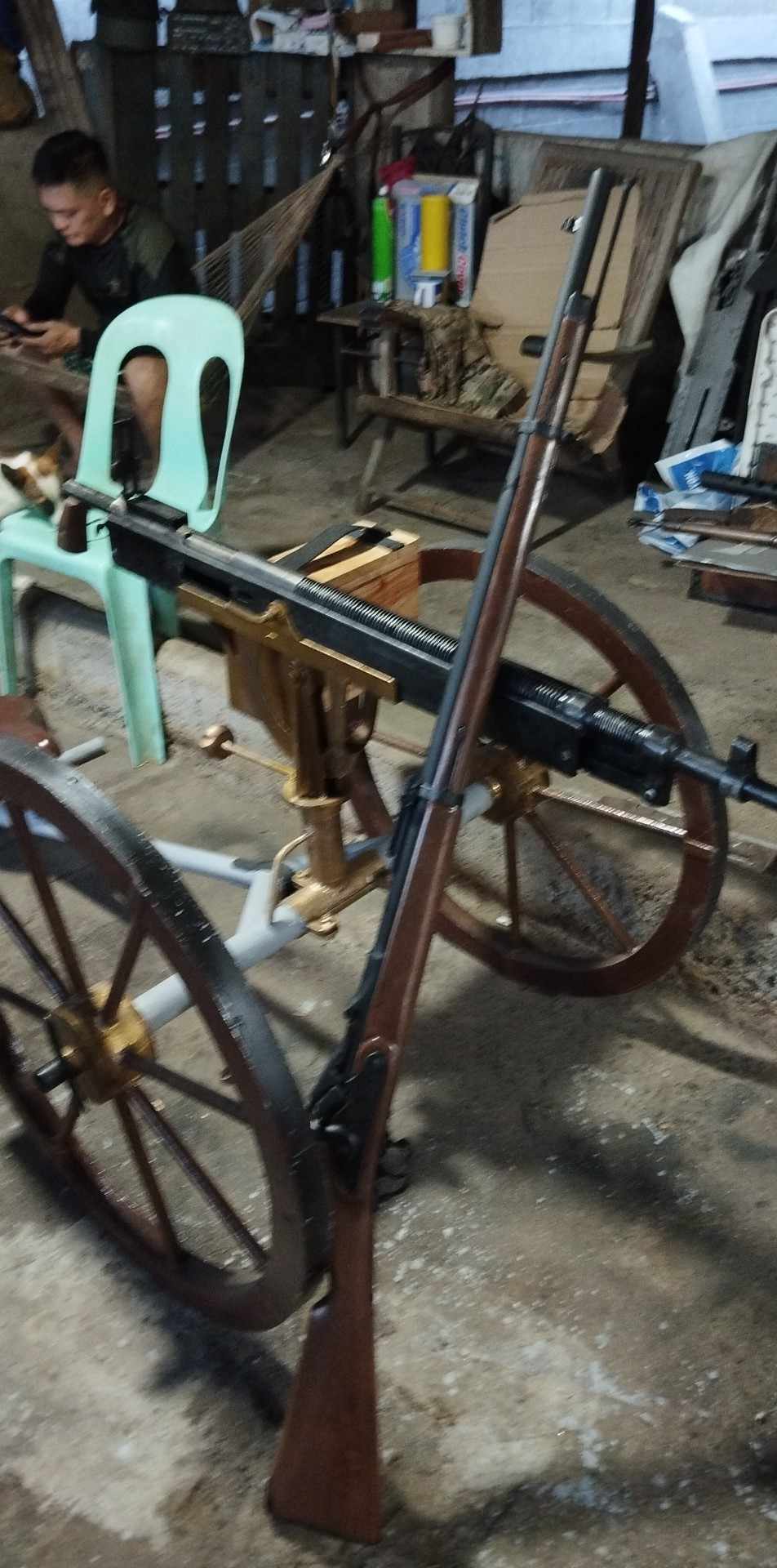
Word slowly got out, and soon, the Bataan Museum as if he could build them a M1917 US Enfield.. Working from a fiberglass moulded M1917, and downloaded pictures from the internet for more details of the M1917,experimenting more, making the bolt workable, triggers too...
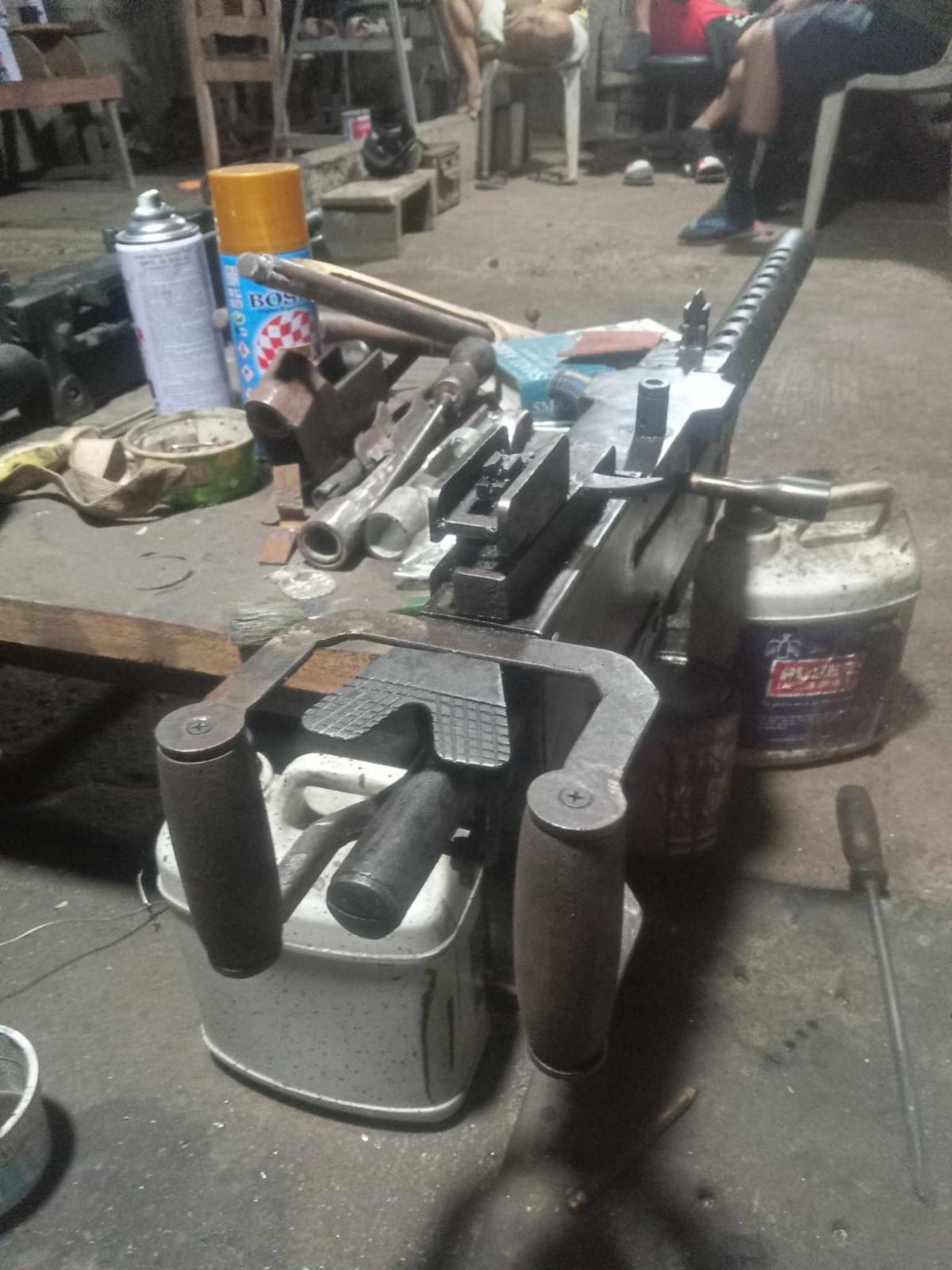
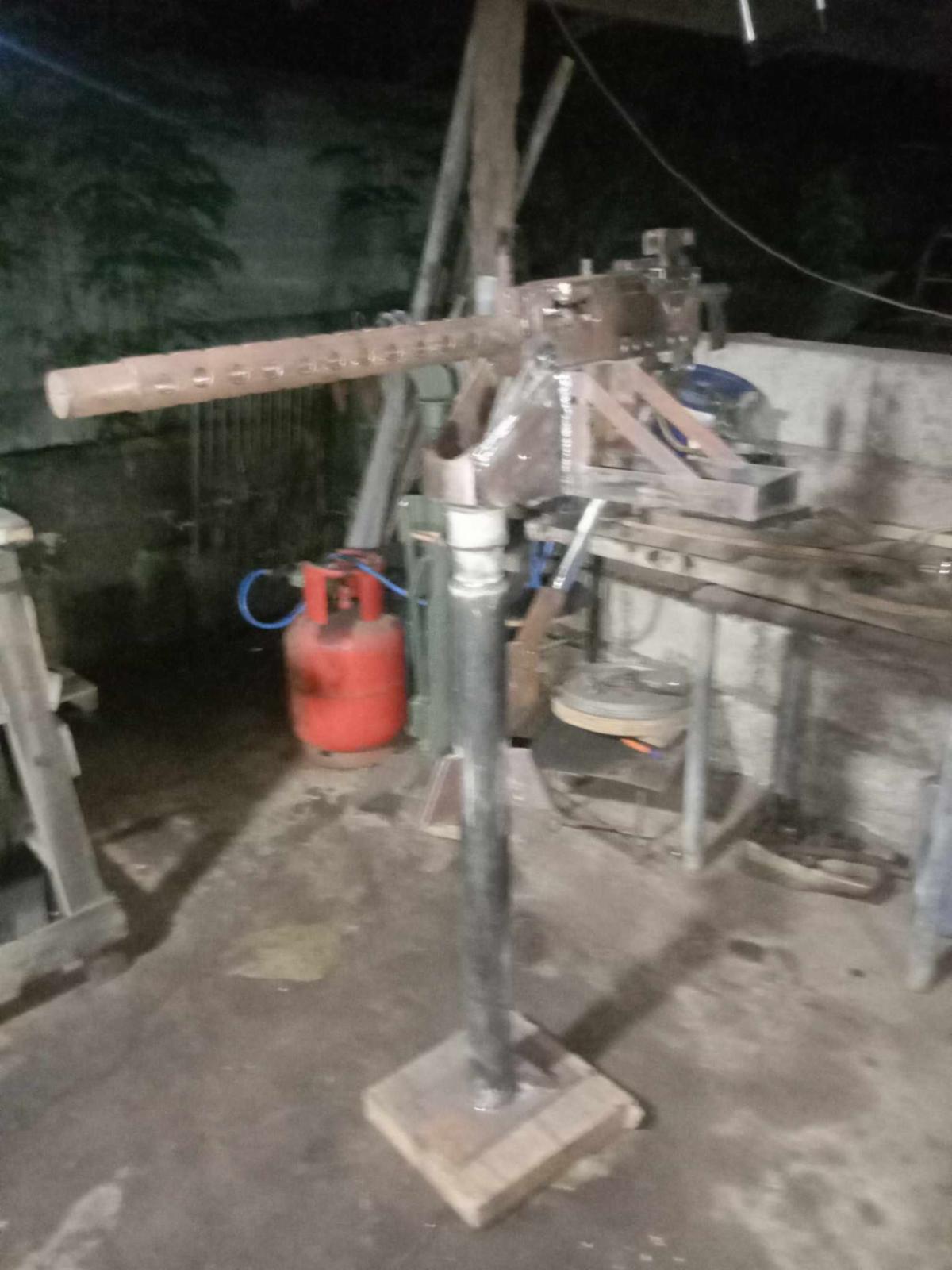
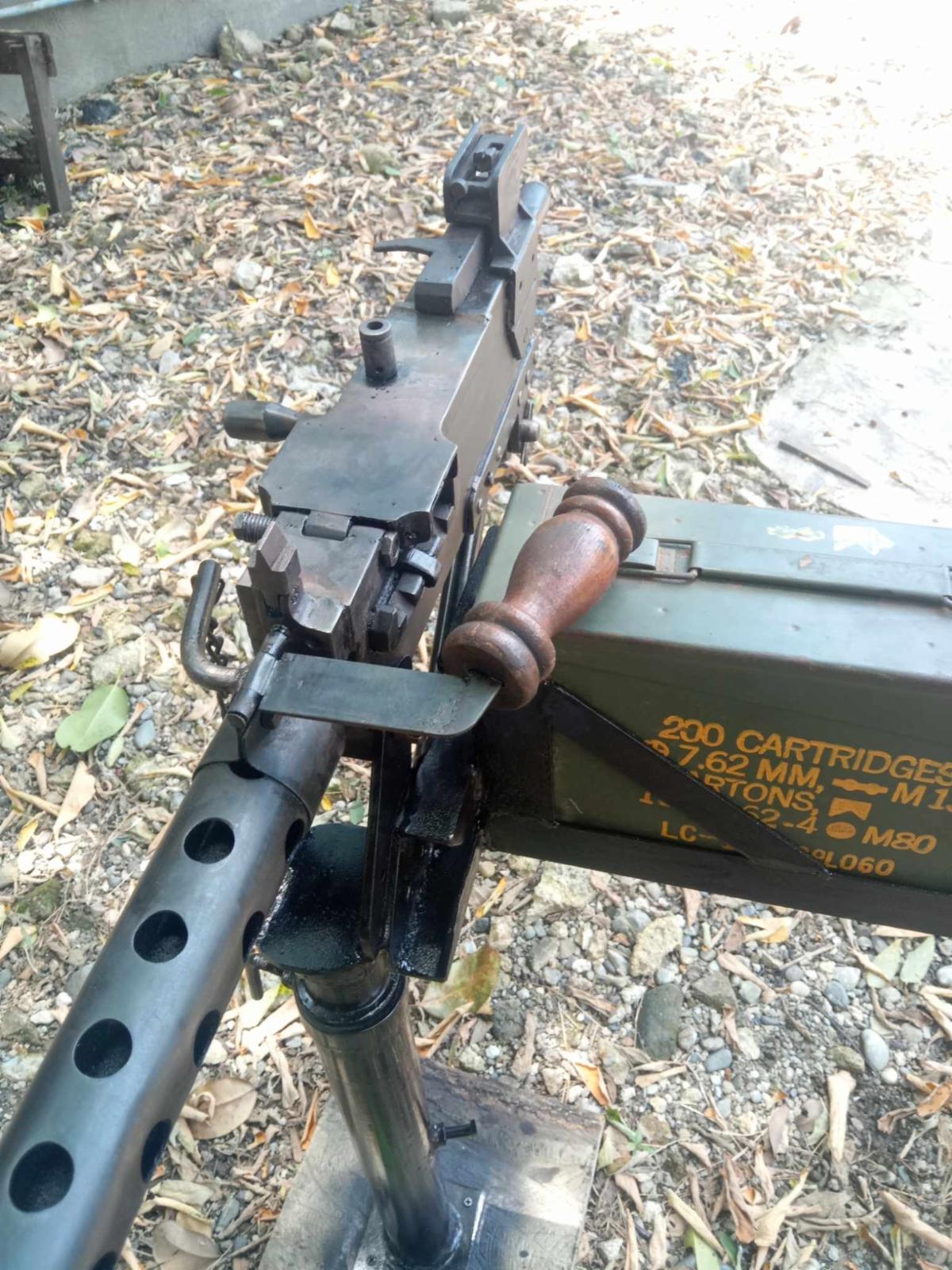
Eventually together with the reenactment groups, school ROTC units discovered his work and he set up his workshop to produce more. Buying more tools and learning other welding processes, eh started building more models. He went ont to build Machine guns, cannons, or whatever the client needed, I got comfortable building without a specimen just from looking at pictures from the net and getting dimensions.He now has other working with him, all of whom share his passion, creative spark and thrill of a new challenge.
|  |  |  | | | |
|
Sign up for images of original items!
We have stared a tradition of a photostudy of original items, which we host on our facebook page. To those that avoid social media we are launching an offer to email you the very same photos that are posted on facebook. Follow the link below to have them rolling in.
Fashion Closet Fridays.
| | |
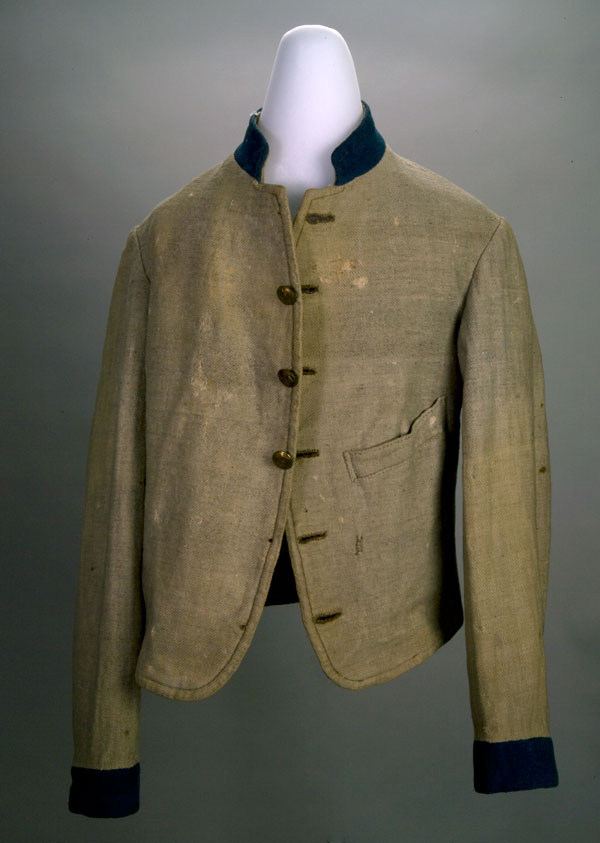
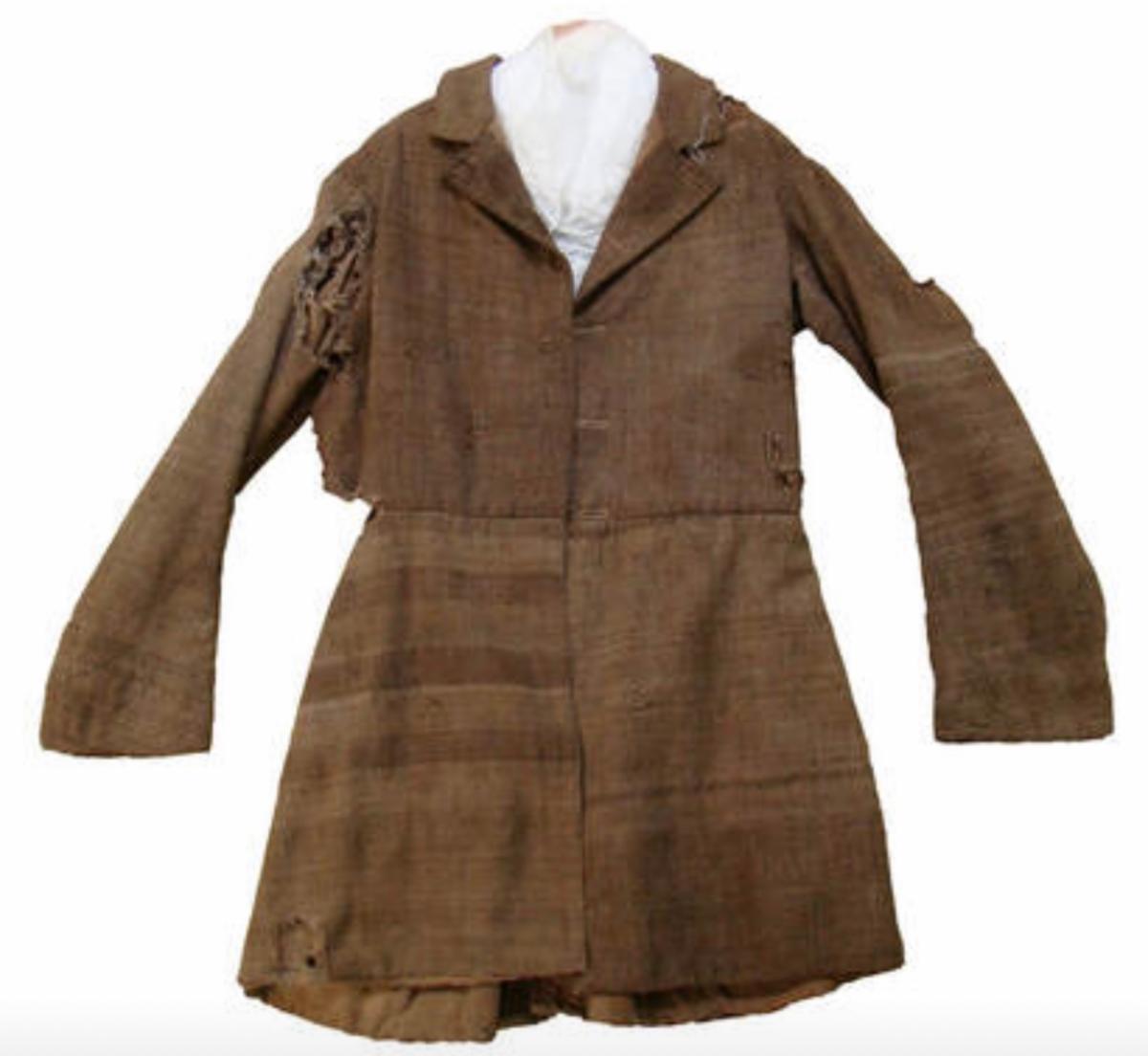
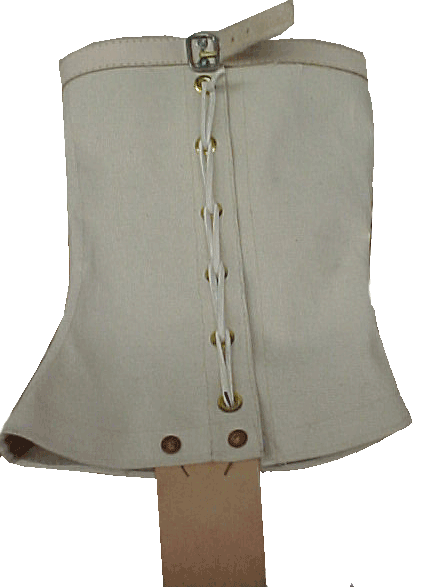
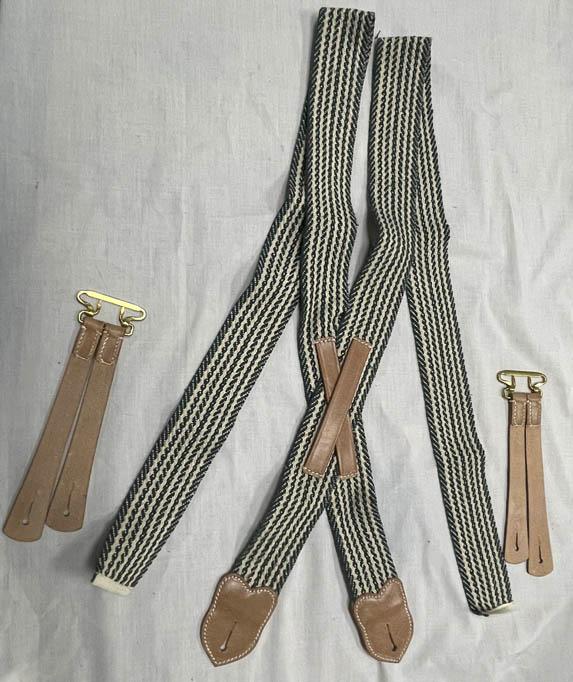
Hands down one of the most common jeancloths of the war. We were the first to offer this, and continue to expand the | | |
This will be offered as an option on many of the Confederate garments that we offer, and will be available through the Depot. | | |
|
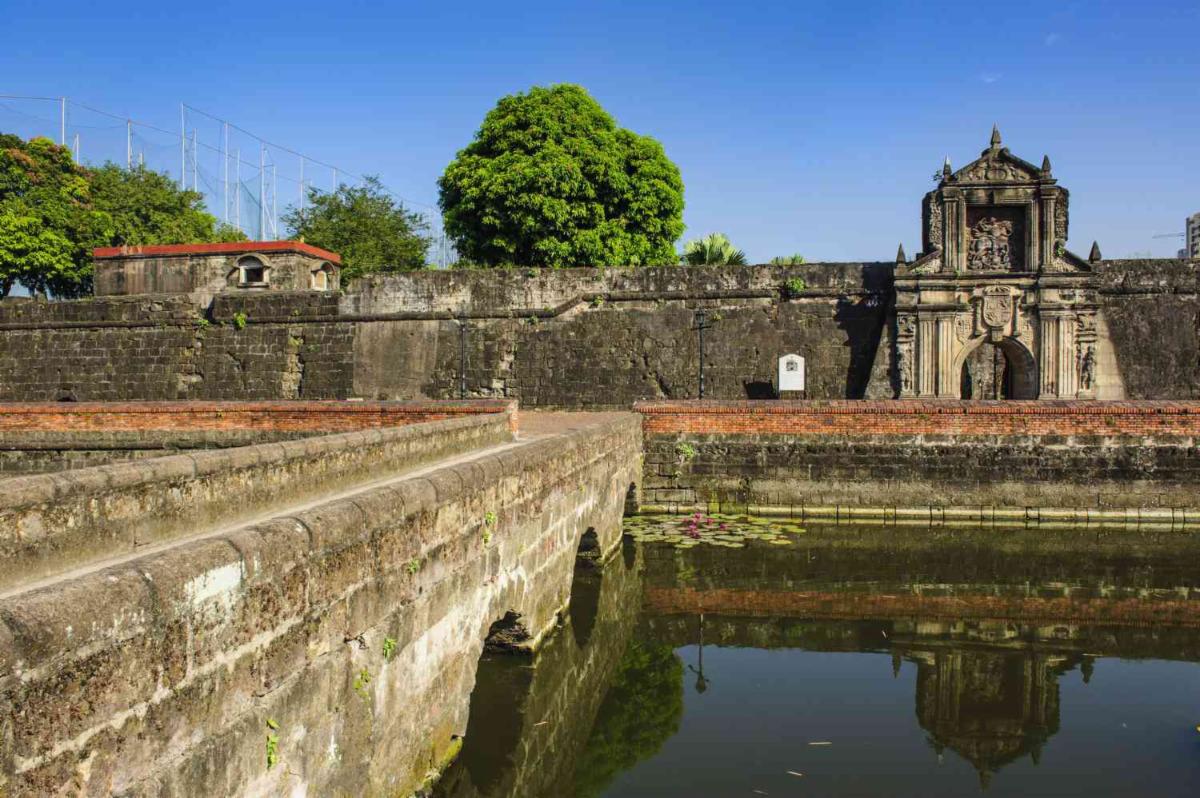
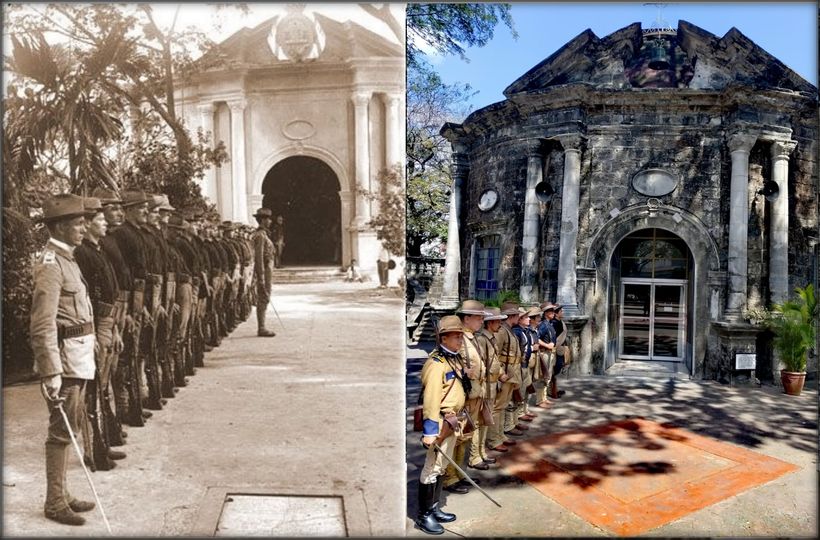
Also known as the Walled City, is a captivating historic district in Manila, Philippines, is comprised of three forts and a museum; Fort Santiago, Baluarte de San Diego. Museo de Intramuros, , Casa Manila Museum
Founding of Intramuros:
The Spanish began constructing Intramuros in 1521 on 0.67 square kilometers of strategically chosen land between Manila Bay and the Pasig River.
Designed as a tight grid, its streets were functional yet contained.
Purpose: To serve as the Spaniards’ political and military base in Asia.
Within its walls, grand administrative buildings, religious institutions, and educational centers thrived. Only the most powerful clans (mostly of Spanish descent) could settle here.
Defensive Features:
Due to constant attacks from foreign invaders and natural disasters, Intramuros was fortified.
Features included two moats, cannons, and walls (from bulwarks to ravelins).
The name “Intramuros” itself signifies a city within the walls.
Fort Santiago:
Located at the bayside end of Intramuros, Fort Santiago served as the citadel.
Originally the site of the palisade fort of the conquered Rajah Sulayman.
Significance:
The Manila Galleon set sail from here, transporting goods (especially spices)
| 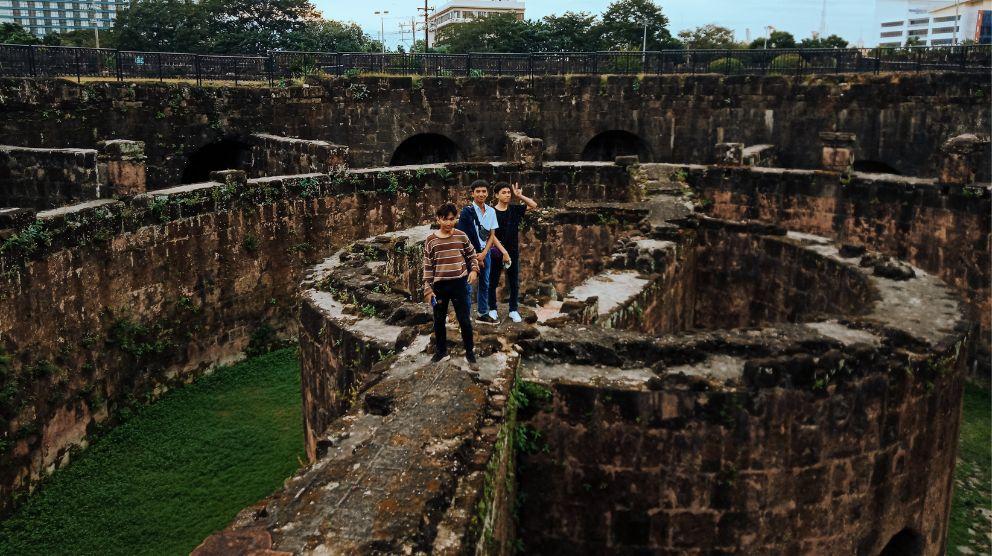 | |
The US flag was raised here, marking the start of American rule over the country in 1898.
During the Japanese occupation from 1941-1945, many Filipinos lost their lives within these walls.
| |
|
The US flag was raised here, marking the start of American presence in the country in 1898.
| During the Japanese occupation from 1941-1945, many Filipinos lost their lives within these walls. | Over the now 51 years (in 2021) that Old Bethpage Village Restoration has been open, there have been hundreds of programs, events and demonstrations which have always gained interested by the community, and attracting visitors from all over the | Currently (Spring 2021) Old Bethpage Village Restoration is open from 10:00am-4:00pm Friday-Sunday, | |
Manila, 1002 Metro Manila, Philippines
For more information, and to contact the museum, please call or visit: Exclusive for tour groups with a minimum of 10 participants. Reserve at least two (2) days before your visit via this link.
For inquiries:
09157174115, 09368403225, 09155994483,
or business@intramuros.gov.ph
| | | | |
|
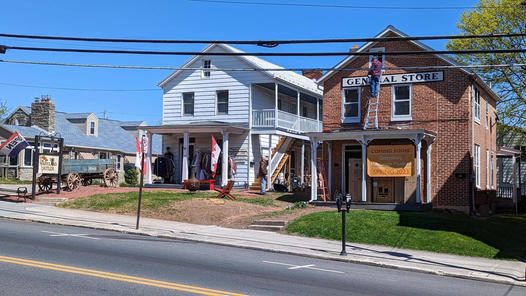
Maryland Sutler Expands Store! | |
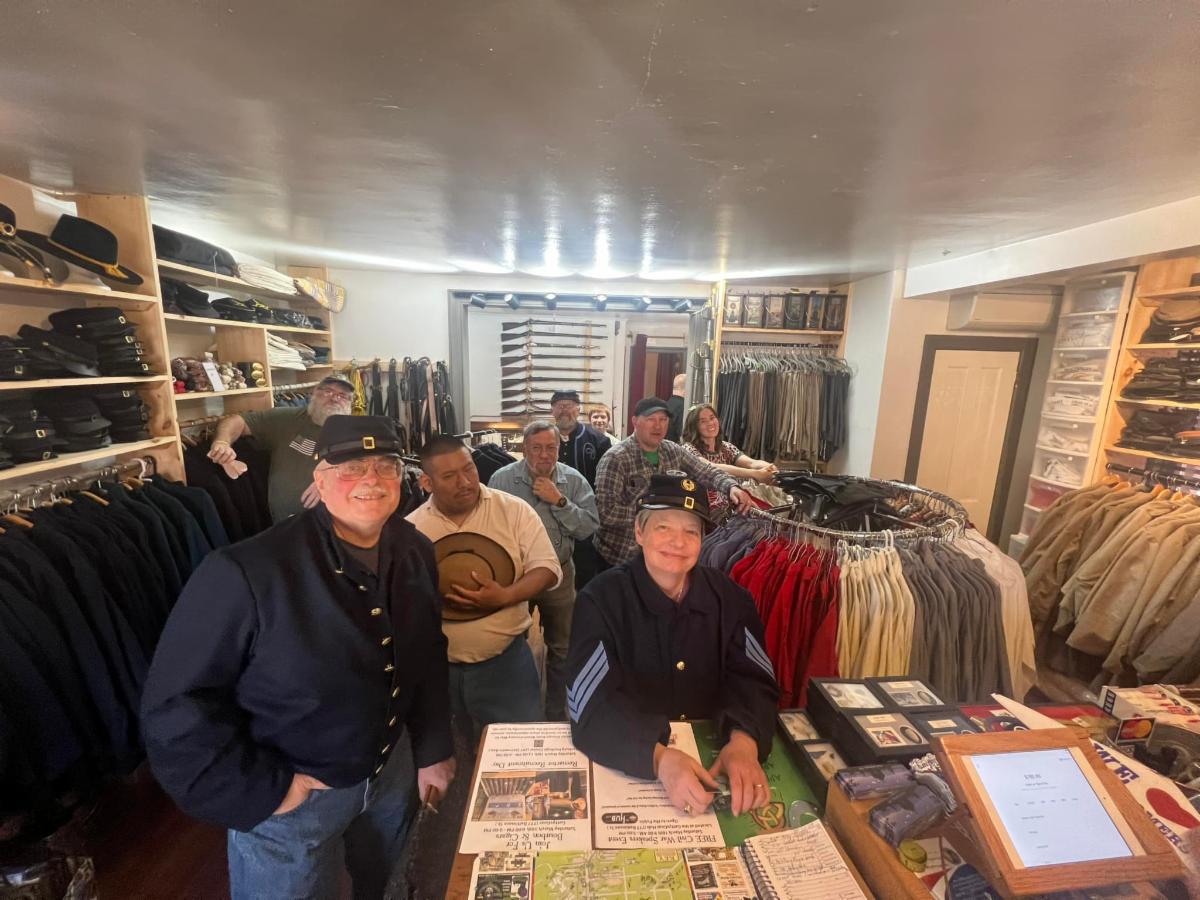
The Maryland Sutler has expaneded into the neighboring building,dramatically increasing his showroom space. He continues to carry may of our items, and we also encourage customers to submit requests for items you would like to see.
Maryland Sutler.
| | |
|
|
The Depot.
We are thrilled to announce that the Depot, the new player has entered the scene and making great headway into bringing convenience and accessibility to our customers. With John and Mistie at the helm, this dynamic duo is already making waves and setting the bar high. Their dedication and innovative approach are truly impressive, and we can't wait to see all the amazing things they will achieve. Join us in welcoming The Depot and get ready to witness greatness in action! Visit the Depot
| | | |
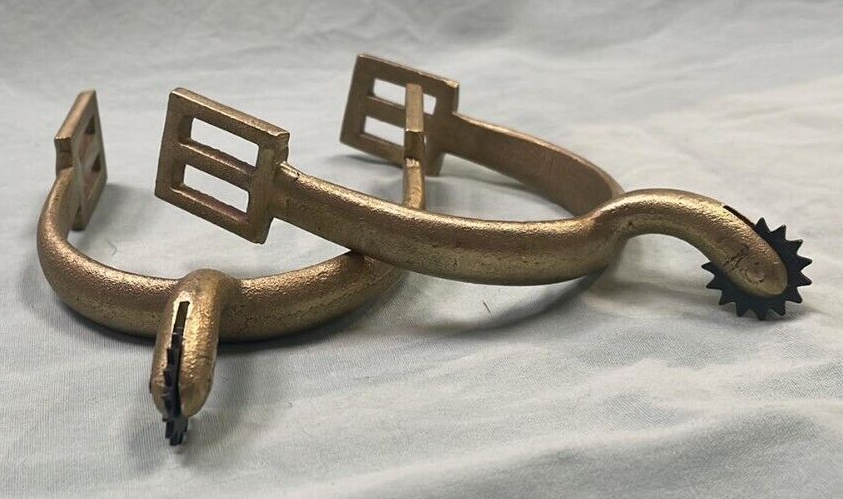
We are continuing to build stock and finally have two of our products on hand for immediate shipment. | | |
|
Pre covid was the last time we had offered them, and these are better than ever before. These have the “rough wartime” finish. Made of solid brass and ready for many years of service. The inside of spur is stamped with the makers mark of “HORSTMANN” just as the originals. $58.00 | Ourselves as the depot have these on hand, and can ship right out. | |
Discounted magazine subscription offered to our cusotmers! | |
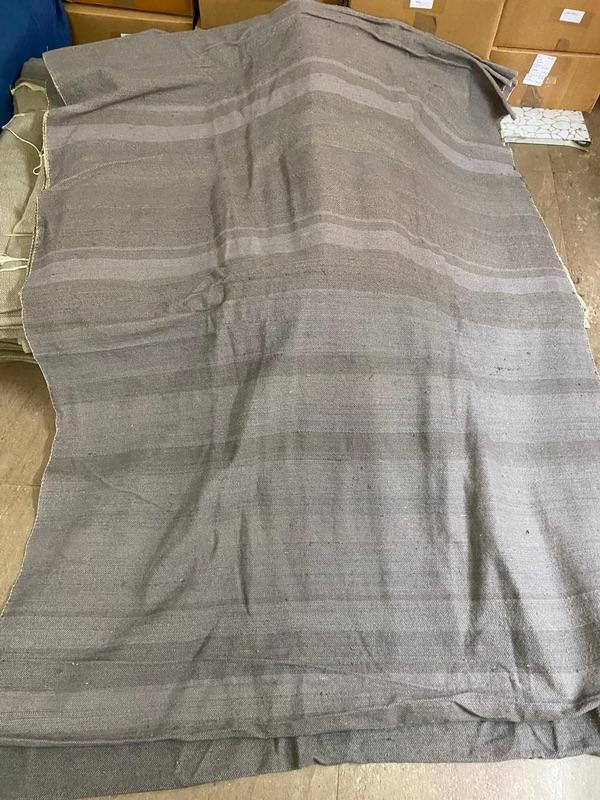
New Confederate Blankets Coming! | This is a direct commisson project from the Depot, so we are very eager and excited to be producing them. Drop them an email if you are interested! | | |
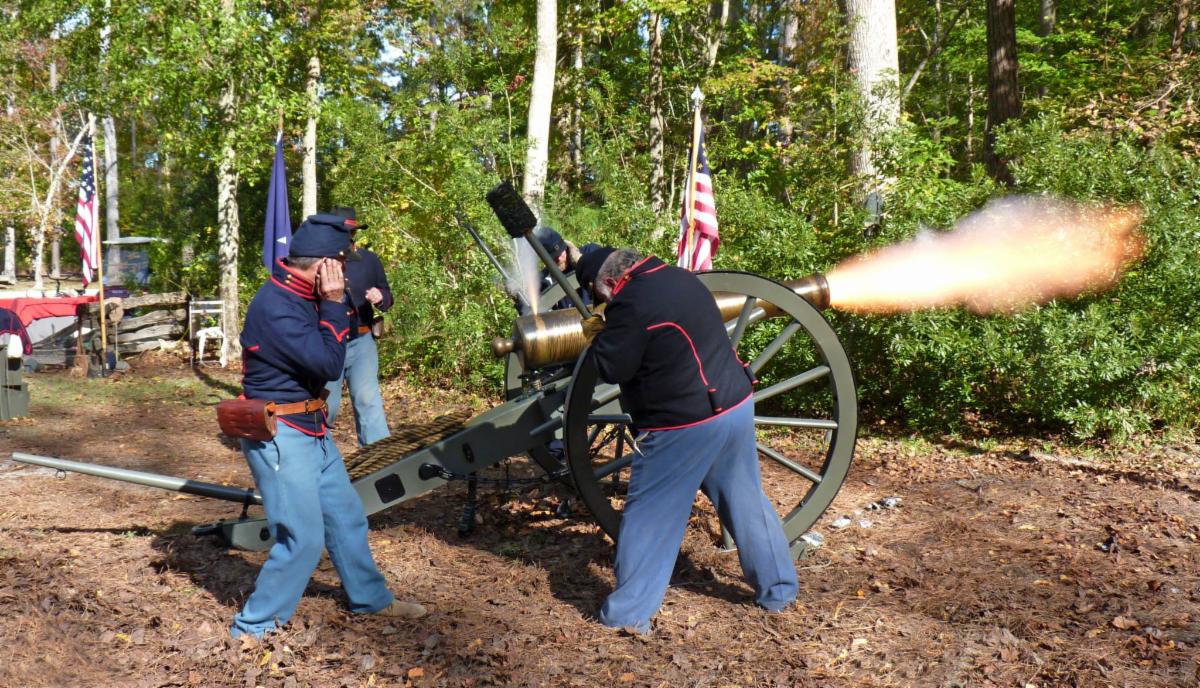
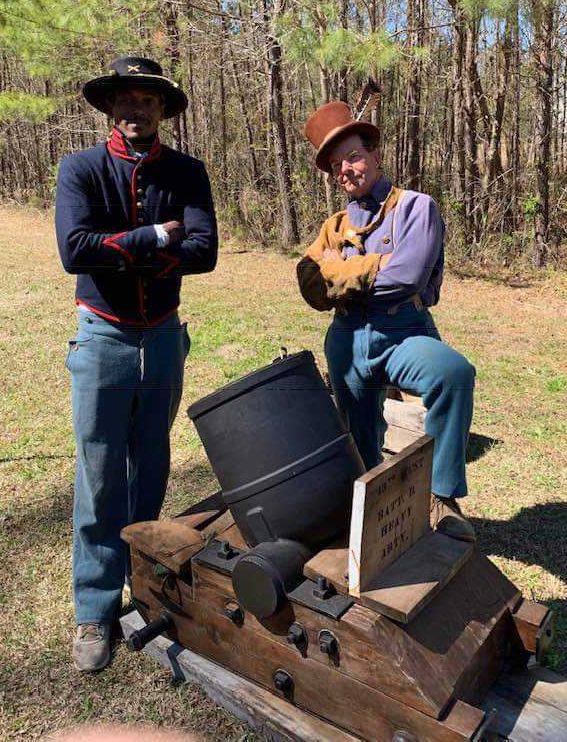
Being that the issue is focusing on reenacting in the Philippines, we are glad to have kept in touch with one our our customers who relocated form the US to the Philippines | Patrick has been reenacting since 2013 until the Covid lockdown of 2020. Self described as a gun and pyrotechnic freak he got bored with rifles, who then discovered artillery reenactment. He drew inspiraiton from his ancestor who was a gunner in a NC light arty battery. They had a 12 pdr Napoleon and a 10pdr Parrot. As an homage, Patrick bought competition grade replicas of both cannon. | |
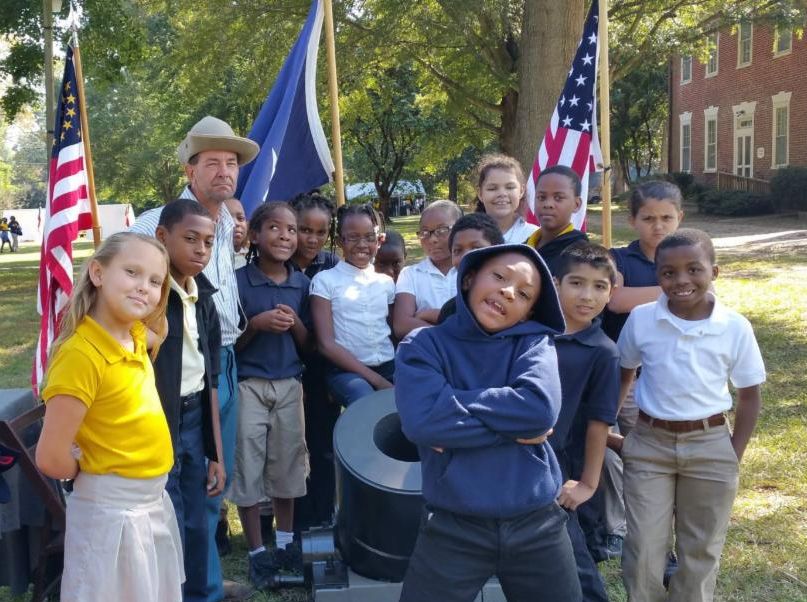
About 2015 he discovered New Bern's CW history and its fortifications laden with arty. A model 1841 8" mortar was part of the original defense. In order to volunteer there, he purchased a reproduction to use in his interpretation.
thereafter, centering his living history live fire mortar demonstrations.
| | |
|
He said that the most fun is being a mortar live fire sideshow of a reenactment, and enjoys showing the
details of the mortar.
Patrick's best experience was always the New Bern CW Battlefield youth adventure day. He always loved getting kids intersted and excited about history.
|  | |
His last living history event was pre Covid, which had drastically impacted his schedule and interest. Having been out of the American loop for a while now so I don't know what the current focus of the hobby is. That notwitstanding, he would like to see absolute period correct events focused on super cool stuff to the target market.the youth.Educating the Civil War period to them is important for the legacy to live on.
Seeking new adventures, Patrick moved to the Philippines in 2018, which was locked down until late 2022. He said that he had only dreamed of reenacting endeavours there. However. There are so many layer if history there. On his property there is deep Spanish to Japanese occupation history. The 2nd oldest Catholic Church is 1.5km from it. I live on the highest summit of the coastal municipality, Baclayon Bohol. Its in the Central Part of the country.
Until the publication of this article, he was not aware of the reenacting community in the Phillippines, and we are hoping that the new chapter in his life, can also include new experiences in living history.
|  | | |
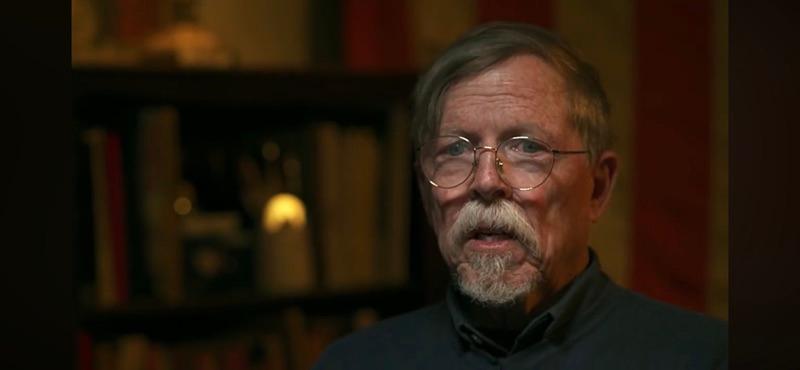
Steven Hill interview
We are expanding our youtube channel and are in the process of editing the interview of Steven Hill. The man is a true font of knowledge, and continues to contribute, even in the golden years of his career..
Steven Hill Interview Trailer.
| |
| |
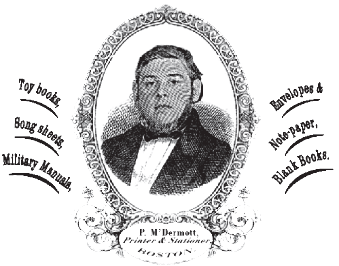
P. M'Dermott Wholesale Stationers items. | |
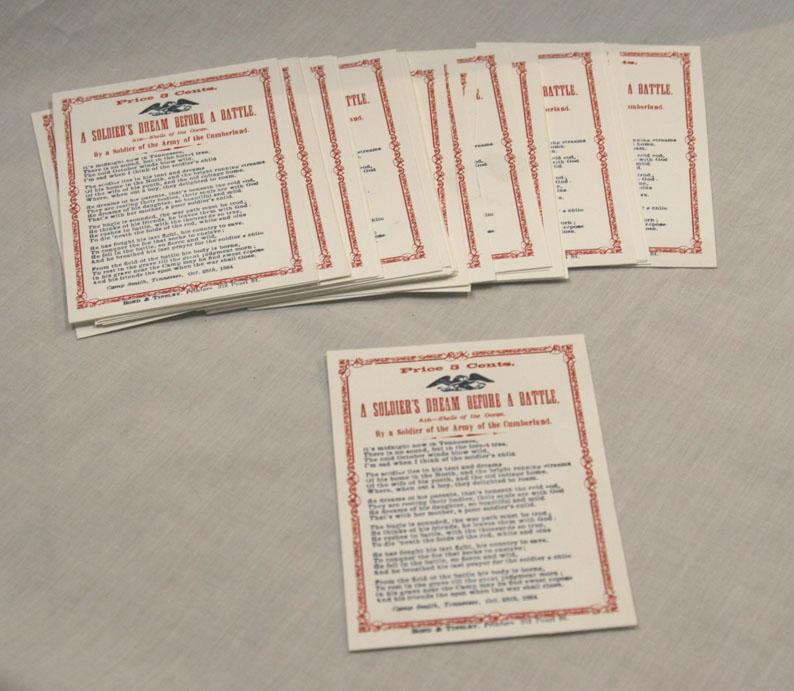
An incredibly convenient item, which is a pocket sized version of the widely produced song sheets | | |
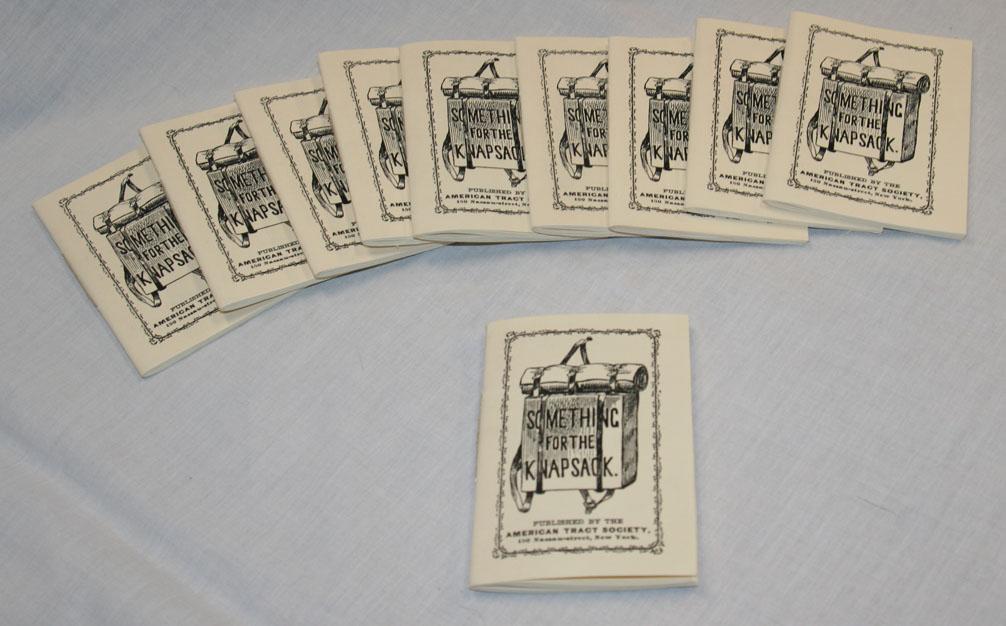
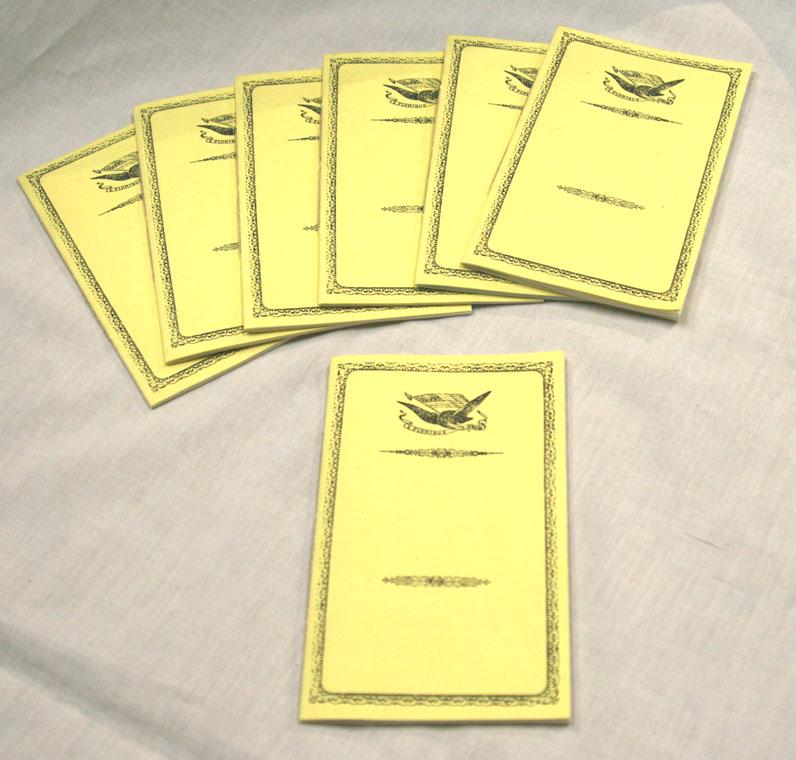
An item long held as classic tract to be carried by the Federal soldiers, we are proud to be offering this limited production item. | A staple item, that is handy for a variety of applications. | | |
|
The British invasion!
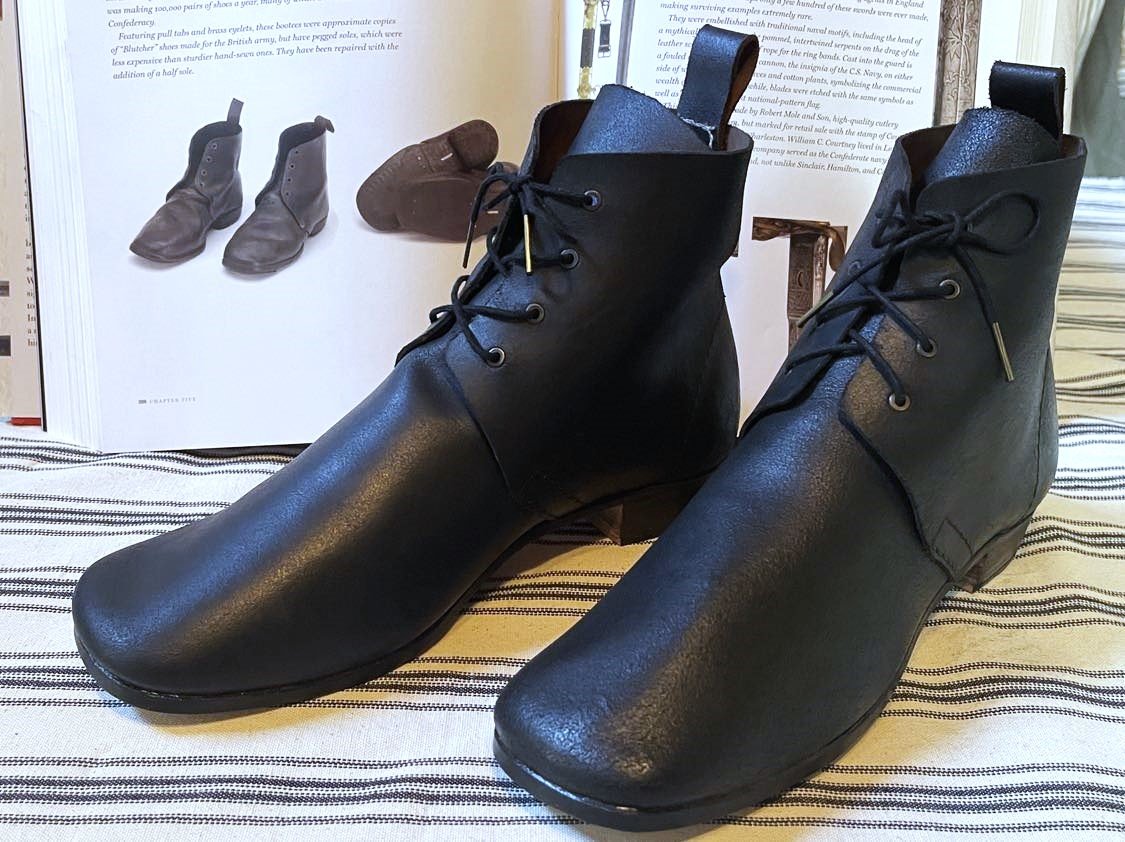
We are really excited a the addition to the line, which is a Depot Exclusive. In stock and ready to ship, these shoes have been an instant success.
| |
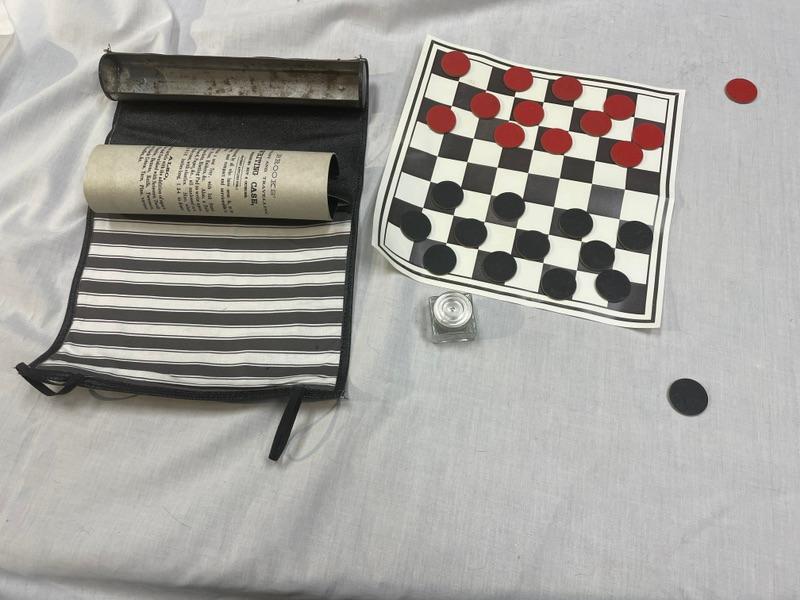
Writing kits coming back to stock! | Both the Brooks and Hathaway Writing kits are coming back to stock. The brooks is currently for sale on ebay | | | |
NJ Sekela
1425 Chambersburg Road
Gettysburg PA 17325
| |
NJ Sekela produces authentic historical reproduction items using cusotm made materials and by providing the best customer experience By using these ideas we will bring to the consumer products that are not currently equaled in the marketplace and bear high fidelity to the originals | | | | |