|
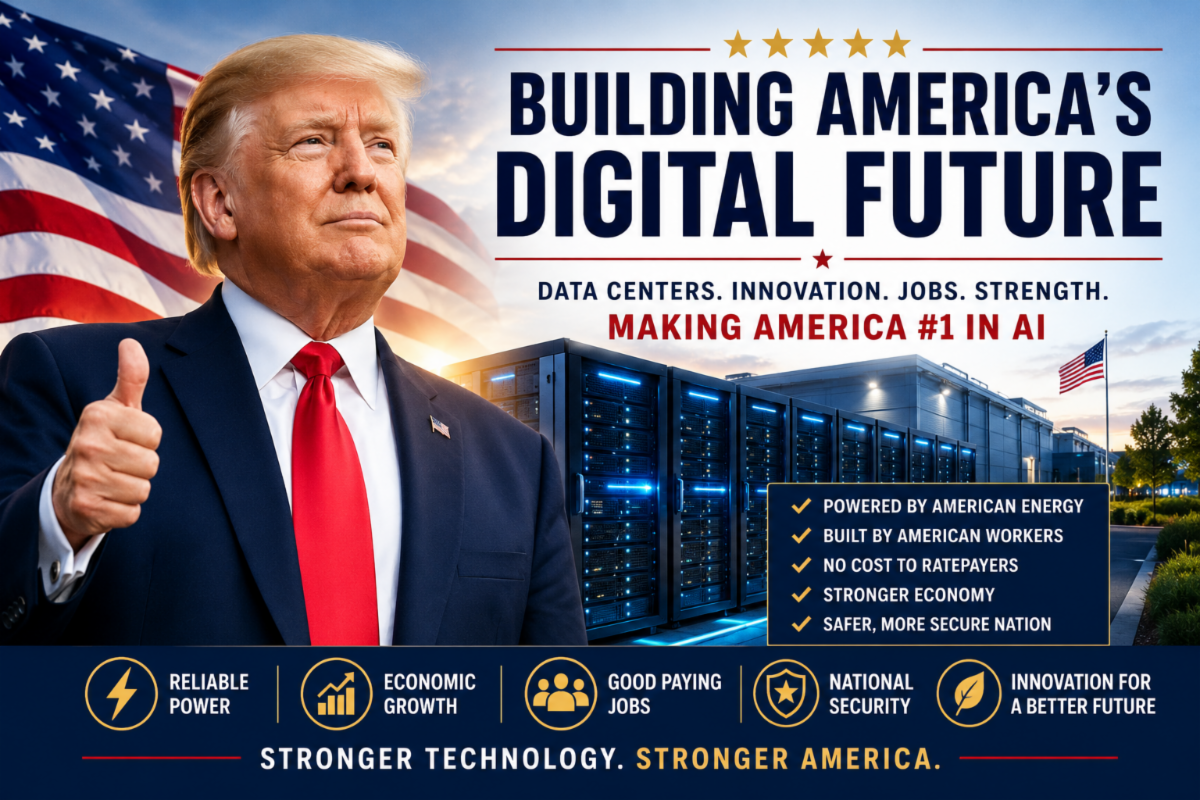
President Trump Makes His Position Clear: America Needs More Data Centers
Data centers have become one of the most debated topics in America. Communities across the country are weighing the benefits of new technology investments against concerns over electricity demand, water use, and local infrastructure. Last week, President Donald Trump made his position unmistakably clear: he believes the United States must embrace data centers if it wants to remain the global leader in artificial intelligence and technology.
The President's message was simple. America cannot afford to lose the AI race to China or other foreign competitors. Modern data centers are the backbone of artificial intelligence, cloud computing, cybersecurity, banking, healthcare, manufacturing, and national defense. Without them, the United States risks falling behind in one of the most important industries of the future.
Data Centers Should Pay Their Own Way
Perhaps the most significant part of President Trump's announcement was not simply his support for data centers—it was his insistence that American ratepayers should not bear the cost.
Through the White House's Ratepayer Protection Pledge, major technology companies agreed to build, bring, or buy the new electricity generation needed for their facilities and to pay for any required transmission and infrastructure upgrades. The goal is straightforward: families and small businesses should not see higher electric bills because a private company builds a massive AI facility nearby.
The pledge also encourages companies to negotiate separate electric rates, pay for infrastructure whether they fully use it or not, invest in local communities, and, when practical, make backup generation available during emergencies to improve grid reliability.
That approach addresses one of the biggest concerns many communities have raised—that residential customers could end up subsidizing the enormous power demands of AI data centers.
Selling Communities on the Benefits
President Trump also encouraged governors and local officials to educate their communities about the economic benefits of data centers. He argued that communities welcoming these projects stand to gain significant private investment, construction jobs, tax revenue, and long-term economic growth.
While some critics question how many permanent jobs a data center creates after construction, supporters point to billions of dollars in capital investment, improved infrastructure, and increased local tax revenues that can support schools, public safety, and roads.
What About Water?
Another common criticism is that data centers consume enormous amounts of water.
That concern is understandable, but it is also important to recognize that today's facilities are much different than those built years ago.
Modern data centers increasingly use advanced cooling technologies that dramatically reduce water consumption. Many employ closed-loop cooling systems, recycled or reclaimed water, air cooling, or hybrid cooling technologies that require far less freshwater than older designs. Technology companies continue investing in new cooling methods because reducing water use also lowers operating costs and improves efficiency.
As the industry has evolved, both energy efficiency and water efficiency have become major design priorities.
Arizona Is Well Positioned
Arizona continues to attract data center investment because of its available land, stable business climate, reliable infrastructure, and growing workforce.
For Arizona communities, President Trump's position aligns with an approach that many residents can support:
- Welcome high-tech investment.
- Require companies to provide or pay for their own power generation.
- Protect residential ratepayers from increased utility costs.
- Encourage the use of modern technologies that reduce water consumption.
- Create jobs and expand the tax base without shifting costs onto local families.
Looking Ahead
The debate over data centers is unlikely to disappear. Artificial intelligence will continue driving demand for computing power, and communities will continue asking legitimate questions about energy, water, and infrastructure.
President Trump's position attempts to strike a balance: encourage America to lead the world in AI while ensuring that technology companies—not homeowners and small businesses—pay the cost of the additional electricity their facilities require. Whether that balance is achieved will depend on how states, utilities, and technology companies implement those commitments in the years ahead.
My viewpoint
If you've read my previous newsletters or blog posts, you know I have been a strong supporter of data centers. I was encouraged to hear President Trump publicly express his support for this industry and recognize its importance to America's future. Too often, when I discuss data centers online, I find that many people are relying on outdated information. Like every other technology, data centers have evolved significantly over the years. Today's facilities are far more energy efficient, use dramatically less water than older designs, and many companies are investing in their own power generation so they don't shift costs onto residential ratepayers.
Data centers are no longer a luxury—they are critical infrastructure. Nearly every aspect of our daily lives depends on them, from online banking and healthcare to streaming services, emergency communications, and artificial intelligence. They are also essential to our military and national defense, providing the computing power needed to protect our country. At the same time, China has been working to shape public opinion against America's technology and energy industries, including data centers. We should evaluate these projects based on facts, science, and what's best for the United States—not on narratives promoted by one of our greatest strategic competitors.
|