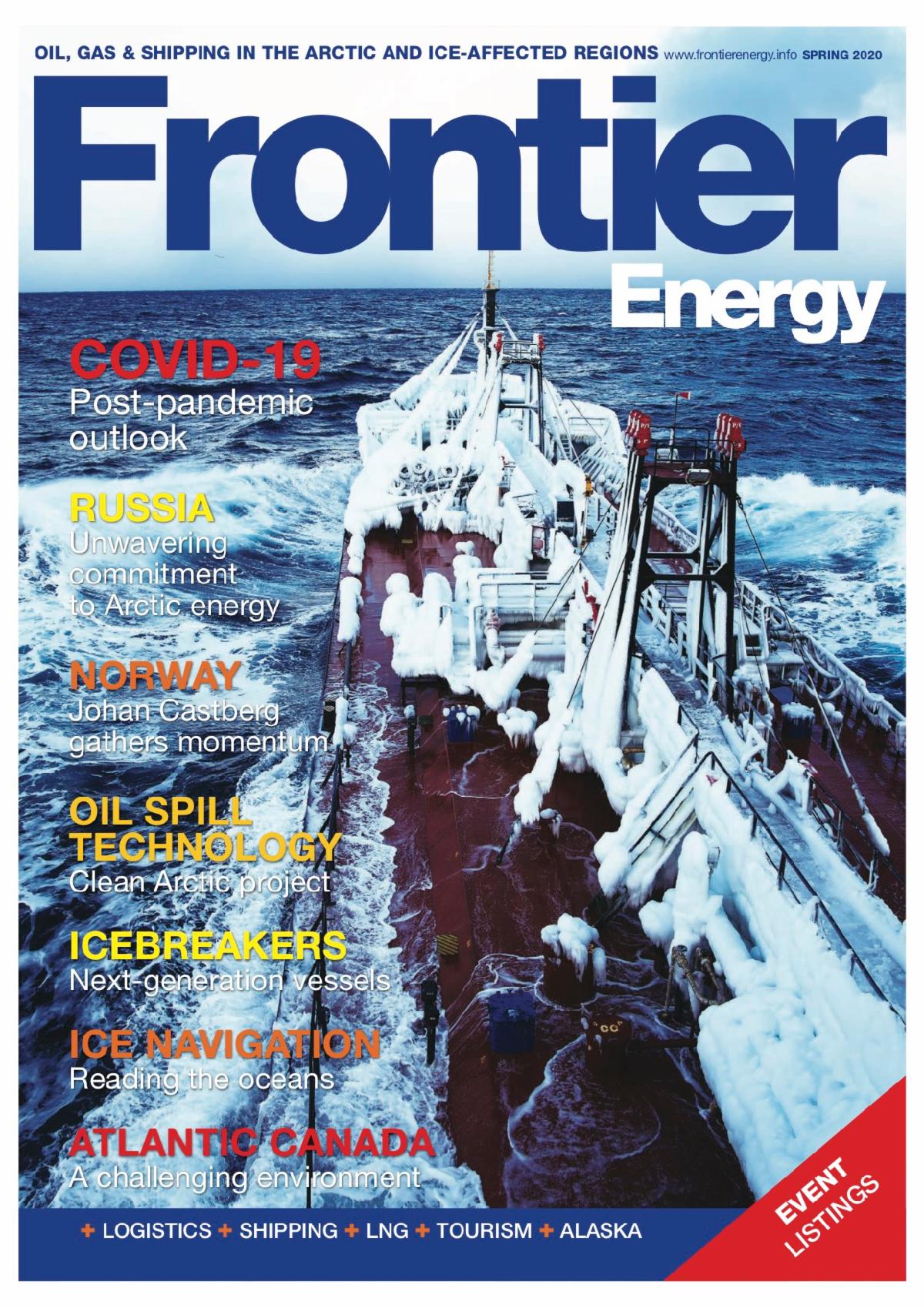
NEW ISSUE SPRING 2020
Unique news and features including
* COVID 19 - Post pandemic outlook
* RUSSIA - Commitment to the Arctic
* ICEBREAKERS - Next gen vessels
* NORWAY - Johan Castberg
* ICE NAVIGATION - Reading the oceans
* ATLANTIC CANADA - Challenging
Click HERE to read the latest issue
of Frontier Energy magazine!
In the light of the Covid-19 pandemic, our industry is facing unprecedented challenges. We will continue to report on events and wish that you, your families and work colleagues stay well and healthy.
|
|
OIL, GAS & SHIPPING IN ARCTIC & ICE-AFFECTED WATERS |
|
NEWS FROM ACROSS THE ARCTIC REGION |
|
 |
The U.S. Bureau of Land Management released its plan for the National Petroleum Reserve in Alaska (NPR-A), a 23 million-acre (9.3 million-hectare) swath of land on the western North Slope.
The plan, signed by Interior Secretary David Bernhardt on Dec. 21, allows lease sales to proceed under relaxed standards.
The NPR-A is Alaska’s primary locale for the state’s daily oil production, which averaged 466,000 barrels per day in 2019, according to U.S. Energy Department data.
RUSSIA'S Ships sailing through the Arctic region’s busiest lane along the Siberian coast made the highest number of trips on record this year as a quicker-than-expected melting of ice enabled more traffic.
Analysis by the Centre for High North Logistics (CHNL) at Norway’s Nord University Business School showed there were 62 transits through the Northern Sea Route in the period to Dec. 9, versus 37 for the whole of 2019.
|
|
|
|
OIL AND commodities trading giant Trafigura has purchased a stake in Rosneft PJSC’s flagship Arctic oil project, unded by a $7 billion loan organised by an unnamed Russian bank, according to documents that shed new light on the trading house’s biggest-ever deal, reports Bloomberg.
The two companies said they had completed a deal for a 10% stake in Vostok Oil, without providing a value.
ROSNEFT, the Russian energy group, has discovered a gas field with total recoverable reserves estimated at 514 billion cubic meters (bcm) of gas and 53m tonnes of gas condensate in the East Prinovozemelsky-2 license area in the Kara Sea.
The field has been named after Marshal Konstantin Rokossovsky.
|
|
|
|
YAKUTIA MULLS DEEP WATER ARCTIC PORT |
|
The prospects of building a deep-water port and land transportation infrastructure in the Arctic zone of Yakutia are back on the table following a regional government meeting with Chairman of the Government of Yakutia Andrei Tarasenko.
"Taking into account the implementation of major investment projects in our republic, the cargo shipped along the Northern Sea Route will reach 300,000 tonnes by 2032, so the main work now should focus on analysing the cargo throughput in the Arctic regions," said Tarasenko.
The meeting also touched on the issue of building land transport infrastructure, which will be further reviewed with subsoil users operating in the Arctic regions.
Each year during the navigation season, Yakutia receives 350,000 tonnes of cargo, approximately 100,000 of which transit the Northern Sea Route, to support life in the Arctic regions of the republic. The 2020 navigation season saw 61,800 tonnes of cargo delivered via the Northern Sea Route.
|
|
SPECIALIST SHIPS AT 'OFFSHORE DIALOGUE' |
|
The most severe impact of climate change is seen in the Arctic, as confirmed recently by the spectacular MOSAiC expedition. For an entire year, the German icebreaker “Polarstern” drifted across the Arctic Ocean, moored to a large ice floe. The most ambitious scientific exhibition of the century had a budget of €140 million. The value of the information it collected is immeasurable. A major contributor to the success of the MOSAiC project was the specialised under-ice camera equipment provided by MacArtney, which also included control, recording and display software. During the Offshore Dialogue, Torsten Turla, Managing Director of MacArtney Germany, will explain the importance of sensors in environmental monitoring.
The changes happening in the icy polar waters confront shipbuilders with new challenges. "As climate change causes temperatures to rise, the ice in the Arctic regions is getting weaker while the winds are getting stronger. This means that the dynamic forces acting upon ships are getting stronger," explains Dr.Walter Kühnlein, Chairman of the Executive Board of the German Association for Marine Technology (Gesellschaft für Maritime Technik, GMT). GMT is the cooperation partner of the Offshore Dialogue. See 'Events' section below for conference details.
|
|
SAKHALIN LNG OUTPUT RECORD
|
|
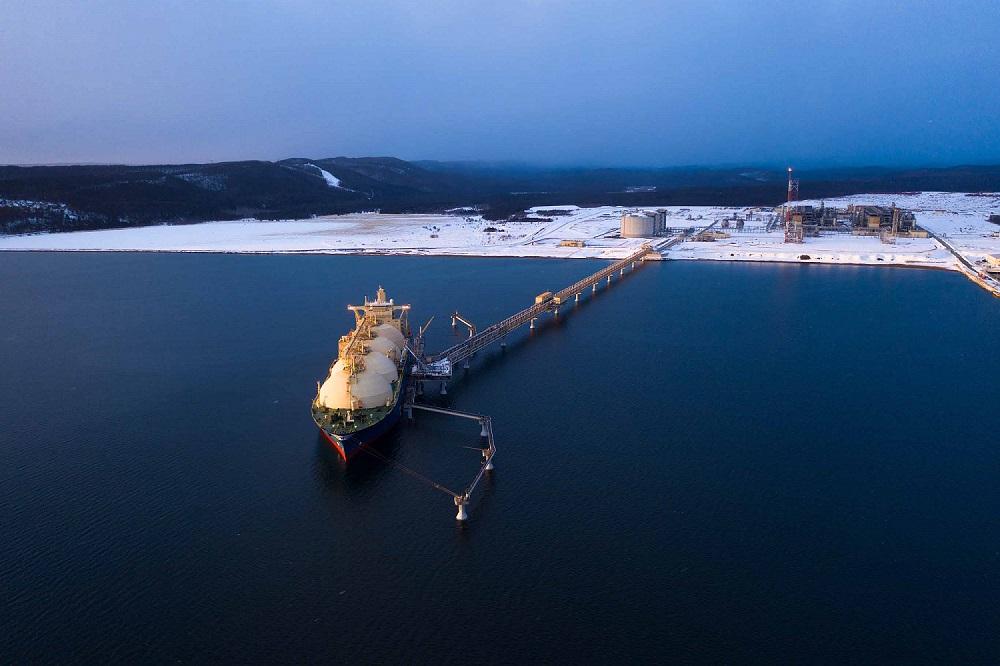
In 2020 Sakhalin Energy produced and shipped a record amount of liquefied natural gas (LNG): 178.6 standard cargo (one standard cargo is equivalent to 65 thousand tonnes) or more than 11.6 million tonnes. This is the best Sakhalin II LNG plant annual performance ever. “Despite unprecedented challenges, both external, including the COVID-19 pandemic and economic crisis, and internal requirements to ensure a “virus-free” status of our assets, we managed to maintain business continuity and reach a historic high production for LNG. Customer focus and reliable supplies through sustainable production are key objectives for our company”, – noted Roman Dashkov, Chief Executive Officer of Sakhalin Energy.
Most of natural gas is produced by the company at the LUN-A platform in the Lunskoye field, north of Sakhalin. Further the gas is transported via trans-Sakhalin pipeline system through the onshore processing facility to the LNG plant. Its original design capacity is 9.6 mtpa, but due to technical improvements and upgrade, together with weather and temperature factors, the factual production has been increased by 20 percent.
Implemented measures against the COVID-19 allowed to successfully perform summer shutdown activities in maintenance, repairing and diagnostics of the equipment. During the year the company's assets demonstrated a world-class reliability, resulting in above-target performance for the production and shipment of LNG to the buyers.
|
|
NORWAY LEGAL RULING OPENS ARCTIC |
|
The Norway’s supreme court has upheld government plans for Arctic oil exploration , dismissing a lawsuit by campaigners who said they violated people’s right to a healthy environment. While most of Norway’s oil output flows from south of the Arctic, the government believes the greatest untapped potential lies in the Barents Sea off Europe’s northernmost coast, reports Reuters.
Tuesday’s verdict upheld rulings by two lower courts, rejecting arguments by Greenpeace and the Nature and Youth group that a 2015-2016 oil licensing round giving awards to Equinor and others had breached Norway’s constitution.
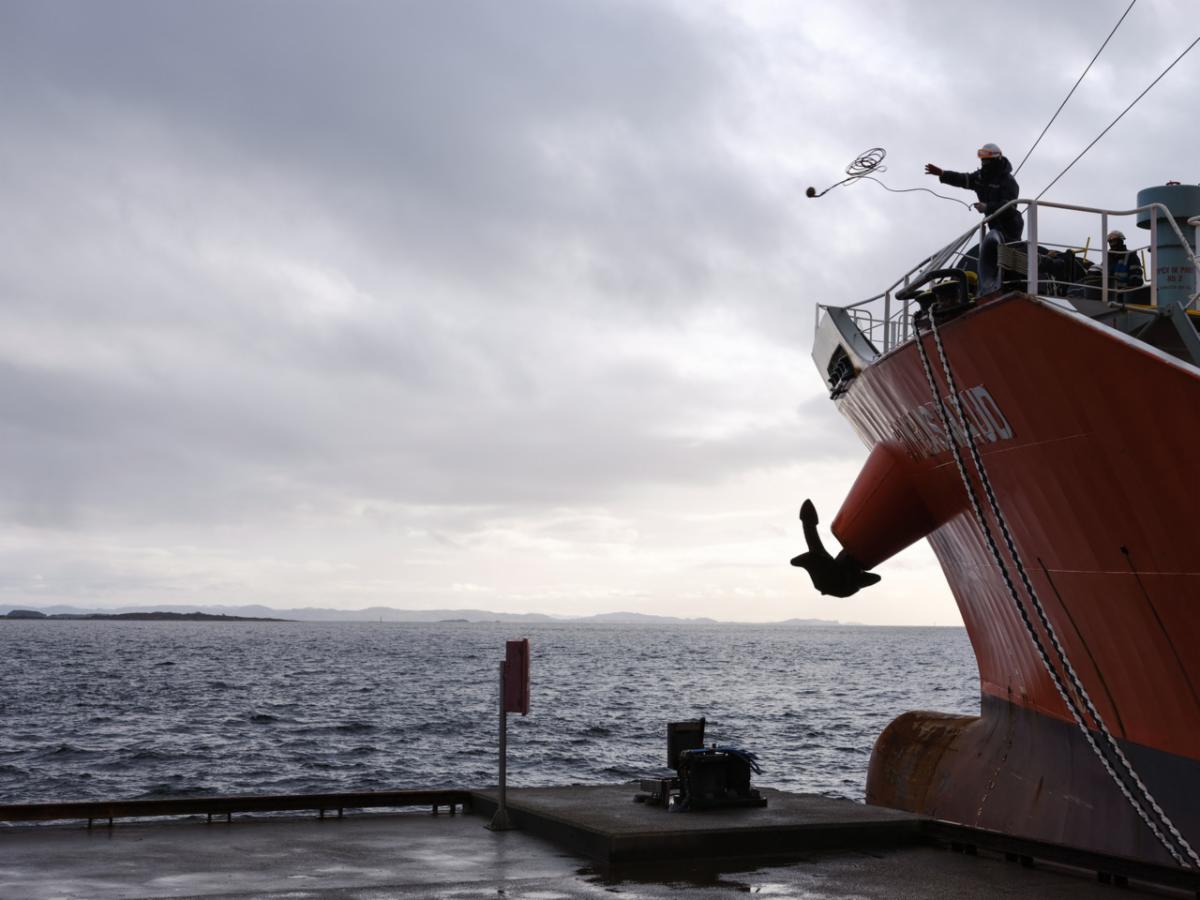
While the case was specifically about ten exploration licenses awarded four years ago, the campaigners had hoped that their appeal would set a precedent limiting the oil industry’s Arctic expansion. (Photo: Ole Jørgen Bratland. Copyright: Equinor)
|
|
SUNCOR ENERGY TAKES WHITE ROSE HIT |
Canadian energy company Suncor Energy is to take a $425 million impairment charge on its share of the existing White Rose oil field assets and the $3.2-billion expansion project that is stalled at 60% complete.
The project lies in the Jeanne d’Arc basin off Newfoundland and Labrador.
In October, the project's operator Husky Energy stuck a deal to merge with Cenovus, which according to Suncor, "cast significant doubt on the future of the West White Rose Project". The merger was finalised at the start of this year.
The White Rose oil field is located in offshore Newfoundland and began production in late 2005 with the SeaRose FPSO — floating production, storage and offloading — vessel. It has since completed several expansions, but saw production drop substantially to 6.3 million barrels in 2019 after operations were interrupted by an oil spill.
|
|
|
|
ANWR SALE FAILS TO SHINE WITH ABSTENTIONS |
|
The US government’s first-ever oil and gas lease sale in the Arctic National Wildlife Refuge raised $14.4 million in bids, with the vast majority of winning bids submitted by a development corporation owned by the state of Alaska.
Interior department deputy secretary Katharine MacGregor called the lease sale a ‘success’.
However, the sale raised less money than anticipated. Initial estimates put the lease sales income at around $1.8bn over a decade, to be split between the Alaska and federal governments. The money raised on Wednesday fell far short.
In the event, the government sold 11 tracts of 22 it was offering in the refuge’s coastal plain, or about 550,000 acres out of about 1 million on offer. Most of the tracts totalled about 50,000 acres, and were released at around $1 million each.
ConocoPhillips, ExxonMobil and Hilcorp, the owners of the large Prudhoe Bay oil field west of the refuge, the three largest operators in the region, did not submit bids.
|
|
Events Calendar : Conferences, Forums, Meetings |
|
Offshore Dialogue
February 2 - 4
Hamburg, Germany (Online)
Offshore Dialogue main focus on the latest maritime technologies. Whether for storage batteries, smartphones or components for innovative on-board equipment: The high-tech industry's demand for rare metals is increasing steadily. As the search for more copper, cobalt and rare earths continues, the industry begins to look beyond traditional frontiers and into regions such as the deep sea and the Arctic.
For more information click here.
20th Annual Arctic Oil & Gas Symposium
March 18 - 19
Calgary, Canada (Online)
Building on a legacy of 20 successful years, this anticipated event brings together political leaders and senior decision makers from government and Northern communities, as well as executives from the resource industry for candid discussions on the future of oil and gas development in Canada’s north..
Click here for more information.
|
|
|
|
|
|
|