|
What is Parol
Evidence?
With the adoption of the new 2026 Minimum Standard Detail Requirements, there has been a concerted effort from the title industry to call upon surveyors to be more diligent in reporting any issue observed in the process of conducting the field work that would indicate any observation relating to potential conflicting boundary issues between adjoining properties. Not only in the new responsibilities relating to parol evidence in Section 6.D.ii. (l), but also in the clarifications in Section 5.C.i. and 6.B.vii regarding lines of possession or occupation. The title industry deals with a lot of claims to their policies involving boundary disputes and therefore are asking surveyors for any evidence relating to the same observed in the process of conducting the survey so in turn they can take exception to any issue in their title policies.
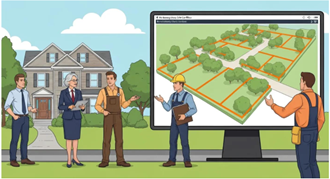
Regarding parol, the surveyor does not have responsibilities to investigate these matters but if something becomes apparent during the process of conducting the survey, that information needs to be reported. It is common, especially in a residential setting, that a surveyor is approached by the property owner or adjoining owner who understands the property boundary to be different than what the surveyor has established. In a commercial scenario, typically the property owners are not present as a tenant or leaseholder occupies the properties so this should be a rare occurrence. If a surveyor is approached, they should respond that they have been retained to update real estate records. Then if someone shares their understanding of where the property line is that differs from what is being established in the process of performing the survey, it now must be reported as Parol per the new responsibility. A diligent surveyor may choose to record the conversation or ask for a written statement to archive the evidence.
On a majority of surveys provided for commercial properties, anticipate a note stating something similar to the following “At the time of survey, the surveyor made not made aware of any parol statements or evidence by interested landowners or occupants” which is pretty much in line with the verbiage in Section 6.D.ii (l). On the occasion where evidence is reported, the surveyor should include the source and date of the evidence within a general note on the survey and show an indication on the survey plat map or drawing.
Per the NSPS (The National Society of Professional Surveyors) parol is defined as follows:
• Parol- Executed or made by word of mouth or by a writing not under seal, The pleadings in a legal action formerly presented by word of mouth.
• Parol agreement- An oral agreement between the owners establishing the boundaries dividing adjacent land.
• Parol evidence- Oral evidence; that which is given by word of mouth; the ordinary kind of evidence, given by witnesses in court.
Please note that individual state statutes for the practice of surveying may include specific definitions or responsibilities that relate to surveyor’s responsibilities in reporting and recording any issue relating to parol.
The title insurer is looking for any evidence reported on the survey that would relate to the following exception they are typically asked to delete from their title policy.
“Rights or claims of parties in possession, boundary line disputes, overlaps, encroachments and any matters not shown by the public records which would be disclosed by an accurate survey and inspection of the land described in Schedule A.” With these responsibilities, the title company can look to the survey for more information that would add more clarification.
In our more than fifty-year history, NV5 has been a leader in educating the industry of revisions and changes made to the Minimum Standard Detail Requirements. We issue a revised version of our Due Diligence Handbook when the new standards are adopted. Most importantly, we offer classes and seminars that may be eligible for continuing education credit to the industry presenting the changes and their impact on both title, surveyors and user of the survey. We will be scheduling in person and virtual presentations and look forward to many opportunities. Please reach out to your client service representative, your Project Manager or email James.Brown@NV5.com for more information. Future newsletters will also address revisions so stay tuned.
|