|
July 2025 brings a slate of bold decarbonization moves—from provincial policy shifts to on-the-ground solutions in schools, campuses and hospitals. Here’s what you’ll find inside:
Protecting Ontario’s Energy Future
The Ontario government has tabled the Protect Ontario by Securing Affordable Energy for Generations Act, 2025. Public and private organizations have an opportunity to reduce their impact on the grid by implementing technologies that reduce energy consumption as well as utilize green energy.
Cleaner Air for Our Kids
Wildfire smoke ignores borders—and so do its fine particulates, infiltrating classrooms province-wide. While some school boards have lagged, Nerva Energy’s Cleaner Air for Schools program is helping boards and post-secondary campuses hit (and even exceed) ASHRAE air-exchange standards where under-ventilated—harvesting energy savings and cutting GHGs in where over-ventilating.
Bioenterprise Canada’s Green Growth Champions
Round 1 recipients of the Sustainable Growth and Adoption Program are driving southern Ontario’s shift to a green economy. Meet the businesses accelerating eco-friendly innovation—and learn how they’re scaling up.
Check out Western University’s sustainability efforts, according to the Times Higher Education 2025 Impact Rankings, they’re one of the best. Also in this issue: Hospitals are investing in energy efficiency, cogeneration systems, and other energy infrastructure upgrades leading to tens of millions of dollars in savings.
This month's CASIS Member Feature is XPEL, a leading global supplier of films serving both architectural and automotive markets.
Clean River case study features St. Andrew’s College Brings Recycling and composting to the Classroom.
Canada is blessed with vast forests, pristine waters, and rich mineral reserves—resources we must protect today and for generations to come. Here’s to living in Canada and wishing all our readers a Happy Canada Day.
If you have stories, events or information to share with our readers about new technologies or strategies for reducing greenhouse gas emissions, or lessons learned on the path to net zero, please reach out to us at mcresswell@thomascoleinc.com.
| | | | |
Ontario Securing Affordable Energy for Future Generations
The Ontario government is taking decisive action to build a more competitive, resilient and self-reliant economy by introducing the Protect Ontario by Securing Affordable Energy for Generations Act, 2025. If passed, this legislation will support major growth in the province’s energy system to meet rising demand, while keeping energy affordable, secure, reliable and clean for generations to come.
“As global competition intensifies, energy demand surges, and affordability becomes more important than ever, Ontario isn’t standing still – we’re stepping up,” said Stephen Lecce, Minister of Energy and Mines.
| | | | |
A zero-emission Canada is within reach. And we can afford it.
That’s true across the globe, as the climate emergency becomes an ever-present danger.
Climate Dollars shows that we can well afford to confront and solve the climate emergency, at less than it would cost to perpetuate the obsolete, polluting, 20th-century energy system that we have today. We can still get it done by the middle of this century. And the solutions on offer will keep us safer in the local climate disasters on the horizon while making Canada stronger and more self-reliant against threats to our sovereignty.
| | | |
Bioenterprise Canada Announces Round 1 Sustainable Growth and Adoption Program Recipients
Bioenterprise Canada Corporation is pleased to announce the round one Sustainable Growth and Adoption Program (SGAP) recipients. Fifteen (15) food and agri-technology businesses in southern Ontario have been awarded funding to partner with organizations that will address their sustainable growth and adoption needs through clean technology adoption and sustainability process enhancements. These projects will help to accelerate environmentally conscious business growth and the transition to a green economy in southern Ontario.
| |
🌟Rebecca Grekin🌟
Winner of the Student Sustainability Leadership Award, Ph.D. Student in Energy Science and Engineering,
Rebecca Grekin has won the prestigious Student Sustainability Leadership Award from AASHE for her innovative project, TASTE Food: The Automated Scope 3 Tool for Tracking Emissions from Food. This award recognizes Rebecca’s outstanding contribution to sustainability through her development of TASTE Food, a free tool that streamlines the categorization of food purchases for emissions tracking. By addressing inefficiencies in manual classification, the tool simplifies the process of measuring and analyzing food-related emissions. TASTE Food standardizes food emissions data across institutions, making it easier to compare and track emissions accurately. Its features, such as plant-based food tagging for AASHE STARS assessments, help universities meet sustainability goals by enabling more effective emissions tracking. This project, supported by AASHE, has the potential to create significant impact by providing a scalable and reliable approach for universities to track and reduce their carbon footprints.
Source: stanford.edu
| | |
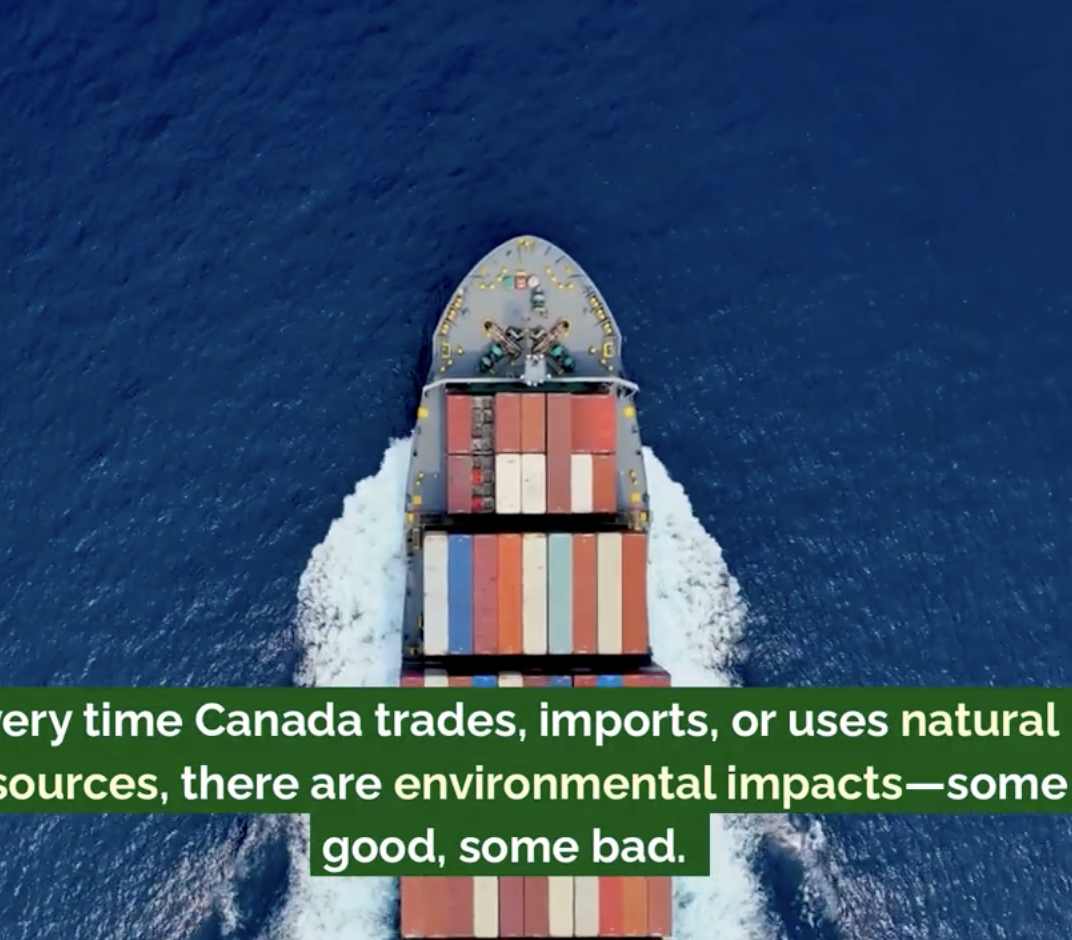
How Canada’s Global Interactions Affect the Environment
Global trade and resource use have environmental consequences. This video explores the impact of invasive species, deforestation, and mining—plus Canada’s efforts in sustainability and conservation.
| | |
Trump’s slashing climate action. They’re fighting back.
From scientists to lobbyists to youth risking arrest, meet the people leading the resistance to anti-climate policy in the United States.
| | |
OLIO
OLIO connects neighbours so surplus food can be shared, rather than thrown away.
This could be food nearing its sell-by date in local shops, bread from your baker or the groceries left in your fridge before you go on holiday.
| |
|
Optimizing Building Efficiency with Window Film Solutions
The Canadian Alliance for Sustainable Innovation and Solutions (CASIS) is a collaborative forum uniting industry leaders, academic institutions, government bodies, and global partners under a shared mission: to accelerate decarbonization across Canada and beyond. By fostering cross-sector dialogue, pooling cutting-edge research, and championing best practices, CASIS drives the development and deployment of high-performance systems and infrastructure that reduce greenhouse-gas emissions, strengthen economic resilience, and create high-value job opportunities. Whether it’s convening policy roundtables, curating case-study exchanges, or spotlighting breakthrough technologies, CASIS serves as the connective tissue that turns isolated successes into scalable, global models for a net-zero future.
This month's Member Feature is XPEL, a leading global supplier of films serving both architectural and automotive markets.
Windows are often regarded as the weakest link in the building envelope, presenting significant challenges in terms of heat gain, heat loss, and safety/security. Despite their critical role in overall energy efficiency, windows are frequently overlooked in Energy Service Company (ESCO) projects. According to the National Fenestration Rating Council (NFRC), inefficient windows contribute to an astounding $50 billion in energy waste annually in the United States alone.
| | | |
|
Get up to 4X incentives on controls projects! Includes: VFDs/Duct Sealing.
Install by Aug. 31, 2025 to qualify for our bonus offer.
Businesses can receive up to $0.50 per cubic meter of natural gas saved (up to 50% of upgrade costs, with a $100,000 cap) if installed by October 31, 2025. A bonus offer of $1.00 per cubic meter applies if installations are completed by August 31, 2025. Eligible projects include building automation systems, outdoor air reset controls for boilers, and variable frequency drives. These upgrades help reduce energy consumption, lower costs, and improve building efficiency.
To maximize incentives, businesses should consult an Enbridge Gas Energy Solutions Advisor (ESA) early in the planning phase. ESAs assist in selecting eligible control projects, estimating savings, and securing incentive quotes. The program prioritizes upgrades over replacements or repairs, encouraging automation for cost-effective, year-round energy management. By participating, businesses can lower maintenance and operating expenses, enhance building comfort, and reduce greenhouse gas emissions. More details and eligibility criteria are available at enbridgegas.com/commercial-custom-retrofit.
Contact an Energy Solutions Advisor
Your ESA can help you identify the best energy-saving opportunities and maximize incentives for your building.
enbridgegas.com/commercial-custom-retrofit
energyservices@enbridge.com
1-866-844-9994
| | | |
|
IESO & Enbridge Boost Incentives for Aeroseal Ventilation Upgrades—25% Subsidy Now Available
The Independent Electricity System Operator (IESO) and Enbridge Gas have announced a significant enhancement to their joint incentive program, upping their subsidy to cover 25% of the cost of Nerva Energy’s Aeroseal ventilation repair and seal optimization projects. By reducing duct leaks and tightening building envelopes, this partnership delivers “more air, more savings and less carbon” to schools, hospitals and businesses across Ontario.
How It Works
Aeroseal is an advanced technology that locates and seals hidden leaks in heating, ventilation and air-conditioning (HVAC) ductwork. A non-toxic sealant is aerosolized and circulated through the system; under pressure, it adheres precisely at leak points—automatically plugging gaps without major demolition or replacement of duct runs.
Why the 25% Subsidy Matters
With IESO and Enbridge now underwriting a quarter of project costs, property owners face much lower overall project costs. That makes Aeroseal accessible to a wider range of buildings—from schools to multi-unit residential complexes and commercial facilities.
Key Benefits
• Enhanced Indoor Air Quality: By ensuring that conditioned air reaches its intended destination, Aeroseal reduces pollutants, allergens and humidity imbalances.
• Energy Savings: Tightening ducts can cut HVAC energy use by 12-15%, translating into lower electricity and gas bills.
• Carbon Emission Reductions: Less wasted energy means fewer greenhouse-gas emissions. On average, a mid-sized building can eliminate 20-30% several tonnes of CO₂ per year.
How to Apply
Eligible customers should contact Thomas Cole Inc., an agent of Nerva Energy, the exclusive contractor/installer of Aeroseal in Ontario. After a free assessment, the contractor will provide a detailed proposal including the total cost, your 25% rebate amount and projected payback period.
Nerva Energy’s Aeroseal duct-sealing service follows a proven five-step process to tighten your HVAC distribution system, improve air quality, cut energy bills and reduce carbon emissions. For more information contact Tim Cresswell
| | | |
|
St. Andrew’s College Brings Recycling to the Classroom
Collection Stations Help School Recycling and Composting Succeed
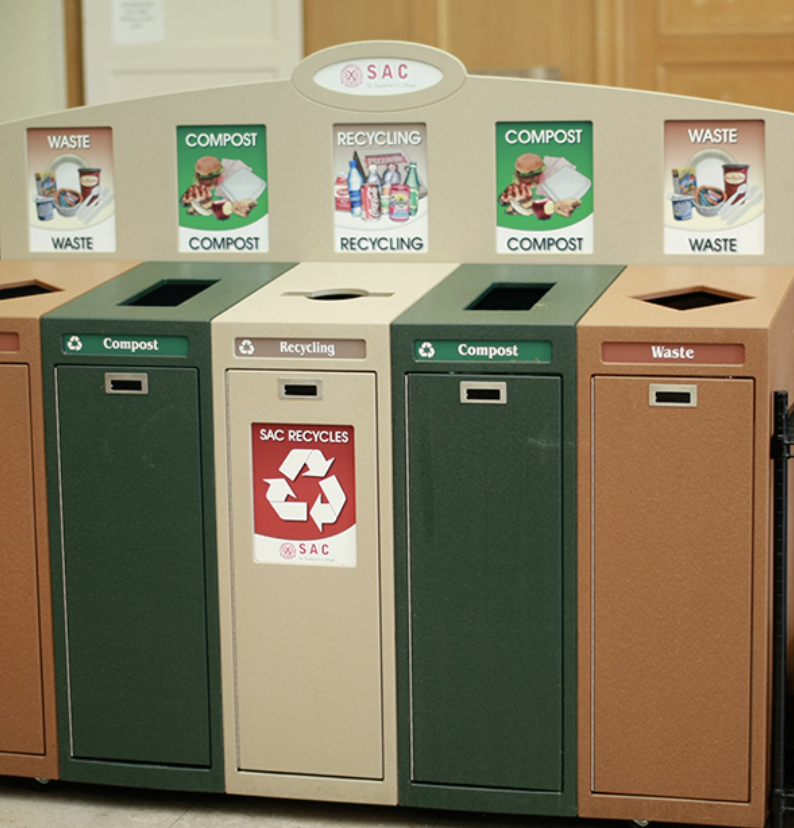
St. Andrew’s College, a university-preparatory school for boys, focuses on academic achievement, leadership development and a healthy dose of environmental stewardship. In 2009 the school tasked CleanRiver to help them implement a detailed and comprehensive environmental plan that included recycling and composting programs to increase their recycling and reduce food waste.
In the Dining Hall, St. Andrew’s College specified a five-compartment recycling station. This unit handles the mealtime rush with two slots for compost and two for trash, as well as a single center slot for metal, paper and plastic recyclables. Recycling stations feature specially designed graphic posters that indicate what goes where.
| | | | | | |