The discs in your spine are an integral part of the way the body functions each day. The wear and tear that comes with aging can cause degeneration of these discs, characterized by disc height and loss of both water and nutrient content. These structural changes cause cracks, fissures, and focal pressure on the spine, and are what cause pain in the body.
The degenerative discs also cause stress on the vertebral endplates, which causes vertebrogenic pain. The pain from degenerative discs typically manifests in the lower back or lumbar spine. This pain is amplified by physical activity, prolonged sitting, and bending and lifting.
|
|
|
|
Discogenic lower back pain |
We define the conditions caused by degenerative discs as discogenic lower back pain. The cracks and fissures of the discs are known as internal disc disruption (IDD), a type of discogenic disorder. The chemicals released from the tears caused by IDD are what send the signals for pain and inflammation. Any activity that puts pressure on the intervertebral disc can worsen this pain or even cause muscle spasms. |
|
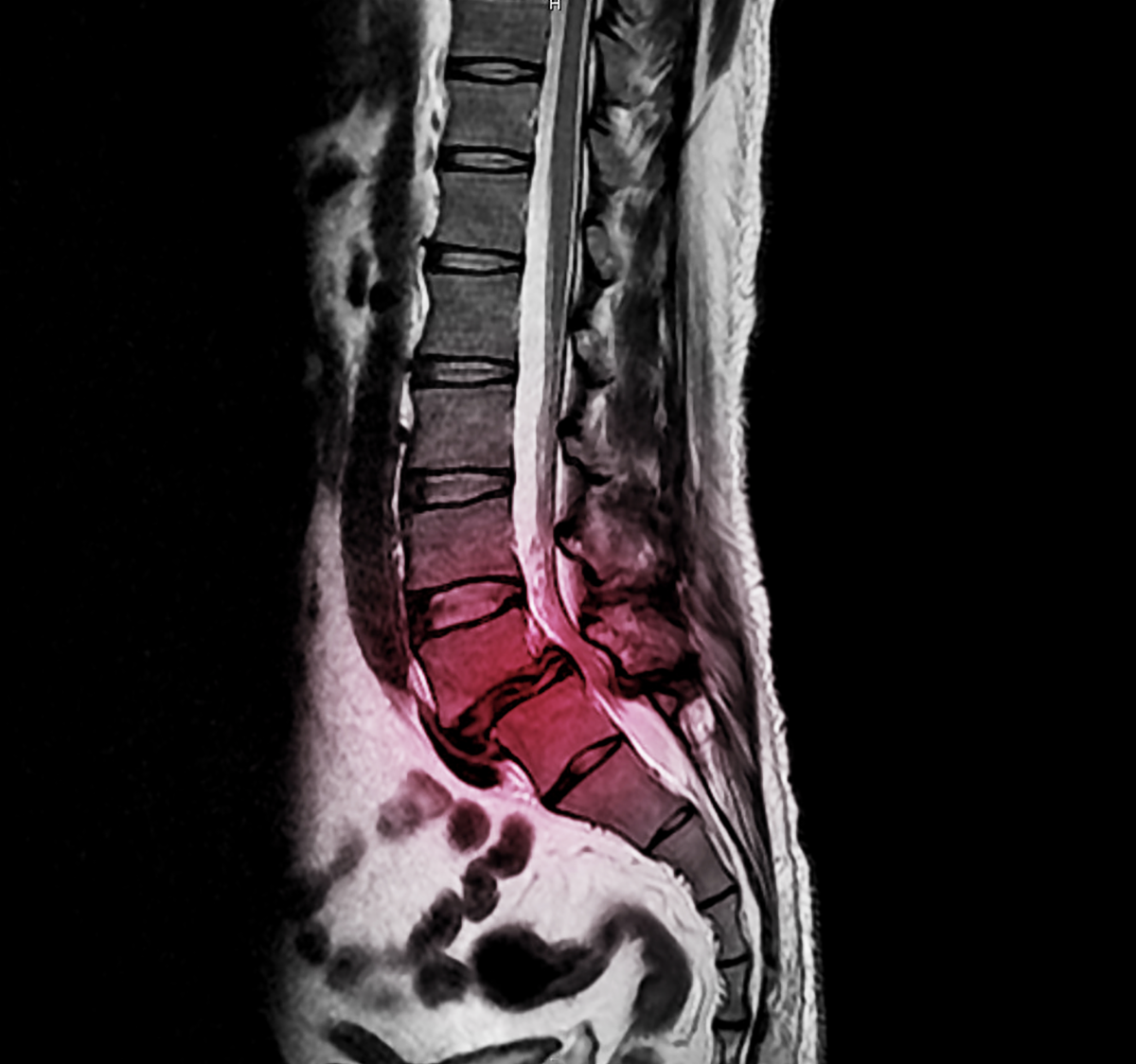
Image of a lateral projection of lumbar spine x-ray showing degenerative disc at L5/S1 level that causes low back pain and sciatica. |
|
Dr. De La Peña will test for a few different symptoms to identify that this is where a patient’s lower back pain is coming from. Pathology will help confirm that disc degeneration is present, and MRI signal intensity can determine the severity of the degeneration.
Part of the identifying process includes monitoring modic changes, the endplate lesions found adjacent to the degenerative lumbar intervertebral discs that cause inflammation. Modic changes are found in three stages, each progressively worse. Although modic changes are often complex, they are treatable, and patients are finding relief from a few different options. With each option for treatment, the goal is to innervate the damaged intervertebral disc in order to enhance regeneration while delaying degeneration and impeding inflammation.
|
|
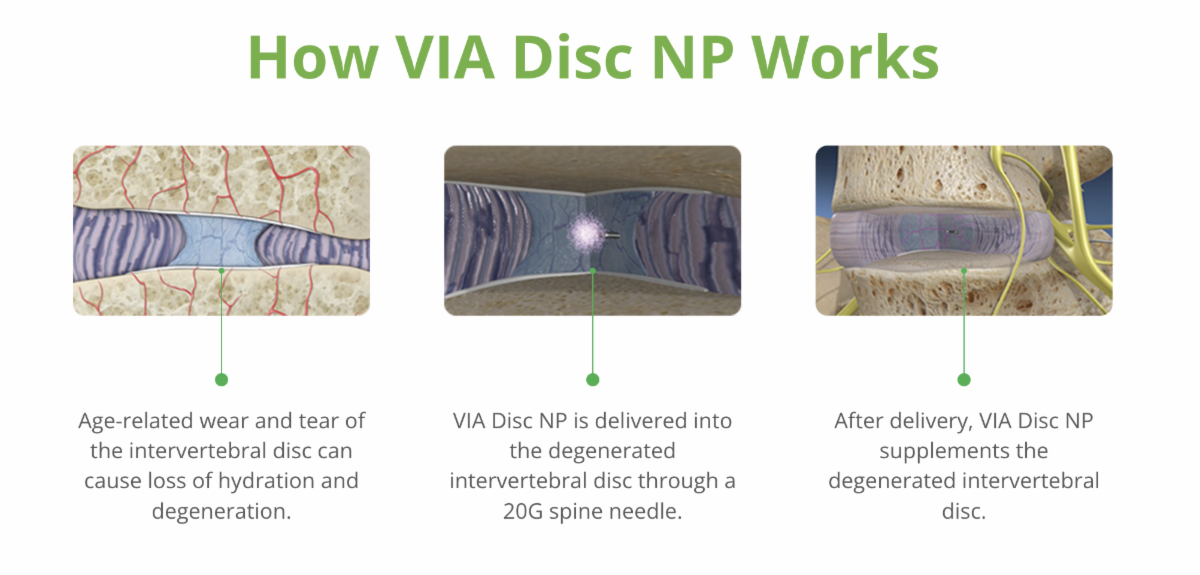
Seek pain relief from Dr. De La Peña, and she may recommend the revolutionary VIA Disc NP® allograft, made to hydrate and supplement your degenerated discs. If you’ve never heard of an allograft before, it’s human tissue from a cadaveric donor, and it has long been a tool for many orthopedic and spine-related issues. Made from processed human nucleus pulposus tissue and mixed with saline for maximum hydration, it’s a simple, non-surgical option administered by a spinal needle.
Patients can be sedated by local anesthesia or moderate sedation, and the whole procedure only takes 20-30 minutes. The proprietary blend of the easy, off-the-shelf product works because it helps support the biomechanical function of the supplemented disc. Not only will it help relieve pain, but it also reverses some of the damage and causes the discs to heal themselves.
|
|
Image courtesy of https://gotviadisc.com/ |
|
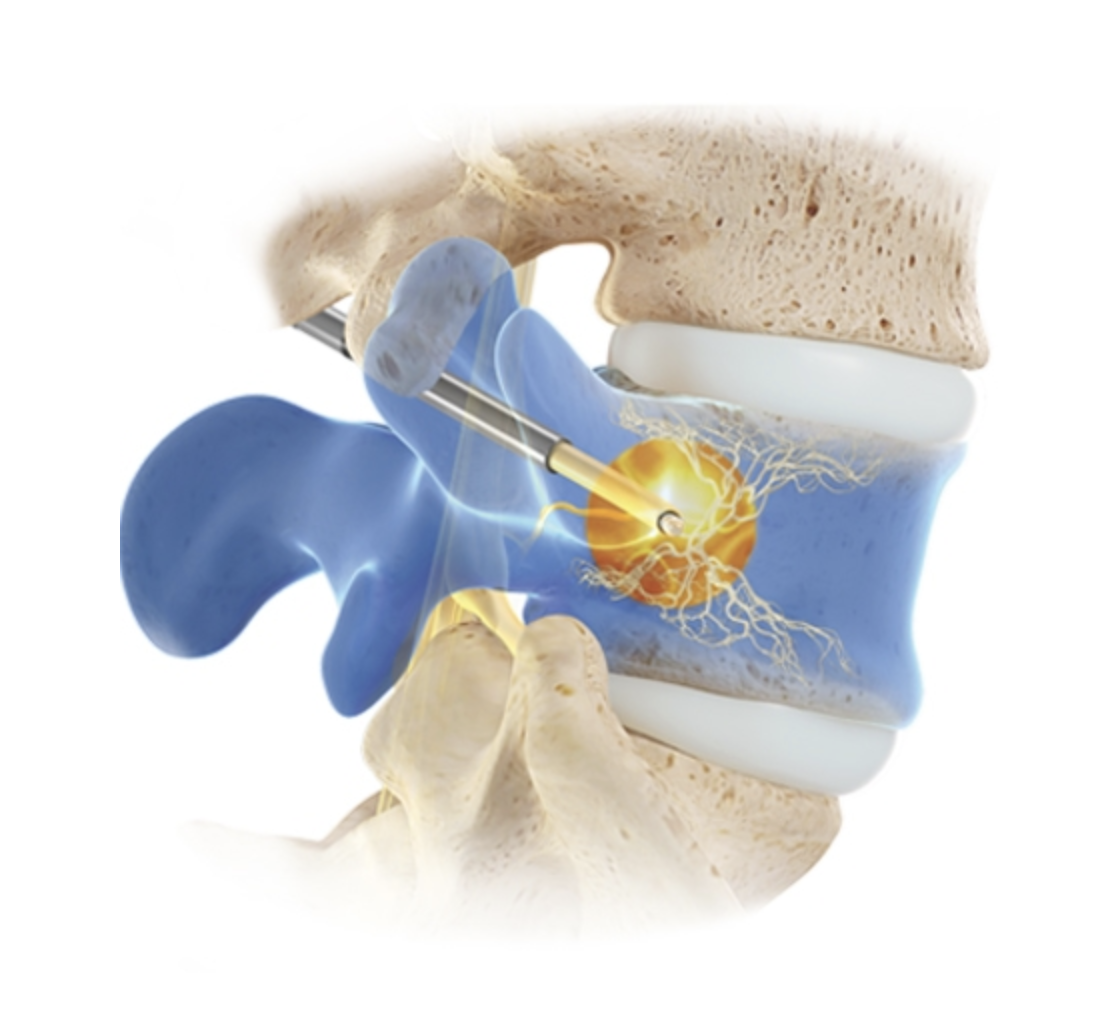
Another minimally invasive option proven to provide long-term relief from degenerated discs is The Intracept Procedure, which uses purpose-built Intracept® Access Instruments to target the basivertebral nerve within the vertebra.
The basivertebral nerve is what signals pain from inflamed endplates to the brain. It’s a same-day, implant-free procedure that preserves the structure of the spine. Dr. De La Peña will heat the basivertebral nerve with a radiofrequency probe, which will stop it from sending pain signals permanently, as this nerve is proven to not grow back after the one-hour procedure. With just one single procedure, patients can expect to feel long-term pain relief as early as two weeks.
|
|
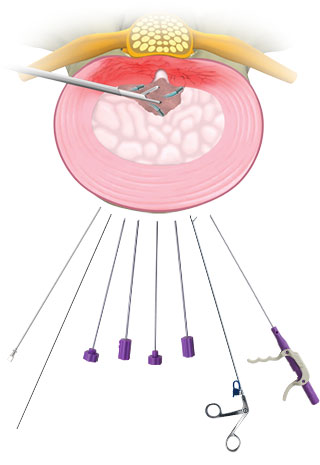
Lastly, Dr. De La Peña may prescribe the Elliquence Disc-FX® System, a third minimally invasive option that achieves precise surgical results for degenerative discs associated with lumbar spine herniations. There are 3 treatment options within the system: nucleus decompression, nucleus ablation, and annulus modulation.
Nucleus decompression involves the manual excision of the herniated nucleus through a small incision. Nucleus ablation heats the nerve in order to further break down the core, making it easier to manually remove fragments. The annulus modulation allows pain receptors to be treated and annular fissures to be sealed. Patients choose the Disc-FX® System and its Trigger-Flex® technology because its results produce less tissue damage, less scarring, less pain, less recovery time, and less stress than other forms of discectomies.
Image courtesy of https://www.elliquence.com
|
|
Dr. De La Peña always takes the time to ensure each patient is getting the best and most personalized treatment for their needs. If you’re experiencing back pain due to disc damage, don't wait until it gets worse. Book your appointment today to see how you can find relief. |
|
|
|
We are conducting a national research study on Lipogems Stem Cell therapy that is FDA approved.
The study is going to be for lumbar facet arthritis and shoulder rotator cuff injuries. If interested in participating, please call our office today at 305.974.5533
|
|
"The Goal is to Live Without Pain" -
Dr. María Alejandra De La Peña
|
|
Dr. María Alejandra De La Peña is a Double Board-certified Anesthesiologist with subspecialty certification in Pain Medicine. Dr. De La Peña, at SWCA, specializes in treating sports injuries on an individual level.
Each of us is different, and, as such, individual injuries are varied and wide-ranging in severity - and location - as well. Offering various treatment options, Dr. De La Peña customizes treatment options and tailors them for each individual and their particular situation, taking into account the injury itself, their overall condition, and their lifestyle. She is fully bilingual in English and Spanish.
|
|
FOLLOW US ON SOCIAL MEDIA |
Visit and follow our Social Media and learn about procedures, pain-relief tools, and wellness information. |
|
|
|
|
|
|