NewsletterHeader5.png

Weekly Analyst Review

11 June 2025


Bottom Line Up Front

AQAP’s New Emir Calls for Global Jihad


On 5 June 2025, Al-Qaeda in the Arabian Peninsula (AQAP) released a video titled “Incite the Believers” through its official media wing, Al-Malahem Media, marking the first public appearance of the group’s newly appointed Emir, Saad bin Atef al-Awlaki. This release is a pivotal moment in AQAP’s ideological evolution and strategic posture. More than a year after assuming leadership, al-Awlaki uses his inaugural speech not simply to reaffirm traditional jihadist tropes, the binary targeting of the “far enemy” (the United States) and the “near enemy” (Israel and allied Arab regimes), but to elevate AQAP’s global ambitions and operational doctrine. His rhetoric is more personalised, symbolic, and transnational, representing a calculated shift toward the mobilisation of global jihadist “lone wolves” in a new era of decentralised militancy.


A Break from Batarfi: Rethinking the Sectarian Lens

Al-Awlaki’s speech also marks a notable departure from the narrative strategy of his predecessor, Khaled Batarfi, who maintained a doctrinally purist stance. Batarfi frequently invoked AQAP’s opposition to the Iran-aligned Houthi movement, positioning AQAP as a staunch defender of Sunni orthodoxy and a bulwark against Shia expansionism in Yemen. In contrast, al-Awlaki conspicuously omits any reference to the Houthis or the Sunni–Shia divide. This rhetorical silence signals a possible strategic recalibration: a shift from sectarian confrontation to a broader, pan-Islamic anti-Western narrative.


Toward a Pan-Islamic Front?

By doing so, al-Awlaki appears to deprioritise internal Islamic fault lines in favour of presenting AQAP as an inclusive actor in the global jihadist front, one that can potentially coexist, or at least coordinate in parallel, with other anti-Western forces, even if they fall outside AQAP’s ideological orthodoxy. This reframing echoes current dynamics on other jihadist fronts, particularly in Somalia, where rival militant factions have increasingly aligned operationally, even if not formally, to oppose U.S. and Western-aligned forces. Al-Awlaki’s avoidance of sectarian rhetoric reflects a pragmatic leadership style, one that prioritises operational convergence over ideological rigidity.


From Local Struggles to Global Ambitions

This evolution is significant for AQAP, which remains rooted in Yemen’s volatile landscape but now seeks to reposition itself within the broader ecosystem of transnational jihadism. The video signals AQAP’s renewed commitment to global relevance and its intent to reassert itself as a vanguard force in the broader jihadist struggle.


Echoes of Bin Laden: Reinvoking the 1998 Manifesto

Perhaps most striking is al-Awlaki’s revival of classical global jihadist themes, drawing direct lineage from the foundational documents issued by Osama bin Laden and Ayman al-Zawahiri in the late 1990s, particularly the 1998 “World Islamic Front for Jihad Against Jews and Crusaders”. Echoing this manifesto, al-Awlaki calls for a united front against Western powers and their regional allies, explicitly naming high-profile global figures such as Donald Trump, Elon Musk, and Egyptian President Abdel Fattah el-Sisi as targets for assassination.


Renewing the Target List

The inclusion of el-Sisi is particularly symbolic, as he is portrayed not just as a collaborator with the West but as a modern embodiment of the secular Arab autocrats targeted by al-Zawahiri in the 1980s and 1990s. This framing resurrects al-Zawahiri’s thesis that “the road to Jerusalem passes through Cairo”—the idea that the liberation of Palestine is contingent upon the toppling of apostate Arab regimes.


Simultaneous Jihad on All Fronts

In essence, al-Awlaki’s speech restates and intensifies the strategic schema proposed by al-Qaeda’s founders: a simultaneous, global jihad against Jews, crusaders, and local Arab tyrants. Unlike earlier phases in which jihadist priorities were presented as sequential (defeating the near enemy before confronting the far enemy), al-Awlaki articulates a convergent model of jihad, where all perceived enemies are targeted concurrently, and the battlefield extends beyond the Middle East to encompass Western political, economic, and technological elites.

Other Developments

TRAC Incident Report: Tehreek-e-Taliban Pakistan (TTP) Conducts Weaponised Drone Strike Targeting Pakistan Army Convoy, Killing 2, in North Waziristan, Khyber Pakhtunkhwa, Pakistan

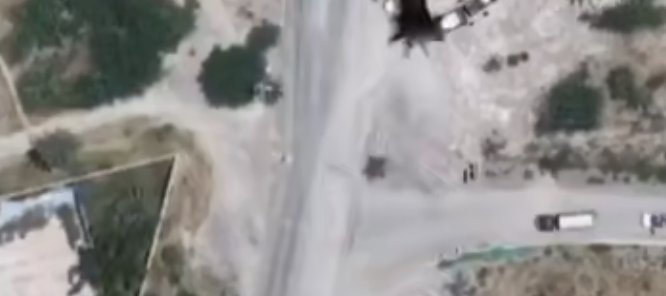
On 04 June 2025, Tehreek-e-Taliban Pakistan (TTP) militants executed a landmark attack using a weaponised unmanned combat aerial vehicle (UCAV), dropping a homemade munition, identified as a modified 30-mm VOG-17 grenade, onto positions held by the Pakistani armed forces. The strike marks the first verified instance of the TTP employing attack drones in active combat. This incident not only demonstrates the TTP’s rapidly evolving technical capabilities but also signals a new era of asymmetric warfare in South Asia.


The TTP’s use of drone-based attacks signifies a tactical breakthrough that mirrors the operational strategies of state actors, including the Pakistan Army’s deployment of weaponised drones. The fact that TTP militants have managed to reverse-engineer/repurpose drone technology typically associated with national militaries is a serious threat and a dangerous new parity in the tactical landscape. It is particularly significant in light of the TTP's public statement on 20 May 2025, when it declared the incorporation of weaponised drones into its arsenal and issued direct threats against the Pakistani military. This drone strike validates these claims and showcases their ability to translate propaganda into action, strengthening their credibility both within their ranks and across affiliated militant networks.


Strategically, the use of drones by the TTP extends beyond battlefield utility; it functions as a sophisticated form of psychological warfare. Much like the FPV (First-Person View) drone tactics revolutionising combat zones in Ukraine, TTP’s deployment is designed to unsettle the psychological balance of power. It projects an image of technological equivalency with the state, destabilising troop morale, eroding public trust in government defences, and enhancing the insurgents’ propaganda narrative. In this sense, drones are not merely weapons but tools of perception warfare, amplifying the TTP’s ability to shape the information environment.

TRAC Incident Report: Islamic State West Africa (ISWA/Wilayat Gharb Afriqiyah) Militants Led an Armed Assault on Cameroonian Army Forces as Part of the “Camp Burning” Campaign in Sagmé, Far North Region, Cameroon

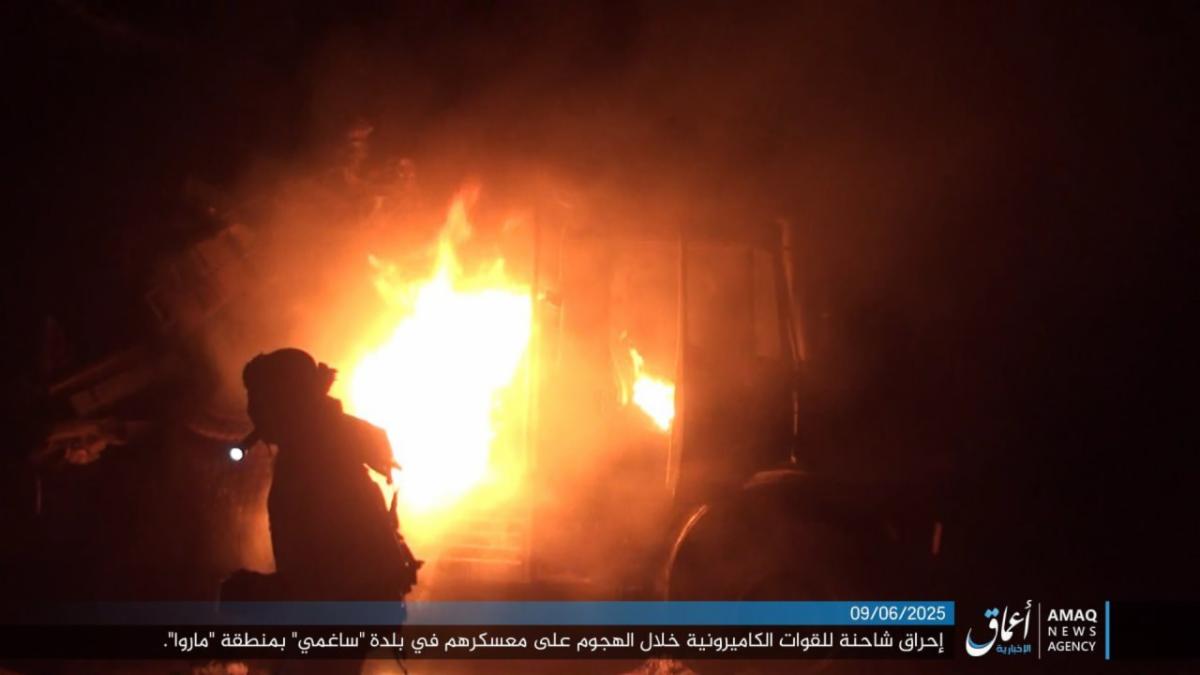
On 9 June 2025, Islamic State West Africa (ISWA) militants launched an armed assault on Cameroonian military forces stationed in Sagmé, in the Far North Region of Cameroon near the Chadian border. The attack resulted in the deaths of at least four soldiers. After seizing weapons, supplies, and communications equipment, the militants proceeded to burn the military barracks to the ground, in a deliberate act of destruction aligned with ISWA’s recent “Camp Burning” campaign. This campaign marks a shift in operational focus, with ISWA increasingly targeting and destroying military infrastructure as part of a broader strategy to destabilise regional forces and create zones of ungovernability.


The attack on Sagmé is especially significant given the town's strategic position along transborder trade and smuggling routes. ISWA has long exploited the Far North Region as a key revenue-generating corridor through an informal taxation scheme. The group extorts money and goods from civilians, particularly fishermen operating on Lake Chad, as they move between national borders. These unofficial toll systems often go unreported but are essential to ISWA’s financial resilience. Targeting Cameroonian military positions in areas like Sagmé reflects a tactical effort to eliminate local security presence that disrupts or threatens this shadow economy. In this light, the attack is not only a military operation but also an economic enforcement action meant to maintain ISWA’s grip on cross-border trade flows.


Furthermore, by burning the barracks, ISWA sends a dual message: first, to demoralise state forces by not only inflicting casualties but also destroying their operational infrastructure; and second, to demonstrate to local communities the futility of relying on state protection. The destruction of the base leaves a critical vacuum. In addition to replacing personnel, the Cameroonian Army now faces the challenge of rebuilding key forward operating posts. This resource-intensive task exposes them to further attacks during the reconstruction period. Failure to quickly reestablish a presence risks ceding permanent control of the area to ISWA, undermining broader counterinsurgency efforts in the Lake Chad Basin.

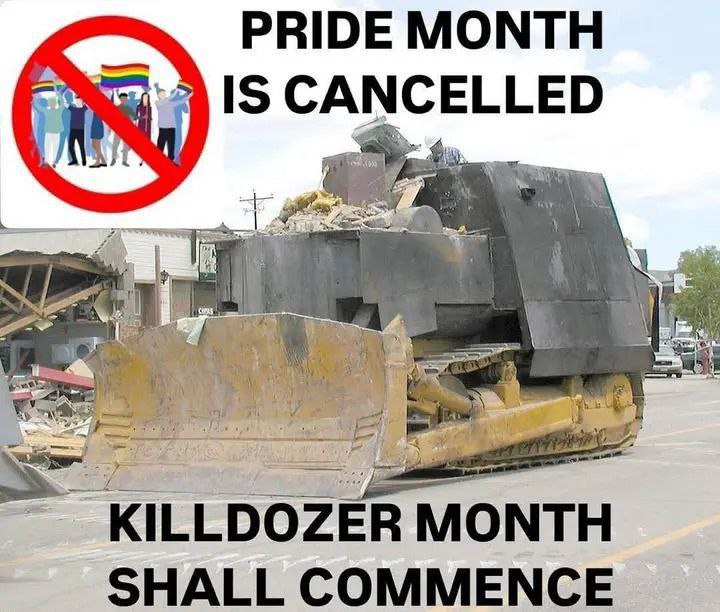
(Right Wing Extremism / Poster) Neo-Nazi Accelerationist Telegram Channels Memewaffen Shares Poster: ‘Pride Month is Cancelled – Killdozer Month Shall Commence’

This poster serves a dual purpose: it functions both as anti-Pride propaganda and as a commemoration of the anniversary of Marvin Heemeyer’s rampage in Granby. Far-right extremists on Telegram celebrate the anniversaries of attacks carried out by white perpetrators, aiming to inspire other lone actors to carry out similar violence against soft targets. The glorification of Marvin Heemeyer exemplifies stochastic terrorism, defined as the use of language or other forms of communication to incite random acts of violence that are statistically predictable, yet individually unpredictable.


This poster is part of a broader pattern of annual digital hate campaigns coordinated by right-wing extremist groups. TRAC has documented that each June, a wave of propaganda floods right-wing Telegram channels, ranging from more "normie" groups like the Proud Boys to covert accelerationist cells. These campaigns often carry recurring slogans like “Take Back June,” “Pride Offensive,” and “Reclaim the Rainbow.” The goal is always the same: to ridicule LGBTQ+ visibility during Pride Month and to embolden offline acts of intimidation or violence against the community.

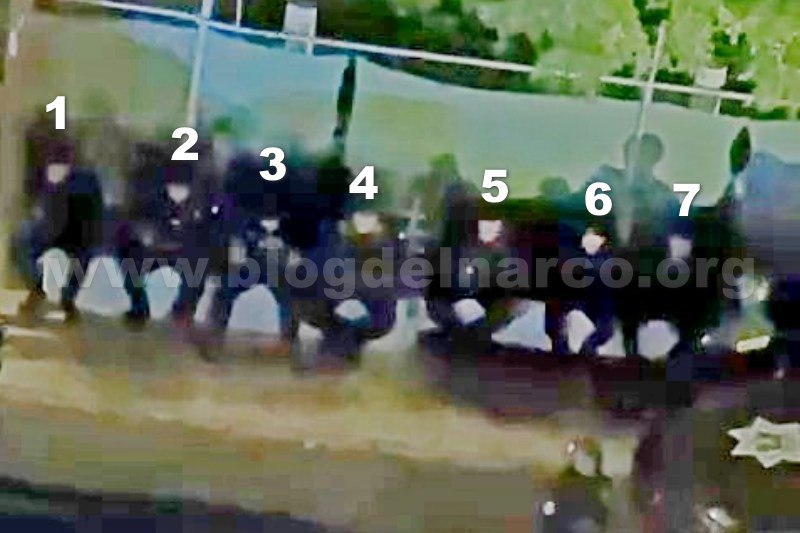
TRAC Incident Report: Suspected Sinaloa Cartel Sicarios Dressed in State Police Uniforms Ambush Municipal Police Officers Station Outside a Private Clinic, in Culiacán, Sinaloa, Mexico


(Video/ Right-Wing Extremism): National Socialist Network (NSN) Jacob Hersant Releases Propaganda Video: ‘The Jews will flee if Whites Become Honourable Again’ 


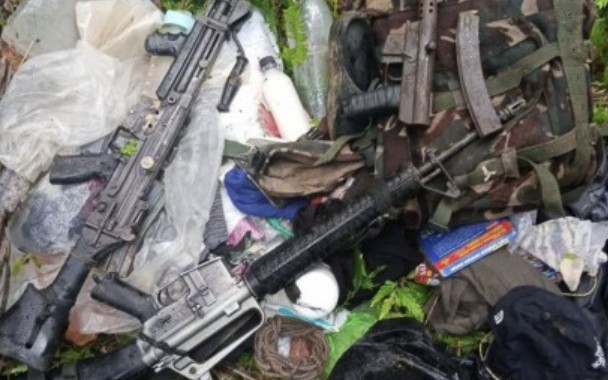
TRAC Incident Report: Clashes Between Security Forces & New People’s Army (NPA) Rebels Leave Five Militants Dead, Catubig, Northern Samar, Catubig, Northern Samar, Eastern Visayas, Davao, Philippines


TRACFusion_Newsletter2.png

CLICK HERE FOR PAST WEEKLY BRIEFINGS

TRAC Logo_Primary_TransparentWhite.png
Facebook          X          Instagram