|
Welcome to Week 3 on this Season of Creation
Our Focus this Week: Pray
Imagine two families living through the same flood.
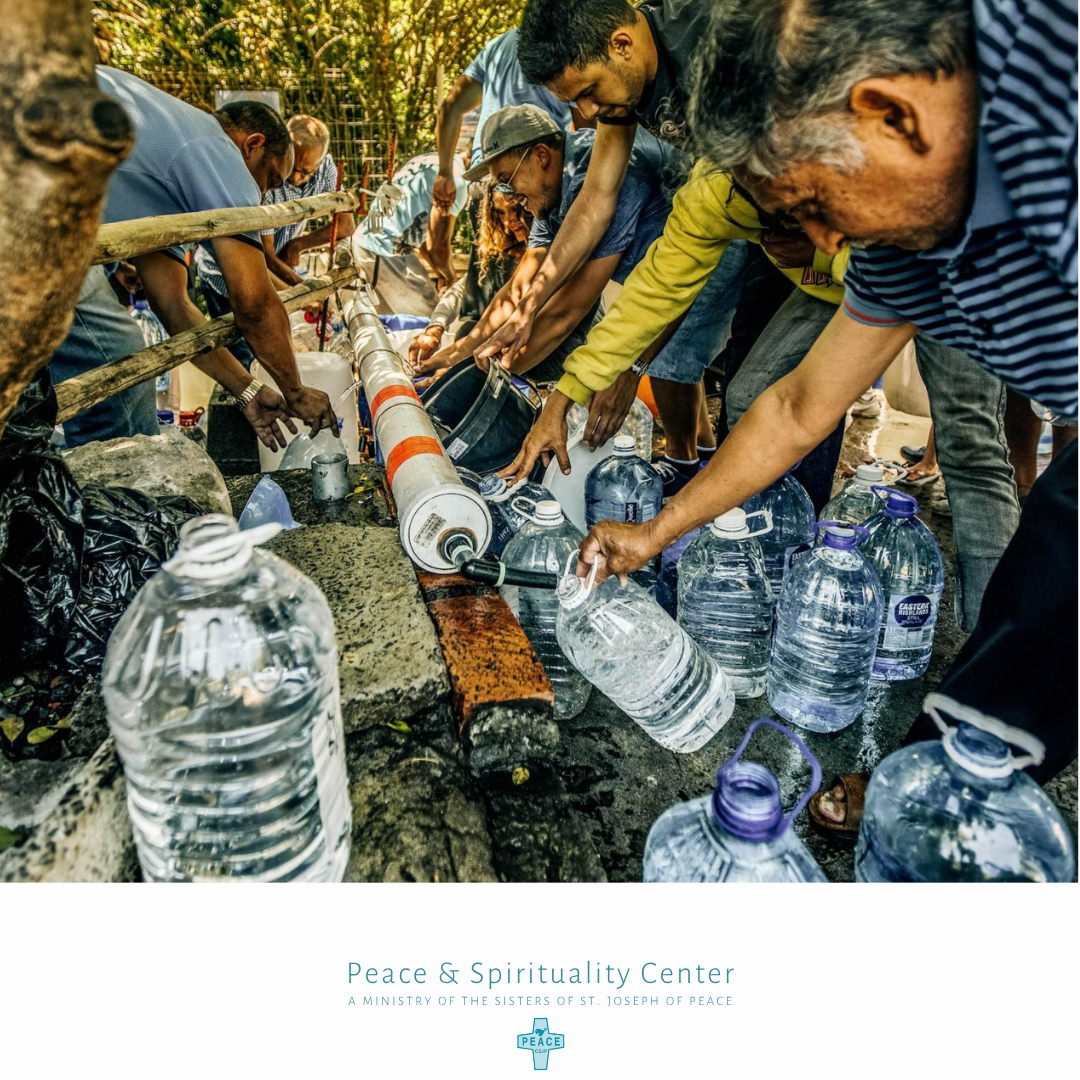
Both lose access to clean water.
One family can leave. They have a car, somewhere else to stay, insurance, savings, and jobs that allow them to miss a few days of work.
The other family cannot easily leave. Missing work means losing income. A hotel is too expensive. Replacing damaged belongings will be difficult. If bottled water becomes necessary for several weeks, even that becomes another expense.
The flood is the same. The consequences are not.
NOTICE
Last week, we looked at how quickly a problem with water can become a problem with food, health, work, housing, and safety.
But there is another part of the story.
People do not enter a crisis with the same resources, choices, or ability to recover.
This is easy to miss when we talk broadly about droughts, floods, fires, pollution, or other environmental problems. We tend to speak about entire cities, regions, or populations as though everyone within them experiences the same event in the same way.
They don't.
And that changes the question. It is no longer only: What happened?
It also becomes: Who will have the hardest time living with what happened?
LEARN
This is one place where care for creation becomes a question of justice.
Not because every environmental problem has a simple political answer. It doesn't.
And not because every difference between people's circumstances can be eliminated. It can't.
But vulnerability matters.
Think again about water.
If drinking water becomes unsafe, some people can purchase bottled water or install filtration systems. If a home floods, some can relocate temporarily. If crops fail, some businesses can absorb the loss. If utility costs rise, some households can adjust.
Others have far fewer choices.
The environmental event may be shared, but the ability to protect oneself from it—and recover afterward—is not.
This is why questions about water eventually become questions about human dignity.
Who has access to what is needed for life?
Who has choices when something goes wrong?
Who carries the greatest burden?
And who might be easy to overlook?
PRAY
There is an interesting moment in John's Gospel when Jesus meets the Samaritan woman at the well.
He begins with a very ordinary request:
“Give me a drink.”
Jesus is thirsty. She has the water.
But the encounter is striking for another reason. Jesus pays attention to someone others could easily dismiss: a Samaritan, a woman, and someone whose personal circumstances made her vulnerable to judgment.
The conversation begins with water, but it becomes an encounter in which another person is seen.
Perhaps that belongs in this journey too.
Prayer is not only asking God to change circumstances. Sometimes it also asks God to change what we are capable of seeing.
God, help us notice the people we might otherwise overlook.
RESPOND
There is still no checklist this week
.
Instead, there is an invitation to become curious.
When we hear about a flood, drought, wildfire, contaminated water supply, or another disaster, perhaps we can go beyond asking how many people were affected.
We can also ask:
Who will have the hardest time recovering?
Who has few alternatives?
Who is already doing the work of helping?
What might the people actually living through it say they need?
Those questions may eventually lead different people to different responses. But before response comes attention.
And so, one question to carry this week:
Whose experience might I understand differently
if I just paid closer attention?
With peace,
The Peace & Spirituality Center
|