|
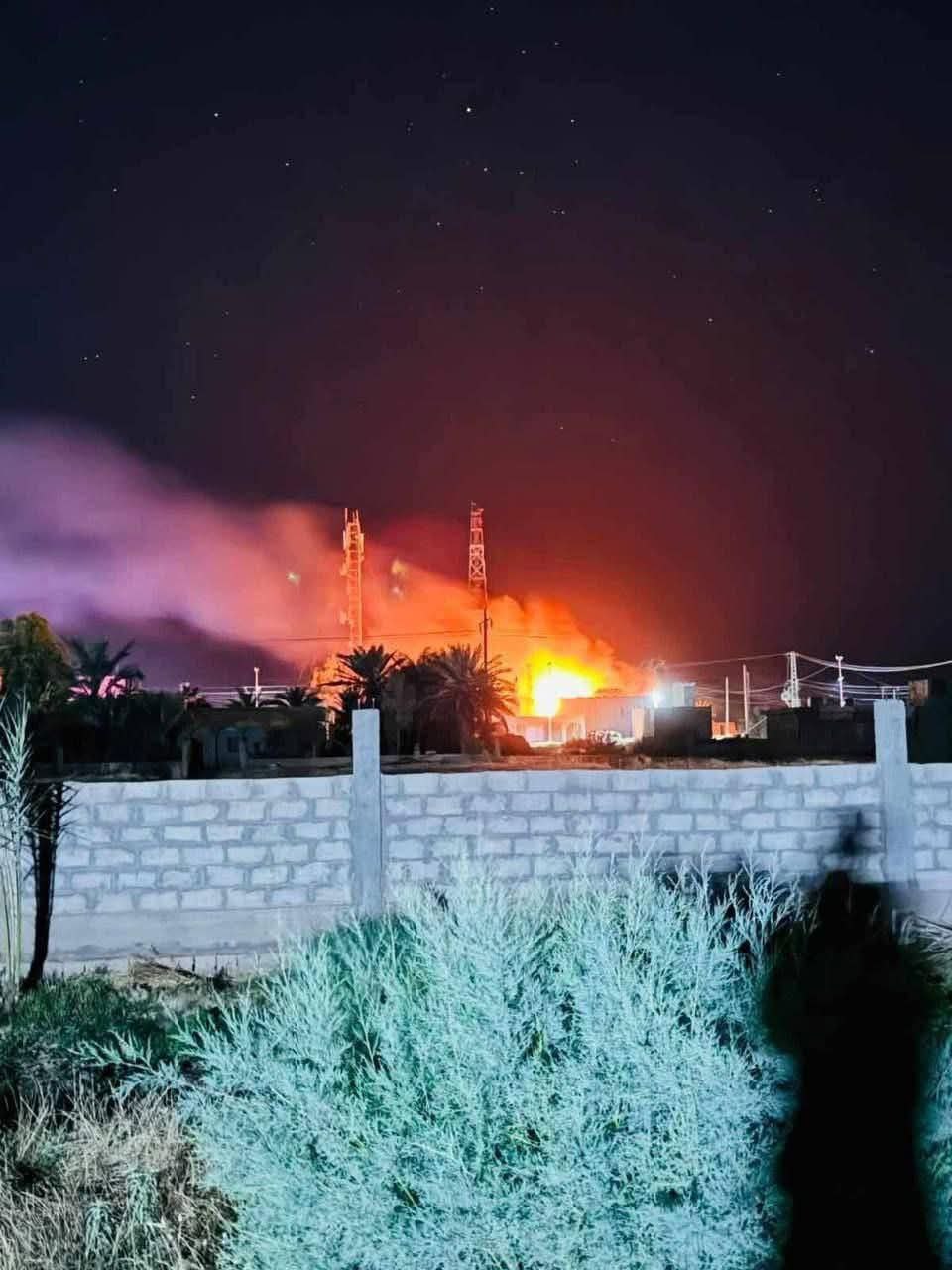
Over the course of late May 2025, the Islamic State (IS) has launched a precise and calculated campaign against Hayy’at Tahrir al-Sham (HTS) positions and legitimacy in eastern Syria, signalling a dramatic shift from passive coexistence to active hostility. Two back-to-back attacks and a new wave of targeted propaganda reveal that IS now views HTS not merely as an inconvenience but as a rival governance structure to be dismantled.
Back-to-Back Attacks in Deir Ezzor
On 24 May 2025, suspected IS operatives detonated an improvised explosive device (IED) targeting the headquarters of the HTS-led General Security Service (GSS) in Abu Kamal, Deir Ezzor. The attack killed three individuals and wounded at least four others. This comes just one week after a similar VBIED attack on another GSS facility in Mayadin, suggesting that these are not isolated incidents but rather coordinated strikes against HTS’ core enforcement infrastructure.
The specific targeting of GSS facilities—the nerve centres for surveillance, interrogation, and local governance—underscores IS’s intent to degrade HTS’ operational control in eastern Syria. These attacks are not meant merely to harass but to directly challenge the viability of HTS' rule in Deir Ezzor.
HTS-IS Relations: From Tactical Detente to Open Confrontation
Since HTS' takeover of Damascus on 8 December 2024 and its subsequent eastern expansion, the group has largely avoided conflict with IS. Both sides had maintained a strained but practical avoidance of confrontation. HTS focused on building state-like structures and neutralising loyalist remnants, while IS remained embedded in rural insurgency, seemingly calculating that HTS' grip was too temporary to merit open warfare.
However, the escalation of attacks suggests that this calculus has shifted. IS views HTS’ presence in eastern Syria as more than a transient anomaly; it is a threat to be dealt with through systematic violence.
IS Propaganda Targets HTS Foreign Fighters and Morale
Alongside kinetic actions, IS has ramped up a strategic ideological campaign against HTS. On 23 May 2025, IS released a detailed statement aimed explicitly at foreign fighters serving in HTS’ ranks. Framed in religious and moralistic terms, the message painted HTS as apostate collaborators with Western interests and accused them of betraying the ideals of jihad.
Importantly, IS avoided crude calls for defection. Instead, it cloaked its message in the language of repentance and redemption, implying that those who abandon HTS would be forgiven and welcomed back into the Islamic State. This approach is deliberately calibrated to provoke a spiritual and ideological crisis within HTS’ foreign cadre, many of whom may already harbour doubts about the group’s trajectory.
This message follows a previous pamphlet dated 16 May 2025, which was more direct in calling on fighters to leave HTS and join IS cells in eastern Syria. The progression from blunt recruitment to sophisticated psychological manipulation indicates a refined, multi-phase campaign—one that seeks not just to poach manpower but to erode HTS’ internal unity.
Concluding Thoughts
Taken together, the two attacks in Abu Kamal and Mayadin, coupled with IS’s aggressive ideological warfare, reflect a multi-dimensional strategy aimed at destabilising HTS’s expanding governance project. By degrading its intelligence infrastructure and sowing doubt among its fighters, especially foreign ones, IS is launching a two-front offensive, physical and spiritual, against what it perceives as an entrenched rival in the Syrian landscape. Finally, TRAC is convinced that the attention IS giving HTS is a direct result of HTS' need to be recognised internationally. Meeting with President Trump, IS is purposely intending to tarnish HTS' shiny new anti-Jihadist image.
| | | TRAC Incident Report: Top Commander of the National Resistance Front (NRF) with Links to the Islamic State Khurasan (ISKP) Shot Dead by Taliban (IEA) Forces, Shuhada District, Badakhshan Province, Afghanistan | | |
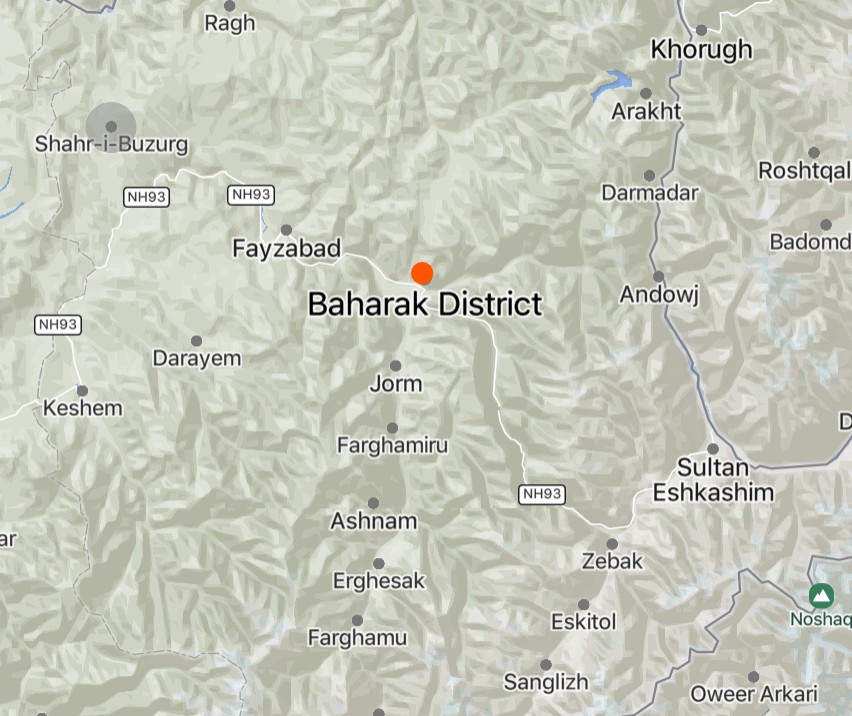
On the night of 26 May 2025, a targeted security operation carried out by the General Directorate of Intelligence (GDI) of the Taliban-led Islamic Emirate of Afghanistan (IEA) resulted in the killing of Zaidullah, a senior commander of the National Resistance Front (NRF), in Shuhada District, Badakhshan Province. Formed from parts of the Baharak District in 2005, Shuhada has emerged as a key zone of anti-Taliban activity and insurgent manoeuvring in Afghanistan’s northeast. During the operation, another NRF militant was arrested, further degrading the group's local leadership structure. Intel suggest that Zaidullah had previously escaped an IEA raid in mid-2023, during which several of his fighters were neutralised in the same district. His return to the area appears to have been part of a renewed coordination effort between the NRF and regional jihadist networks.
What makes this operation particularly significant is the intelligence emerging after Zaidullah’s death. Local sources, corroborated by the GDI, reveal that Zaidullah had recently been appointed to liaise with the Islamic State’s Khurasan (ISK), particularly with Sibghatullah, a Pakistan-based ISK commander. The duo were reportedly involved in planning joint operations aimed at destabilising Taliban control in Badakhshan, a province where ISK and the NRF increasingly find overlapping interests despite ideological differences. This convergence of NRF and ISK signals a pragmatic alliance of convenience aimed at weakening the Taliban through asymmetric warfare, coordinated attacks, and regional destabilisation. This cooperation, if proven, represents a significant evolution in the insurgent landscape in northeastern Afghanistan and could complicate Taliban counterinsurgency efforts.
Notably, the operation took place on the same day that poppy farmers in nearby Jorm District clashed with Taliban forces during a poppy eradication campaign. Jorm lies near Shuhada, and both districts are part of a larger mosaic of growing anti-Taliban sentiment, driven not only by political opposition but also by economic grievances. The Taliban’s ongoing enforcement of its drug ban, while intended to demonstrate international legitimacy, has created widespread discontent among local communities dependent on the opium trade for survival. These economic flashpoints are increasingly overlapping with political fault lines, fueling unrest that insurgent groups, such as the NRF and ISKP, may exploit for recruitment and support.
Additionally, it is worth noting that Badakhshan province holds immense strategic value, not only due to its rugged terrain and history of resistance, but also because of its proximity to the borders of Tajikistan, China, and Pakistan. With insurgent activity resurging and alliances shifting, the region could soon emerge as a staging ground for cross-border militancy, with implications that extend beyond Afghanistan’s borders into Central Asia’s fragile security environment.
| | TRAC Incident Report: Suspected Jalisco New Generation Cartel (CJNG) Sicario Executed Ximena Guzmán Cuevas & José Muñoz, Close Associates of Mexico Cities Current Head of Government, on Calzada de Tlalpan, Mexico City, Mexico | | |
On 21 May 2025, a gunman executed Ximena Guzmán Cuevas, personal secretary to Clara Brugada (current Head of Government of Mexico City), and José Muñoz, a political advisor, in broad daylight on Calzada de Tlalpan in Mexico City. Surveillance footage reveals the attacker, a man wearing a motorcycle helmet, likely to obscure his identity, approaching Guzmán’s black Audi and opening fire at close range. After fatally shooting Guzmán inside the vehicle and then Muñoz as he attempted to board, the gunman fled the scene on foot while the still-running car rolled forward aimlessly.
This attack bears all the hallmarks of a professional hit. The timing, the use of disguise, and the choice of high-profile political targets suggest a motive that extends beyond a personal vendetta. Clara Brugada, who recently transitioned into Mexico City’s top political position and has long been affiliated with the ruling Morena party, has taken stances on urban security, cartel activity, and political reform; issues that place her and her team in direct conflict with entrenched criminal interests.
While the exact perpetrators remain unidentified, TRAC speculates that the attacker could be involved with the Cártel de Sinaloa (CDS) or possibly the Cártel Jalisco Nueva Generación (CJNG), two of the most powerful cartels with a growing presence in Mexico City. Both have been known to use targeted killings to exert political pressure or retaliate against perceived obstacles to their operations. If either cartel saw Brugada’s administration as a threat, perhaps due to planned crackdowns, policy shifts, or anti-corruption probes, sending a violent message through her inner circle would align with typical cartel strategies.
Moreover, the attack may also reflect internal political rivalries being exploited by organised crime. With local elections approaching and a national atmosphere of volatility, such executions may aim to destabilise leadership, undermine public trust in security, or serve the interests of rival factions—criminal or political.
| | TRAC Incident Report: Four Soldiers Injured in Clashes with New People’s Army (NPA) Militants in Barangay Hagpa, Impasug-ong, Bukidnon Province, Northern Mindanao, Philippines | | |
On 23 May 2025, an armed confrontation broke out between Philippine security forces and fighters from the New People’s Army (NPA) in Barangay Hagpa, located in Impasug-ong, Bukidnon Province, Northern Mindanao. The clash, which reportedly lasted for several minutes, resulted in four soldiers being wounded during the engagement.
According to official sources, the military unit was deployed in response to complaints from residents regarding the presence of NPA insurgents engaging in extortion activities. These practices typically include demanding so-called "revolutionary taxes," food supplies, and other material support under threat of violence. The NPA often uses such coercive tactics to sustain their operations and assert influence in rural, economically vulnerable communities.
While the Armed Forces of the Philippines (AFP) have previously claimed progress in diminishing the NPA’s presence in Northern Mindanao, recent incidents—including this latest clash in Hagpa—underscore the continued operational capability of the NPA in the region. Bukidnon, in particular, remains one of the key strongholds of the rebel movement due to its dense forests, mountainous terrain, and limited state presence in some barangays.
The Hagpa incident is not an isolated event but rather part of a wider pattern of localised confrontations across Bukidnon and nearby provinces. Over the past year, TRAC has observed a re-emergence of small-unit guerrilla activity by NPA remnants in Northern and Eastern Mindanao, often timed with periods of reduced military visibility or during operations in other areas.
TRAC also emphasises that despite official narratives portraying the NPA as a "diminishing threat," the group remains resilient and ideologically committed. The recent spike in clashes, extortion complaints, and youth recruitment efforts is an indicator that the NPA is rebuilding its networks, particularly in the aftermath of perceived neglect or failed counterinsurgency programs in rural Mindanao.
| | TRAC Incident Report: Jama’at Nusrat al-Islam wa al-Muslimin (JNIM) Militants Disguised in Military Uniforms Belonging to the Burkinabe Army, Burkina Faso | |
TRAC Incident Report: Suspected Incel Movement-Linked Teenage Student Neutralized After Targeting Young Female Schoolmates with a Knife and Injuring Three, Pirkkala, Pirkanmaa Region, Finland
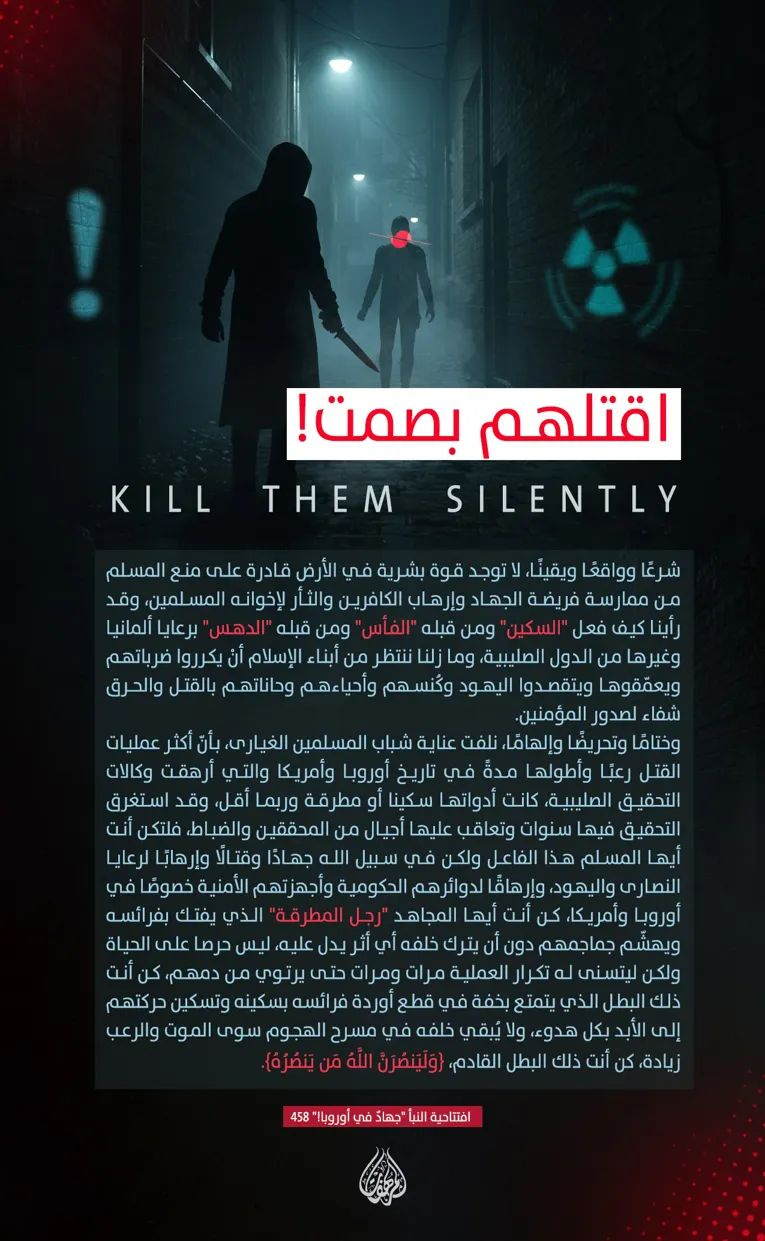
| | (Poster) Unofficial Islamic State (IS) Al-Hayat Media Center: Jihad in Europe -“Kill Them Silently” | | | | |