|
🔍 GENERAL STRATEGIES
Before we dive into specific ideas, here are some strategies that should be embedded in your environment:
-
Use open-ended questions: “What do you think will happen if…?”, “How did you figure that out?”, “Can you think of another way?”
-
Model thinking aloud: Show how to think through a problem by verbalizing it.
-
Encourage problem-solving: Avoid giving answers quickly. Let them struggle (productively).
-
Foster collaboration: Many children solve problems better together.
-
Reinforce effort and strategies, not just outcomes.
🧠 LEARNING CENTER IDEAS
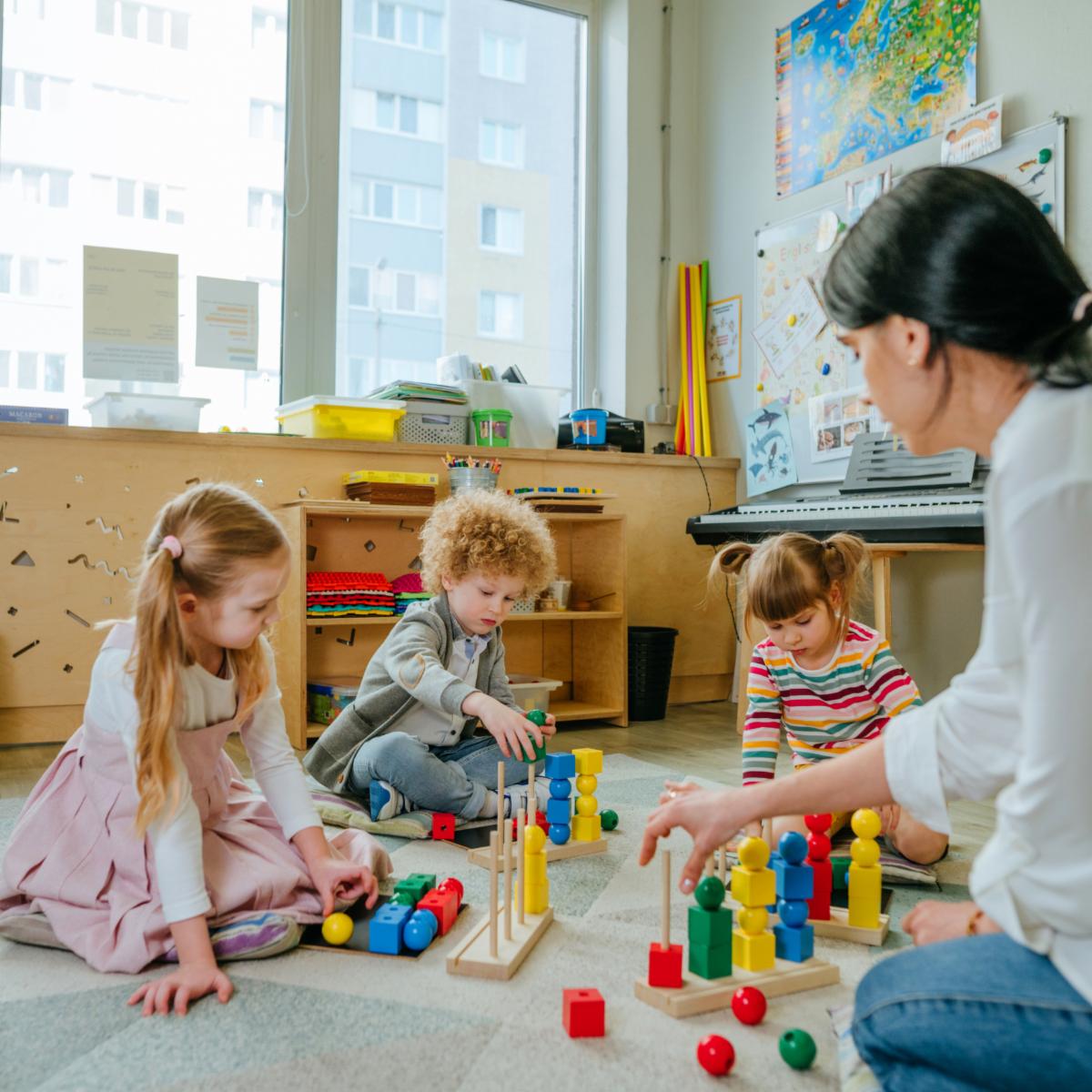
1. STEM/Building Center – "Engineering Explorers"
Materials: Blocks, LEGOs®, Magna-Tiles®, cups, cardboard, tubes, etc.
Activity: Challenge of the week — e.g., “Build a bridge that can hold a book.”
Critical Thinking: Predict, test, evaluate, redesign
Engagement Tip: Let students take pictures of their builds, explain them to peers
Positive Behavior Tie-In: Collaboration roles (builder, tester, planner) promote teamwork
2. Literacy/Storytelling Center – "What Happens Next?"
Materials: Wordless books, puppets, felt boards, story cubes
Activity: After reading or seeing a story, children invent alternative endings
Critical Thinking: Sequencing, cause and effect, imagination, perspective-taking
Engagement Tip: Record their stories or let them act them out
Positive Behavior Tie-In: Role-play encourages empathy and listening
3. Math/Logic Center – "Math Mysteries"
Materials: Pattern blocks, number cards, dice, scales
Activity: Puzzles like "Who Ate the Cookies?" with clues to figure it out
Critical Thinking: Sorting, comparing, reasoning, analyzing clues
Engagement Tip: Turn it into detective games with badges and magnifying glasses
Positive Behavior Tie-In: Problem-solving in partners promotes cooperation
4. Art Center – "Creative Solutions Studio"
Materials: Recycled materials, drawing supplies, paint, clay
Activity: “Can you make something useful from scrap?” or “Design a new animal”
Critical Thinking: Flexibility, creativity, synthesis of ideas
Engagement Tip: Display their work and let them explain it
Positive Behavior Tie-In: Calm, creative time boosts regulation and pride
5. Dramatic Play Center – "Real-World Problem Solvers"
Themes: Grocery store, post office, vet clinic, construction site, etc.
Activity: Add a problem — “We’re out of dog food, what should we do?”
Critical Thinking: Planning, predicting, negotiation, empathy
Engagement Tip: Rotate themes often and let kids suggest ideas
Positive Behavior Tie-In: Teaches social problem-solving and cooperation
6. Science Exploration Center – "Discovery Lab"
Materials: Magnets, ramps, water table, natural objects, simple experiments
Activity: “What sinks? What floats?” → Predict, test, explain
Critical Thinking: Hypothesizing, observing, analyzing
Engagement Tip: Use science journals or drawings
Positive Behavior Tie-In: Inquiry-based tasks channel energy productively
✏️ LESSON & ACTIVITY IDEAS TO PROMOTE CRITICAL THINKING
➤ “What’s Missing?” Game
Show a tray of items → cover → remove one → ask what’s missing.
Skill: Observation, memory, inference
➤ “Mystery Bag”
Put an object in a bag. Let kids ask yes/no questions to guess.
Skill: Questioning, deductive reasoning
➤ "Would You Rather?" Daily Question
Pose fun but thought-provoking questions like, “Would you rather be a bird or a fish?”
Skill: Decision-making, reasoning, self-expression
➤ Problem of the Day
Simple challenge: “How can we clean up faster today?” or “What could we do if a friend is sad?”
Skill: Social-emotional reasoning, planning, innovation
🌈 BEHAVIOR-BOOSTING ELEMENTS
-
Choice boards: Let kids choose from several tasks that all target learning goals.
-
Visual prompts/reminders: Show steps for problem-solving.
-
Praise thinking strategies: “I love how you tried a different way.”
-
Small-group rotation: Keeps attention and reduces downtime.
-
Reflection time: “What was tricky today? How did you handle it?”
|