|
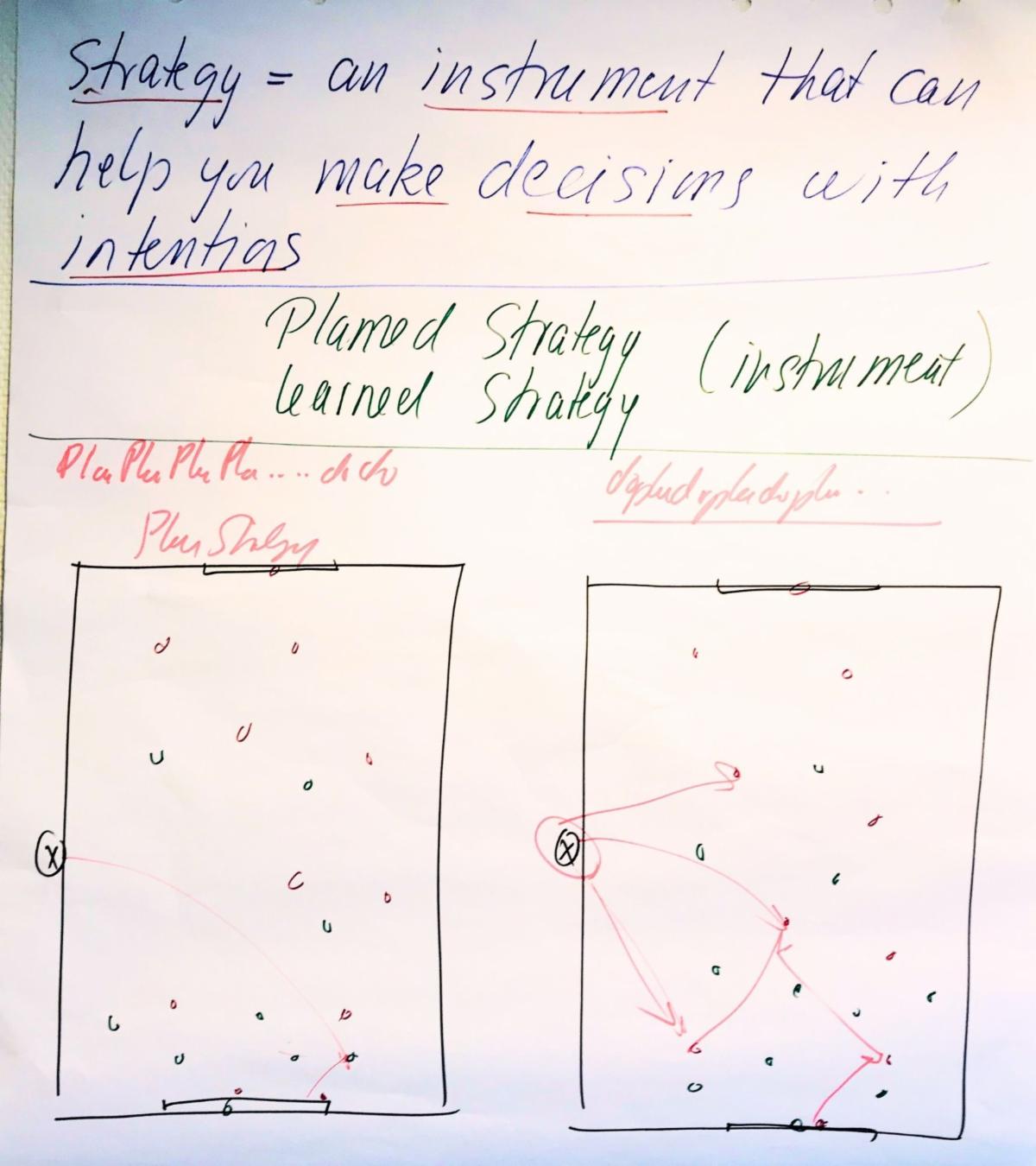
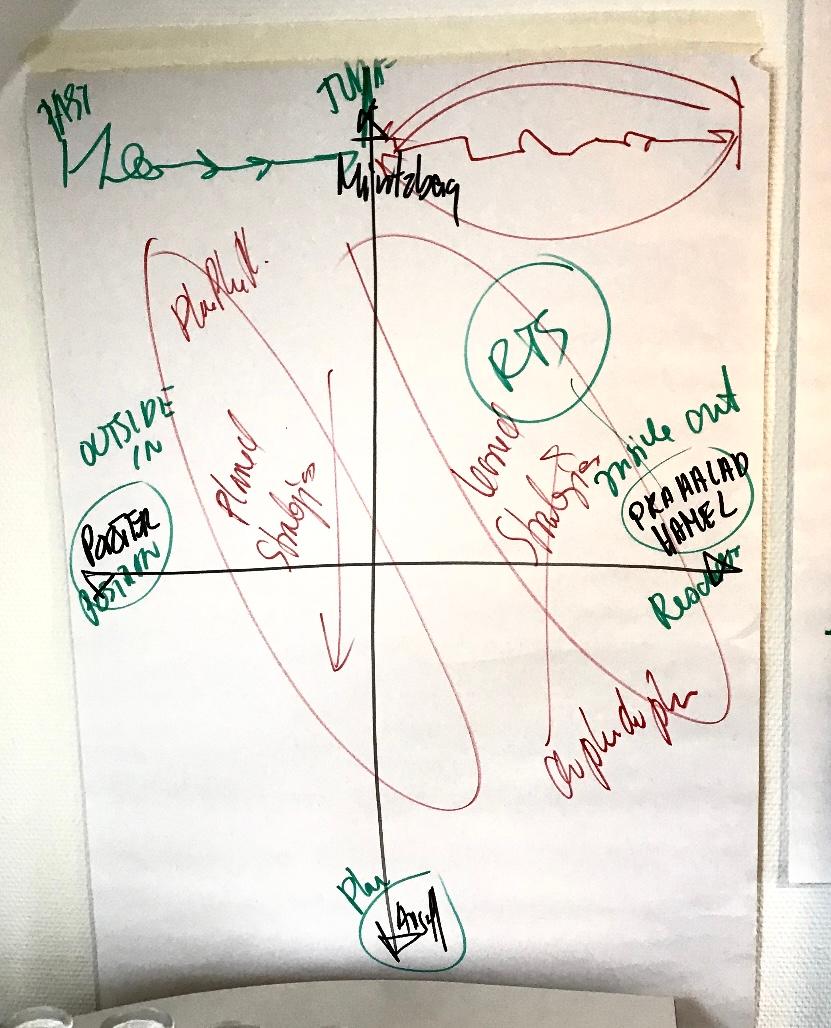
Over the last 5 years, I have had quite a few client problem statements that required Real Time Strategy. I realized how the right field sketch captures the truth of our world. Every industry, every team, every day, there aren't any straight lines or predictable choreography.
For a fintech, I facilitated a series of RTS workshops nationwide across four zones. The objective was to understand the current situation, identify the challenges, craft a strategy to overcome the caveats, be fully aligned, and stay on top of it. Every workshop, the team was always standing squarely in that first field Robert had drawn. The rooms were filled with VPs, Regional Managers, and Zonal Managers, who knew how to make a plan. Every role and its dependencies were defined on paper. But regulations change overnight. Customers move like monsoon clouds, unpredictable and drifting. Tech dependencies snarled at the worst possible moments while competitors move faster. And, the moment the field changes shape, their immaculate plan buckles. Their reflex each time would be to come up with another plan!
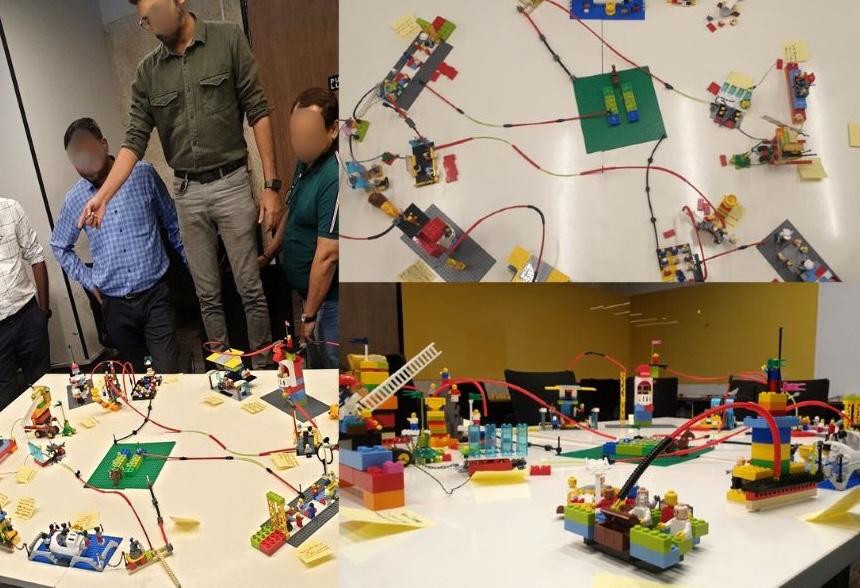
The RTS workshops changed that rhythm. Once they started building, they didn’t actually want to be the “perfect plan” team. They wanted to play like the second team in Robert’s football example. The team read the field, responded to movement, learnt mid-play, and used strategy as a living guide instead of a rigid script. During these workshops, their decision-making became more informed. Conversations opened up, they played out the future where the risks were articulated without posturing. And the Simple Guiding Principles (SGPs) emerged from the system they built together, not imposed or grounded in who they were, but in what they were capable of if they moved as one.
One of most interesting projects was facilitating RTS workshops for a group of artisans. There were no titles in the room. Most of them were migrant workers who had been trained over time into skilled artisans for a sustainability studio. The questions weren’t growth charts or targets but straightforward: do they actually want to be here? Did their own aspirations match what the studio was trying to build for the long term? Were there any unspoken tensions that could silently undo everything? Strategy, in the traditional sense, meant nothing here. But once they began building, the field revealed itself. It became clear who genuinely wanted to grow into that future, who felt stuck, and who were conflicted. A set of Simple Guiding Principles emerged that everyone committed to. I knew those SGPs could easily get lost once the workshop ended, so we did something simple. They painted them so they stayed visible, lived with them, and remembered.
Here, there was no possibility of the “left field.” If the studio had arrived with a fixed plan for who these artisans should become, it would have collapsed in the long run. What emerged instead was the "right field" where strategy was built together without any instructions. By building, the artisans were reading their own field in real time. Their choices, hesitations, fears and hopes became the information. The studio didn’t impose direction; it learned what direction was actually possible.
In another RTS workshop in the automotive sector, the brief sounded simple enough: set targets, align the sales team, and build a strategy to hit the numbers. But once everyone was in the room, it became clear that each function had its own reality, with mismatched assumptions and conflicting priorities. As the session unfolded, something unexpected happened. The youngest sales executive in the room, someone most people barely noticed at first, began connecting dots others had missed. He spoke about customer behaviours, on-ground friction, and little ideas that could change outcomes. Senior leaders listened. This young man’s ideas didn’t come from hierarchy but from being awake to the field. It was no longer about top-down targets but was about shared understanding. The SGPs emerged from the system they built together. And that made all the difference.
|