|
|
The Newsletter of Fig Tree Books | |
December '24: Issue #61 --- Fredric D. Price, Founder & Publisher | |
GUEST COLUMNISTS: It's Mike DeWine's Fault and Other Truths about the Catastrophe, by Robert Lehrer - & The 2024 Election and the Disappearance of Adulthood, by Paul Schwartz | |
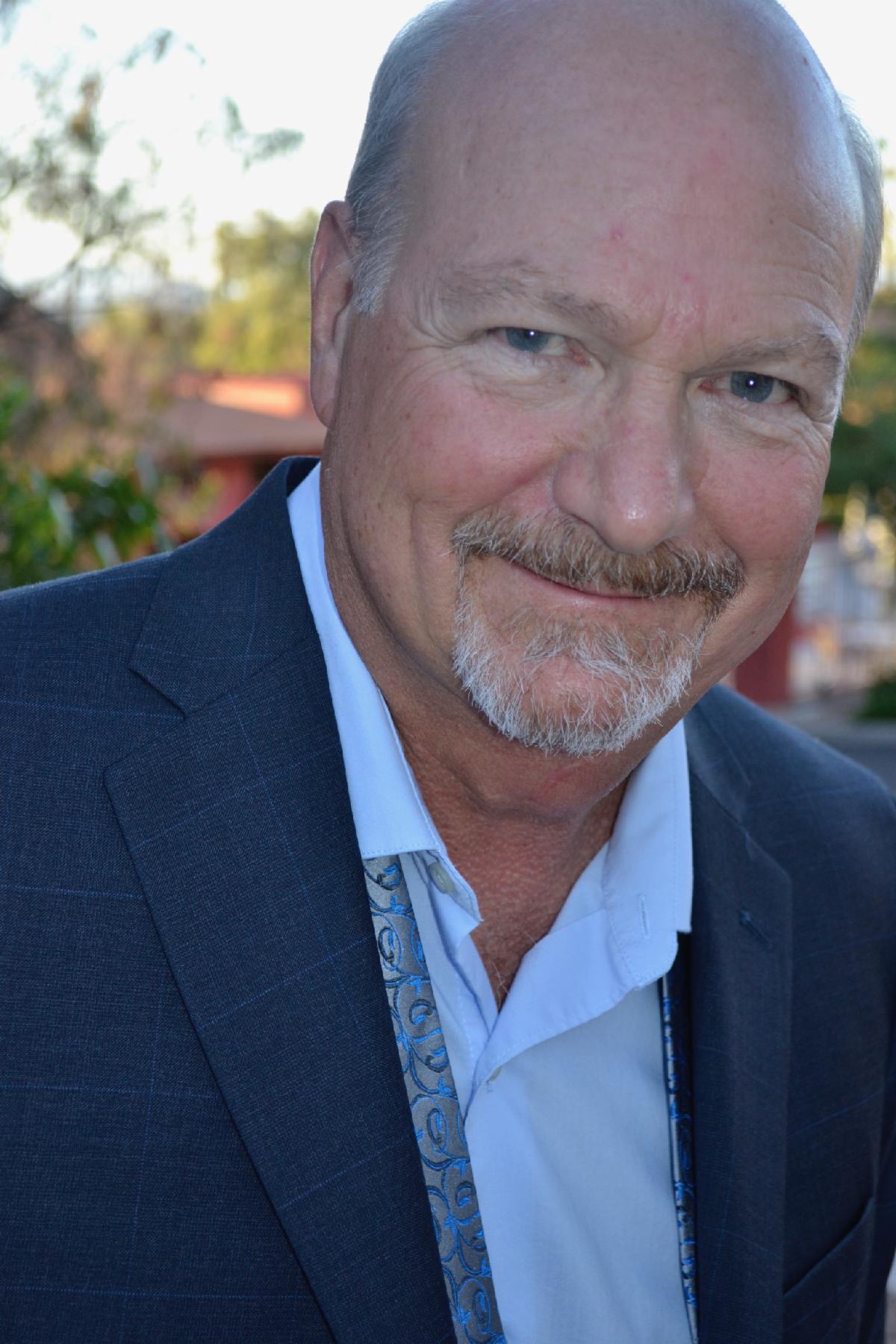
Stephen Colbert’s quip late in the summer when Kamala Harris was rising in the polls, “Well, the latest polls have restored my faith in 49% of the American people,” provoked a chuckle for me and then a groan as I wondered where did we go wrong? By “we” I meant myself and the whole education profession. I wondered how we could have let millions of young people graduate from high schools, colleges, and even graduate and professional schools without the basic ability to discern truth from lies, reality from fiction, sincerity from hypocrisy. Deeper reflection, however, led me to the conclusion that the fault does not lie with us. We have been doing the best we can. | Paul Schwartz received his AB degree from Harvard and his PhD in French literature from Yale. In his 40 year academic career, he held faculty and administrative positions at 5 universities in the US and France. | |
|
I. The Catastrophe, Not Least for Most American Jews
The Catastrophe, which is what I have taken to calling the reelection of Donald Trump, is Ohio Gov. Mike DeWine’s fault. I’ll explain that verdict below. But in this “Newsletter of the American Jewish Experience,” I note first that The Catastrophe is one not least for most American Jews. A Catastrophe for most American Jews because Jews strongly favored Harris over Trump. Her second strongest voting block, after black women (92%), was Jewish women (88%). And an estimated 79% of all Jewish voters cast their votes for Harris.
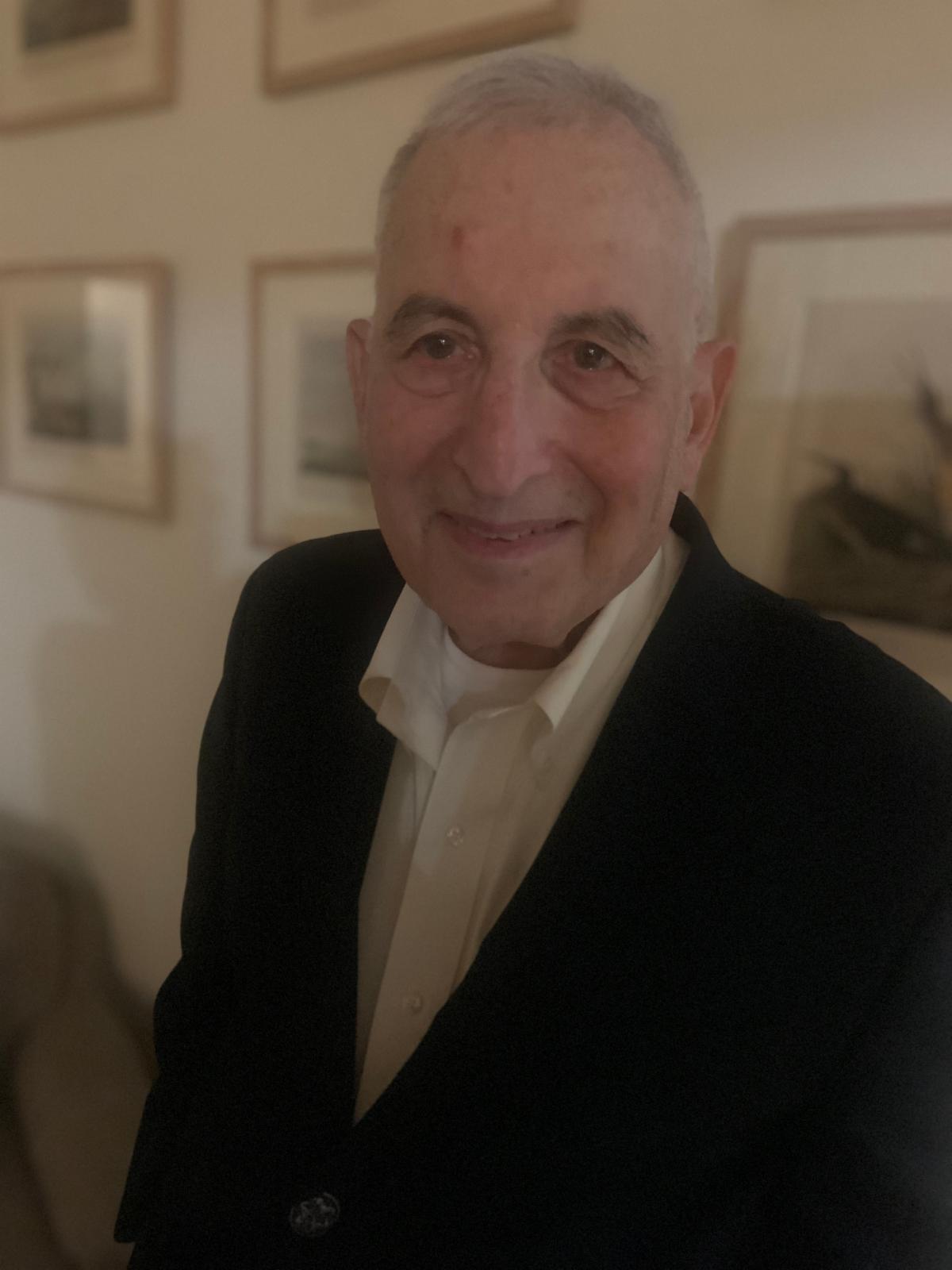
| Robert E. Lehrer, a Yale College and Harvard Law School graduate, is a lawyer in Chicago. When he was actively practicing law, he specialized in plaintiffs’ civil rights litigation. | |
|
NEW BOOK RELEASE:
It Takes Two to Torah,
by Abigail Pogrebin and Rabbi Dov Linzer
| | |
|
|
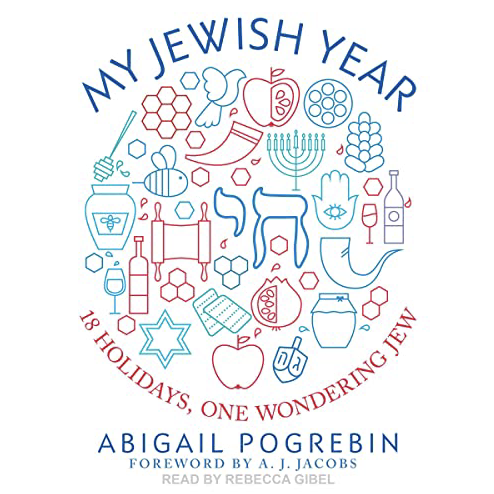
She is a journalist and former president of a leading Reform synagogue in New York, Central, who some years ago published a book on her personal journey through the festival calendar, My Jewish Year. He is president of Yeshivat Chovevei Torah in New York, which lies at the modern end of the Modern Orthodox family.
It Takes Two to Torah is based on their discussions, five to six pages each, on the weekly Torah portion. They met at a Jewish conference called the Conversation 15 years ago - “we started talking and haven’t stopped”, said Pogrebin. From 2018 to 2020 they did a podcast on the parashah for the Tablet magazine, an audio equivalent of chavruta, the time-honoured Jewish method of studying texts with a partner. The book is the print version of the podcast.
| |
ABIGAIL POGREBIN is the author of My Jewish Year: 18 Holidays, One Wondering Jew—a National Jewish Book Award finalist—and Stars of David: Prominent Jews Talk About Being Jewish. She’s written for the Atlantic, the Forward, and Tablet, and moderates conversations for the Streicker Center and the Jewish Broadcasting Service. | |
|
RABBI DOV LINZER is the President and Rosh HaYeshiva (Rabbinic Head) of Yeshivat Chovevei Torah, an Orthodox rabbinical school and Torah center, which promotes a more open and inclusive Orthodoxy. He has written for the Forward, Tablet and the New York Times, published widely, and hosted highly popular Torah podcasts. | |
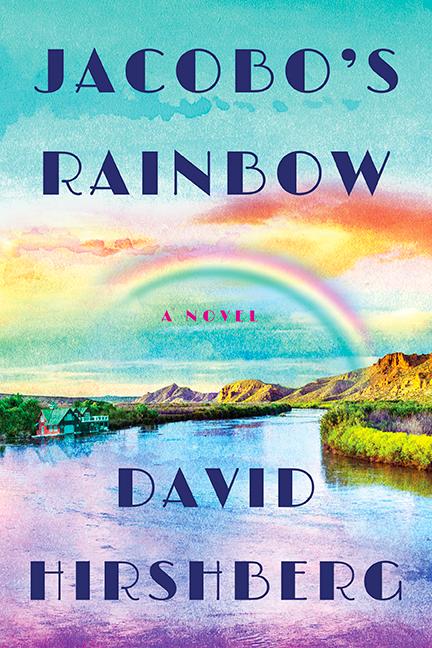
BOOKS FOR HANUKKAH GIFTS: Jacobo's Rainbow by David Hirshberg; My Jewish Year by Abigail Pogrebin; Safekeeping by Jessamyn Hope; Saving Free Speech by Thane Rosenbaum
KINDLE PRICE FOR THESE BOOKS IS JUST $2.99!
| |
|
In Jacobo’s Rainbow, David Hirshberg is making a bid to join the short list of very special novels about the tumultuous sixties—a time of reckoning as the US finally began to confront systemic racism, poverty, its aggressive use of military force, and other societal ills. Today’s headlines betray a country still engaged in that reckoning fifty-plus years later. Matt Sutherland, Editor-in-Chief, Foreword Reviews
A deftly crafted and inherently fascinating read from first page to last, "Jacobo's Rainbow" by David Hirshberg is an impressively scripted historical and literary novel that is set primarily in the nineteen sixties during the convulsive period of the student protest movements and the Vietnam War. Specially and unreservedly recommended for community, college and university library Historical Fiction and Literary Fiction collections. James A. Cox, Editor-in-Chief, Midwest Book Review
| |
|
Pogrebin calls herself a “wondering” Jew, and her exploration is lively, funny and honest. It is a relatable, immersive experience that pays homage to “The Year of Living Biblically,” by A. J. Jacobs, who writes the foreword. She is a holiday pilgrim ... intent on reaching others like her, indeed like so many secular American Jews, who “do not connect their Jewish identity to Judaism. David Gregory, The New York Times
Though it required uncomfortable tasks such as wrestling with an unwieldy shofar for a month and enduring multiple fasts, the calendar proved a tidy framework for discovering the fullness of the religion. “The Jewish schedule heightened the stakes,” Pogrebin writes, “reminding me repeatedly how precarious life is, how impatient our tradition is with complacency, how obligated we are to rescue those with less, how lucky we are to have so much history, so much family, so much food.” Jaclyn Trop, The Jewish Book Council
| |
|
"Safekeeping,'' Jessamyn Hope's luminous, irreverent, and ambitious first novel, shows how a single item — a medieval brooch made by a Jewish artisan for his wife — connects people across time and history. Full of romance, tragedy, betrayal, and the constant reminder that chaos is a driving force in everyone's story, "Safekeeping'' is a wise and memorable debut by a novelist of great talent and originality.
Spanning seven centuries, the novel tackles geography and history — the Holocaust, the Palestinian-Israeli conflict, 9/11, the Black Plague, Nazi Germany, the Jewish ghettos of the Holy Roman Empire, the Chernobyl disaster, postwar New York, and a strange controversy involving orphans and Canadian Roman Catholic nuns — through multiple points of view and with a healthy dose of dark humor. Emily Rapp Black, The Boston Globe
| |
|
In his informative and highly readable book, “Saving Free Speech … from Itself”, Rosenbaum explains how many of our assumptions about freedom of speech and the law are either incorrect as a matter of history or rest on a thin scaffolding of flawed reasoning. At the same time he shows there are many instances where America is shutting down free speech...His book deserves serious consideration in our current political and educational climate." New York Jewish Week
More and more are recovering addicts from the drunken free-speech hedonism of the past,” he writes with his characteristic snap and flair. Many question what free speech really means in a world of social media trolling, cyberbullying, cloak and dagger hacking of America’s presidential election, militant protest rallies by groups that spread hate, incitement to violence, the spreading of fear, and college campuses that are repressing the openness of mind that was once the whole point of a liberal arts education Jewish Journal
| |
JEWS OF DIFFERENT HUES
My Family’s Grinding Stone:
Jewish Cooking in Ahmedabad, Esther David
| |
|
Every Hanukkah, I light my menorah and feast on fried samosas and vegetable patties. I look back at how my large family slowly disintegrated, though we used to live together in an old house in the walled city of Ahmedabad, India.
Over the years, my elderly relatives passed away, and other family members immigrated to Israel, Canada, England, Australia, and the United States. I also left Ahmedabad, many times, but kept returning and became part of the community of the last one hundred and forty Jews in the city. In a sense, we are like one family, meeting often and breaking bread together at the Magen Abraham Synagogue.
| | | |
Esther David received the Sahitya Akademi award in 2010 for her novel Book of Rachel. She is also the author of The Walled City, By the Sabarmati, Book of Esther, My Father’s Zoo, Shalom India Housing Society and The Man with Enormous Wings. Her novels are based on the Jewish ethos in India, studied by scholars, and some of them have been translated into French, Gujarati and Marathi. She is an art critic and columnist for the Ahmedabad edition of the Times of India and has written extensively about the city of her birth. | |
and Tami Schlossberg Pruwer
| |
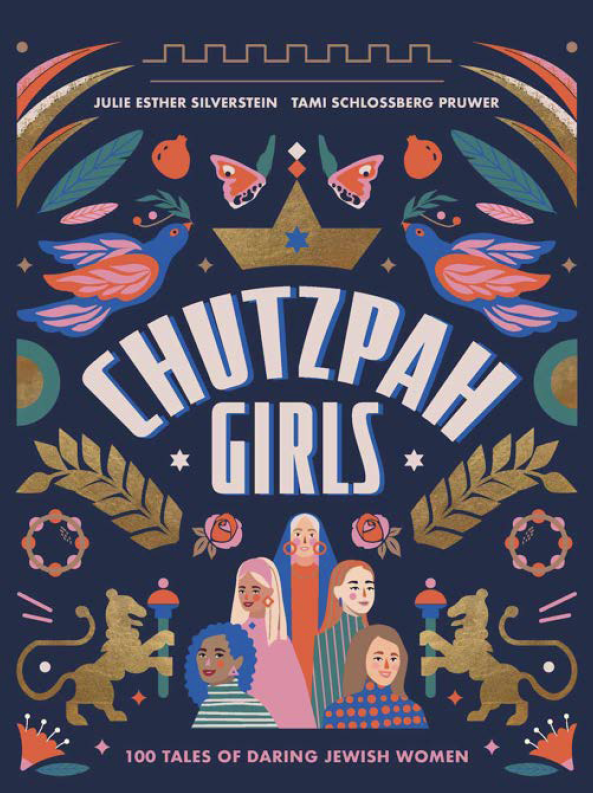
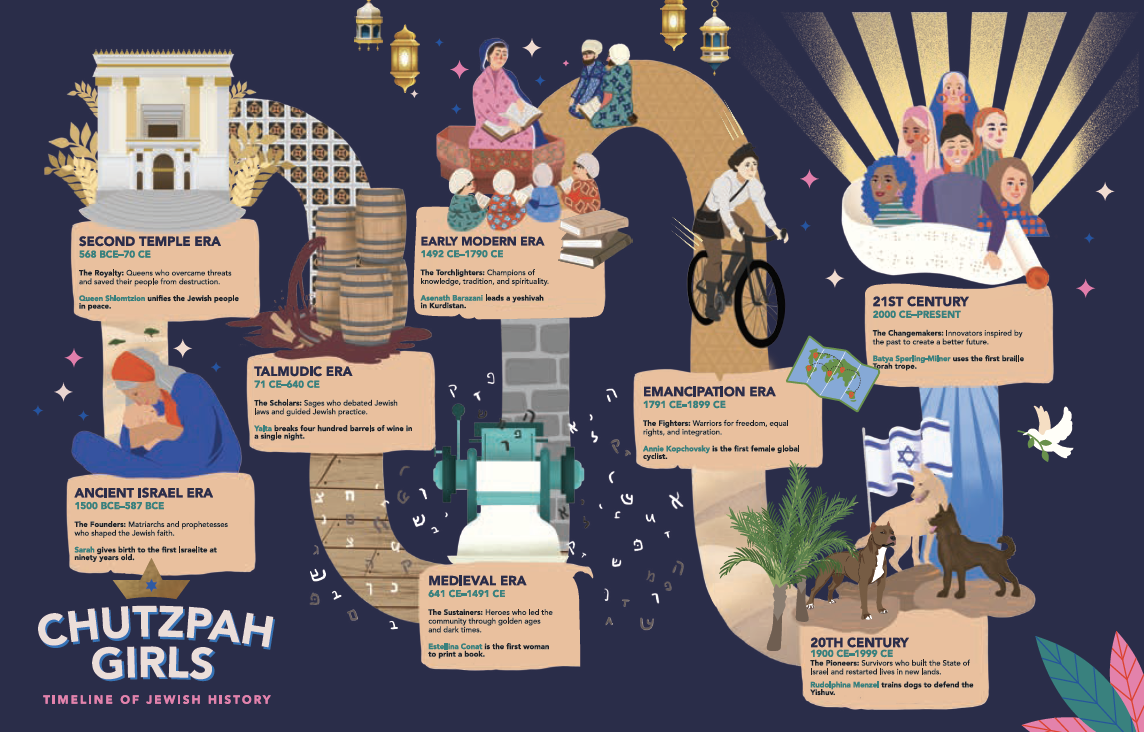
Embark on an extraordinary journey to discover the stories of daring Jewish women, past and present, who triumphed over darkness and went on to create a brighter world. From Abigail to Zivia, Chutzpah Girls come from diverse communities across the globe with powerful stories to awaken your Jewish pride, inspire you to explore your heritage, and, despite the odds, dream bigger than ever before. Includes 100 original portraits by Jewish female artists worldwide. | |
Julie Silverstein is a co-author of Chutzpah Girls: 100 Tales of Daring Jewish Women (Koren). Julie wrote Chutzpah Girls to honor the daring Jewish men and women in her life, like her grandmother, who, as a girl in Germany, bravely confronted the Nazi police to demand the release of her father from unjust detention. She hopes this book will be a key that un-locks the stories of chutzpah in your family. | |
Tami Schlossberg Pruwer is a co-author of Chutzpah Girls: 100 Tales of Daring Jewish Women. Tami comes from and married into lineages of strong Jewish women. She wrote this book in their honor and to inspire her children with the heroines of their heritage. She can't wait to hear who your favorite Chutzpah Girl is! | |
|
“Chutzpah Girls explores the pioneering spirit and ingenuity that drive success. This
book is a powerful reminder of the impact that determined, courageous women can
have on society, and it serves as an inspiration for readers of all ages to embrace their
own inner chutzpah.”
Adi Soffer Teeni, CEO, Meta Israel
“The artistry, innovation, and faithfulness to history encapsulated in this volume are
simply electric. I can’t wait to read it with my children.”
Avital Chizhik-Goldschmidt, Writer and Rebbetzin of the Altneu Shul
“Having been raised by strong women and privileged to work with some of the
strongest, I applaud Chutzpah Girls and will make it my go-to Bat Mitzvah gift for all!”
Ben Pery, CEO, Momentum
“Joy, pride, wonderment, and awe are but a few of the emotions that washed over
me as I read these stories of the heroines of our people, culled from 4,000 years of
Jewish life until today. I can’t wait to read this book with my granddaughters – and
grandsons – as each builds their own sense of Jewish pride and sweep of history.”
Blu Greenberg, Author and Founder of the Jewish Orthodox Feminist Alliance
“Finally, we can see the array of Jewish accomplishment, commitment, and courage
through the prism of the women who are so often unsung! Chutzpah Girls is a joy
and inspiration to read and look at – and it should be on every young person’s
bookshelf, regardless of religion.”
Abigail Pogrebin, Author of My Jewish Year: 18 Holidays, One Wondering Jew and co-author of It Takes Two to Torah
| |
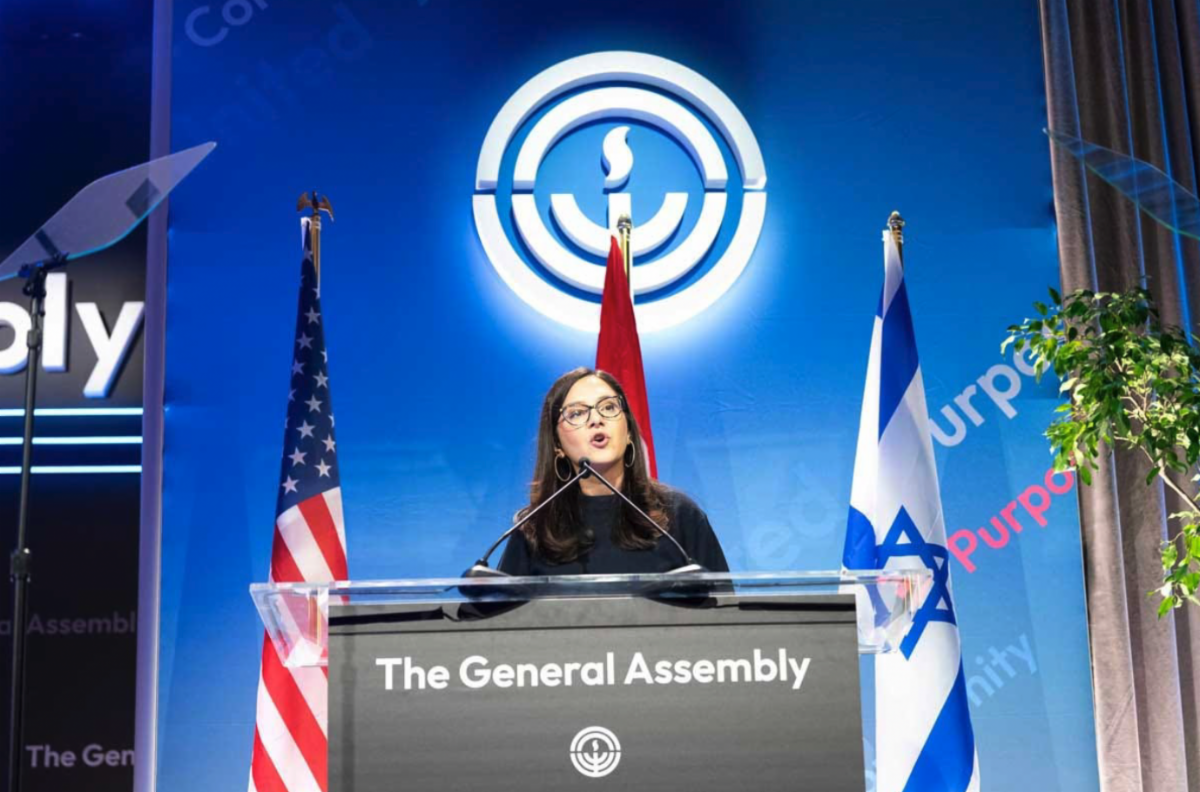
SPEECH: The Old World is not Coming Back, by Bari Weiss | |
|
When did you know?
Looking back, now that we are on the far side, I wonder: When did you realize that things had changed?
When did you know that the things we had taken for granted were suddenly out of our reach? That the norms that felt as certain as gravity had disappeared? That the institutions that had launched our grandparents had turned hostile to our children?
When did you notice that what had once been steady was now shaky ground? Did you look down to see if your own knees were trembling?
When did you realize that we were not immune from history, but living inside of it?
When did you see that our world was actually the world of yesterday—and a new one, one with far fewer certainties, one where everything seems up for grabs, was coming into being?
| | |
|
Bari Weiss is the editor in chief of The Free Press. | |
BLOG: With commentary and Guest Blogs on culture & current events, plus mini-reviews of books not published by Fig Tree Books
CLICK on the BLOG image to READ, REPLY to what we've written, COMPOSE something on your own about the state of literature (Jewish or otherwise), book publishing in general, culture & current events, or a specific book that you want to let others know about. And to SIGN UP, so you don't have to wait to read our blogs once a month when Fig Tree Lit is published.
| | | | |