e-Newsletter | May 23, 2025 | | |
Whole Fields Filled with Peonies
by Bethany Groff Dorau
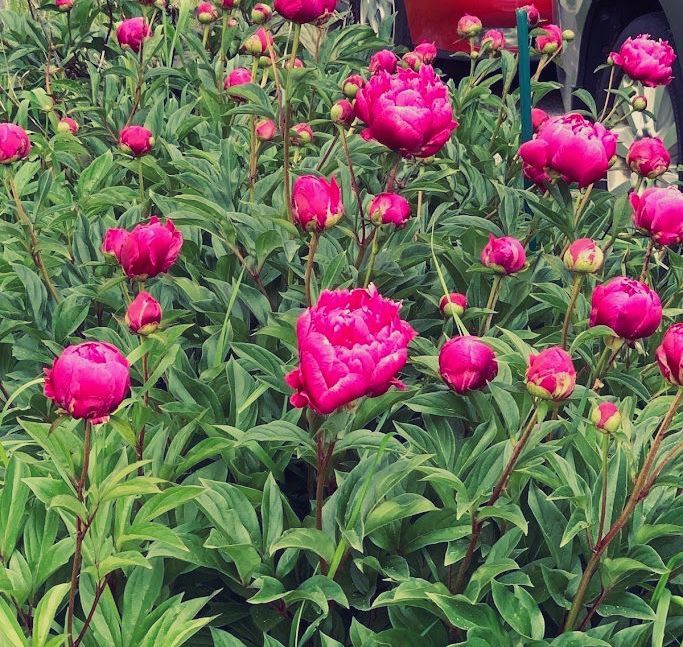
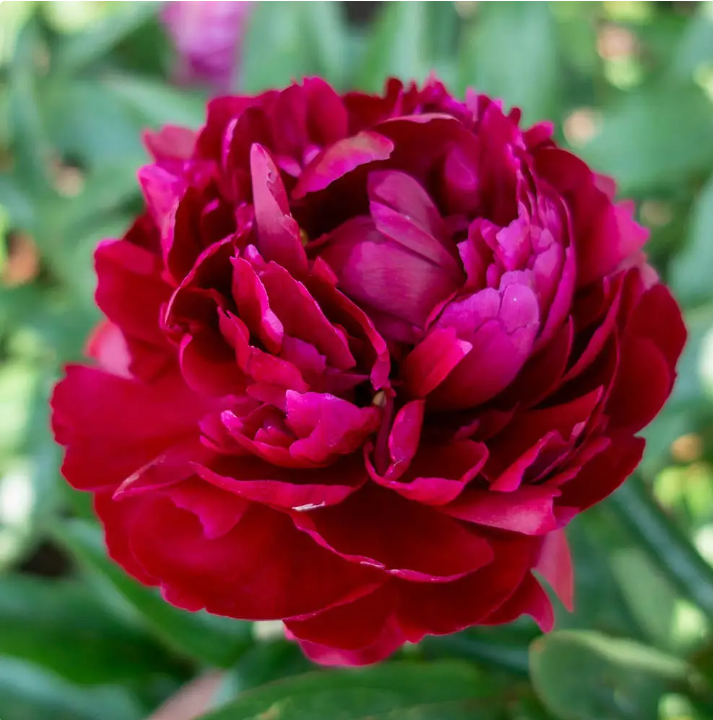
When we bought the Poore Farm from my parents, my children became the seventh generation of my family to occupy the farmhouse, and when we built a small house alongside (and connected to) the old house, we carefully dug up and replanted a half-dozen peonies that were in harm's way, and I moved them to a small flowerbed at the top of the driveway. They had been white and light pink and dark pink, but somehow, after struggling for a couple of years to re-establish themselves, the four peonies that thrived were all dark pink. I thought about augmenting them with others to break up the exuberant but monochrome array, and did a bit of research. And there, on the website for the American Peony Society, is my peony, the Cherry Hill, attributed to "Thurlow" in 1915. "One of the earliest and a very good color," notes a reference guide from 1928.
I expected triumph - the thrill of discovery, but instead, there was an unexpected wave of sadness. In my family, Cherry Hill Nurseries and the Thurlows who owned the sprawling enterprise are forever entwined with heartbreak...
Read more below event announcements!
| | |
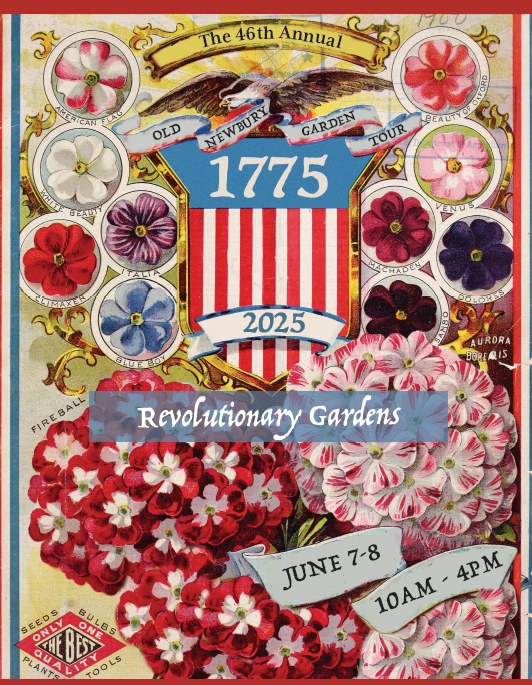
Get your tickets today for Revolutionary Fun at the Museum of Old Newbury's 46th Annual Old Newbury Garden Tour!
Sponsored, in part, by the Massachusetts Office of Travel and Tourism
| | More Upcoming Museum Events | |
RESCHEDULED to THIS THURSDAY!
Newburyport's Road to Revolution, Part V - Powder and Shot
Curious about what Newbury(port) soldiers carried into battle?
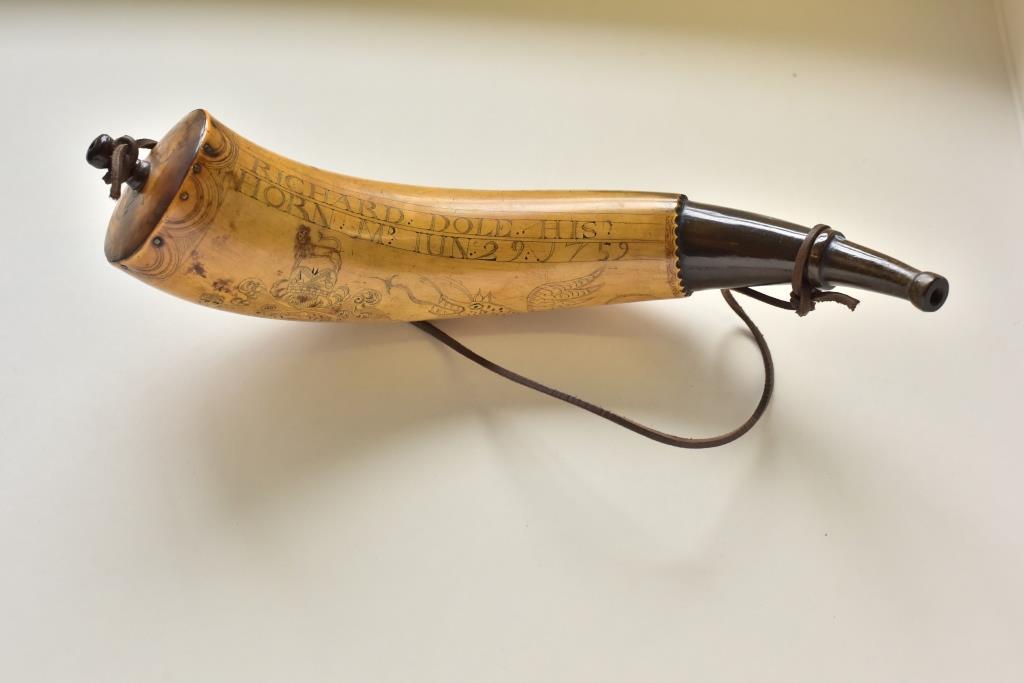
Join Joel Bohy, Revolutionary War weapons expert, for an exploration of the muskets, swords, and accouterments carried during the earliest days of the American Revolution, featuring notable items from the Museum of Old Newbury collection. Session concludes with a musket drill outside.
Joel Bohy is the director of Historic Arms & Militaria at Blackstone Valley Auctions and a frequent appraiser of Arms & Militaria on the PBS series Antiques Roadshow, an active member of the American Society of Arms Collectors, the Company of Military Historians, The Colonial Society of Massachusetts, an instructor for Advanced Metal Detecting for the Archeologist, and an advisory board member of American Veterans Archaeological Recovery.
Funded, in part, by the Massachusetts Office of Travel & Tourism
| | We know it is frustrating when events sell out quickly, so we are staggering registration dates to give everyone a chance. Please click the image or link below to check out all of our upcoming events! | | Funded, in part, by the Massachusetts Office of Travel and Tourism | |
| | |
Thursday, June 5
10:00 a.m.
Architectural Walking Tours: Newburyport’s Fashionable Old Houses
Join us for a walking tour of Newburyport’s architectural styles from the 18th and 19th centuries as found along High Street and the neighborhood near the Museum of Old Newbury.
Tickets Here
| | | |
| |
Saturday & Sunday,
June 7 & 8, 2025
10:00 a.m. - 4:00 p.m.
46th Old Newbury Garden Tour
Enjoy two days of exclusive access to stunning gardens in greater Newburyport.
Tickets here
| | | | |
Save the Date for these Upcoming 250th Events! Click here for more information.
Walking Tour: Road to Revolution in downtown Newburyport
Saturday, June 14, 10:00 a.m.
at Museum of Old Newbury - Tickets here
Newburyport’s Road to Revolution Part VI:
Bunker Hill - Heroes & Cowards
Thursday, June 18, 7:00 p.m.
at Firehouse Center for the Arts - Tickets here
Burying Ground Tour 3: Sawyer Hill and Newburyport's Road to Revolution
Sunday, June 29, 6:30 p.m.
at Sawyer Hill Burying Ground - Tickets here
| | |
Whole Fields Filled with Peonies...
by Bethany Groff Dorau
| | |
A note about this story: My family name was spelled Poor and Poore interchangeably until the 20th century, when it was standardized as Poore, which I use here.
I have been thinking quite a lot about flowers recently. The 46th Annual Old Newbury Garden Tour is well nigh upon us, and I have been gleefully sorting through dozens of pictures of blossoms on several recent gloomy days. At my own house, the flowers I most enjoy are heirlooms of family members long passed, most notably my great-grandmother Mary Dyer Noyes Poore, who died in 1934. Mary's lilacs barely bloomed this year, though in the past they have been such a riot of color and scent as to overtake the senses completely on a warm spring day. The plate-size poppies she planted after World War I will bloom in the next few weeks.
When we bought the Poore Farm from my parents, my children became the seventh generation of my family to occupy the farmhouse, and when we built a small house alongside (and connected to) the old house, we carefully dug up and replanted a half-dozen peonies that were in harm's way. I moved them to a small flowerbed at the top of the driveway. They had been white and light pink and dark pink, but somehow, after struggling for a couple of years to re-establish themselves, the four peonies that thrived were all very dark pink - almost maroon. I thought about augmenting them with others to break up the exuberant but monochrome array, and did a bit of research. And there, on the website for the American Peony Society, is my peony, the Cherry Hill, attributed to "Thurlow" in 1915. "One of the earliest and a very good color," notes a reference guide from 1928.
What came next was an unexpected wave of sadness. In my family, Cherry Hill Nurseries and the Thurlows who owned the sprawling enterprise are forever entwined with heartbreak.
| | |
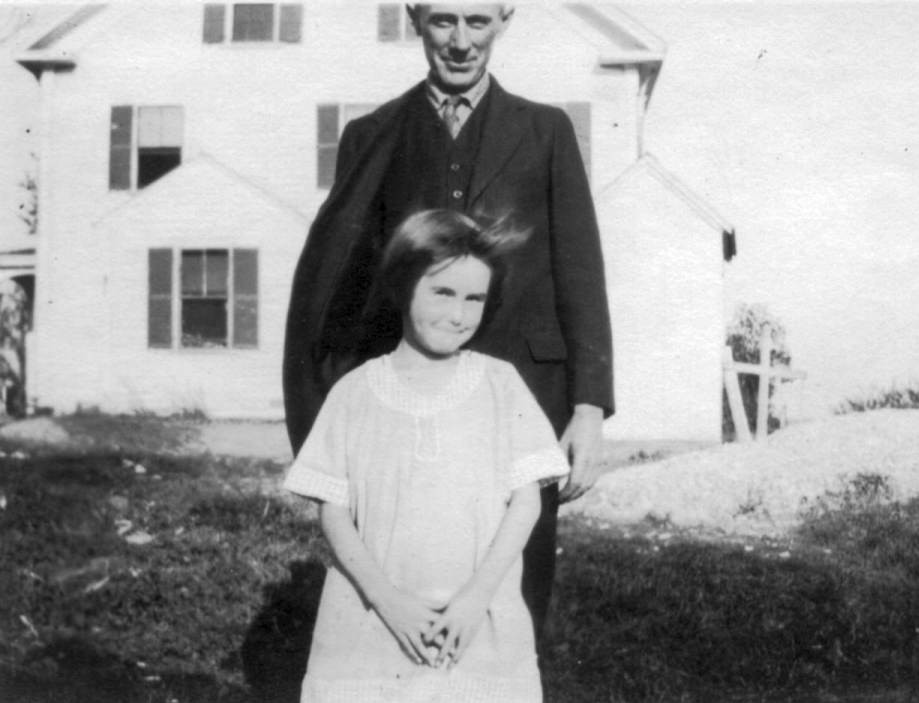
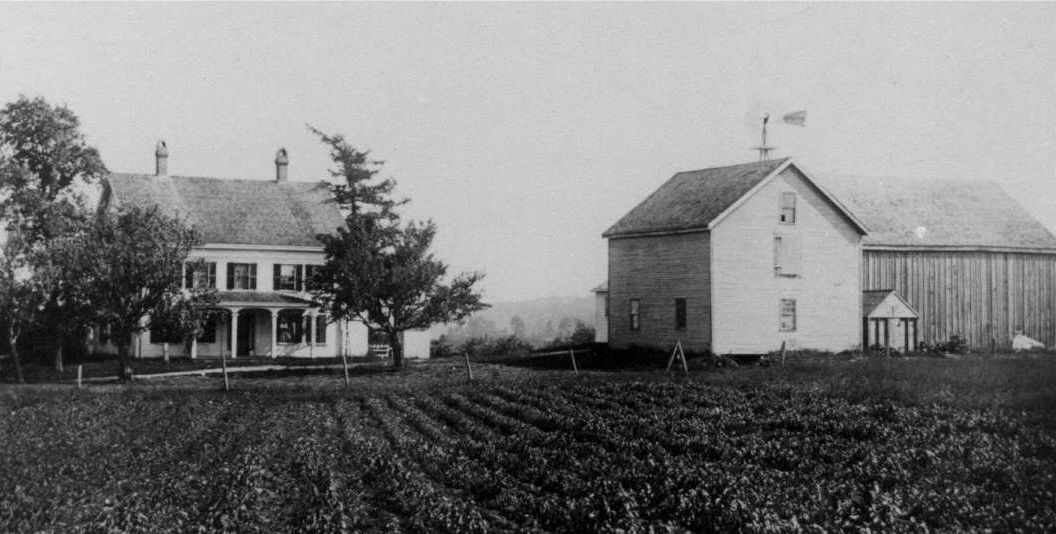
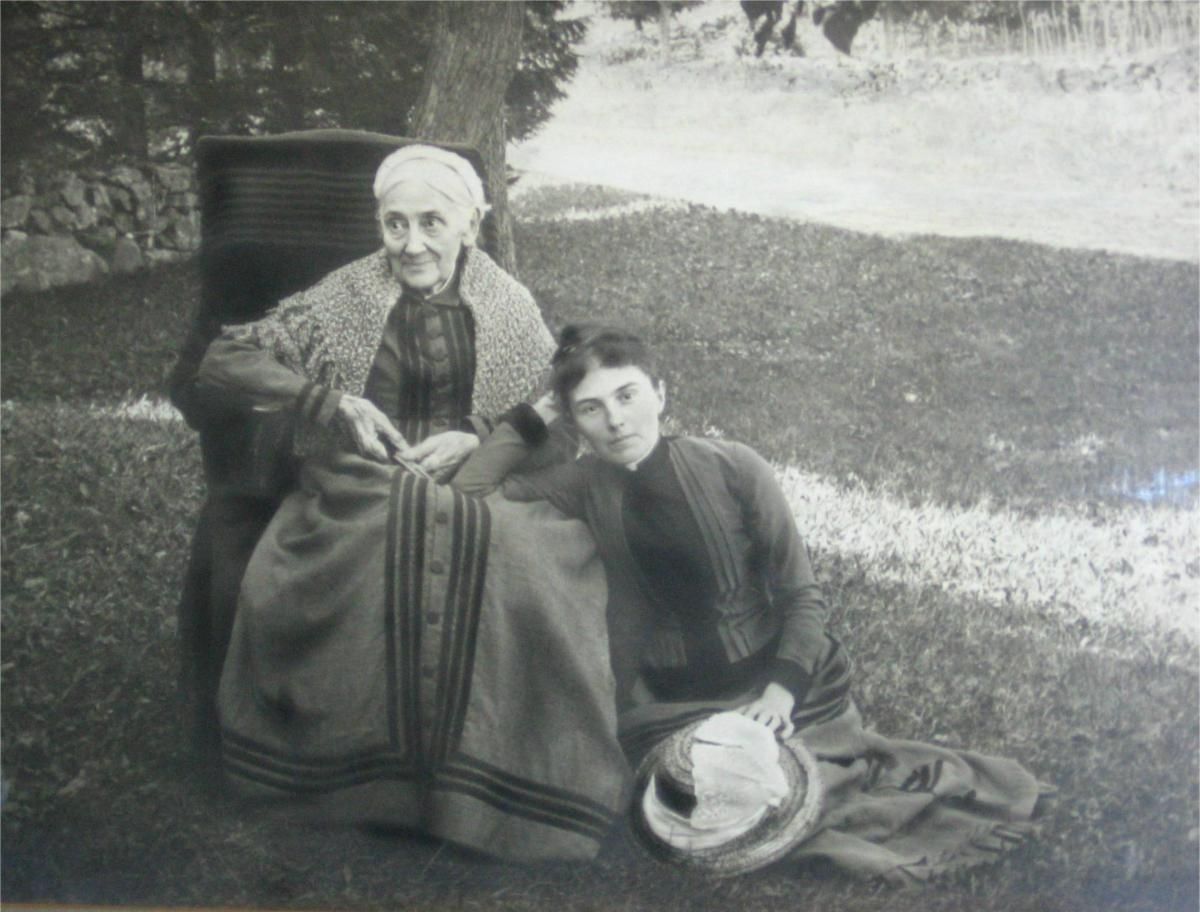
Top: Philip Poore and his daughter Emily, c. 1930.
Bottom: The Poore Farm house and barn, c.1900
Like many family tragedies, this story is hard to tell from beginning to end. One person's actions seem inexplicable without reference to their own past. I follow the story from my mother to my grandmother, to her sister, to their father. Before I can steady myself, I am three generations ago, watching as my great-grandfather throws down his bucket of water and covers his ears to block out the screams of his horses.
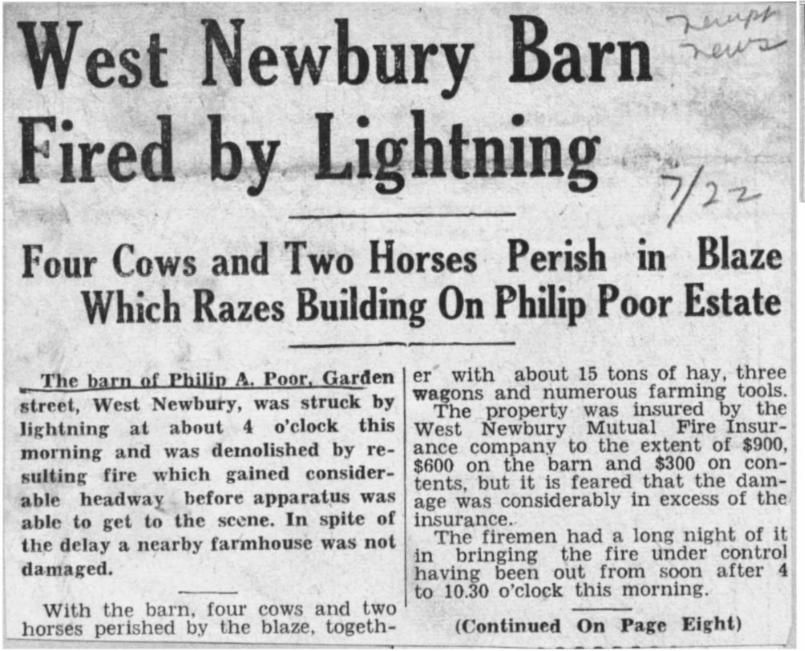
It is a muggy, stormy July night in 1943. Philip Poore's sons are away at war, and his older daughters are married and living away. Only his youngest daughter, Emily, is home, asleep in her iron bed on the second floor when, in the ink dark of her room, she hears something like a steam engine, different than the thunder that has shaken the farmhouse that night. Her father shouts and she leaps from her bed and runs downstairs to find the kitchen aglow, flickering and otherworldly, its windows reflecting the inferno outside. She runs to the phone, but the line to the house is down. She runs next door to her uncle's house, but his phone is dead. She runs down the road, screaming and waving when she sees headlights. The driver speeds away to call for help.
When Emily finds her father, he is crouched behind the house, holding his hands over his ears, the strongbox with the deed to his burning farm held in the crook of his body.
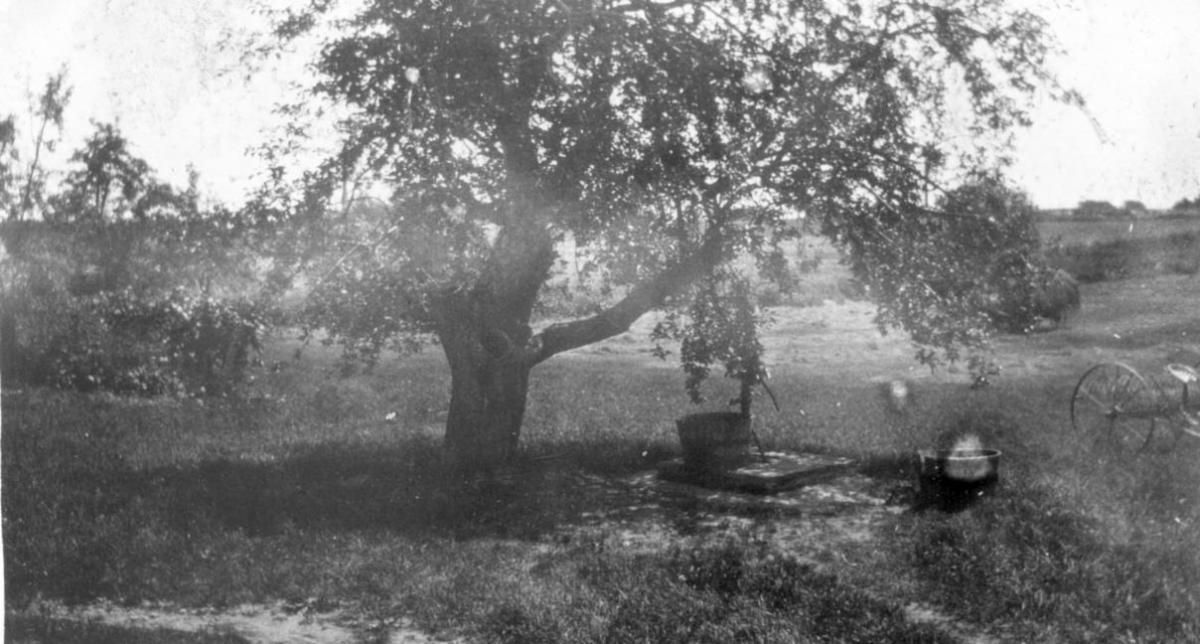
| | There is no running water at the Poore Farm in 1943, just a well with a handpump and bucket, and a windmill that fills the trough for the cows. Emily pulls her father to his feet, and as as they wait for help for what seems like an eternity, they turn from the barn and try desperately to save the house. | | |
The old well pump at the Poore Farm was down the hill from the house. Early 20th century photo. Family collection.
At dawn, Emily's nightgown is soaked and streaked with soot. Her father has relinquished the scene to the skeleton crew of firemen, volunteers too old or young to fight overseas. The barn is still blazing, and they have grimly directed their hoses onto the house. By mid-morning, only the smoldering stone foundation of the barn remains. All the animals, the fifteen tons of hay that would have sold, with plenty to see them through the winter, the plows and rakes and harrows, everything is gone.
The insurance is eaten up by taxes. Philip contracts pneumonia and doctor bills take the rest. He is sixty-two years old. There is no starting over for this man who has only ever lived and worked on this farm.
Emily takes a job as a book-keeper at a trucking company, but her wages are not enough to support them. Philip will not sell or rent his farm. His children try to reason with him, whisper between themselves that he had been unmoored since the death of his wife Mary a decade before, but the fire finished him. But he will not discuss it. The land is the only part of himself that he did not lose in the fire. Instead, he does an unthinkable thing. He asks the Thurlow brothers for a job.
| | |
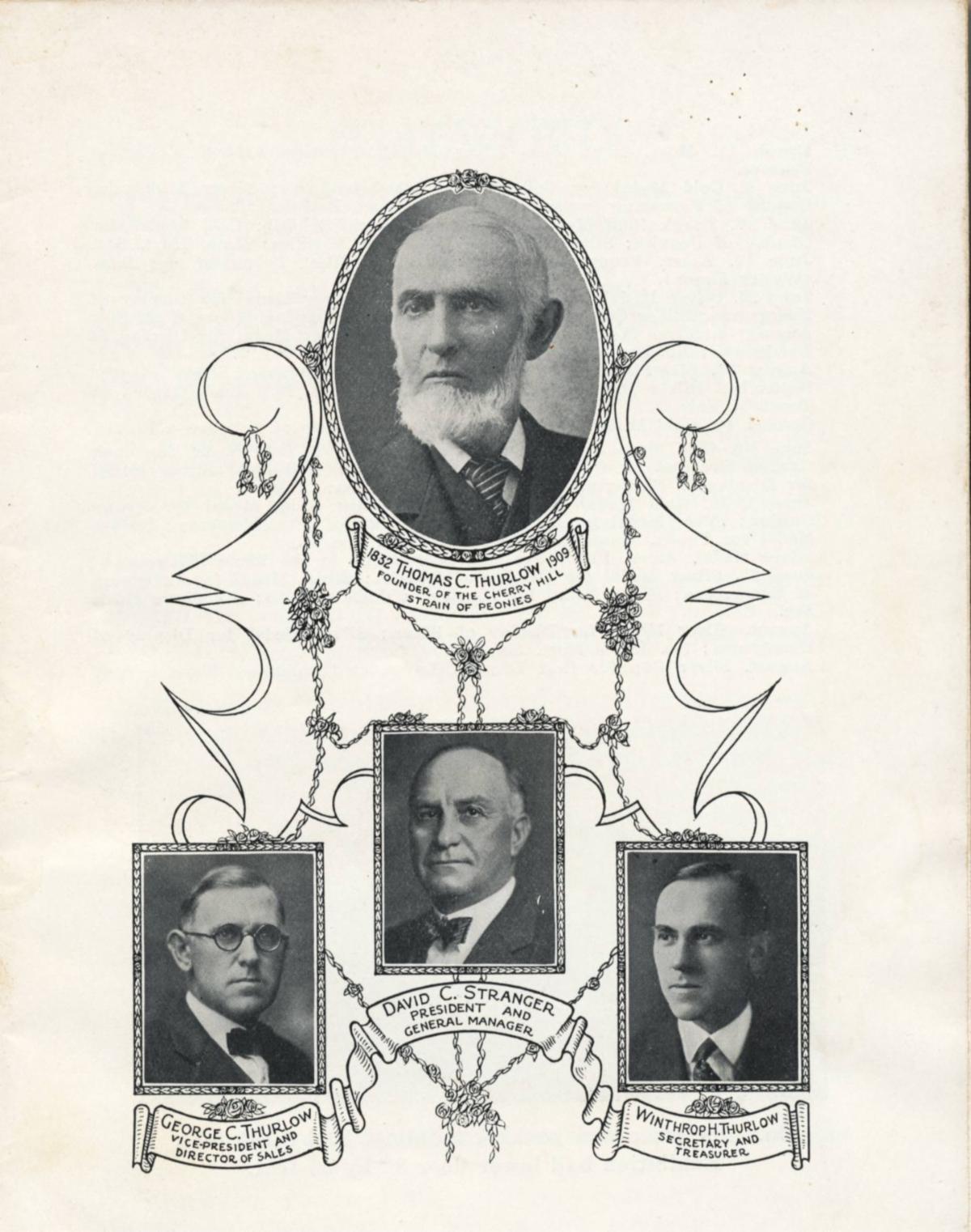
Leadership of Cherry Hill Nurseries in 1909, the year George's son, Thomas C. Thurlow died.
Over a century before, in 1832, 27-year old farmer George Thurlow and his wife Susan Chase Thurlow welcomed their first son, Thomas. That same year, George, who had always had a knack for growing things, started planting seeds from hardy local apple trees. More seeds germinated than he had expected, and the resulting saplings thrived. Faced with a surplus, George began selling the saplings to neighbors, and when apple tree sales took off, he began growing and selling cherry, plum, pear, and peach trees.
Meanwhile, a mile away, Philip Poore's father, Moses, a decade younger than George Thurlow, was steadily growing the farm he had suddenly inherited when his father, Ebenezer died in 1837. Moses, the oldest of five, became the primary breadwinner at age 15. Luckily for his family, and for all the subsequent generations of my family, he was a determined, hard-working, ambitious young man. He added marshland to his holdings and used the salt hay to feed his dairy herd, and he doubled the size of his farm, including the addition of pear, apple, and cherry orchards.
In 1856, George Thurlow brought his son Thomas, born the same year as his thriving nursery, into the business. The Thurlow nursery now included ornamental trees and berry bushes. They still grew more potatoes than trees, however, and kept a dairy herd.
The same year, Moses Poore doubled the size of his father's farmhouse, adding a pillared porch and fashionable Greek Revival details. He had put off marrying until the relatively advanced age of 34 to focus on caring for his siblings and growing his farm, but now, he turned his attention to romantic affairs.
| | |
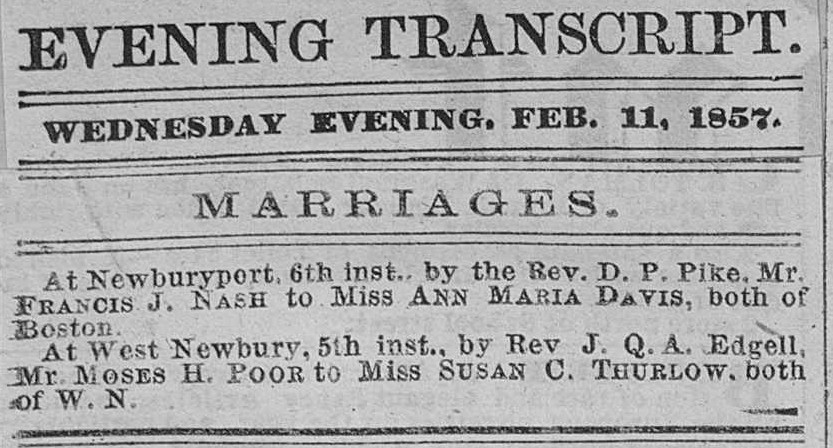
On February 5, 1857, after a short courtship, Moses married George Thurlow's 20-year-old daughter, Susan. Despite the age difference, it was, by all accounts, a solid match. The Thurlows were distant cousins - Moses Poore's grandmother was Martha Thurlow. Susan was pretty and practical and familiar with life on a farm. Her new husband would benefit from the success of the Thurlow's nursery and farm, which was far more successful than the Poore Farm - worth almost twice as much on the 1850 census - but Moses' farm was still one of the more valuable in the town, with 114 acres of good farmland.
Just shy of a year later, on January 4, 1858, after a hard, prolonged labor, Susan Thurlow Poore gave birth to a healthy baby girl that they named Alice. Though the baby thrived, Susan, weakened by the birth, contracted tuberculosis and after a long decline, died on December 5, just 22 years old.
In the wake of Susan's death, a grief-stricken Moses made a fateful decision. He gave Alice to Susan's parents, nurseryman George Thurlow and his wife, also named Susan, to raise. Moses turned his attention back to his farm, and as the years went by, he saw less and less of his daughter.
| | |
Alice Poore with her grandmother, Susan Chase Thurlow, who raised her after the death of her mother.
Seven years later he met and married another Susan - this one Susan Huntington, the daughter of successful shopkeepers in Haverhill. Moses was 42. Moses and Susan Huntington had five children together, but his oldest child, Alice, would never return to her father's house. Moses was 58, his wife 41 when his last child, Philip, was born on July 5, 1881. Susan Huntington Poore never left her bed after Philip's birth, dying of "puerperal fever" eleven days later.
| | |
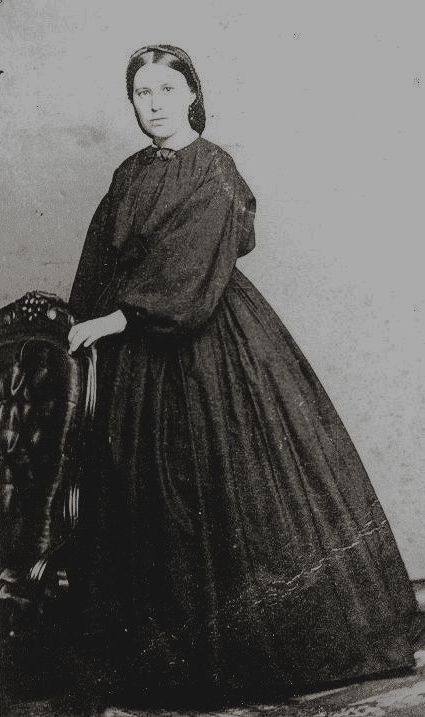
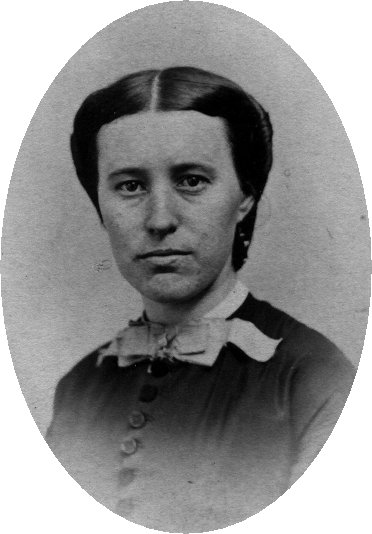
Left: Susan Huntington Poore just after her marriage in 1865
Right: Susan several years before her death in 1881.
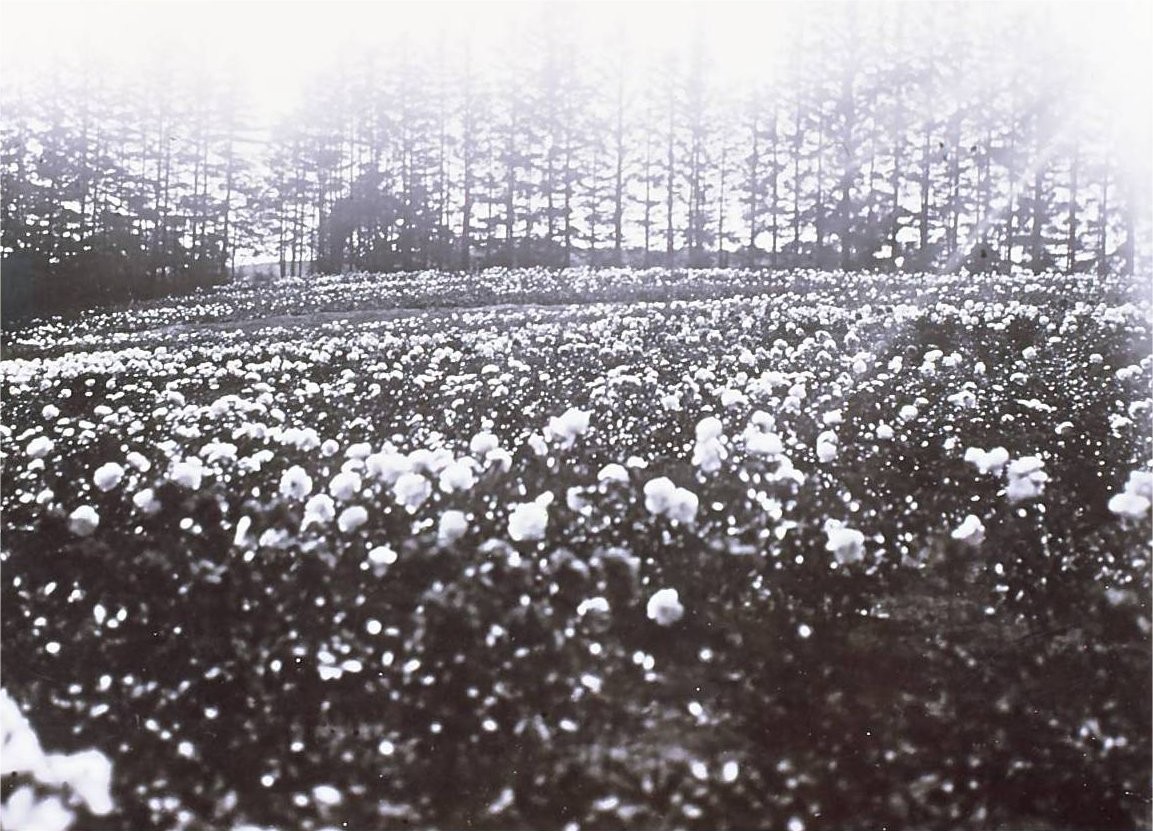
In 1881, just as Philip was entering the scene, his half-sister Alice Poore turned 23, and her uncle Thomas C. Thurlow discovered peonies, which were just about to become one of the most popular flowers in America. Thomas C. Thurlow began collecting peony specimens from around New England, sometimes buying exclusive rights to the entire collection of other farmers. Thomas understood the value of spectacle, and planted "whole fields of peonies", inviting the public to visit when the flowers bloomed. They were, of course, also encouraged to buy tubers to bring home.
The number of black and white photographs of Thurlow peony fields in my family albums is a poor substitute for the lush, colorful blooms that filled West Newbury in early June beginning in the 1880's.
| | |
Alice Poore died of tuberculosis, just as her mother had, when she was 44 and her half-brother Philip was 20 years old. She left a will, in which sums and gifts are left to all the extended Thurlow family. Not one of her Poore siblings or other relatives are mentioned. She had married the Canadian-born manager of the her uncle's sprawling nursery, now known as Cherry Hill, and they had one daughter, Dorcas.
As sometimes happens, whatever grief and bitterness may have lingered between the Thurlows and the Poores was laid aside by Alice's daughter, Dorcas, who sought out the company of her Uncle Philip, and became a regular visitor to the Poore Farm.
After the death of Thomas C. Thurlow in 1909, his sons, Winthrop Hale Thurlow and George C. Thurlow incorporated the business as T. C. Thurlow’s Sons, Inc. The business passed to George's son, G. Harold Thurlow, who went into business with long-time employee David Stranger.
And so, after he lost his barn and his livelihood, it was to the firm of Thurlow and Stranger, owners of Cherry Hill Nurseries, that Philip Poore, 62 years old, weathered and thin, his face pinched by sickness and grief, applied for work. And despite, and also because of, what had passed between their families, Alice Poore's nephew gave Philip a job, and when he confessed that he did not know how to drive, even though the nursery worked mostly with tractors and trucks, they gave him a team of horses. One co-worker remembered Philip, who they called Old Phil, frightening them all by plowing peony fields with the reins wrapped around his neck so he could keep his hands free to work the levers. He had his ways.
Cherry Hill Nurseries closed down their peony fields, the oldest, and at one time the most famous flower fields in the country, in 1968 to focus on tree and shrub sales. The birth and death of the Cherry Hill peony operation roughly tracks Philips's long life. The first tubers were planted the year before he was born, and he died three years after the last plants were sold, on May 30, 1973, age 91, less than a year before I was born.
There has not been sufficient sun or warmth yet this year to convince my Cherry Hill peonies to bloom. They are still shut up tight, biding their time. And when I drive home one of these nights and they have burst open, their lush blooms heavy on the stalk, I will think of how they survived upheaval, fire, and war, as did my family, as did this farm, blooming once again at the end of Poore's Lane.
| | Something Is Always Cooking... | | |
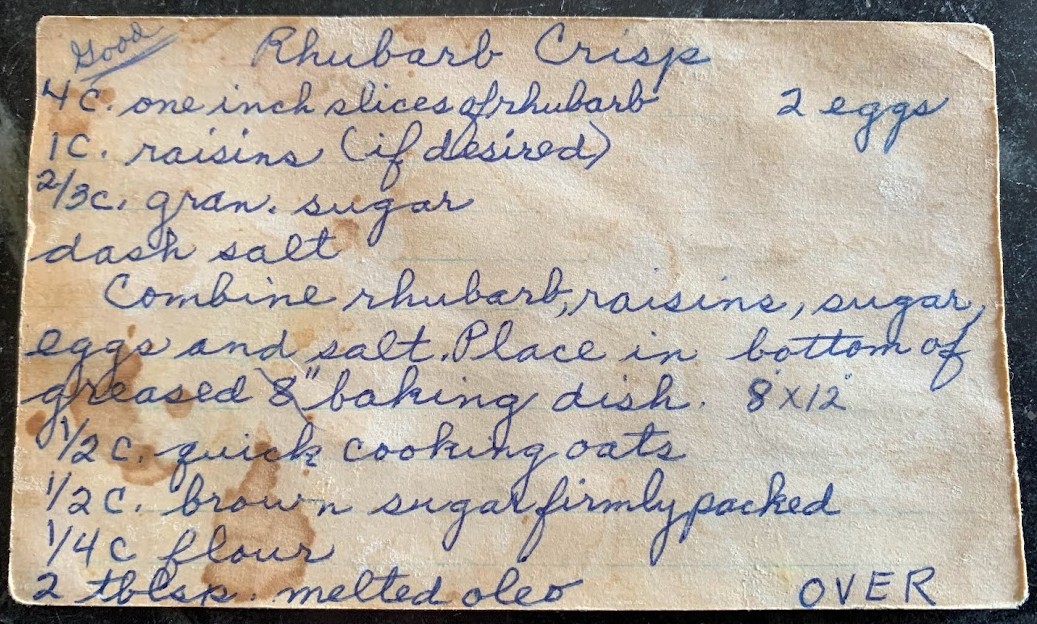
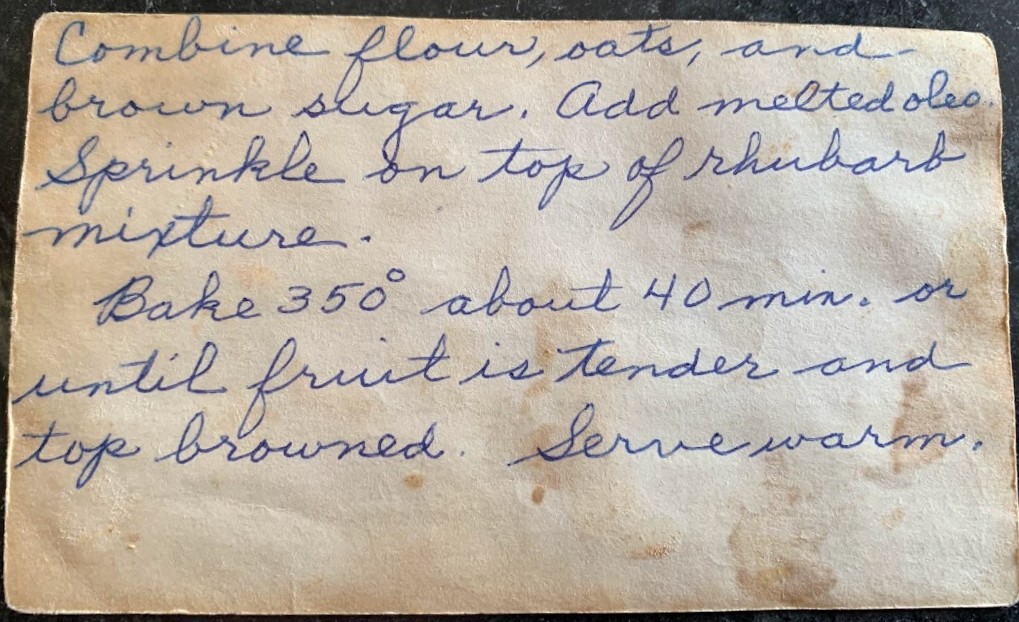
Aunt Emily's Rhubarb Crisp
In honor of my great-aunt Emily Noyes Poore, and the rhubarb plants that also survived the 1943 fire, this is a favorite from her recipe box.
Enjoy!
| | |
Click the image to do the puzzle
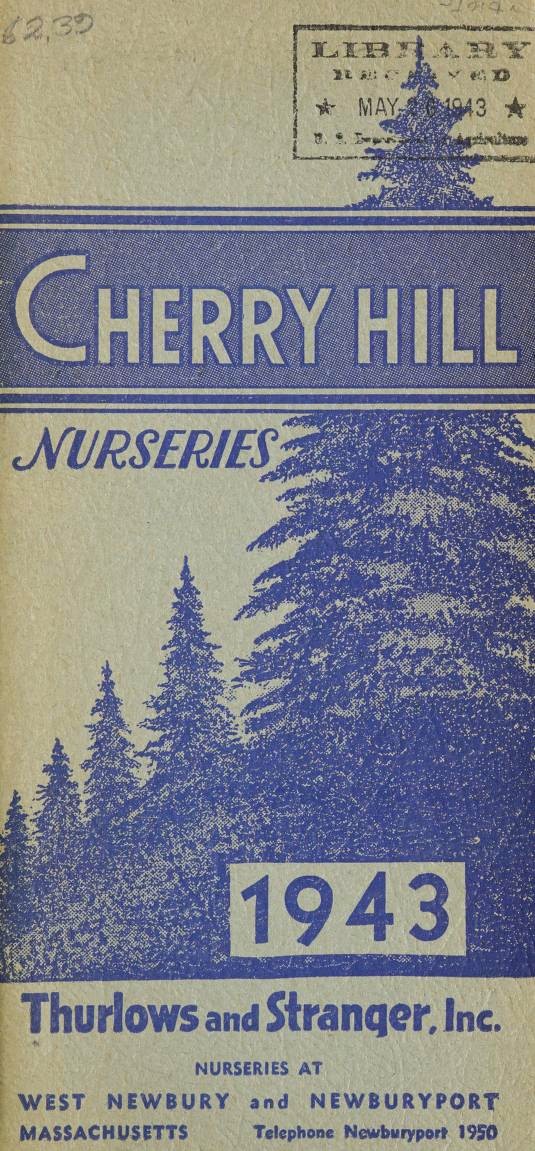
1943 catalogue for Cherry Hill Nurseries.
| | |
Museum e-Newsletter made possible through the
generosity of our sponsors:
| | | | | |