Elmo Peeler Note-for-Note Piano Transcriptions |
|
|
Greetings!
Today is the first day of December - and time again for my monthly newsletter, to keep you informed of recent transcriptions and other news of the last month.
|
|
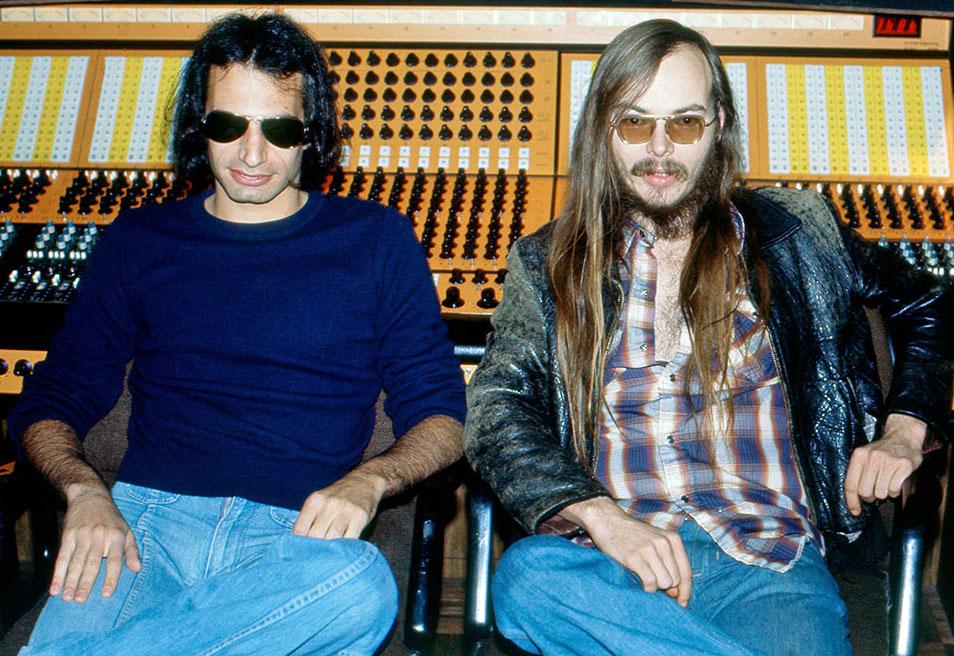
Donald Fagen & Walter Becker -Steely Dan in the studio |
|
This month I've transcribed the extraordinary piano part for Steely Dan's' "Your Gold Teeth II" from their Katy Lied album. Check it out on YouTube here.
Plus, a brand-new 8-part exercise to increase the strength and independence of the 4th finger.
BTW, to make sure that my email doesn't end up in your Spam folder, please add me to your Contact list and/or mark my email as "Not Spam".
Note that every Title Heading is clickable.
|
|
ALL of the Sheet Music listed on my website has been personally transcribed by me, and guaranteed to be note-for-note perfect.
Whether you:
- have a cover band and want to get your keyboard parts exactly correct,
- are a professional who wants to study the styles of rock's greatest keyboard players, or
- are a hobbyist that wants to learn how to play pop/rock and great piano music,
...these note-for-note transcriptions will prove extremely helpful.
|
|
In the News! - "Steely Dan's Your Gold Teeth II" & Jerry Lee Lewis' "Great Balls of Fire"
|
|
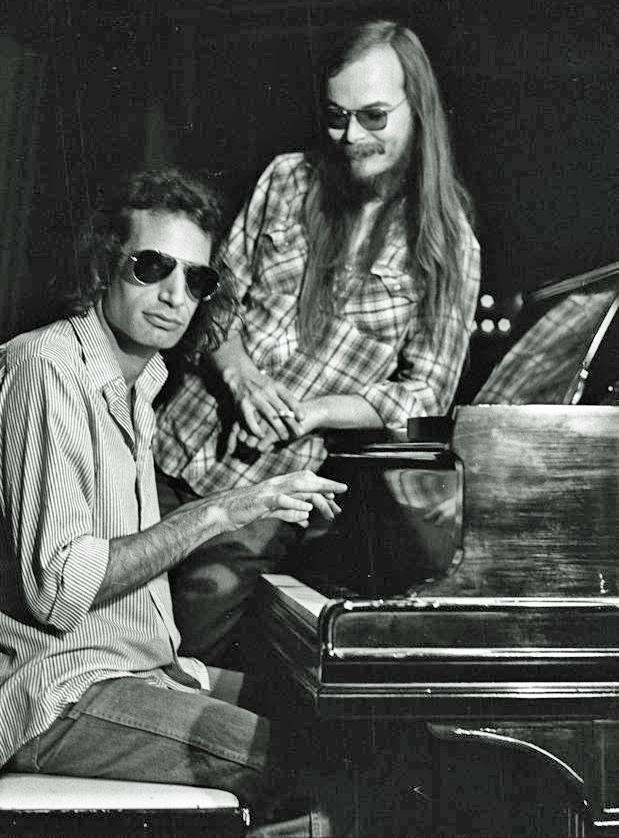
Steely Dan was formed by two musicians, Donald Fagen (keyboards, lead vocals) and Walter Becker (guitars, bass, backing vocals) in 1972, after meeting in college in 1967, playing together locally in various small ensembles (the Don Fagen Jazz Trio, etc.).
After graduating in 1969 they moved to Brooklyn and peddled their tunes in the Brill Building, but met with little success.
They joined the touring band of Jay and the Americans for about a year and a half, at first paid $100 per show, but partway through their tenure the band's tour manager cut their salaries in half. The group's lead singer, Jay Black, dubbed Becker and Fagen "the Manson and Starkweather of rock 'n' roll", referring to cult leader Charles Manson and spree killer Charles Starkweather.
They then moved to Los Angles, were signed by ABC Records, and in 1972 released their first single, "Dallas", which sold very poorly.
|
|
Donald Fagen & Walter Becker |
|
However, that same year their first album, Can't Buy a Thrill, was released, and contained two hits, "Do It Again" and "Reelin' In the Years" reaching No. 6 and No. 11 respectively on the Billboard singles chart. Their third album, Pretzel Logic, released in early 1974, included the group's most successful single, "Rikki Don't Lose That Number" (No. 4 on the charts).
Around this time a rift began growing between Becker-Fagen and Steely Dan's other members, who wanted to tour. Becker and Fagen disliked constant touring and wanted to concentrate solely on writing and recording. The other members gradually left the band, replaced by first-call studio musicians, including Michael Omartian on keyboards.
|
|
 |
|
|
|
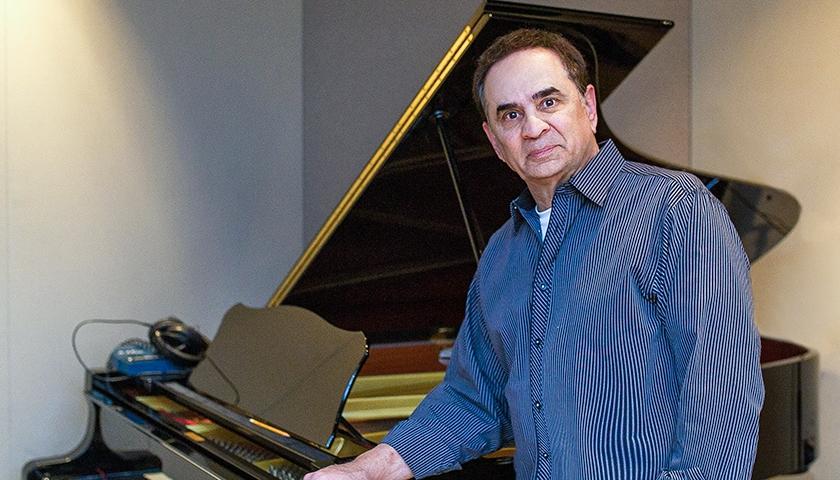
Born in 1945 in Evanston, IL with perfect pitch, when Michael was just three years old he would walk around the house banging on furniture and humming tunes.
Omartian’s father loved the accordion, so that was the instrument on which little Michael learned his first notes at the age of four.
He began playing piano around that same time and drums a year later.
|
|
|
|
His aunt Rose had an upright piano at her house, so he would sit at her piano playing old tunes for hours on end, until his parents agreed to enroll him in music lessons. As an adolescent he studied percussion, composition and theory, and was composing and arranging original songs by age 16.
He soon found himself writing scores for full orchestra in spare time. Winning a prize as the “Illinois Percussionist of the Year” led Michael to play in the Chicago Symphony orchestra summer program. His early influences — mainly jazz — included Oscar Peterson, Art Tatum, Count Basie, Dizzy Gillespie and Buddy Rich, followed by the British Invasion of the 1960s.
While playing in several club bands around Chicago, Omartian fell in love with the Beatles.
"The Beatles had become a huge influence in my life," says Omartian, "and that opened the world of pop music to me. I noticed that all of these albums, which I studied in minute detail, were recorded in Los Angeles, New York, Nashville and different parts of England. Since very little commercial recording was done in Chicago, I boarded a plane for L.A. as a 20-year-old, with $3,000 in savings (the equivalent of ~$25,000 in 2020), no prospects of any kind and just the idealistic enthusiasm of youth."
"I just made myself available from the very beginning," Omartian recalls, "and was taught by veteran musicians and producers who went before me to be humble, willing to work for nothing in order to get started and have a cooperative attitude."
Already one of L.A.'s leading session keyboardists/arrangers by 1970, he met Kenny Loggins and in 1972 played on "Your Mama Don't Dance" and also played piano and arranged the strings for Albert Hammond's "It Never Rains in California", plus arranged/produced/played on "I've Found Someone of My Own" by The Free Movement.
During the 1970's Omartian played for Steely Dan, The Four Tops, Jerry Garcia, John Lennon, Seals & Croft, and many others.
In 1980 he was nominated for 10 Grammies and won 3, including Producer of the Year. In 1985 he was arranger and one of the keyboard players on "We Are the World" (USA for Africa).
Omartian is the first record producer to have #1 records in three consecutive decades - the 70's, 80's, & 90's - and has contributed his talents to over 350,000,000 albums sold worldwide as a producer, composer, arranger, artist or musician - including seventeen Grammy nominations.
My Michael Omartian transcriptions:
|
|
"Great Balls of Fire" (Complete Piano Part)
Note-for-Note Accuracy
|
|
|
|
|
|
My new piano transcription this month is of another extraordinary pianist's track - Michael Omartian - on Steely Dan's "Your Gold Teeth II", one of Steely Dan's most musically complex recordings, released on their 1975 album, Katy Lied.
Famous for using chord progressions and harmonies that explore the area between traditional pop sounds and jazz, they are known for their use of add 2 chords, which they nicknamed the "mu major" and "slash chords". This tracks contains lots of both.
|
|
|
|
Also full of meter changes, including 3/8, 6/8 and 9/8 measures, it was a challenge for the late great session drummer, Jeff Porcaro, who said:
"'Your Gold Teeth II' is a song with lots of bars of 3/8. 6/8. and 9/8. And it's bebop! I could swing the cymbal beat and fake it, but that always bothered me. After recording it, Fagen gave me a Charles Mingus record with Dannie Richmond on drums. It had a tune that was full of 6/8 and 9/8 bars. I listened to that for a couple of days, and we tried it again and it worked. What a cool thing!"
|
|
Also new this month is Jerry Lee Lewis' "Great Balls of Fire" - his original, smash-hit version from 1957. Although I'd already transcribed just the piano solo, this new transcription also contains the entire piano part, not just the solo.
New software processing that was not available until last year has made it possible to hear Jerry's licks/riffs more clearly, bringing out his 9th chords, tremolos, etc.
|
|
My other Steely Dan transcription:
My other Jerry Lee Lewis transcriptions:
|
|
A Challenging Exercise for Independence & Strength
|
|
|
|
|
|
The 4th finger is the weakest and least independent of all five fingers. However, great pianists can use it almost as well as any other finger.
The late, great Richard Tee demonstrated in his 1984 tutorial video, Contemporary Piano, the importance of being able to even execute trills with the 4th and 5th fingers.
This exercise is actually a group of eight exercises specifically designed to increase the strength and independence of the 4th finger.
|
|
|
|
In two sections, one for the Right Hand and the other for the Left Hand, the second section is a mirror image of the first section. Fingering is included.
Each of the eight measures in each section is a stand-alone exercise, in order of progressive difficulty.
(BTW, if you need other good, effective technical exercises, pleases check out the other 81 exercises available.) |
|
|
Roy Bittan & Bruce Springsteen |
|
|
|
'Custom' (to-order) transcriptions can be expensive because of the time required. And when a recording is particularly long and/or complex, the expense can be too much for one person.
|
|
|
|
The way it works is simple: No contributor will be allowed to pay in advance, but only after the transcription is finished and distributed to all the contributors and everyone is happy with it. |
|
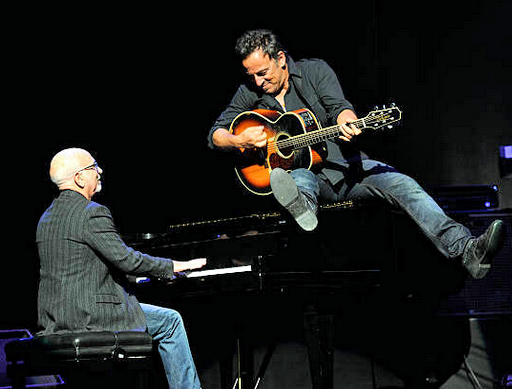
Roy Bittan, Bruce Springsteen's long-time pianist, is one of the best, and in every concert is given almost five minutes to improvise a piano solo during the Out Section of "Racing in the Street".
Here is a live performance from Hyde Park (2009), and here is another live performance from Barcelona (2012). And here is an incomplete Out Section from Granåsen Trondheim (2016), which shows Bittan's hands.
If you'd be interested in help 'Crowdfund' any of these long Out Sections, let me know how much you'd be willing to pledge.
The goal is $850; the minimum pledge accepted would be $50. The transcription would require about three weeks. One generous supporter has already pledged $100, so we have $750 more to go.
if you'd like to help 'crowdfund' Roy Bittan's superior piano track on the extended Out Section of Bruce Springsteen's live performance of "Racing in the Street".
My 'CrowdFunded' transcriptions to-date:
|
|
Almost all of my transcriptions are available as MIDI files.
Drop me a note indicating which you'd like, and I'll respond with availability and pricing.
|
|
If you're using a vintage synthesizer, please check out our synth patches here.
These are the most highly-organized and best-sounding synth patches available anywhere, guaranteed.
Ensoniq
Kawai
Korg
Roland
Yamaha
Even if you don't use the actual hardware synthesizers, there are software emulations that will allow you to play some of these patches on your computer, as VSTI's in your sequencer. These include:
Korg Legacy Digital Edition (for M1 & T1 synths)
Digital Yamaha FM8 (for DX7 synths)
|
|
During this pandemic many are having to stay at home more. It's a good time to pursue one's artistic passions and to put time into self-improvement.
Whatever level you're on, I'll be happy to help you.
By means of Skype lessons, I can coach you and help you to improve your technique, your rhythm, your knowledge of music theory, your sight-reading, and to develop relative pitch.
|
|
|
- The Beach Boys
- Rod Stewart - All 'Unplugged' Concerts
- Ricky Nelson - Stone Canyon Band
And I've also won classical piano competitions performing Beethoven, Rubinstein and Saint-Saens' Piano Concerti. See me playing here. "Josie's Boogie" is quite the virtuoso dramatic minor-key showpiece; check out the ascending double-octave run at the ending... :)
Thanks to the internet, I can help you play piano better - rock or classical, by ear or by note.
Perhaps all you need is just an hour on Skype discussing rock keyboards.
1) Your musical background
2) Where you are currently, musically-speaking
3) Your musical goals
|
|
|
|
|
|
|
My students include members of:
- Weezer (Rivers & Brian)
-
Vampire Weekend (Ezra & newest addition, Greta)
- Incubus (Mike)
- The Strokes (Nick)
- Rooney (Robert)
-
Jason Schwartzman (Mozart in the Jungle)
- Courteney Cox
- Pablo Dylan
|
|
|
|
"A few months back I bought the incredible note for note transcription you did of the Paul Griffin piano part to the studio version of American Pie and just wanted to say thanks. I'm a multi-instrumentalist who dabbles with One Man Covers and Don McLean's opus has been on a short list of challenging songs I've wanted to attempt for some time...
I have no issue with figuring out simpler keyboard lines by ear... but the gospel inspired, bluesy freeform lines of that Paul Griffin part had too many nuances that I'm just not experienced enough as a keyboardist to work out on my own...
As somebody who has done transcriptions I understand the time and effort involved...
...none of this could've come together if you hadn't done such great work figuring out the piano track and for that I have to thank you a million times over. Please keep up this great work, and if there is another particularly difficult keyboard piece I want to try I'll remember to have a look at your work in the future."
- Errol B.
|
|
|
Los Angeles, CA
323-650-6602
|
|
|
|
|
|
|
|