Taking a patient off opioid medication or reducing their dose – a practice known as opioid tapering – significantly raises the risk of a non-fatal overdose or mental health crisis, according to a large new study.
Researchers at the University of California Davis looked at medical and pharmacy claims for over 113,000 patients on long-term opioid therapy at a dose of at least 50 morphine milligram equivalents (MME) per day. About 25% of those patients were tapered.
The study findings, published in JAMA, show that tapered patients were 68% more likely to be treated at a hospital for opioid withdrawal, drug overdose, or alcohol intoxication, and they were twice as likely to have a mental health crisis such as depression, anxiety or suicide attempt.
|
|
A Special ASIPP Invitation |
|
Our collective research and network is the most powerful instrument of healing. The best medical solutions can only come from continued learning and collaboration with those who administer them. That's why ASIPP is inviting you to join us at the 2021 The Orthobiologic Institute Conference!
Featuring 50+ Lectures, 70+ Speakers, Live Debates & Demonstrations.
|
|
In January 2022, physician practices will face 9.75% cuts and ambulatory surgery centers face 6% cuts.
1. Physician Payment Cuts
- The expiration of the congressionally enacted 3.75% temporary increase to the Medicare physician fee schedule conversion factor, which was set into place to avoid payment cuts associated with budget neutrality adjustment tied to PFS policy changes.
- The expiration of the current reprieve from the repeatedly extended 2% sequester stemming from the Budget Control Act of 2011. It appears that while Congress originally scheduled this policy to sunset in 2021, it will now continue into 2030.
- The Imposition of a 4% statutory PAYGO sequester resulting from passage of the American Rescue Plan Act, presumably extending for at least another 10 years.
2. Facility Payment Cuts
- Under the present status, it appears that ambulatory surgery centers and other facilities will be suffering from a 2% cut from sequester extension and a 4% reduction with the imposition of a 4% statutory PAYGO sequester resulting from the passage of the Budget Control Act of 2011
3. Telephone Only Services
- CMS has eliminated coverage for telephone-only services (CPT 99441-99443), effective December 20, 2021.
|
|
If you plan to attend the Thursday afternoon workshop,
Regenerative Medicine Techniques with Ultrasound Guidance,
we recommend you book your hotel reservations today!
|
|
The number of U.S. clinics pushing unproven stem cell procedures has ballooned in recent years
Hundreds of clinics pushing unproven stem cell procedures caught a big break from the U.S. government in 2017: They would have three years to show that their questionable treatments were safe and worked before regulators started cracking down.
But when the Food and Drug Administration's grace period expired in late May — extended six months due to the pandemic — the consequences became clear: Hundreds more clinics were selling the unapproved treatments for arthritis, Alzheimer’s, COVID-19, and many other conditions
“It backfired,” says Leigh Turner, a bioethicist at the University of California, Irvine. “The scale of the problem is vastly larger for FDA today than it was at the start.”
|
|
The Biden administration on Thursday released a rule for how health care providers and insurers should implement legislation prohibiting what are known as surprise medical bills.
The rule outlines procedures for how disagreements between payers and providers over out-of-network rates should be resolved provides self-paying and uninsured people a way to resolve payment disputes and provides a process for resolving payment disputes without placing patients in the middle, among other features.
The regulations outline an arbitration process among insurance providers and a service provider who are at odds over payment, allowing a negotiation process of 30 days to be initiated by either the insurance company or provider to try to resolve the dispute, The Associated Press reported. If that process fails to reach a resolution, an independent third-party can be asked to arbitrate.
|
|
Sharp rise in lethal counterfeit pills containing fentanyl, meth
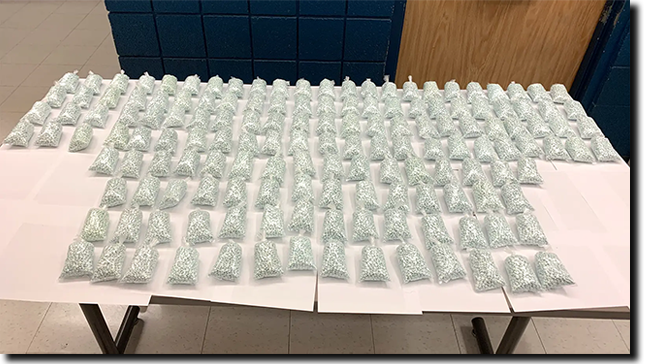
The Drug Enforcement Administration (DEA) issued a public safety alert on Monday warning of an "alarming increase" in lethal counterfeit pills containing fentanyl or methamphetamine.
The alert, the DEA's first in 6 years, aimed to raise awareness of a significant surge in fake pills mass-produced by criminal drug networks and marketed as legitimate prescription pills.
"The United States is facing an unprecedented crisis of overdose deaths fueled by illegally manufactured fentanyl and methamphetamine," DEA Administrator Anne Milgram, JD, said in a statement.
|
|
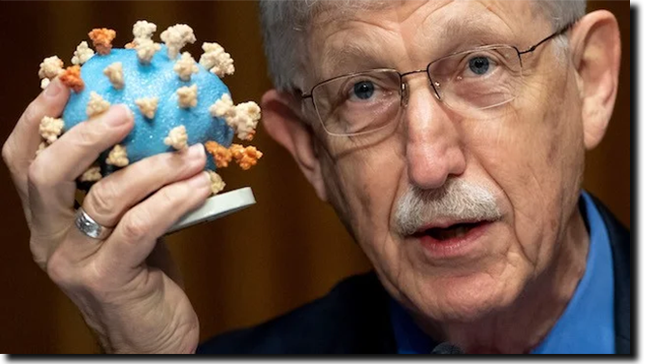
Francis Collins, director of the National Institutes of Health (NIH), announced his resignation on Tuesday, just weeks after documents exposed that he made “untruthful” comments about U.S. federal funding of gain-of-function research at the Wuhan Institute of Virology.
“It has been an incredible privilege to lead this great agency for more than a decade,” Collins said in a statement posted at the NIH website.
Just weeks before this announcement, Richard Ebright of Rutgers University accused Collins of making false public statements about National Institute of Allergy and Infectious Diseases (NIAID) grants to the Wuhan Institute of Virology (WIV), which have since been proven to fund the study of “chimeric SARS-related coronaviruses” which “could infect human cells.” Ebright said bluntly that Collins had not told the truth when asked about this research: “assertions by the NIH Director, Francis Collins, and the NIAID Director, Anthony Fauci, that the NIH did not support gain-of-function research or potential pandemic pathogen enhancement at WIV are untruthful.”
|
|
ASIPP® is pleased to offer a new feature for
its members to help provide value to you and your practice.
Click here to visit ASIPP®'s newly created site where you can
make purchases on our Amazon Store, learn more about and
join the ASIPP® GPO and ASIPP®’s partnership with
Fedora Billing & Revenue Cycle Management Company.
|
|
The fiscal year 2022 ICD-10-CM diagnosis code updates became effective Oct. 1.
Here are eight key things to know:
- The number of new codes. Compared to fiscal 2021, when 485 codes were added, just 165 codes were added in fiscal 2022.
- Codes to further describe homelessness.
- Codes for COVID-19.
- Expansion of codes for describing a cough.
- Codes for injuries, poisonings and certain other consequences of external causes.
- Codes for musculoskeletal system and connective tissue diseases in Chapter 13.
- Guidance changes for laterality.
- Guidance change for codes relating to factors influencing health status and contact with health services.
|
|
With a first-of-its-kind antiviral pill against COVID-19 potentially headed towards distribution, the health care community may soon have another tool to combat a virus that has claimed the lives of more than 700,000 Americans.
Merck and Ridgeback Biotherapeutics created an antiviral pill the companies say can reduce risk of COVID-19 hospitalization and death by 50%, and Merck said it will seek emergency use authorization from the US Food and Drug Administration (FDA) for its molnupiravir medication "as soon as possible."
"We'll be able to prescribe this to folks. They'll take a five-day course and hopefully be able to stay home, not come in for an intravenous infusion and keep folks out of the hospital. So, it's really very promising news," Dr. Jonathan Reiner, CNN medical analyst and professor of medicine and surgery at George Washington University, told CNN's Pamela Brown Saturday.
|
|
Pain Medicine Case Reports (PMCR) and Editor-in-Chief Alaa Abd-Elsayed, MD, PhD would like to invite you to submit case reports and case series to the PMCR journal. Your article will be published free of charge.
Open access journals are freely available online for immediate worldwide open access to the full text of published articles. There is no subscription fee for open access journals. Open access journals are no different from traditional subscription-based journals: they undergo the same peer-review and quality control as any other scholarly journal.
Interested in becoming a member of the PMCR Editorial Board?
Editorial board members are asked to review 2-6 manuscripts per year. Please submit your most up-to-date CV to sgold@asipp.org for consideration.
For more information or to submit your articles, click here.
|
|
| CASE REPORT |
George C. Chang Chien, DO, Austin Marcolina, DO,
and Jeimylo C. de Castro, MD
Abstract
BACKGROUND: Cubital tunnel syndrome is the second most common cause of peripheral nerve entrapment in the upper extremity, trailing only carpal tunnel neuropathy. While the roof of the cubital tunnel is most often formed by Osborne’s ligament, the anomalous, evolutionary remnant muscle, the anconeus epitrochlearis, has been previously identified as a potential cause of cubital tunnel syndrome.
CASE REPORT: A 45-year-old female physical education coach noted bilateral upper extremity pain, numbness, paresthesias, and early onset exercise fatigue originating at the medial elbow and radiating down the ulnar nerve distribution. Sonographic evaluation showed evidence of a hypertrophic anconeus epitrochlearis in the right upper extremity causing compression of an enlarged, bifid ulnar nerve. The patient was treated with 3 separate ultrasound-guided hydrodissection injections, which resulted in complete resolution of her symptoms and a decrease in the ulnar nerve cross-sectional area on sonographic evaluation at 24-week follow-up.
CONCLUSION: A hypertrophic anconeus epitrochlearis can cause cubital tunnel syndrome and ultrasound-guided hydrodissection is a potentially efficacious surgery-sparing treatment option.
KEY WORDS: Cubital tunnel syndrome, hydrodissection, ulnar neuralgia, ultrasound
|
|
| SYSTEMATIC REVIEW |
Yuxiang Chen, MD, Peng Yin, MD, Yong Hai, MD,
Qingjun Su, MD, and Jincai Yang, MD
Abstract
BACKGROUND: The management of pain after osteoporotic thoracolumbar burst fracture has not reached a treatment consensus. Percutaneous kyphoplasty has been shown to be efficient in reducing acute pain after burst fracture, although the topic remains highly controversial in this field.
OBJECTIVE: This study aimed to conduct a systematic review of the current literature to evaluate the effectiveness and safety of percutaneous kyphoplasty on the treatment of osteoporotic thoracolumbar burst fracture.
|
|
| SYSTEMATIC REVIEW |
Tao Bei, PhD, Junting Liu, PhD, Qiulin Huang, BS,
Jiaheng Wu, BS, and Jinmin Zhao, PhD
Abstract
BACKGROUND: Perineural (PN) dexamethasone (DEX) administration can prolong the analgesic time of a brachial plexus block. However, its efficacy and safety are controversial due to its off-label use and different routes of administration.
OBJECTIVES: This meta-analysis aimed to assess the safety and efficacy of PN versus intravenous (IV) dexamethasone.
|
|
Since this malpractice insurance program officially launched in November 2018, ASIPP has signed up hundreds of providers with an average savings of 30%. This is professional liability insurance tailored to our specialty and will stand up for us and defend our practices.
Norcal Mutual is 'A' Rated by AM best and is license in all 50 states. To read a few important points to keep in mind about the program, including discounts, administrative defense, cyber coverage, aggressive claims handling, and complimentary award-winning risk management CME activities, click here.
|
|
ASIPP® is now offering our members the benefit of a unique revenue cycle management/ billing service. We have received a tremendous amount of interest in the ASIPP® billing and coding program.
Click here to learn more about the negotiated rate for practices and more!
|
ASIPP® has formed a partnership with Henry Schein and PedsPal, a national GPO that has a successful history of negotiating better prices on medical supplies and creating value-added services for the independent physician. Working with MedAssets, PedsPal provides excellent pricing on products like contrast media that alleviate some of the financial pressures you experience today.
|
|
up-to-date news related to you, your practice, and your patients!
|
|
|
|
|
|
|