|
The good news continued for East Tennessee's housing market leading into summer, with another robust month of sales in May. Pending sales were up 15% over last year, indicating that the trend will continue in June.
While eager buyers have finally emerged, demand and unbalanced residential inventory have kept the options tight this spring and pushed the median sale price up. With nearly half of homes selling at asking price or above, it's certainly not a "buyer's market" yet.
Over on the rental side, the commercial market has given mixed signals. The Knoxville-Knox County Planning 2025 Development Activity Report cited a record number of permitted multifamily units, but less than half of the permitted units are making it to the rental market each year. Rent remains flat, for now, and added supply is sorely needed, especially for units affordable to the area median income or below.
In welcome news, several Class A commercial office spaces are under construction - the first major additions in several years. Occupancy is still tight with vacancies at around 3% for office space, 2% for retail and 2% for industrial spaces.
All in all, East Tennessee real estate remains in high demand.
| | |
Home Sales Report
MAY 2026
-
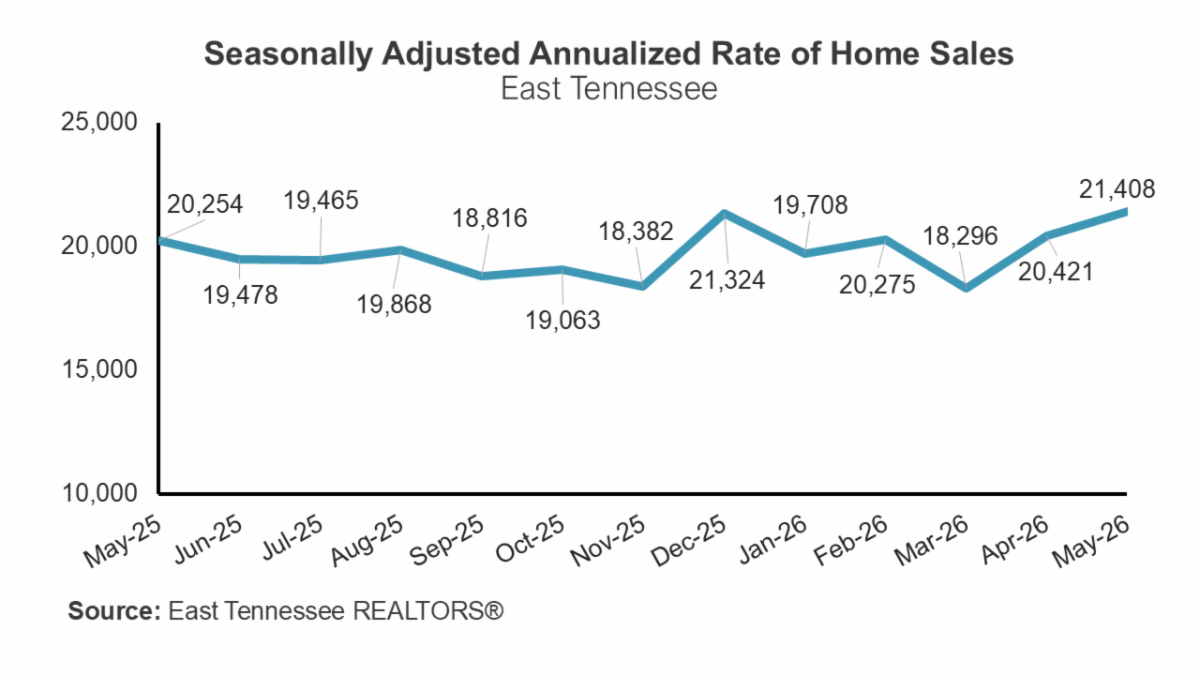
East Tennessee home sales increased 11.3% in May from 2025.
-
The median sale price was $385,000 — up 4% from the previous year.
-
Total housing inventory is up 7% from May 2025.
-
Half of the homes sold were under contract in 23 days or less, up from 19 days a year ago.
-
43.1% of homes sold for the asking price or above, with 19.9% selling for more than the asking price. 8.33% sold for at least $10,000 over asking and 3.04% sold for at least $25,000 over asking price.
-
The sale-to-list price ratio held steady at 98.9% compared to 99% a year ago.
-
New construction was 13.1% of total home sales, up from 12.3% in 2025.
| | East Tennessee REALTORS® reports home sales data using a seasonally adjusted annualized rate (SAAR). This method takes into account seasonal fluctuations in the real estate market, such as increased home sales during the spring and summer, by adjusting the data to provide an annualized rate representing the projected number of homes that would be sold over a year if the current sales pace were to continue. | | |
What's the outlook?
The spring home sales streak continued in May, with sales up year-over year 9% in April and 11% in May. May's single-family sales of 2,015 units (not seasonally adjusted) is the highest month on record since 2019.
Demand is high relative to recent spring seasons, with sales from eager buyers outpacing new inventory. Historically, inventory would begin to come online in early spring and consistently peak around July. This year, however, inventory has already begun to slide backward, down 4% month over month in May as the number of new listings cannot keep up with sales.
Prices and sizes of homes sold have inched up as well, with the elevated median sales price of $385,000 up 4% from 2025.
The median size of homes sold in East Tennessee was 1,853 square feet in May, the highest number since 2023. The median layout of these homes is a sizeable 3 beds, 2.5 baths, and half an acre lot.
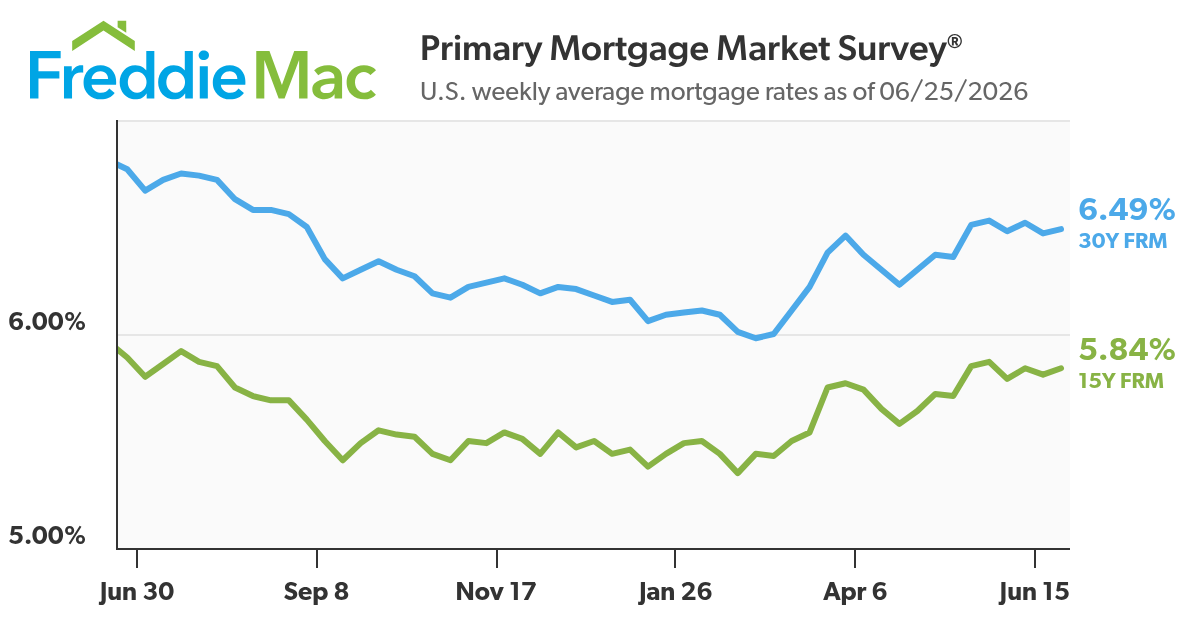
Assuming that interest rates remain within their current range of 6.4-6.6%, we anticipate June and July to continue to show strong home sales. Pending sales in May were up 15% over 2025, giving a peek at June's expected performance.
Our members tell us that strategy and deep understanding of surrounding community are the keys to success in this environment; buyers in each neighborhood assign different values to similar features. Meanwhile, modestly sized single level ranch homes are flying through the process in just days with multiple offers regardless of zip code - if you have one of those, call a REALTOR®.
| | |
Inventory by county
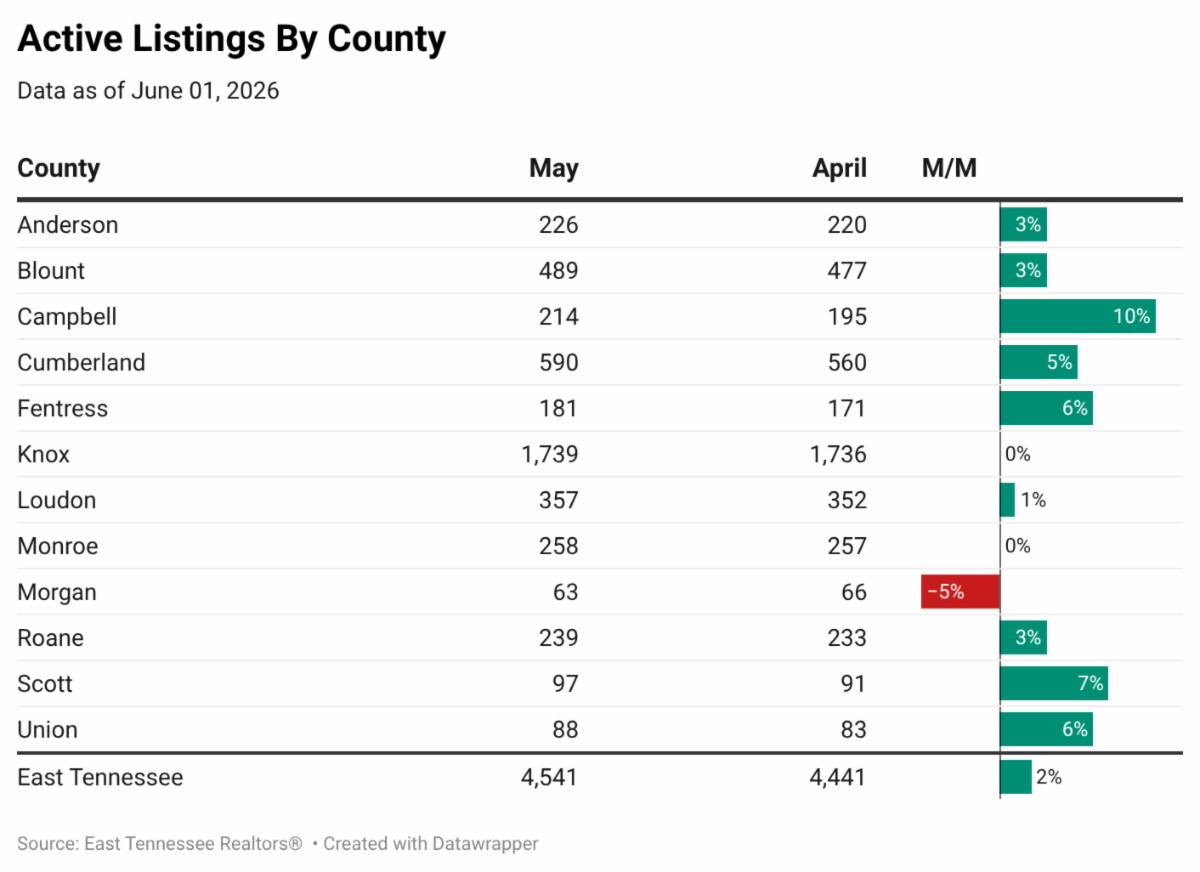
Out of the 12 counties in the East Tennessee REALTORS® footprint, 9 marked measurable increases in active listings month-over-month. Overall, regional inventory increased month-over-month by 2%.
| | |
Policy inflating the cost of homes for buyers, and taxpayers
Several major research studies were recently released, and you could be forgiven for thinking they were collaborating. The takeaways from these nonpartisan organizations aligned: overregulation adds cost to homes, and good policy can reduce cost.
In June, the Pew Research Center shared a study quantifying the exact dollar amount effect of building homes close to infrastructure. As planning experts, economists, land use experts and REALTORS® often advocate, housing density saves both public dollars and preserves natural resources.
After studying housing supply gaps and zoning policies in 10 states of varying sizes and geography, Pew researchers found that:
- The up-front cost to government and taxpayers for infrastructure is approximately $21,000 lower per home if built near existing utilities, versus at the outer edge of the municipality.
- The maintenance cost of roads and utilities that serve new homes are 50% lower when those homes are built near existing jobs, stores, and transit.
- Property taxes generated per acre are 13% higher when new homes are built near jobs, stores, and transit.
This is great news for every beleaguered East Tennessee politician who is doing their best to keep taxes reasonable but also seeing their budget fall behind the need for road, water and utility improvements.
Local government can keep property taxes low AND maintain their budgets when housing is built in areas with established infrastructure. Density saves taxpayer dollars and rural character.
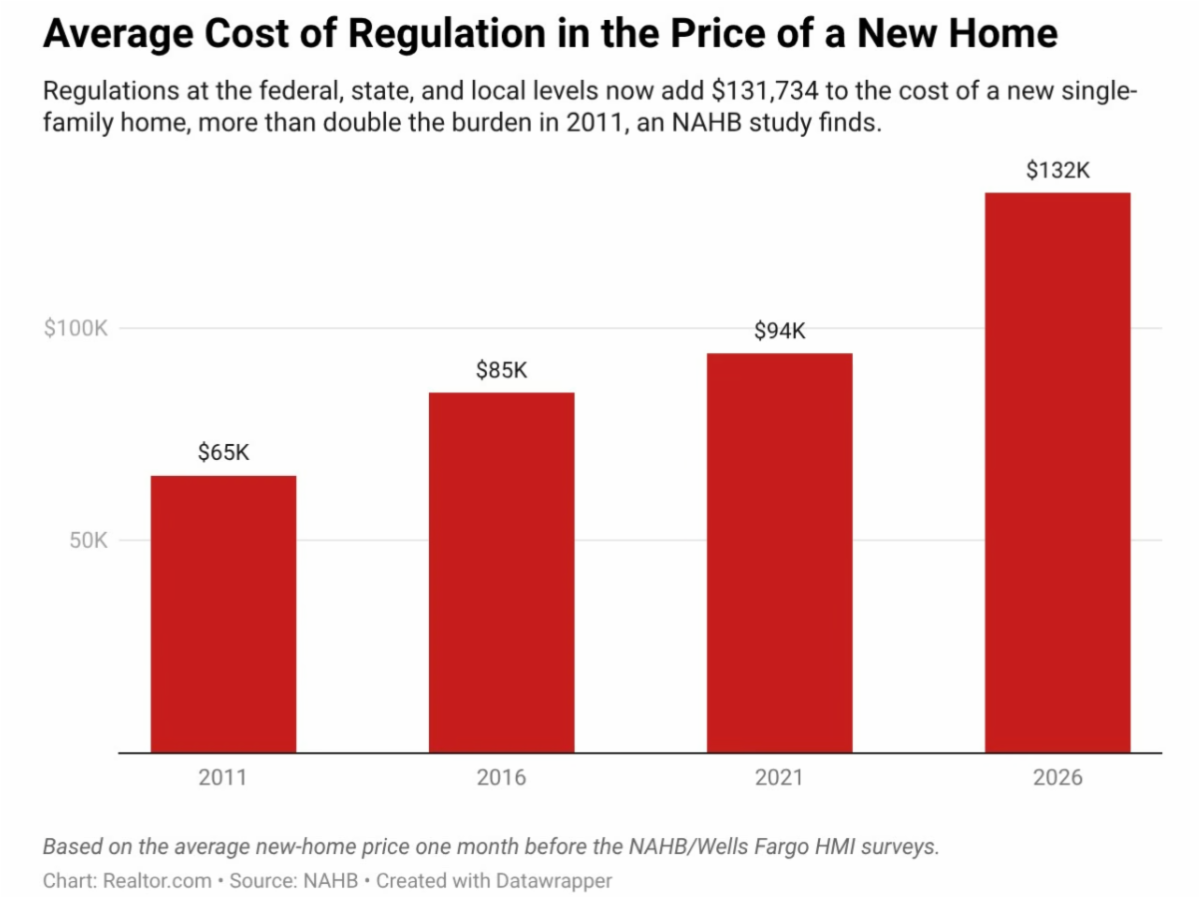
Also released in June, the National Association of Home Builders calculated that regulatory costs nationwide have increased nearly 40% in the last 5 years, and now comprise 26.4% of the total cost of the average home.
| |
Noting that the national average cost of a new home is about $500,000, this means that $132,000 of the total is regulatory cost. This is a huge issue for families struggling to afford a place to live, as experts warn that our shortage has grown past 4 million missing homes.
Another survey on the costs of homeownership revealed this spring that the cost of homeowner's insurance has jumped for nearly 71% of homeowners. A report published by the Consumer Federation of America backed that up, showing that the average insurance premium for homeowners rose 24% from 2021 to 2024.
So what can we do about this? Well, your elected representatives have taken a first step!
Congress just overwhelmingly passed a landmark piece of bipartisan legislation called the 21st Century ROAD to Housing Act, a good start on knocking down some of the unnecessary and duplicative federal regulations that add cost to homes and barriers to access.
The bill, currently awaiting presidential signature, is a policy nerd's dream for homeownership affordability. It takes aim at everything from burdensome HUD approvals to manufactured home innovations to affordable mortgage lending, and does it without adding significant federal dollars. Instead, it enables the private market, tax and banking incentives to kick in and lowers taxpayer cost by removing layers of regulation.
The catch? State and local governments will have to proactively opt in to many provisions before the bill's reforms can take effect on the ground.
| | |
East TN housing affordability is stuck, waiting for bolder reforms
We're frequently asked if East Tennessee has "fixed" its housing cost and inventory crisis. While local leaders have made concerted efforts to hold the tide at bay and should be applauded for those choices, we also haven't taken bold steps toward housing affordability reform. Until we do, residents will only see marginal improvements in affordability that never quite reach the tipping point.
The Harvard University Joint Center for Housing Studies released its annual State of The Nation's Housing report at the end of June. The main conclusions were easy to guess based on previous patterns: Low consumer confidence has hampered household formation and mobility, renters and owners alike are struggling with costs, and cross-state migration has slowed considerably from post-pandemic years.
The 9-county Knoxville metropolitan area largely followed national trends, with some varying indicators of higher demand and tighter inventory. Overall, we fall right in the middle. Consumers are still struggling with a heavy cost burden after the increases of 2020-2024, but as of 2025 we have kept the upward trajectory mostly at bay. We're building more homes than we had, but not quite enough to make a dent in the supply imbalance.
It's important to note that a flatter growth rate now does not mean immediate affordability gains; rather, envision a small plateau at the top of a mountain. Knoxville metro home prices have increased a massive 84% since 2020, compared to the national increase of 54%.
| | |
The report shows how the Knoxville metro area stacks up to the state of the nation:
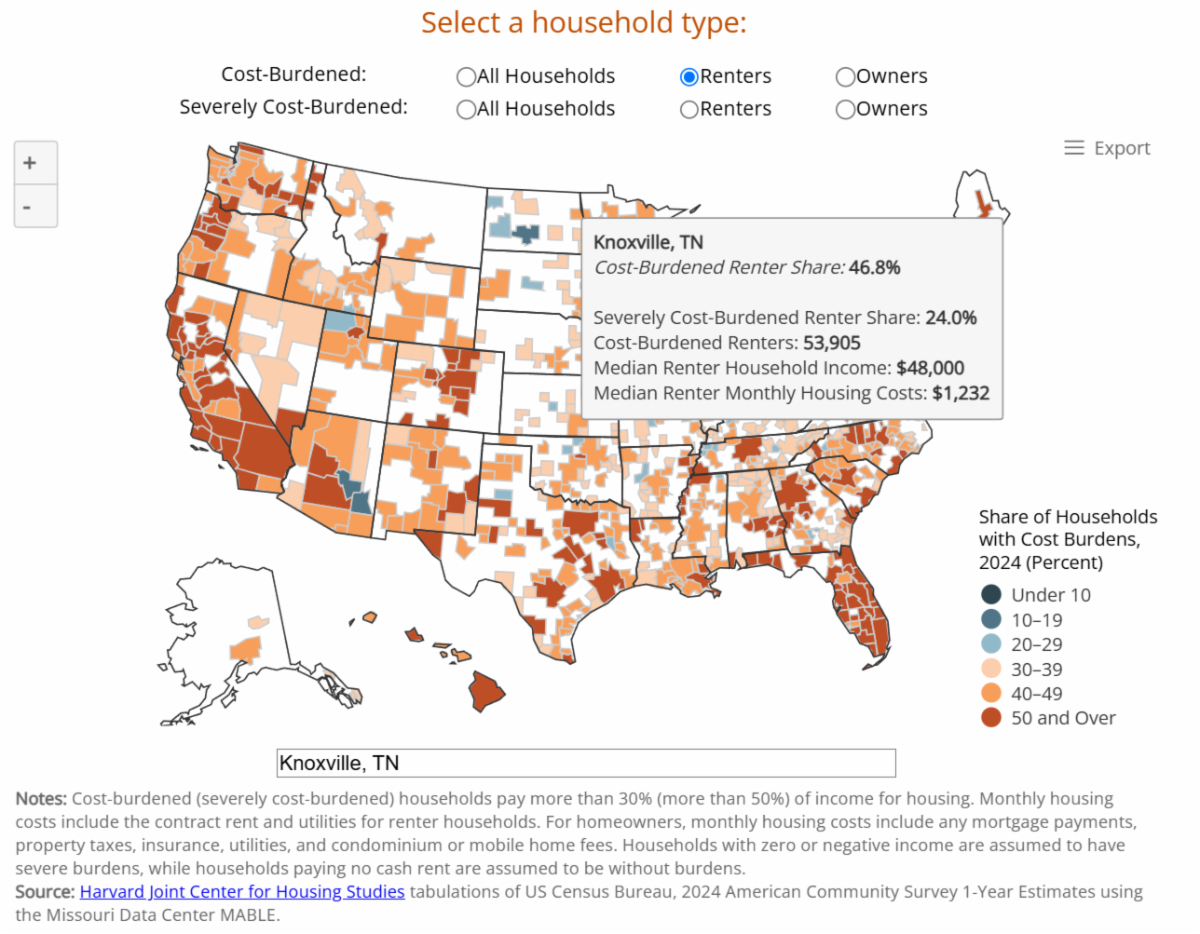
Nearly half of our renters are cost-burdened. In this area, we rank toward the bottom of the most expensive metros. While rent has flattened further in the 12 months since this data was collected, the per household cost adjustment would likely be less than $50 per month - not much help.
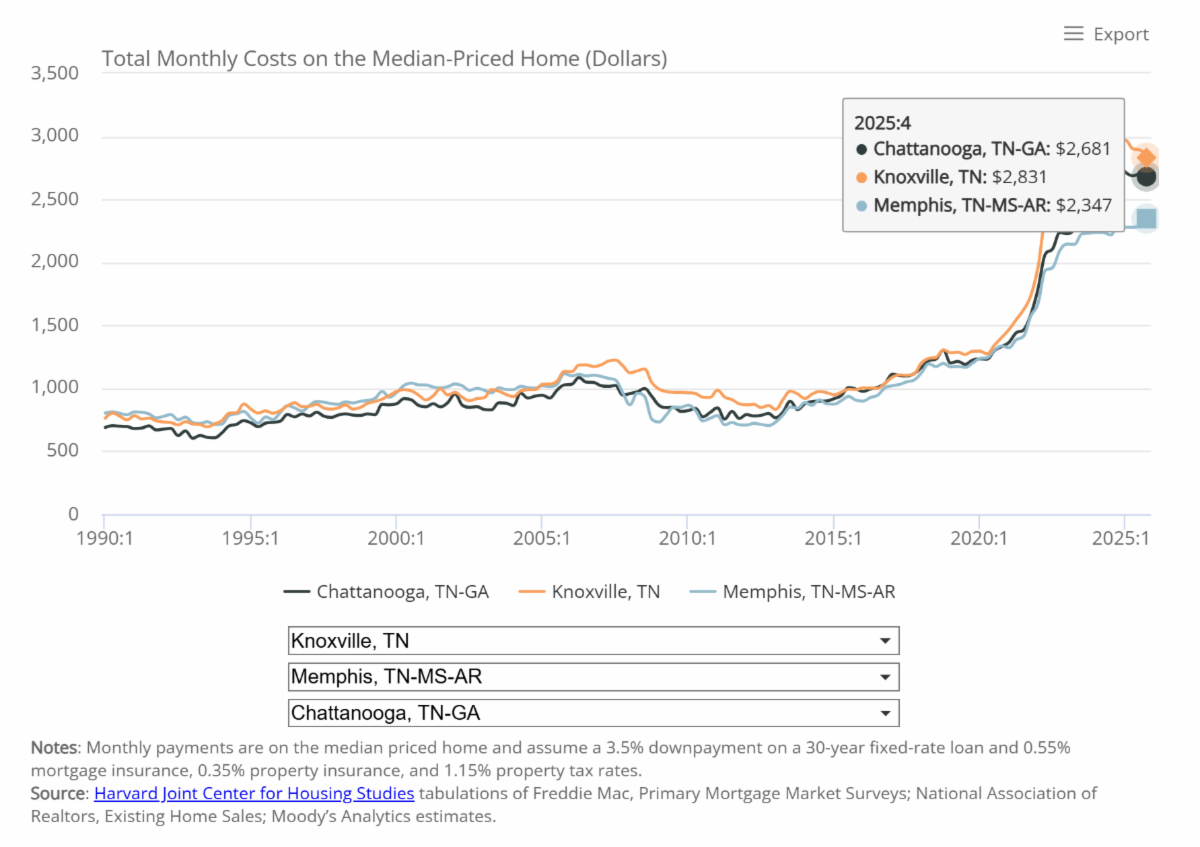
Our monthly cost of housing ranks right in the middle of nationwide metros. While we haven't quite topped San Francisco's whopping $10,000 per month household housing cost, Knoxville is higher than most similarly sized metros at a median $2,831 monthly housing cost.
Our median home price is nearly 5 times the median annual household income. Even if it represents a relatively small increase to prior years, East Tennessee's May median single-family home price of $385,000 is the highest its ever been... almost exactly 5 times the median household income of $76,000 per year.
| | |
Knoxville gets a pass on a few metrics - while most of the country is still hovering around the 30-year low mark for home sales, the East Tennessee region is enjoying healthy growth. However, we can still borrow insights from other markets' affordability success.
What are some of the bolder housing reforms undertaken by metros who rank better than East Tennessee for affordability?
Houston, TX: Removed most zoning regulations in favor of broad use categories, created a public-private land bank, and added hefty developer incentives for creative approaches to affordable housing.
Chicago, IL: Isn't it surprising that Chicago's income to home price ratio is better than Knoxville? The area recently legalized ADUs by right in most zones, launched a "Cut The Tape" initiative to streamline regulations on adaptive reuse, and adopted a missing middle housing expansion.
Greenville, SC: Kicked off a "neighborhood-scale" housing overhaul to allow more missing middle and infill housing, created a GVL2040 corridor plan to incentivize density and commercial development along corridors, and added senior-specific housing incentives and funds.
Read the full report below.
| |
|
Lenoir City kicks off new comprehensive plan process
The City of Lenoir City has officially kicked off work on its Smart Growth Lenoir City plan, a long-range roadmap that will guide future decisions on housing, land use, transportation, and economic development over the next 20 years. Throughout the summer, city officials will be gathering public input to help shape the plan, giving residents and stakeholders an opportunity to weigh in on the community's long-term vision.
| |
Lenoir City residents and visitors currently enjoy a variety of settings including a beautiful walkable historic downtown, a splashpad, a community college, a hospital, river access, an assortment of both small and chain businesses, suburban neighborhoods and several parks. Previous community commentary has identified a desire for more diversity of housing, green spaces and outdoor venues, restaurants and more.
Do you live or work in Lenoir City? Weigh in now!
| |
Nation's median home price may reach $1M within 25 years
During the recent National Association of REALTORS® Legislative Meetings, Chief Economist Dr. Lawrence Yun gave a promising update on 2026 home sales. Despite headwinds in the housing market, Yun said the U.S. economy will avoid a recession in 2026, pointing to strong business investment in artificial intelligence and data centers. The unemployment rate is expected to remain under 5%, and job gains are projected to reach 400,000 this year.
Yun also offered a surprising long-term projection, showing that multiple calculations reach the same conclusion: the national median home price—currently $430,000—would reach $1 million within 25 years.
To illustrate the likelihood of this outcome, Yun recalled that the national median home price was just $90,000 in 1990.
Read the full analysis here.
| | |
Mortgage Rate Update
The average 30-year fixed mortgage rate (30Y FRM) showed very little change over the last few weeks, finishing the week ending in June 25, 2026 at 6.49%.
| | |
As new Fed Chair Kevin Warsh took his post, the central bank's first move was to hold rates steady. If labor data continues to show strongly and inflation is stubborn, the Fed may hike rates within the next two quarters. The CME Fedwatch tool, a popular indicator, is currently predicting a hike during the September meeting.
All in all, the housing market cannot expect a mortgage rate dip to jolt sales in the second half of 2026. While a rate drop would mean a boost to home sales, this early indicator of a steady and reliable central bank policy uninfluenced by popular opinion or politics is a good foundation for long-term market stability.
| | Stay up to date with the most recent information about East Tennessee's housing and real estate market. Here's the latest from local media: | | Market Pulse is a monthly research newsletter providing a rundown of the latest housing and economic research and analysis across East Tennessee. | | Was this email forwarded to you? Subscribe here. | | | | |