|
It is estimated that over 1600 men from Shetland served in WWI. When they returned to Shetland to a changed local economic and social environment with low chances of employment, they made the decision to make the long journey to the whaling stations of South Georgia to earn a living.
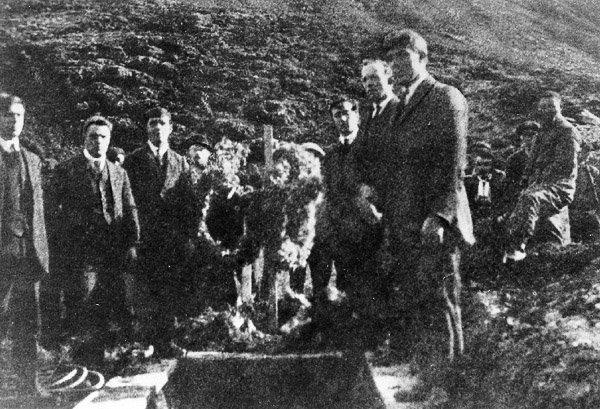
So, when Sir Ernest Shackleton died suddenly in South Georgia in 1922, it was six Shetlanders based at Leith Whaling Station who were his pallbearers. They were all ex-servicemen and had survived the First World War. But who were these men?
- James Brown, known locally as Sodger, was given the responsibility to pick the men to carry Shackleton’s coffin. James had served in the 2nd Royal Scots. During WWII, he joined the Royal Engineers, after being turned down from the Home Guard due to his age.
- John Bryne enlisted as a seaman in the Royal Naval Reserve in 1916, having previously served with the Gordon Highlanders. After the war, he was a baker and the town lamp lighter.
- James Leask came from Lerwick and worked as a fisherman. In 1914, he enlisted as a seaman with the Royal Naval Reserve.
- Magnus Leask was also a fisherman before he too enrolled as a seaman in WWI. After the war, he was employed as a crofter. In the 1970s, Shackleton's son visited Shetland and was presented with a photograph of the burial by Magnus.
- George Manson was from Burra and enlisted in the Royal Naval Reserve as a seaman.
- William Sandison was from Lerwick and before the war, he worked as a cooper at the barrel factory. He joined the 7th Battalion Gordon Highlanders in WWI. Following WWII, William again returned to whaling.
Over a century later, we remember not only Shackleton, but the Shetlanders who carried him to his final resting place.
Credit for the brilliant research on these pallbearers goes to Jon Sandison.
|