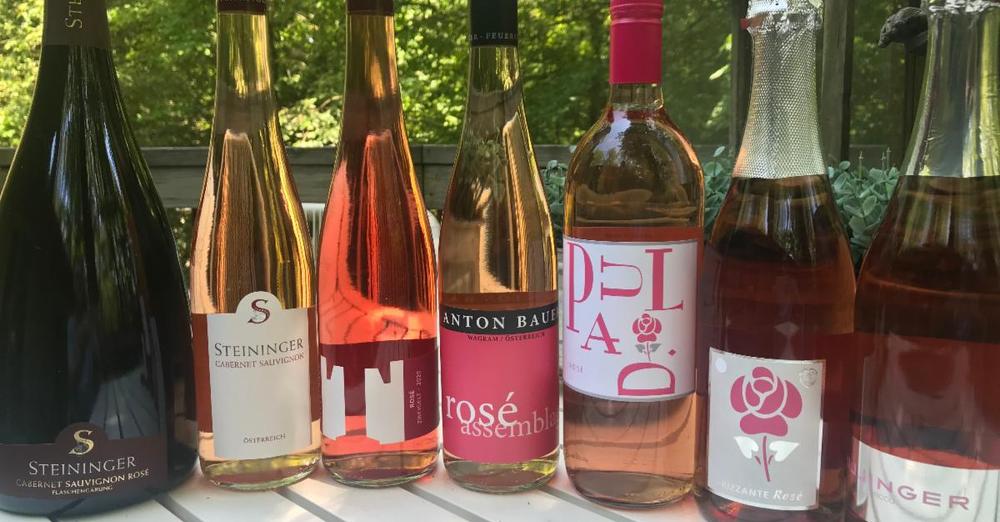
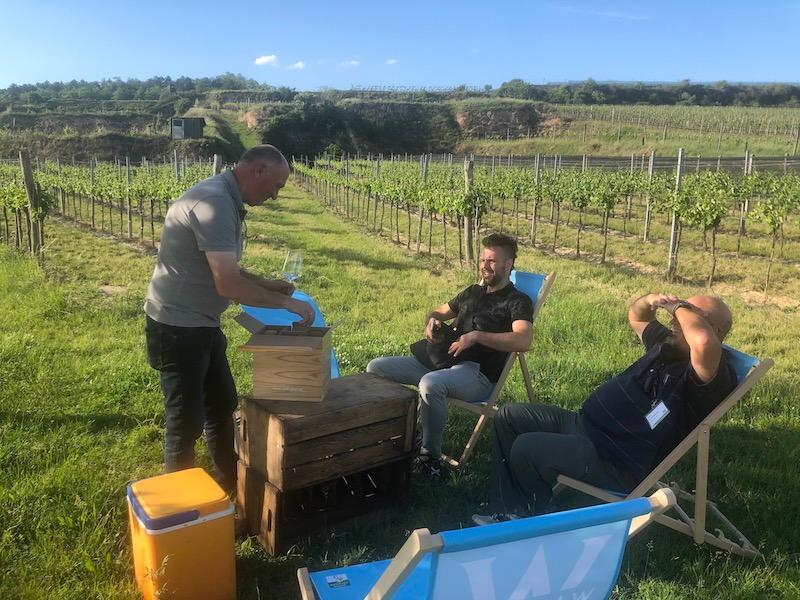
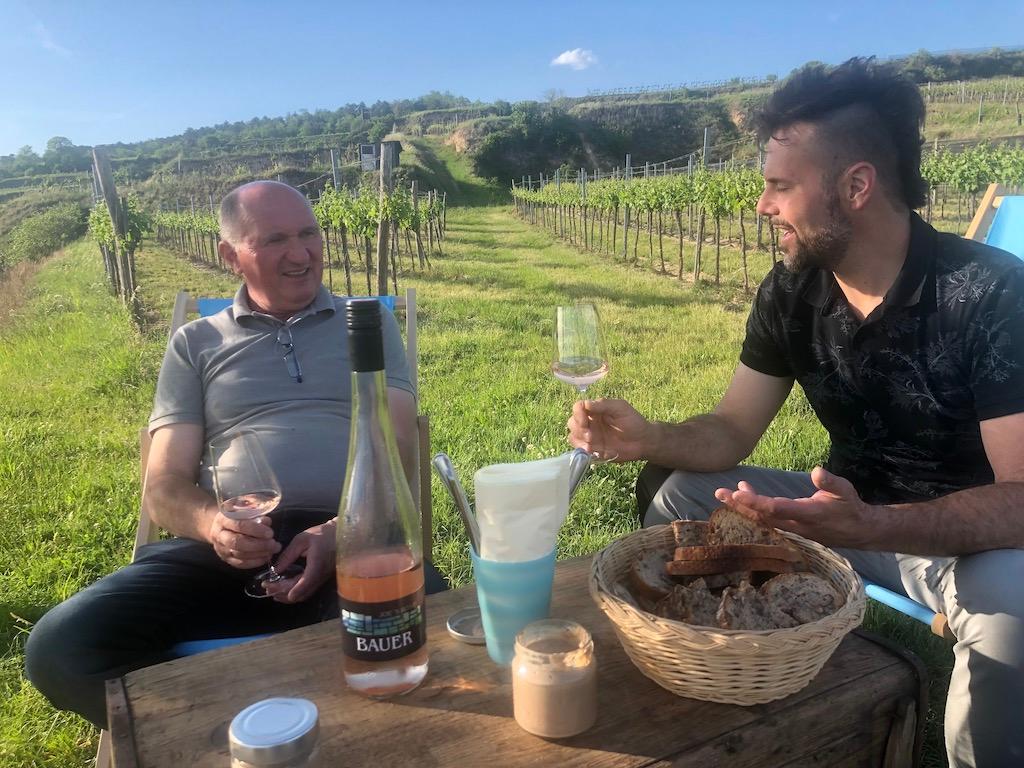
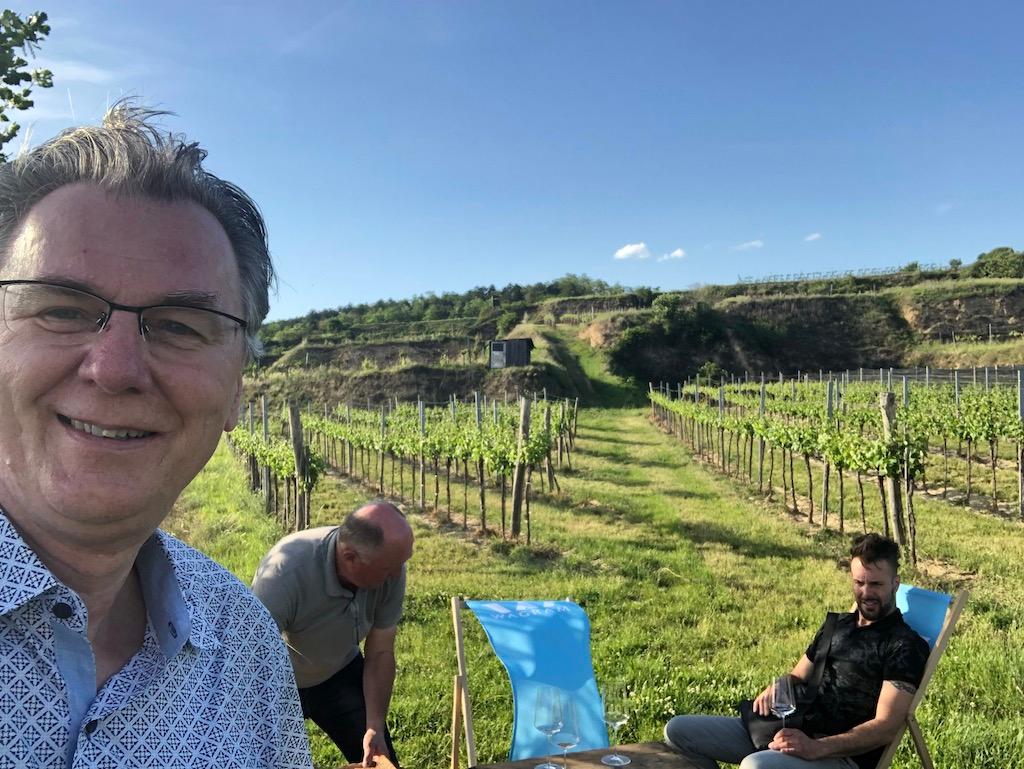
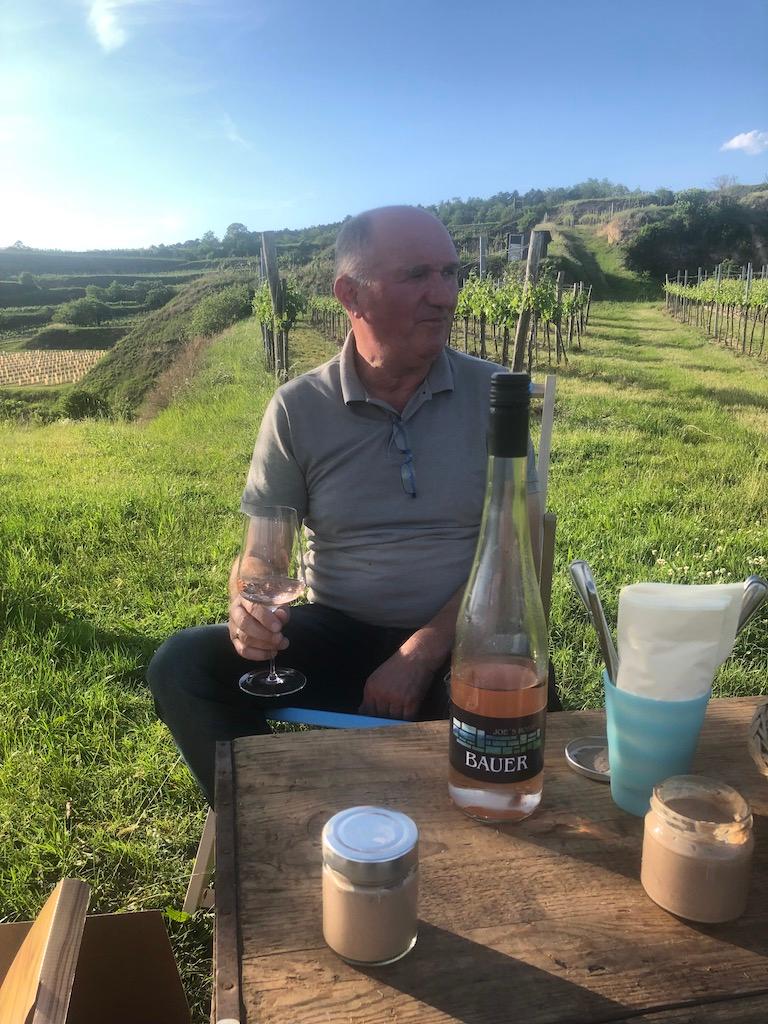
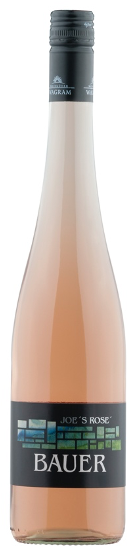
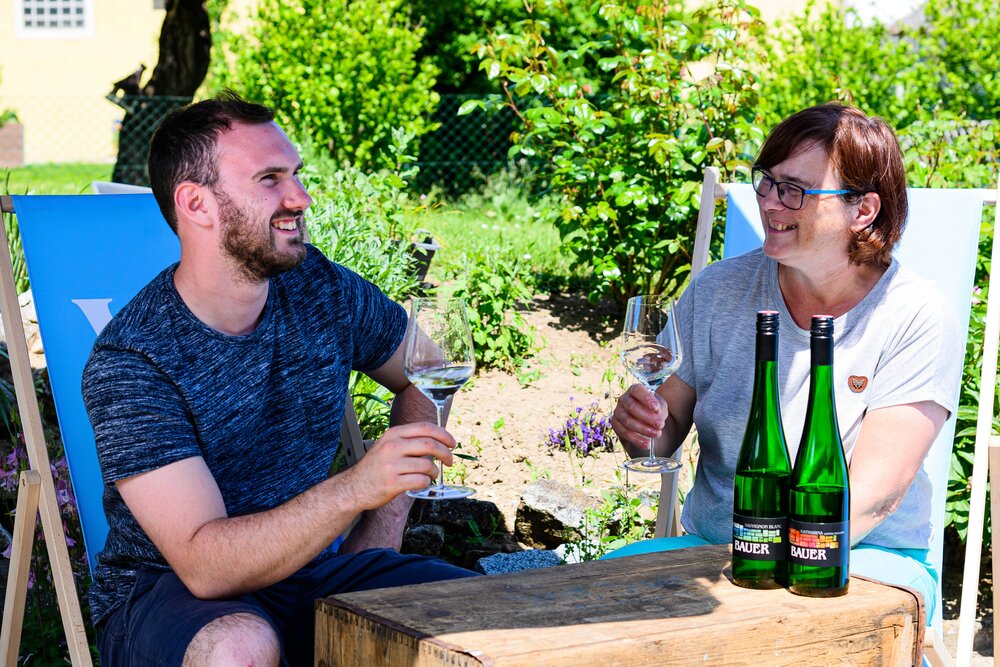
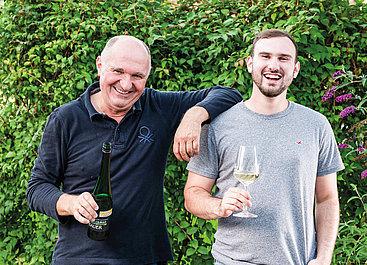
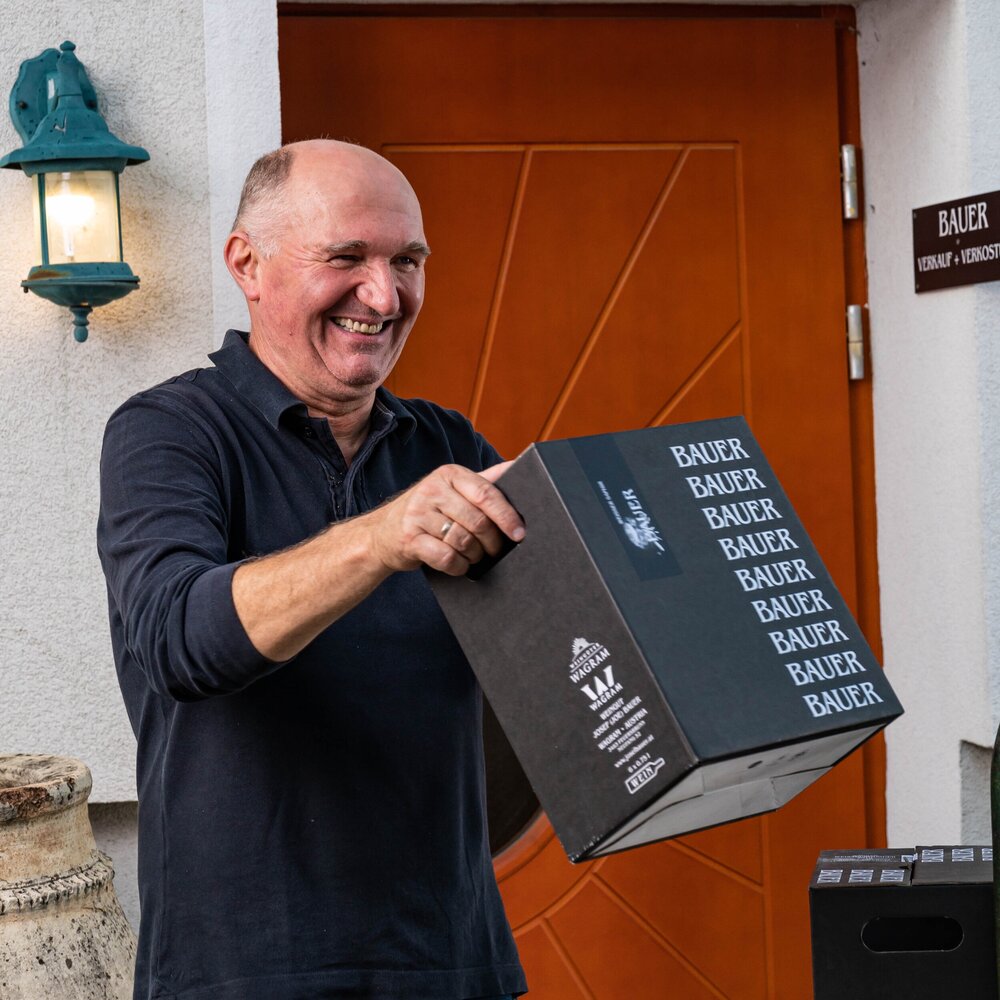
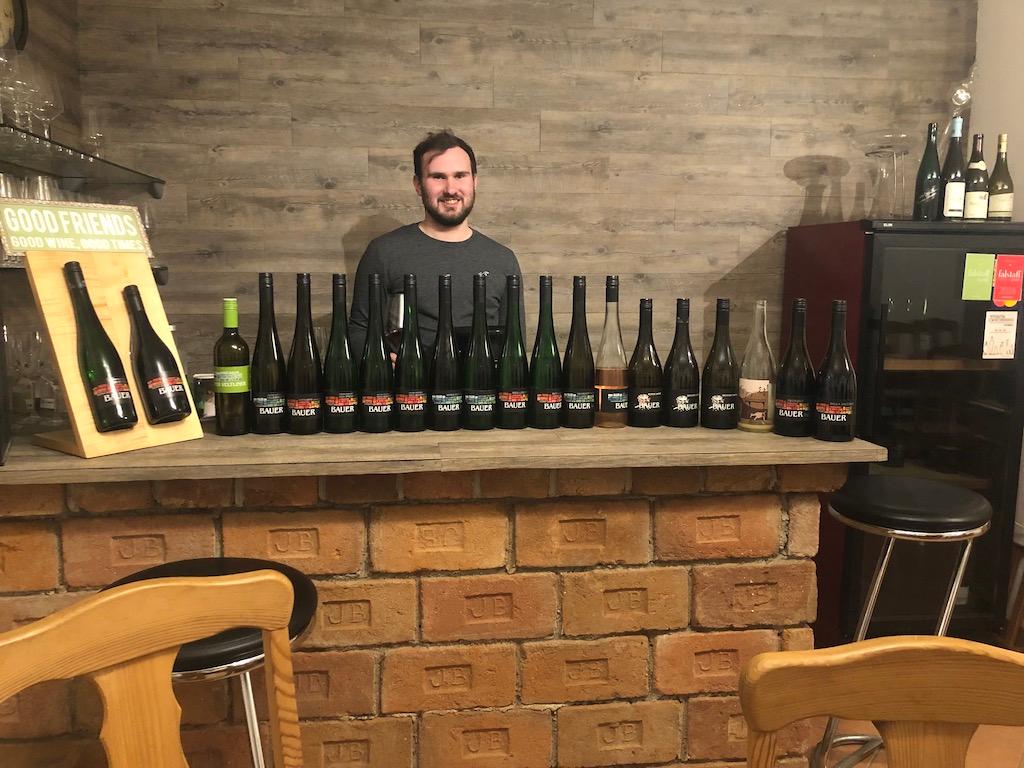
When I first tasted the 2021 Joe’s Rosé in February at the winery with Joe and his son (and now winemaker) Florian Bauer, I wrote, “This will be great with salmon sushi.”
Tasting it now, I see that’s right. But it will also shine with shellfish, pair with poultry, be friendly with anything fried, and do a absolutely wonderful job of keeping you cool by the pool.
In short, it’s everything you’d hope for in a $20 rosé from Provence (but don’t always get). Which raises the question:
How in the world do you make a wine that looks and tastes an awfully lot like high-end Provençal pink in Austria?
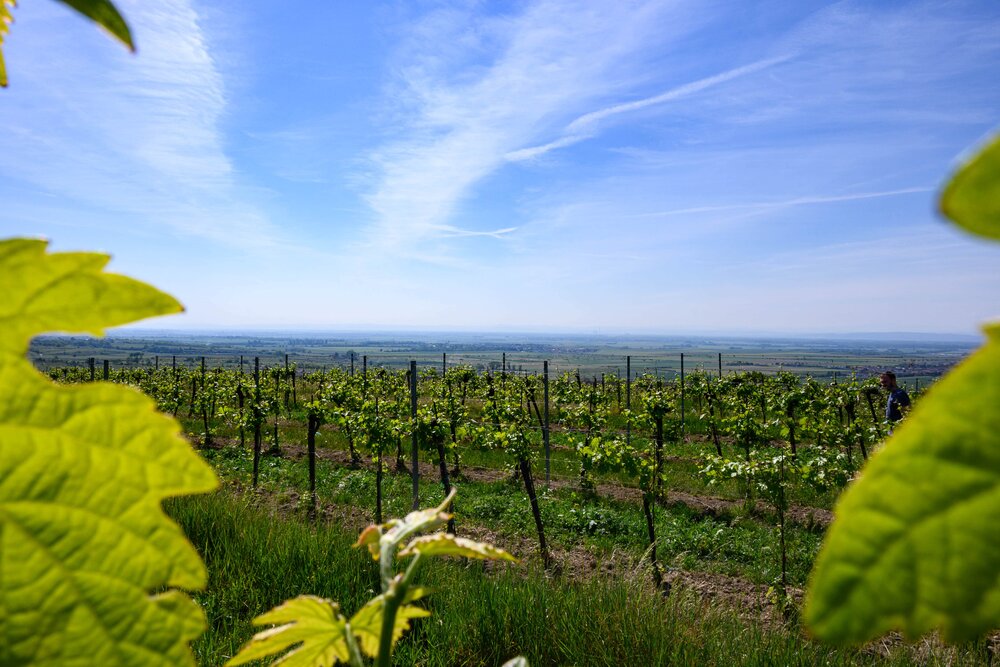
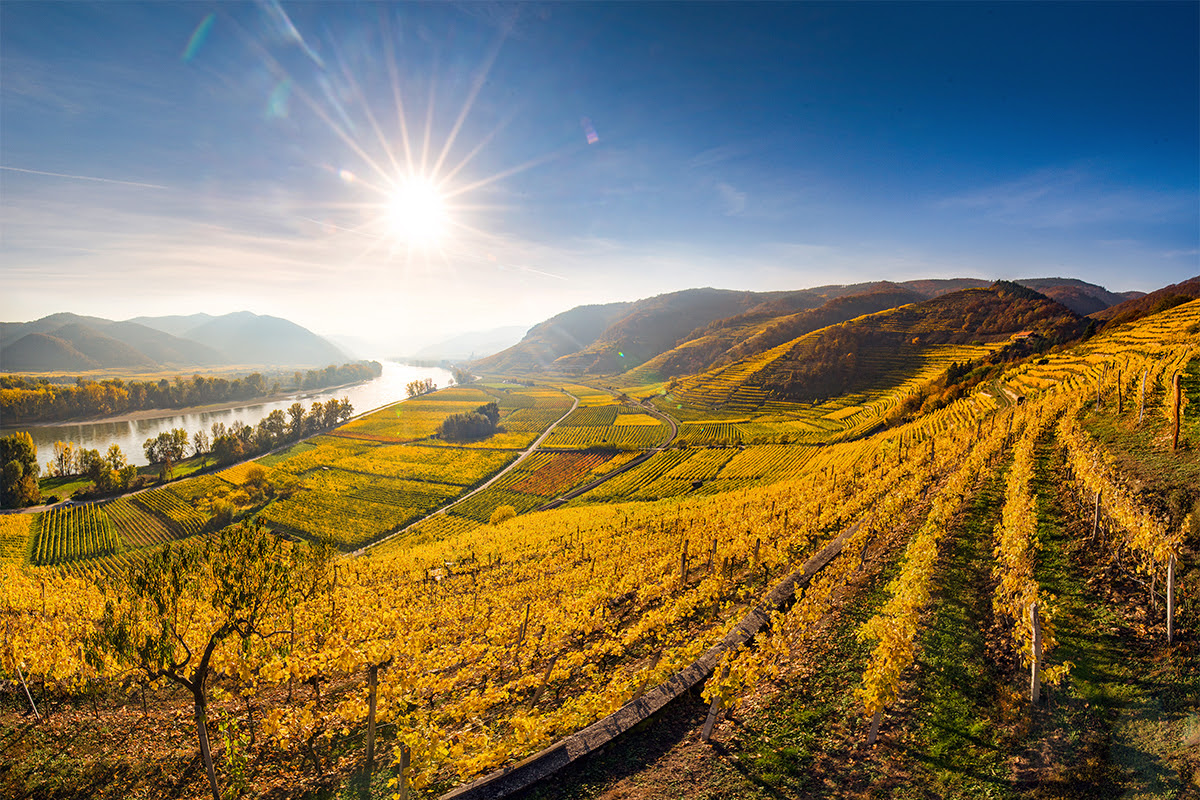
I remember asking Joe that exact question back in 2016 at the winery. And wondering at the sly smile he gave me. I looked at the label - as a wine from Austria’s Wagram region where both white and red grapes do well, I wasn’t surprised to see Zweigelt, Cabernet, and Merlot listed. Austria’s own Zweigelt gives plenty of ripe cherry/berry fruit and the Cabernet accounted for the wine’s freshness and herbal accents. And the Wagram’s loess and limestone soils surely helped drive the wine’s lovely minerality.
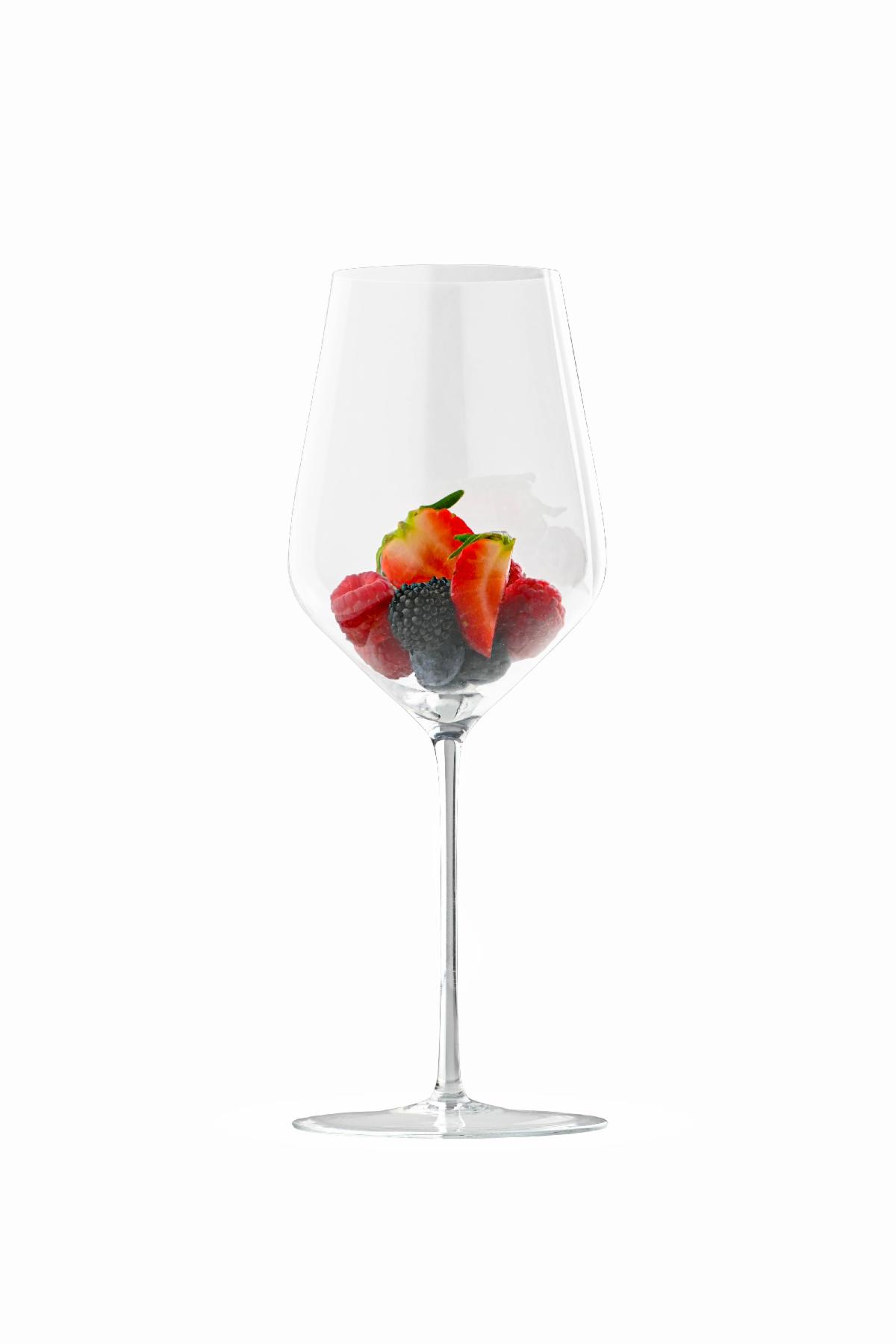
But where did all that strawberry come from? And the super pale color and tiny hint of green melon? Joe laughed and revealed his secret weapon.
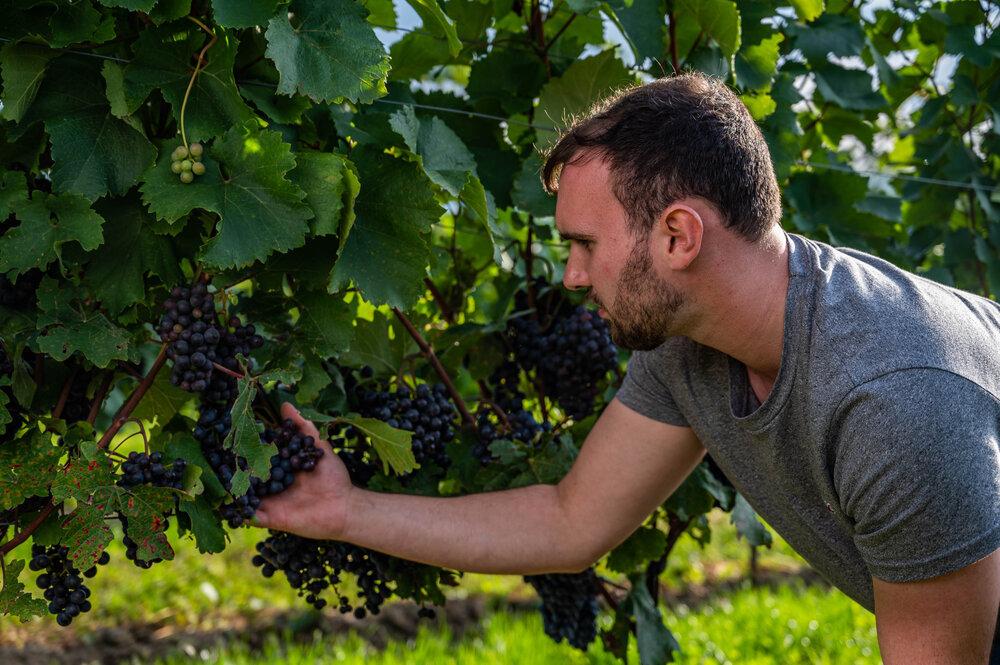
Around 2010, Joe needed to replant a limestone/clay vineyard and decided Merlot would be interesting to have for both reds and this rosé. So he ordered Merlot vines from his preferred nursery, received a bunch of boxes labeled “Merlot,” planted them, and started the three-year wait to have fruit he could make wine with. But when that fruit appeared, it looked…well, definitely not like Merlot! And after some research and “vigorous” discussions with the nursery, the truth came out.
Joe’s "Merlot" was…Grenache. The grape that makes up the guts of most great Provence rosé. And was 100% not legal to plant in the Wagram!
Doug House
Chain Bridge Cellars