Weekly Digest Number 17 - April 26th, 2022 |
|
Welcome to the RWU Rail & Labor News! This news bulletin is produced and emailed out each Tuesday morning. We hope you find each week's news and information useful. If so, please share with co-workers, friends, and colleagues. If you like, you can sign them up to get all the news from RWU HERE. Or forward them the link. Note: If you read over this news bulletin each week, you will be sure to never miss the important news of what is going on in the railroad world from a worker's perspective!
|
|
(Editor's Note: Railway Age Magazine was careful to point out that, "The opinions expressed here are those of Mr. Lindsey, and not of Railway Age." It is surprising that such an industry lapdog would even reprint a railroad worker's letter to the STB. Brother Lindsey speaks the truth, a truth that in the long run, the rail industry ignores at its own peril, and a truth that should inspire all railroad workers to action. His letter is making the rounds!)
|
|
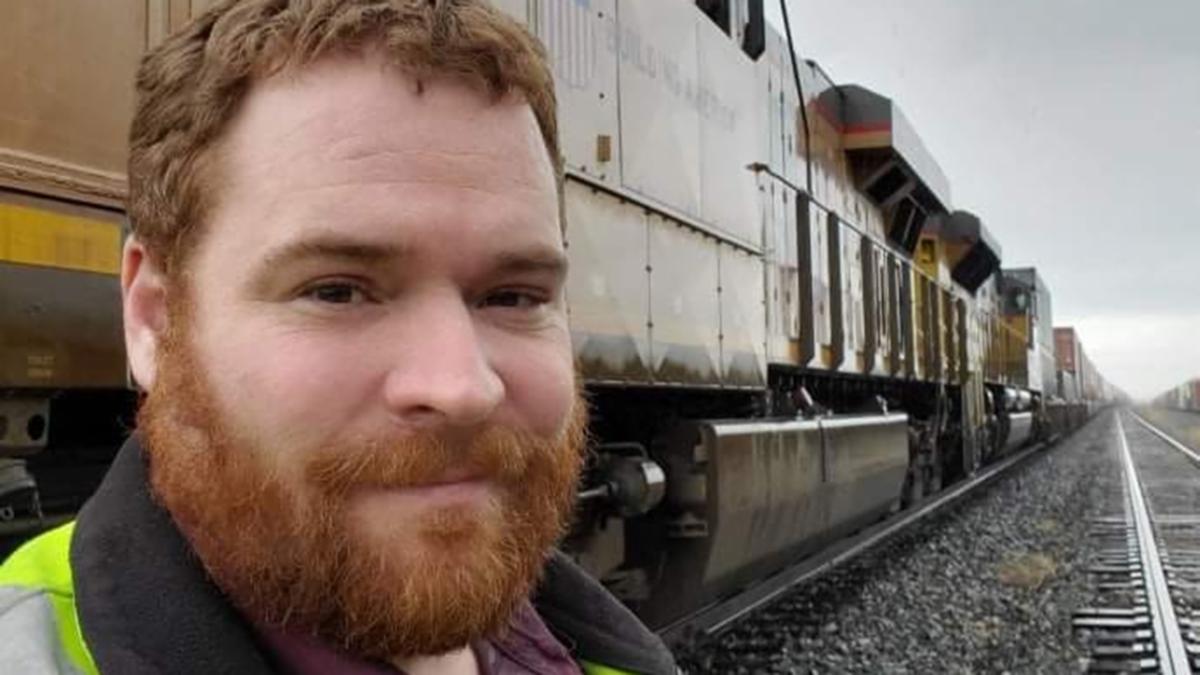
Union Pacific Locomotive Engineer Michael Paul Lindsey II sent this letter to STB Chairman Marty Oberman on April 18 as commentary for the hearing. It was entered into the Public Record by the STB Office of Proceedings on April 18. It is reproduced here in its entirety, with only minor edits for punctuation.
Dear Chairman Oberman,
As a UP engineer with 17 years of service, I would like to add my two cents to the actual reasons behind labor shortages, which have become a huge topic among the industry, railroaders, and the unions alike. I believe that there are little bits of truth floating around, but neither the unions nor the railroads seem to get it, and I don’t see a good resolution coming out of this any time soon. Let me start with an anecdotal saying that I heard from an old Southern Pacific hand during one of my first shifts on the job in Roseville all those years ago. “Kid, do you know why we are paid so well?” I shrugged my shoulders in response. “We are paid to be available on call, and for the inconvenience of our time.” This saying has been there in the back of my mind ever since, and today it lies at the root of the manpower shortage the railroads currently find themselves in. Railroads, it seems, have lost sight of this altogether in a world of “competitive” salaries, which really is just business school lingo for manipulating people out of what they really should be paid.
Could anyone do this job? I have heard this from railroad management for years, and the short answer is yes. Technically, anyone can be a conductor or an engineer. It does not require a specialized degree from an Ivy League school. There is however an immense amount of knowledge, experience, and skillset that goes into how to operate a train effectively or switch cars in a yard, or effectively manage industry switching on a local, and some people just never quite can get it. There is an immense amount of book knowledge and muscle memory that goes into doing the job effectively, but technically, yes, anyone could do it. There are plenty of careers that require no degree, but significant specialized knowledge and skillsets, and many of them pay far less than the railroad does. This is what the railroad means when they say they want to pay a more “competitive” salary.
Are railroaders all uneducated high school grads that can’t do anything else? This is another one of those gaslighting techniques that the carriers love to throw out there in their propaganda meetings about how “the crews are screwing them.” They love to say that we are overpaid high school grads. This is simply not true. I personally have a four-year business degree and manage my own rental properties and keep up-to-date balance sheets, income statements, and accounting records. Several of my coworkers have degrees and a few of them hold advanced degrees. Many of my coworkers are retired from the military, serving 20 years and discharging at very high ranks before beginning a career at the railroad. Others were small business owners, commercial farmers, or experts in fields such as welding and metal fabrication. They left for the promise of a good retirement, excellent pay, and excellent health insurance. The only thing they needed to do is to learn the job, be available for call, and allow their time to be inconvenienced by the railroad, just as that old-head SP conductor once told me.
But the game has changed. We are no longer paid for the inconvenience of our time ...
|
|
(Editor's Note: Thanks to staff writer Aaron Gordon for his efforts to bring the voices of BNSF workers to the American public in this follow up article.) |
|
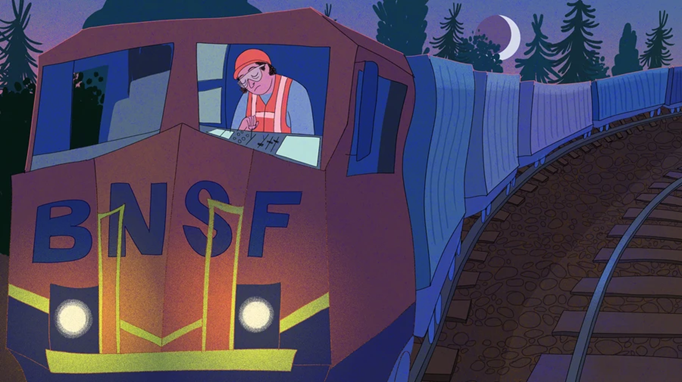
‘What Choice Do I Have?’ Freight Train Conductors Are Forced to Work Tired, Sick, and Stressed
Workers have had to choose between work and attending funerals for loved ones, parenting their kids, and going to the doctor, 45 BNSF employees told Motherboard.
|
|
Two weeks ago, a BNSF freight train conductor, who asked not to be named so he could speak freely about his experience, fell asleep on duty while the train was moving. He knows it’s a fireable offense, not to mention an unsafe practice that potentially endangers not only his own life but those of others near the tracks. But he couldn’t help it.
He fell asleep, he told Motherboard, because of the punishing attendance policy the railroad enacted in February called Hi Viz, a points system that requires workers to be on-call upwards of 90 percent of their lives, depriving them of any semblance of a non-work life. (The worker provided Motherboard with recent documents verifying his recent work schedule.) At the start of February, workers got 30 points. Taking time off almost always costs them between two and 15 points. They can only earn points back by being available for work with 90 minutes’ notice for 14 consecutive days, meaning they can’t go out of town, schedule doctors appointments, or go to a movie. Use all 30 points and they get suspended and given 15 more points. Use those 15 points and they get suspended even longer and given their last 15 points. Use those and they’re fired.
In the week leading up to him falling asleep at the switch, the conductor slept an average of five hours or less each night largely due to a hectic work schedule and stress around when the next call to work would come, he said. Prior to Hi Viz, if he was too tired to work, he could “lay off” in freight rail parlance, meaning take himself off the list of people available to work for 24 hours, giving him necessary time to recuperate. But now he cannot, because it would cost him too many points.
“With this point system, I have to choose between getting rest with my off time or spending a day with my family,” the conductor said.
So, he tried to work through the exhaustion, taking over 600 mg of caffeine pills—about six cups of coffee’s worth—but it didn’t help. The gentle rolling of the freight train moving along in the middle of the night lulled him to sleep. Freight train conductors can’t listen to music, books on tape, or do anything else that could potentially help them stay awake.
Each freight train has two crew members, a conductor and an engineer. The conductor said he was “pretty sure” the engineer fell asleep too.
What makes this worker’s story noteworthy is not that a freight rail conductor fell asleep while on duty, as much of a safety hazard as that is. It is that the conditions which resulted in his extreme fatigue are by design in the modern freight rail industry and all too typical of the daily experiences of the people responsible for running trains safely. After we published our first story about Hi Viz, Motherboard heard from 45 current and former BNSF conductors, engineers, and their families about what it's like to work under Hi Viz or be married to someone who is. Motherboard granted them anonymity so they could speak publicly about the issue without fearing reprisals from the company.
|
|
(Editor's Note: The STB vote on this one was unanimous. Does this portend a positive vote of the Board in the case of ther pending CP-KCS merger?) |
|
Regulators Approve CSX Transportation’s Acquisition of Pan Am Railways |
|
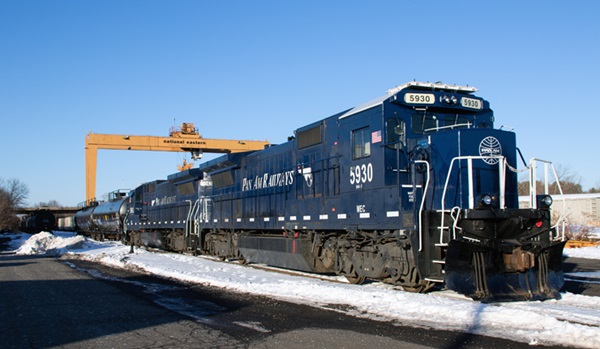
WASHINGTON – Federal regulators on Thursday gave the green light to CSX Transportation’s acquisition of New England regional Pan Am Railways.
Regulators largely agreed with CSX’s arguments that the merger will result in much-needed capital improvements to the worn out Pan Am system while improving service and safety. CSX has pledged to spend more than $100 million to improve Pan Am’s track, bridges, and yards as well as its aging and failure-prone locomotive fleet, over the next three years.
“After a searching review of the well-developed record in this proceeding, which included a two-day public hearing before the full Board, the Board concluded that this transaction satisfies the statutory criteria based on CSX’s representations to the Board. I look forward to improvements in the rail network with respect to reliable service and competitive transportation options in New England and beyond,” STB Chairman Martin J. Oberman said.
CSX, already the dominant freight railroad in the region, will extend its reach into Vermont, New Hampshire, and Maine, as well as to Saint John, New Brunswick, via Pan Am’s haulage rights agreement with Irving-owned short lines.
|
|
(Editor's Note: Seems like hardly a week goes by now that another trade association does not complain about the terrible rail service they are receiving. Last week was ethanol, the week before grain and feed. Now sweeteners. It is not much different than more than a hundred years ago when carriers like SP held most California businesses hostage to their monopolistic pricing and lousy service.) |
|
Food and Beverage Producers Forced to Curtail Production Due to Delayed Rail Shipments |
|
WASHINGTON – The trade group representing sugar shippers has told federal regulators that rail service problems have forced some of its members to stop or curtail production of food and beverages.
“Issues with switching have forced companies to reduce production in key product lines and shut down manufacturing facilities,” Richard Pasco, president of the Sweetener Users Association, wrote in his letter to the board.
Shippers and the nation’s largest food and beverage producers rely on railroads for bulk movements of sugar.
“Intermittent switches at the plants are not only causing it to take twice as long to get the bulk rail cars, but even when companies get them, they are not consistently switching them into the manufacturing plants,” Pasco wrote. “For example, a manufacturer may have 50 rail cars of sugar close to their facilities and still run out because the railroad is not switching them into the plants due to a lack of labor.”
The group also told the board its members are experiencing delayed shipments, increased dwell times, and bunched deliveries of carloads.
|
|
(Editor's Note: And now our very food supply is being threatened by the Union Pacific's "crew and locomotive shortages." UP has - or did have - plenty of locomotives and plenty of crews a few short years ago? Where did they go? They were sidelined by the railroad due to PSR, self-inflicted wounds that we are all paying for while prices go up, shortages abound, and yet, record profits continue unabated, lining the pockets of these thieves.) |
|
Fertilizer Producer Says UP Shipment Restrictions Could Threaten Crops |
|
“The timing of this action by Union Pacific could not come at a worse time for farmers,” CF Industries CEO Tony Will said in a statement on Thursday. “Not only will fertilizer be delayed by these shipping restrictions, but additional fertilizer needed to complete spring applications may be unable to reach farmers at all. By placing this arbitrary restriction on just a handful of shippers, Union Pacific is jeopardizing farmers’ harvests and increasing the cost of food for consumers.”
CF Industries informed its customers located on UP that railroad-mandated shipping reductions would result in nitrogen fertilizer shipment delays during the spring application season. The company also informed customers that it would be unable to accept new rail sales involving UP for the foreseeable future.
UP on April 8 told CF Industries that it would have to reduce its shipments by nearly 20% as part of the railroad’s plan to reduce congestion in the midst of crew and locomotive shortages.
CF Industries said it will ask the Surface Transportation Board to intervene so that fertilizer shipments are prioritized.
|
|
(Editor's Note: In March, Amtrak submitted their annual report on the performance of so-called "host" freight railroads over which Amtrak operates many of its trains. We reported on this last month. Now read the full report at the button below complete with lots of cool charts and graphs.) |
|
Amtrak Submits Annual Report on Host Railroads Performances |
|
Amtrak has issued a 2021 Host Railroad Report Card, ranking the Class I railroads for keeping Amtrak intercity passenger trains on time, and presented an award to Canadian Pacific (CP) for earning its sixth-consecutive “A” grade.
|
|
(Editor's Note: You know the situation is getting dire when the railroad unilaterally offers some form of compensation to their employees. Nevertheless, this plan will not be enough. Recruiting workers to a job while explaining that the employer hopes to soon eliminate by running trains with a single crew member might prove difficult. Perhaps NS and the other Class One's need to rethink their penchant for single person ops, cuts to healthcare, and other givebacks, and bargain a decent contract. THAT is the way to recruit and retain employees!) |
|
NS Expands Conductor Trainee Incentive Program |
|
Norfolk Southern Railway is expanding its conductor trainee incentive program to Bellevue, Ohio; Elkhart, Indiana; and Fort Wayne, Indiana.
The program includes starting bonuses of $5,000.
NS conductors are guaranteed minimum annual pay of $52,000 with benefits including the Railroad Retirement System and a 401(k) savings option, NS officials said in a press release. Guaranteed minimum earnings increase to $63,500 over four years of service, but with additional work opportunities, most conductors earn far more than the guaranteed minimum, NS officials added.
The job can entail coupling rail cars to build trains, delivering rail cars to local customers and transporting trains hundreds of miles across the Class I’s freight network. The 10-to-13-week training program includes classroom and field training. The first two weeks are conducted at the Norfolk Southern Training Center in McDonough, Georgia; the remaining weeks take place at or near the trainee's hiring location.
Applicants must be 18 years of age and successfully complete a background check.
Other locations offering the starting bonuses include Binghamton, New York; Birmingham, Alabama; Buffalo, New York; Chattanooga, Tennessee; Cincinnati, Ohio; Conway, Pennsylvania; Harrisburg, Pennsylvania; Linwood, North Carolina; Louisville, Kentucky; Manassas, Virginia; Roanoke, Virginia; and Sheffield, Alabama.
|
|
(Editor's Note: It appears that the draconian nature of railroad operations is infecting the airline industry. Interestingly, the article seems to suggest that airline pilots actually have the right to "mark off" fatigued. This is worth following up on. We will meet some of them hopefully in June at the Labor Notes conference in Chicago!) |
|
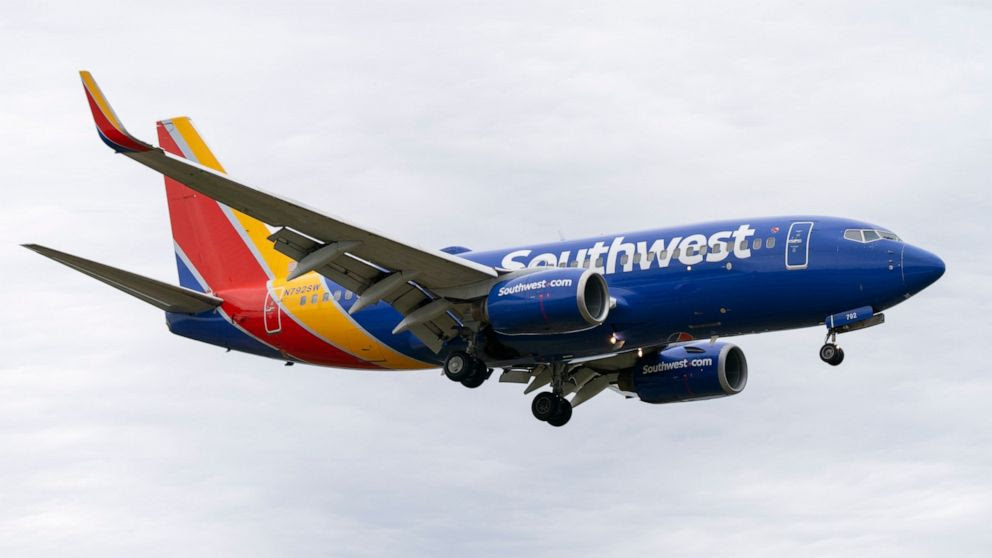
Southwest Pilots' Union Says Fatigue is a Safety Problem
Pilots at Southwest Airlines say fatigue from poor scheduling is a growing problem and is raising safety concerns
|
|
DALLAS -- Union officials say pilots of Southwest Airlines pilots are suffering through an epidemic of fatigue due to poor scheduling practices by the airline, and that it is raising safety concerns.
Union leaders said in an open letter Tuesday to Southwest CEO Robert Jordan and other executives that problems started last summer when the number of travelers returned nearly to normal pre-pandemic levels, and have gotten worse.
The Southwest Airlines Pilots Association, which is currently negotiating with the airline for a new contract, said the number of pilots asking to be relieved from a flight assignment because of fatigue jumped 330% in March compared with the same month in pre-pandemic years.
“April is already setting fatigue records,” they said. “Fatigue, both acute and cumulative, has become Southwest Airlines’ number-one safety threat.”
Southwest spokeswoman Brandy King said the airline saw “a significant and steady decline” in pilots calling in fatigued after the airline made schedule changes in November. She said the March increase was expected, as weather-related flight cancellations disrupted schedules.
King said the rise in fatigue calls in March shows that the system works and that the airline lets pilots determine if they are too tired to fly.
Last summer, Dallas-based Southwest, the nation’s fourth-largest airline, was plagued by flight cancellations due partly to staffing shortages. The airline responded by hiring several thousand workers, executives have said.
|
|
(Editor's Note: Despite what the carrier may say, this is not a Tentative Agreement but simply an anticipation that some form of wage increase will probably happen. The good news here is that in doing so, the carriers have provided much need funding for workers' expenses, so hopefully this will in fact facilitate the workers holding out for longer to achieve e a better contract without being starved into submission.) |
|
SMART-TD Agrees to ‘Advance Payments’ From CSX |
|
CSX on April 19 reached what it’s calling a “tentative agreement” with the Sheet Metal, Air, Rail and Transportation Workers, Transportation Division (SMART-TD) to provide SMART-TD Trainmen and Yardmasters with “monthly advance payments on future wage adjustments anticipated in settlement of the 2020 round of national bargaining between rail labor and the Class I railroads.” CSX also said it “notified its other labor organization representatives that it intends to reach agreements to provide identical payments to all unionized employees.”
The tentative agreement with SMART-TD provides that the monthly payments of up to $600 would be made from May 2022 through the end of the year, “or until a negotiated wage settlement is reached, whichever is earlier,” CSX noted. “The advance payments would be deducted from any retroactive or future pay increases that may be agreed upon at national bargaining.”
The 2020 round of bargaining began in November 2019, and the National Carriers’ Conference Committee (NCCC)* and rail labor coalitions are currently in mediation before the National Mediation Board (NMB). “It is unclear how long it may take for negotiations to conclude,” CSX said. “CSX has advised its labor unions and seeks their agreement to implement these advances, as required under the Railway Labor Act.”
|
|
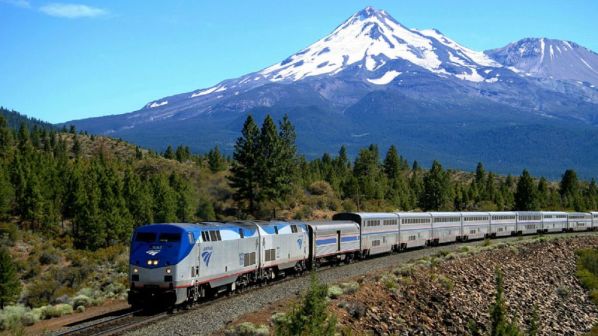
Amtrak to Restore Four Long-distance Trains to Daily Service in Late May |
|
WASHINGTON — Four of the seven Amtrak long-distance trains currently operating five days per week will return to daily schedules the week of May 23, according to information obtained by Trains News Wire. Two others will continue to run on the five-day-per-week schedule, while cancellation of Silver Meteor service to and from Florida will continue until Sept. 11.
Other moves outlined in a planning document include the end of a shared-equipment experiment involving the Capitol Limited and Texas Eagle; capacity moves involving the Cardinal and some Northeast Corridor trains; and an additional Boston-Washington Acela round trip.
“Bolstered by demand for both business and leisure travel, Amtrak will restore additional train frequencies for summer travel,” Amtrak said in a statement. “Providing customers with increased travel options, the new summer schedule features additional Acela and Northeast Regional frequencies as well as some long distance routes.”
Returning to daily operation will be the Lake Shore Limited, Southwest Chief, California Zephyr, and Empire Builder, while the Crescent and City of New Orleans will remain at their current five-day-per-week frequencies. The table below includes more details.
Amtrak reduced the trains’ frequencies in January, first targeting March 28 and then May 23 as dates to restore operation. It had been accepting daily bookings after those dates [see “Amtrak extends cuts …,” News Wire, March 3, 2022].m Passengers who have made Silver Meteor, City of New Orleans, and Crescent reservations on days when the trains will not run after May 22 are being notified.
|
|
VIA Rail Canada Sets Restoration of Most Service |
|
In addition to the previously announced return of two weekly round trips for the flagship, Toronto-Vancouver Canadian, plans announced last week will see three weekly round trips for the Montreal-Halifax Ocean, tentatively beginning June 3.
Also returning to three weekly round trips will be services between Jasper, Alberta, and Prince Rupert, B.C., as of June 10; Sudbury and White River, Ontario, as of July 14; Montreal and Senneterre, Quebec, as of June 29; and Montreal and Jonquière, Que., as of June 29.
|
|
TSA Will No Longer Enforce Federal Mask Mandate |
|
The Transportation Security Administration announced yesterday it will no longer enforce its security directives and emergency amendment requiring mask use on public transportation and in transportation hubs.
The announcement follows a federal judge's ruling yesterday that struck down the mask mandate for planes, public transportation, train stations and airports. The judge determined that the Centers for Disease Control and Prevention's extension of the mask mandate through May 3 exceeded the agency's legal authority.
Due to the potential severity of the COVID-19 Omicron subvariant known as BA.2, the CDC continues to recommend that people wear masks at indoor public transportation settings.
Immediately after the judge’s ruling, Amtrak and a number of major transit-rail agencies — including New Jersey Transit, Southeastern Pennsylvania Transportation Authority and the Washington Metropolitan Area Transit Authority — announced mask-wearing is now optional for passengers and employees.
|
|
(Editor's Note: One cannot help but wonder how long this downward trend is going to continue. The nation's railroads are moving less freight than 16 years ago and it just gets worse. The rail carriers blame everyone and everything but themselves. When will they ever be forced to take responsibility for the quagmire which they have created?) |
|
North American Rail Volume Down Through 15 Weeks, AAR |
|
North American rail volume for the first 15 weeks of 2022 (ending April 16) on 12 reporting U.S., Canadian and Mexican railroads came in at 9,987,458 carloads and intermodal units compared with 10,389,949 in 2021. Cumulative volume in the U.S. was 7,355,182 carloads and intermodal units vs. 7,577,584 in 2021; in Canada, 2,083,303 carloads, containers and trailers vs. 2,275,481 in 2021; and in Mexico, 548,973 carloads and intermodal containers and trailers vs. 536,884 in 2021.
According to the AAR, for the week ending April 16, 2022, U.S. Class I railroads hauled a total of 489,801 carloads and intermodal units, down 8.1% compared with the same week last year. This comprises 221,228 carloads—down 6.8% from the prior-year period—and 268,573 containers and trailers—down 9.2% compared with 2021.
|
|
|
|
|
|
|