Weekly Digest Number 7 - February 15, 2022 |
|
Welcome to another year of the RWU Rail & Labor News! This news bulletin is produced and emailed out each Tuesday morning. We hope you find each week's news and information useful. If so, please share with co-workers, friends, and colleagues. If you like, you can sign them up to get all the news from RWU HERE. Or forward them the link. Note: If you read over this news bulletin each week, you will be sure to never miss the important news of what is going on in the railroad world from a worker's perspective!
|
|
(Editor's Note: The leadership of one of the biggest and potentially most powerful union in the nation has pledged to fight back against the corporations that own the U.S. It is up to the rank & file to get active and hold them accountable to that promise.) |
|
After Electing New Leadership, the Possibilities for the Teamsters Are Enormous |
|
Big changes are afoot in one of the largest labor unions in North America. Last November, following a three-year campaign, the Teamsters United (TU) slate led by Sean O’Brien defeated the Teamster Power (TP) slate led by Steve Vairma by a two-to-one margin in the election to determine the top leadership of the 1.3-million-member International Brotherhood of Teamsters (IBT).
Vairma, head of Denver Local 455, had received the endorsement of outgoing incumbent James P. Hoffa, who did not seek reelection after twenty-three years in office. O’Brien, head of Boston Local 25, had the backing of Teamsters for a Democratic Union (TDU), the rank-and-file reform movement in the Teamsters.
Although the election was not widely reported, even in a year when workers and their unions managed to make some headlines, it could be one of the most consequential events in recent years for shaping the future of the US labor movement. With members located throughout the transportation and logistics sector, Teamsters can exert power all along the supply chain.
That leverage makes them an essential part of any strategy for rebuilding labor’s power, including perhaps the biggest challenge of all: organizing Amazon.
But under Hoffa, that power has remained more potential than actual. His leadership has been characterized more by concessions and cutbacks than organizing and fightbacks. O’Brien and Teamsters United promised something different, a more militant approach to building union power. As they take the helm, can we expect them to deliver?
|
|
(Editor's Note: With the assistance of the Courts, BNSF was able to implement their hateful new attendance policy on Feb. 1, apparently without incident. But the deep anger and resentment among the rank & file festers. We have not heard the last of this.) |
|
BLET, SMART-TD File Opposition to Preliminary Injunction in Attendance Dispute at BNSF |
|
Yesterday, the BLET and SMART-TD filed their oppositions to BNSF’s request for the court to convert the January 25, 2022, Temporary Restraining Order (TRO) into a preliminary injunction. The unions each filed for their own preliminary injunctions against BNSF’s implementation of its new Hi Viz attendance policy last week on February 2.
BLET and SMART-TD continue to maintain that BNSF’s policy, issued in the midst of the ongoing COVID-19 pandemic and continuing supply chain issues caused in significant part by the nation’s railroads’ own cost-cutting measures, represents the epitome of corporate greed. This new policy will require employees to choose between going to work sick and spreading the COVID-19 virus to their co-workers and those co-workers’ families or face termination by BNSF, once more proving there is no shame amongst the modern-day robber barons like BNSF.
While BLET and SMART-TD will continue to abide by the court’s TRO, the unions will continue to use every legal means available to prevent BNSF from carrying on its unconscionable and illegal attendance policy. Additional information will be forthcoming as it is available.
|
|
(Editor's Note: U.S. railroad workers would be wise to watch these developments closely. Canadian rails have struck a number of times in recent years with some success. An international coordination of strike activity in the U.S. and Canada could be very effective. New Teamster leadership, are you on this?) |
|
CP Conductors, Engineers Taking Strike Vote |
|
Unionized conductors, engineers, trainmen and yardmen for Canadian Pacific Railway are getting their ballots for a strike vote this month, as contract talks have again wound up in dispute.
The Teamsters Canada Rail Conference (TCRC), which represents about 3,000 CP employees in those categories, said strike ballots were being distributed to members starting Feb. 1, with the balloting period to start Friday and run to Feb. 21.
In a release Thursday, the union said it expects to have the results of its vote in hand by the end of the month.
The union’s negotiating committee had said in a memo to local chairs in December that it would file a “notice of dispute” with the federal labour ministry regarding its talks with Calgary-based CP.
Labour Minister Seamus O’Regan named a conciliator/mediator from his department’s Federal Mediation and Conciliation Services (FMCS) to support the negotiation process, the union said Thursday.
Teamster and CP representatives were scheduled to have taken part in meetings with the FMCS conciliator Tuesday to Thursday in Calgary. Legally, the union noted, a work stoppage can only happen following a 21-day “cooling-off” period after the conciliation process is completed.
The “main issues at hand” in the Teamsters’ dispute with CP are wages, benefits, and pensions, the union said.
CP’s latest collective bargaining agreement with its Teamster-led conductors, engineers, trainmen and yardmen expired at the end of 2021. That four-year deal was reached after a one-day strike in May 2018. The contract leading up to the 2018 strike was itself reached after a one-day strike in February 2015, ending when the union and company went to binding arbitration.
|
|
Transport Canada Proposes ETC Plan to Improve Rail Safety |
|
Transport Canada has published a notice of intent in the Canada Gazette that proposes implementation of enhanced train control (ETC) technology to improve freight and passenger rail safety.
ETC involves an embedded driver assist mechanism that reduces the potential for human error by alerting the train crew to potential danger on the tracks. More advanced implementations of ETC can stop a train’s movement to prevent a collision or derailment.
The agency’s approach focuses on having railroads tailor investments according to the level of safety risk posed by individual rail corridors. Advanced ETC would be used in high-risk corridors, while ETC with a more basic level of functionality would be used in low-risk corridors, Transport Canada officials said in a press release.
The agency is seeking feedback from the rail industry and labor unions.
"The safety benefits of enhanced train control technologies are widely recognized when it comes to helping prevent certain railway accidents caused by human behavior," said Transport Minister Omar Alghabra. "Successfully introducing this technology to Canada will involve working closely with industry, labor representatives and other stakeholders to develop new approaches, standards and protocols."
|
|
(Editor's Note: If you are a working person, you already kinda know this. But to see the actual tally of how we collectively have been ripped off kinda makes you feel sick. Just think about how much better our lives could now be if we had a political economy that worked for us instead of the billionaire class. The rail industry is a blatant example of this redistribution of wealth from the lower to the upper echelons, with the industry now ranked as one of the most profitable on Wall Street.) |
|
In a Single Year, $1.78 Trillion Was Taken From the Working Class
The wealth that workers should have received, had wages kept up with productivity, was instead given to shareholders
|
|
The fate of the Build Back Better Act is currently unknown. The bill would be the largest social spending achievement in decades and provide needed services and support to millions of families — with more than half of the proposed $1.75 trillion in spending going to child care, preschool, affordable housing, higher education and healthcare.
But this proposed spending, over 10 years, is barely noticeable compared with the wages workers have lost over the past 40 years. In terms of productivity, wages should be significantly higher than they are, and the average worker continues to be shortchanged thousands of dollars annually. And much of the money workers should be getting is instead being pumped up to the top 0.3% of income earners.
The following chart from the Economic Policy Institute (EPI), an independent think tank, shows the growing gap between productivity and worker pay since 1979, during which productivity grew 3.5 times as much as pay.
|
|
(Editor's Note: While the Class One carriers attempt to block progress, the DOT, FRA, Amtrak, states and communities across the nation are gearing up for lots of new trains. Never have we had such an opportunity in the last half century to expand the U.S. passenger train network. To get there, we will have to defeat the Class One freight carriers' opposition.) |
|
FRA Solicits Input on New Passenger-Rail Corridor Program |
|
The Federal Railroad Administration (FRA) yesterday issued a request for information (RFI) on a new program that will identify intercity passenger-rail corridors across the United States.
The Corridor Identification and Development Program was authorized by the Infrastructure Investment and Jobs Act (IIJA) that President Joe Biden signed in November 2021. The program will create a framework to facilitate the development of new, enhanced and restored intercity passenger-rail corridors throughout the country, according to the RFI published in the Federal Register.
FRA officials are seeking comments on how the program can best serve stakeholders and the public in facilitating the corridors' development. Written comments are due March 9.
|
|
(Editor's Note: This is long overdue and hopefully will shed some light on this situation. RWU urges all those active T&E workers to take part in this survey.) |
|
BLET Asks Members to Participate in Fatigue Research Study |
|
WASHINGTON, D.C., February 9 — The Brotherhood of Locomotive Engineers and Trainmen (BLET), working in collaboration with the Federal Railroad Administration (FRA) and the Virginia Tech Transportation Institute, is asking locomotive engineers and conductors to participate in a confidential survey regarding fatigue.
The goal of the research study is to better understand the factors that contribute to fatigue in locomotive engineers and conductors. To participate, you must be a current locomotive engineer or conductor on either a freight or passenger service.
Officials with Virginia Tech stress that the survey is anonymous and will not collect any personally identifying information. According to the survey’s creators: “Your contribution to this research is valuable. Assessing the important factors that contribute to fatigue and the impact these factors have on locomotive engineer and/or conductor safety is necessary to find solutions that benefit rail workers, management and the industry. This information is a critical first step in developing fatigue-mitigation strategies for locomotive engineers and conductors.”
|
|
(Editor's Note: CSX has claimed that without $2.3 billion in infrastructure improvements - more than the carrier spent on capital improvements to its entire railroad in 2017 - the new Amtrak service would wreak havoc upon their ability to move freight on this line. This is a flat out lie. The carriers are adamant that Amtrak not expand operations here or on most any freight mainline because they know that these trains will interfere with their "UNPrecision UNScheduled business model. A railroad that was truly scheduled and was precise in its operation could easily handle a couple of short, fast moving passenger trains on its tracks. AND WE ALL KNOW THIS!)
|
|
Gulf Coast Battle: CSX Seeks Shipper Support; Amtrak Advocates Respond |
|
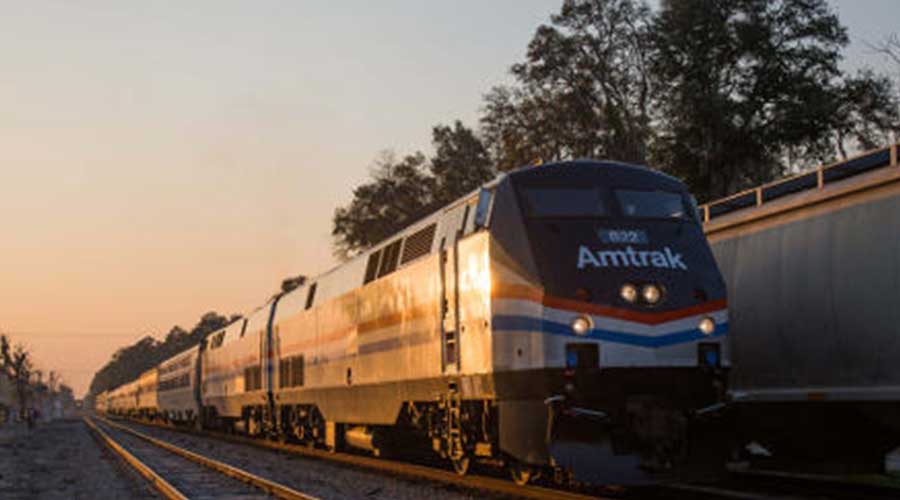
In a memo sent to shippers on Feb. 4 (published below), CSX President and CEO Jim Foote urged them to support the railroad in its efforts to stop the proposed Amtrak service, or at least stall it until unless the capacity improvements CSX wants are made. The message went out just before the Feb. 7 deadline for the public to register with the Surface Transportation Board to comment at a Feb. 15 STB hearing on the Amtrak proposal. Not to be outdone, Amtrak issued its own strongly worded response, as did advocates. The hearing will likely expand to two days, concluding on Feb. 16.
|
|
Rail Passenger Association Responds |
|
“It’s been 16 years since Amtrak’s Gulf Coast passenger train was knocked offline by Hurricane Katrina. Since then, we’ve seen 16 years of advocates fighting to restore this critical national corridor, 16 years of studies, 16 years of negotiations. All to restore one train per day.”
In the same blog, Jim shares the news that CSX CEO Jim Foote sent a message to the railroad’s customers asking them to sign-on to legal action the railroad is taking against Amtrak to make sure that the “new service is not irresponsibly forced through.”
Service between New Orleans & Mobile is being “irresponsibly forced through”. After 16 years.
While we prepare to testify before the Surface Transportation Board, we are asking our members & supporters to voice their support for the restoration of passenger rail in the Gulf Coast by signing the petition linked below. Let’s send a message to CSX that they can no longer deny their legal obligations.
|
|
(Editor's Note: While Union Pacific and the Class One railroads raise the alarm about self-driving trucks, they are in fact complicit in their promotion! In fact, this should come as no surprise. The Class One's are determined to run trains with a single - or no - crew member aboard. Presumably, UP sees this effort (see article below) as adding pressure to eliminate the second rail crew member and ultimately all crew members from the locomotive cab.) |
|
Self-Driving Big-Rigs Will Haul Freight in Arizona |
|
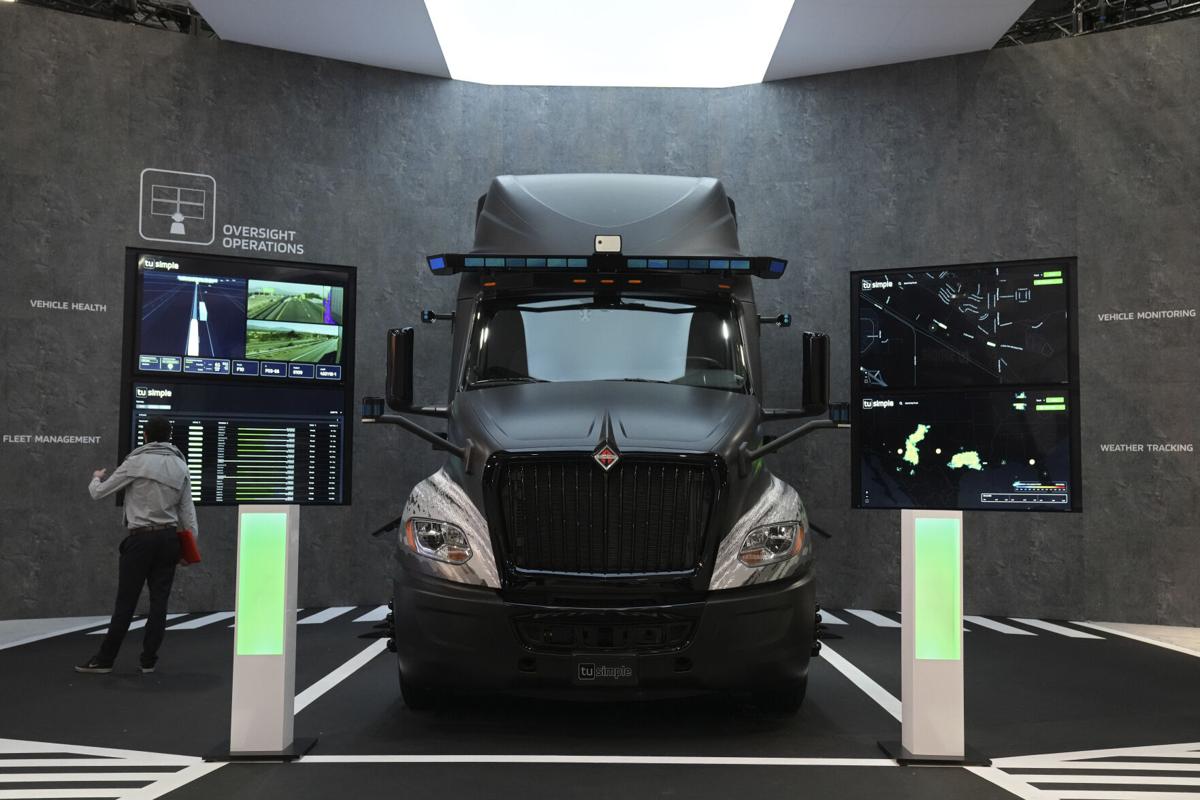
Since late December, San Diego autonomous driving outfit TuSimple has run seven semitruck trips between Tucson and Phoenix without a driver in the vehicle.
These driver-out demonstrations aim to prove that TuSimple’s artificial intelligence autonomous driving technology works repeatedly along a real freight hauling route.
And this spring, the recently public company hopes to add another layer of proof by delivering actual freight for Union Pacific — one of the nation’s largest railroad shippers.
While not groundbreaking by itself, the deal with Omaha-based Union Pacific announced Wednesday aims to provide additional evidence that TuSimple’s technology can add value to the freight hauling industry in real-world conditions.
“It is really about automating the world’s first autonomous freight lane — the first one where we have repeated operations on a driver-out basis going from one real freight location to another,” said Chief Financial Officer Pat Dillon.
Financial terms of the agreement were not disclosed, nor were other details such as how many driver-out freight hauling trips per week are expected.
TuSimple will own and operate the 53-foot big rig making the roughly 80-mile trip between the Tucson railyard and a distribution site near Phoenix using open, public roads without a human in the vehicle.
|
|
CN, CP Dispute Continues over STB Review of KCS Merger Application |
|
Late last week, CN filed a letter with the STB in response to CP’s letter that addressed CN's intention to submit a responsive application asking the STB to condition its approval of the CP-KCS merger on the divestiture of KCS lines from Kansas City, Missouri, to Springfield and East St. Louis, Illinois, to CN.
The Springfield Line is a direct competitive alternative to CP’s route from Kansas City to Chicago, and beyond to Detroit and eastern Canada, according to CN.
To read CN’s letter in response to CP’s Jan. 28 letter, click here.
To read the CP letter to the STB, click here.
|
|
Upcoming Webinars - New Passenger Trains |
|
Big Sky Passenger Rail Authority
Looking for inspiration on the power of local government in passenger rail advocacy? Then join Rail Passengers on Wednesday, February 23rd at 3pm eastern as we talk with Dave Strohmaier, Chairman of Montana’s Big Sky Passenger Rail Authority about how the Authority came into existence and the opportunities for local governments to catalyze regional and national change.
Established during the height of the pandemic in November 2020, the Big Sky Passenger Rail Authority became the first regional passenger rail authority in Montana, and was entirely the result of county governments coming together around the shared vision of restoring the North Coast Hiawatha, which was discontinued by Amtrak in 1979. In the past year and a half, they’ve arguably accomplished more toward this goal than in the previous 42 years combined.
|
|
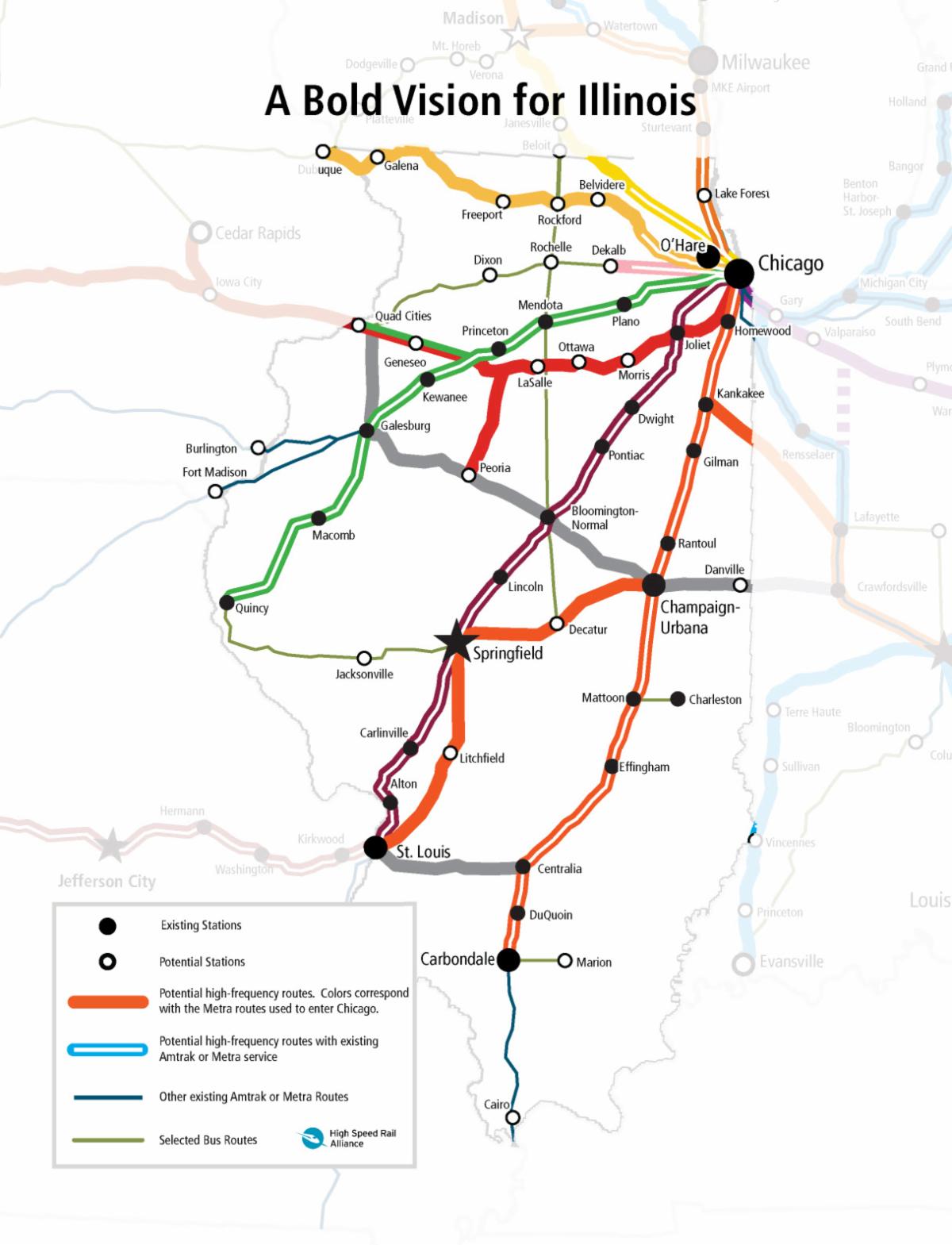
Illinois Fast Track Initiative
Join us as we lay out a strategy for how Illinois' transportation system can be transformed to meet the economic and environmental challenges of the 21st century.
The passing of the federal infrastructure bill provides a tremendous opportunity to improve our nation’s passenger rail, but states need to rise to the occasion and take advantage of the availability of funds. Illinois should be at the forefront of this effort and has the potential to become a leader in developing a high-speed rail network for the Midwest and the nation
The High Speed Rail Alliance envisions an ambitious program to reconnect cities and towns with convenient, affordable and productive trains. It starts with a statewide plan for modernizing intercity trains, commuter trains, transit systems and buses—and integrating them into a robust connected network. A 220-mph high-speed trunk line will tie the statewide network together.
|
|
More Passenger Train News ... |
|
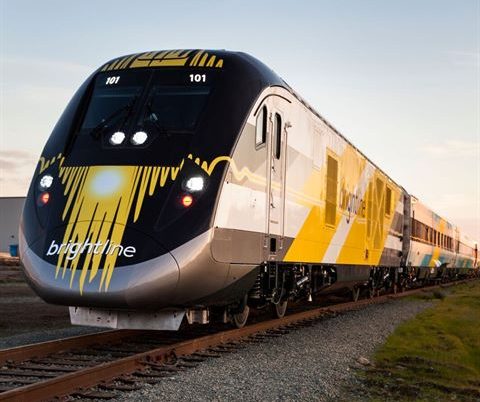
Bright Day for Brightline
Brightline’s Orlando extension project is currently 70 percent complete, employs more than 1,300 construction workers and is expected to be complete in late 2022, carrying passengers in 2023.
To watch the arrrival of Bright Blue 2 at the road’s vehicle maintenance facility just south of Orlando, please follow this link.
|
|
A New Pricing Plan for Commuter Railroads? |
|
While I do not have hard facts on what the long-term impact on COVID-19 will be on downtown office workers, we know the long-term trends are unfavorable.
- Consolidation of firms has reduced the number of total companies employing office workers.
- Automation has reduced the amount of office workers needed to do the same amount of labor. This trend is likely to continue.
|
|
(Editor's Note: In a booming economy, with demand for transport high, a truck driver shortage and all the rest, the U.S. freight railroads keep moving less and less freight. With the Class One's now targeting an Operating Ratio of 0.50, there appears to be no end in sight to this irresponsible madness. We are moving less freight than we did 16 years ago, and the numbers keep dropping...) |
|
Week 5: U.S. Rail Traffic Behind 2021 Levels |
|
Two of the 10 carload commodity groups posted an increase compared with the same week in 2021, according to AAR. They were coal, up 4,682 carloads, to 64,582; and chemicals, up 348 carloads, to 33,921. Commodity groups that posted declines from the previous-year period included motor vehicles and parts, down 4,614 carloads, to 10,432; grain, down 2,569 carloads, to 23,517; and petroleum and petroleum products, down 2,315 carloads, to 9,148.
For the first five weeks of 2022, U.S. railroads reported cumulative volume of 1,120,551 carloads, dipping 3.1% from the same point last year; and 1,241,309 intermodal units, dropping 14% from 2021. Total combined U.S. traffic for the first five weeks of 2022 was 2,361,860 carloads and intermodal units, a fall-off of 9.1% compared with last year.
|
|
|
|
|
|
|