BDRC Banner
Because Every Birth Defect has a Cause
July Newsletter
Issue 13 Vol: 11
Artificial Heart Valve Would Grow with Kids, Cutting the Need for Repeat Surgeries

An expandable artificial heart valve could save children with congenital heart disease from repeated open heart surgeries as they grow up, researchers report.

Current artificial heart valves are fixed in size, meaning children need to get larger ones as they grow. Children who receive their first artificial valve before age 2 will require up to five open-heart operations before they become adults.


This new design means children could keep the same artificial heart valve until adulthood, and it could also benefit adults with heart valve defects, according to the Boston Children's Hospital team.

Babies born near natural gas flaring are 50 percent more likely to be premature: Study

Living near fracking operations that frequently engage in flaring—the process of burning off excess natural gas—makes expectant parents 50 percent more likely to have a preterm birth, according to a new study.
‌
A birth is considered preterm when a baby arrives before 37 weeks (about eight and a half months) of pregnancy. Preterm births can result in underdeveloped lungs, difficulty regulating body temperature, poor feeding, and slow weight gain in babies.

Fracking, another name for hydraulic fracturing, is a process of extracting oil and gas from the Earth by drilling deep wells and injecting liquid at high pressure. While  many studies  have established links between living near fracking wells and numerous health effects, including preterm births, this is the first study to specifically investigate the health impacts of flaring.
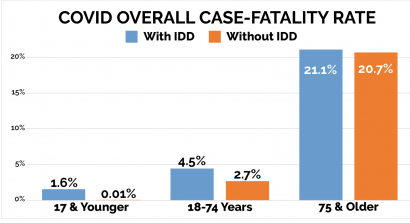
Individuals with Developmental Disabilities May Suffer More Severe COVID Outcomes


As the global pandemic continues to grow, concerning news originating from SUNY Upstate Medical University shows that COVID-19 appears to pose a greater threat to people with intellectual and developmental disabilities (IDD).  The report  published in Disability and Health Journal set out to compare COVID-19 outcomes among people with and without IDD through three different age spans.

The research team gathered data using TriNetX, a global federated network of electronic medical records from 42 healthcare organizations representing hospitals, primary care and specialty treatment providers. The team collected data and examined trends in comorbidities, numbers of cases, numbers of deaths, and case fatality rates for individuals in both study cohorts who had a positive diagnosis for COVID-19 from April 14 through May 14, 2020.

Feds to cover more ailments linked to Agent Orange nearly 50 years after end of Vietnam War


Federal officials are taking steps to help some veterans of the Vietnam War nearly 50 years after the official end of the conflict.

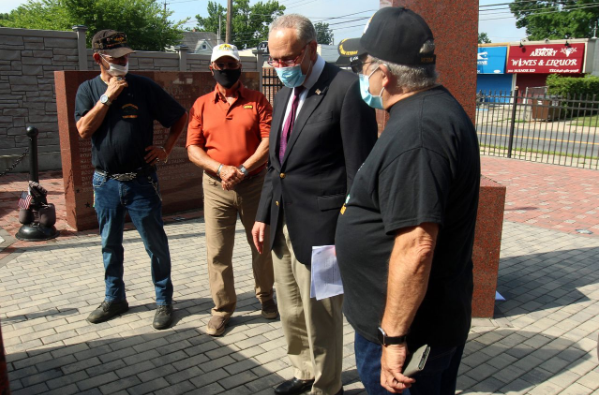
Sen. Charles Schumer (D-N.Y.) and Rep. Max Rose (D-Staten Island/South Brooklyn) announced bipartisan legislation on Thursday at the Vietnam Memorial in Castleton Corners that would add certain ailments to the list of those recognized and covered by the federal government.

At least Parkinson’s disease, bladder cancer, and hypothyroidism will be included in an amendment to the National Defense Authorization Act set to pass next week, according to Schumer. The version of the amendment House of Representatives will also include hypertension.


Early Findings Grim on the Health of Flint
Kids after Water Crisis

You may remember the pictures from the water crisis six years ago in Flint, Michigan. Hundreds of angry residents holding up bottles of rust-colored water and demanding answers. Months of protests were waved off by officials who denied anything was wrong. The turning point came when a local pediatrician found conclusive proof that the children of Flint were being exposed to high levels of lead in their water and prompted the state to declare an emergency. Now, that same doctor is working to solve a mystery that still worries parents in Flint: what lasting damage did the water do to their kids? As we first reported in March, her initial findings were worse than she feared. But we begin with the legacy of Flint's water crisis.

Your childhood neighbourhood can influence how your genes work – new study

Numerous studies have shown that children who grow up in more deprived neighbourhoods tend to have  worse physical health  as adults compared to those raised in more affluent areas.  This is the case  even when researchers take into account family income and education, and whether or not parents have major illnesses.
In order to address this health disparity, researchers need to understand how those living in disadvantaged neighbourhoods end up with worse health outcomes. Our team’s  latest study  has highlighted one potential way your childhood neighbourhood may influence your health for years to come. It might do so through changing how the activity of your genes is regulated.