|
CIRCLING GITCHE GUMEE:
THREE WEEKS AROUND LAKE SUPERIOR
| |
|
Day 7: CANADA
Thunder Bay
| |
CURRENCY EXCHANGE INFO: At the time of this trip, the currency exchange rate is about 30%: $1 (Canadian) = 72¢ (US). | |
We visited the Fort William Historical Park on the Kaminstiquia River, a terrific re-creation of the actual trading post from the late 1700s and early 1800s. | |
|
Thursday, June 20, 2024
THUNDER BAY
The town of Kakabeka Falls is just outside Kakabeka Falls Provincial Park. On our way to Thunder Bay, we stopped at an ATM in Kakabeka Falls to get Canadian Cash. We don’t need much. I suspect that most places accept credit cards. So far, they have. The Canadian paper money still has a big picture of England’s Queen Elizabeth II. The exchange rate is $1 Canadian to .72¢ US.
Just before reaching Thunder Bay, we stopped at Walmart to get our empty LP tank exchanged for a full tank. We were pleasantly surprised at how diverse the customers and workers were. Of course, once in the Black Hole, we found $68 worth of other stuff to get.
I was also surprised by the brands carried in the Canadian Walmart. Many of the products that we are used to in the US Walmarts weren’t stocked. And the beer section really threw me. It was all Canadian brands, most of which I had never heard of. Perhaps it is time to get familiar with them. The one reason we stopped at Walmart, exchanging the LP tank didn’t happen. They have an automated kiosk that dispenses new tanks. The kiosk was broken.
The last time we visited Thunder Bay, in the 1970s, the city was named Port Arthur. I remember it being on the seedier side. Today, the city of 110,000 people appears to be in the throes of urban renewal. The downtown, or Water Front District as it is formally called, is getting a needed facelift. New sidewalks and streets are being built. The stretches that are completed are spiffy and inviting.
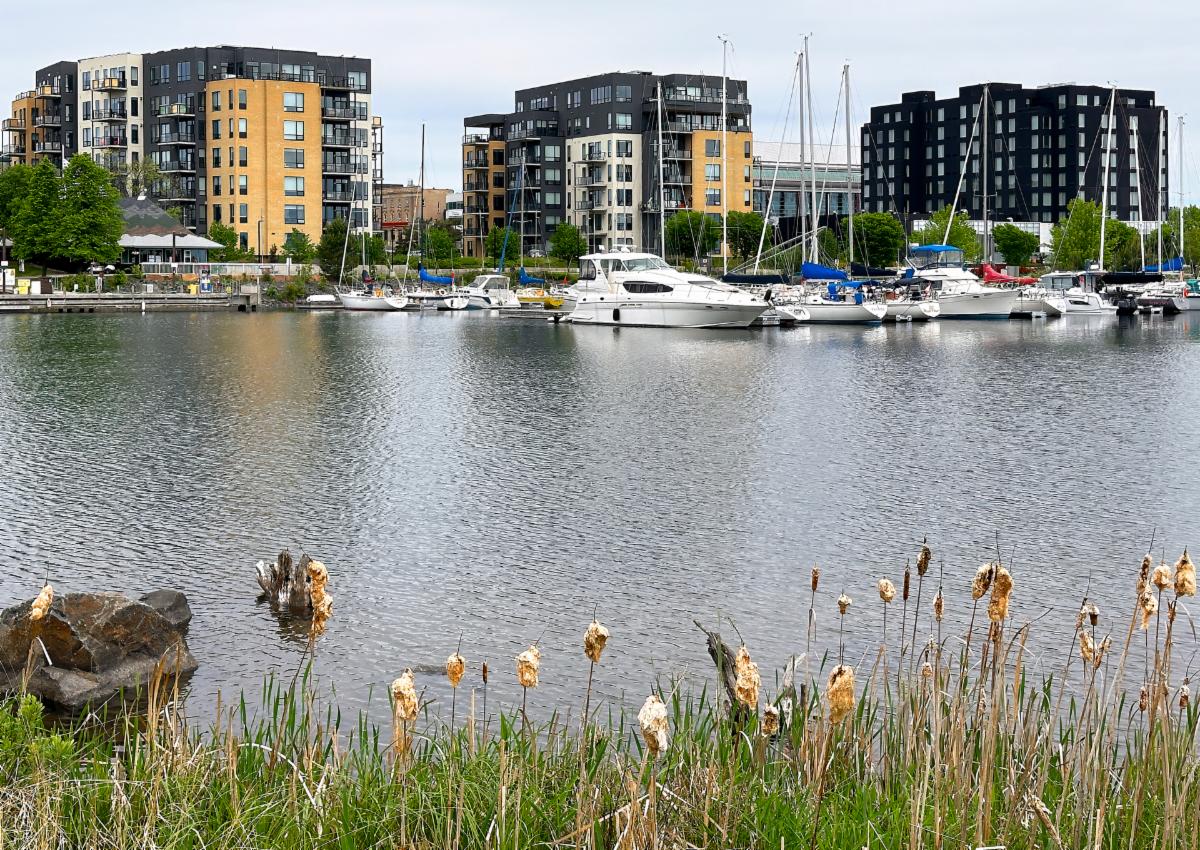
The entire marina and lakeshore in front of downtown have been restored. There are a couple of miles of pleasant walking paths, some new waterfront condos, and ample open green space for picnics, playing games, or holding a grand gathering, which is happening today. An organization that celebrates diversity was sponsoring a large get-together with just about every cultural group imaginable. Asians, Middle Easterners, Africans, and First Peoples were having picnics and playing games.
(Side Note: Canada, the second largest landmass country in the world, has a small population of only 39 million and an extremely low birth rate. As such, it is experiencing a labor shortage in some areas—not enough young people to feed the labor force. I have read that it has turned to immigration to solve this. Canada is the true melting pot, at least in Thunder Bay.
America has a similar issue—an aging population and a low birth rate. And young Americans don’t want to work the ‘hands-on’ jobs needed to keep us going. Hospitality, agricultural, and food processing jobs? No way, José. Even the good-paying trades jobs are struggling to fill the openings left by the droves of retiring workers. Hmmm, where are we going to get these workers as we binge on our current anti-immigrant sentiment?)
Anyway, back to the Waterfront District. The only thing that needs to catch up in the downtown renewal is the stores. Some storefronts are still kind of tacky, and the downtown lacks the fun, funky kind of touristy pubs and high-end antique and gift shops. I guess the theory is to build up the infrastructure, and the rest will follow. I hope so; they have a good start.
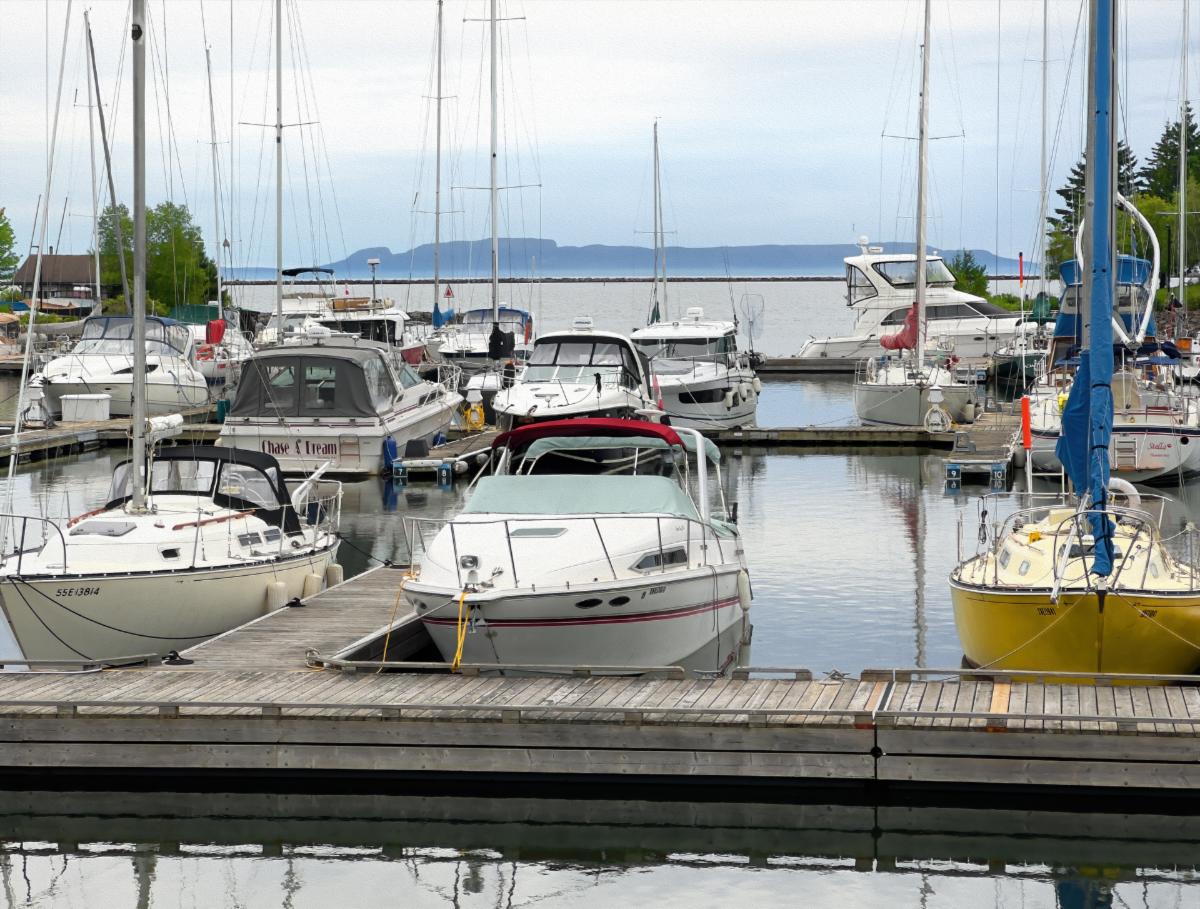
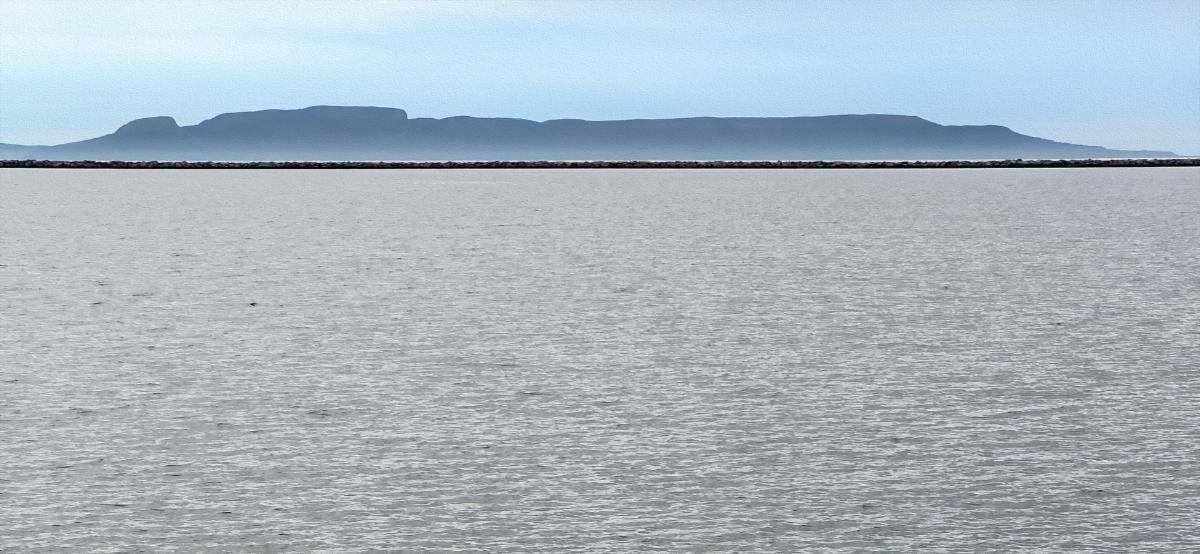
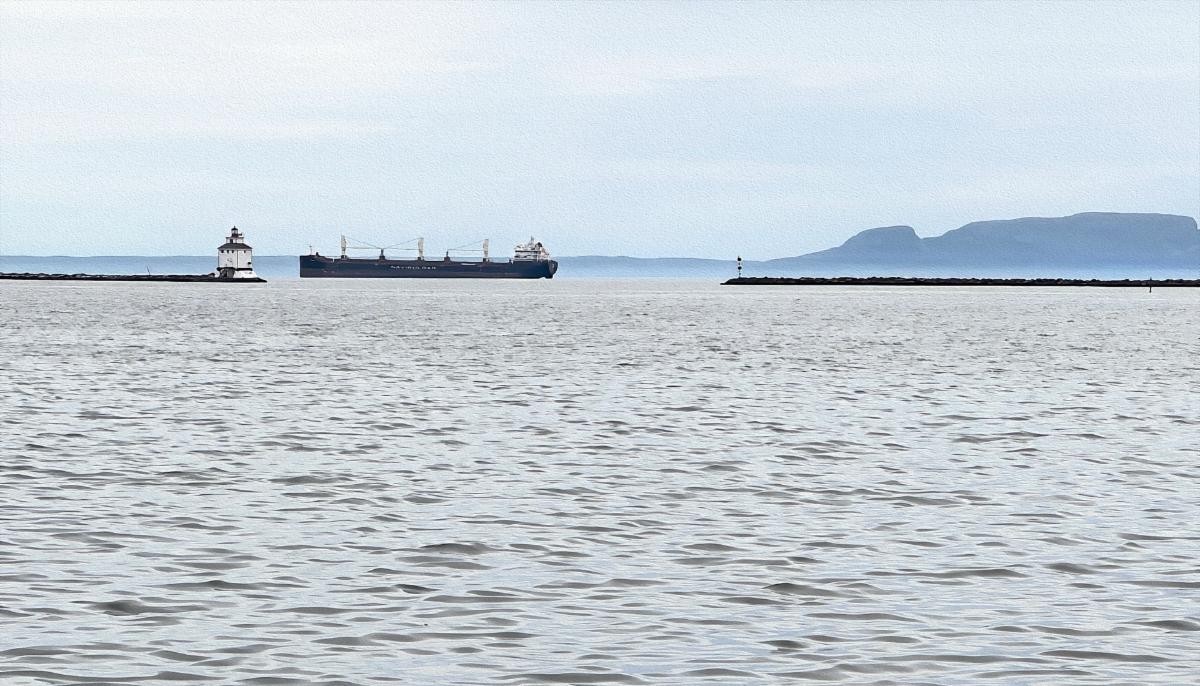
| 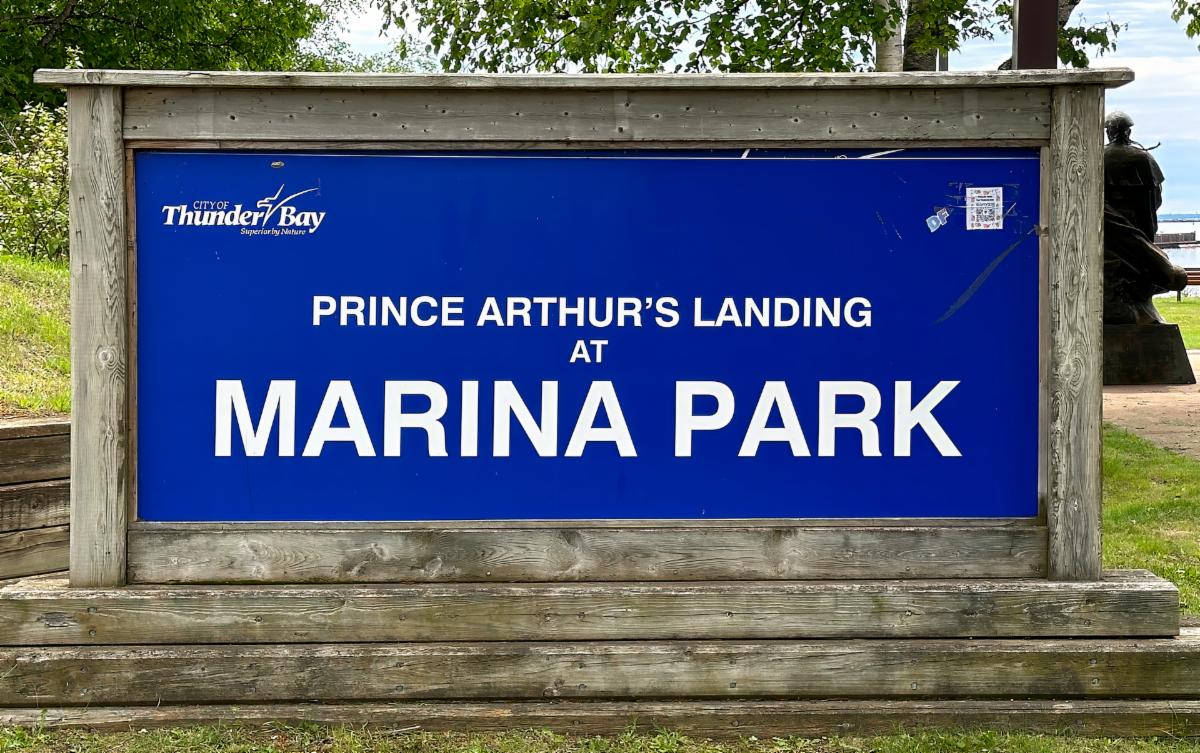 | Thunder Bay's Marina Park has become a lovely green space with two miles of walking trails, new condos, a bandshell, and a large open space. | Above and below: Off in the distance, as seen from Thunder Bay's marina, you can see the mythical shape of the Sleeping Giant. Sleeping Giant Provincial Park covers the entire mountainous area. We are going there next. | |
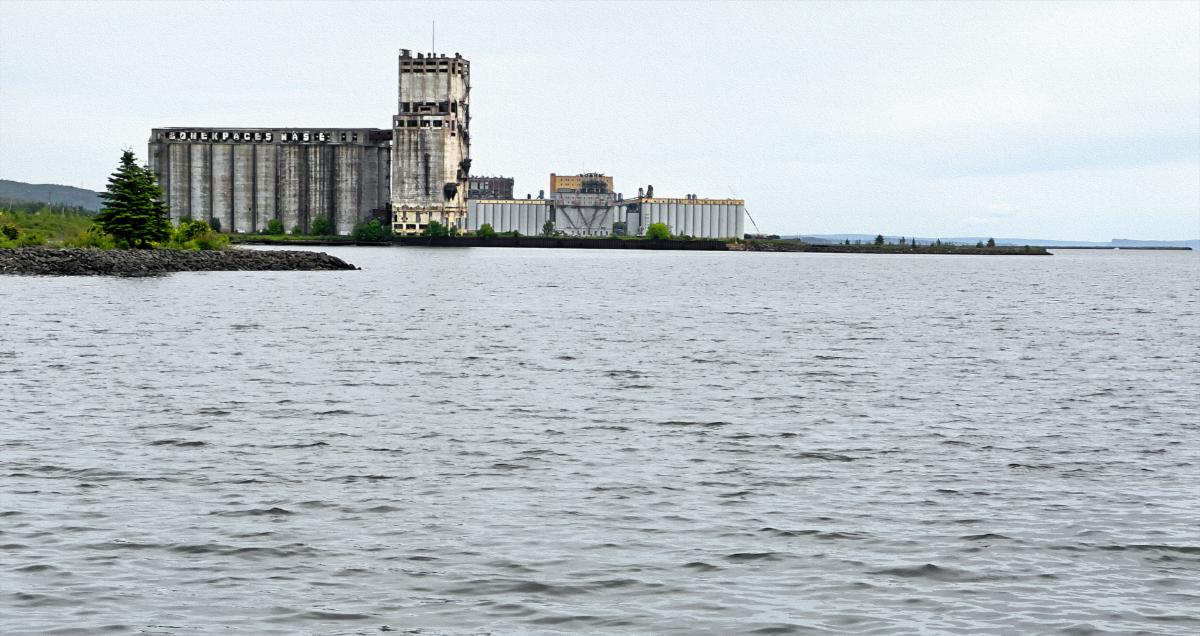
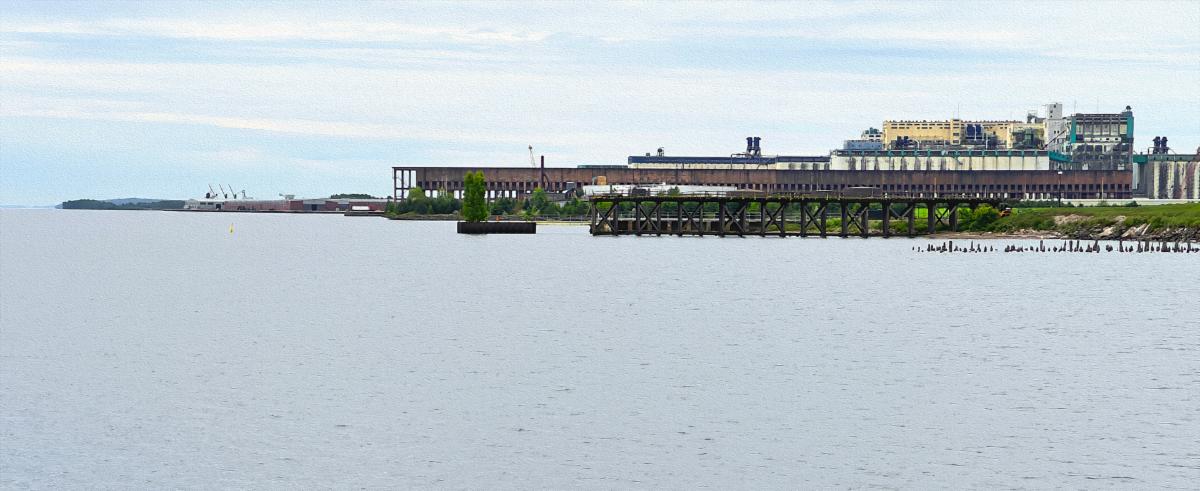
Above and below: Thunder Bay is a workin' town. Grain elevators border both sides of the marina. | |
A freighter is approaching one of the grain elevators. | |
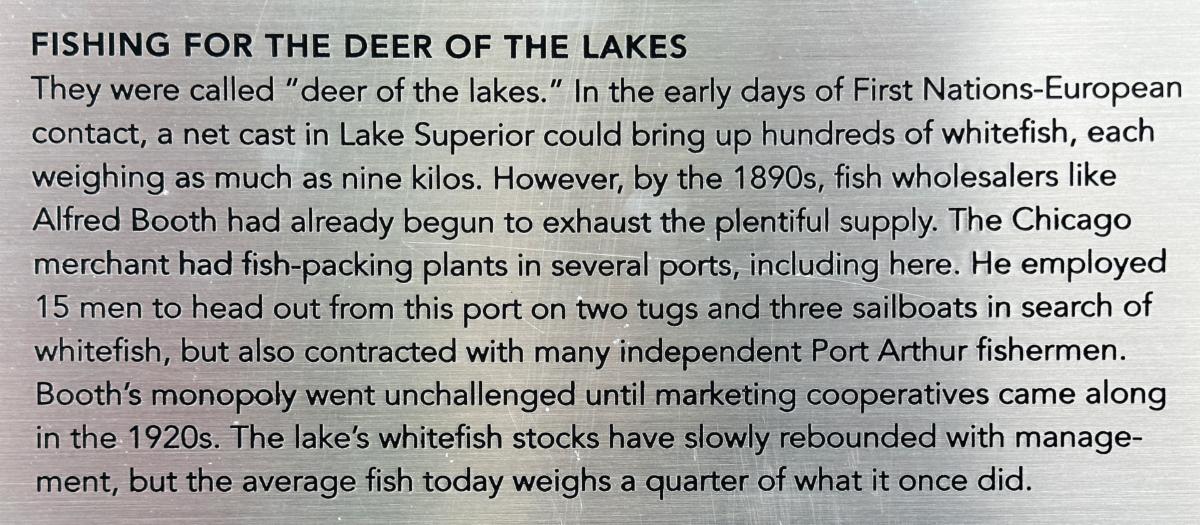
There are several interesting info plaques at the Marina. This 'Deer Of The Lakes' plaque caught my eye. | |
|
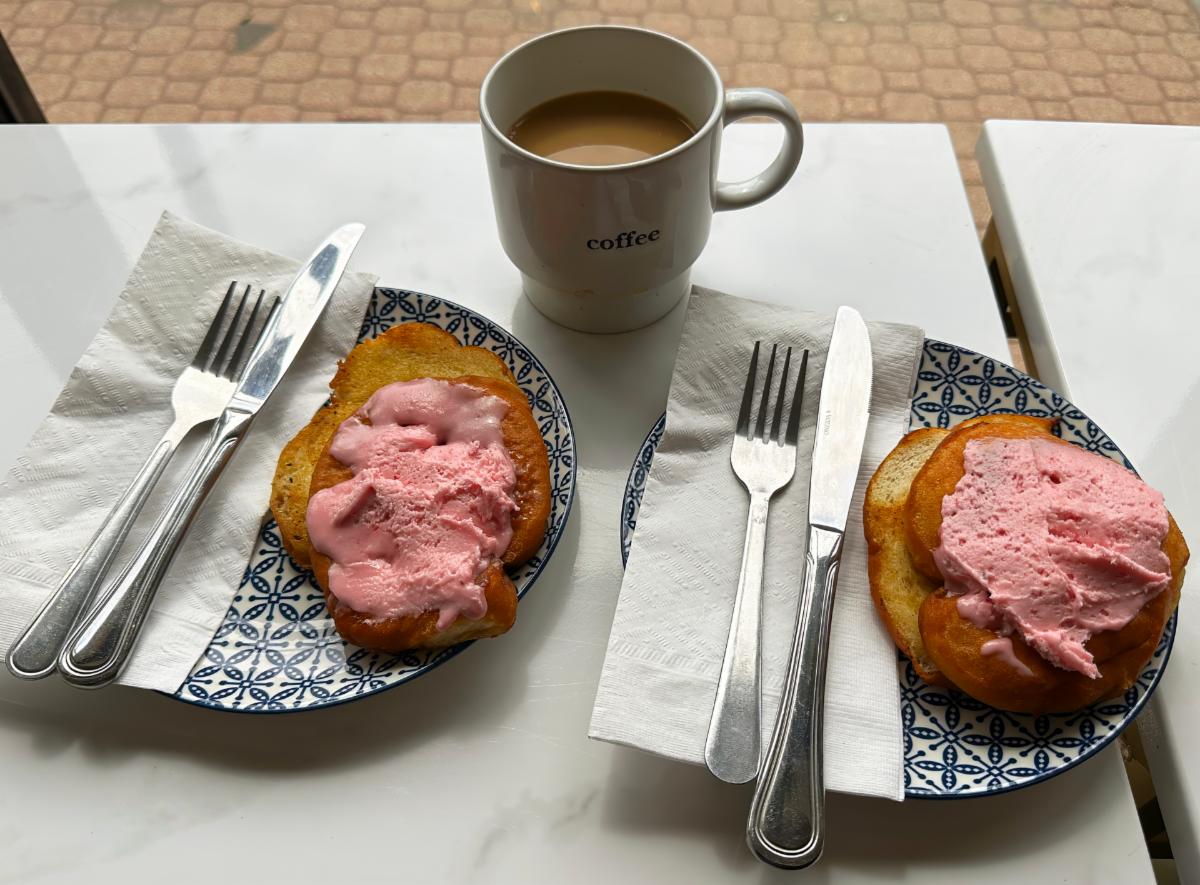
Thunder Bay has two unique taste treats that we wanted to sample: Finnish pancakes and Persians. Finnish pancakes are basically crepes with exotic toppings. We found plenty of Mexican and Asian restaurants but struck out on the Finnish pancakes. The one cafe we stopped at only served Finnish pancakes on Sundays. However, they did have grilled Persians. These are donuts much like the beignet donuts made in New Orleans but with a sinful heaping helping of extra-sweet blueberry frosting. Apparently, grilling these local delights was this cafe’s specialty. We had to try them, and they were nothing short of decadent.
We saw several more billboards advertising medical and recreational cannabis. We passed by a couple of pot shops and resisted the temptation of checking them out. We didn’t need to as we got a contact high from the clouds of smoke inhaled just walking the streets. OK, that’s an exaggeration, but not much of one.
| |
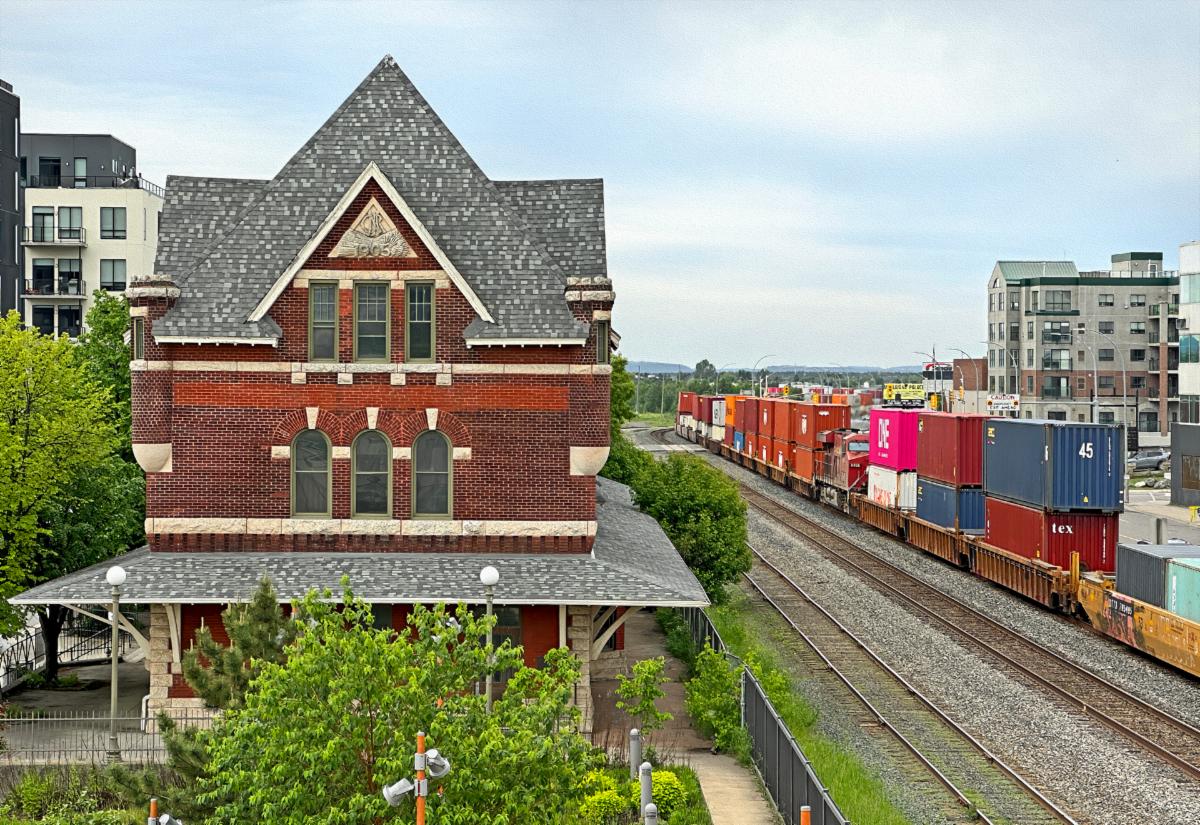
The railroad separates the Marina from downtown. The historic train depot (left forefront) has been nicely preserved. We have noticed that freight trains in Canada are incredibly long - easily over a mile long. | |
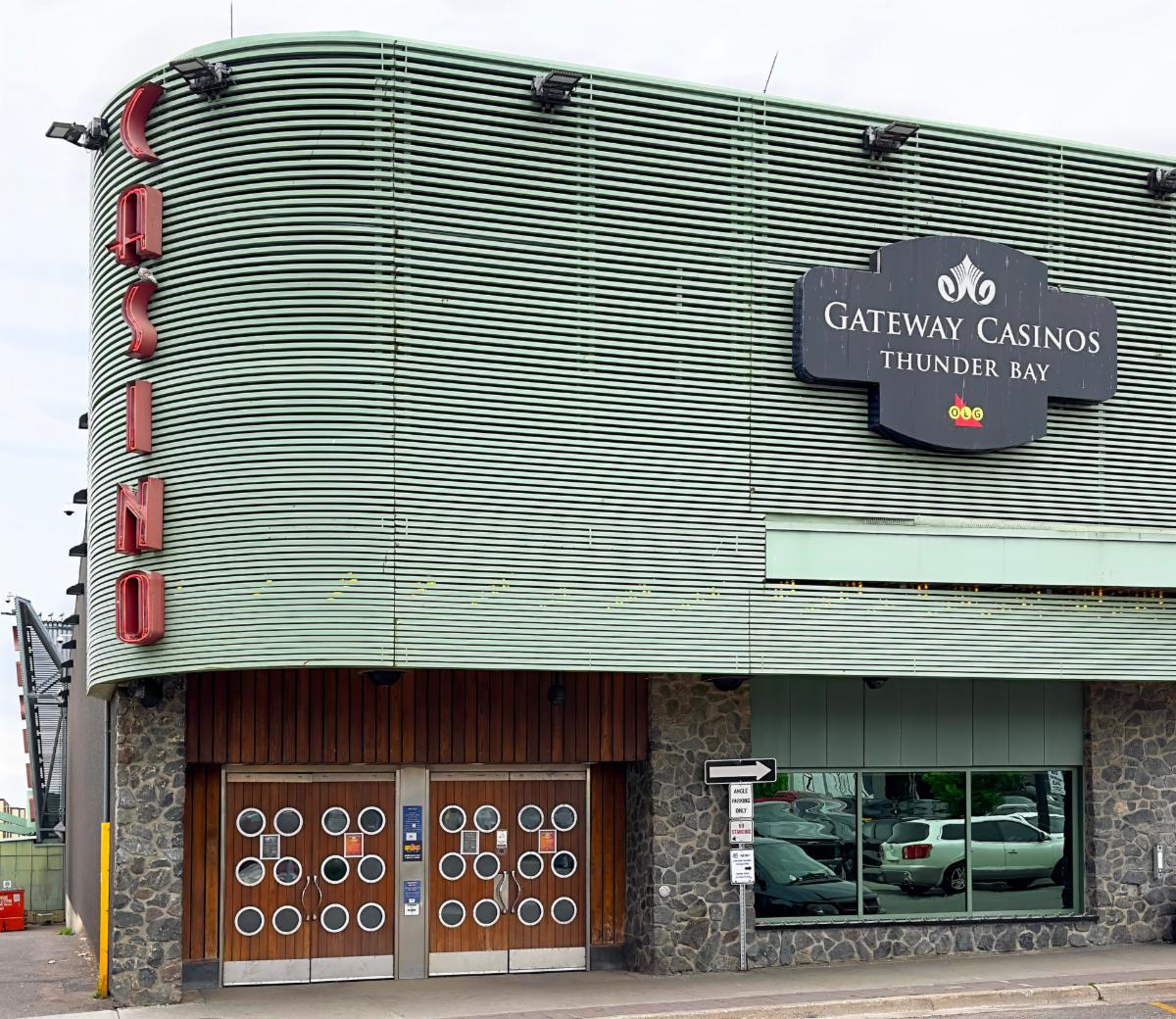
You are not a serious city without a downtown Casino. | |
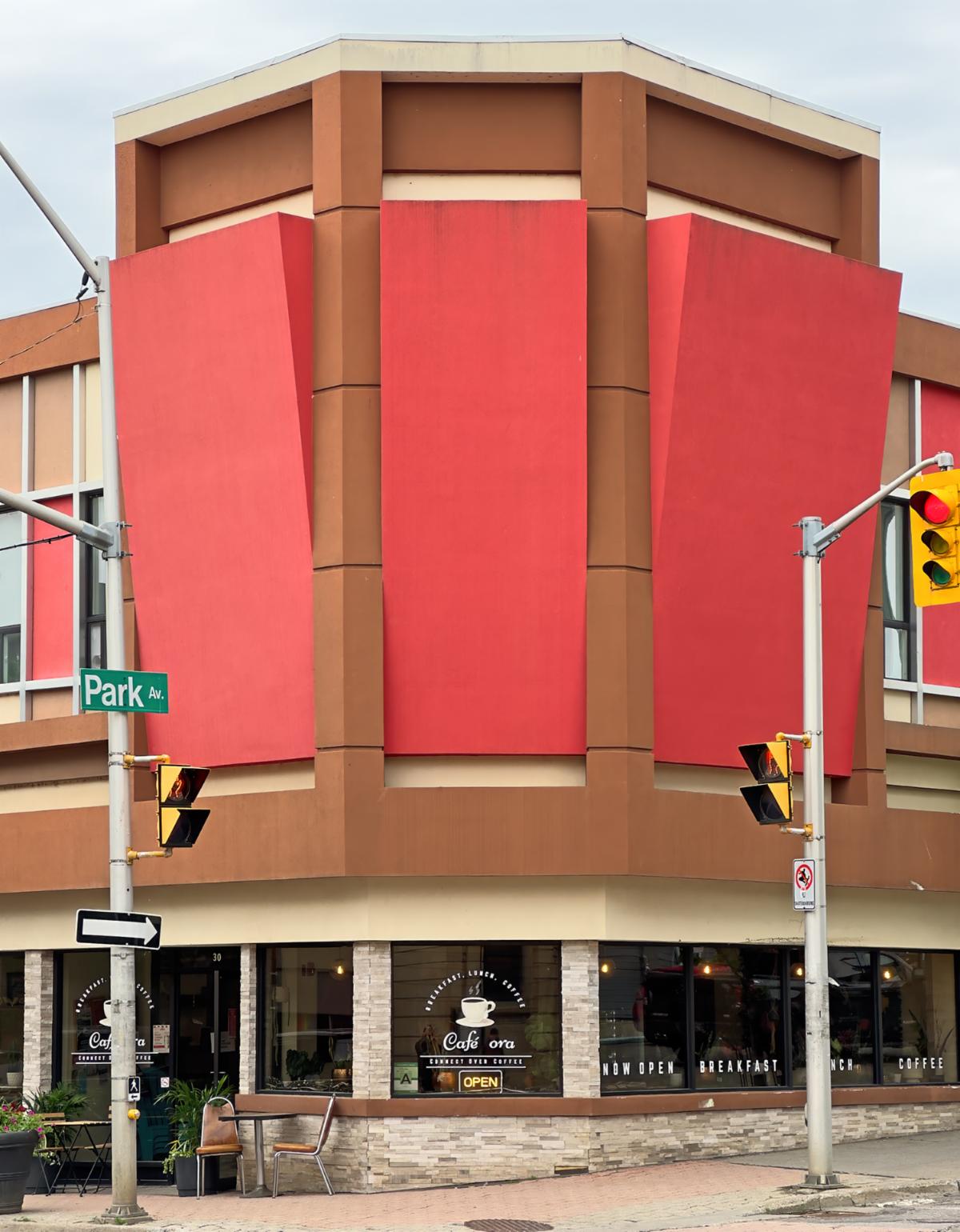
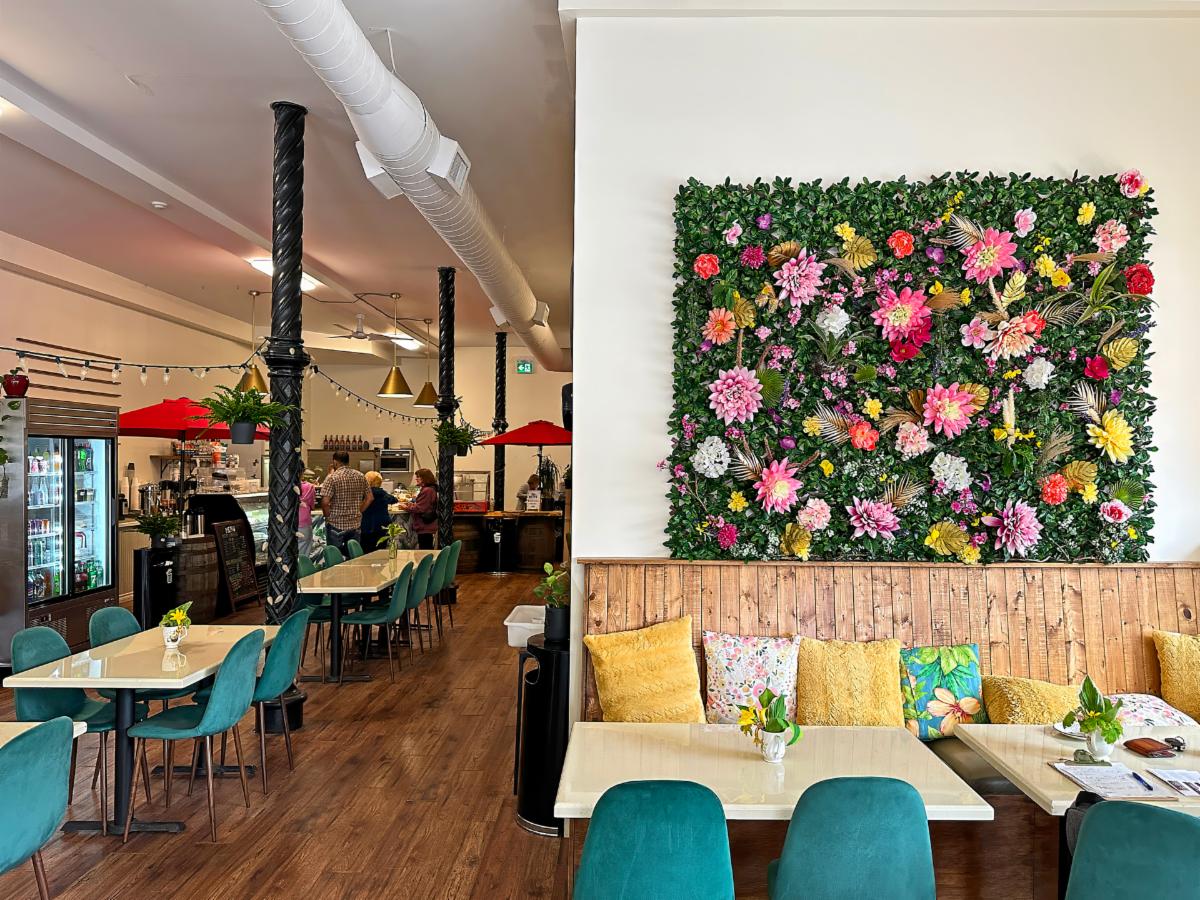
Thunder Bay doesn't wake up until noon. At 11 a.m., when we were there, this was the only cafe open. We wanted a breakfast of Finnish pancakes and a Persian. They only served Finnish pancakes on Sunday, and they grilled their Persians. | |
This restaurant was unique in grilling the Persian donut and serving it on top of a piece of French Toast. Later, I saw a bakery serving regular Persians, and they were much different. The blueberry frosting was very sweet. | |
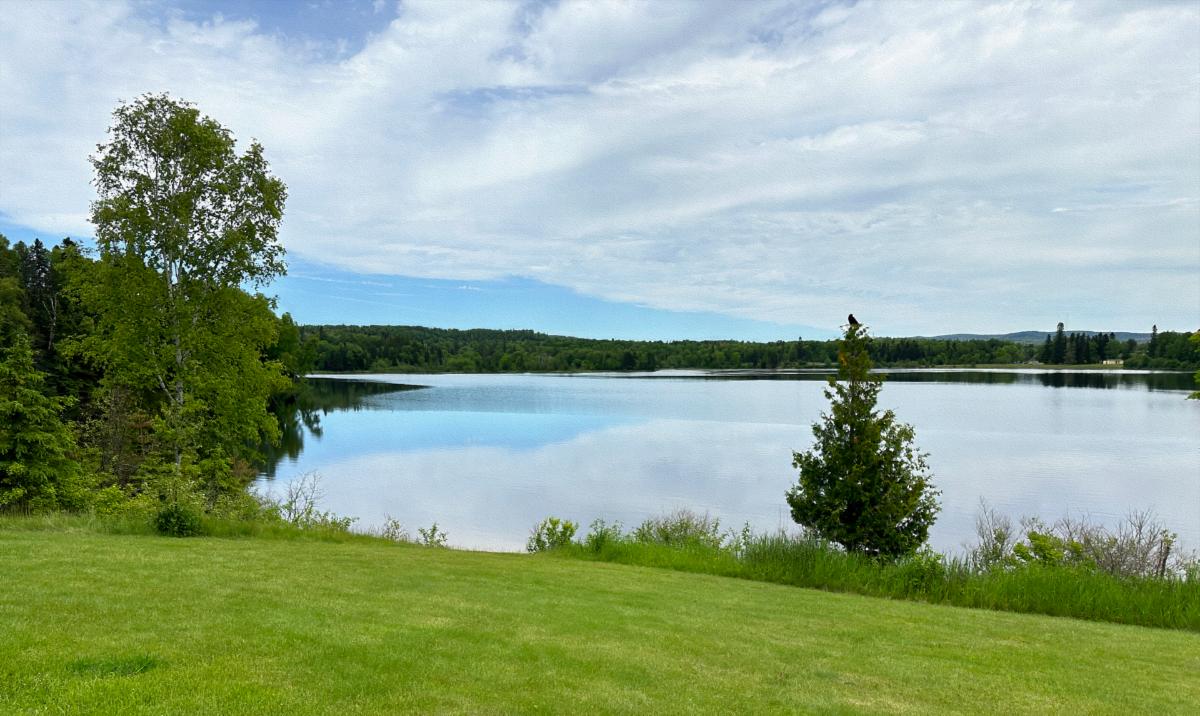
After walking around town and the waterfront marina for two miles, we drove to the beautiful Boulevard Park. This is a gorgeous green space wrapped around a large reservoir. We walked the entire 3.5-mile trail around the lake, bringing our total mileage to 5.5 miles. That’s more like it. The best part of the trail? There were few bugs.
Next to the park were a couple of schools. We noticed many kids participating in a gym class playing organized games on the ball fields. I looked it up: School in Ontario doesn’t get out for the summer until June 28. One of the ball fields was a fancy, well-appointed football field. I wonder if the kids play by Canadian football rules?
| |
Boulevard Reservoir surrounded by Boulevard Park. | |
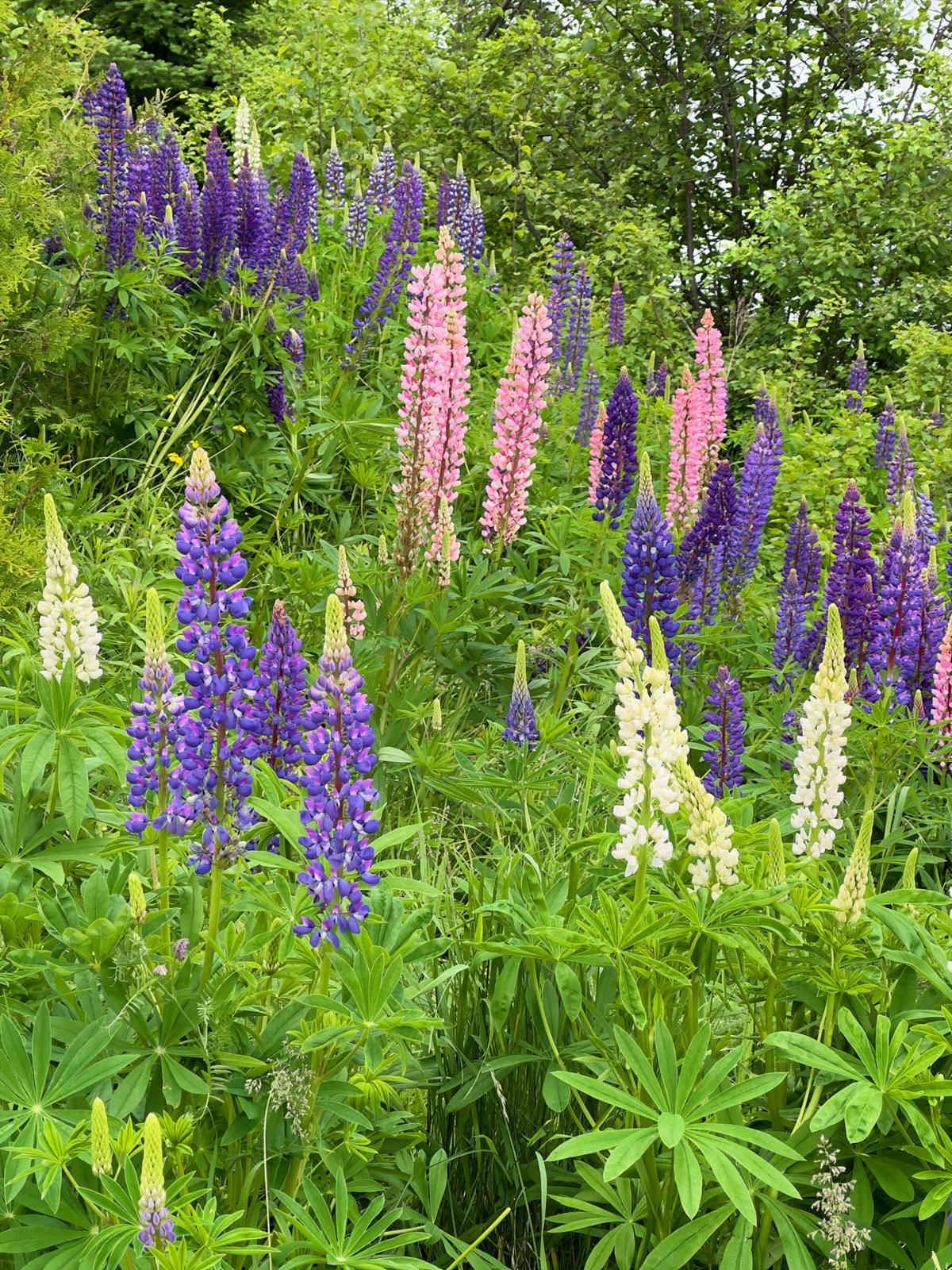
The Current River feeds into the Boulevard Reservoir. | Lupins along the path around the Boulevard Reservoir. | |
|
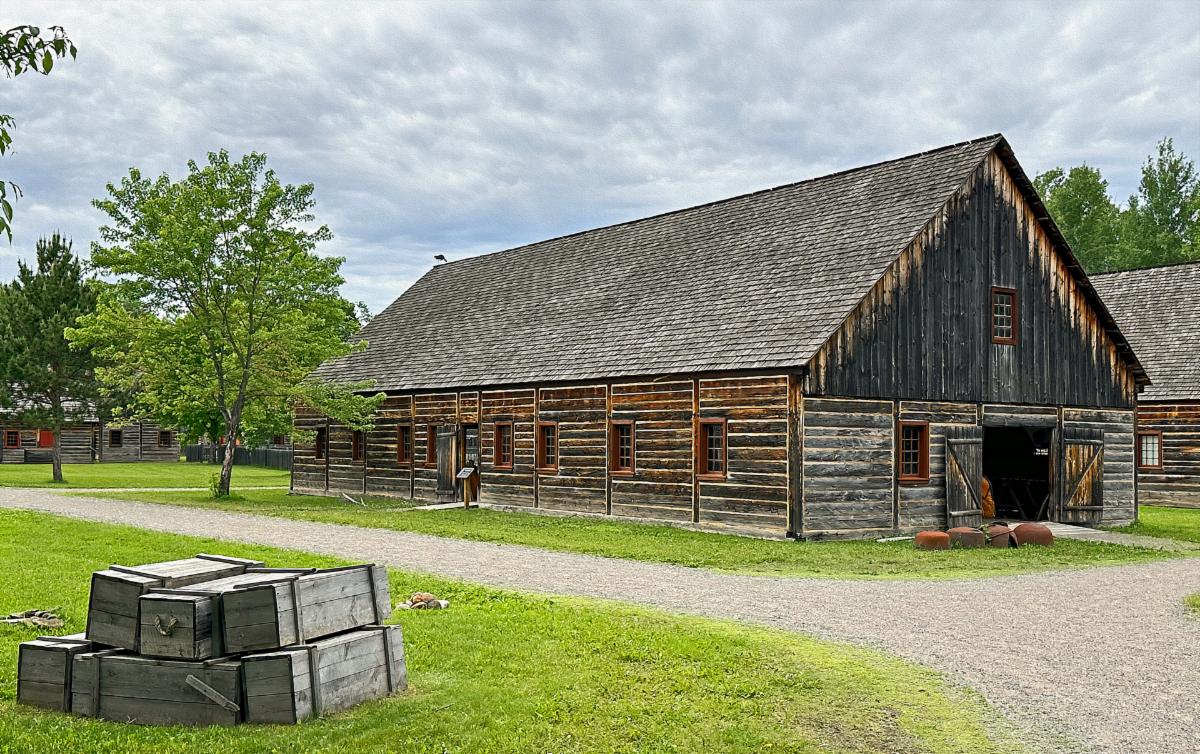
Finally, we drove to Fort Williams Historical Park. This is an exact replica of the original French trading center from the 1700s/1800s. When I say exact, that is an understatement. In the early 1970s, local craftsmen utilized blueprints from the original Fort and built an authentic reproduction using old-world construction techniques. The craftsmanship and attention to detail is astounding.
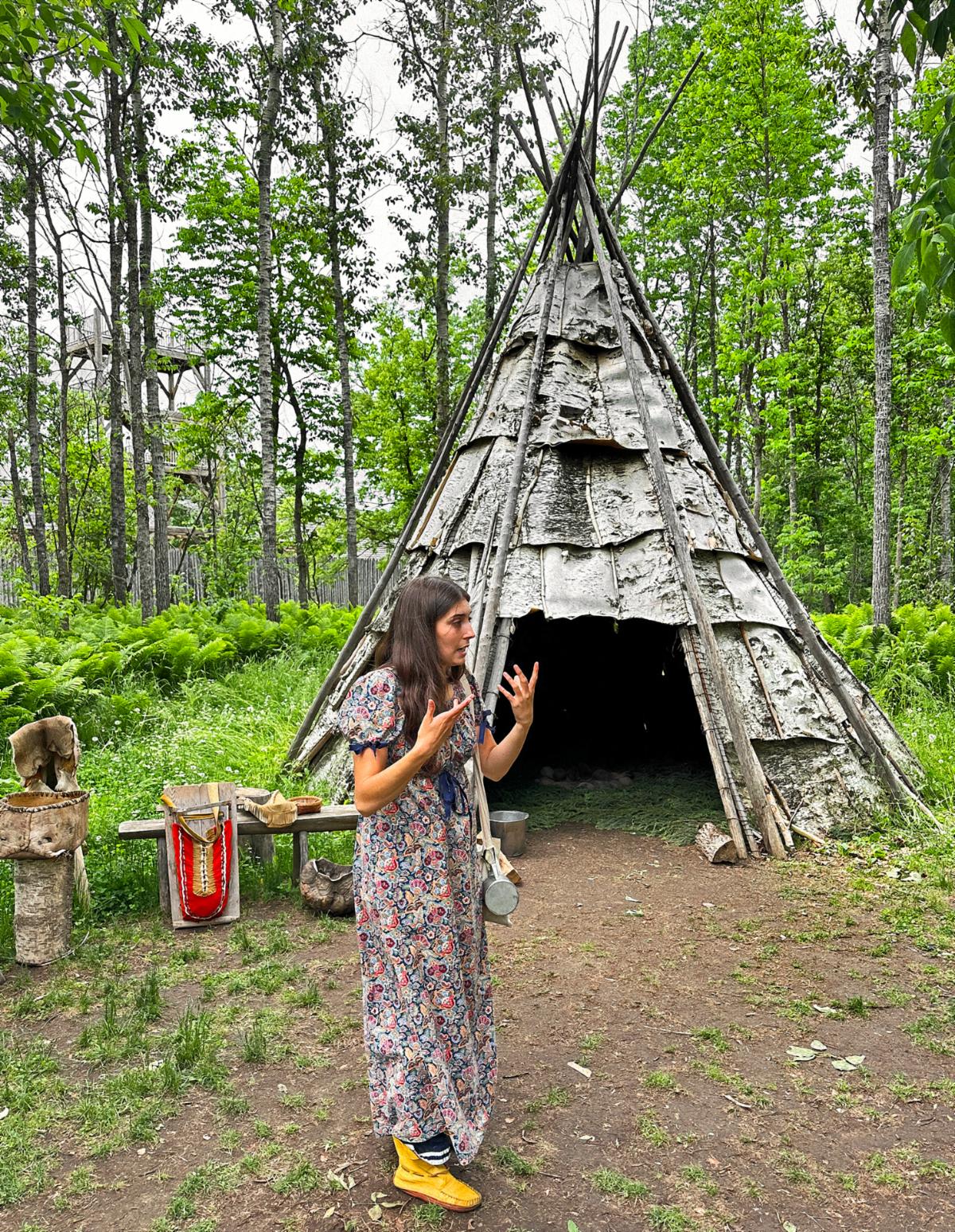
It is a living museum with guides dressed in period clothing and performing typical tasks and chores of the era. Our guide, a local young lady with expressive hands named Franky, took us around the fort, pretending to be the aboriginal wife of the fort’s doctor. She pulled it off effortlessly and transported us back to the year 1816.
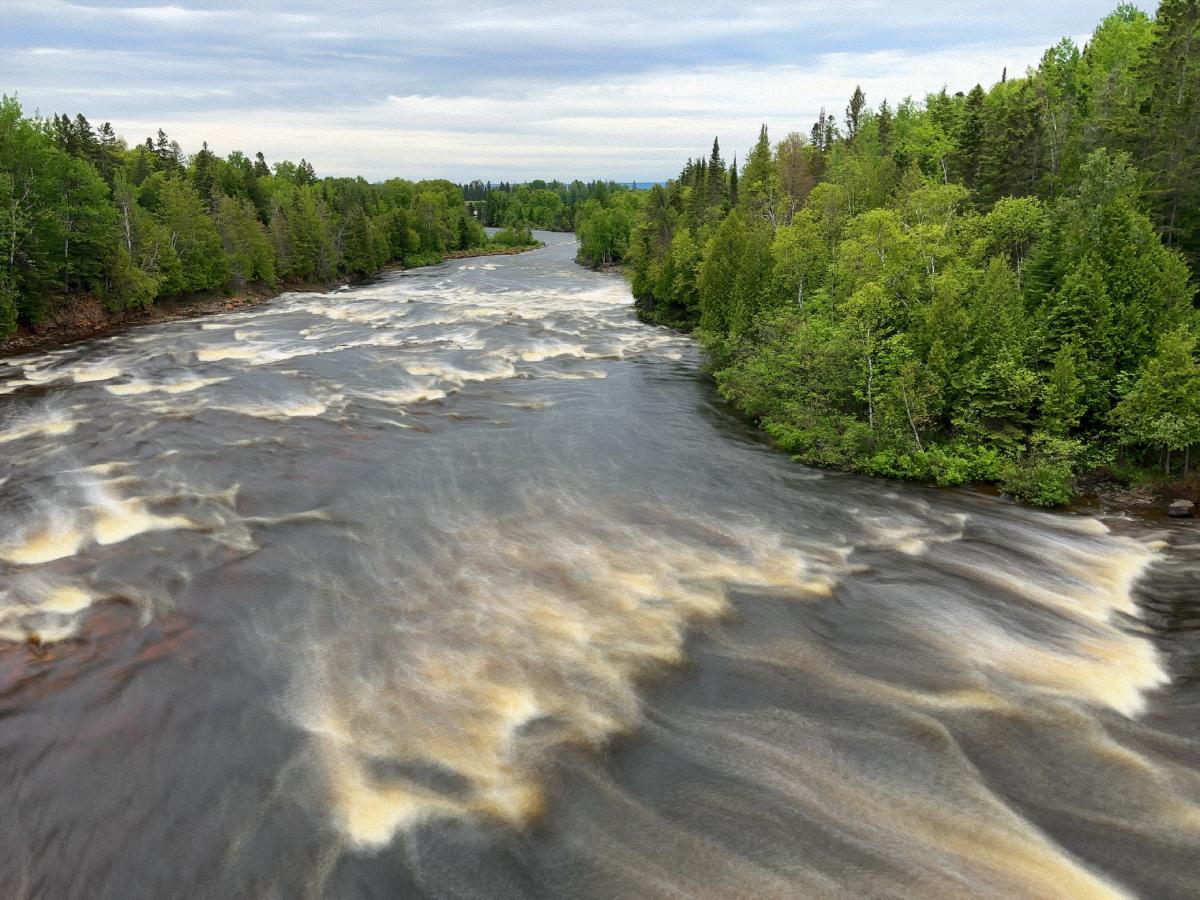
The fort, located on the swift, wide Kaministiquia River, was vast with a zillion authentic handcrafted buildings. The interiors were furnished as they were in the period. A lot of time, money, and effort went into this well-researched experience. It was worth the $14 Canadian ($10 US) entry fee. The admissions building was a half-mile hike to the actual fort. The round-trip walk added another mile to our total. I can feel the extra time being added to our end-of-life time-span. Ka-ching!
| |
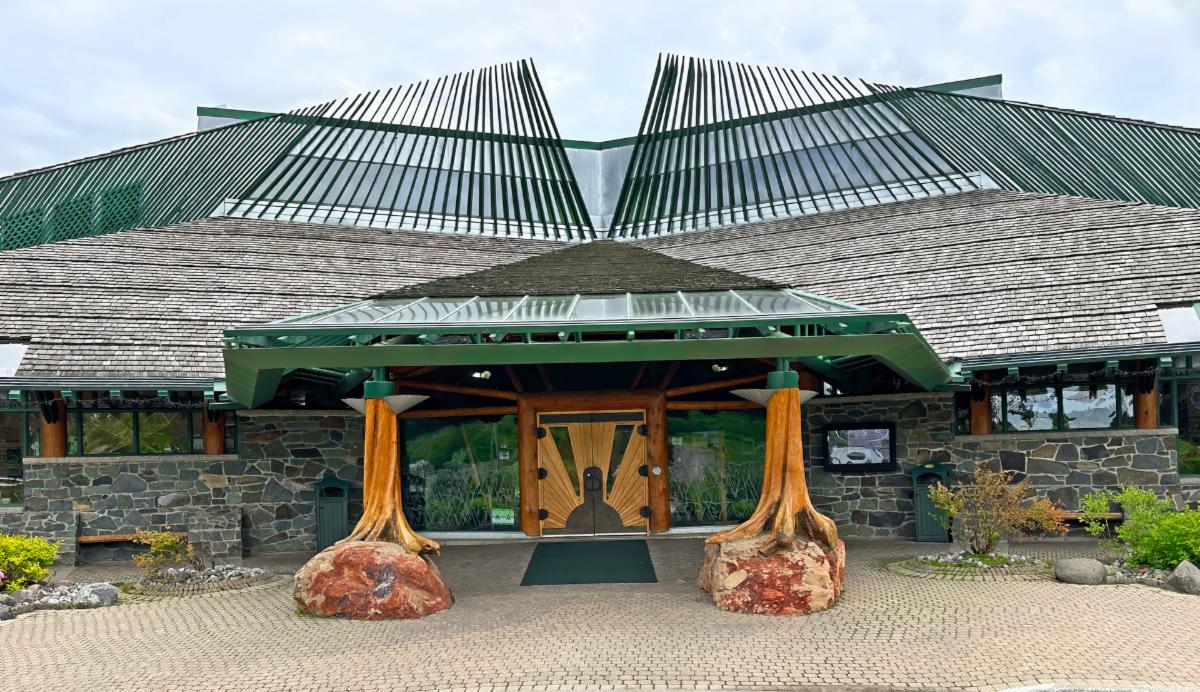
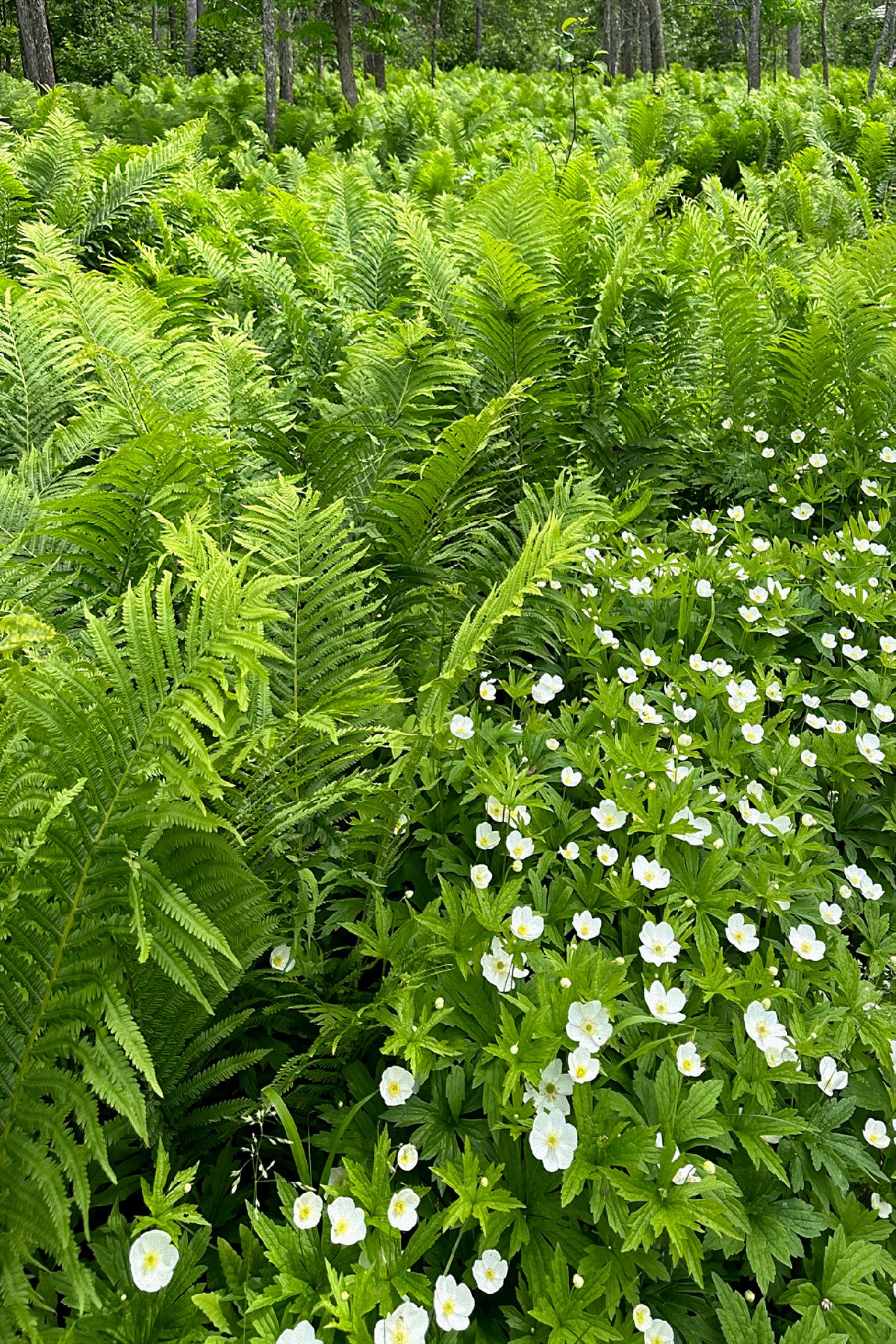
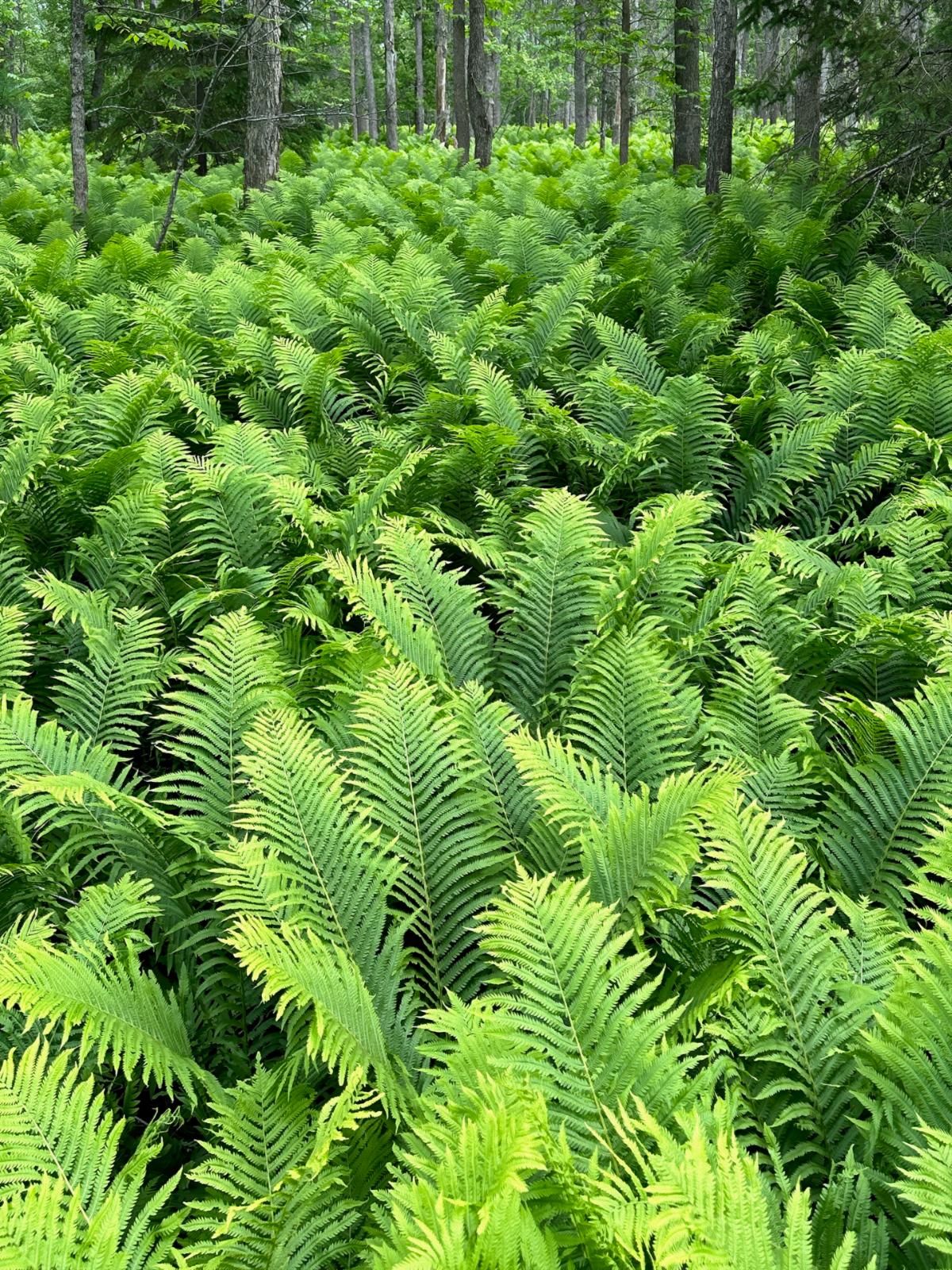
Above and below: The entry building to Fort Williams. It was oddly placed a half mile away from the Fort. The walking path to the Fort was gorgeous, and you could get a golf cart ride if needed. | Above and below: The walking path to the Fort cut through a lush fern forest. | |
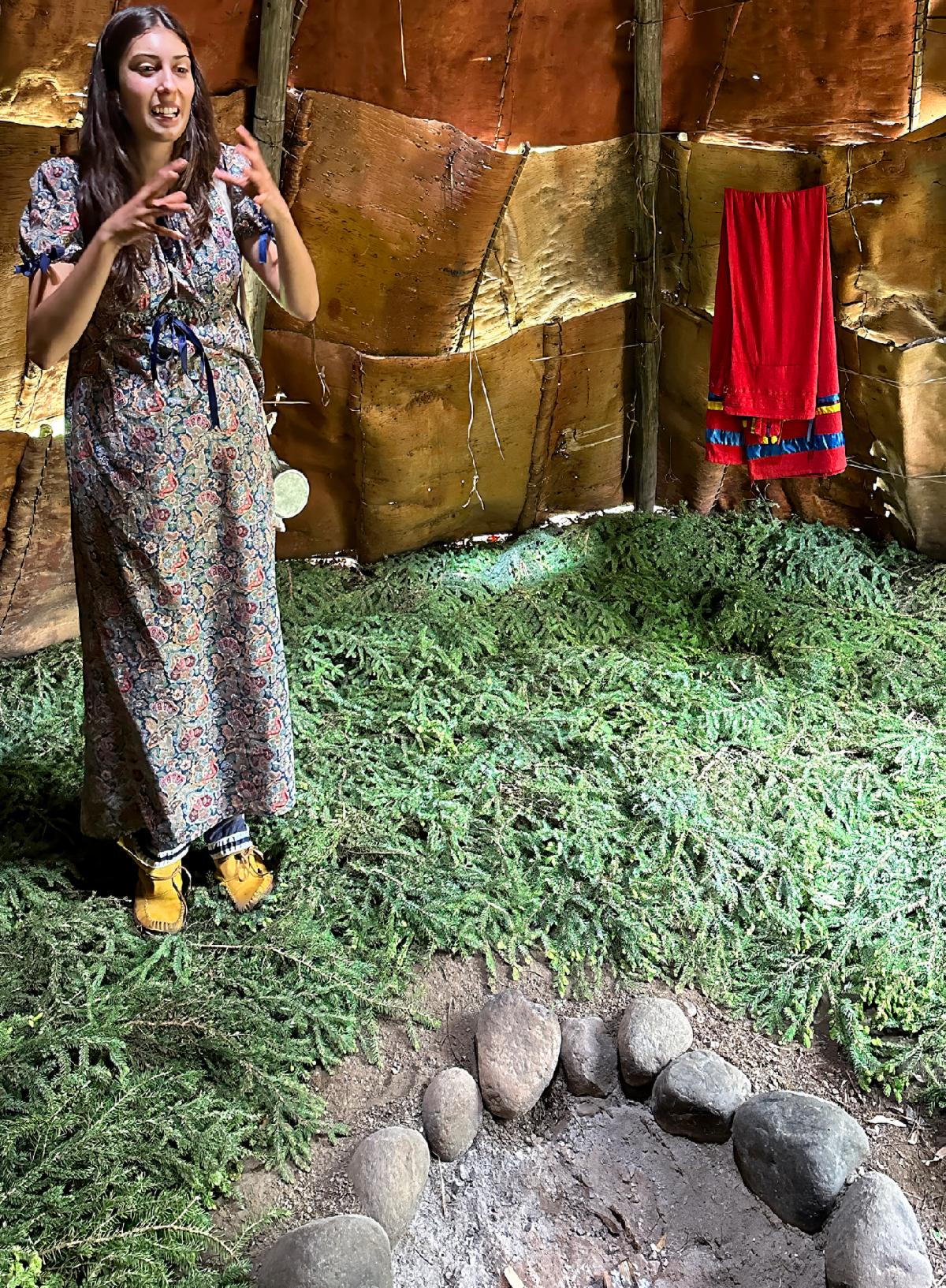
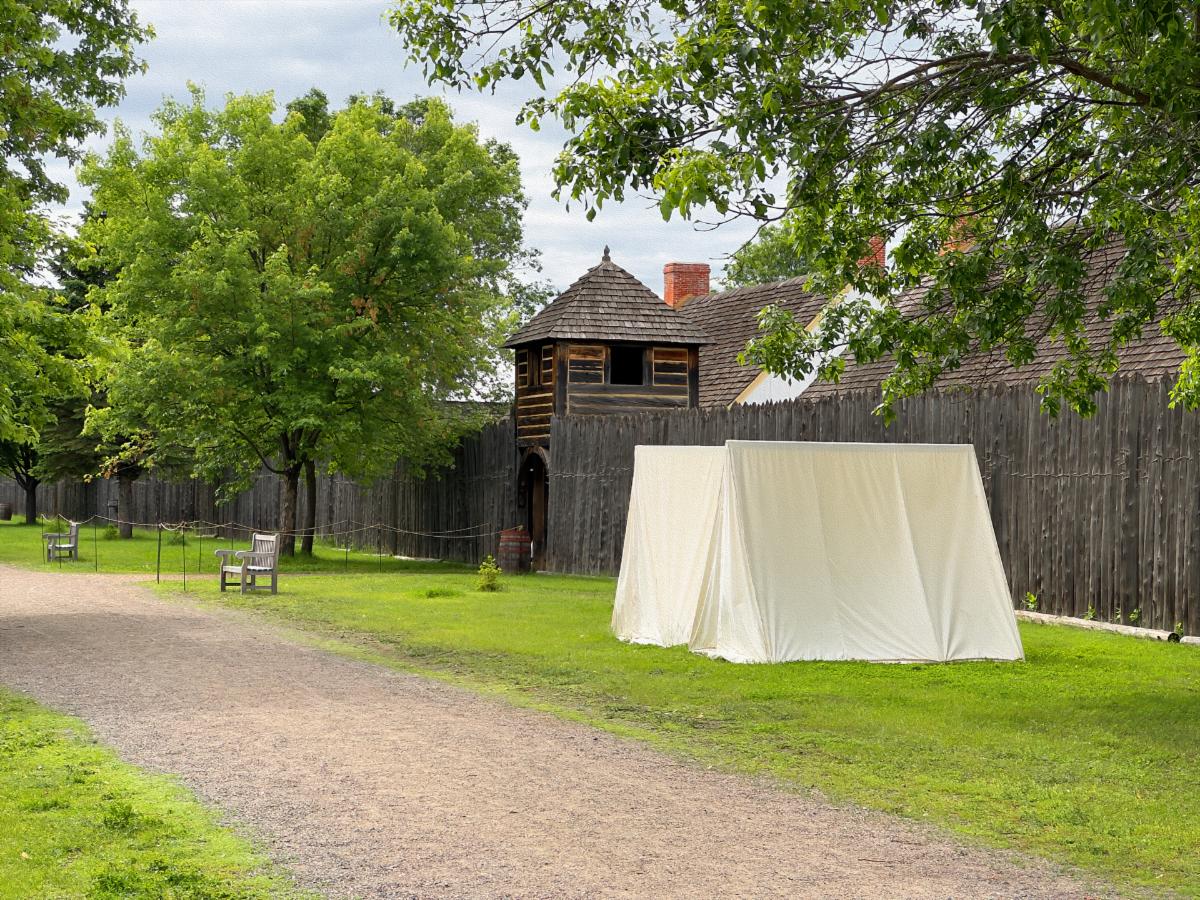
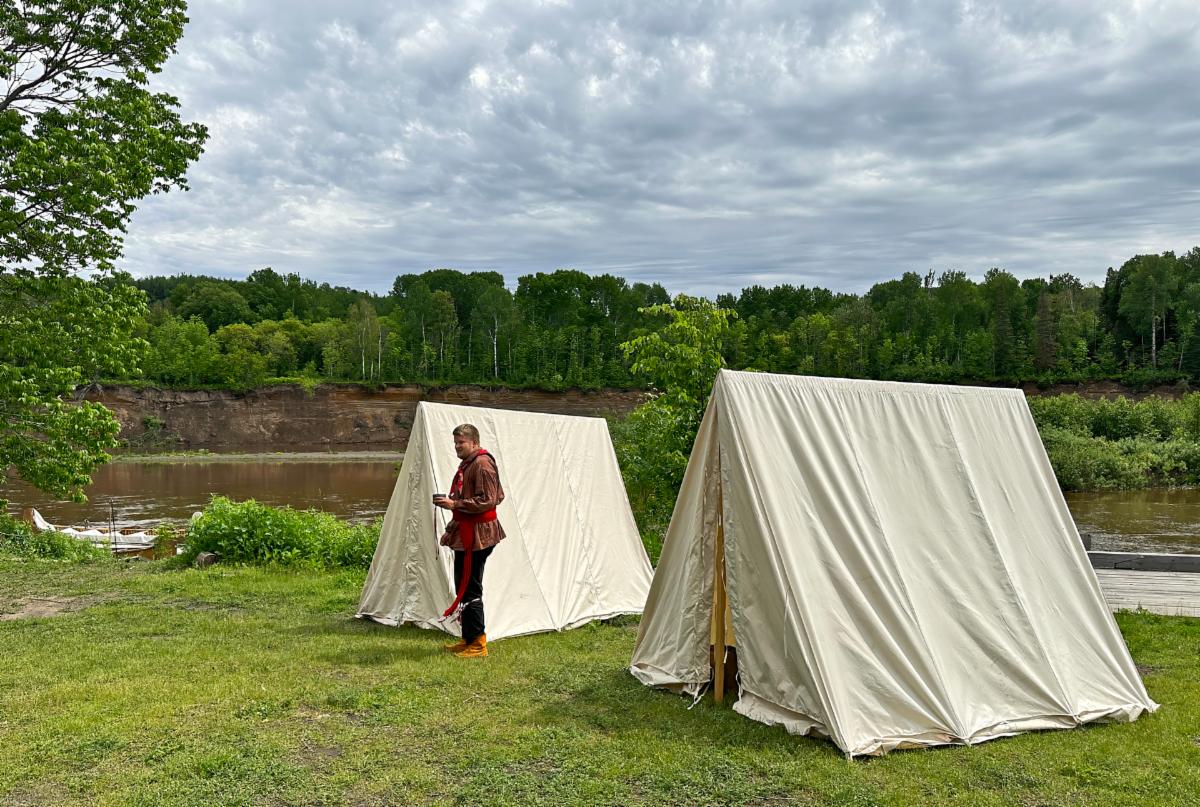
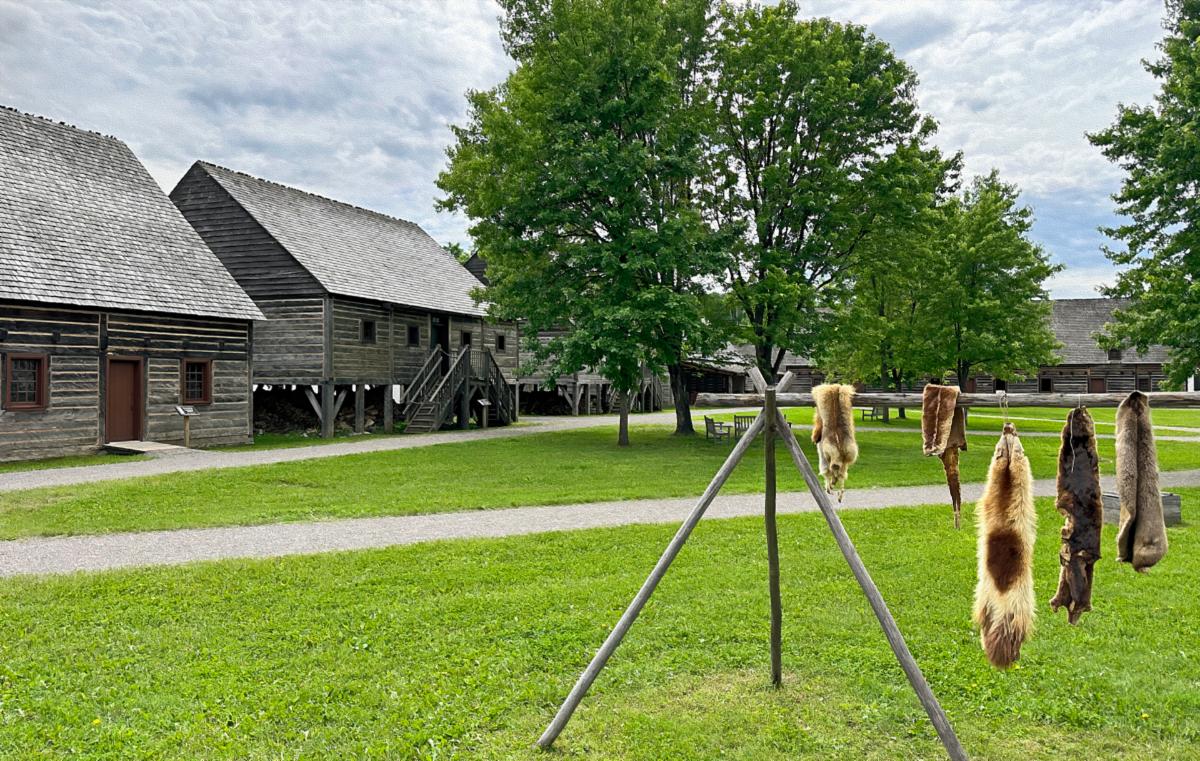
Our terrific animated guide took us through the Fort. The French traded with the Indigenous Peoples, as well as with French trappers and hunters. Every summer, these people congregated outside the Fort to trade. Tepees and tents lined the perimeter of the Fort. | |
The pine boughs provided a robust, fresh scent that could easily cover up foul smells. | |
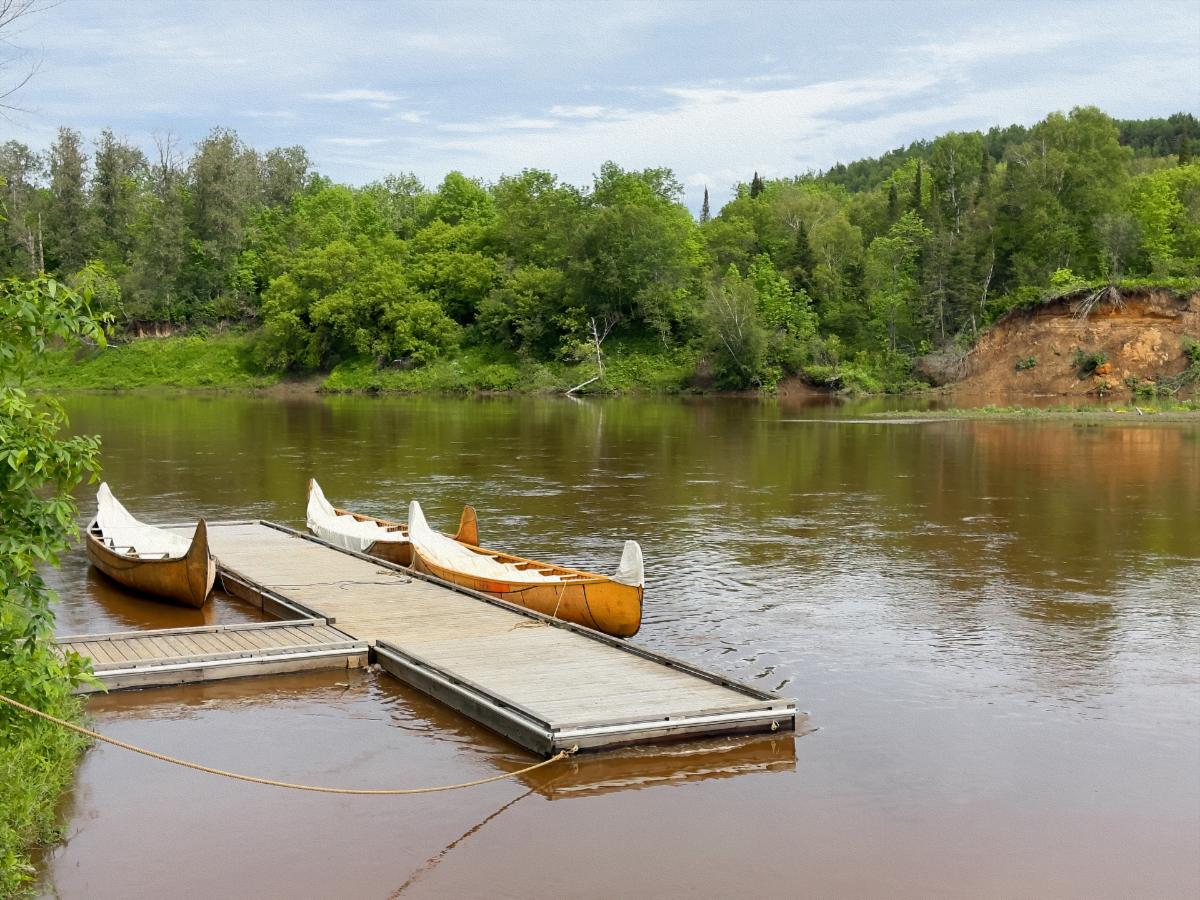
The Kaministiquia River was a major transportation route from the interior to Lake Superior. This replicated Fort was built just a few miles up river from where the actual Fort was located. | |
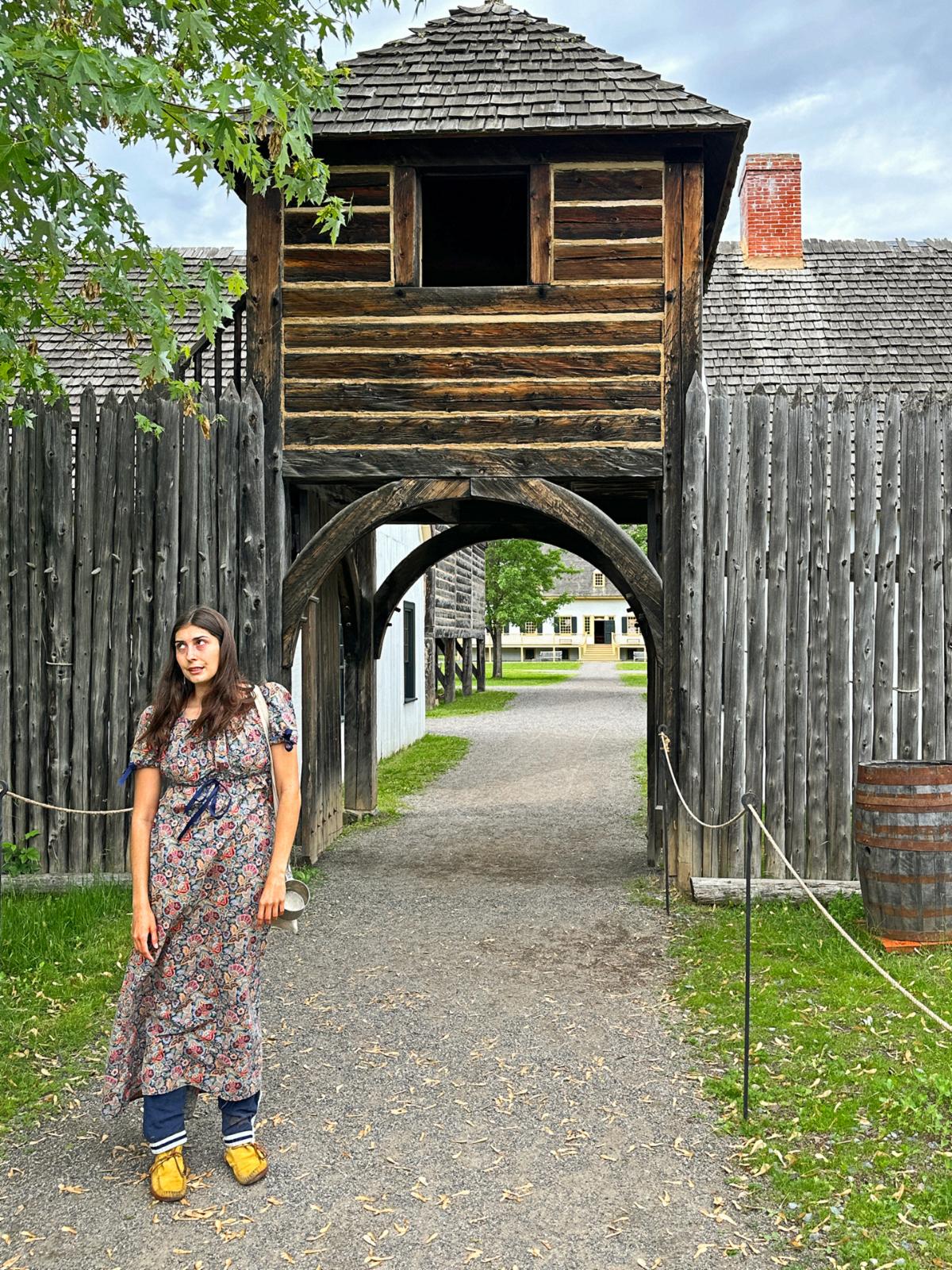
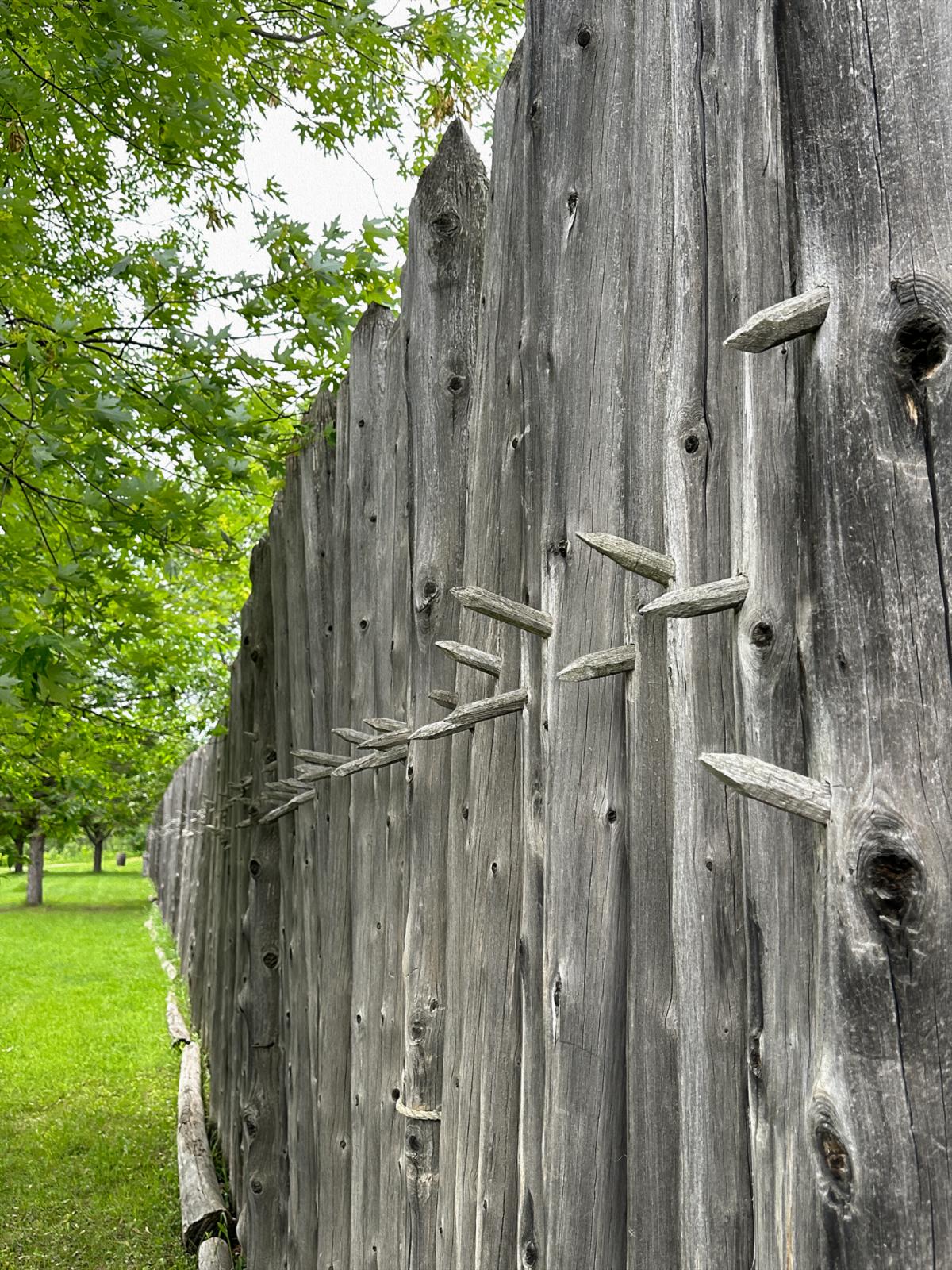
These spikes were not used for defensive purposes. They were the nails used to hold the log fence in place. In fact, the entire fort was not designed for defense. This was a trading center, not a military base. The wall was built to funnel the traders, trappers, and hunters, who set up tents and tepees along the river, into the compound through a specific gate. This kept things orderly. | |
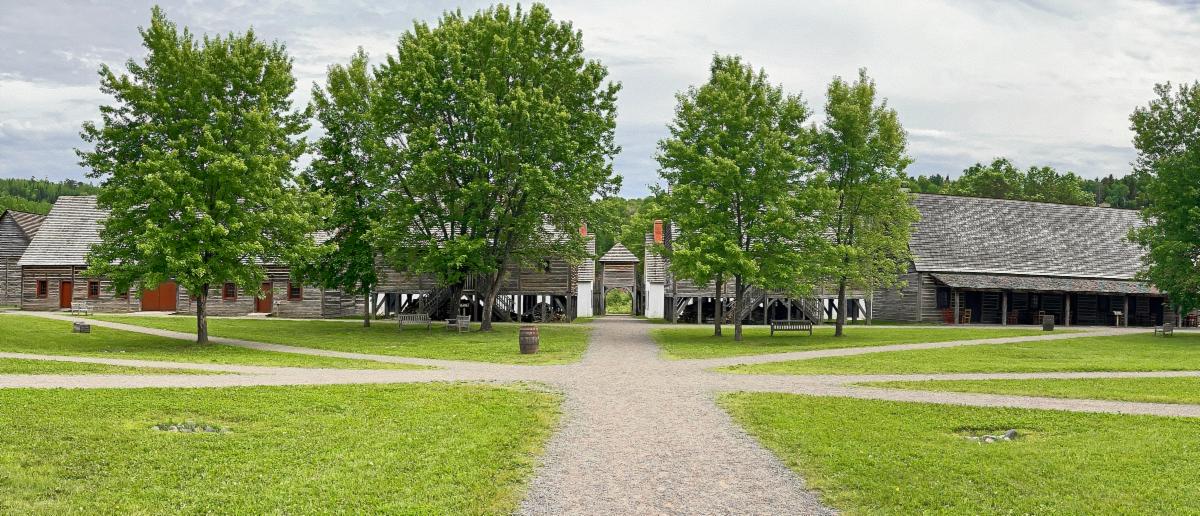
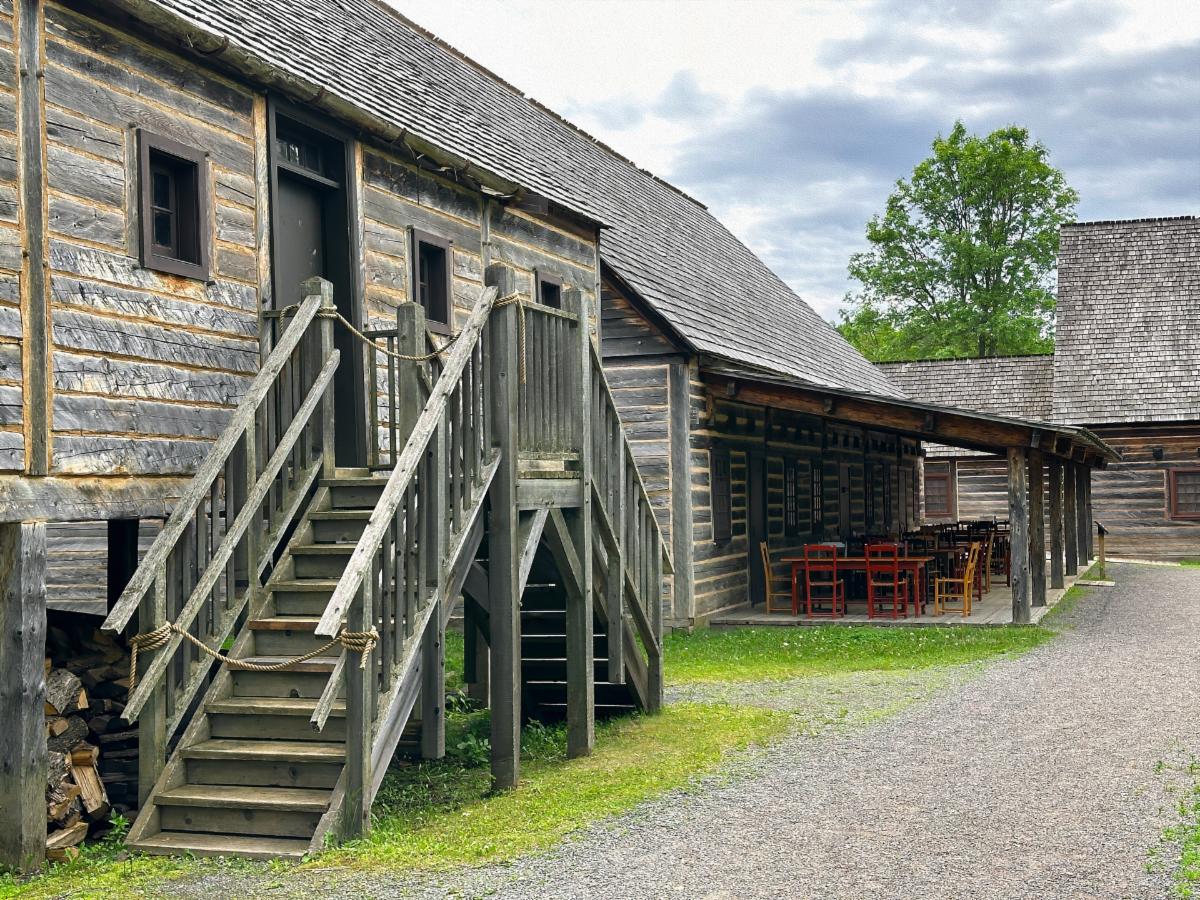
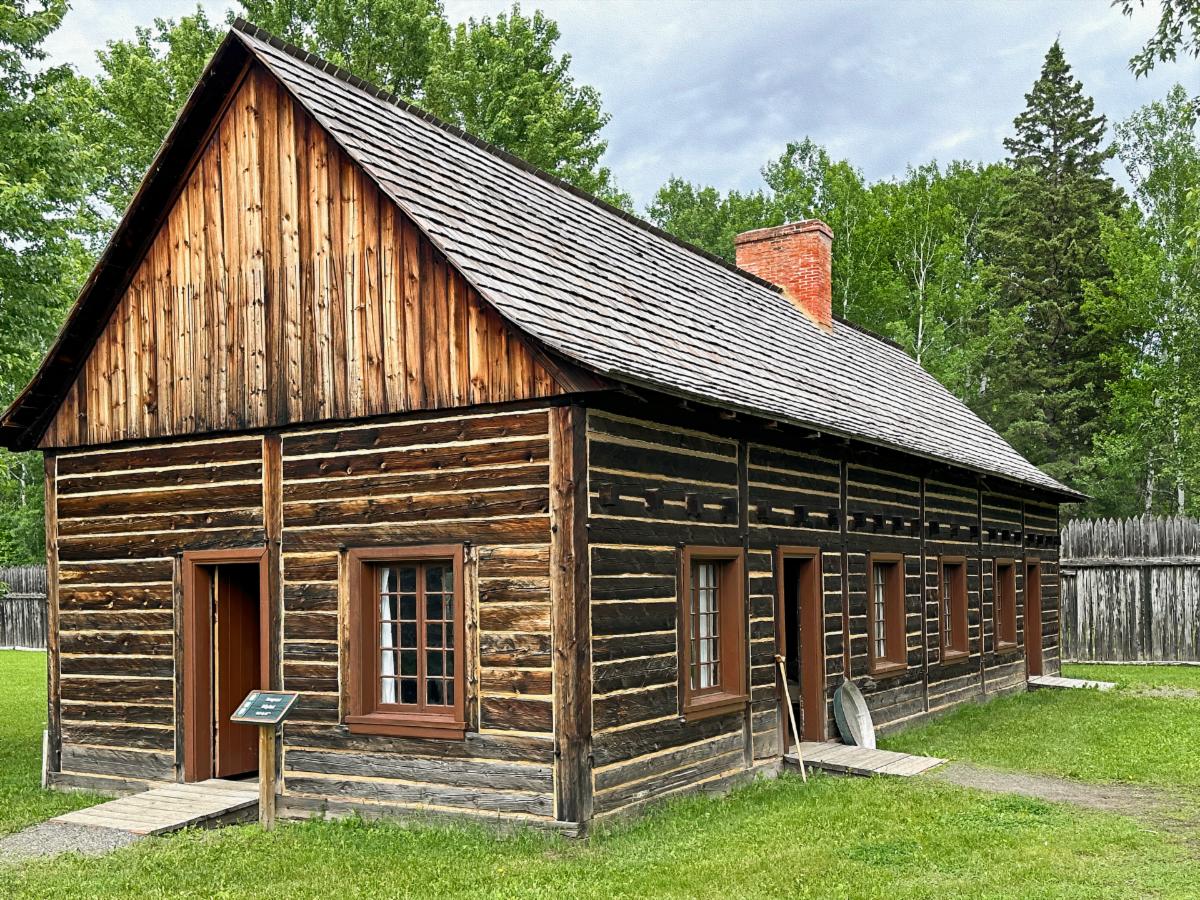
Each building was an exact replica of the original. Each building had a specific purpose. | |
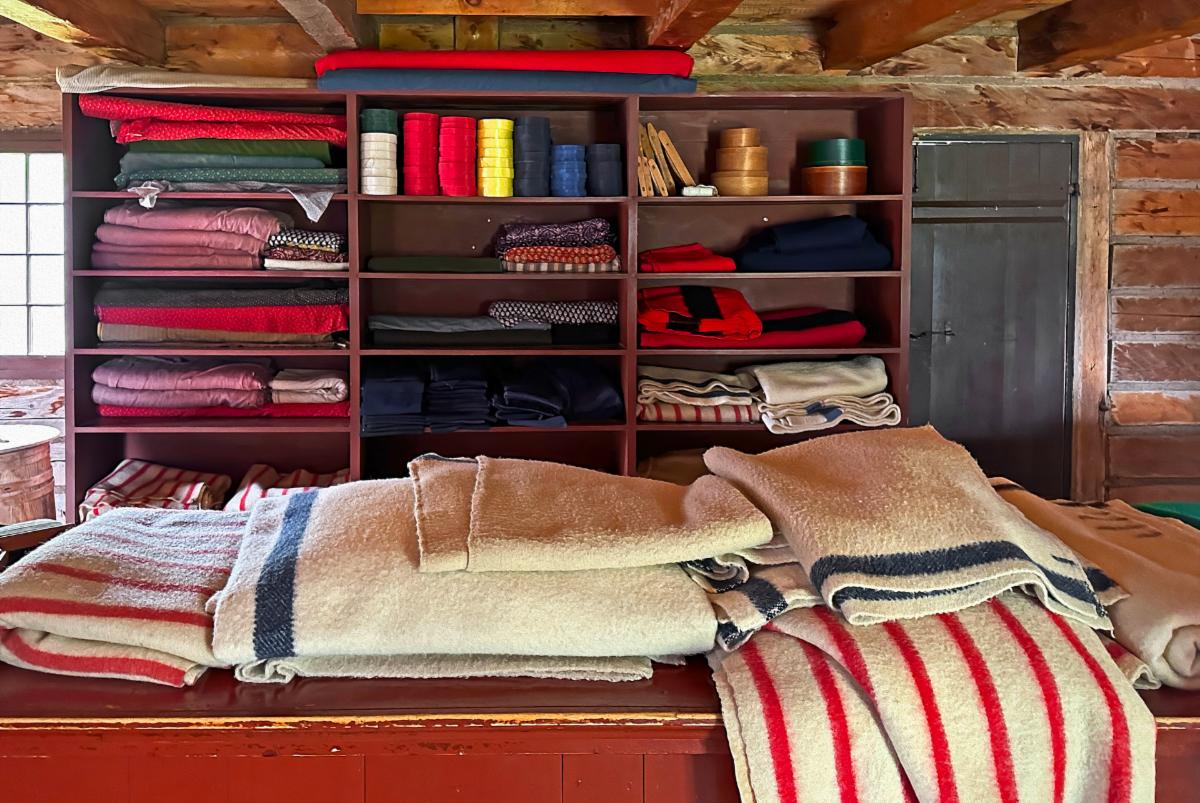
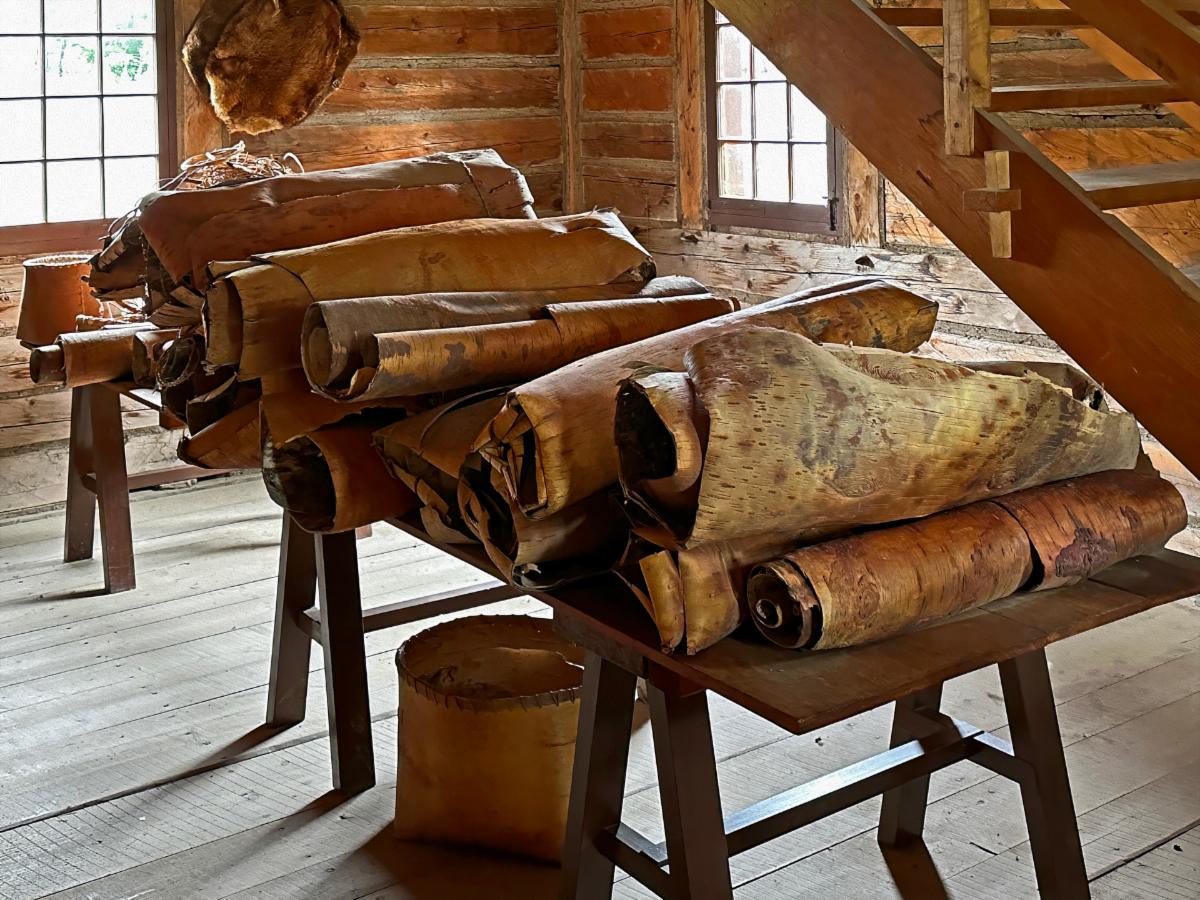
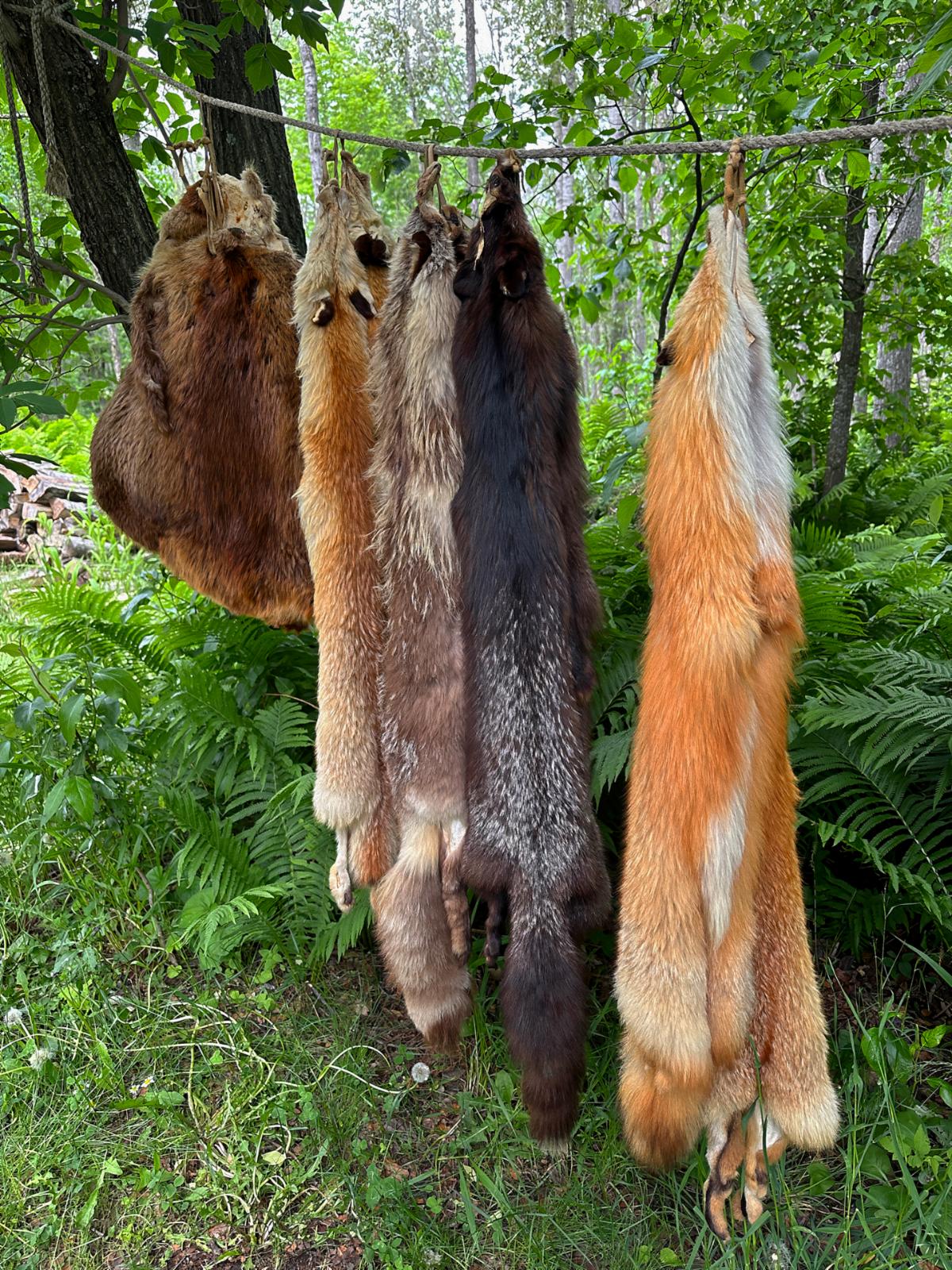
Above and below: Goods for sale at the trading store at the Fort. I loved the rolls of birch bark below. | |
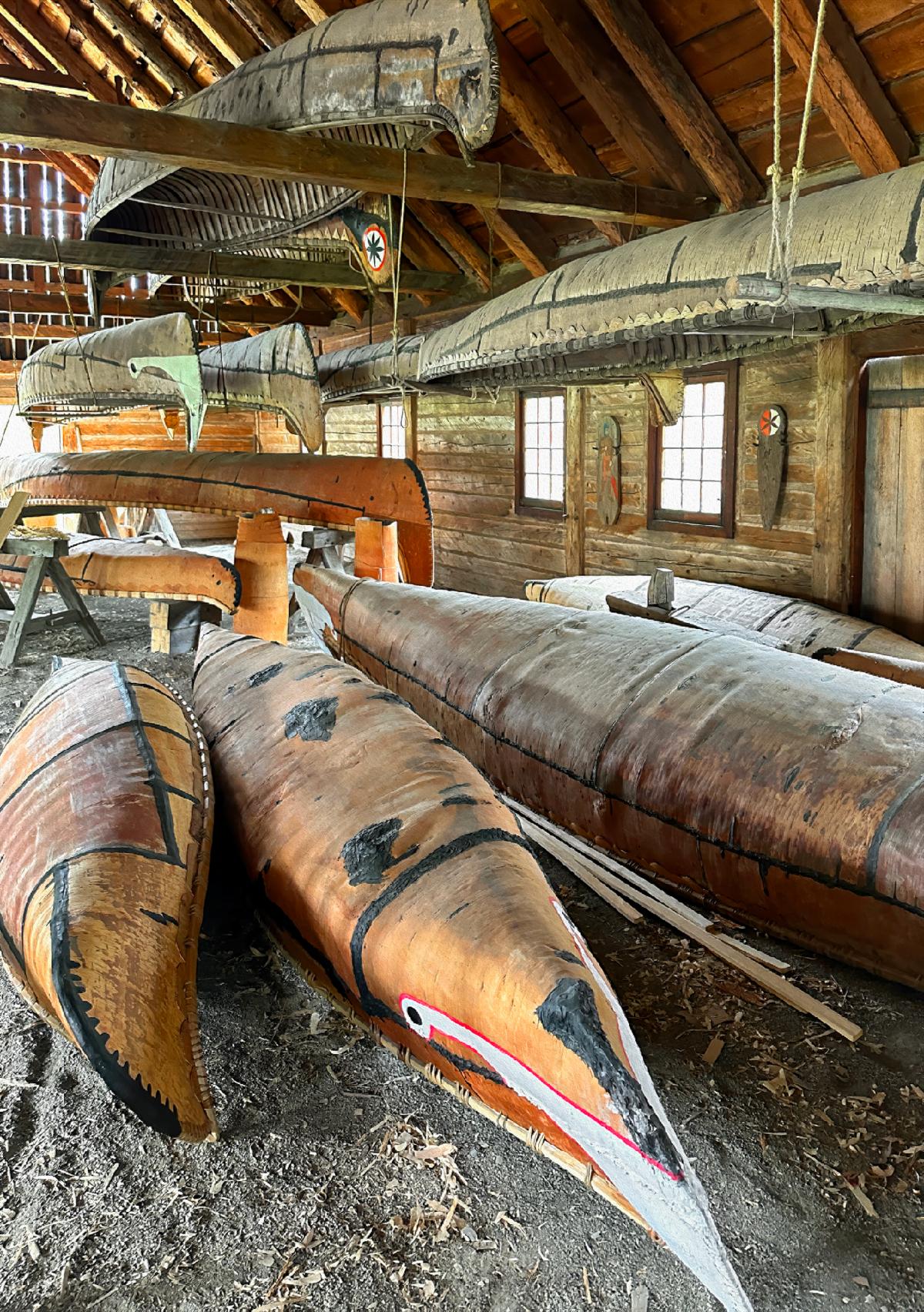
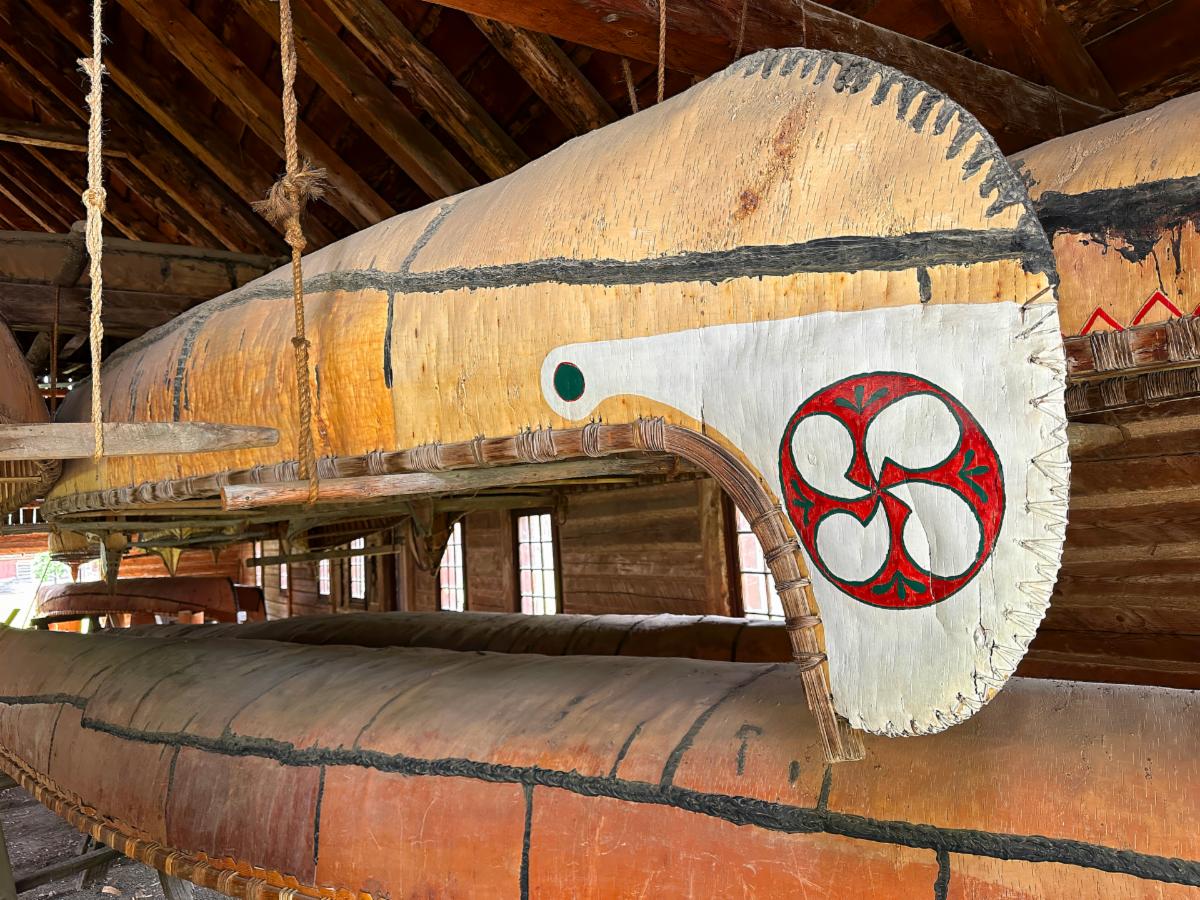
This is where the birch bark canoes were built and stored. | Even the canoes were built in the old-world way, and they were far sturdier than I believed possible. | |
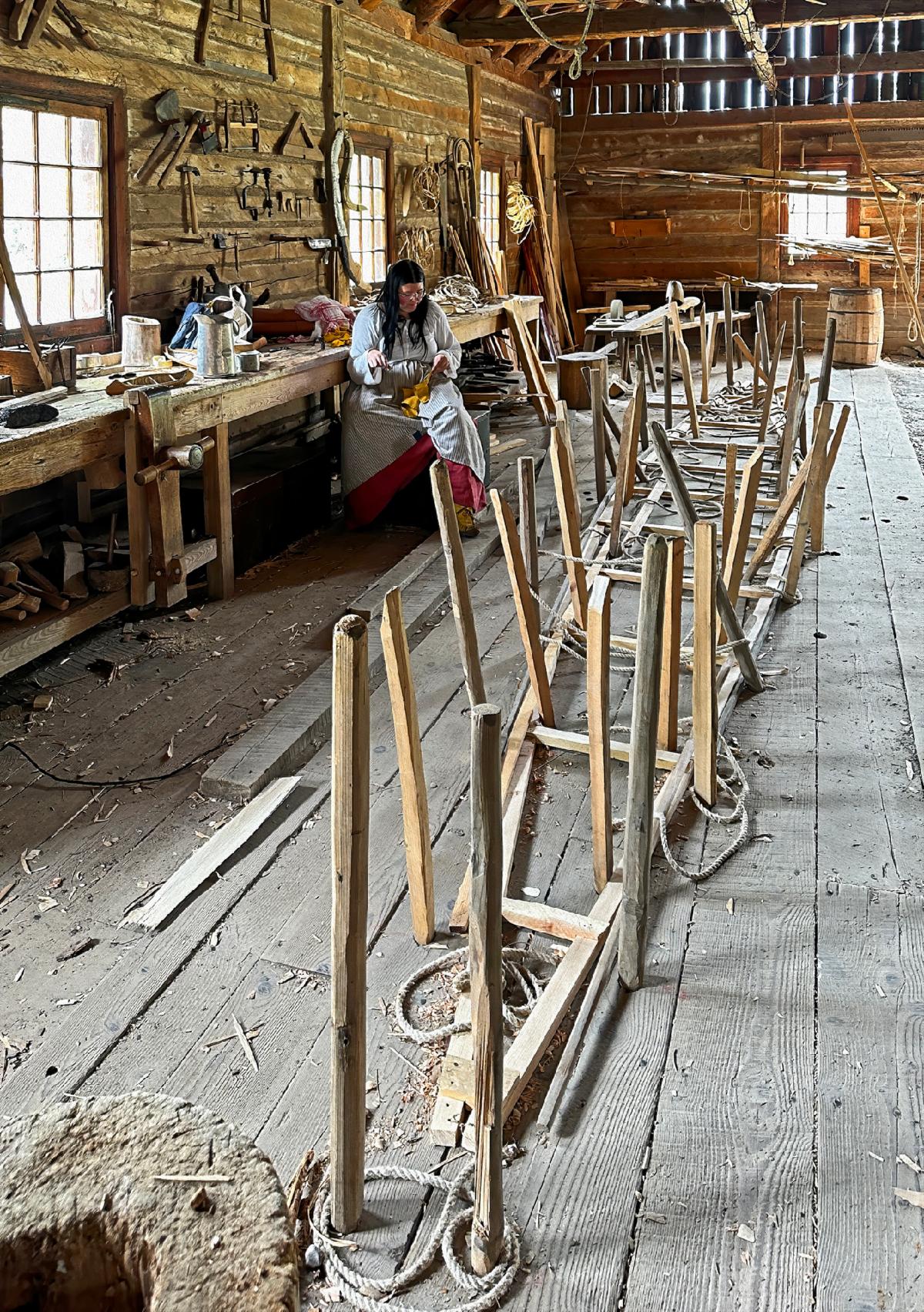
An old-world canoe building jig. | |
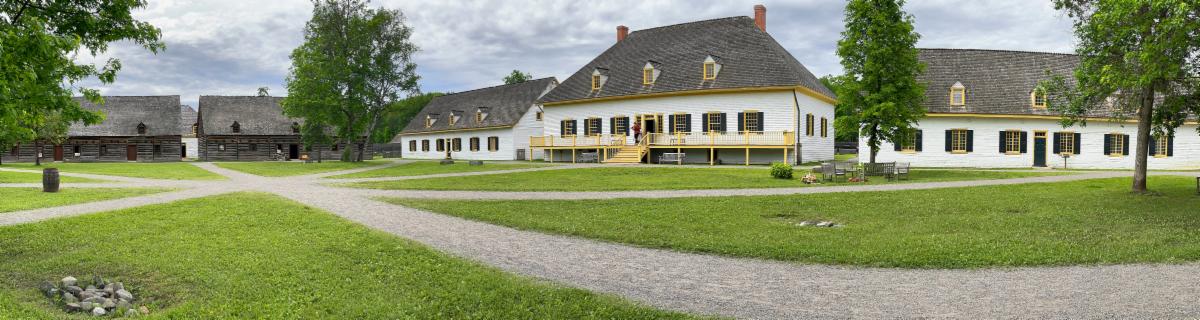
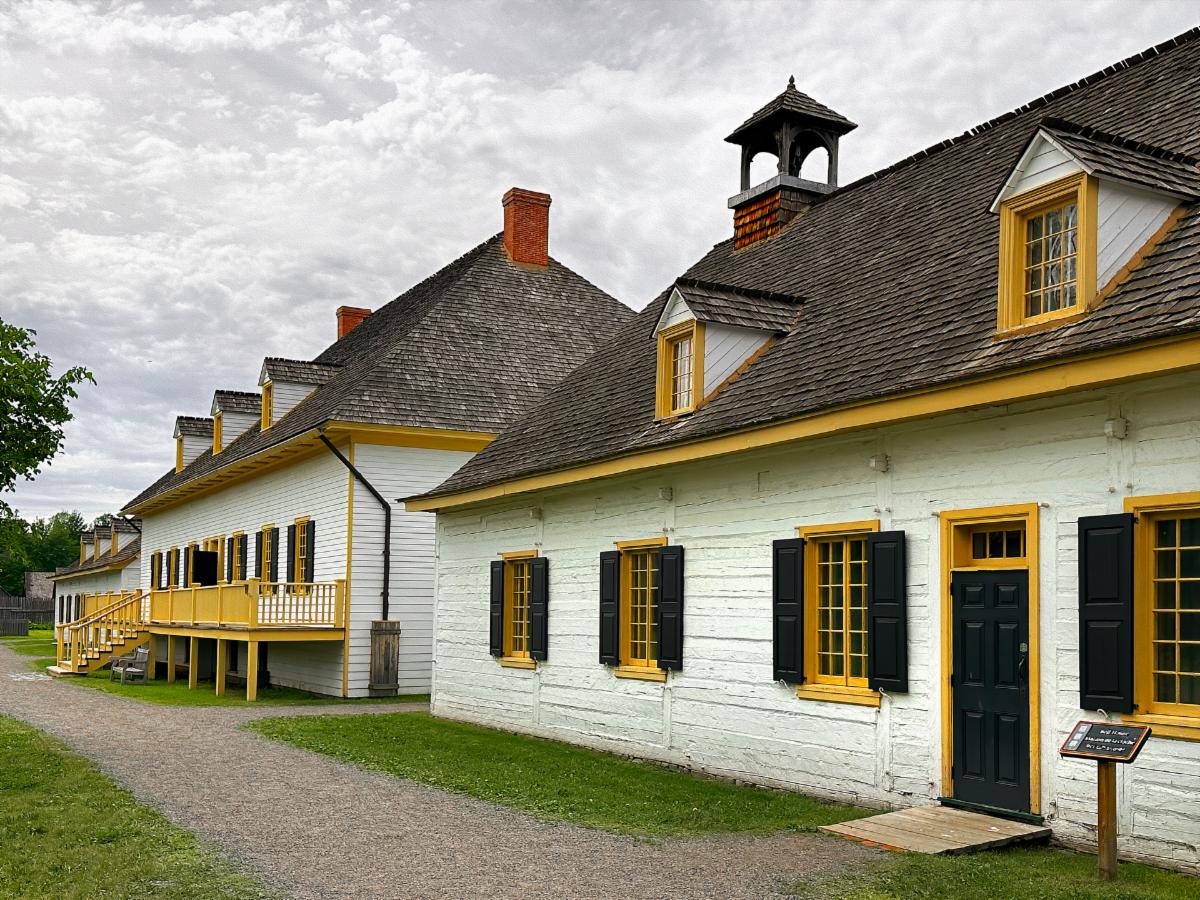
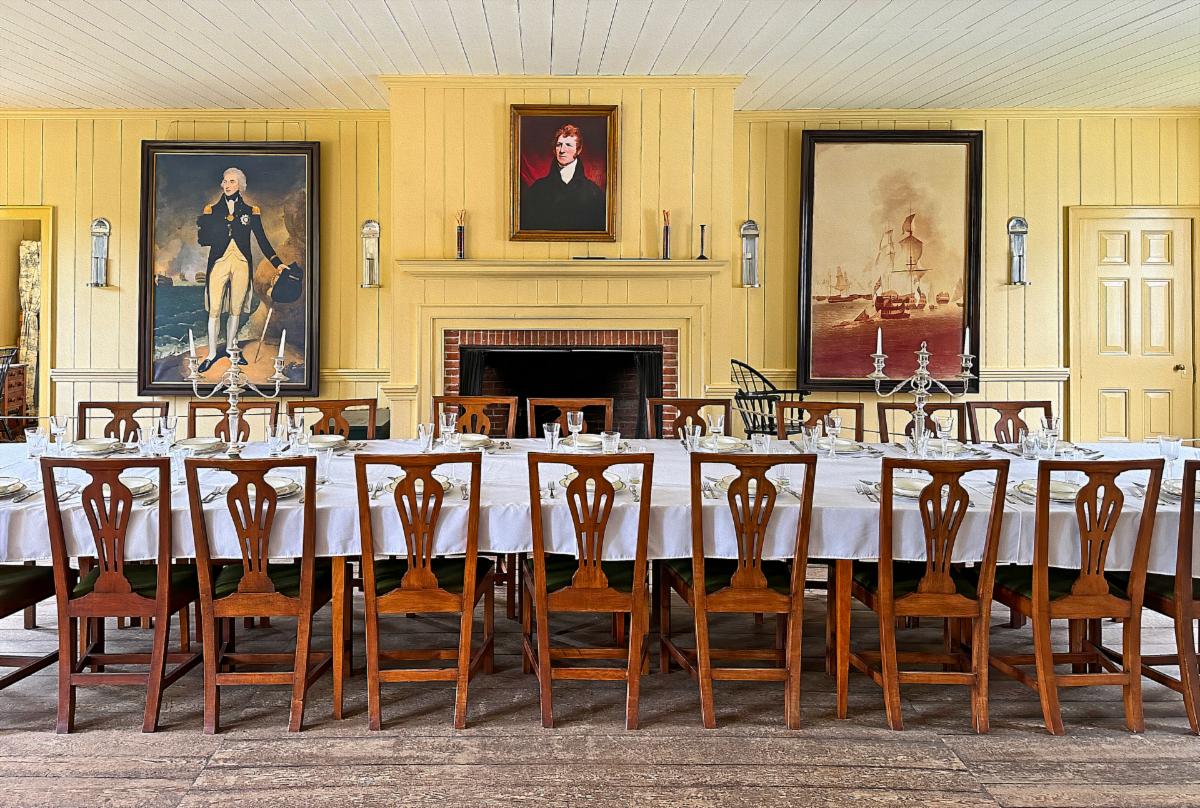
The original trading post was owned by the North West Trading Company (1879 - 1821), a Montreal-based company. The white buildings were for the wealthy company executives. | |
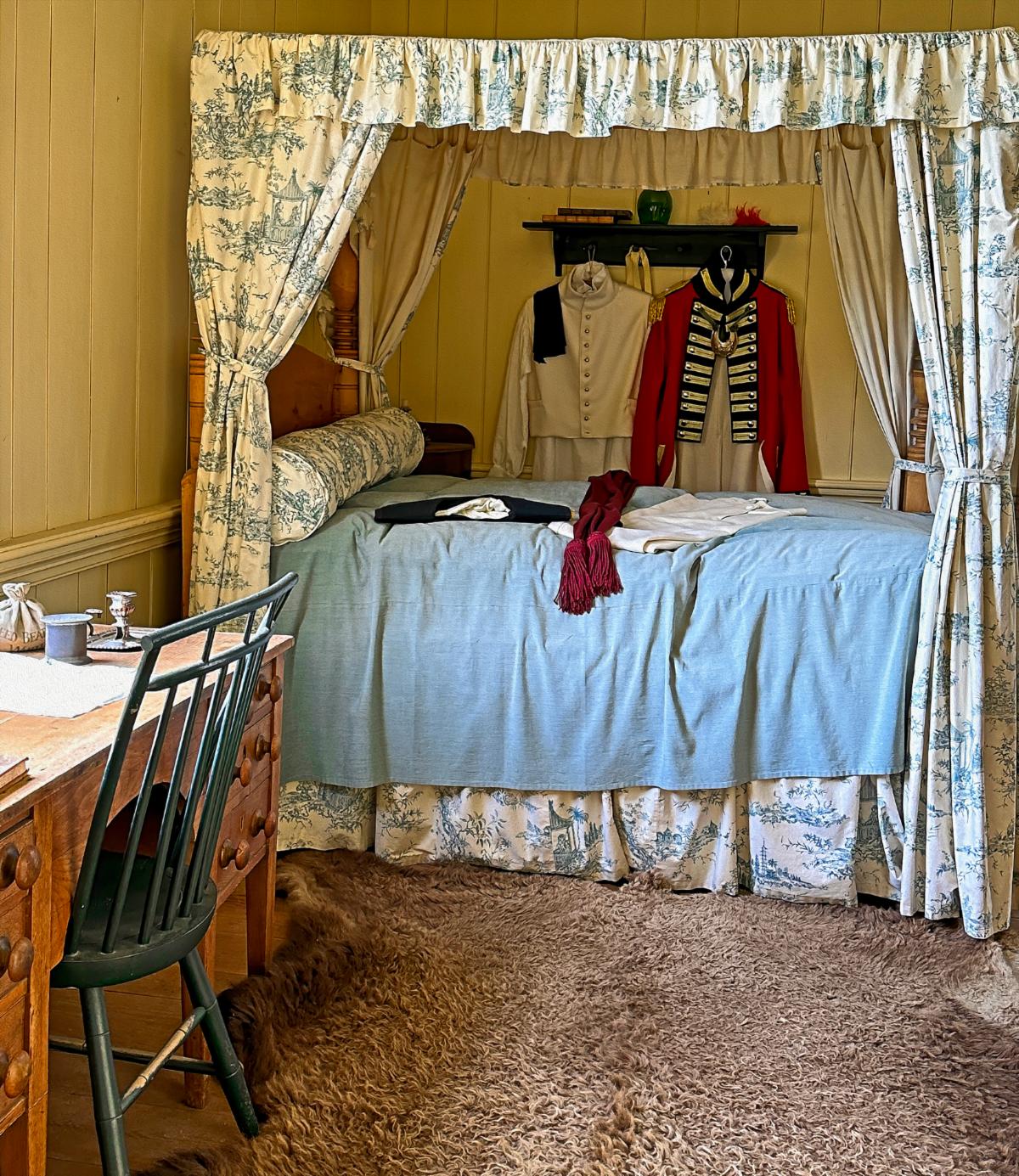
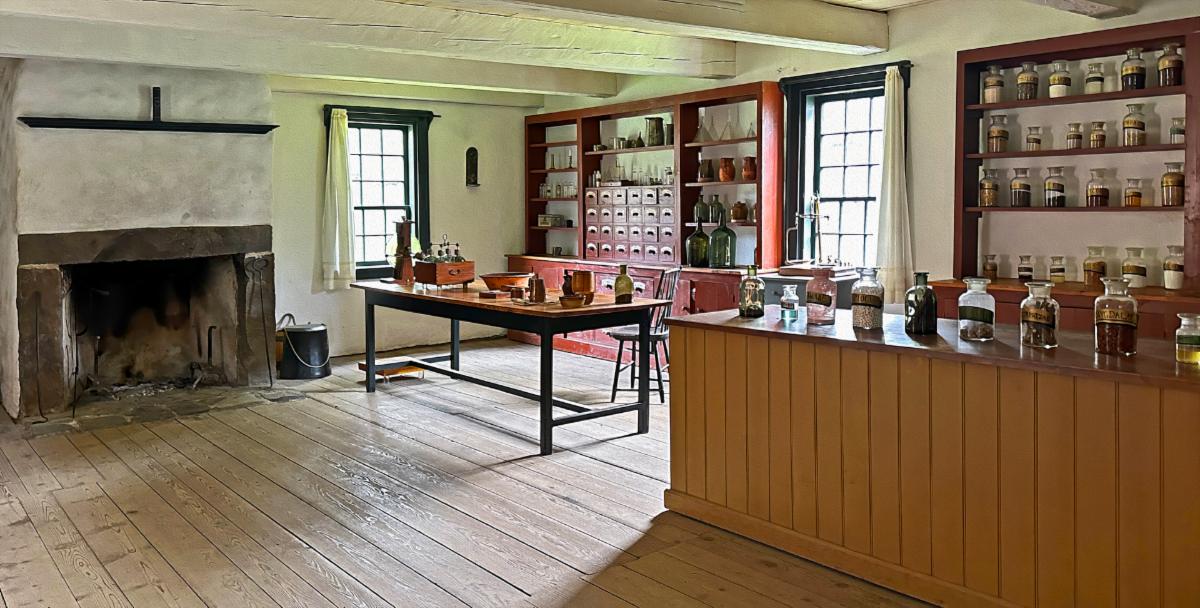
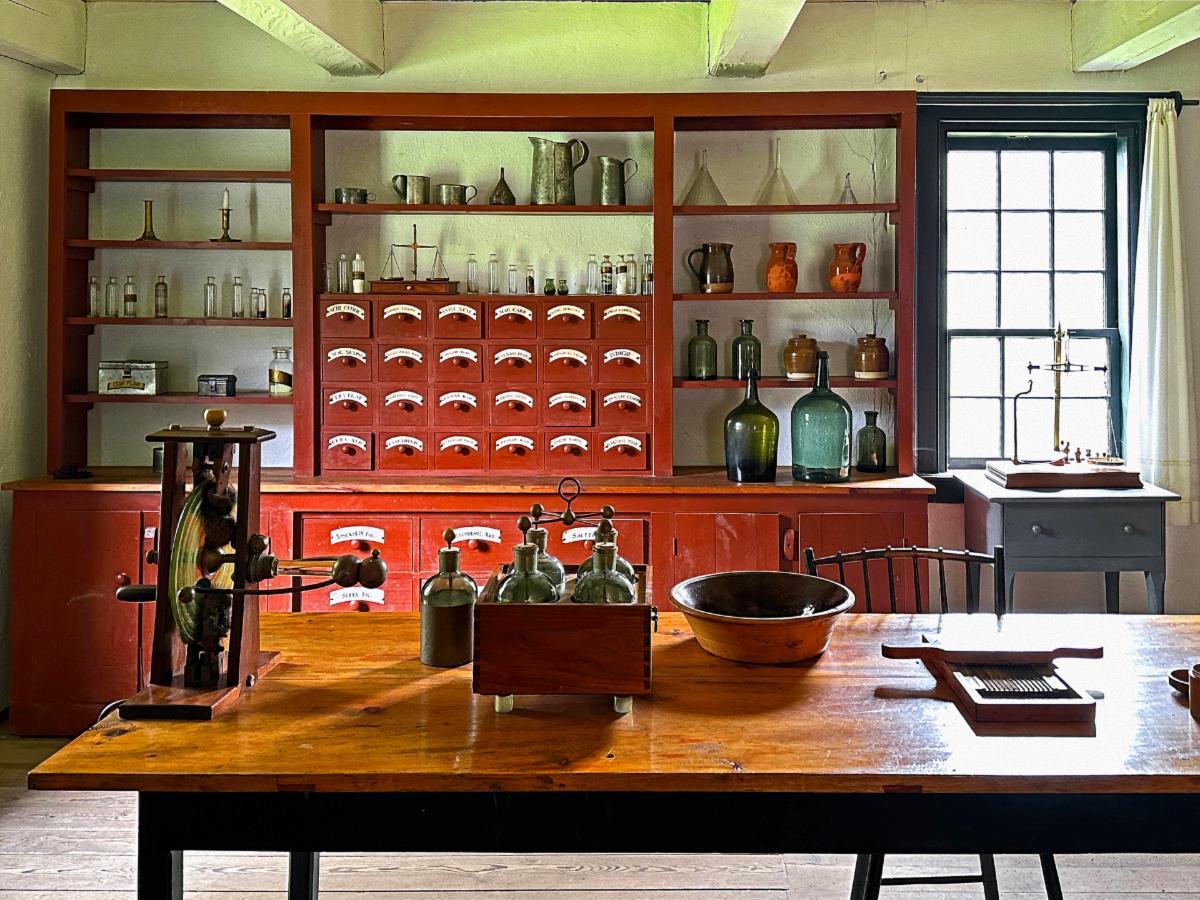
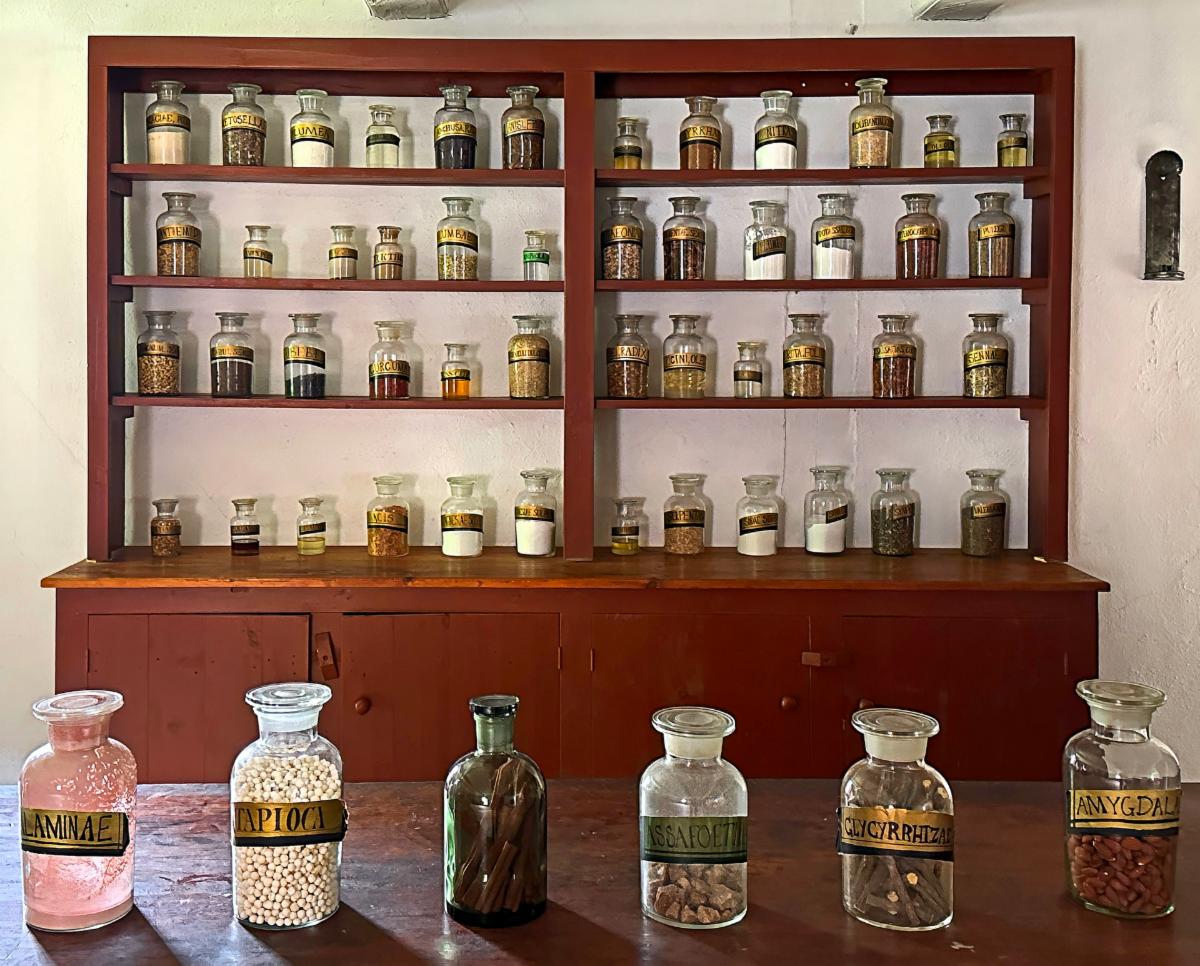
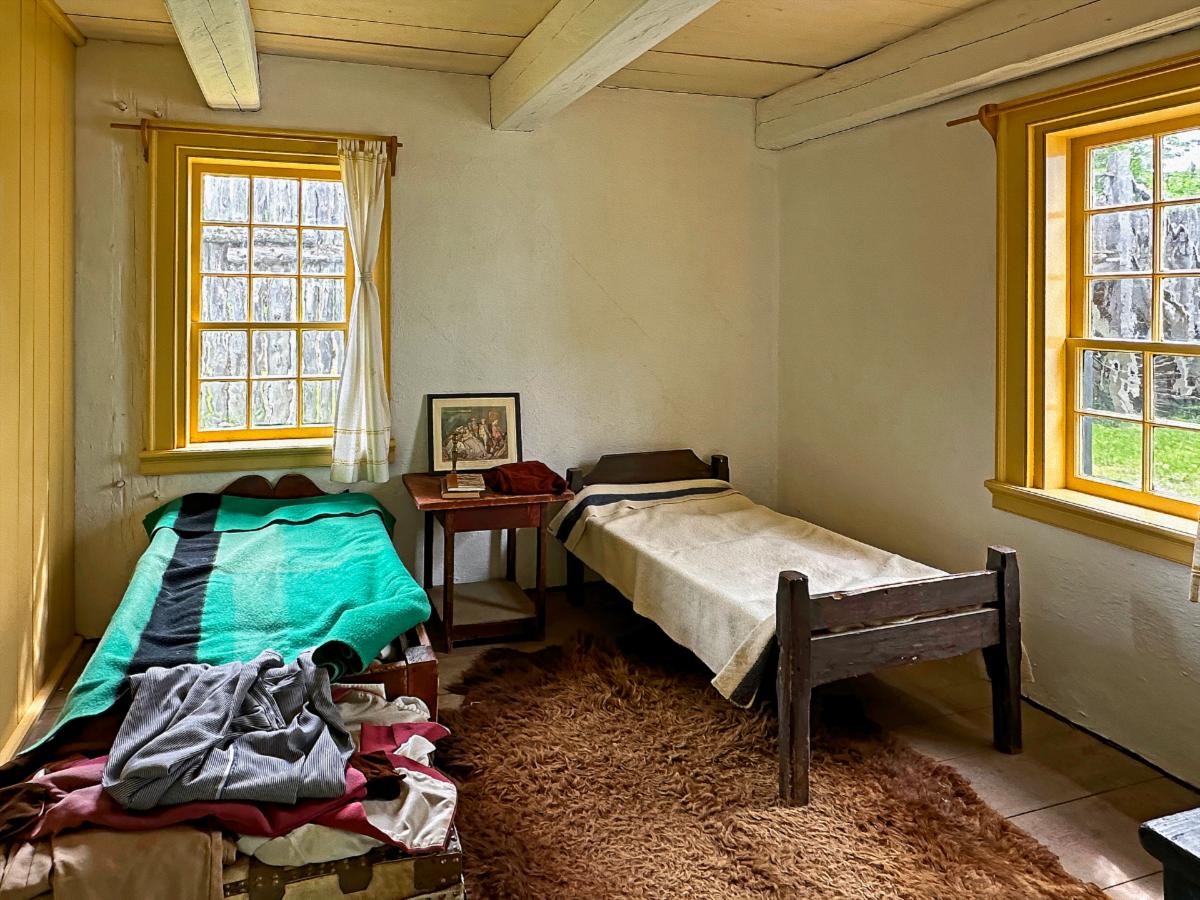
The executives' living quarters were well-appointed for being in the wilderness. These executives did not live at the Fort full-time; they came during the summer trading season. Some had native wives while at the Fort in addition to their actual spouses back in Montreal. | The Fort needed a doctor to care for the medical needs of the traders. Above is the hospital and pharmacy. On the back wall (not shown in this photo) are cots and a curious enema contraption. | |
Above and below: An inventory of elixirs, potions, and medicines. Tooth extraction was by far the most often performed medical treatment. | |
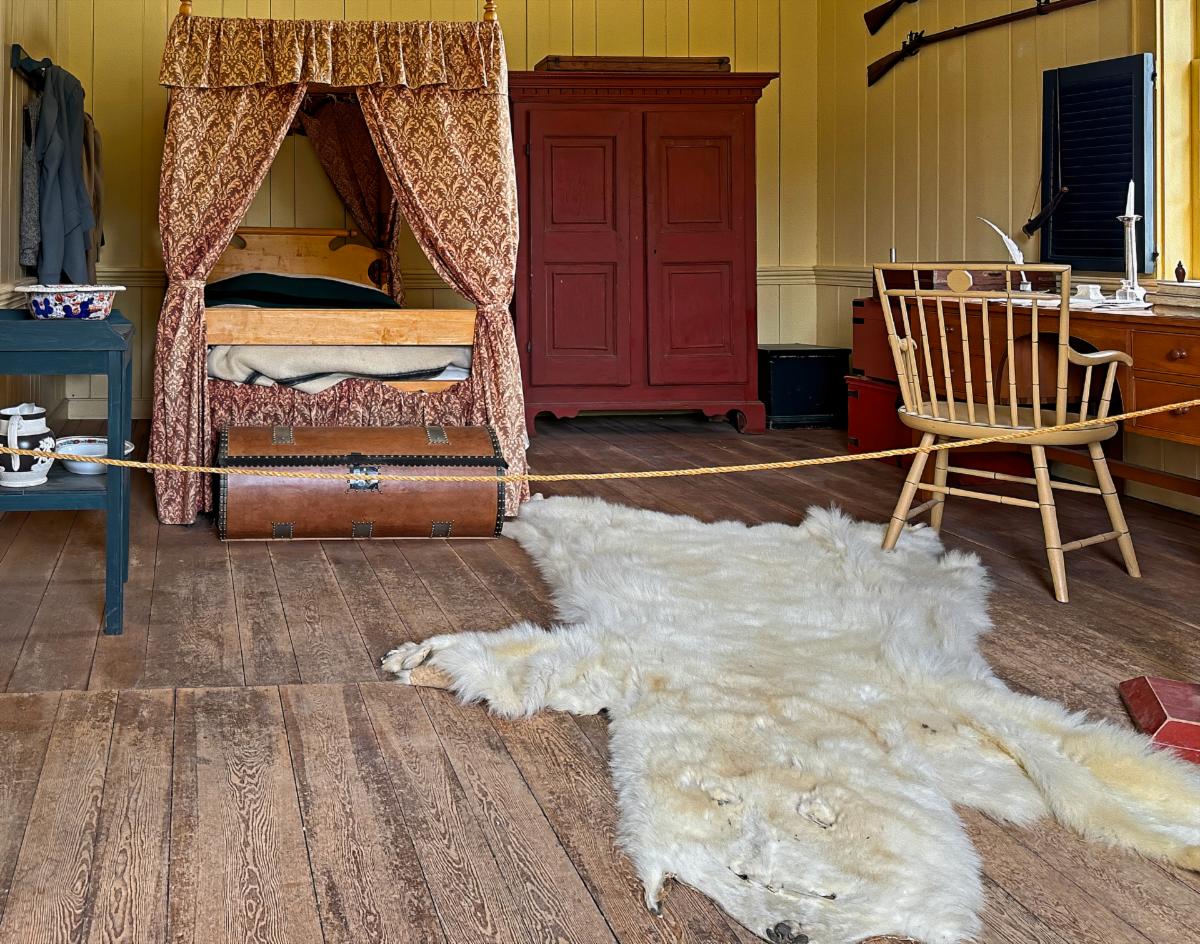
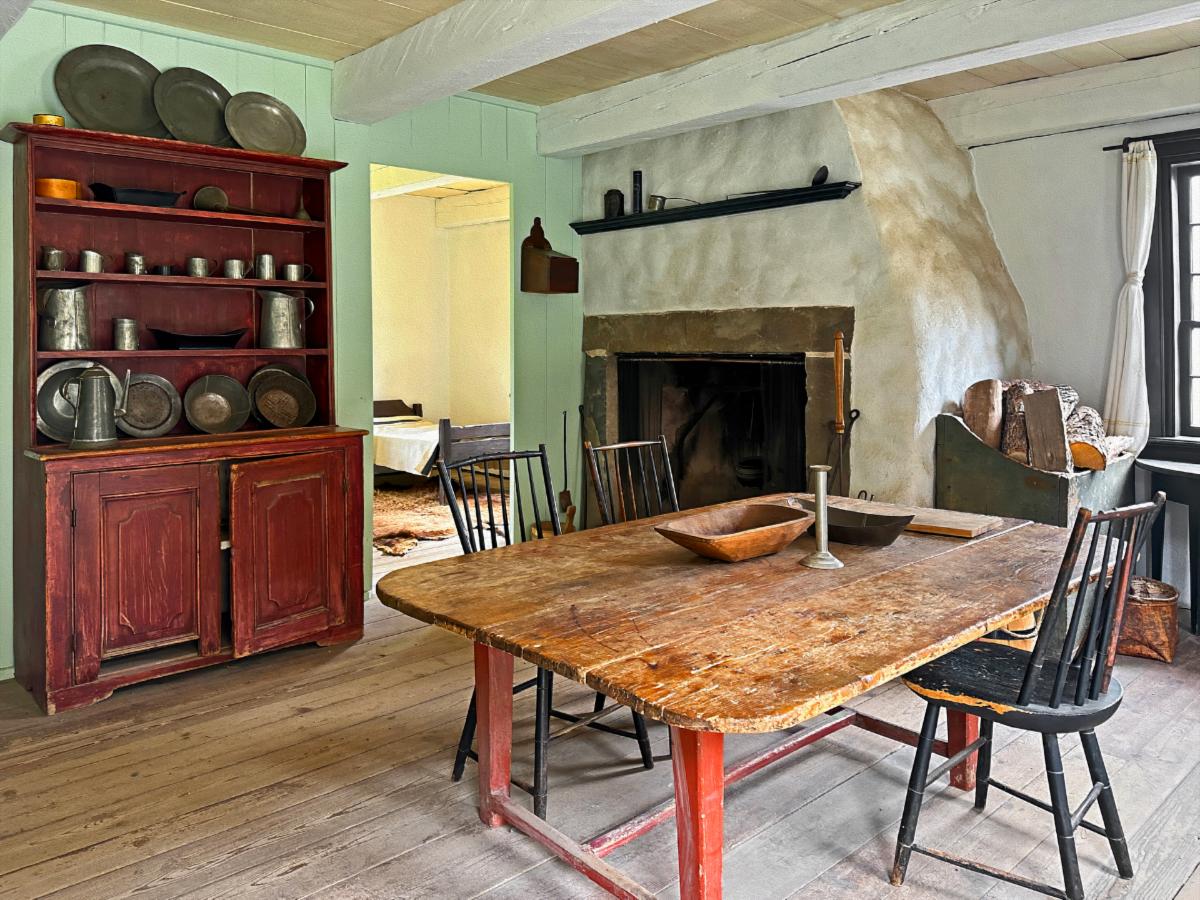
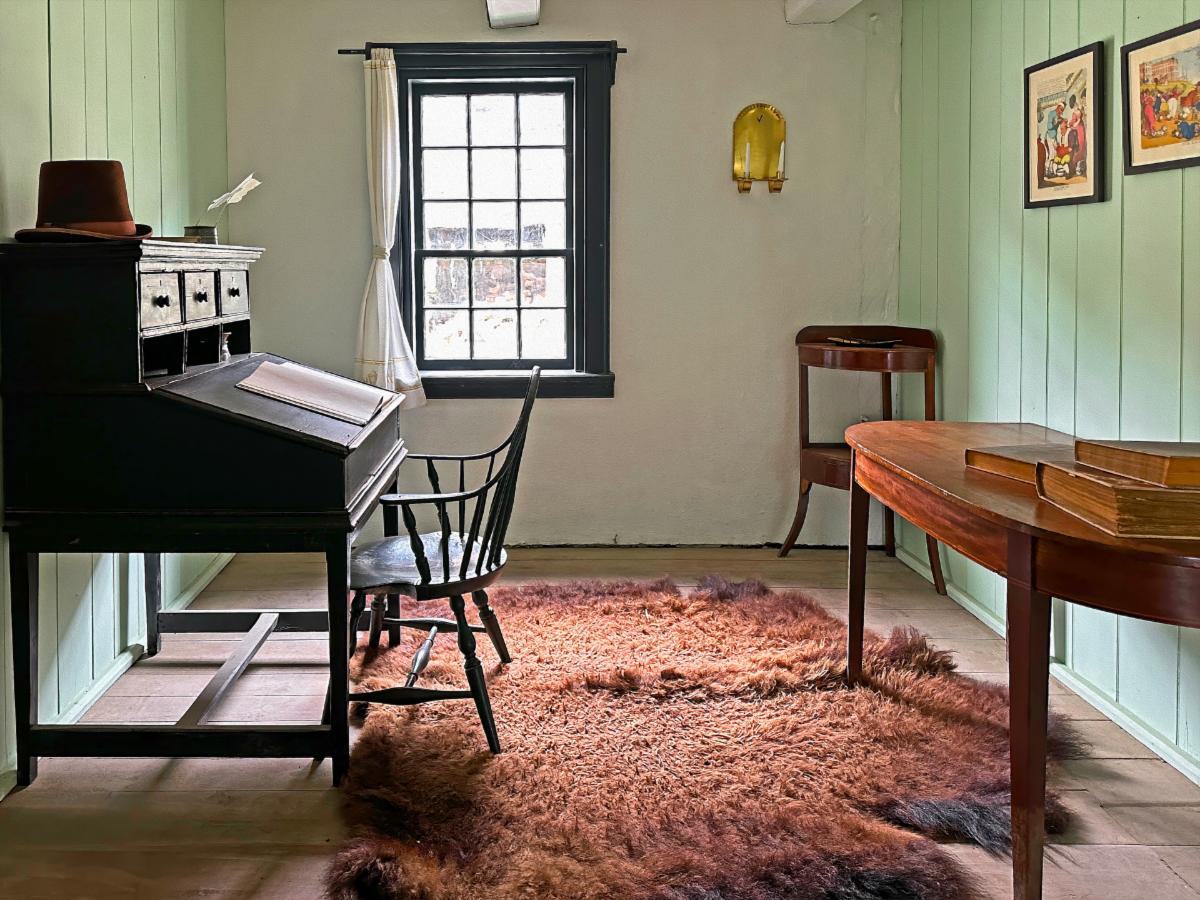
Above and below: The doctor's modest living quarters. At least he didn't live in a tent. | |
|
We stumbled into a neighborhood on the fringe of town that is a Canadian Indian Reservation. I noticed that the gas stations sold gas at a steep discount. I immediately pulled in for a fill-up. Not only was the gas $1 a gallon cheaper, it was full service, just like in the old days.
Gas is expensive in Canada at $1.67’ish a liter. A liter is 34 ounces, just 2 ounces more than a quart. Four liters is 8 ounces, or 1 cup larger than a US gallon. So, four liters cost $6.68, which prorates to $6.29 for a US gallon. That’s Canadian dollars, which equals $4.53 US for a US gallon.
That makes a $1 per gallon discount on Reservation gas significant. Oh yeah, we exchanged our LP tank at the reservation and got a great deal on that, too. Now, I must figure out where all the reservations are along our route.
KAKABEKA FALLS PROVINCIAL PARK
There are three separate campground loops. We were in the loop on top of a tall, thickly wooded hill. Most of the sites had electrical hookups, but ours did not, so it was a bit less expensive. The sites were nicely laid out. Most were roomy, but a handful of sites were weirdly cramped together. The bathhouses, or comfort stations, with showers and a laundry facility, are very nice. There is a dump station and a water refill station.
| |
|
Welcome to All Over The Map Travel Ventures!
Join us as we share our personal travel stories, inspiring you to relax and plan your own adventures. Our blog, a labor of love, helps us keep our memories fresh and connect with fellow travel enthusiasts.
Enjoy exploring our journeys, and if you know someone who might like our travel content, please share our site with them.
Stay up-to-date with our latest destinations by joining our free mailing list. You can also reply to this email to chat with us directly. We’re here to help you plan your next trip, share travel tips, or simply say hello.
Until next time, safe travels, and have fun!
-- David and Wanda Zuege
Message us: 715-252-6664 | 715-252-3326
Email: alloverthemaptravelventures@gmail.com
North America . Europe . Mexico . Asia . Travel Resources . RV Product Reviews
| | | | |