October 5, 2021
Fall 2021 Issue 7
Weekly activities and lessons to keep your child thinking and progressing throughout the school year.
"Tell me and I forget, teach me and I may remember, involve me and I learn."
The McManus Files
Fall 2021 Issue 7

Happy Tuesday,

I'm very excited to share this week's learning activities. I've been wanting to try the Sierpinski Triangles activity in my class, but I haven't been able to find the time yet. :-/ I hope you enjoy it and share your work. The Great Read of the Week is a wonderful, dark collection of classic fairy tales. I know your readers will love the retellings. I surely did. I've also posted two challenging math Problems of the Week to tickle your brains and three new creative writing prompts. Keep busy, keep learning, keep growing.

Please share this flyer with your friends and encourage them to join our mailing list by following the links on this page.

Mr. McManus :-)
Great Read of the Week
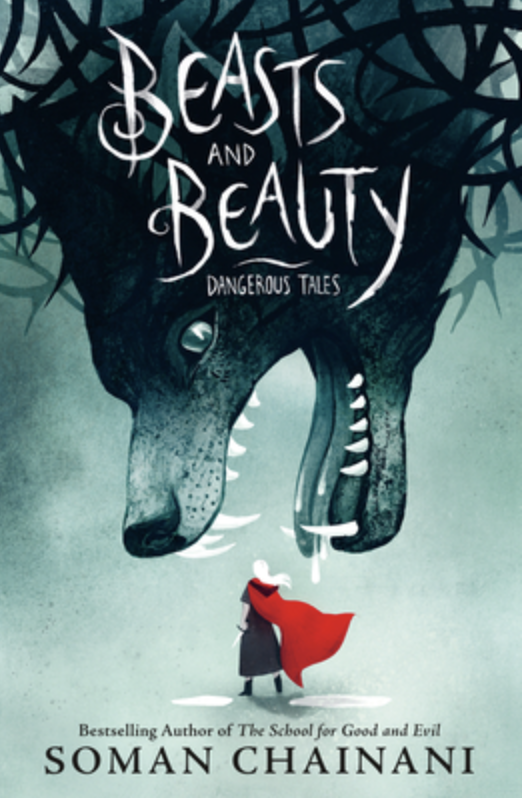
Beast and Beauty
Dangerous Tales
by Soman Chainani
Here is another scary tale to welcome in the Halloween season. You might think you know these stories, but the author has reworked the fairy tales in a dark, enchanting, and fresh way that breathes life into the classics and makes them feel very modern. In this wonderful book, you will find twelve dangerous tales of mystery, magic, and rebellious hearts. Each twists like a spindle to reveal truths full of warning and triumph, truths that free hearts long kept tame, truths that explore life . . . and death. A must-read for any fairy tale devotee who wants to view classic stories through a new lens. Keep the lights on!
Inquiry Quest

LEARNING ABOUT SIERPINSKI TRIANGLES
If your child thinks the only famous triangle is in Bermuda, this project is for them

Sierpinski triangles are perfectly self-similar fractals. Your budding scientist will learn about them and make their own Sierpinski triangle fractal in this simple project that teaches about shapes, geometry and structural engineering.

Using the template provided, (Click here for Triangle Template) your child will color and then cut out their own triangles and then scale up the Sierpinski triangle fractal to create a larger one. They can rest assured that no airplanes have ever disappeared in the Sierpinski triangle. (A nice website with simple directions HERE)

GATHER THESE:
  • Paper
  • Coloring tool, pencils, crayons, etc.
  • Optional: scissors, tape

THEN DO THIS:
  1. Color the Sierpinski triangle below.
  2. Print or draw many equilateral triangles and tape them together on a wall to scale up the Sierpinski triangle fractal. Ask family and friends to help!
  3. Challenge: Make a 3-Dimensional Sierpinski triangle pyramid!

ASK THIS:
  • Can you continue scaling down the pattern smaller than the template provides? Where do the next colored triangles go?
  • Are there other shapes that can make self-similar repeating patterns?
  • Where do you see fractals in nature?
  • Look up a Von Koch snowflake!

WHAT IS HAPPENING?
A Sierpinski triangle is a self-similar fractal described by Waclaw Sierpinski in 1915. Self-similar means when you zoom in on a part of the pattern, you get a perfectly identical copy of the original. A fractal is a quantitative way to describe and model roughness. In this case, we mean the roughness of the perimeter of the shape. Most fractals are not self-similar and can be found in nature. Examples of fractals in nature are the branching patterns of tree branches, lightning, shells, ocean waves, and river systems.

Benoit Mandelbrot, the father of fractal geometry was inspired to create a formula for describing the roughness of an outline, such as the coastline of Britain, for pragmatic purposes. The formula for roughness of the perimeter of the shapes is quantifiable and is used to model soil erosion design more compact and efficient antenna.


If you feel your child might benefit from a group or individual tutoring program to close the gap created during summer vacation and to prepare them for the next phase of their education, please contact McManus Tutoring.

Programs are structured so that students learn independence, accountability, and self-possession and they develop a repeatable structure that can be used to build success in the future.

McManus Tutoring has all Summer 2021 issues of The McManus Files posted in the library.

You can visit the site by clicking the link mcmanustutoring.com
or simply scanning the QR Code
3 Writing Prompts

These prompts and questions will help jump-start your daily writing. Just as it's important to read for at least 30 minutes each day, you should also write for 30 minutes a day. Don't worry about your organization or spelling, just write!


"The first thing I did after I taught myself to fly was..."


"The song was like a magic potion. When people heard it they began to..."


"Two men entered my store and asked to buy a..."


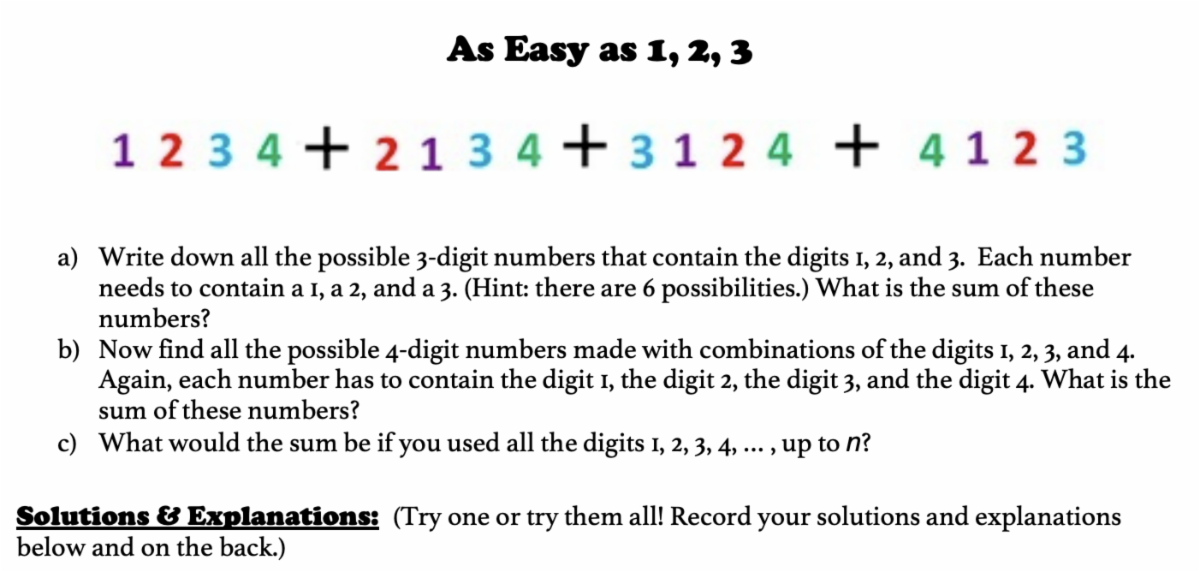
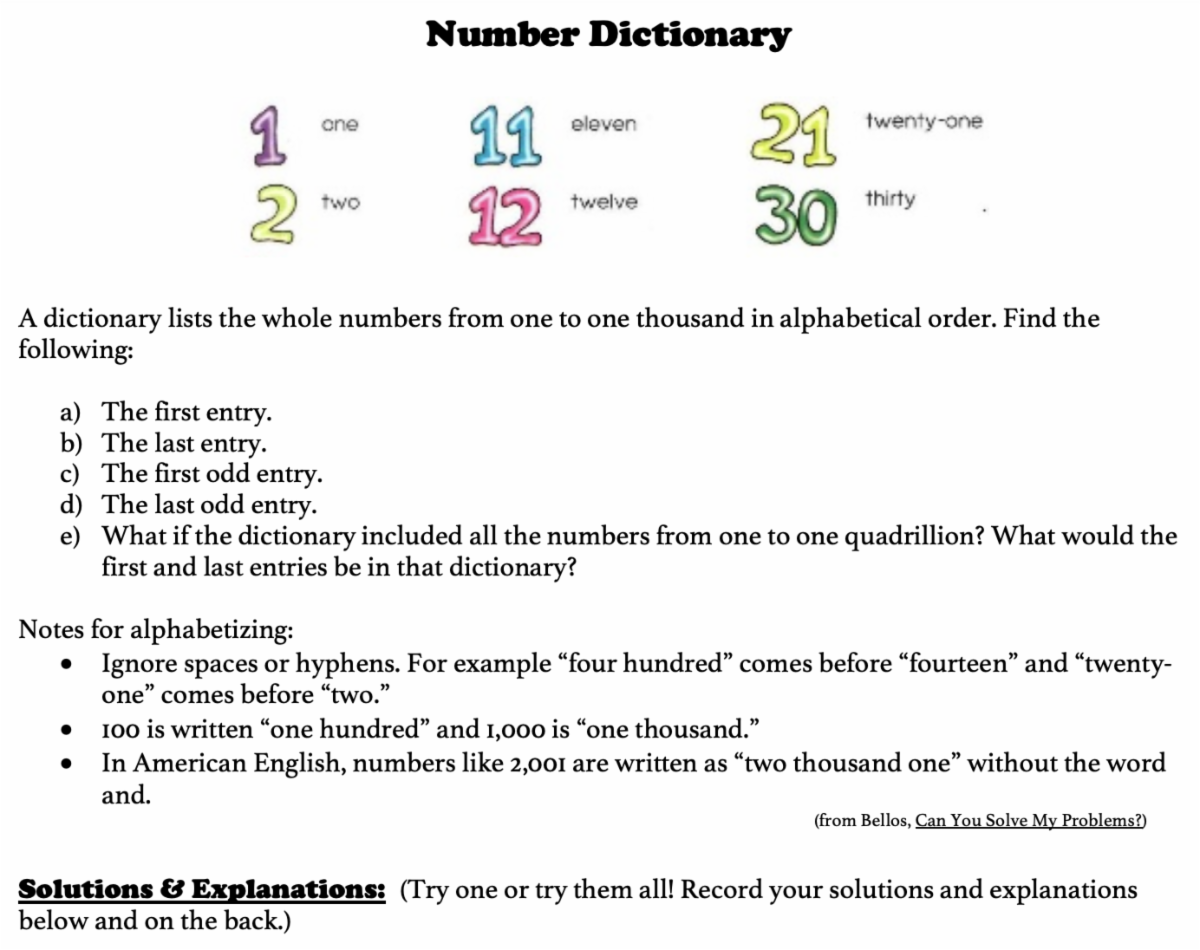
Problem(s) of the Week

Solve the problems and complete
Parts A & B
Part A: What is your answer to the problem? 

Part B: Explain your thinking in complete sentences. How did you come up with your final answer?
Part A: What is your answer to the problem? 

Part B: Explain your thinking in complete sentences. How did you come up with your final answer?
To receive your own copy of The McManus Files, join our mailing list