|
As many of you know from the announcement earlier this week, this past Monday was the Bris of our Grandson, Miles.
Lifecycle events are evokers of emotion. We think of the past. We think of the future. At the same time, and this is often the hardest part, we need to be present to the wonder of the moment.
Most will probably agree that attending a Bris is a wonderful experience. Except, of course, if you are the guest of honor. (Actually, the event is important and meaningful. But if you look around the room, the mom does not look happy at all, and the father is nervous. The men look uncomfortable, and the women are all thinking: “only a man could conjure up such a custom”.)
Putting all of this aside, this is a ritual that has been a constant in the Jewish world for around 3,000 years. That is a long time. It is a wonder. An unbroken thread from generation to generation.
I was given the great honor of being the Sandek, with the job of holding and comforting the baby during the circumcision. I loved being given the honor, but I must confess that I find myself hoping that he does not bear a grudge against me for playing such an active in the ritual.
All the above having been said, during the ceremony and as the name was announced, my eyes teared from the power of the moment. The fact that the ritual goes back, in an unbroken chain, all the way from Miles, to his father, to his grandparents, to his great grandparents, to his great-grandparents, all the way back to Abrahm and Isaac, is a powerful thought indeed.
Some know that Miles was born on my birthday. He and I have an additional connection. His Bris was performed on the week that we will be reading Parashat Achrei Mot/Kedoshim, which is my Bar Mitzvah portion.
Kedoshim, is a perfect Parasha during which to be brought into the covenant. It begins: “You shall be holy, for I, the Lord your God, am holy”. What a message to receive as you enter the covenant. “Hey kid! Holy, Holy, Holy! Kadosh, Kadosh, Kadosh!”.
Much of what follows in the Torah portion gives a glimpse of God’s vision of holiness. Interestingly it begins with 3 seemingly unrelated ideas. 1) Revere your mother and father, 2) Observe My Sabbaths, and 3) Do not turn to idols.
But the underlying message is clear: 1) Mom and Dad represent family, 2) Shabbat observance represents community, and 3) retaining faith in God represents our personal connection. In effect, the Torah is telling us to be holy in every aspect of our lives. As it has done for generation after generation of young Jews, it is Telling Miles to aspire and, grow up, to be holy.
But there is more. The Parasha then provides a (non-exhaustive) list of the things we should do in our attempts to be holy. Here is an abbreviated list, and I want my Grandson to feel it in his kishkes:
When bringing in the harvest, leave food behind for the poor. Don’t steal. Don’t lie. Don’t cheat. Pay your workers promptly. Do not insult the deaf. Do not place a stumbling block before the blind.
Each one seems so obvious that one wonders why the Torah feels compelled to tell us. Perhaps that is the point. We should not need to be told these most basic ideas of kindness. And yet, when we read the paper, or listen to the news, or look at our social media feeds, these “rules” are being broken every minute of every day.
As we enter the first Shabbat after Miles’ entry into the covenant, I pray that our beautiful child will gain the understanding of what it means to be holy in all aspects of his life, and that he will not need to be frequently reminded of how one should comport oneself in this world. May he be raised to be holy to himself, to his family, and to his community. May he enjoy the blessings of learning Torah, standing under the Chuppah, and performing good deeds. May he love and may he be loved.
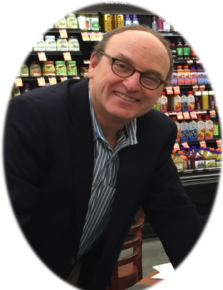
Shabbat Shalom – Rabbi Michael S. Jay
|