NJ MAT Centers of Excellence Newsletter |
|
Friday, August 27th, 2021 | Issue #30 |
|
|
|
New Approaches to Help Emergency Rooms Help Those with Addiction |
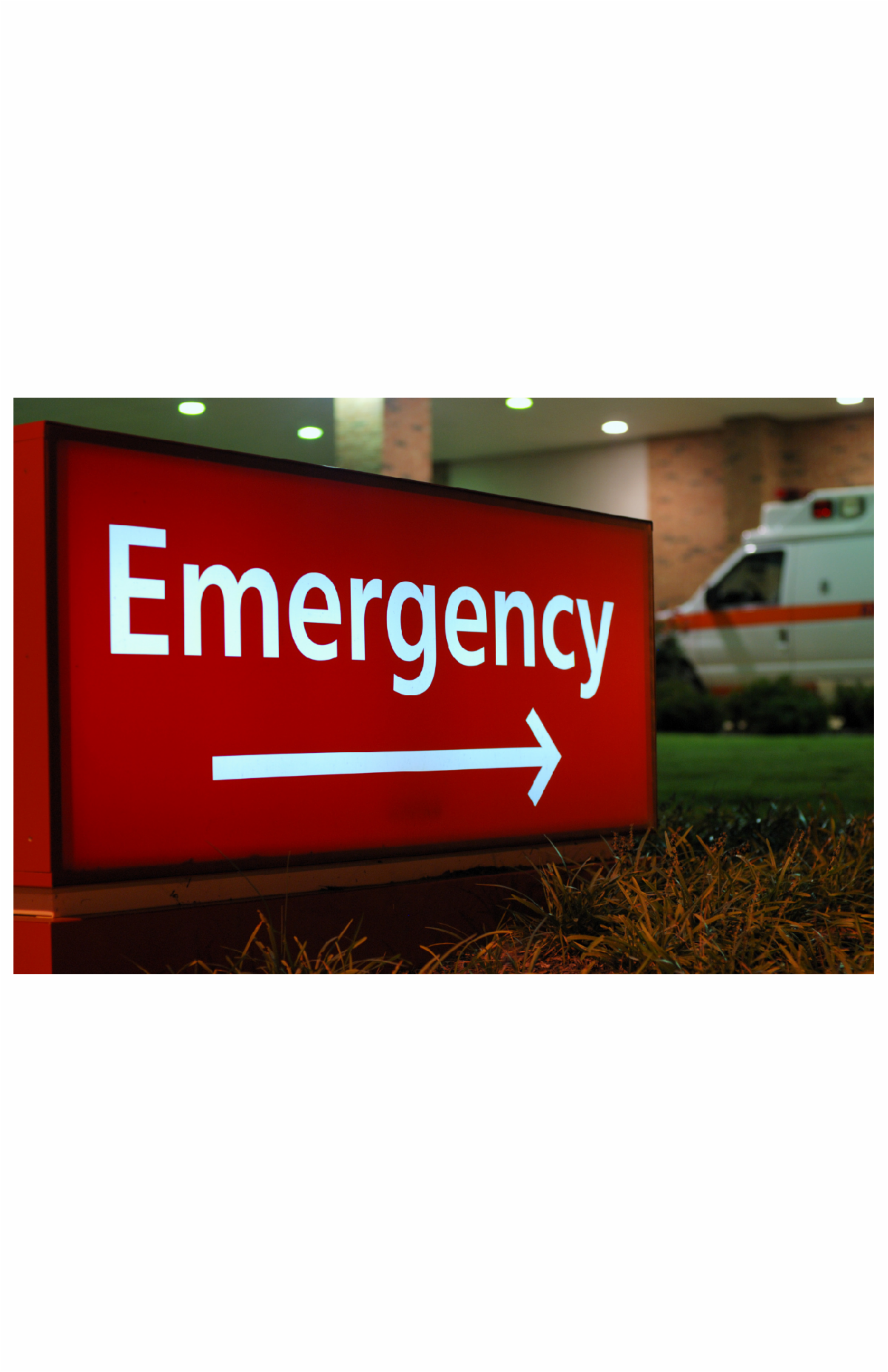
Throughout the U.S., many patients do not receive care for opioid use disorder in the emergency room. Given the unprecedented rise in overdose deaths, changes are needed and inevitable. This is an NPR article that discusses the new approaches to help ERs treat those with addiction, which include hiring advocates, removing barriers by creating a program that gives patient access to buprenorphine and linking them to addiction clinics to continue treatment, and training all health care providers. |
|
|
|
|
ECHO: Concurrent Stimulant Use Disorder Management in Patients with OUD |
If you missed any of the previous MAT or continuous quality improvement ECHO sessions, they are posted on our Northern COE Website webinar archive. Please note that you are only able to receive CE credits by attending LIVE ECHO sessions.
The next Project ECHO session is on Friday, September 10th from 12 - 1pm
The case-based application of this topic will be presented on Friday, September 24th from 12 - 1 PM
This ECHO will discuss how to manage concurrent stimulant use disorder with OUD. Dr. Chris Milburn, a psychiatrist and addiction medicine specialist from Cooper University Hospital, will lead this discussion. Free CEs are provided and all are welcome! Please note that you are only able to receive CE credits by attending LIVE ECHO sessions.
Do you have a patient or client you would like to present to the panel to receive recommendations and suggestions for management? Please click here to email your question(s) or scenario(s).
Coming October 1st: Managing Chronic Pain in Patients with OUD
|
|
|
|
|
Next MAT Lunch Hour - Xylazine in the Illicit Drug Market |
Join us and the Camden Coalition of Healthcare Providers for the next monthly MAT Lunch Hour to network, collaborate, and discuss. Dr. Joseph D'Orazio, an emergency medicine physician and an addiction medicine specialist at Temple University, will be leading the discussion on xylazine and its impact on those who use drugs.
Next Forum: Wednesday, September 15h from 12:00 - 1:00 PM
|
|
|
|
|
Hepatitis-C OBAT Skills Lab |
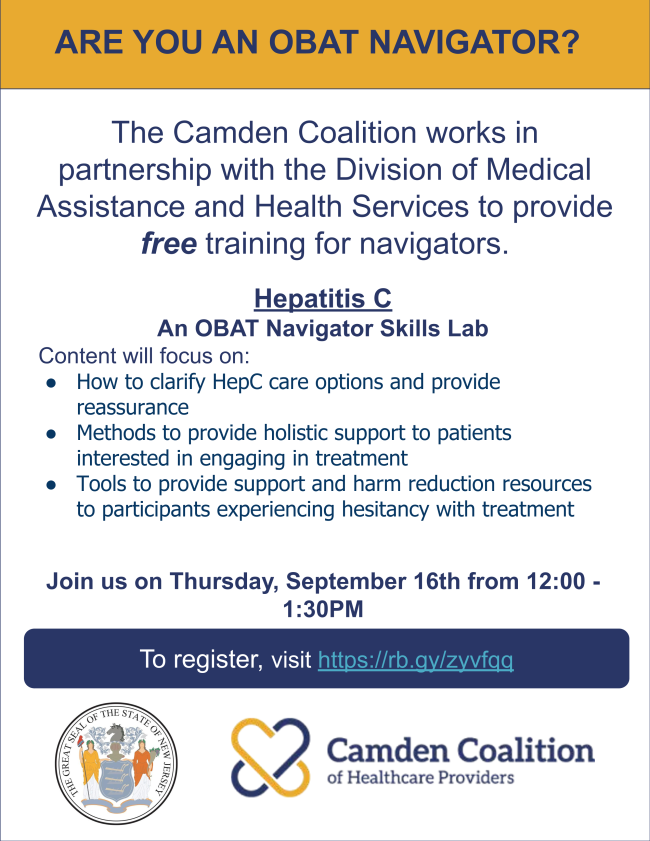
The Camden Coalition will be working with the Division of Medical Assistance and Health Services to provide free training for OBAT navigators. Some topics discussed will be how to clarify Hepatitis C care options and provide reassurance, methods to provide holistic support to patients, tools to provide support, and harm reduction resources.
This event will take place on Thursday, September 16th from 12:00 - 1:30 PM
|
|
|
|
|
Buprenorphine Virtual Training |
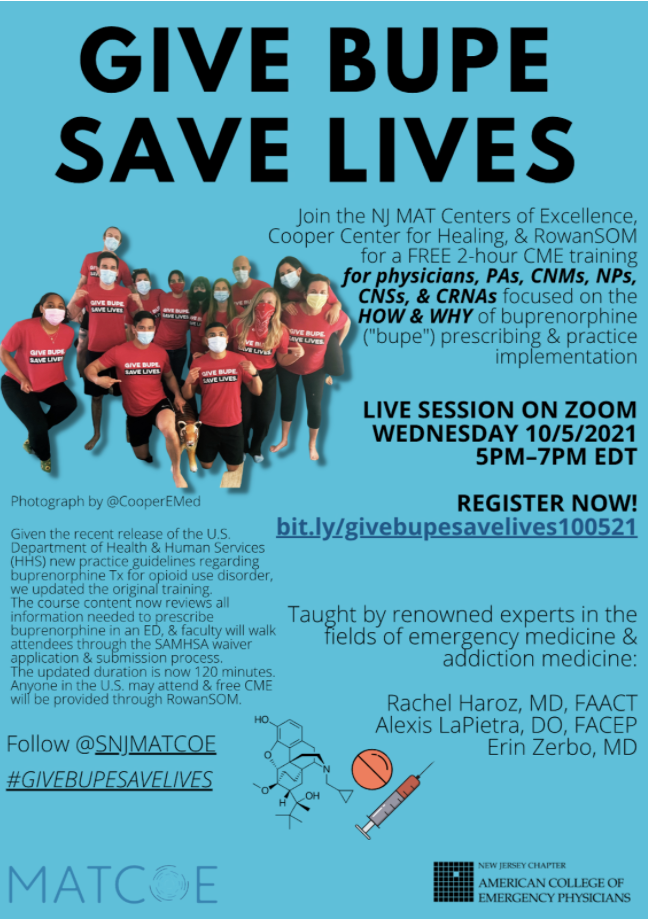
If you have not been able to join the NJ MAT Centers of Excellence for a free two-hour CME training focused on the how and why of buprenorphine prescribing and practice implementation, here is your next opportunity. Given the recent release of HHS’ new practice guidelines regarding buprenorphine treatment for opioid use disorder, the course content now reviews all information needed to prescribe in the ED and provides clinical justification for the use of MOUD that can be applied in all settings. Faculty will also walk attendees through the SAMHSA waiver application and submission process to treat up to 30 patients.
Join us for the next training on Tuesday, October 5th from 5:00 - 7:00 PM
|
|
|
|
|
Physician Use of Stigmatizing Language in patient Medical Records |
This is a qualitative study in JAMA Network Open analyzing 600 randomly selected patient encounter notes written by 138 physicians from electronic medical records in an ambulatory internal medicine setting at an urban academic medical center. Of the patient cohort, 69% were identified as female and 80% were identified as Black/African-American. Five themes categorized from the encounter notes represented negative physician language: questioning credibility; expressing disapproval of reasoning or self-care; racial or social class stereotypes; depicting the patient as “difficult”; and emphasizing physician authority. Positive language included direct compliments; expressed approval; self-disclosure of positive feelings toward the patient; minimization of blame; personalization; and shared decision-making. The study’s findings indicate that increased physician awareness when writing and reading medical records is necessary to prevent continued perpetuation of bias in care.
This study is an important read for all prescribers, including addiction medicine specialists. Biased language used by prescribers in encounter notes can influence patient outcomes, especially for Black, Indigenous, people of color, and highly vulnerable populations including pregnant people. (Pregnant people are not mentioned in the JAMA study; however, here is a seminal study in Health & Justice on fear, stigma, and barriers to care for pregnant people struggling with substance use.) Stigma that exists in medicine prevents people who are struggling with substance use and substance use disorders from seeking, accessing, and retaining in treatment. As the study informs, seeking to understand how bias manifests in language used in encounter notes and developing interventions to eliminate such language could reduce treatment and outcome disparities for stigmatized populations.
|
|
|
|
|
“This is Part of Emergency Medicine Now:” A Qualitative Assessment of Emergency Clinicians’ Facilitators of and Barriers to Initiating Buprenorphine |
In this study, semi-structured interviews were conducted on a sample of ED clinicians to explore barriers and facilitators of prescribing buprenorphine. It finds that, in addition to the systematic barriers that include getting a DATA-2000 waiver and lack of referrals, individual factors fueled by stigma, beliefs about their role and consequences, and knowledge presented as major barriers. Many of these providers, however, recognize this concern and provided strategies on how to encourage their colleagues to embrace the idea that “[treating addiction] is part of emergency medicine now.” |
|
|
|
|
Continuation of Outpatient Buprenorphine Therapy After Dispensing Buprenorphine-Naloxone from the Emergency Department |
This was a retrospective descriptive analysis of 155 patient records that included those who received a take-home supply of buprenorphine-naloxone from an urban, academic ED between March 2018 and March 2020. The primary outcome was the proportion of patients who filled a prescription at three months after the index ED visit upon receipt of a buprenorphine take-home kit; the proportion of patients who filled a prescription at 6 months was also evaluated. 45.2% of the patients filled buprenorphine at 3 months, while 41.3% filled the prescriptions at 6 months. It concludes that dispensing buprenorphine take-home kits from the emergency department led to nearly 50% of patients filling a prescription after 3 months, providing more evidence of starting buprenorphine in the emergency setting. Further prospective studies comparing these patients with those who did not receive a kit are also needed. |
|
|
|
|
Opioid Use Disorder: A Neglected Human Immunodeficiency Virus Risk in American Adolescents |
Youth who live with HIV are less likely to be retained in care and have their HIV controlled. Having opioid use disorder is a major risk factor that negatively impacts these outcomes. This is an editorial review that emphasizes the importance of addiction treatment as infection prevention, and the importance of integrating addiction and HIV treatment to improve health outcomes in youth, especially given the stigma and lack of experience amongst providers for prescribing medications for OUD in youth. |
|
|
|
|
History of Methadone and Buprenorphine Opioid Agonist Therapy Among People Who Died of an Accidental Opioid-Involved Ovedose: Rhode Island, 1/1/2018-6/30/2018 |
This article provides additional evidence that most people who died of an accidental opioid-involved overdose had never received treatment with buprenorphine or methadone (61%). It provides an analysis on a proportion of individuals previously engaged in opioid agonist therapy, concluding that linkage to care is vital to preventing overdose deaths. |
|
|
|
|
Video Directly Observed Therapy for Patients Receiving Office-Based Buprenorphine – A Pilot Randomized Controlled Trial |
This is a pilot study that assessed the feasibility of using video directly-observed therapy for patients starting buprenorphine therapy and compared outcomes with treatment as usual, which included weekly/biweekly visits with nurse care managers or providers with urine drug testing. The primary outcome was the proportion of weekly urine drug that test negative for illicit opioids, including morphine, methadone, oxycodone, and fentanyl. Of the 78 patients enrolled, the study finds that the video directly observed therapy did not result in statistically significant improvements in illicit opioid use and treatment engagement compared to usual therapy. |
|
|
|
|
Buprenorphine Mini-Course: Building on Federal Prescribing Guidance |
The American Society of Addiction Medicine is offering a new and free online training module that expands on the federal guidance for prescribing buprenorphine for opioid use disorder. To learn more, click below. |
|
|
24/7 MAT Provider Hotline: 844-HELP OUD (844-435-7683)
|
|
|
|
|
|
|