March 26, 2021
The Out-of-Pocket Health News Digest
|
|
Below you will find briefs about recent health policy news stories. Our hope is for students to have an information outlet at their fingertips to keep up-to-date with the most pressing news stories in health policy.
This compilation is produced by the HPSA Education Committee: Matthew Dunn, Magdalena Mihaylova, Atticus Raasch, and Brynna Thigpen
|
|
Shock and widespread calls for change after attack on Asian businesses
by Magdalena Mihaylova
|
|
Last Tuesday, the nation was rocked and disturbed after a white man shot and killed eight people — six of them of Asian descent and two of them women — at three different spas and massage parlors in Atlanta. While investigations continue, the shooting has not yet been labeled as a hate crime by police, but many people — both members of the Asian American and Pacific Islander community and others alike — are pointing to the specific targeting of Asian businesses, wherein the employees are largely women and low income.
The Thursday after the Atlanta shooting, Asian American lawmakers in Washington testified on the rise in violent crime against Asians since the COVID-19 pandemic — and while the hearing was actually scheduled before the Atlanta shooting, the message rang even clearer after last week’s tragedy. In one testimony, New York Democratic Rep. Grace Meng mentioned the statistic that over one-third of Americans have observed blame against Asian Americans for COVID-19 and how eight of 10 AAPI young people reported bullying or harassment due to their race. The lawmakers are pushing for a greater push for reviewing violent hate crimes and an easier process for reporting them.
As the nation reels from Atlanta and a subsequent massacre in Colorado, new conversations about the old topic of gun laws arise, prompting reflection on the public health crises borne by mass shootings.
Sources: The New York Times, 11Alive, Time, The New Yorker, Roll Call, NBC News, Teen Vogue, ABC News.
|
|
CDC Updates Distancing Requirements for Education
by Brynna Thigpen
|
|
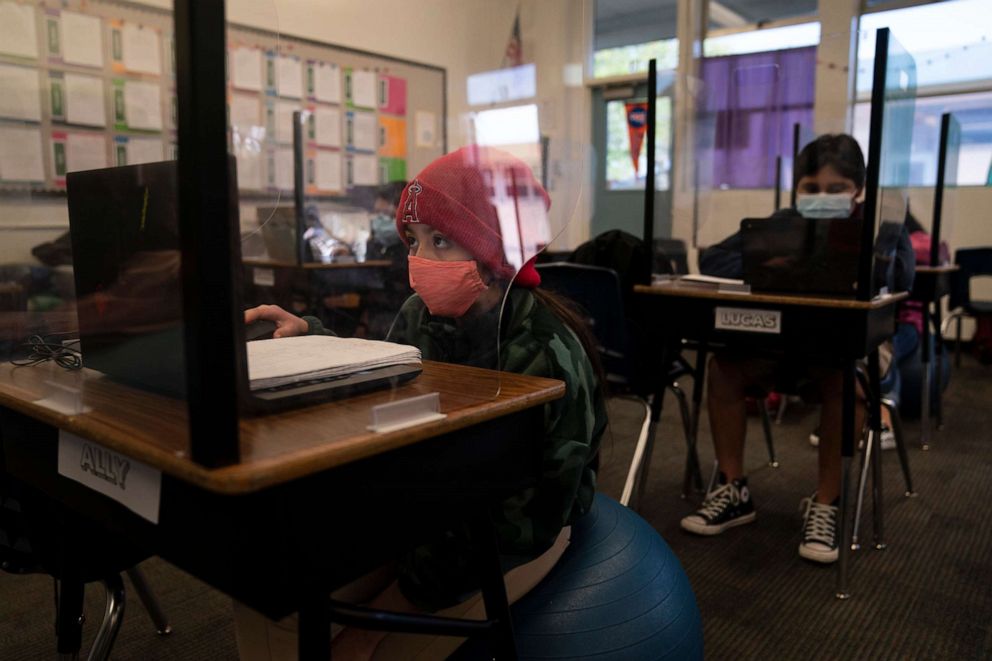
On Friday, March 19th, 2021, the U.S. Centers for Disease Control and Prevention (CDC) announced new distancing requirements for elementary, middle, and high school settings, citing results from three new studies about the safety of various combinations of transmission mitigation strategies. Their recommendations differ based on the community transmission where the school is located, as well as the ages of the students, summarized in the table below:
|
|
These recommendations apply only to students in classroom settings where all teachers and students maintain universal masking and other COVID-19 prevention strategies. For schools that do offer increased in-person instruction, the CDC also recommends “cohorting” students, meaning that the same group of students (and in some cases, their teacher) should stay together throughout the day to reduce the number of interactions between students.
While school districts across the country (including the nation’s largest in NYC) are jumping at the chance to offer in-person instruction to more of their student populations, some teachers’ unions are less enthusiastic. One such union, the American Federation of Teachers, questioned whether the studies quoted by the CDC were robust enough to justify reducing social distancing, one of the most powerful tools available to fight COVID-19. They - and some parents - would rather wait to see results from further studies before potentially increasing transmission risk.
|
|
New priorities in Congress after COVID-19 relief bill
by Matthew Dunn
|
|
Following passage of the $1.9 trillion COVID-19 stimulus, Democrats in Congress have shifted their attention to a new slate of policy goals. The next major legislation on the agenda is an infrastructure bill that will almost certainly come through budget reconciliation, a process for passing bills that involve changes in spending, taxes, and the federal debt limit. This is critical when the Senate is closely divided, because bills passed through budget reconciliation are not subject to the Senate filibuster, and can be passed by a simple majority vote.
The next budget reconciliation bill may deliver reform to multiple areas of health policy and public health. Drug pricing is one topic under debate, as Democrats consider an overhaul that would let the government negotiate drug prices - and likely cost pharmaceutical companies billions of dollars in profits. Accordingly, this bill will have to overcome vigorous industry opposition, but many Democrats see the benefit of pushing forward. Politically, proposals to control drug prices usually garner public support; in fact both Biden and Trump campaigned on promises to lower prescription drug prices in the 2020 election. Fiscally, the proposal is expected to save money, and the savings could be used to pay for other legislative items.
Another candidate for inclusion in the legislative package is the White House's immigration bill, which would offer a path to citizenship for an additional 11 million undocumented immigrants already living in the U.S. Although bipartisan talks have started in the Senate, there is skepticism that meaningful immigration reform would survive a filibuster, and Congressional Hispanic Caucus (CHC) Chair Rep. Raul Ruiz believes it should be tied to the infrastructure bill.
Finally, the Biden Administration is also hoping to pass climate policy through reconciliation. Recent reports estimate the White House wants $400 billion in spending to combat climate change, with provisions such as development of green transit and electric-vehicle charging stations available across the country.
|
|
-
Criminal Justice: This week Virginia Gov. Ralph Northam signed a bill that abolishes the death penalty, making Virginia the 23rd state to stop executions for state-level offenses (NPR).
-
Medicaid expansion: In a surprising turn, the Wyoming House of Representatives voted on Monday to expand Medicaid coverage under the Affordable Care Act, raising pressure on the state senate which had previously voted down the proposal (Casper Star-Tribune).
-
Price Transparency: A Wall Street Journal investigation found that hundreds of hospitals have re-coded their websites to prevent their price listings from appearing in search engine results (WSJ).
-
Reproductive Rights: HHS released plans to rewrite rules for the Title X federal family planning program, which will undo changes made during the Trump Administration that withheld federal funding from Planned Parenthood and other clinics that refer patients for abortions (Politico).
-
SNAP: The USDA announced a 15% increase in Supplemental Nutrition Assistance Program (SNAP) benefits through September, amid increases in food stamp spending during the COVID-19 pandemic (Axios).
|
|
|
|
|
|
|