October 11, 2024

Newsletter for October 11, 2024

This Issue:

  • County Farm Bureau Annual Meeting Dates Set
  • Churchill County Farm Bureau Annual Meeting Kicks Off The Grassroots Process
  • Farm Bureau Market Intel Offers Overview Of The Concerns Facing U.S. Agriculture
  • Consideration Of Current Policy On Forfeiture Of Groundwater Rights
  • Other Policy Might Also Need Changing?
  • Biological Fertilizer Contact Seeking To Line Up Visits In Eureka County – Oct. 17 & 18
Register For The 105th Annual Meeting

County Farm Bureau Annual Meeting Dates Set

We currently have eight county Farm Bureaus who have scheduled their up-coming 2024 annual meeting dates.  They are:


  • Central Nevada Farm Bureau – November 1 (6 p.m.) Hartman Ranch
  • Clark County Farm Bureau – October 29 (6 p.m.) High School Farm in Moapa
  • Douglas-Carson City County Farm Bureau – November 5 (6 p.m.) JT in Gardnerville
  • Elko County Farm Bureau – October 24, (6 p.m.) Starr Valley Community Hall
  • Humboldt County Bureau – October 12 (6 p.m.) at the Humboldt County Extension Office
  • Lincoln County Farm Bureau – October 29, (6 p.m.) at the Firehouse in Caliente
  • Lyon County Farm Bureau – October 16 at the Lions Club House in Yerington
  • White Pine County Farm Bureau – October 30 (6 p.m.)

Churchill County Farm Bureau Annual Meeting Kicks Off The Grassroots Process

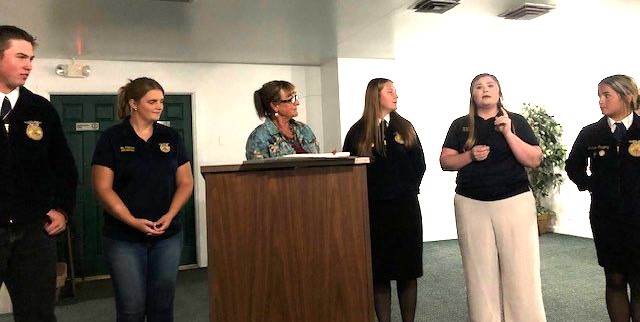
Wednesday, October 9th began the series of county Farm Bureau annual meetings that will cross the state with Farm Bureau members meeting in their local organizations, discussing issues and celebrating their accomplishments of the past year.  Churchill County Farm Bureau is the first county to hold their 2024 annual meeting.  Along with the enjoyment of getting together with fellow Farm Bureau members, discussing proposed policy ideas, Churchill County Farm Bureau President Patty Julian also highlighted the number of Farm Bureau activities that have benefited from the help and assistance of Churchill County FFA chapters and leaders.  This recognition also included a donation from Churchill County Farm Bureau to the FFA chapters.  


Churchill County Farm Bureau also made a sizeable contribution for the support of the Farm Bureau Ag Wagon which has made several visits to promote Nevada agriculture over the course of the past year.  Pictured above, President Julian (in the center of the photo and behind the podium) brought FFA leaders and advisors forward to offer recognition to the two FFA Chapters who have been and continue to be active partners with Churchill County Farm Bureau.

Farm Bureau Market Intel Offers Overview Of The Concerns Facing U.S. Agriculture

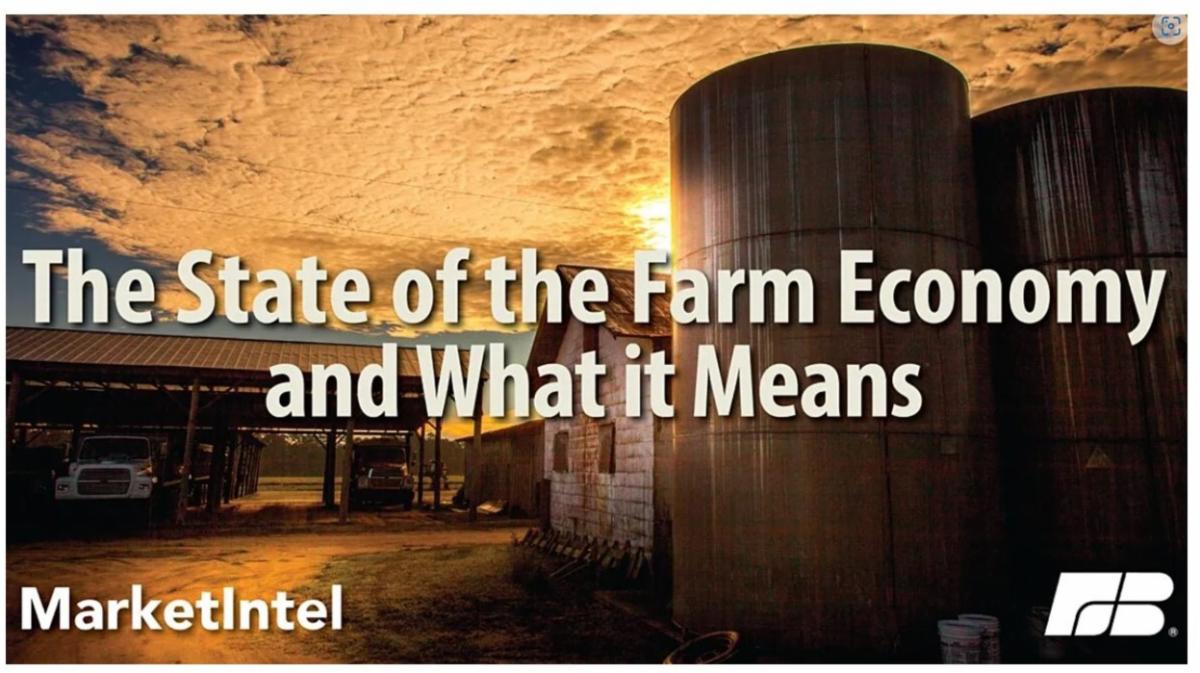
Drawing parallels with the current conditions of the farm economy and the circumstances of the crisis that shook farm country in the 1980s, American Farm Bureau Federation (AFBF) economist Bernt Nelson presented this recent Market Intel piece. “American farm families are struggling to keep their heads above water; and the farm bill that is supposed to provide a safety net for likes like this in not there to protect them.” Nelson wrote.


Nelson went on to share that USDA’s September farm income forecast is projecting that the current year’s net farm income will fall 4.4 percent from 2023 and over the two latest years, net farm income has fallen by roughly $42 billion.  An interesting table in this Market Intel showed a map of the state-level changes in farm income on a percentage basis from 2023 to 2024.  In this map it is reported that Nevada is one of the states seeing the most dramatic change from 2023 to 2024 with a drop of .53 percent.  


Crop price declines and heavy inflationary cost of production increases make for the negative situation and outlook agricultural producers currently have, according to Nelson.  He also pointed out the differences between the present and economic conditions of the 1980s.  Lower interest rates not (even though they did increase by 43 percent from 2022 and 2023) are not anywhere near the 1980 levels.


Land values, which have been strong and have even increased, is another important factor that is different, according to Nelson, in comparison with dropping land values in the 1980s.  


We look forward to bringing you soon a promised post of Market Intel which Nelson indicates will layout the leadership traits and actions that can help farmers survive the challenges of this farm economy.

Consideration Of Current Policy On Forfeiture Of Groundwater Rights

Nevada Farm Bureau’s current policy on forfeiture of groundwater rights states:


“Forfeiture of Ground Water Rights:   326                                                       

We believe that the state water engineer’s office should not forfeit a ground water right under the five-year use requirement when the water is not being put to beneficial use because of challenges outside and beyond the control of the affected right holder.


We support amendments to Nevada Revised Statutes to allow for longer term non-use of ground water to help recharge the water table in basins where the water table is being drawn down.


We direct Nevada Farm Bureau to carry out an educational program on state water law and procedures to help members better protect their water rights. We also ask for a change in, or relaxation of, the prescribed procedure for changing a point of water diversion and for limiting the time allowed for

putting an existing permit or certified use into action. We also ask for 1-year notification prior to any

forfeiture.”


Based on on-going meetings with the Nevada Division of Water Resources, we know that a proposed change in Nevada water law, pertaining to forfeiture, will be brought before the 2025 session of the Nevada Legislature.


The concepts that we understand for changes might cover will:

  • Amend state law (NRS 533.3703) to cause the State Engineer to consider the consumptive use of a water right and the consumptive use of a proposed beneficial use of water.  This would also include the beneficial use of a water right over the five years prior to the application for the proposed change.
  • When evaluating an application to change the manner of use or place of use of water already appropriated and perfected – only the maximum amount of water up to the limit of the right that has been beneficially used in a period of 12 consecutive months within the five years prior to the application may be changed.
  • Water remaining on the right, being changed that has not been beneficially used will be forfeited on the approval of the change application.
  • After the non-use of any of the water associated with a water right for a five-year period the State Engineer will notify the owner of the water right (as determined in the records of the Division of Water Resources) will be notified that they need to provide proof to the State Engineer that they have put the water to beneficial use to avoid forfeiting the water right.
  • There would be another five-year period, after the first five-year notice has been sent to the water right owner of non-use, in which the water right owner would need to provide proof of the resumption of putting the water to beneficial use or receive a final notice of forfeiture of the water right because of non-use.  
  • If the owner of the water right, pending forfeiture, fails to file the required proof of resumption within 30 days of the final notice, the State Engineer will send a notice to the owner that the water right has been forfeited.
  • The proposed idea also deletes, from the current law (NRS 534.090), the section which provides the consideration of extensions of time for non-use of water connected to the water right.


Depending on how one interprets the provisions of Nevada Farm Bureau’s current policy, you might perceive that the lengths of time spelled out in the proposed changes would provide plenty of time for a water right owner to put their water to beneficial use, provide the necessary proof and meet the required principles of putting their water to beneficial use.  On the other hand, someone might consider it necessary to amend Nevada Farm policy and be rewritten to better reflect the policy position that ought to be taken with reference to the outline of what we understand could be proposed for legislative changes.  


County Farm Bureau policy resolutions on whether changes should be made will determine what goes before Nevada Farm Bureau voting delegates when they take the matter up on November 8th at the 2024 Nevada Farm Bureau Federation’s annual meeting.

Other Policy Might Also Need Changing?

Beyond the policy item covered above, there are other issues and concerns facing farmers and ranchers on any number of areas.  Member input to the policy development process can be effective when we know what the issue is and compare that against what we currently have in our policy book.  There may be holes that need attention by adding new policy.  There may be changes that need to be made with existing policy positions to be in line with desired outcomes.  Please take advantage of the available download of the current Nevada Farm Bureau policy to evaluate what your input proposal needs to be in order to fit the advocacy that Farm Bureau does with your needs.

Biological Fertilizer Contact Seeking To Line Up Visits In Eureka County – Oct. 17 & 18

One of the announced 10 start-up companies which are competing in the American Farm Bureau Federation’s 2025 $100,000 Ag. Innovation Challenge, Halio from Utah will be visiting Eureka County to look into possible solutions that they have developed for producing higher yielding crops which are having to contend with salt issues in the soil.  Tucker Bateman is behind the formation of Halio and is interested in meeting with area farmers when he’s in Eureka County, October 17 and 18.  He will also be participating in Nevada Farm Bureaus 2024 annual meeting in Fallon, November 7th.  If you would like to discuss your soils and receive a free soil sample when he’s in Eureka County – call Tucker at 385-286-7708. 

Have A Great Weekend!