Hi there!
This morning it was 34 degrees at Wholesome Valley Farm and there was a thick blanket of frost on everything. This marks an abrupt end to summer vegetables like peppers, tomatoes, and eggplants.
For the produce farmer, the season is not over yet though. For those joining us at the Farm Tour and Feast this weekend, you'll notice that the produce fields are anything but empty.
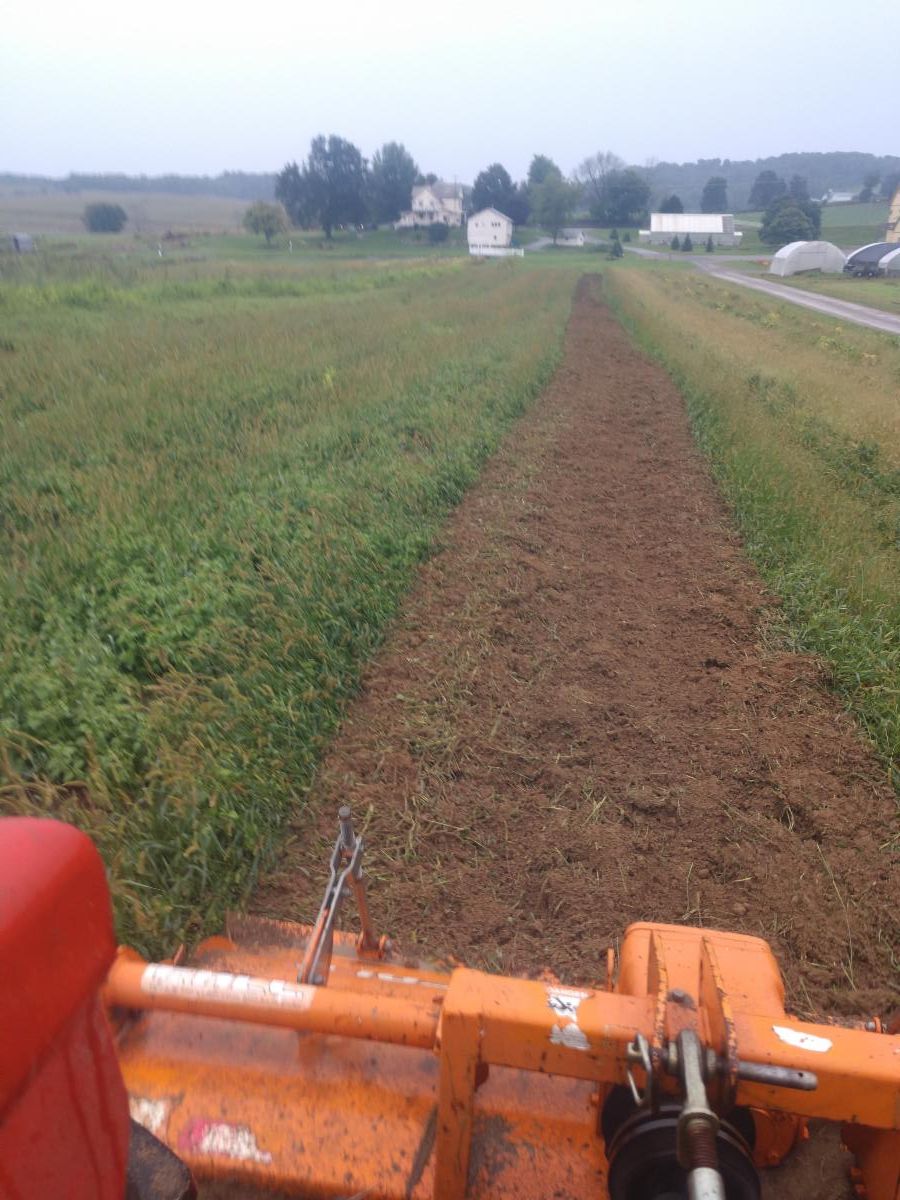
Now, we are busy cleaning up and trying to prepare our soils for next year. Cleaning up means removing all the twine that supported tomato plants, pulling tomato stakes, plowing up the plastic mulch that is used to create weed-free rows, pulling up the drip irrigation, and getting ready for a cover crop.
Cover crops are interesting. The concept isn't new, but the practice isn't widespread, particularly in crop fields (where corn and soybeans are grown).
Cover crops are crops that are planted before winter with the intent that you plow them under the next spring. Some people call this "green manure" as the vegetative matter adds nutrients back to the soil. Some plants, such as legumes like peas and clover, have the ability to pull nitrogen to the surface of the soil and have it ready for next season.
Sounds like magic, right? Well why doesn't everyone do it? It's simple. Time and money. It takes a lot of time for us to get the fields ready for cover crops, all at the same time that you are trying to harvest other crops and get ready for winter food holidays.
Timing is also very important. Not all plants will germinate this late in the season. For us, we are going to be planting hairy vetch and winter ryegrass, both very cold hardy and quick to germinate.
If done correctly, next spring the plowing down of the green manure will add up to 120 lbs of nitrogen per acre (as well as many other important nutrients). Nitrogen is important for promoting green growth in plants, which allows them to trap more sun and nutrients.
Beyond the price of the labor and time, the seed to do this isn't cheap. The planting rate is approximately 50# per acre, and a 50# bag of seed ranges from $175 to $200.
For a farmer in conventional agriculture, this price and the work is prohibitive. The easier solution would be to apply synthetic chemicals like urea. Using urea at 46% nitrogen would require approximately 200 to 250 lbs per acre to get the "same results." At a cost of approximately $200 per ton, that means only $20 to fertilize that acre of land.