Celebrating Women's History Month 2025:
“Moving Forward Together! Women Educating & Inspiring Generations”
| |
|
Dear Vicky,
March is a time to celebrate the incredible contributions of women throughout history. The theme for Women’s History Month 2025 is "Moving Forward Together! Women Educating & Inspiring Generations." This theme highlights the power of women to shape the future by educating and inspiring the next generation of leaders, innovators, and changemakers.
Women's History Month honors the often overlooked achievements of women across all fields, from science and politics to the arts and social justice. This month reminds us of the progress made and the ongoing work needed to ensure equality for all.
As we reflect on the achievements of women, let’s also focus on the future — supporting women’s education, empowering young girls, and working together to create a more inclusive world for everyone. Celebrate, educate, and inspire!
| |
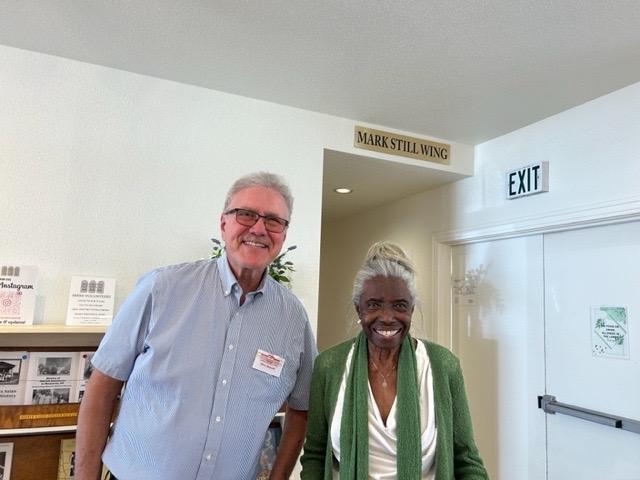
Board Member, Oliver Beckwith, with Lois Gaston: In 1969 Lois Gaston tried to buy a home north of Foothill Blvd., and was denied because of her race. She instead bought in Duarte where she became Mayor. Gaston continued to break down barriers by working on political campaigns for candidates who promoted human rights, and by encouraging cultural understanding through Monrovia ChangeMakers. | | |
|
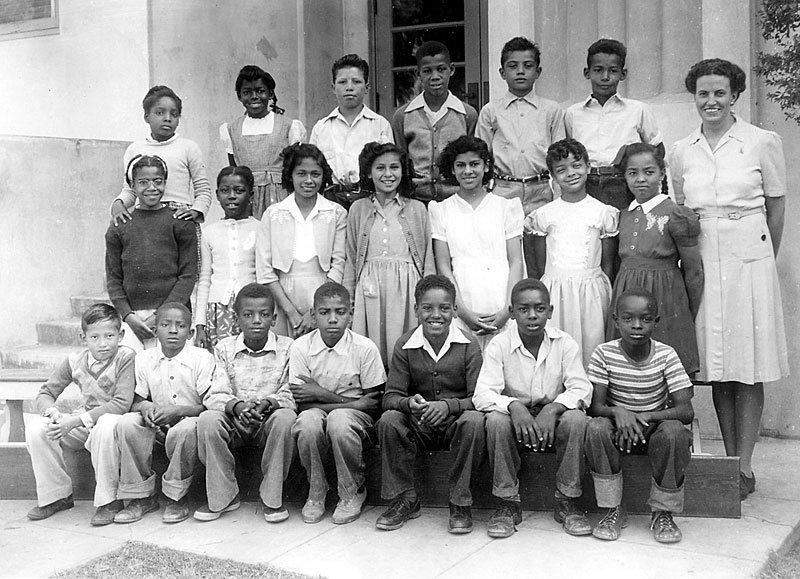
The Principal Who Made Monrovia Better: Almera Romney | In celebration of Women's History Month, our latest article highlights Almera Romney, recognizing her not only as the principal of Huntington School but also as a prominent leader in the Monrovia community. | | |
Historic Home Exhibit: Near Completion! | |
|
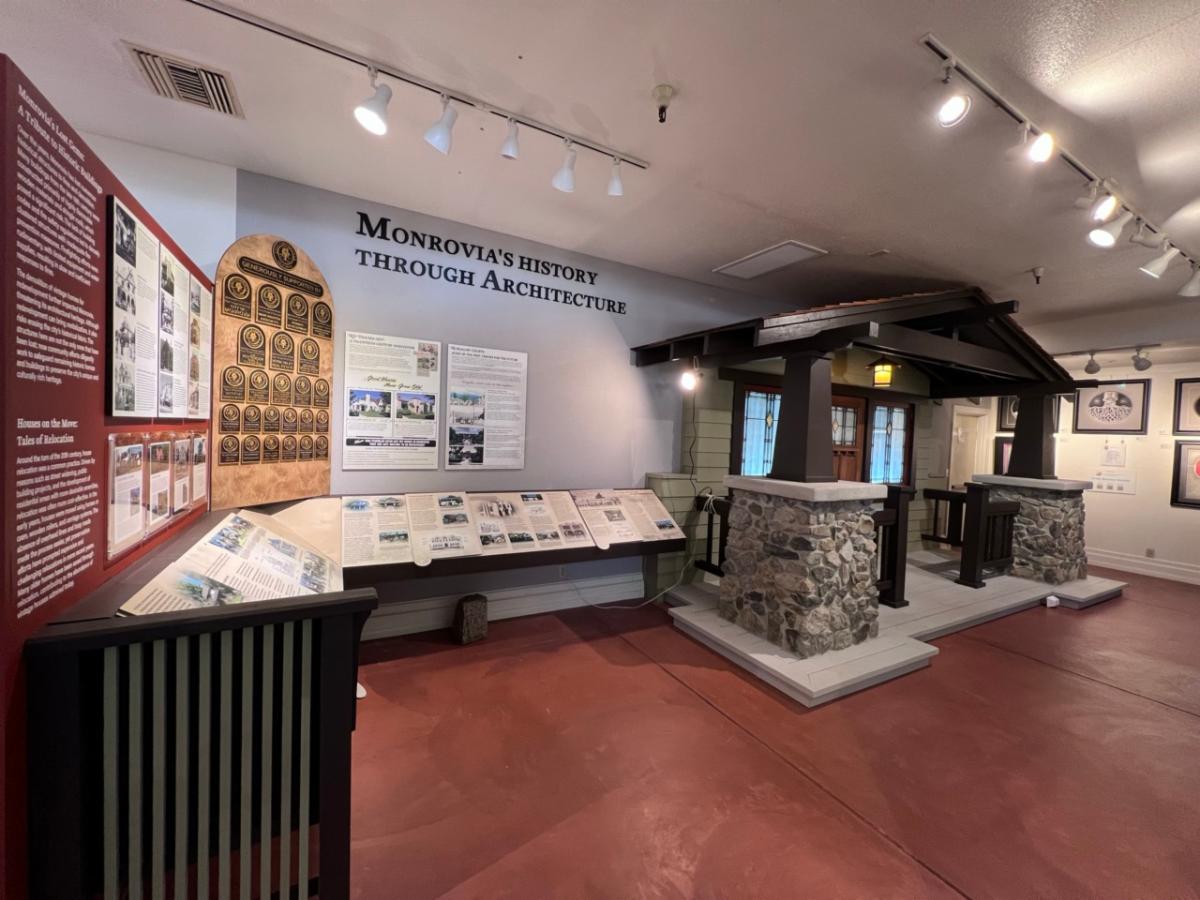
The latest exhibit to grace the wings of the Monrovia Historical Museum is in the final stages of completion and should be ready to view for the Historic Homes Tour on May 4. The exhibit is a nod to the many and varied vintage housing styles in Monrovia and provides detailed information about them and why they are such an essential component to the town’s identity.
To better understand how the concept for the exhibit was conceived and carried out, here in her own words is the story of how it all began. Vicky Hansen is a museum board member and the principal force behind the project:
The journey to showcasing Monrovia’s architectural heritage began about five years ago with a casual conversation over cocktails at Bella Sera restaurant. Mark Houston, a local architect, and museum board members Ili Lobaco and Vicky Hansen discussed the city’s rich history and the importance of preserving and educating the public about its architectural legacy.
As the fourth-oldest incorporated city in Los Angeles County, Monrovia is home to many historic homes - yet misinformation about their architectural styles often circulates in the media, especially in real estate listings. With so many years in the real estate business, Vicky Hansen saw firsthand the need to correct these inaccuracies and spark a deeper appreciation for the city’s historic structures. Inspired by the “Early Structures” website created by Pam Barkas for the Historical Museum, the idea of an architectural exhibit was frequently discussed among the Monrovia Historical Museum board.
However, the project remained in limbo - until 2022, when a conversation with Jim Wigton at the MOHPG pretour of the Blair and Brossart Houses reignited the idea. Jim suggested that MOHPG sponsor a fundraiser to generate seed money, leading to a successful event hosted at the home of John and Penny Zuk. Their exclusive dinner and tour of John’s collection of vintage music machines became an extraordinary three-day event, raising $3,100 and officially launching the exhibit initiative.
Momentum continued to build with the creativity and dedication of museum board member Mike Andrews, who used a 3D printer to replicate Monrovia’s historic home landmark plaques. This sparked excitement among the community, encouraging donations, volunteer labor, and further participation. With the generous support of the City of Monrovia, Bowden Development, Norm Haley, Arcadia Sash and Door, and numerous other contributors, the exhibit took shape, helping to bring Monrovia’s architectural history to life for all to appreciate.
| |
Granite Bank: A Glimpse Into Its Past | | |
|
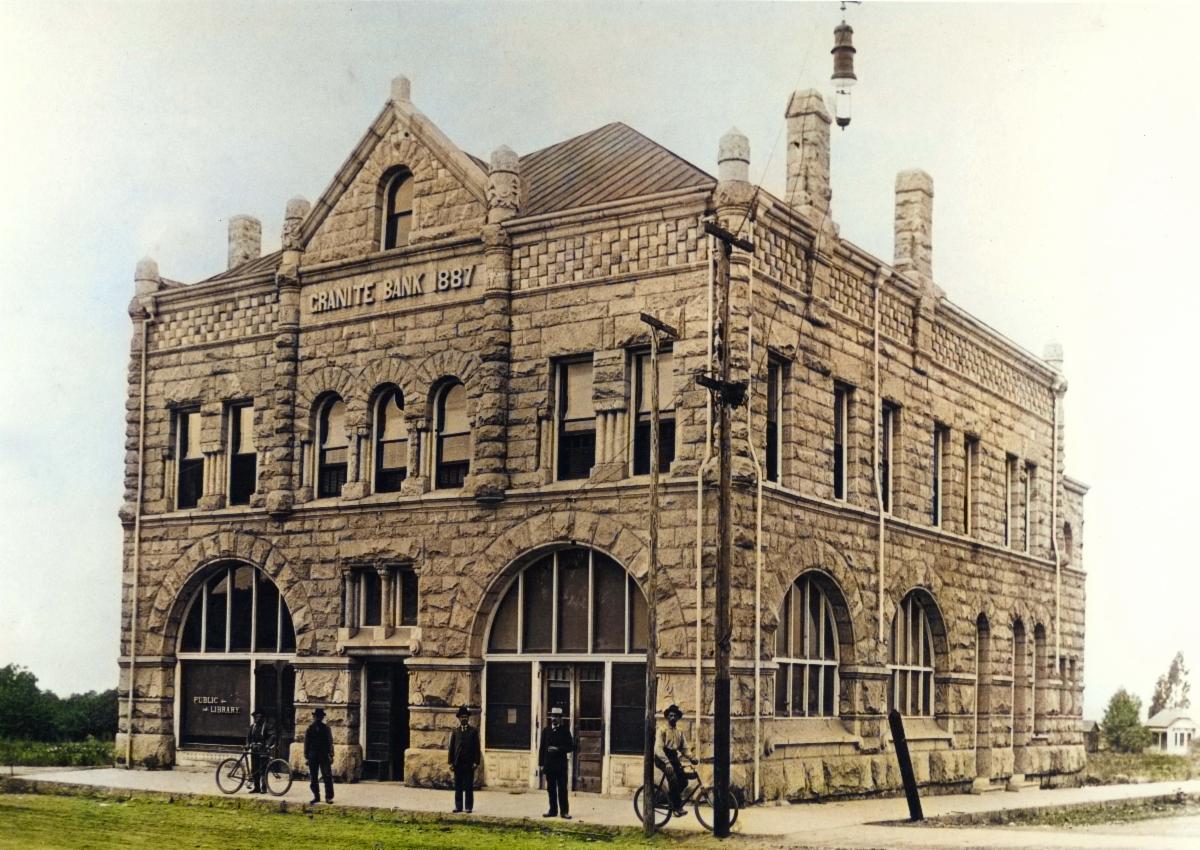
The Granite Bank was a two story building located on the Southwest corner of Myrtle and Palm Avenues. The bank was founded in March of 1887 by a group of investors which included founders E.F. Spence, John D. Bicknell, and William Monroe. The stones for the building were quarried in nearby Sawpit Canyon at a cost of $25,000, equal to about $831,000 today. The bank opened in February the following year.
The bank depended heavily on the real estate boom of 1887 1888, and shortly after it opened the real estate market went flat. Investors pulled out and the building eventually sold for $5000. In the early 1900’s the fire and police departments were located there, and in 1905 Monrovia voters approved the building for use as its city hall. However the building suffered irreparable damage from the Tehachapi earthquake in 1952 and was torn down. Some of the stones for the building can be found today at Library Park and here at the museum.
| |
|
Help Us Fill the Gaps:
Donate Missing Yearbooks to the Museum
| |
|
As dedicated followers and supporters of our museum, you understand the profound impact that history has on our community. Each artifact tells a story, preserving memories and experiences that shape our collective legacy. Today, we are reaching out to you for assistance aimed at enriching our collection: we are in search of yearbooks from years we currently need.
Yearbooks hold a unique significance - they are more than just a compilation of photographs and text. They capture the spirit of an era, reflecting the culture, fashion, and social dynamics of their time. For many, they evoke feelings of nostalgia, recounting the triumphs and tribulations experienced during formative years.
However, our collection is not complete. There are specific years where we have gaps, and we are reaching out to our community to help us fill these gaps. If you have a yearbook from Monrovia High School during the years of 1915-16, 1919-1923, 1926, 1935, 1949, 1960-1961, 1964 -1965, 1967-1969, 1972, 1974-1976, 1978-1979, 1981-1982, 1984- 1987, 1996, 1998-2001, 2006-2009, 2011-2012, 2014, 2016 and 2019 to present, we would be incredibly grateful if you would consider donating a copy to our museum.
Donating a yearbook is a straightforward and rewarding process. If you wish to contribute, you can bring the yearbook to our museum during our regular hours of Sundays and Thursdays from 1:00pm – 4:00pm, or if you prefer, you can reach out to us via our email at info@monroviahistoricalmuseum.org to discuss mailing options.
|
|
|
Discover the past and help shape the future by joining the Monrovia Historical Museum team. We’re looking for passionate volunteers and interns! Opportunities include:
- Exhibit Guides and Docents
- Research and Archival Support
- Event Planning and Community Outreach
- Administrative Assistants
- Special Projects
Whether you can spare a few hours a month or are seeking a longer-term internship (unpaid), we have opportunities to match your interests and schedule. Contact us to learn more and become part of our mission to preserve Monrovia’s rich history.
| | |
@monroviahistoricalmuseum | |
|
Help us build our Instagram presence!
Tag or Hashtag #mhmtheplunge when you visit the museum or other historical places around town!
|
| | | |