|
Virtual Crisis Care Helps Rural Communities Access Mental Health Resources in Emergencies
In rural counties where access to emergency mental health resources is limited, Virtual Crisis Care programs are giving law enforcement on-demand access to behavioral health professionals, reducing unnecessary hospitalizations or confinement in jail. Virtual Crisis Care has been active in South Dakota for over five years and adopted by more than 30 rural law enforcement departments. And in 2025, Wyoming launched a Virtual Crisis Care pilot program. Through Virtual Crisis Care, law enforcement can connect people to behavior health professionals from the telemedicine network Avel eCare for video-based assessments, intervention, and stabilization. Clinicians guide officers through complex mental health situations, minimizing the need for costly holds, transports, and hospitalizations. Since Virtual Crisis Care was implemented in South Dakota in 2020, 86% of people encountering law enforcement through the program have been able to remain safely at home, accessing local follow-up care and successfully avoiding hospitalization or incarceration. Read more here.
| |
A Danish Program Takes On the Stigma of Mental Illness
At a class reunion a few years ago, a former teacher asked Giuseppe Parlatore what he was doing these days. He was on a state disability pension, he said. “Did you hurt yourself?” the teacher asked. When Mr. Parlatore said no, that he had a mental illness, paranoid schizophrenia, the teacher instinctively stepped back. “Oh, then you’re dangerous,” Mr. Parlatore recalled him saying. The shame that immediately flooded Mr. Parlatore was familiar, he said. He wanted to protest that no, he wasn’t dangerous, but he knew the conversation was already over, his life reduced to a crude stereotype. For years after he was diagnosed in 2009, Mr. Parlatore, 42, felt like schizophrenia had swallowed him up. Today he is one of Denmark’s leading mental health advocates, working with the country’s top health officials to change how the public sees mental illness. This government initiative, called One of Us, works with people who have mental health challenges — the program calls them ambassadors — to share their stories in schools, hospitals and police stations, with a focus on their recovery. Read more here.
| |
Despite Their Successes, Some Mobile Crisis Response Teams Are in Crisis
It was a snowy afternoon in Bozeman, a city of nearly 60,000 nestled among the mountains of southern Montana. Temperatures hovered in the mid-30s. The city’s mobile crisis team had just gotten a call about a man walking around outside without shoes. The man’s family told the team he was having a mental health crisis and wouldn’t come inside. As they drove down the highway toward the city’s outskirts, team member Evan Thiessen spoke with the relative who had reached out. “You’re doing the right thing, and we’re going to make sure he gets help today, OK?” he said. They pulled up the man’s police record on a laptop and saw that he did have a record of some previous encounters with police, including some that had turned violent. Luke Forney, a licensed therapist, had that in mind as they pulled into a neighborhood of single-family homes. He stepped out of the Ford Bronco and headed toward the front door. Read more here.
| |
Governor Hochul Launches Public Awareness Campaign to Educate New Yorkers on Access to Behavioral Health Treatment
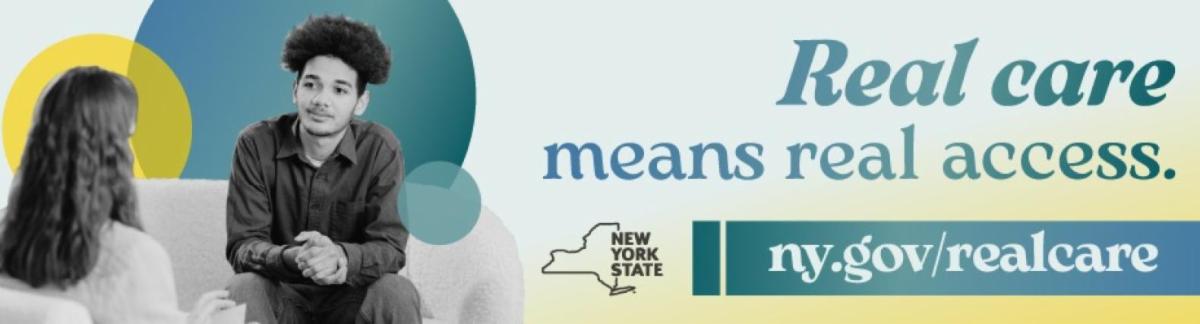
Governor Kathy Hochul on February 27 announced the launch of a public awareness campaign to educate New Yorkers on regulations that improve access to mental health and substance use disorder care. The ‘Real Care, Real Access to Behavioral Health Services’ campaign highlights regulations that give New Yorkers with qualifying health plans access to initial outpatient appointments for behavioral health care within ten business days of the request and require insurers to help insured individuals access the care they are entitled to receive. The campaign also includes a new website with information about patient rights and how to file a complaint if those rights are violated. Led by the State’s Department of Financial Services and Office of Mental Health, the statewide public education campaign is aimed at encouraging more New Yorkers to access in-network mental health and substance use disorder care and understand their rights under these rules. Read more here.
| |
Colleges See Spike in Students With Disabilities, Including Elite Schools
The number of college students reporting disabilities rose more than 50% over the last decade across a wide swath of schools, including at some of the most selective universities in the nation, according to a New York Times analysis of government data. The rise, which has corresponded with an increase in A.D.H.D., autism and other diagnoses, has also meant an increase in the number of students requiring accommodations, such as more time to take tests. While some colleges and students have embraced the trend, saying it shows schools are opening their doors to students who might previously have been shut out, it has raised worries that some could be gaming the system. The increases have occurred at all kinds of institutions, from small liberal arts colleges to large research universities commanding global reputations. Read more here.
| |
Teens 'Zill' In New Ad Council Mental Health Campaign
Taking a different approach to mental health support for teens, the Ad Council and Omnicom’s BBDO New York have worked with experts - and most significantly, with teens themselves - to create what they hope becomes a new buzzword among 13- to 17-year-olds: “zill.” Defined as “any action to show love to your mind on good, bad, or whatever days,” teens “zill” in a campaign launching March 2 on World Teen Mental Wellness Day. A year in the making, the effort includes six PSAs running on a wide range of teen-targeted media, and more than 50 specially developed activities at a zill.org hub. “The campaign was co-created with teens and young adult creators from a wide range of backgrounds, interests and communities,” Heidi Arthur, the Ad Council’s s chief campaign and program officer, explained to Marketing Daily. Read more here.
| |
The Economic and Social Impact of Disability Services Providers in New York and NYSID: New Developments
A new report from the Rockefeller Institute of Government shows that disability service providers are not just vital to communities across New York — they are a major economic force. The Institute found that 408 of these providers reported $9.0 billion in revenues. Overall, nonprofit disability service providers:
- Generated $15.6 billion in economic output in New York State. This includes the $9.0 billion in revenues generated by the providers, $2.0 billion in output for their suppliers, and $4.6 billion related to employee spending.
- Supported 194,186 full-time jobs with service providers, their suppliers, and in the wider regional economy.
- Contributed $2.4 billion in federal and state tax revenue. Read more here.
| |
Solving the Psychological Safety Problem in Healthcare
Workplace violence is often treated as a physical security problem to be ‘contained’. But the reality is, exposure to violence extends far beyond physical threats. Addressing violence in healthcare as solely a security issue leaves out a critical aspect of harm: the psychological impact of violence on healthcare workers. Psychological safety isn’t just a “culture” metric; it is the foundation of a functional workforce. When clinicians operate in a constant state of hypervigilance, it presents as anxiety, burnout, and disengagement from their role. These effects can linger for months or years, shaping how people show up to work or whether they stay at all. In fact, nearly 2 in 5 healthcare workers say they’ve considered leaving their jobs due to safety, and 45% say they’re likely to leave in the next 12 months. Read more here.
| |
How Value-Based Models Can Close the Physical Health Gap for People with SMI
The complexity of SMI care, combined with its high comorbidity rate and high costs, makes this space a prime target for value-based arrangements that could potentially save payers money and significantly boost health outcomes for patients with SMI conditions. Serious mental illness can have a significant financial and physical health impact. The lifetime economic burden of SMI — including lost productivity, healthcare spending, and social services — is estimated at $1.85 million per patient, placing these conditions among the most expensive chronic illnesses in the country. But these factors also make SMI a ripe place for innovation, particularly when it comes to payment innovation. The complexity of SMI care, combined with its high comorbidity rate and high costs, makes this space a prime target for value-based arrangements that could potentially save payers money and significantly boost health outcomes for patients with SMI conditions. Read more here.
| |
Teaching Small Talk—An Often Neglected and Teachable Skill in EMS
Too often in EMS education and operations, there is a tendency to focus on the dramatic, extreme, and challenging, the true emergencies where life, death, and long-term outcomes depend on providing correct care promptly. But for most agencies, this is not the bulk of their calls. A recent call I was on illustrates this. Called to an urgent-care without using lights and sirens, at the request of a nurse practitioner, we transported a patient who had controlled bleeding from a limb to a hospital emergency room 15 minutes away for stitches. Although the patient was properly examined by ALS and vitals were monitored en route, it was determined that they did not require any further assistance from EMS. The patient was transported, and care was turned over to the ER staff in a caring and professional manner, but no actual medical care was provided. The patient was made comfortable, and we chatted with her enroute. Their major complaint, aside from the controlled bleeding, was embarrassment to be in an ambulance for a non-emergency matter. After changing the stretcher linen, the young EMT I worked with smiled and said, “Sometimes 80% of this job is small talk.” Read more here.
| |
|
Amid Opioid Addiction Treatment, Losing Insurance Tied to Mortality Risk
Disenrollment from health plans was associated with an increased risk of mortality among patients who initiated medications for opioid use disorder (OUD), according to a retrospective cohort study. In adjusted analyses of more than 20,000 patients, ever experiencing disenrollment was associated with increased risks of all-cause mortality (HR 1.51, 95% CI 1.23-1.84) and overdose mortality (HR 1.56, 95% CI 1.17-2.09), reported Anh P. Nguyen, PhD, of Kaiser Permanente Colorado in Denver, and colleagues. The all-cause mortality rates were 17.6 versus 14.7 per 1,000 person-years for patients with and without health plan disenrollment, respectively, while rates of overdose mortality were 8.9 versus 5.4 per 1,000 person-years, they noted in JAMA Psychiatry. Read more here.
| | |
UPCOMING EVENTS & TRAININGS
Innovation in Behavioral Health (IBH) Model Cohort II Notice of Funding Opportunity (NOFO) Webinar
March 5, 2 - 3 pm, CMS Innovation Center
The Black Sheep of Addiction: Integrating Tobacco Control into Substance Use Disorder Programming
March 5, 2 - 3 pm, National Council for Mental Wellbeing
Building a Licensed Workforce: Organizational Support for Clinical Licensure
March 5, 2:30 - 3:30 pm, National Council for Mental Wellbeing
Development and Implementation of Crisis Technical Assistance Centers: Introduction and Overview of Learning Collaborative Opportunity
March 5, 4 - 5 pm, CMS
Reducing Problem Gambling Stigma Through Language and Action
March 6, 1 - 2 pm, National Council on Problem Gambling
Breaking the Revolving Door: How an Intensive Crisis Stabilization Center Is Reducing ER Reliance
March 10, 1 - 2 pm, OPEN MINDS
Educator Café - Building Dignity in Schools: Exploring the Dignity Index
March 10, 3:30 - 4:30 pm, School Mental Health Resource Training Center
Strengthening Helping Professionals: Ethics, Resilience, & Attachment-Informed Approaches
March 11, 12 - 1:30 pm, NAADAC
From Feedback to Impact: How CCBHCs Can Use Experience Management to Improve Quality and Engagement
March 11, 2 - 3 pm, National Council for Mental Wellbeing
Recovery Housing Funding Sources and Financial Sustainability Webinar
March 11, 2 - 3 pm, SAMHSA Center for Financing Reform and Innovation
Means Reduction Counseling and Overdose Prevention Strategies
March 12, 12:30 - 1:30 pm, Zero Overdose/Zero Suicide
Becoming a MHFA Instructor
March 12, 2 - 3 pm, National Council for Mental Wellbeing
Having an Impact: Young Adult Change-Makers Explore Mental Health Challenges and Accomplishments
March 17, 12 - 1 pm, NYS Public Health Association
Workforce Solutions Jam: Extending the Behavioral Health Workforce - Technology as an Extender
March 17, 1 - 2 pm, National Council for Mental Wellbeing
An Introduction to Problem Gambling Screening Tools
March 17, 1 - 2 pm, National Council on Problem Gambling
Leading Change With H.O.P.E. — How Leaders Can Enable Change That Sticks
March 18, 1 - 2 pm, Positively Partners
Suicide and Substance Misuse: Supporting Safety
March 23, 11:30 am - 12:30 pm, PCSS
The South Carolina Model: Competence to Stand Trial Pre-Screening Consultation Services
March 23, 1:30 - 3 pm, SAMHSA's GAINS Center
ADHD Neurobiology: Exploring Dopamine, Norepinephrine, & Serotonin in an Integrative Model
March 25, 12 - 1 pm, PsychU
Understanding The Role of Toxic Shame in Substance Use Disorders
March 25, 12 - 1:30 pm, NAADAC
Dually Enrolled Medicaid and Medicare Beneficiaries: Publicly Available Databases and Tools to Improve Understanding and Provide Relevant Services
March 25, 2 - 3 pm, SAMHSA CFRI
Setting the Record Straight: What AOT Is—and Is Not
March 25, 2:30 - 3:30 pm, Policy Research Associates
2026 Working with Addictions Summit - VIRTUAL
March 28 - 29, NAADAC/Mental Health Academy
Care Coordination and Referral Partnerships in the Integrated Care Field
March 31, 3 - 4 pm, Center of Excellence for Integrated Health Solutions
Brain Injury 101: Understanding & Identifying Brain Injury
March 31, 10 - 11 am, DOH/OMH/OASAS
Rural Overdose Prevention: What State Policymakers Need to Know
April 9, 2 - 3 pm, National Conference of State Legislatures
Becoming a MHFA Instructor
April 16, 2 - 3 pm, National Council for Mental Wellbeing
New York's Healthcare System in the Face of Federal Uncertainty
April 20, 12 - 1 pm, Albany Law School
Brain Injury Treatment: Psychopharmacology & Medical Interventions
April 21, 10 - 11 am, DOH/OMH/OASAS
Workforce Solutions Jam: Extending the Behavioral Health Workforce - Lived Experience as a Resource
April 21, 1 - 2 pm, National Council for Mental Wellbeing
Brain Injury: Practical Strategies for Engagement
May 19, 10 - 11 am, DOH/OMH/OASAS
| |
CLMHD CALENDAR
March
Mental Hygiene Planning Committee Meeting
March 5: 1 - 3 pm
LGU Clinic Operators Call
March 10: 10 - 11 am
Addiction Services & Recovery Committee Meeting
March 12: 11 am - 12 pm
Mental Health Committee Meeting
March 12: 3 - 4 pm
Children & Families Committee Meeting
March 17: 12 - 1:30 pm
Membership Call
March 18: 9 - 10:30 am
IOCC Meeting
March 23: 1 - 3 pm
April
Executive Committee Meeting
April 1: 8 - 9 am
Addiction Services & Recovery Committee Meeting
April 9: 11 am - 12 pm
Mental Health Committee Meeting
April 9: 3 - 4 pm
LGU Clinic Operators Call
April 14: 10 - 11 am
Membership Call
April 15: 9 - 10:30 am
Developmental Disabilities Committee Meeting
April 16: 1 - 2 pm
Children & Families Committee Meeting
April 21: 12 - 1:30 pm
| |