Illinois Pensions

Newsletter

A PUBLICATION OF IPPFA


October 2026

UPCOMING EVENTS


26-2 Certified Trustee Program


Carterville Pension Conference


Heroes Holiday Gala: A Season of Giving


2027 Illinois Pension Conference

ONLINE TRAINING


Online 16 Hour Certified Trustee Program


Online 8 Hour Seminar


NEWS LINKS

2026 Q4 Public Safety Financial Wellness Survey


Seeking Financial Advice Is Less Common for Public Sector Workers


Police Pension Fund inflated benefits for top Adams-era cops, report finds


Florida Man Defrauded Cops in $860K Investment Scheme, SEC Alleges


Relocating in Retirement: Reducing Stress and Costs


US. 10 Million Seniors Live in Poverty—Even as They Hold Trillions in Housing Wealth


New bill would let nurses and others claim Social Security at 60


Best & Worst Places to Retire (2026)


Seven Social Security Reform Packages: Effects on Growth and Generations


Everything you need to know about proposed changes to Chicago’s despised parking meters deal


Why Pensions Still Provide Key Income for Many Retirees Even as Access Declines


To Save Social Security, Tax the Rich, Leading Retirement Researcher Says


Illinois law to lower prescription drug prices struck down


A 20% Cut Is Closer Than You Think


Employers Gear Up for Biggest Healthcare Cost Spike in 20 Years


New Ranking of Best and Worst Places to Retire Puts Tax-Friendly Cities on Top


Chicago TIF Districts: Map and Fund Balances


National Preparedness Month: September 2026


Illinois Receives Rating Upgrade to A1 From A2 From Moody's


80% of Americans Say U.S. Faces Retirement Crisis Amid Affordability Pressures and Debt


Workers lack savings buffer for unexpected medical costs


AI is hitting entry-level jobs hardest, Stanford study finds

UPCOMING PENSION TRUSTEE TRAININGS

26-2 Certified Trustee Program

November 11 - 12, 2026

NIU Outreach Center

1120 E. Diehl Rd.

Naperville, IL 60563

Carterville Pension Conference

November 17, 2026

Walker's Bluff Casino Resort

777 Walkers Bluff Way

Carterville, IL 62918

2027 Illinois Pension Conference

May 5 - 7, 2026

Eagle Ridge Resort

444 Eagle Ridge Drive

Galena, IL 61036

HEROES FAMILY FUND

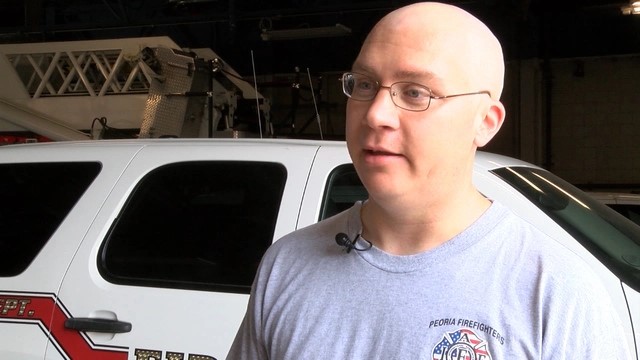
Heroes Spotlight: Nicholas "Nick" Riordan

Department: Peoria Fire

End of Watch: April 3, 2018

Nicholas “Nick” Todd Riordan was a lifelong servant to his community and dedicated his career to helping others.


A Heyworth native, Nick graduated as a Hornet in 2002. His career in emergency services began as a 911 dispatcher for Metcom before he pursued his education and became a paramedic. He spent countless hours volunteering with the Randolph Township Fire Department, where he rose to the rank of Captain, and with the Heyworth Ambulance Service as an EMT/Paramedic.


Nick continued to serve in numerous emergency response roles, including as a firefighter with Global Fire Service and the Germantown Hills Fire Department, and as a paramedic with Eureka Goodfield Ambulance Service and Putnam County EMS.


In 2014, Nick achieved a lifelong career goal when he joined the Peoria Fire Department. He quickly earned a reputation as a hardworking firefighter with an infectious smile and genuine enthusiasm for serving the community. His fellow firefighters affectionately called him “Smiley,” a reflection of the happiness he found in his work and in protecting the citizens of Peoria.


Nick’s commitment to his community was evident throughout his life and career. After a nearly yearlong battle with an aggressive form of cancer, Nick passed away on April 3, 2018.


We honor Nick Riordan for his dedication, courage, and unwavering commitment to serving others. His legacy lives on through the communities and fellow first responders he touched.

Join Us in Supporting the Heroes Family Fund

Help us honor Nick and others like him by contributing to the Heroes Family Fund. Your generosity ensures that we can continue supporting the families of our fallen heroes in their time of need.

Guardian Sponsor: $10,000+

Protector Sponsor: $5,000–$9,999

Courage Sponsor: $2,500–$4,999

Bravery Sponsor: $1,000–$2,499

Honor Sponsor: $500–$999

Community Sponsor: $250–$499

Supporter Sponsor: $10–$249


Scan or click the QR code below to make your donation today.

Support our Silent Auctions & Raffles!

Explore our Amazon Wishlist and contribute today.

All proceeds go to the Heroes Family Fund.

Need Assistance? The Heroes Family Fund is Here to Help

The Heroes Family Fund exists to provide financial assistance to the families of Illinois police officers and firefighters who are killed or catastrophically injured in the line of duty. During one of the most difficult times a family can face, navigating benefits and resources can feel overwhelming. Our goal is to help ease that burden by providing timely financial support.


If your department becomes aware of a line-of-duty death or catastrophic injury, we encourage you to contact the Heroes Family Fund as soon as possible. Early notification allows us to begin the benefit process and provide assistance without unnecessary delays. Click here for the benefit application.

Together, we can ensure that no hero's family faces their greatest challenge alone.

UPCOMING FUNDRAISERS:

Heroes Holiday Gala: A Season of Giving

December 10th, 2026

Eaglewood Resort

1401 Nordic Road

Itasca, IL 60143

EXPERT INSIGHTS

Each month, Expert Insights features timely commentary, practical guidance, and industry perspectives from professionals serving Illinois public pension funds.


Contributors share expertise on legislative updates, fiduciary responsibilities, investment trends, legal developments, and other topics impacting trustees and fund administration.

Your Payroll Contributions are a Big Deal!

By Dan Ryan, IPPFA Project Coordinator

October 2026


Police and fire professionals in Illinois make substantial payments to their eventual pension benefits. This is not appreciated by critics of public pensions and the reporters and editors who often cover public finance. They claim that public employees only contribute a small amount of money to their pensions or that they “get back” all of their contributions in less than two years. IPPFA was fortunate to have a letter published in the Chicago Tribune to rebut these arguments (December 4, 2018 from Jim McNamee), but that hasn’t slowed them down.  


This article provides background information on payroll contributions and examines their impact on pension financing.


Nature of Defined Benefit Plans

In a defined benefit pension plan such as ours (“DB” for short in pension parlance), a calculated benefit is guaranteed to the member. This is different than the defined contribution world (“DC”) such as 401k plans where the member contributes, the employer contributes, and those two sums create investment earnings through the working years. Retirement income in a DC plan is whatever the account balance will support.


But our Illinois public pensions share something in common with the DC universe. We do make contributions from our paychecks.  


Public Employee Pension Contributions

Payroll contributions are unique to the public sector. I’ve only seen one corporate pension plan that had employee payments. That doesn’t mean that there aren’t others – but it’s rare. The union negotiated plans (known as Taft-Hartley plans) do not have payroll contributions. The benefits are fully paid by the companies participating in the pension plan. But any public employee retirement system that I have ever seen has member contributions as part of their financing. And some amounts are substantial.


How did this come to pass? Well I stumbled upon what I think is the answer a few years back in a pension textbook. The earliest approach to public employee retirement was in New York City at the turn of the prior century. An arrangement was made for NYPD police and city teachers to pay money into a retirement savings plan and the city matched the amount. This was long before Section 401k was adopted and may have even pre-dated the establishment of the federal income tax. Eventually those plans matured into a real pension plan. And, since employees had been paying some of their own money into the account, that feature was retained as part of the pension plan funding mechanism. And as other pension systems were established for police, fire, teachers and other public workers across the country, an employee contribution was maintained. It just became part of the landscape for public pension funding.


Payroll Contributions Today

Employee payday contributions today are substantial. They run higher in pension plans where the workers are not covered by Social Security and higher still for public safety members because of their earlier retirement ages and the higher incidence of disability. So in Illinois for example, an office worker or building inspector in the Illinois Municipal Retirement Fund (IMRF) pays 4.5% of pay. This funds lower benefits than the police/fire formula but it is companioned with Social Security where the member pays 6.2%. IMRF-SLEP for sheriff members has a 7.5% contribution rate plus Social Security. Chicago PD and FD are 9%, “Downstate” fire is 9.455% and police is 9.91%.  Chicago is not in Social Security and most of the Downstate groups are also not covered under Social Security.


What do your pension contributions do?

Payroll contributions simply help fund the pension benefit. They are recorded in a nominal account to the benefit of the member but that is only important (a) in the event of a withdrawal refund to someone who leaves before becoming “vested” in the pension plan (i.e. eligible for a monthly benefit) or (b) under certain fund-to-fund transfer formulas.  


The member contributions, along with the amount paid in by the municipality or fire protection district, are invested for long term returns and the aggregate amount of money from all sources is used to pay current and future pension benefits.  


Unlike in a 401k style plan, there is no employer “match” of what you pay in and there is no direct relationship between how much you pay in and what you receive in pension benefits. Picture identical twin brothers who come on the job the same day and retire as deputy chiefs thirty years later. One is a great civil service test taker and successfully goes up for promotion every time he is eligible. The other is more of a “take it slow” kind of guy who stays in the lower ranks longer than his brother but eventually attains the same rank at retirement. The fast-track guy (Mom probably liked him best!) paid a lot more in pension contributions than his brother. And the fund earned a lot more interest on his money. But their pensions are the same. That’s the way the system works. Payments from the paycheck help fund the system, not earn a member a specific benefit.


What is the impact of these contributions?

It’s big. The naysayers ignore the investment earnings that employee payroll contributions earn from the first day of work until the last pension check, usually six decades later. That is a lot of time for member’s personal contributions to turn into some real money.


In fact, it is estimated that public employees pay somewhere between 30 percent and 40 percent of their own pensions, once future earnings on their payroll deductions are considered. The taxpayers (and the investment earnings on taxes) pay the rest. This ratio of member-to-taxpayer contribution is supported by various actuaries’ calculations of the Normal Cost contribution and by IMRF’s public graphics of member-taxpayer-investment funding of pension plans.


In other words, both member and taxpayer substantial amounts and both should receive appropriate credit.


Closing

We hope this article improves your objective knowledge of public employee pension contributions. Your personal money pays probably a third or more of your pension. Subjectively, this is a meaningful contribution. Ignore statements or claims that you don’t pay enough.


Any questions or just a comment? They can be sent to Dan.ryan@ippfa.org

Interested in contributing to Expert Insights?

IPPFA welcomes educational and informational contributions from professionals serving the public pension community. Suggested topics include legal updates, fiduciary best practices, compliance guidance, investment trends, training resources, and other industry developments affecting Illinois public pension funds.

ORDER THE IPPFA RETIREMENT GUIDE!

The IPPFA Retirement Guide – 3rd Edition

The best source of information on the newly expanded Social Security benefits is the 3rd Edition of the IPPFA Retirement Guide.


The Social Security chapter has been totally rewritten. In addition, the book has been updated with the latest information on:

  • Article 3 police pensions
  • Article 4 fire pensions
  • Public employee deferred compensation
  • Retirement healthcare funding

Order Your Copy Today!

The IPPFA Retirement Guide – 3rd Edition is now available:

  • Paperback copies on Amazon for $9.99.
  • Ebook copies on Amazon for $7.99.
  • From the IPPFA Office: $7.50 per book for bulk sales of 10 books or more


When the books are sold in bulk from our office, IPPFA avoids the Amazon royalty charge and passes the savings on to you.

For the earlier editions, IPPFA sold thousands of copies via bulk sale to police and fire pension funds, cities and fire districts and foreign fire insurance tax boards. Some entities bought 10 books and distributed them to the pension board, fire stations, police station libraries and alike. Other pension funds bought hundreds of books and supplied one to each active member.

Get the Word Out!

Whatever the method, let’s get the word out to our active and retired members on their new Social Security benefits.

Stay Connected with Us!

Download the IPPFA app for updates and follow us on social media for more news and insights

LinkedIn  YouTube  Facebook  Web

IPPFA | Contact Us | Privacy Policy