Weekly Digest Number 10 - March 8, 2022 |
|
Welcome to the RWU Rail & Labor News! This news bulletin is produced and emailed out each Tuesday morning. We hope you find each week's news and information useful. If so, please share with co-workers, friends, and colleagues. If you like, you can sign them up to get all the news from RWU HERE. Or forward them the link. Note: If you read over this news bulletin each week, you will be sure to never miss the important news of what is going on in the railroad world from a worker's perspective!
|
|
International Women's Day - Tuesday, March 8th |
|
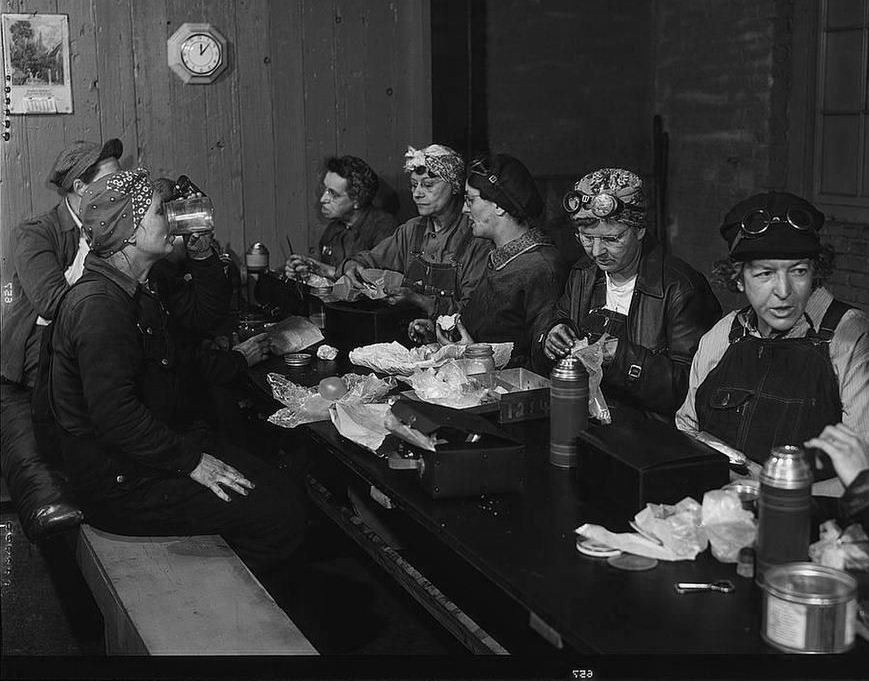
International Women's Day has been celebrated around the world on March 8th for over 100 years. Founded in the USA in 1909, it is commemorated in a variety of ways worldwide; it is a public holiday in several countries, and observed socially or locally in others. In honor of the women railroad workers and the important role they have played in the history of the railroad, RWU issues a Special Bulletin every year on March 8th. Please click HERE to see this year's edition.
|
|
(Editor's Note: While the actual figures were never announced by the unions of the operating crafts in the U.S. at NS and BNSF, one can assume that the numbers in favor of striking these carriers were on par with the level of support garnered for strike action by the TCRC brothers and sisters in Canada at CP. The only difference will most likely be that in Canada, the workers will actually go out on strike.) |
|
Teamsters Canada Vote Approves Strike Against Canadian Pacific |
|
Members of the Teamsters Canada Rail Conference have approved a possible strike against Canadian Pacific, the union reported to members after a strike vote concluded on Feb. 28.
Union officials said 3,062 ballots were sent out to members. While it did not report the number of ballots returned, 96.7% of those voting approved the strike.
The union is scheduled to hold mediation sessions facilitated by the Federal Mediation and Conciliation Service March 11-16, but said it would begin making preparations for a possible strike or lockout on Wednesday, March 16.
The union represents about 3,000 engineers, conductors, crew members, and yard workers.
A Canadian Pacific spokeswoman told Bloomberg News that the railroad has offered a two-year contract with wage increases and agreed to 20 union demands, and that the union “appears poised to force a shutdown of the essential rail supply chain.”
|
|
(Editor's Note: This article below is not exactly new news this week. But it is a comprehensive article that lays out where rail labor is in the process of bargaining with the NCCC under the RLA. Once again, significantly, the larger of the two rail labor bargaining coalitions is standing in solidarity with the smaller. While the whole process continues to creep at a snail's pace, things are starting to move.) |
|
Unions to NMB: Release Us From Mediation |
|
The BMWED/SMART-Mechanical Division bargaining coalition late last month petitioned the National Mediation Board (NMB) for a proffer of arbitration, requesting to be released from further mediation sessions with the National Carriers Conference Committee (NCCC); the Coordinated Bargaining Coalition unions support the move.
The letter, dated Feb. 23, 2022, explained that the unions “made a comprehensive settlement proposal to the NCCC [—which represents all U.S. Class I railroads and many smaller freight and passenger lines—] in June of 2021, and the NCCC has never responded with a comprehensive proposal of its own. NCCC has not even made a wage proposal to BMWED and SMART MD; NCCC has refused to even offer a proposal on compensation despite surging inflation and the lack of a pay increase for employees of the carriers for over two years. However, the carriers have made proposals for changes in the National Health and Welfare plan that would constitute employee concessions, after concessions on health and welfare benefits were made in the three prior rounds of bargaining. The current proposed concessions would be much more significant than the concessions in prior rounds; and the changes sought would substantially diminish any increase in compensation. Furthermore, the proposal is unjustifiable because health and welfare benefits are a small component of carrier costs; and, contrary to the contentions of the NCCC, the National Health and Welfare Plan is not out of the so-called ‘mainstream’; it is consistent with plans of other private sector unionized employers. In addition to those facts, and information known to the Board because of its role in mediation between these parties, the unions support their contention that the parties are at impasse with a summary of the state of the parties’ negotiations prepared by NCCC, and the unions’ response to that summary, that were exchanged by the parties in December of 2021. … [The summaries] objectively demonstrate how far apart the parties were at that time. The next mediation session on January 28, 2022 produced no movement and offered no basis for concluding that continuing mediation would facilitate an agreement.”
|
|
(Editor's Note: After nearly seven long excruciating years, Brandon Bostian and railroad workers have a reason to celebrate!) |
|
Amtrak Engineer Cleared of All Charges Over Fatal 2015 Philadelphia Derailment |
|
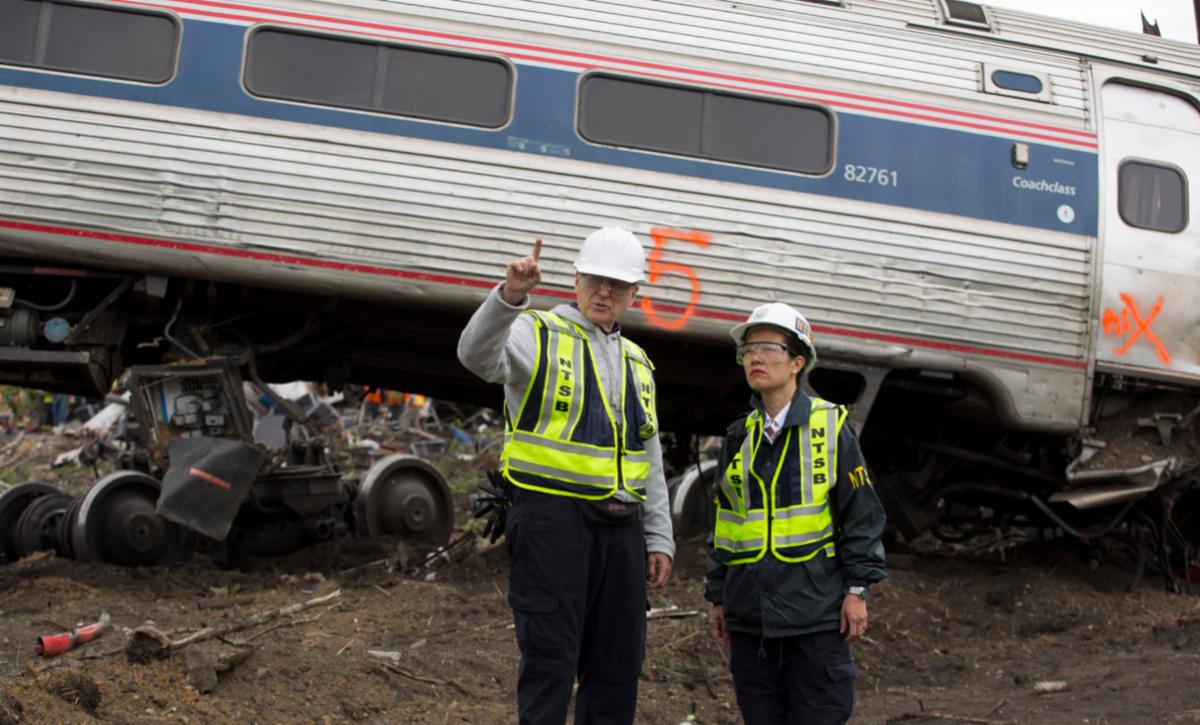
An Amtrak engineer was on Friday cleared of charges related to a deadly high-speed derailment that left eight people dead and hundreds injured in Philadelphia in 2015.
After a little more than an hour of deliberations, a jury acquitted Brandon Bostian, 38, of causing a catastrophe, involuntary manslaughter and reckless endangerment.
Eight died and more than 200 were injured when the train rounded a curve at more than twice the speed limit and derailed in north Philadelphia. Amtrak agreed to pay $265m in civil settlements to victims and their families.
Bostian’s lawyer described him as a lifelong train buff who had a perfect work record until he was distracted by people throwing rocks in the area just before the crash.
Prosecutors said he acted with reckless disregard for the safety of his passengers, who were traveling from Washington to New York on that Tuesday evening. The train had stopped at Philadelphia’s 30th Street station about 10 minutes earlier and was heading north.
Federal safety investigators concluded Bostian lost what they call “situational awareness” on the track, thinking he was past an S-curve and on a straightaway when he accelerated from about 65mph to 106mph. In fact he was in the middle of the S-curve and going more than twice the speed limit. Investigators found no evidence he was impaired or using his cellphone at the time.
|
|
(Editor's Note: RWU has high hopes that this coalition can usher forth a new kind of rail advocacy organization - one that is immersed in the working class, enjoys support from the labor movement, and encompasses a broad swath of society - that is capable of putting rail development at the state and national levels on the agenda in a big way.) |
|
Nevada Rail Coalition Promotes Rail Development in the State |
|
More than a dozen labor organizations, environmental groups, passenger/freight rail advocacy associations, social justice organizations, and neighborhood/community associations have joined forces to launch the Nevada Rail Coalition. The Coalition’s express purpose is to build an expanded and more robust rail system — freight and passenger — in the Silver State and regionally.
An expanded, robust rail system in Nevada and neighboring states can be the keystone of a low-carbon, environmentally sustainable and socially just transportation system that helps the United States meet its carbon-reduction goals. The transportation sector is currently the leading emitter of carbon and other toxic emissions.
Nevada is an ideal place to develop rail, because of its great distances between cities and large amount of auto and truck traffic crossing the state to and from California. Nevada and the American West are under-served by rail. Reno has only one Amtrak passenger train a day. Las Vegas, an international resort destination, is not served by rail at all, leaving visitors to deal with overcrowded airports and freeways. In rural Nevada - even in towns where Amtrak’s minimal service passes though, if you don’t or cannot drive, you’re stuck...
|
|
(Editor's Note: All rail workers are encouraged to register and take part in this. Hopefully, the panel addresses the failures of PSR this past decade or so and calls it out as one of the culprits in the current supply chain debacle.) |
|
Supply Chain Fragility: How To Rebuild A Resilient System |
|
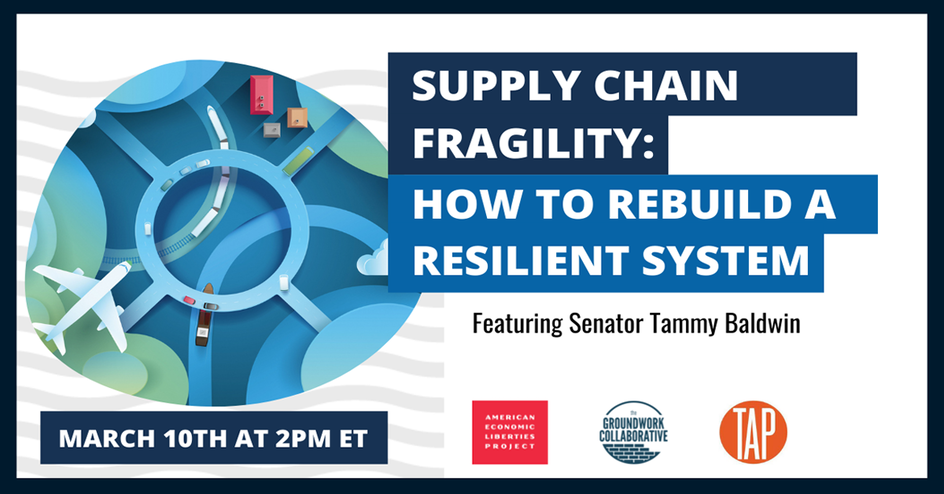
On March 10 at 2pm ET, join the American Economic Liberties Project, Groundwork Collaborative and The American Prospect to hear about how the policy choices we made over the last 50 years left us with a brittle and broken supply chain that has resulted in small businesses falling through the cracks. Learn what policymakers like Senator Tammy Baldwin are doing to build a resilient supply chain, and hear from independent business leaders and supply chain experts about the challenges facing small businesses up and down our supply chain.
Speakers include: Senator Tammy Baldwin (D-WI), Member of the U.S. Senate Committee on Commerce, Science, and Transportation; Mike Beckham, CEO of Simple Modern; Todd Spencer, President of Owner-Operated Independent Drivers Association; Charmaine Chua, Assistant Professor at UC Santa Barbara; Matt Buck, Senior Fellow at the American Economic Liberties Project; Rakeen Mabud, Ph.D., Chief Economist and Managing Director of Policy and Research at the Groundwork Collaborative; David Dayen, Executive Editor of The American Prospect; and Sarah Miller, Executive Director of the American Economic Liberties Project.
|
|
(Editor's Note: It is somewhat ironic that these 5 monopolistic corporations - who have made their great wealth and fortune by owning and controlling the rail infrastructure of North America, are suddenly so concerned about the all-important value of "competition.") |
|
Five Class Is to STB: CP-KCS Merger Would Harm Competition |
|
In their comments, the five Class Is laid out their reasons why they believe the CP-KCS merger would negatively affect competition to the detriment of rail customers if certain conditions are not met. Each Class I also detailed their concerns for how the merger would impact their own operations, as well as the conditions they believe the STB should impose to protect competition if it approves the merger.
Following are selected points made in each of the five Class Is' comments filed Feb. 28, as well as links to their documents.
|
|
(Editor's Note: Using a Class One favorite tactic - delay - CSX has requested and been granted, an extension by the STB. One can only assume they need more time to get their lies and deceptions together.) |
|
STB Grants Delay in Next Phase of Amtrak Gulf Coast Hearing |
|
The Surface Transportation Board has granted CSX Transportation’s request to delay the hearing on Amtrak Gulf Coast service, which was unopposed by Amtrak and the other parties to the case.
The evidentiary hearing, which had been scheduled to begin March 9, will now be held April 4-5, with April 6 and April 8 held in reserve in case additional time is needed.
The first phase of the hearing, allowing public comment, was held Feb. 15-16, along with a conference to outline procedures for the evidentiary hearing [see “First day of Gulf Coast hearing …,” Trains News Wire, Feb. 15, 2022, and “Moorman, CSX, and Amtrak weigh in …,” News Wire, Feb. 16, 2022].
CSX filed its request to reschedule the hearing on Feb. 23, but the reason was redacted from the public version of the filing [see “CSX asks for delay …,” News Wire, Feb. 23, 2022].
|
|
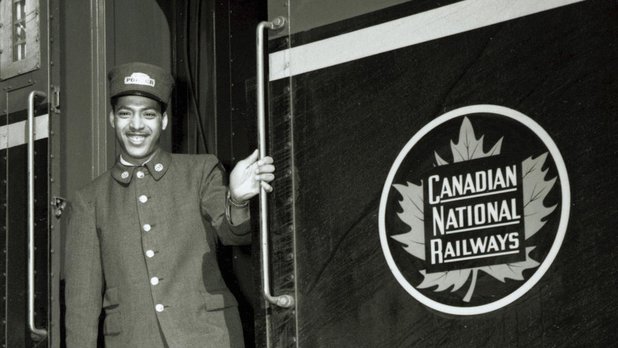
This 1996 documentary takes a nostalgic ride through history to present the experiences of Black sleeping-car porters who worked on Canada's railways from the early 1900s through the 1960s. There was a strong sense of pride among these men and they were well-respected by their community. Yet, harsh working conditions prevented them from being promoted to other railway jobs until finally, in 1955, porter Lee Williams took his fight to the union.
Claiming discrimination under the Canada Fair Employment Act, the Black workers won their right to work in other areas. Interviews, archival footage and the music of noted jazz musician Joe Sealy (whose father was a porter) combine to portray a fascinating history that might otherwise have been forgotten.
|
|
CN Proposes 'Kansas City Speedway' as Part of CP-KCS Merger |
|
CN made the request based on the STB’s statutory authority to order “the divestiture of parallel tracks" as a merger condition, company officials said in a press release. Granting CN control of what it calls the "Kansas City Speedway" line would provide rail customers with a new competitive option to move goods across a key North American economic corridor, they proposed.
CN would invest in the Kansas City Speedway, which would "benefit customers and communities, create union and management jobs, and produce substantial environmental benefits by taking 80,000 trucks off the road annually," company officials said.
|
|
(Editor's Note: As expected, another Class One reports its record earnings for 2021. How does a company even announce this stuff with a straight face while they discipline and fire employees simply for taking necessary time off work, those same employees who made the company those profits . These powerful corporations have no shame ...) |
|
BNSF Posts Record Earnings for 2021 |
|
BNSF Railway Co. logged $1.7 billion in net income in fourth-quarter 2021, a 13% increase from 2020's bottom line, the Class I announced yesterday.
Total revenue for the quarter rose 11% to $6.3 billion from $5.7 billion a year ago. Operating income climbed 12% to $2.4 billion, while operating expenses increased 10% to $3.85 billion.
The railroad recorded an operating ratio of 60% in the quarter versus 60.3% in fourth-quarter 2021.
For full-year 2021, BNSF reported net income of nearly $6 billion, up 16%; total revenue of $23.3 billion, up 12%; operating income of $8.8 billion, up 14%; and operating expenses of $14.5 billion, up 10% year over year.
BNSF's earnings were a record for the railroad, according to Berkshire Hathaway Inc. Chairman and CEO Warren Buffet's letter to shareholders in the company's 2021 annual report. Berkshire Hathaway owns BNSF.
"BNSF trains traveled 143 million miles last year and carried 535 million tons of cargo. Both accomplishments far exceed those of any other American carrier," Buffett wrote.
In 2021, BNSF's full-year volumes were 1% lower than the pre-pandemic volumes of 2019. The changes included a 3% decrease and 7% increase in unit volume for the fourth quarter and full-year 2021, respectively.
The full-year volume increase is primarily due to continued improvements from the 2020 effects of the COVID-19 pandemic, partially offset by the ongoing disruptions in the global supply chain, as well as the following:
|
|
(Editor's Note: With air and truck freight rates skyrocketing, the pandemic waning, the economy booming and the Class Ones making record profits, there damn well should be an increase in freight moved by rail. In fact the increase should be much stronger than it is.) |
|
U.S. Freight-rail Volumes Rose in February |
|
Less severe winter weather last month helped boost U.S. freight-rail volumes compared with February 2021 levels, the Association of American Railroads (AAR) announced yesterday.
U.S. railroads logged 1,945,646 carloads and intermodal units last month, a 5.7% increase compared with February 2021 volumes, according to AAR data. Carload volume climbed 11% to 915,329 units, while intermodal rose 1.4% to 1,030,317 containers and trailers.
"U.S. rail traffic had big year-over-year gains in February, largely because severe winter storms held volumes back last February," said AAR Senior Vice President John Gray in a press release. "That said, there were pockets of real strength last month. For example, carloads of chemicals set a new monthly record last month, carloads of coal were the highest in five months and carloads of lumber were the most in eight months."
|
|
|
|
|
|
|