|
From Crisis to Catalyst
In 2011, Nevada stood at a crossroads. The Great Recession had battered the state with unusual force, leaving behind a $2 billion budget shortfall, unemployment north of 14 percent, and more than a quarter million lost jobs. For a state long dependent on tourism and construction, the downturn exposed a structural vulnerability that could not be solved by waiting for the next economic cycle.
Newly elected Governor Brian Sandoval understood that Nevada needed not just recovery, but reinvention. In his first State of the State address, Sandoval argued for a different future one that leaned on knowledge, innovation, and high value industries rather than volatility. That vision came with risk. Faced with unprecedented fiscal constraints, Sandoval nonetheless committed $10 million to create the Nevada Knowledge Fund, a program designed to support research, development, and commercialization emerging from the state’s universities and innovation institutions.
At the time, the move was seen by some as aspirational at best. Nevada had talent, but it lacked infrastructure. Northern Nevada in particular had no dedicated pathway for entrepreneurs to turn ideas into viable companies or connect academic research to the market. There was no physical place where universities, economic developers, investors, and founders could collide with purpose.
Yet Sandoval believed that lasting economic transformation required exactly that kind of collision. The Knowledge Fund was designed as seed capital for a broader ecosystem, one that could anchor innovation locally while building bridges to national and global markets. The bet was not just on technology, but on people and proximity.
That bet would soon take physical shape in downtown Reno.
| |
Building a Third Space for Innovation
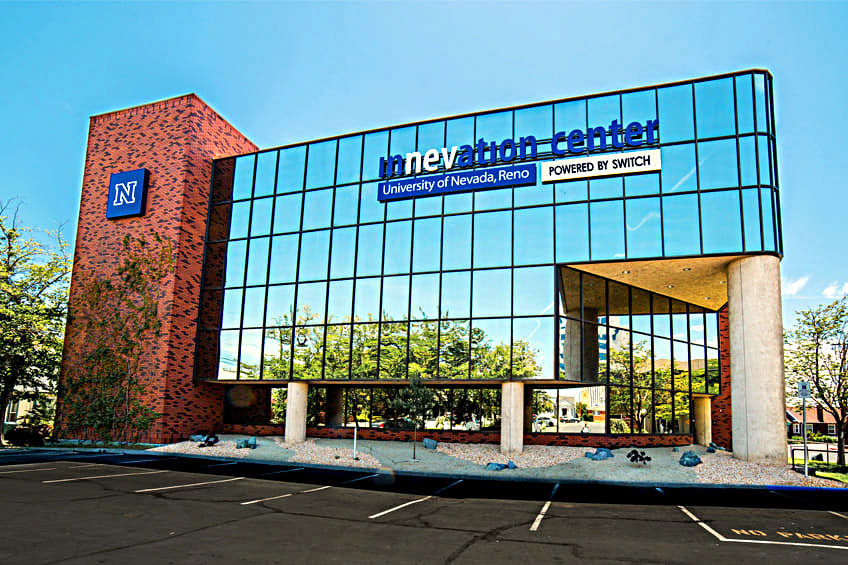
The University of Nevada, Reno Innevation Center officially opened its doors in 2015 at a 25,000 square foot building on Sinclair Street. Supported by the Knowledge Fund and bolstered by a $500,000 grant from Switch founder and CEO Rob Roy for interior buildout and renovations, the center was intentionally positioned off campus, embedded in the city rather than insulated from it.
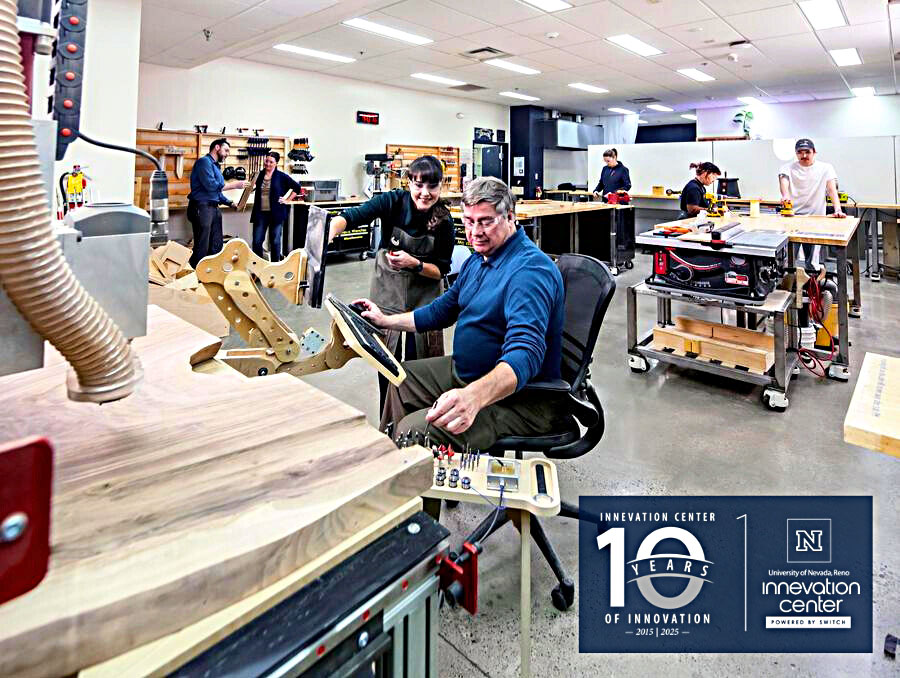
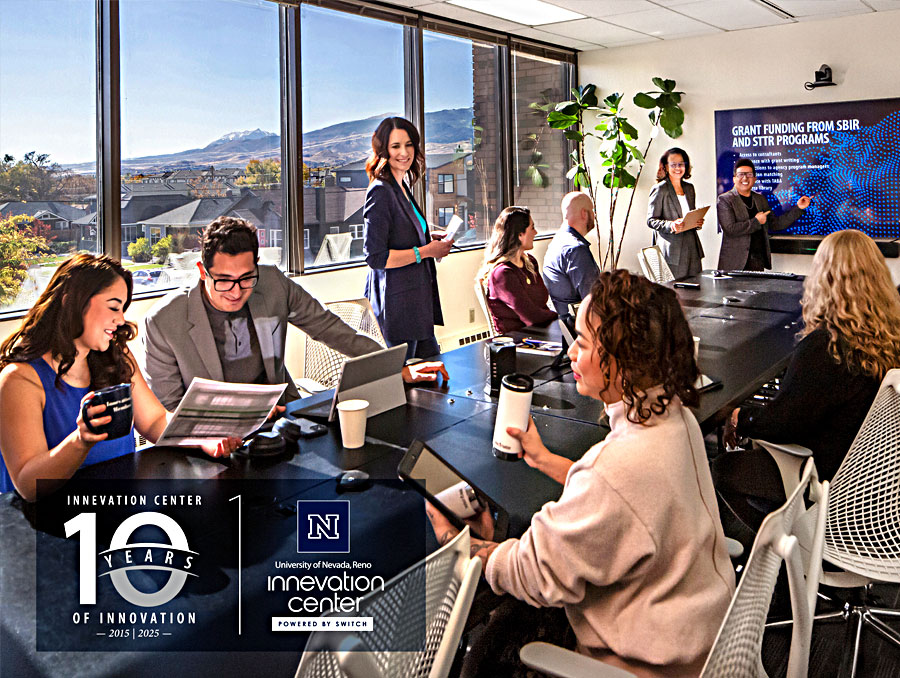
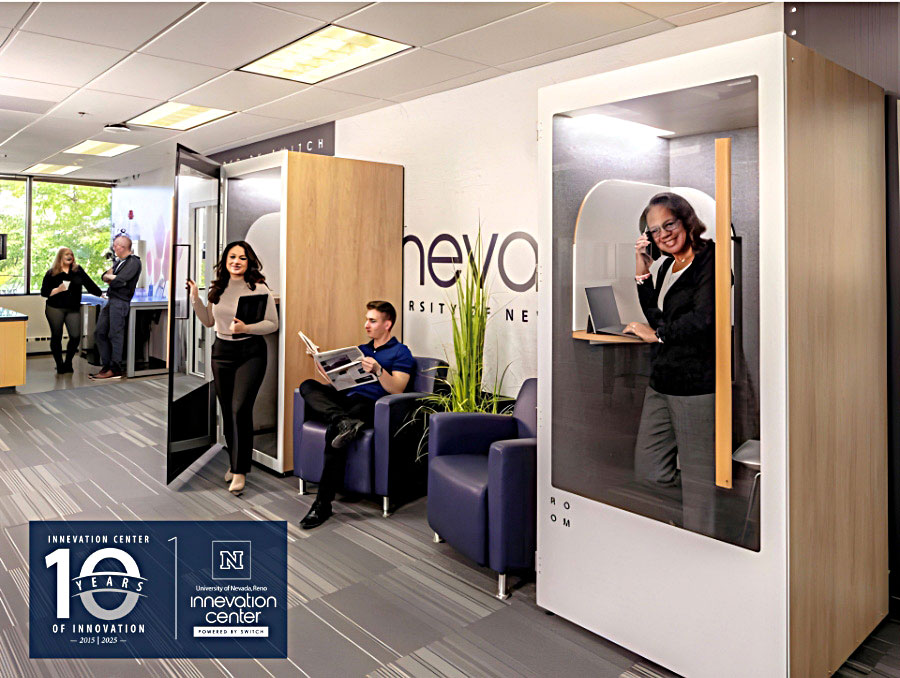
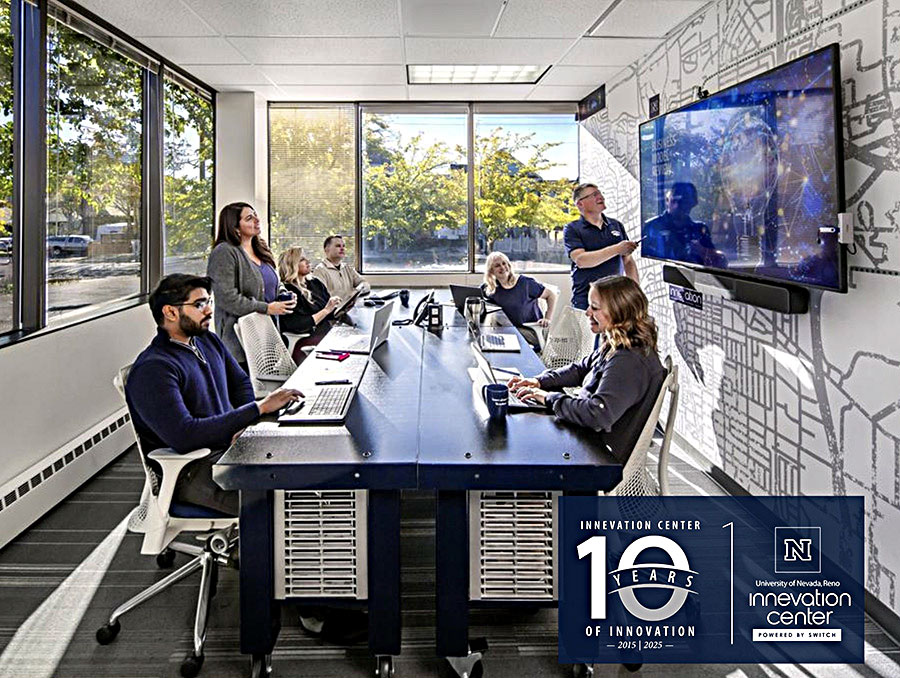
From the beginning, leaders envisioned the Innevation Center as a “third space” neither purely academic nor corporate but shared ground where researchers, students, founders, investors, and policy leaders could work side by side. It would offer more than desks and Wi Fi. The building housed coworking areas, meeting and conference rooms, and a richly equipped makerspace stocked with modern tools and prototyping equipment designed to dramatically shorten design cycles and reduce barriers to experimentation.
When Sandoval returned to address the launch of the center that year, he emphasized the urgency behind its creation. Nevada, he said, needed to become more than a bridge to Silicon Valley. It needed to build its own onramps for innovation at home.
“We knew how important it was to have innovation and create a space where partners like economic development organizations, higher education, community colleges, and the state could come together around a singular mission,” Sandoval told the gathered crowd in 2015. “That mission was creating opportunity for the creative people in our communities.”
Expectations were deliberately modest. No one predicted the scale or speed of what would follow. As Sandoval would later reflect, the goal was alignment, not instant success. Create the space. Invite the community. Let ideas collide.
| |
Beta Mode as a Philosophy
If one phrase has defined the Innevation Center over the past decade, it is beta mode. Mridul Gautam, Vice President for Research and Innovation at the University of Nevada, Reno, has often described the center’s early years as experimental by design, guided more by curiosity than certainty.
“We were in beta mode from day one,” Gautam has said. “And truth be told, we’re still in beta mode today. That’s exactly where I like to be.”
This philosophy shaped both programming and culture. The center encouraged rapid testing, iteration, and adaptation. Entrepreneurs could access mentorship from industry executives and peers, tap into external networks, and connect with venture capital while still refining their ideas. Students and researchers could prototype solutions without navigating the traditional friction between academia and commercialization.
Over time, that flexibility enabled scale. In the decade following its opening, the Innevation Center generated more than $384 million in sponsored research, money that flowed back into Nevada’s innovation economy and seeded additional breakthroughs. It supported 18 spinout companies, helped 26 firms relocate to Nevada, and attracted more than $345 million in venture capital funding for businesses, some of which were founded within its walls.
Perhaps most notably, the center helped create more than 920 high tech jobs outside the university, a tangible measure of its role in diversifying the state’s economy.
Despite its relatively modest footprint, the impact was outsized. The building did not grow larger, but its influence did.
| |
Anchoring a Startup Community
By the early 2020s, the Innevation Center had become the de facto gathering point for Northern Nevada’s entrepreneurial ecosystem. Its downtown location and open door culture made it accessible, approachable, and deeply woven into the fabric of Reno’s economic transformation.
In 2023, the center hosted the inaugural Reno Startup Week, an event that many observers viewed as a litmus test for the region’s entrepreneurial maturity. More than 600 founders, investors, students, and business leaders showed up. By 2025, attendance had grown to 1,445 people.
Taylor Adams, President and CEO of the Economic Development Authority of Western Nevada, was unequivocal about the center’s role in that growth. “Make no mistake,” Adams said. “Without the university and without the Innevation Center, that event would not have happened.”
For EDAWN, startups represent some of the “stickiest” businesses in economic development, companies that grow roots locally and generate long term impact. The Innevation Center, Adams argued, provided critical regional infrastructure, creating pathways to the economy that mirrored the university’s pathways to education and careers.
Doug Erwin, Senior Vice President of Entrepreneurial Development at EDAWN, echoed that sentiment. He described the Innevation Center as a natural convergence point where nearly every major collaboration in the region could trace its roots. “It’s not campus. It’s not corporate,” Erwin said. “It’s a place where startups, researchers, and community leaders collide and create.”
From accelerators like InNEVator to pitch competitions and community events, the center’s walls absorbed countless ideas and conversations, many of which later turned into companies, partnerships, and careers.
| |
Ten Years In and Looking Forward
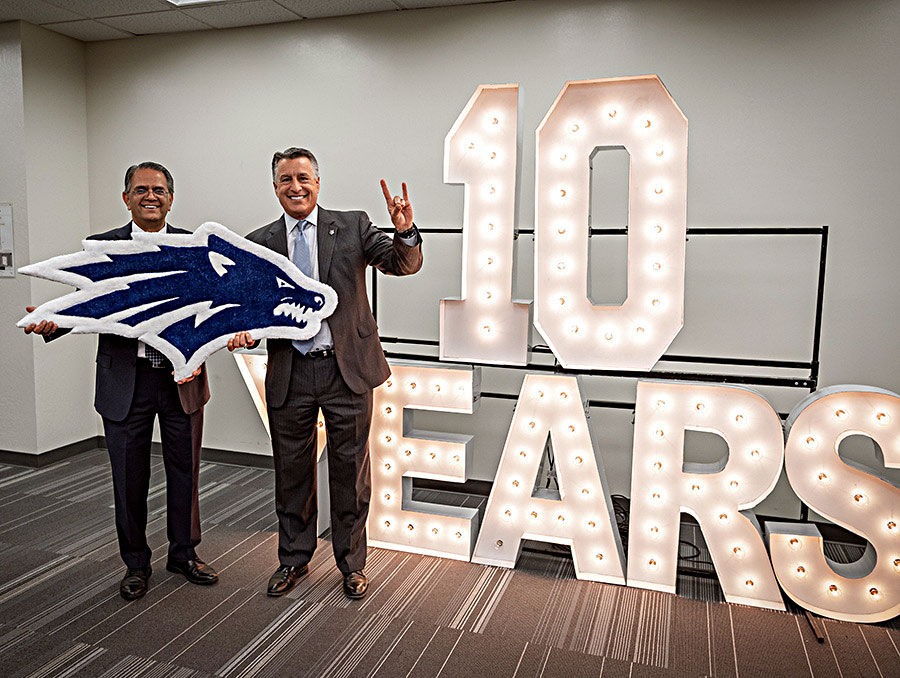
On October 13, 2025, the University of Nevada, Reno Innevation Center celebrated its ten year anniversary with an event that reflected both its origins and its future. Guests explored all three floors of the building, engaging with startup showcases, partner booths, live makerspace demonstrations, and anniversary exhibits. The celebration included 3D printed glass charms, a member fair, and even a photobooth, a reminder that innovation thrives where creativity and community intersect.
During the speaking program, now University President Brian Sandoval looked back on a journey that began with a risky decision during the darkest days of the recession. “We had modest expectations,” he told the audience. “I never dreamed it would evolve into what it has. But I knew how powerful it could be when education, economic development, community, and employers come together.”
Sandoval said one of the most exciting aspects of the center remains its unpredictability. The next transformative idea, he noted, could come from anywhere, a student, a startup founder, or a researcher sketching on a napkin. “There are ideas here that will be absolute game changers,” he said. “It can happen right here. You just never know which one it will be.”
As the university continues to expand its research and innovation capacity, the Innevation Center remains a cornerstone of that effort. A decade in, it stands not as a finished product, but as a living system intentionally unfinished, adaptive, and open.
From crisis to catalyst, from napkin sketch to innovation powerhouse, the Innevation Center has helped rewrite Reno’s economic story. And true to its beta mode roots, it is already asking what comes next.
| |
If you know anyone who you think might be interested in my emails - Please forward to them this link.
http://www.renokelly.com/blog.html
They can click on a subject that interests them on this webpage. I will not contact your friend unless they contact me. Of course, nobody is ever given access to my email list.
Thank you very much - Kelly
| |