March 12, 2021
The Out-of-Pocket Health News Digest
|
|
Below you will find briefs about recent health policy news stories. Our hope is for students to have an information outlet at their fingertips to keep up-to-date with the most pressing news stories in health policy.
This compilation is produced by the HPSA Education Committee: Matthew Dunn, Magdalena Mihaylova, Atticus Raasch, and Brynna Thigpen
|
|
COVID-19 stimulus signed into law, delivering aid to individuals, schools, and more
by Matthew Dunn
|
|
President Biden signed the $1.9 trillion stimulus bill on Thursday, one of the largest pieces of anti-poverty legislation in modern American governance. The $1,400 individual relief checks are a key component of the bill; adults earning $75,000 or less, married couples earning $150,000 or less, and heads of household earning $112,500 or less are eligible for the full payment. Complete details on relief eligibility can be found here, and White House press secretary Psaki told reporters that checks will start to arrive in bank accounts as soon as this weekend.
The bill extends $300 unemployment benefits through Labor day, which comes at a critical time as current unemployment benefits were set to expire on Sunday. It also includes aid to state and local governments, funding for schools and vaccine distribution programs, a 1-year increase in the child tax credit, expanded nutrition benefits, and greater assistance for rental housing.
In addition, the stimulus also provides aid that will reduce healthcare costs for many Americans over the next 2 years. The bill provides $34 billion to help Americans who purchase insurance on ACA marketplaces through 2022, which will save some individuals thousands in annual premiums. There is also a subsidy to cover 100% of COBRA costs, although this is only temporary.
These measures to lower healthcare costs are also expected to add more Americans to the health insurance rolls in the coming years. According to the Congressional Budget Office (CBO), this legislation would bring an additional 1.7 million people to enroll in ACA exchanges - 1.3 million of these currently uninsured.
The relief bill passed the Senate and House without a single Republican vote, despite Biden’s prior assurances that he is equipped to work across the aisle to advance legislation. On the other hand, passing the COVID-19 stimulus on a Democratic party-line vote has not hindered its initial popularity. Overall, 75% of voters support the package versus only 18 percent opposed. That figure includes 90% of Democrats, 59% of Republicans, and 71% of independents.
|
|
Variations in state reopening policies
by Atticus Raasch
|
|
As both COVID-19 cases and deaths begin to fall across the country, various states are taking different approaches in lifting restrictions, reopening businesses, schools and more.
In California, the state plans to reopen theme parks and sports/concert venues. After being closed for almost a full year, the venues will have limited capacity and other restrictions. In addition, California still requires face-coverings in public places.
Other states have taken a different approach. In Texas, Gov. Greg Abbott is lifting all COVID-19 restrictions, including the mask mandate. Mississippi, Iowa, North Dakota and Montana are taking similar measures as well.
Gov. Abbott has faced backlash from his decision to lift restrictions, as the number of COVID-19 cases increased in the state during the two weeks leading up to the announcement. Additionally, only around 8% of the state population has been vaccinated.
Other states however, such as Colorado, Arizona and West Virginia, are looking to lift COVID-19 restrictions while keeping and extending the state mask mandates. Though COVID-19 cases, hospitalizations, and deaths have decreased in the past few months, thousands are still being infected every day. There were more than 50,000 new cases and 2,200 deaths reported Friday, according to Johns Hopkins University.
|
|
Hope by vaccine
by Magdalena Mihaylova
|
|
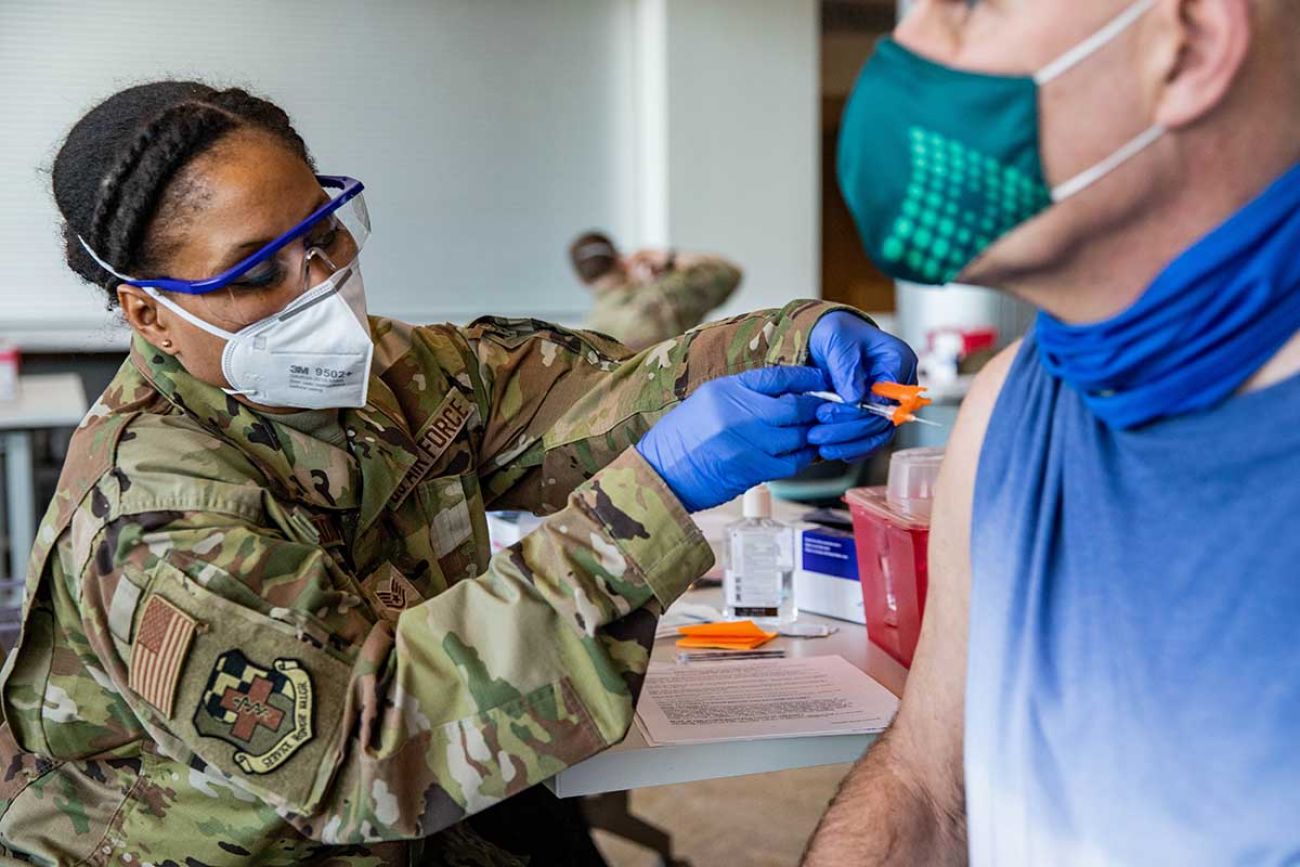
After over a year of social distancing, quarantine, and loss, the United States is offered some hope from President Biden, who said in a speech Thursday that he would order states to make all adults eligible for the COVID-19 vaccine by May 1st and expressed that the nation would likely see a normal Fourth of July. President Biden said the federal government would create a website that would allow people to locate available vaccines near them.
The news comes at a time when vaccine eligibility and prioritization are rapidly changing, not only in the country as a whole, but here in Michigan, too. Michigan began vaccinating those 50 and older with underlying health conditions on Monday, and plans to start vaccinating all people 50 and older starting March 22.
While close to 20% of the U.S. population is already vaccinated against COVID-19, and many remain hopeful for a normal summer, Biden also maintained a cautionary tone in his speech, putting it bluntly: “This is not the time to let up.”
Sources: The New York Times, Bridge Michigan
|
|
One-Liners
by Brynna Thigpen
|
|
-
Nigerian Farmers can sue Shell: After Shell (formally “Royal Dutch Shell,” or RDS) inflicted decades of harm on the health, environment, and safety of Nigerian communities in the Niger Delta, a court told Nigerian farmers in 2015 they could not sue because RDS was not ultimately responsible for the farm; however, a February 12th decision by the UK Supreme Court reversed that decision, clearing the way for the farmers to sue RDS. (BBC)
-
Pollution’s impact on COVID-19: All else held equal, populations in more polluted places sustained worse COVID-19 outcomes than populations in less populated, a phenomenon that played out dramatically in Bergamo, Italy. (LA Times)
-
US Traffic Deaths rise: Despite a dramatic decrease in road traffic after stay-at-home orders began in 2020, U.S. traffic deaths jumped for the first time in 4 years, a phenomenon potentially attributable to the temptation drivers faced on mostly open roads to drive recklessly or while under the influence. (PBS)
-
Regulating Heavy Metals in Baby Food: After years of reports that some baby foods contain dangerously high levels of toxic heavy metals such as lead, arsenic, and cadmium, the FDA has finally moved to set more stringent standards. (Politico)
-
Faulty Fever Scanners: Thermal imaging technologies that organizations have used over the past year to monitor people’s temperatures may be ineffective at actually identifying people who have a fever. (Washington Post)
|
|
|
|
|
|
|