|
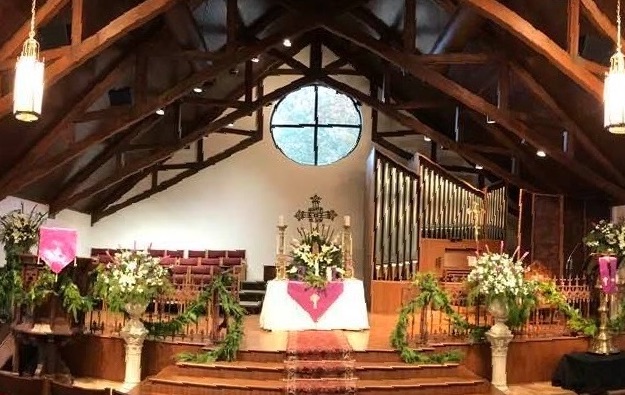
If you've been around Northminster very long, you've probably heard me quiz the children on "church words." Every few weeks I'll ask them to point to things like the lectern, narthex, pulpit, or paraments. Sometimes they know exactly where to look. Other times they point with complete confidence to something entirely different, and we all learn—and laugh—a little together.
I love those moments because the children remind me of something adults often forget. They aren't embarrassed to ask, "What does that mean?" Somewhere along the way, many of us decide we're supposed to know, so we stop asking.
The truth is, every community develops its own shorthand. Teachers, doctors, carpenters, musicians, and accountants all use words that make perfect sense within their own circles. Churches are no different. After hearing words like lectern, narthex, pulpit, and paraments for years, it's easy to forget they aren't part of everyone's everyday vocabulary.
I sometimes imagine what worship must sound like to someone visiting for the first time: "Today the paraments are green. The Scripture will be read from the lectern. We'll gather in the narthex after worship." If you've never heard those words before, you might wonder whether you've accidentally wandered into another country.
Those conversations with our children remind me that explaining our language isn't about dumbing anything down. It's about extending hospitality. Every time we pause to explain a word instead of assuming everyone understands it, we're quietly saying something much more important: You belong here. You don't have to know all the words before you become part of the conversation.
The beautiful thing about the gospel is that it doesn't require a secret vocabulary. It can be spoken around a kitchen table, in a hospital room, on a front porch, or over coffee after worship. We don't lose anything by choosing words that welcome more people into the conversation. In fact, we gain something. We remember that faith has always been learned one question at a time.
So the next time you hear me asking the children to point to another mysterious church word, know that I'm not really teaching vocabulary. I'm reminding all of us that the Church is always at its best when no one is afraid to ask, "What does that mean?"
|