Congratulations to Laxmaiah Manchikanti, MD, ASIPP Chairman of the Board and CEO, who was recently honored with the Presidential Award by the American Association of Physicians of Indian Origin (AAPI). This award is in recognition of his outstanding leadership and excellence in community service. The award was presented at the 41st Annual AAPI Convention in Philadelphia, PA, on July 8, 2023, where Dr. Sanjay Gupta introduced Dr. Manchikanti, mentioning many of his achievements.
|
|
Could glucagon-like peptide-1 (GLP-1) receptor agonists such as semaglutide — approved as Ozempic to treat type 2 diabetes and as Wegovy to treat obesity, both from Novo Nordisk — also curb addictions and compulsive behaviors?
As demand for semaglutide for weight loss grew following approval of Wegovy by the US Food and Drug Administration in 2021, anecdotal reports of unexpected potential added benefits also began to surface.
Some patients taking these drugs for type 2 diabetes or weight loss also lost interest in addictive and compulsive behaviors such as drinking alcohol, smoking, shopping, nail biting, and skin picking, as reported in articles in the New York Times and The Atlantic among others.
|
|
Health experts from around the world will soon offer advice on consuming aspartame, a popular sugar substitute that is added to sodas, cough drops, desserts, and gum.
The artificial sweetener aspartame is in the hot seat once more. Two separate committees made up of health experts from around the world will soon offer advice on consuming aspartame, a popular sugar substitute that is added to sodas, cough drops, desserts, and gum.
The World Health Organization’s International Agency for Research on Cancer (IARC) is analyzing whether the ingredient is a carcinogen. Meanwhile, the WHO’s Joint Expert Committee on Food Additives will offer guidance on an acceptable daily intake of aspartame. Both are expected to issue their reports on July 14, according to leaked WHO documents, CNN reported.
|
|
Residents and Fellows:
Have you registered for TOMORROW'S COMPLIMENTARY ASIPP WEBINAR?
|
|
A brief assessment in primary care can help identify patients most at risk
New designer molecules that target weight loss via multiple mechanisms continue to raise the bar of how many pounds people with overweight or obesity can lose.
Retatrutide (Eli Lilly), an investigational agent that combines agonism to three key hormones that influence eating and metabolism into a single molecule, safely produced weight loss at levels never seen before in a pair of phase 2 studies that together randomized more than 600 people with overweight or obesity, with or without type 2 diabetes.
Among 338 randomized people with overweight or obesity and no type 2 diabetes, 48 weeks of treatment with retatrutide at a 12-mg dose given by weekly subcutaneous injection (the highest dose tested) safely produced an average 24% drop from baseline bodyweight.
|
|
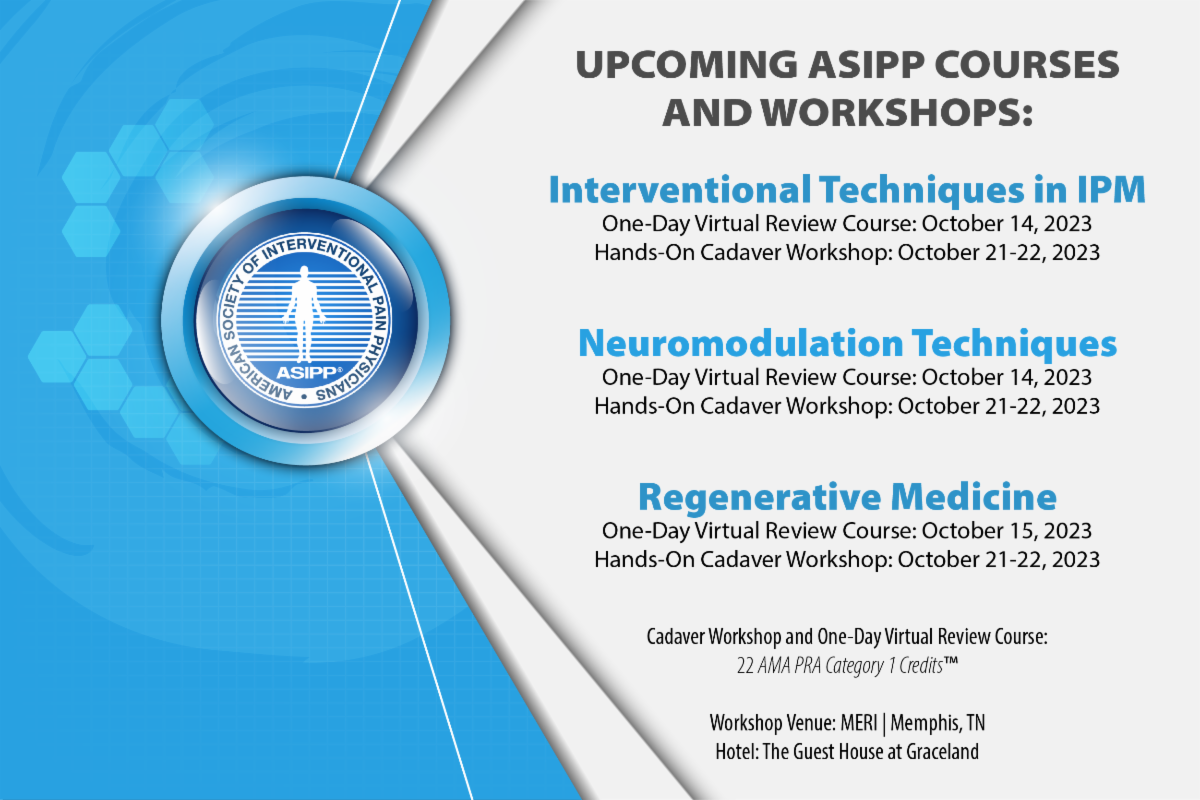
Interventional Techniques in IPM
Review Course & Cadaver Workshop
|
|
Regenerative Medicine
Review Course & Cadaver Workshop
|
|
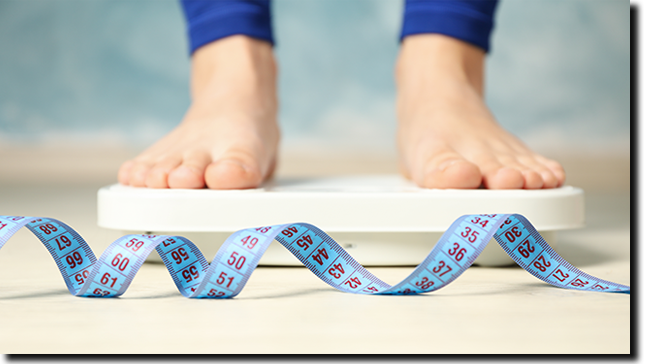
The American Medical Association (AMA) on Wednesday said it will advise doctors to pay less attention to body mass index (BMI) in determining if a patient is at a healthy weight, saying the measure does not predict disease risk equally well across racial and ethnic groups.
BMI, a ratio of weight to height, has long been used to define underweight, "normal" weight, overweight, obesity and morbid obesity, despite mounting evidence that it is an inaccurate predictor of health risks on an individual level.
At the influential physician group's annual meeting in Chicago, members voted adopt a new policy that says BMI should be just one factor in determining whether a patient is at a healthy weight. Other measures such as body composition, belly fat, waist circumference, and genetic factors are also important, the AMA said.
|
|
Virtual
ABIPP Part I; ABIPP Path - Combined DCCPM/CSM virtual exam; ABIPP Competency Exam in IPM; ABIPP Competency Exam in Regenerative Medicine
Memphis, TN
ABIPP Part II - Practical Portion; ABIPP Competency Exam - Practical Portion; ABIPP Regenerative Medicine Competency Exam - Practical Portion
|
|
Researchers believe medical errors may be third cause of death in U.S.
Medical errors may be responsible for far more deaths than previously realized, according to a new study published today in the BMJ medical journals.
Researchers from Johns Hopkins University School of Medicine found that deaths from medical errors may be responsible for more than a quarter of a million deaths annually. Data in the studies was taken from a combination of Medicare and 13 other hospitals, which researchers examined to determine that the estimated annual rate of deaths from medical errors is 251,454 in the U.S.
|
|
Worries and risks surrounding generative artificial technology
The sanctity of the doctor-patient relationship has always been a cornerstone of modern medicine. It's a relationship rooted in trust, confidentiality, and mutual understanding.
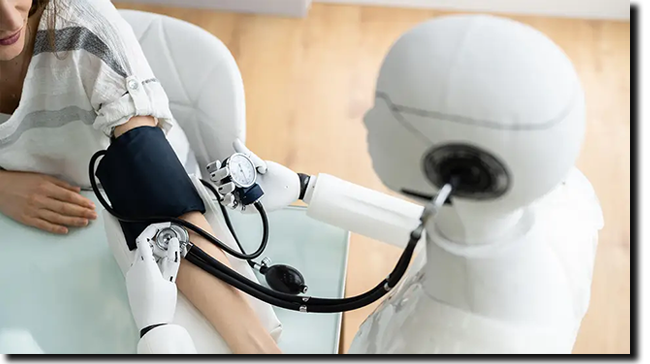
Yet, with the advent of generative artificial intelligence (AI) technologies like ChatGPT, apprehension is growing among doctors and patients. Physicians fear these tools will undermine (or replace) them. Patients worry the personal touch of their healthcare providers will be replaced by zeros and ones.
A recent Pew Research Poll found that most Americans feel this way. Sixty percent of patients surveyed said they feared their healthcare provider would rely too much on AI to diagnose disease and recommend treatments, and 57% said they worried that AI will erode the connection they have with their healthcare provider.
|
|
Strategy involves a "whole-of-government" response, says Rahul Gupta
The Biden administration released a plan Monday to combat the problem of fentanyl being laced with xylazine, a veterinary tranquilizer implicated in increasing numbers of overdose deaths.
"In the 12 months ending in January, we lost -- tragically -- more than 109,000 Americans to drug overdoses," White House Domestic Policy Advisor Neera Tanden, JD, said Monday on a phone call with reporters. "Almost seven in 10 overdose deaths can be attributed to synthetic opioids like fentanyl, and fentanyl adulterated with xylazine presents another rising threat."
"A recent CDC report found that xylazine was detected in nearly 11% of fentanyl-involved deaths," she said. "The proportion of xylazine-involved deaths in this country is continuously growing and is of great concern to this administration. Every one of these numbers is tragic. They represent individuals, families, friends, and communities torn apart by opioids. Addressing this crisis is a top priority for this administration."
|
|
Australian primary care docs love to order scans, just like their American counterparts
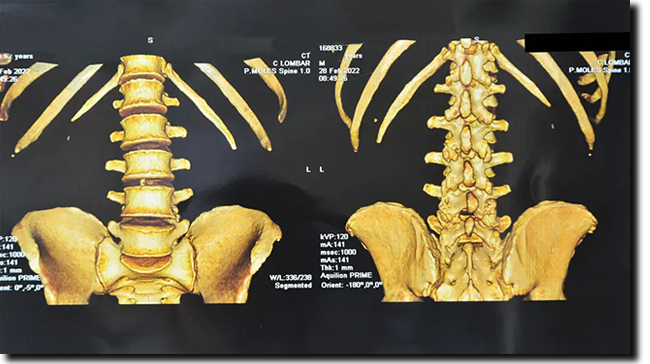
Records in an Australian database indicated that primary care physicians very often order diagnostic imaging for patients with musculoskeletal pain shortly after first seeing them, despite evidence and guidelines that say these scans only rarely improve outcomes.
Among some 133,000 patients in Australia's POLAR primary care database from 2014 to 2018 diagnosed with back, neck, or other joint pain, 36.2% were sent for some type of imaging (x-ray, CT, MRI, or ultrasound), according to Romi Haas, PhD, MPH, of Monash University in Melbourne, and colleagues.
About 30% of orders came within the 2 weeks prior to diagnosis and only a few were recorded in the weeks afterward. Only for MRI scans in patients with shoulder complaints was the median time substantially after diagnosis (42 days).
|
|
- ASIPP Members Only Site Information - |
|
-
To log in for the first time you will need to click “forgot password” at the bottom of the login window.
- Check your email and then log in as directed.
-
If you have problems logging into your account, click here.
|
|
The ABN, Form CMS-R-131, and form instructions have been approved by the Office of Management and Budget (OMB) for renewal.
The renewed form has an expiration date of January 31, 2026. This updated form was mandatory beginning June 30, 2023.
Instructions remain the same.
- Used for medical necessity situations.
- May also be used as a reminder Medicare will not pay for statutorily excluded services.
ABN Resources:
|
|
Pain Medicine Case Reports (PMCR) and Editor-in-Chief Alaa Abd-Elsayed, MD, PhD would like to invite you to submit case reports and case series to the PMCR journal. Your article will be published free of charge.
Open access journals are freely available online for immediate worldwide open access to the full text of published articles. There is no subscription fee for open access journals. Open access journals are no different from traditional subscription-based journals: they undergo the same peer-review and quality control as any other scholarly journal.
Interested in becoming a member of the PMCR Editorial Board?
Editorial board members are asked to review 2-6 manuscripts per year. Please submit your most up-to-date CV to sgold@asipp.org for consideration.
For more information or to submit your articles, click here.
|
|
| CASE REPORT |
Tenzin Palkyi, BS, and Daltry Dott, MD
Abstract
BACKGROUND: Spinal cord stimulation (SCS) has consistently been shown to improve quality of life and reduce pain in patients with complex regional pain syndrome (CRPS). Nevertheless, the extent of its potential benefits has yet to be completely elucidated.
CASE REPORT: This case follows a patient who developed CRPS in her right wrist following a fall from her wheelchair. She experienced severe disruption to her quality of life. Multiple conservative treatment modalities failed to alleviate her symptoms. After successfully completing an SCS trial and receiving an implant, the patient’s symptoms and quality of life improved significantly. Additionally, her blood glucose and oxygen saturation readings improved in the affected extremity after undergoing SCS.
CONCLUSION: Normalization of blood glucose and oxygen saturation levels is not a deeply studied effect from SCS treatment. More research is encouraged to understand the mechanisms under which these results arise and how they can benefit patients’ outcomes.
KEY WORDS: Spinal cord stimulator, complex regional pain syndrome, causalgia, wrist pain, case report
|
|
| RETROSPECTIVE STUDY |
Ran Wang, MD, Tong Zhu, MD, and Ying Han, MD
Abstract
BACKGROUND: Pulsed radiofrequency (PRF) treatment of the dorsal root ganglia (DRG) has recently been used as an important option for postherpetic neuralgia (PHN) patients who do not respond well to drugs. This procedure is commonly guided by computed tomography (CT) or fluoroscopy, but they cannot be performed in real time and are associated with radiation exposure. Ultrasound (US) is a potential alternative option, but no reliable method of US-guided DRG PRF treatment has been reported.
OBJECTIVES: The goal of this study was to propose a method for performing US-guided transforaminal PRF on cervical DRG. By comparing the results with those of CT guidance, we also sought to assess the accuracy, safety, and efficacy of this new approach in the treatment of PHN.
STUDY DESIGN: A retrospective cohort study.
SETTING: The study took place at the department of pain management of a single academic medical center.
METHODS: The data of 73 PHN patients receiving 2 sessions of US-guided (US group, n = 26) or CT-guided (CT group, n = 47) cervical DRG PRF were reviewed. US-guided DRG PRF was performed using our proposed protocol. The one-time success rate was used to assess accuracy. The average radiation dose, the number of scans per operation, and the rate of complications were recorded for safety assessment. For the evaluation of pain amelioration, a Numeric Rating Scale (NRS-11), the daily sleep interference score (SIS), and oral medication (i.e., anticonvulsants and analgesics) usage 2 weeks, 4 weeks, 12 weeks, and 24 weeks after treatment were compared to the baseline values and between groups.
RESULTS: The one-time success rate in the US group was significantly higher than that in the CT group (P < 0.05). Compared those of the CT group, the mean radiation dose and number of scans per operation were both obviously lower in the US group (P < 0.05). The average operation time was also shorter in the US group (P < 0.05). No obvious serious complications occurred in either group. No obvious between-group difference was found in the NRS-11 score, daily SIS, or rate of oral medications at any of the time points (P > 0.05). The NRS-11 score and SIS significantly decreased after treatment at each follow-up time point (P < 0.05) in both groups. Compared with those at baseline, the use rate of anticonvulsants and analgesics obviously decreased 4 weeks, 12 weeks, and 24 weeks after treatment (P < 0.05).
LIMITATIONS: This study was limited by its nonrandomized and retrospective design.
CONCLUSIONS: US-guided transforaminal DRG PRF is a safe and effective method for the treatment of cervical PHN. It is a reliable alternative option to the CT-guided procedure, demonstrating great advantages in reducing radiation exposure and the operation time.
KEY WORDS: Ultrasound, pulsed radiofrequency, dorsal root ganglion, postherpetic neuralgia, transforaminal
|
|
| ANIMAL STUDY |
Nackhwan Kim, MD, PhD, Chan Sam Moon, MD, PhD, Tae-Hong Lim, PhD, Junghwa Hong, PhD, and Donggeun Sul, PhD
Abstract
BACKGROUND: Chronic discogenic pain includes degeneration-driven changes under the mechanical macroenvironment of an internal disc, which leads to the progressive changes of biochemical microenvironment that induce abnormal ingrowth of the nociceptor. The propriety of the animal model reflecting the pathologic natural history has not been assessed.
OBJECTIVES: This study investigated the biochemical evidence of chronic discogenic pain by employing a discogenic pain animal model induced by shear force.
STUDY DESIGN: Animal study utilizing rats in vivo model of a shear force device.
METHODS: Fifteen rats were divided into 3 groups (n = 5/group) according to the period for which sustained dorsoventral shear force was applied (1 week or 2 weeks); the control group received the spinous attachment unit, without a spring. Pain data were collected using von Frey hairs on the hind paws. Growth factor and cytokine abundance was analyzed in the dorsal root ganglion (DRG) and plasma.
RESULTS: After the shear force devices were installed, the significant variables were found to markedly increase in the DRG tissues of the 2-week group; however, they were not altered in the 1-week group. Specifically, interleukin (IL)-6, neurogrowth factor (NGF), transforming growth factor (TGF)-alpha, platelet-derived growth factor (PDGF)-beta, and vascular endothelial growth factor (VEGF) were increased. Meanwhile, the plasma levels of tumor necrosis factor-alpha, IL-1beta, IL-5, IL-6, IL-12, and NGF were increased in the 1-week group; whereas, TGF-alpha, PDGF-beta, and VEGF were increased in the 2-week group.
LIMITATIONS: The limitations include the general limitations of quadrupedal animals, the poor precision and flexural deformation of shear force devices, inaccuracies regarding the evaluation of histological denaturation, and short intervention and observational periods.
CONCLUSIONS: This animal model effectively generated biochemical responses to shear loading with evidence of neurological changes induced without direct macrodamage to the outer annulus fibrosus. Chemical internals were induced by mechanical externals among the contributing factors of chronic discogenic pain.
KEY WORDS: Discogenic pain, dorsal root ganglion, intervertebral discs, low back pain, shear force, interleukin, growth factor, animal model
|
|
ASIPP is now in collaboration with Curi Medical Liability Program
Since this malpractice insurance program officially launched in November 2018, ASIPP has signed up hundreds of providers with an average savings of 30%. This is professional liability insurance tailored to our specialty and will stand up for us and defend our practices.
Curi is a full-service advisory firm that serves physicians and their practices. Their valued advice is grounded in your priorities and elevated in your outcomes. They are driven by a deep understanding of your specific circumstances in medicine, business, and life. To read a few important points to keep in mind about the program, including discounts, administrative defense, cyber coverage, aggressive claims handling, and complimentary risk management CME activities, visit our website.
|
|
ASIPP® has formed a partnership with Henry Schein and PedsPal, a national GPO that has a successful history of negotiating better prices on medical supplies and creating value-added services for independent physicians. Working with MedAssets, PedsPal provides excellent pricing on products like contrast media that alleviate some of the financial pressures you experience today.
|
|
ASIPP® is now offering our members the benefit of a unique revenue cycle management/ billing service.
We have received a tremendous amount of interest in the ASIPP® billing and coding program.
Click here to learn more about the negotiated rate for practices and more!
|
|
|
up-to-date news related to you, your practice, and your patients!
|
|
|
|
|
|
|