Environmental Interpretive Center December 11, 2025 | | |
In this issue:
- An Invitation, With Thanks
- Upcoming Program
- Congratulations to...US!
- Congratulations to Students
- Tales From the Trails: A Northwoods Secret
- Greenways: Apply Yourself!
| | An Invitation, With Thanks | | As another semester at the EIC draws to a close and we enter a new year, I find myself reflecting on how fortunate I've been to spend these past months at this remarkable place as Interim Director. The EIC is far more than the sum of its parts—it’s a living classroom, a beautiful indoor retreat, a gathering space for dedicated naturalists, and a hub for campus and community partnerships that advance our mission. | | | Spending these months at the EIC has felt like a return to my earliest lessons in nature. For the past twenty years, my research and advocacy have focused on the harms humans inflict on our planet and our health. This fall, the EIC reminded me of all that’s worth protecting, and of the abundance surrounding us when we build relationships with the natural world. | | |
Microseasons at EIC
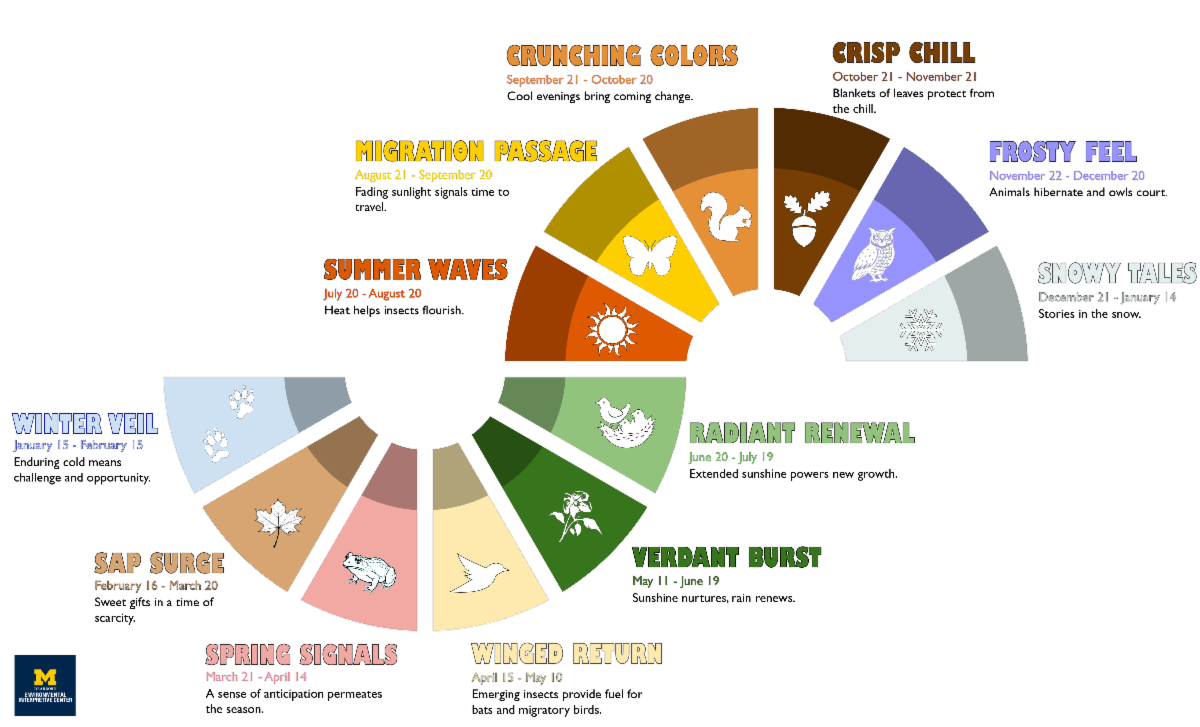
Amid our busy schedules, screen-filled lives, and endless to-do lists, my time at the EIC has reminded me that nature follows a subtler calendar. I’m particularly inspired by the EIC’s embrace of twelve microseasons.
| | | |
For those following closely, we are introducing our own microseason calendar, inspired by College for Creative Studies student projects and rooted in local phenology.
There is the hush of “Frosty Feel” when owls court and chipmunks doze beneath the earth. There’s the serenity of “Winter Veil” with animal tracks in fresh snow and squirrels digging for hidden treasures. Each microseason draws us to remarkable details that too often go unnoticed. For me, these microseasons offer a refreshing way to read the landscape and connect with its rhythms.
| | |
An Open Invitation
We invite you to celebrate these transitions with us and follow along. May our microseason calendar serve not just as a scientific guide, but also as a prompt for wonder.
Want to know why rabbit droppings change shape over winter, or which mushrooms appear during sudden thaws? Want to know why oaks cling to their leaves, or which creatures are stirring beneath the snow?
I invite you to notice something new, ask a question, or share an observation.
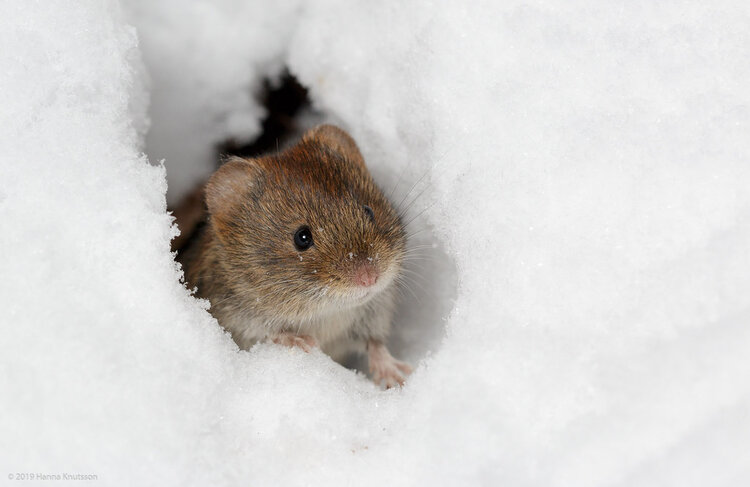
(Vole photos by Hannah Knutsson)
| | | |
Volunteer for Stewardship Saturday. Attend an Owl Prowl. Plan to tap maple trees with us. Keep an eye out for new indoor and outdoor signage coming soon, as well as fresh social media features.
The Winter Solstice is upon us in the coming weeks, as we enter the “Winter Veil” microseason and prepare for a new year. Here’s to the transitions ahead—and to the opportunities and challenges of a Michigan winter. Even as I hand directorial duties back to Jacob Napieralski, you will be seeing me at the EIC regularly as the seasons change.
-Natalie Sampson, Interim Director
Editors note: The EIC staff are grateful to Dr. Sampson for her enthusiasm and engagement, guiding our "ship" during Dr.Napieralski's sabatical. We are thankful she will also be part of our upcoming "Silver Anniversary" in May.
| | |
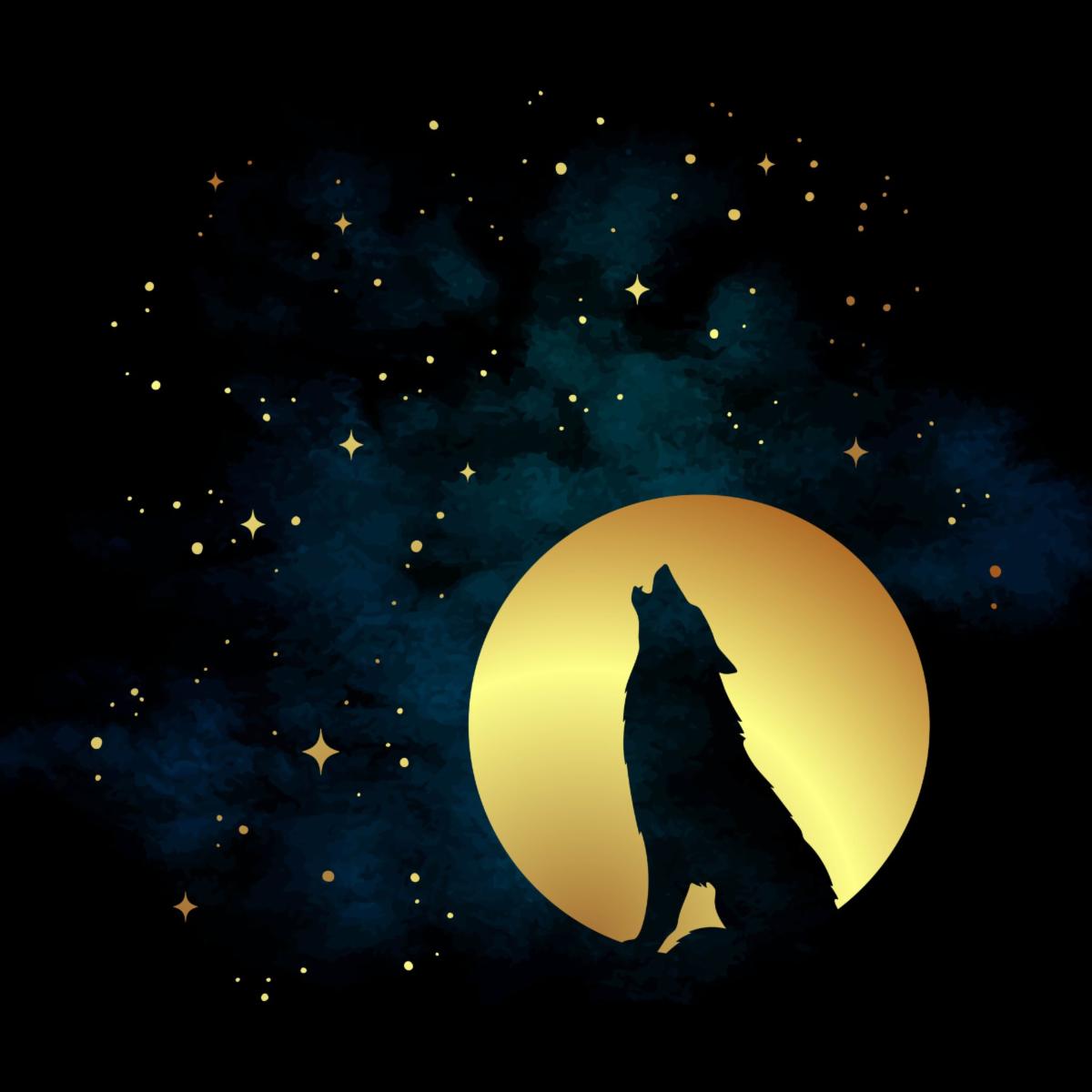
Wolf Moon Walk & Campfire*
Saturday, January 3
6:00-7:30 PM
Welcome in the New Year on a guided nighttime walk along the interpretive trails. The "Wolf Moon" coincides with perigee, the point at which it is closest to the earth, making it a visually impressive Supermoon that appears larger and brighter than usual, rising in the east around sunset.
*Dress warmly, as this program will be almost entirely outdoors. We can warm up by the campfire with treats, friends, and hopes for a happy new year! (Image from Minnesota State Horticultural Society)
Please register for this program.
| | |
Congratulations to Us!
The EIC staff was recently recognized by the University of Michigan-Dearborn at the Chancellor's Staff Recognition Ceremony. We were honored to receive the award for Advancing the Mission of the University. Nominated by our Director, Dr. Jacob Napieralski, with support from Interim Director Sampson, we joined our campus community to celebrate not only our awards, but those of the outstanding people we work with on this campus.
“Since the EIC opened in 2001, over a quarter million people have visited our space or participated in our programs. I have watched the staff tackle a diversity of problems, streamline processes and exhibit a willingness to contribute to change. As individuals, the staff have received a number of regional and national awards for excellence in environmental interpretation and education, shining a bright light on UM-Dearborn's impact on southeastern Michigan."
We are humbled and delighted to be recognized for doing the work we love for the communities we hold dear, human and otherwise! Pictured below from left to right are: Dale Browne, Laura Mallard, Dorothy McLeer, Interim Chancellor Gabriella Scarlatta, Mike Solomon, and Rick Simek.
| |
Congratulations to Our Students!!
EIC Cooper Family Student Intern Joseph Giessuebel will be graduating with his second master's degree, this one in Environmental Science. He has already been hired by the State of Florida and is moving even before the semester ends! We met Joseph at a camp fire after and evening program and quickly recruited him for our staff. He has been busy with all kinds of projects for us and we will miss him personally and as a valued member of our staff. Best wishes, Joseph, and congratulations!
| | |
Scholarship Congratulations!
Many thanks to the Garden Club of Dearborn for their continued support of UM-Dearborn Natural Science majors. This year's honoree is Environmental Science major Angel Linear, who received their scholarship at the Holly Berry Brunch, which supports the Club's fundraising efforts.
Angel is a senior with a geosciences concentration. She has recently formed and launched the Environmental Scientist Student Association and currently serves as the president. One of her career goals is to become a meteorological storm chaser!
| | |
A Northwoods Secret
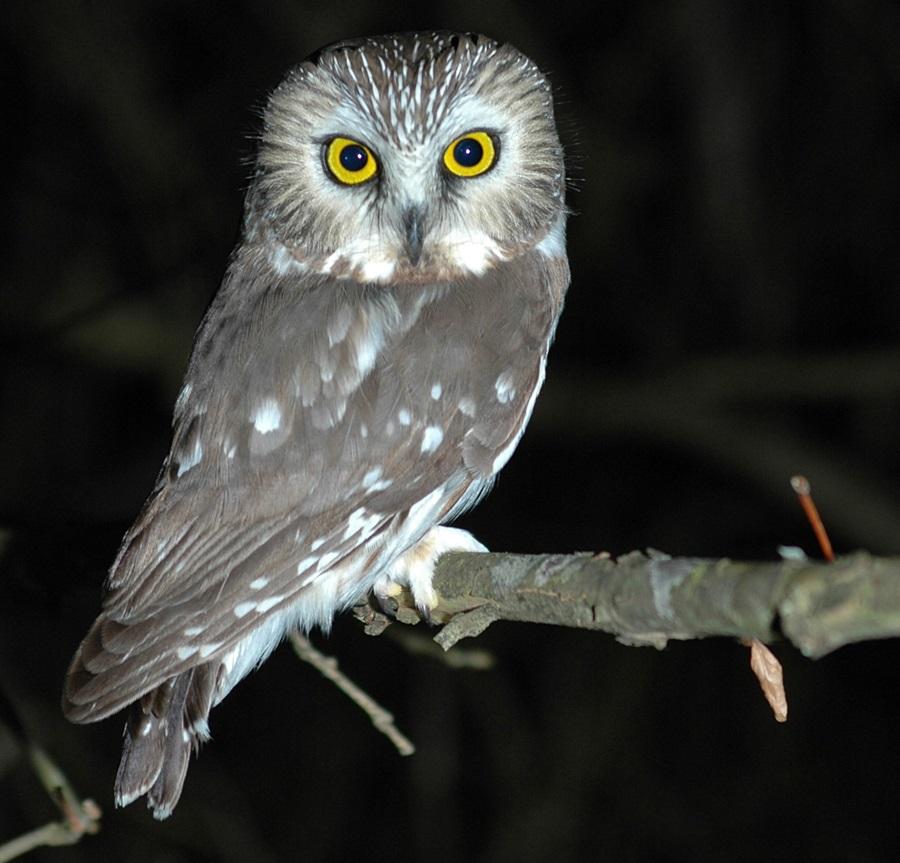
Here’s a raptor riddle: what is the size of a soda pop can, is able to hide in plain sight, turns toads inside out to eat them, and beeps like a construction truck backing up? None other than “the Acadian Adorable,” more commonly known as the Northern Saw-whet Owl (Aegolius acadicus), the smallest owl in Michigan! The petite size and docile demeanor of this owl has melted the hearts of even the most hard-core researchers.
(Photo by von Herff, USFWS)
There are several stories about the origin of the name “saw-whet.”
Lumberjacks sharpening saws would use a whetting stone to restore the bite to the saw’s teeth, producing a rasping sound. The saw would also occasionally squeak during the process, which resembles some of the noises this owl makes. Another version plays off the Anglicization of the French word chouette, a word traditionally used in France or French Canada to refer to any small owl.
| | |
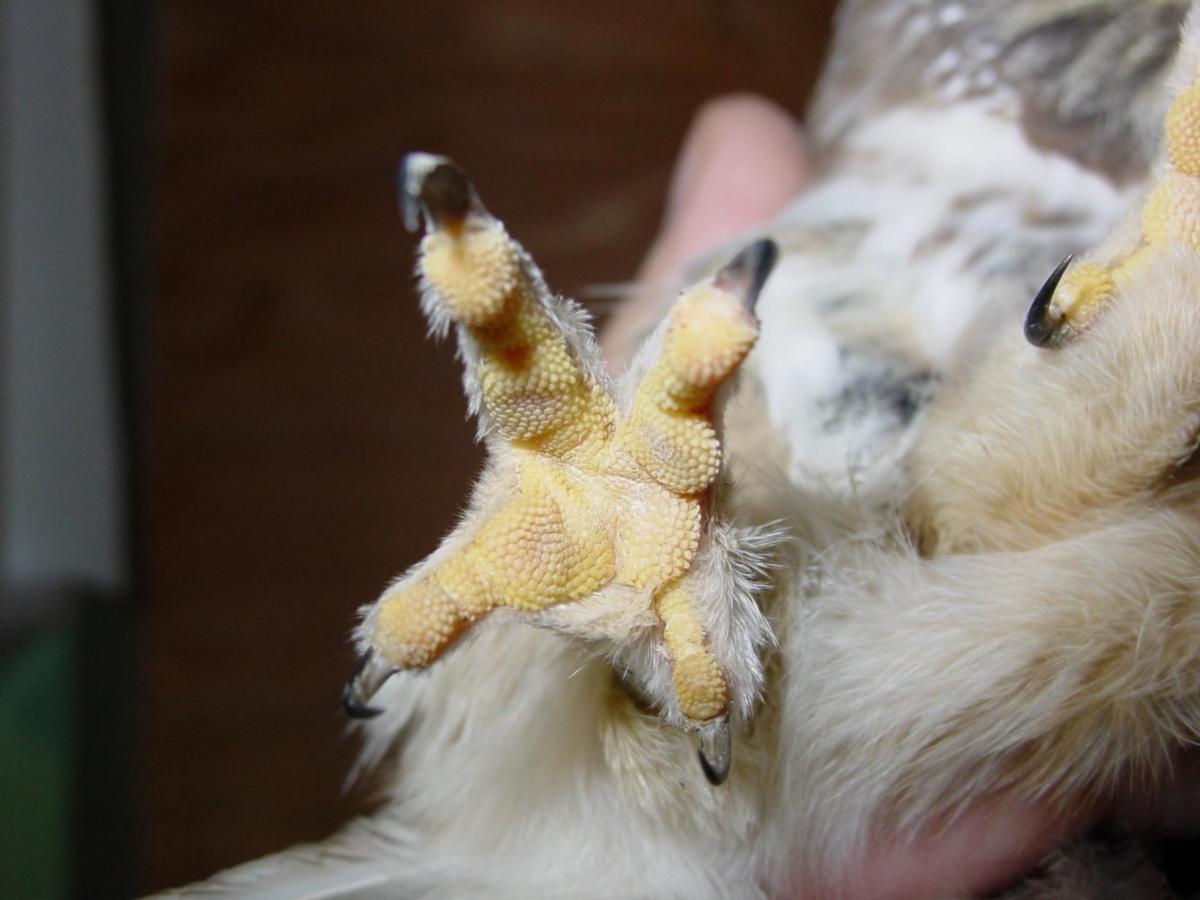
One look at their muscular toes and needle-like talons reveals their hunting talents. Saw-whets are known for their incredible agility, making swift, sharp turns in pursuit of equally agile prey. They are adept at ground hunting as well as hunting on the wing.
(Photo by Jason Sodergren)
Their camouflaged “dappled sunlight” plumage allows them safety from daytime predators and curious naturalists as they hide in inaccessible grapevine tangles, hunting mice and voles that scurry through tunnels under the snow (see vole photos above).
This strictly North American cavity nester breeds from southwest Alaska through British Columbia and most of the western United States into central Mexico; east across central Canada to Nova Scotia; south to the central U.S. (except in the prairies); and the east, south to the New Jersey highlands, continuing in the mountains to South Carolina.
Saw-whets winter throughout their breeding range and south erratically to the Mexican border, Arkansas, Louisiana, Tennessee, the coastal Carolinas, Georgia, and northern Florida, although you may see some postings about saw-whet sightings on the “apps” featured in Mike Solomon’s "Greenways" article (below).
| | |
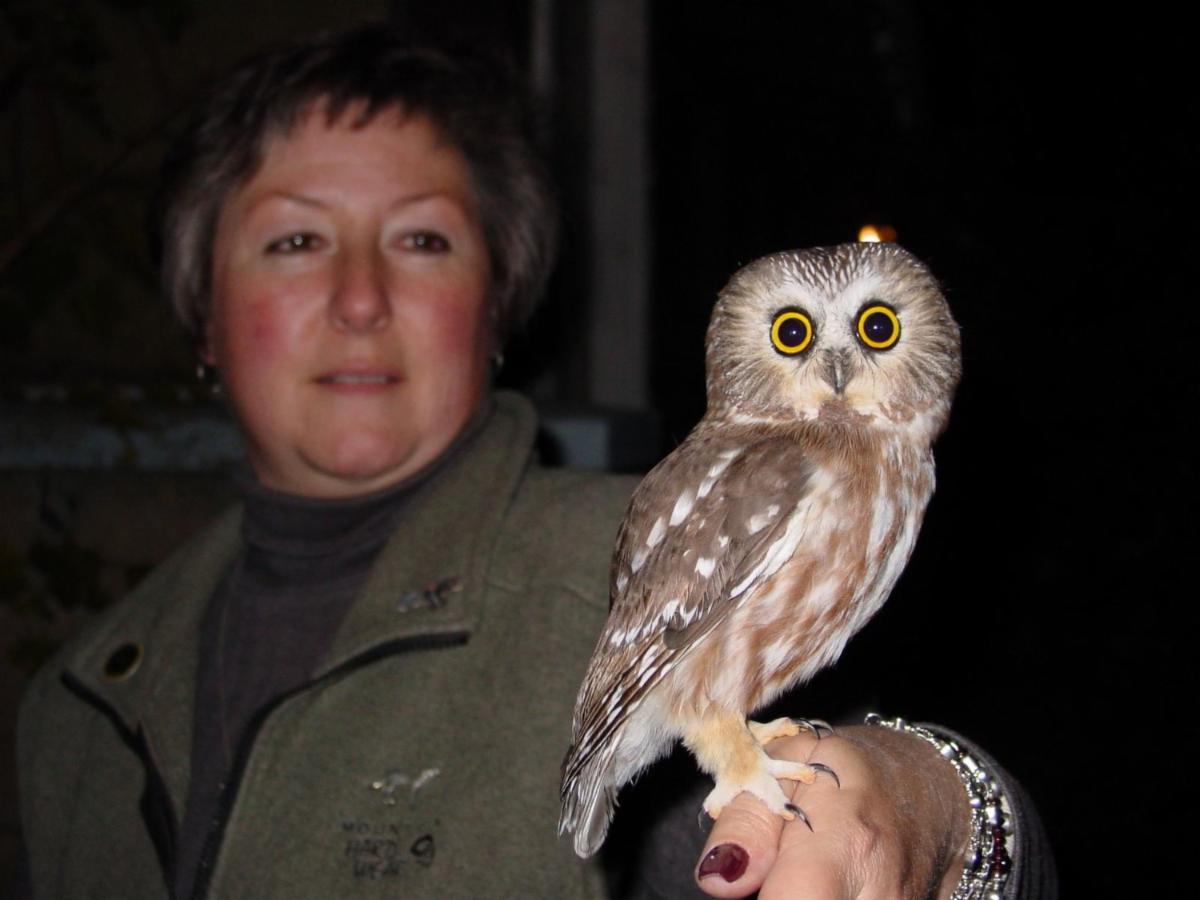
Occasionally, we will see them hunkered down in our Environmental Study Area, and we have banded them in the past, but it’s surely a challenge to find them. This little one is adjusting to the light before "lift off" from my hand after receiving a numbered federal band. For an irreverent video of saw-whet banding, visit Rick Mercer's Long Point Bird Observatory episode. (Photo by Jason Sodergren)
If you're up for a challenge, go for a woodsy winter’s walk on a trail and take the time to let your eyes look for a pop can sized owl–-who might be looking right back at you.
-Dorothy McLeer, Editor
| | |
Apply Yourself!
If you’ve been keeping track of our Microseason calendar, or looking out your window, you may notice that winter has arrived here in southeast Michigan. Winter brings colder temperatures, and life in general seems to slow down. I find it becomes more difficult in this time to keep my observation skills fresh! Fortunately, I have discovered some Community Science platforms that allow me to continue observing. I would like to share them with you, so you can help me improve our understanding of seasonal changes and biodiversity around us.
iNaturalist.org is a website that uses machine learning to identify living things in photos. There is also an iNaturalist app for handheld devices. The organization maintains a database of nature observations from regular folks like you and me, which aggregates them into fantastic maps and visualizations, providing open access to data for researchers. There is also a dedicated online community of naturalists, biologists, and other scientific experts who work to identify submissions.
I use iNaturalist on a daily basis to keep track of what I’ve observed, and to allow others to share in my discoveries. iNaturalist also operates a more “game-ified” version of their app, called Seek, which relies heavily on iNaturalist’s “AI Camera” feature for identification. There are also medals and achievements, to add a bit of fun to collecting data.
| | |
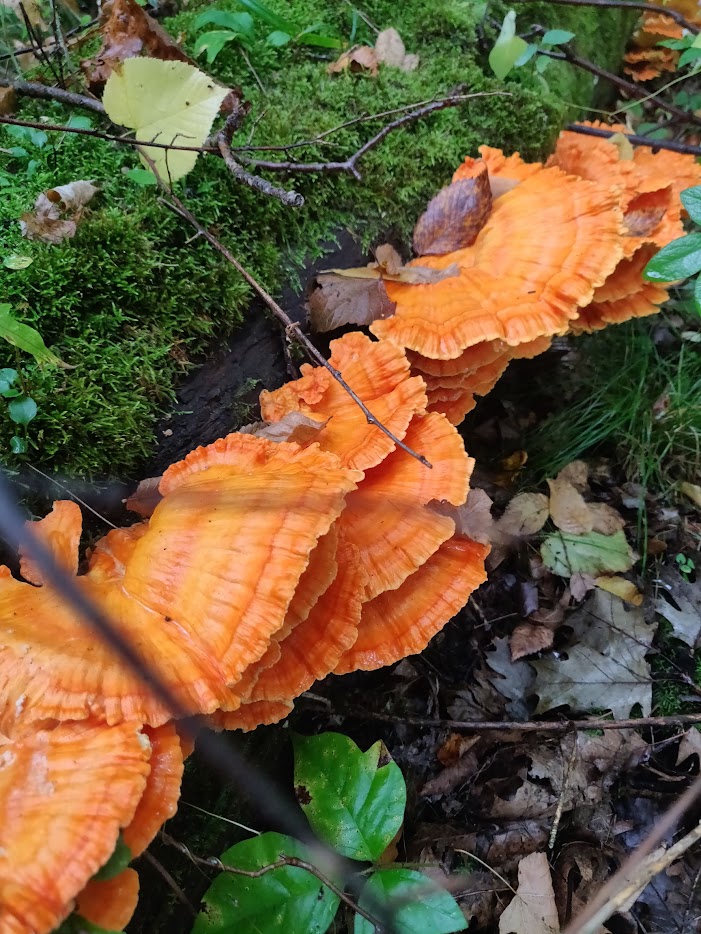
MushroomObserver.org is a fungi-specific Community Science platform where you can submit photos of a mushroom, as well as key identifying information about it. Experts in the community can edit observations, and rate their usefulness for identification. Fungi have incredibly diverse shapes, colors, and sizes, which make them challenging to identify. (Photo by Mike Solomon)
MushroomObserver is a great place to check your photos against known species, to try and figure out what you’ve observed. While they do not have features for automatic identification, you can submit a photo and check back to see when someone has identified it, or edit your observation when you figure it out with a book.
| | |
Nature’s Notebook is an app offered by the USA National Phenology Network (NPN), an organization working to track seasonal changes across the US. They collect data from a network of “registered observers” who choose to keep track of local plants and animals. These observations are a bit different than something like iNaturalist.
Nature’s Notebook allows you collect phenological data that helps scientists better understand seasonal changes on a weekly basis at a chosen site. The NPN collects this data, and provides visualizations and forecasts like the arrival of spring. On the NPN’s website, you can also explore by species, to see what others have observed in their areas.
I encourage you to try out some of these platforms! I have found it highly rewarding to make meaningful observations of the wildlife around me. It is fun to think about what kind of research might want to use my photos and observations, and I still get to connect with the wildlife around me, even when the weather is a little less welcoming!
-Mike Solomon, EIC Staff Naturalist
| | |
Venturing outdoors and encountering nature is good for your health. Our trails are accessible, so please visit our Environmental Study Area. Stay engaged in learning activities and check out our Remote Learning Activities & Resources page for ideas to create a “Neighborhood Nature Journal” and “Family Nature Walk” activities!
| | | We also hope to see you in person at our upcoming programs! | |
Please remember...
The EIC Environmental Study Area is open daily from sunrise to sunset. We would like to remind nature-goers that fishing on site is prohibited and to leave bikes and dogs at home because they cause disruption and stress to the EIC wildlife.
| |
| | | |